REVIEW · METEORA
Morning Horseback Tour in Meteora with Monastery Ypapanti
Book on Viator →Operated by Meteora horse riding · Bookable on Viator
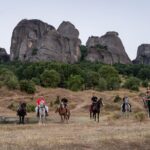
Meteora is usually seen from a road, a monastery terrace, or a busy walking path. This two-hour horseback ride gives you a slower, quieter angle on the famous rock pillars, with a visit to the restored but inactive Ypapanti Monastery built into a rocky height.
I like the small six-person limit, which should make it easier to hear your guide and ride at a comfortable pace. I also like the early start, the gentle horses described by past participants, and the fact that the guide can take photos and videos during the outing. The main consideration is simple: this is a short scenic ride, not a long expedition, and bottled water is not included.
In This Review
- Key points at a glance
- Why horseback riding suits Meteora
- Starting with the horse and guide in Kastraki
- Following the trails beneath Meteora’s rock pillars
- Reaching the restored Ypapanti Monastery
- Taking in the panoramic viewpoints for one hour
- Meeting the story of Thymios Vlachavas
- What $86.73 buys you
- Who should book this morning ride
- Timing, cancellation, and useful planning notes
- Should you book the Meteora horseback tour?
- FAQ
- Where does the horseback tour begin?
- What time does the activity start?
- How long does the horseback tour last?
- What is the maximum group size?
- Is a helmet provided?
- Is bottled water included?
- Does the tour visit Ypapanti Monastery?
- Can I cancel for a full refund?
Key points at a glance
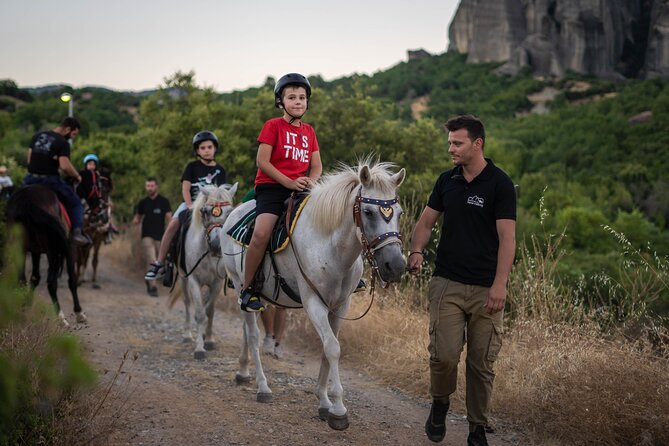
- Ride to Ypapanti Monastery: Reach one of Meteora’s less-visited religious sites on horseback, with about 30 minutes devoted to the stop.
- Morning views of Meteora: The route includes about an hour of panoramic viewpoints around the great stone pillars.
- Small group of six: A limited group can mean more personal attention from the guide and less waiting.
- Gentle, trained horses: The horses are described as well-trained and calm, a useful point for first-time riders.
- Photos during the ride: Guides can take pictures and videos, so you do not need to handle your phone while mounted.
- Simple two-hour format: Meet in Kastraki at 10:00 a.m., wear practical clothes, bring water, and return to the same place.
Why horseback riding suits Meteora
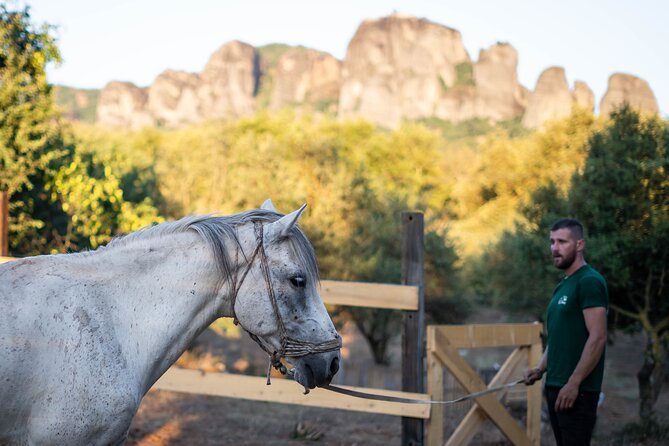
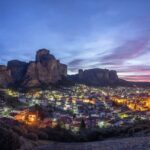
Meteora can feel almost too large to take in at once. The rock pillars rise sharply from the plain, while monasteries cling to heights that seem made for eagles rather than people. A car gets you between major sights quickly, but it can leave you focused on parking, traffic, and the next stop.
A horse changes the pace. You have time to notice the shape of the rocks and the quiet around the trails. You are not covering huge distances, but you are moving through the setting rather than simply stopping in front of it for a photograph.
This tour is especially appealing if you have already seen Meteora’s main monasteries and want a different way to understand the area. It is also a good choice if you want scenery without committing to a full-day ride.
The tour begins at Meteora horse riding in Kastraki, with a 10:00 a.m. start. Kastraki is one of the main bases for visiting Meteora, so check the exact meeting instructions when you book and allow enough time to arrive before mounting.
A few more Meteora tours and experiences worth a look
Starting with the horse and guide in Kastraki
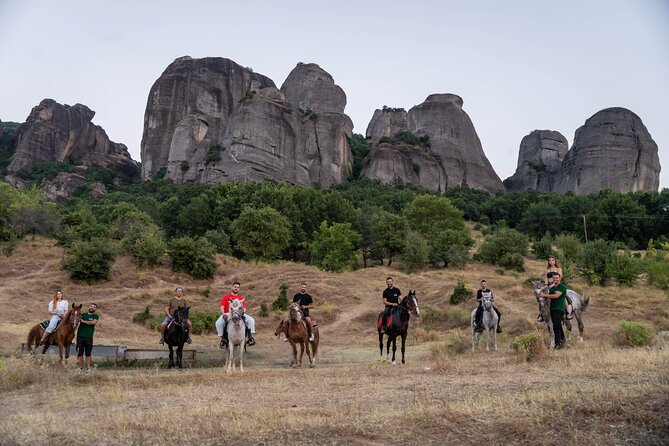
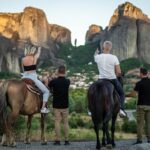
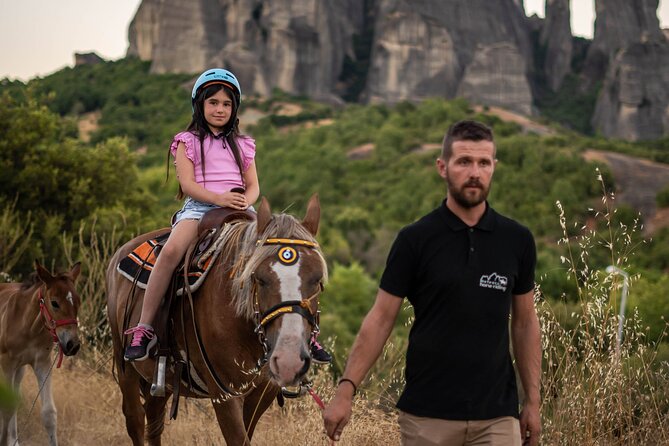
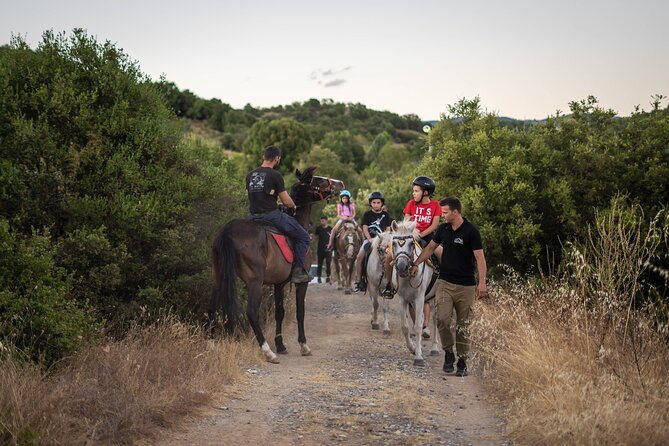
The first part is practical but important. You meet the guide at the stables, receive a helmet, and are introduced to your horse. The horses are described as gentle and well-trained, which matters if you have some riding experience but do not ride regularly.
You should expect a short orientation before setting off, although the supplied details do not specify how long it lasts or whether formal riding instruction is provided. If you are a complete beginner, tell the guide before the ride begins so expectations are clear.
Wear clothes that allow you to move comfortably and shoes suitable for riding. Since the route includes outdoor trails and rocky surroundings, avoid delicate clothing or footwear that you would not want to get dusty. The tour provides a helmet, but bottled water is not included, so bring your own.
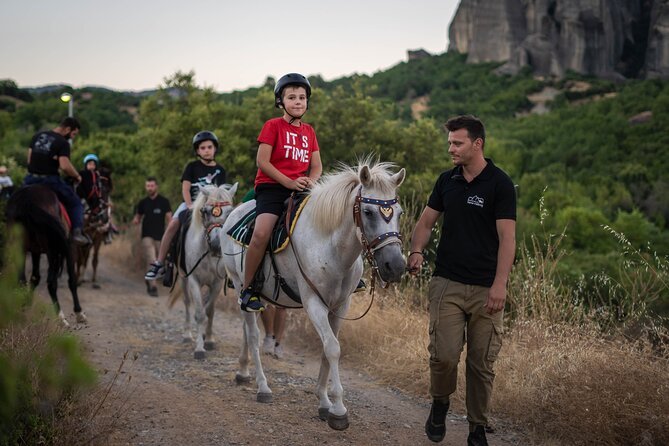
The group has a maximum of six people. That is one of the strongest practical features here. A small group can make it easier for the guide to keep an eye on each rider, answer questions, and stop for photographs without creating a long line of horses.
Following the trails beneath Meteora’s rock pillars
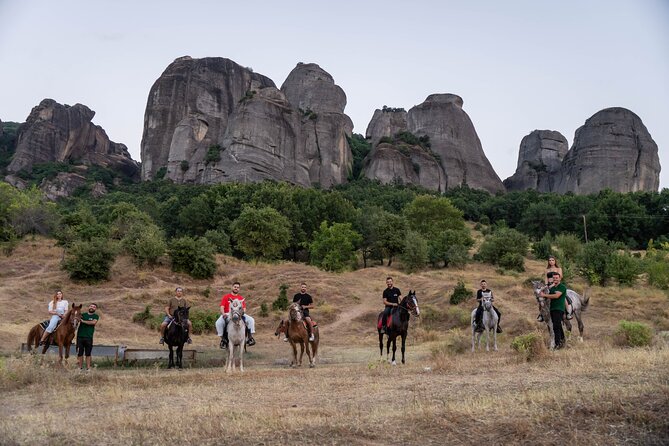
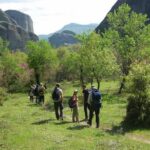
Once you leave the stable, the ride moves along picturesque trails around the towering rock formations. The point is not speed. You are there to let the setting unfold at a steady pace.
The morning timing helps. The light can give the rocks a softer appearance than the harsh midday sun, and the early hours tend to suit a calm ride. The tour description emphasizes the quiet of the morning, so this is a better fit for someone who wants atmosphere and views than for someone seeking a high-energy horseback outing.
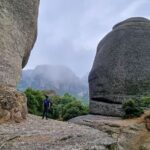
You will have chances to look up at the pillars from below and see how the stone walls shape the area. Meteora is not just a collection of monasteries. Its power comes from the meeting of geology, faith, and human effort. Riding through the spaces between the rocks makes that connection easier to appreciate.
Do not expect a trail ride through untouched wilderness based on the information provided. The attraction is the setting around Meteora and the access to Ypapanti, not a long-distance wilderness route. The total outing lasts about two hours, with the time divided among the monastery, viewpoints, and the statue stop.
Reaching the restored Ypapanti Monastery
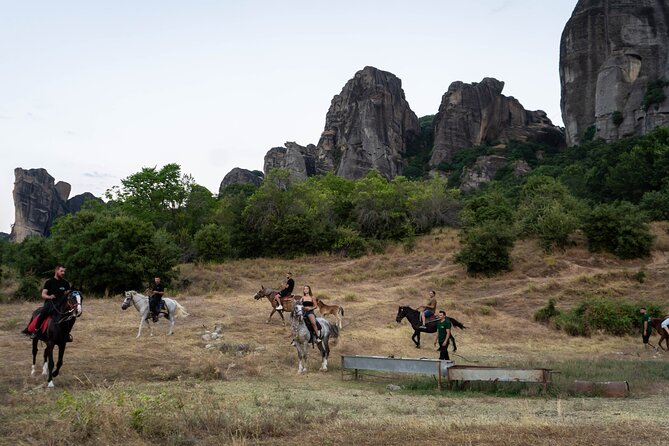
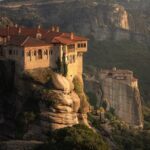
The first named stop is Moni Ypapantis tou Kyriou, commonly called Ypapanti Monastery. You spend about 30 minutes here, and admission is free.
Ypapanti was founded in 1367 by the prior or abbot of the Skete of Dupiani. It was restored in 1765 by Athanasios Vlachavas, a local leader and family member of Thymios Vlachavas. Today the monastery is inactive and rarely visited, but the building has been fully restored.
That combination makes the stop more interesting than a simple photo break. You are seeing a religious site with a long past, but not one functioning as a modern monastery with a regular community. The quiet setting helps explain why a horseback approach feels appropriate. There is less sense of a formal visitor circuit and more of an encounter with a preserved place.
The tour description says your guide will explain the monastery’s history, importance, and daily life within its old walls. Since the site is inactive, do not assume that you will see monks, attend a service, or enter every part of the building. The value is in the setting, the architecture, and the story of how people built and maintained religious sites in these difficult heights.
A practical point: the stop is only about half an hour. That gives you time to look around and listen, but not enough for a long, detailed archaeological visit. If Ypapanti is your main reason for coming, you may want to ask the operator how close the horses can go and what access is available on the day.
Taking in the panoramic viewpoints for one hour
The longest part of the itinerary is an hour of panoramic views from different points around Meteora. This is where the ride earns much of its price.
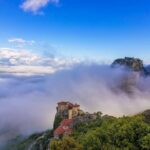
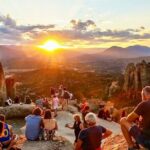
You are not limited to one overlook. The route gives you changing views of the rock pillars, the surrounding countryside, and the monasteries placed high above the valley. From horseback, the viewpoints become part of a moving route rather than isolated stops.
The tour includes no admission charge for the viewpoint section. That does not mean it lacks value. The cost here is tied to the guide, horse, equipment, and access to a route that would be difficult to experience in the same way on foot or by car.
This is also the best time to use the guide for photographs. Two people who took the tour specifically appreciated that the guides captured photos and videos during the ride. That is a real advantage when you want a record of the outing but do not want to risk holding a phone while mounted.
Keep your expectations sensible. The tour lasts two hours, so the viewpoint section will not cover every famous angle in Meteora. You get a selection of scenic points, not a complete survey of the region. If you want to visit several major monasteries inside, this horseback tour should complement a separate monastery visit rather than replace it.
A few more Meteora tours and experiences worth a look
Meeting the story of Thymios Vlachavas
The final named stop is the statue of Thymios Vlachavas, with about 30 minutes allocated to it. The statue adds a human story to a tour otherwise shaped by rocks, horses, and monasteries.
Thymios Vlachavas held a prominent position among the klepht leaders in the 19th century. He helped lead resistance against Ali Pasha, the powerful and semi-independent Ottoman governor of Yanina. In May 1808, Vlachavas and others prepared a large uprising, but the plan was betrayed. Ali Pasha later captured him through a trick, then had him executed and quartered.
This is a grim story, but it gives the area historical weight. The Meteora region was not only a place of religious retreat. It was also part of a wider world of local leadership, conflict, and resistance.
The statue stop may appeal most to you if you enjoy connecting scenery with people and events. If you prefer nonstop riding, 30 minutes at a monument may feel long, especially after the monastery stop. The guide’s explanation will be important here, since the supplied details do not say how much interpretation is included or how the stop is arranged.
What $86.73 buys you
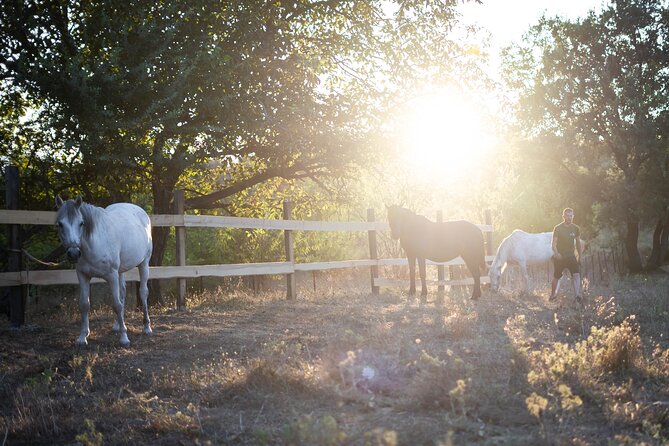
At $86.73 per person, this is not the cheapest way to see Meteora. You are paying more than you would for a simple viewpoint visit, but the comparison is not quite fair. The fee covers a horse, guide, helmet, a small group, and a two-hour route that combines scenery with two historical stops.
I think the price is reasonable if you value the riding itself. The horse is not just transportation between sights. It is the central part of the experience, and the quiet pace changes how you see Meteora.
The value is also stronger for solo visitors or couples who want an organized activity without spending a full day. The guide’s help with photographs adds something practical, especially if you are traveling alone.
The price is less convincing if you mainly want access to the monasteries. Ypapanti is inactive, admission is free, and the panorama stops do not require an entry ticket. In that case, you are paying for the guided horseback format, not for paid monuments.
The tour is commonly reserved about 32 days ahead. That suggests you should not leave it until the last morning of a short Meteora stay, particularly if your schedule is fixed. The maximum group size is six, so available places may be limited.
Who should book this morning ride
I would choose this tour if you want:
- A quiet way to see Meteora beyond the main roads
- A short activity that fits into a larger sightseeing day
- A small group rather than a large coach outing
- A gentle ride with scenic and historical stops
- Help taking photos and videos during the outing
- A visit to a less active and less frequently visited monastery site
You should think twice if you want a long horseback trip, difficult riding, or a full tour of Meteora’s working monasteries. The route is only about two hours, and the schedule includes 30-minute stops at Ypapanti and the Vlachavas statue.
It may also be a poor fit if you dislike horses, feel uncomfortable outdoors, or need a fully detailed accessibility plan. The operator says most people can participate, but the available information does not describe mounting assistance, trail surfaces, or adaptations for specific mobility needs.
The weather matters. If poor weather forces cancellation, you can choose another date or receive a full refund. That is useful protection, but it also means you should keep some flexibility in your Meteora plans.
Timing, cancellation, and useful planning notes
The activity starts at 10:00 a.m. and ends back at the meeting point in Kastraki. There is no listed hotel pickup, so plan to reach the stable on your own.
A mobile ticket is provided, and booking confirmation arrives at the time of booking. You can cancel for a full refund up to 24 hours before the start time. Inside that 24-hour window, the amount paid is not refunded, and changes are not accepted.
The weather rule is worth noting. Since the ride requires good conditions, a cancellation caused by poor weather gives you the choice of another date or a full refund. Cutoff times follow local time in Greece.
Bring water, since it is not supplied. You may also want sun protection, though the tour details do not specify how much shade the route provides. Keep personal items secure and avoid carrying anything awkward while riding.
Should you book the Meteora horseback tour?
Book it if the idea of seeing Meteora at a slow pace, on horseback, appeals to you more than checking off as many monasteries as possible. The best parts are the small group, the gentle horses, the morning quiet, the panoramic route, and the chance to reach restored Ypapanti Monastery in an unusual way.
Skip it if you want a long riding adventure or if your main goal is to enter active monasteries. At two hours, this is a focused scenic outing, not a complete Meteora tour.
For the right visitor, $86.73 buys more than a horse ride. It buys time beneath the rock pillars, a guide-led look at Ypapanti and Thymios Vlachavas, and a memorable change from the usual car-and-viewpoint routine. Bring water, arrive ready for the outdoors, and leave room in your schedule for the weather.
FAQ
Where does the horseback tour begin?
The tour begins at Meteora horse riding in Kastraki, Greece.
What time does the activity start?
The start time is 10:00 a.m.
How long does the horseback tour last?
The tour lasts approximately two hours.
What is the maximum group size?
The activity allows a maximum of six participants.
Is a helmet provided?
Yes. A helmet is included.
Is bottled water included?
No. Bottled water is not included, so you should bring your own.
Does the tour visit Ypapanti Monastery?
Yes. The route includes Moni Ypapantis tou Kyriou, also called Ypapanti Monastery, with about 30 minutes allocated to the stop.
Can I cancel for a full refund?
Yes. You can receive a full refund if you cancel at least 24 hours before the local start time. Cancellations or changes made less than 24 hours before the start are not refunded or accepted.