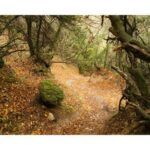
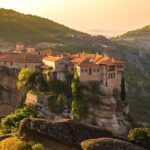
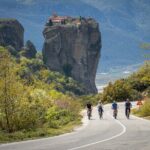
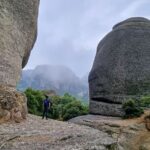
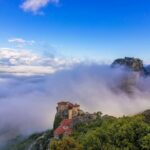
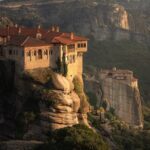
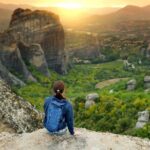
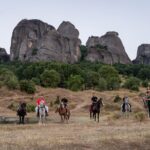
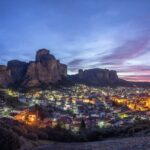
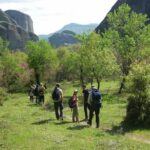
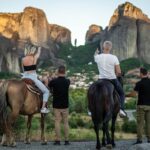
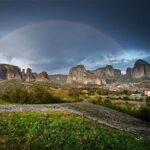
Meteora rocks hit you right in the chest. This is a practical morning Meteora photo tour built for quick immersion: you ride in comfort, you get guide-led stops at major sights, and you pause often for photos. The tour also includes a little extra context so the monasteries aren’t just scenery.
I especially love the pacing. You’re not rushed through the viewpoints, and the guide (including Thanos, in at least one recent group) keeps the flow moving with smart timing and photo stop breaks when you ask. The small group size, capped at 8 people, means it’s easier to move as a cluster and actually hear the explanations.
One thing to consider: the monastery entrance fees aren’t included, and the guide doesn’t go inside with you. So you’ll want a bit of extra cash and a willingness to explore on your own for the interior bits.
In This Review
- Key highlights you’ll feel right away
- Why the morning route works for Meteora photos
- Getting from Kalambaka: quick, comfortable, and easy to manage
- Stop 1: Holy Monastery of Saint Nicholas Anapafsas
- Meteora viewpoints and two monasteries on the local schedule
- Stop 3 in Kastraki: St George the Mandilas in a cliffside cave
- Photo stops that don’t waste your time
- Price and value: what you’re paying for (and what you’re not)
- Logistics that matter in Meteora: timing, group size, and comfort
- Who should book this Meteora morning photo tour
- Should you book this morning Meteora photo tour?
- FAQ
- How long is the Morning Tour to Meteora with Photo Stops?
- What time does the tour start?
- Where does the tour meet?
- Is pickup offered?
- Is the tour in English?
- How much does it cost?
- Is there a group size limit?
- Are monastery entrance fees included?
- Does the guide go inside the monasteries?
- Can I cancel for a full refund?
Key highlights you’ll feel right away
- Small group (max 8): easier photos, easier conversations, less herding.
- VIP mini bus with air-conditioning: comfortable ride from Kalambaka for a 4-hour morning loop.
- Monastery stops with real stories: Saint Nicholas Anapafsas and a schedule-driven second monastery.
- Kastraki + St George the Mandilas: a cave-top setting tied to Greek Orthodox tradition.
- Expert crowd-and-traffic navigation: less stress getting to the right places in time.
- Guided recommendations after the tour: like lunch and halva ideas from Thanos.
Why the morning route works for Meteora photos
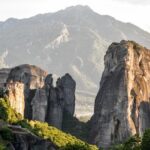
Meteora is all about light, height, and that unreal feeling of rocks balancing in midair. A morning start at 8:20 am helps because you’re out before the day turns into a full-on sightseeing traffic jam. You’ll spend the morning focusing on viewpoints and monastery areas while the air is still fresh and the rocks look crisp.
This tour is also built around photo-friendly stops. Even if you’re not there at sunset, you’ll hit the classic angles where Meteora shines later in the day. The result is you get framing practice and good photos without wasting hours trying to “figure it out” on your own.
The biggest win for me is that you’re not just parked at one spot. You move through different parts of the rock complex, so your photos look like a story instead of one repeating view.
A few more Meteora tours and experiences worth a look
Getting from Kalambaka: quick, comfortable, and easy to manage
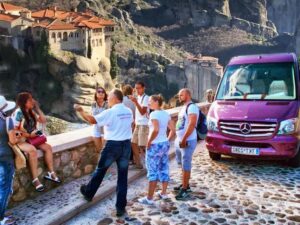
Your tour meets in Kalambaka (back to the meeting point at the end). Pickup is offered, and the ride uses a VIP mini bus with air-conditioning. That matters in Greece, because even a short ride can feel long when you’re standing around waiting for everyone to catch up.
The group is kept small (up to 8), which helps with both comfort and logistics. In a place like Meteora, where roads and parking can get chaotic, a mini bus also makes it simpler to arrive, unload, and move before the crowd surge hits.
You’ll also have a mobile ticket, so you don’t need to hunt for paper on your phone. And since it’s in English, you can actually use the history explanations instead of just nodding at signs.
Stop 1: Holy Monastery of Saint Nicholas Anapafsas
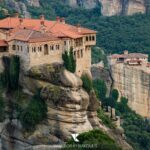
The first stop is at the Holy Monastery of Saint Nicholas Anapafsas. This is one of the most meaningful introductions to Meteora because it connects you to the earliest monastic life—people choosing solitude on vertical rock pillars long before Instagram made it trendy.
You’ll also hear about Saint Antonios, where the first hermits arrived in the Meteora area. That detail changes how you see the complex. You start noticing how the monasteries are not random buildings on giant cliffs; they’re part of a carefully chosen system of living, worship, and survival in a hard landscape.
Plan for about 30 minutes here. That’s plenty of time for the key exterior sights and a good photo loop, but it also means you shouldn’t expect a long, slow interior visit. Since entrance fees to monasteries are excluded, you’ll likely pay about 3 euro per person when you’re ready to go in.
If you’re the type who wants to understand what you’re seeing before you take 50 photos, this first stop delivers.
Meteora viewpoints and two monasteries on the local schedule
Next comes the main Meteora rock area stop, with around 1 hour 40 minutes to soak up the views and get your photo moments. You’ll be taken to multiple spots, with pauses timed for images of the Meteora rocks.
This is also where you’ll visit two monasteries, depending on the local monastery time schedule. That’s a big deal because monasteries can have hours that vary. A schedule-aware tour keeps you from planning your whole day around a place that ends up closed when you arrive.
The guide also shares how monks lived and what daily life meant in this setting. Even if you’ve read a line or two about Meteora, a live explanation gives you the mental map: why these places exist where they do, how the isolation shaped spiritual routines, and what you should look for while you’re there.
A practical note: the guide is not for inside the monasteries. So your experience here is split into two parts. You’ll get the orientation and context outside, then you’ll enter (and explore on your own) during the interior time. That’s not bad—it just means you should bring your curiosity and be ready to read what’s posted on-site.
Stop 3 in Kastraki: St George the Mandilas in a cliffside cave
The last major stop is in Kastraki, at St George the Mandilas. This one has a story that goes beyond architecture. Saint George is described as a Greek who became an officer in the Roman army, and he’s venerated as a Christian martyr. You’ll also hear family background details tied to places in Greek tradition.
Then comes the part that makes this stop feel uniquely Meteora. The customs honoring Saint George include colourful head scarfs, climbing, and dancing right on the cliffs edge—happening all at the same time during the celebration. The setting described here is an old ruined monastery dedicated to Saint George, built inside a cave roughly 40 meters above ground on the north side of a Meteora rock.
That physical detail matters. When you’re standing near it, you can feel how people could turn a cliffside cave into a stage, a place of worship, and a landmark for community memory. For photography, it also means you’re getting a different visual angle than the big “main monasteries” look.
Expect about 40 minutes at this stop. It’s long enough to understand the story, take photos, and still keep the morning moving at a good pace.
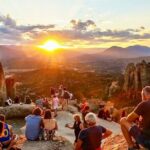

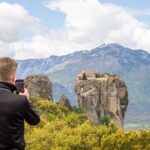
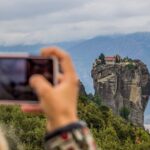
Photo stops that don’t waste your time
I like tours that treat photos like an actual plan, not an afterthought. Here, photo breaks are built in when you request them, and the guide helps with the hard part: timing and crowd flow.
Meteora can feel like a giant photo session with rules you didn’t know you were supposed to follow. The guide’s job is to help you get your bearings fast—where to stand, when to move, and how to avoid dead angles where rocks look flat instead of dramatic.
If you want the best results with minimal stress, do this:
- Wear shoes you trust on uneven ground around viewpoint areas.
- Be ready to turn your camera quickly when you get a new viewpoint; the light can change fast.
- Ask for a photo moment, then move on. Staying at one spot too long makes you feel rushed later at the interior visits.
One more helpful detail: in one recent tour with Thanos, the guide navigated crowds and traffic with ease. That translates to less time stuck, more time actually looking at the rocks and monasteries.
Price and value: what you’re paying for (and what you’re not)
The tour price is $36.01 per person, about 4 hours total. For that money, you’re getting the guide, VIP mini bus transportation with air-conditioning, sightseeing stops, and culture explanations.
What’s not included is the monastery entrance fee—listed as 3 euro per person—and the guide not going inside with you. On your budget, that means you should plan for an extra small cash payment when you enter monasteries.
Is it worth it? In my view, yes if you want:
- A structured morning that hits the big sights without long driving stress.
- Guidance on what matters at each stop (especially the stories around Saint Antonios and Saint George).
- Photo time that’s supported by smart movement and timing.
If you already have your own rental car, you’re a pro at monastery hours, and you’re fine with figuring out the flow alone, you could go independently. But if you have limited time in Kalambaka, this format is a good way to make every hour count.
Logistics that matter in Meteora: timing, group size, and comfort
This tour runs in a tight time window, so it rewards preparation. The duration is about 4 hours, and it starts early at 8:20 am. That makes it ideal if you’re only in the area for a short stay and want Meteora checked off without sacrificing your whole day.
The group size limit of 8 travelers is a quiet quality upgrade. Smaller groups tend to move faster with fewer arguments about where everyone should meet. You’re also more likely to hear the guide clearly, even when you’re standing close to viewpoints.
Also keep in mind: the tour is offered in English, and service animals are allowed. It’s listed as suitable for most travelers.
And since it’s near public transportation, you’re not totally stuck if you’re coming from elsewhere. Still, the pickup offering is a nice convenience if you want to reduce the “where do I park” headache.
Who should book this Meteora morning photo tour
This tour is a great fit if you:
- Have limited time in Kalambaka and want a compact, high-impact morning.
- Want help understanding what you’re seeing at the monasteries, not just collecting pictures.
- Prefer a small-group experience rather than a large bus crowd.
- Like stopping often for photos without turning the day into a scavenger hunt.
It’s also good if you appreciate guidance around crowds and traffic. Meteora doesn’t just look hard; it can be hard to navigate, especially during peak visitor times.
If you’re the type who needs long interior monastery time with slow contemplation, this may feel short. But as a “first taste” or a smart add-on to other Meteora plans, it’s strong.
Should you book this morning Meteora photo tour?
If your goal is to see Meteora with less hassle and more meaning in a morning, I’d book it. The VIP mini bus, the small group size, and the fact that the guide explains what you’re looking at are the main reasons this works.
Add to that the monastery sequence with the first stop at Saint Nicholas Anapafsas, plus a second monastery picked by what’s open, and a final story-heavy stop at St George the Mandilas in Kastraki. That mix gives you variety: early monastic context, major rock viewpoints, then a cliffside cave setting with local tradition.
I’d skip it only if you’re not interested in paying the 3 euro monastery entrance fee and doing some interior exploring on your own, or if you need much more time inside each monastery to feel satisfied.
FAQ
How long is the Morning Tour to Meteora with Photo Stops?
It runs about 4 hours (approx.).
What time does the tour start?
The start time is 8:20 am.
Where does the tour meet?
It starts in Kalambaka, Greece (Kalambaka 422 00). It ends back at the same meeting point.
Is pickup offered?
Yes, pickup is offered.
Is the tour in English?
Yes, it’s offered in English.
How much does it cost?
The price is $36.01 per person.
Is there a group size limit?
Yes. The maximum group size is 8 travelers.
Are monastery entrance fees included?
No. Entrance fees to the monasteries are excluded, listed as 3 euro per person.
Does the guide go inside the monasteries?
The guide is not for inside the monasteries. You’ll have guidance for sightseeing and context, but you explore the interiors on your own.
Can I cancel for a full refund?
Yes. Free cancellation is available, and you can cancel up to 24 hours in advance for a full refund.