REVIEW · RHODES
Rhodes: Kamiros, Embona, Mt. Profitis Ilias & Kallithea Tour
Book on GetYourGuide →Operated by Kariba Travel · Bookable on GetYourGuide
Rhodes, packed into eight guided hours, mixes ancient ruins with tastings. I really like Ancient Kamiros for its layered, walkable ruins, and I love the Embonas wine and olive oil tasting stop for flavor and local flavor. The one thing to plan around: the bus can feel crammed if it’s full, so legroom isn’t your friend.
This tour is a smart way to learn the island without renting a car. You get hotel pickup and drop-off, a live English guide, and a route that swings from the northwest coast over to the mountains and back toward the sea.
Wear good shoes and bring swimwear if you want it. Kallithea Springs is a highlight, but the water can be cool depending on the season, so don’t assume you’ll want to swim the whole time.
In This Review
- Key highlights worth getting excited about
- The real value: a car-free Rhodes best-of route for $53
- Ancient Kamiros: three levels, an Acropolis, and a walk you’ll remember
- Kritinia Castle: Venetian fort vibes with big Aegean views
- Embona wine and olive oil tasting: where the stop becomes the day’s mood shift
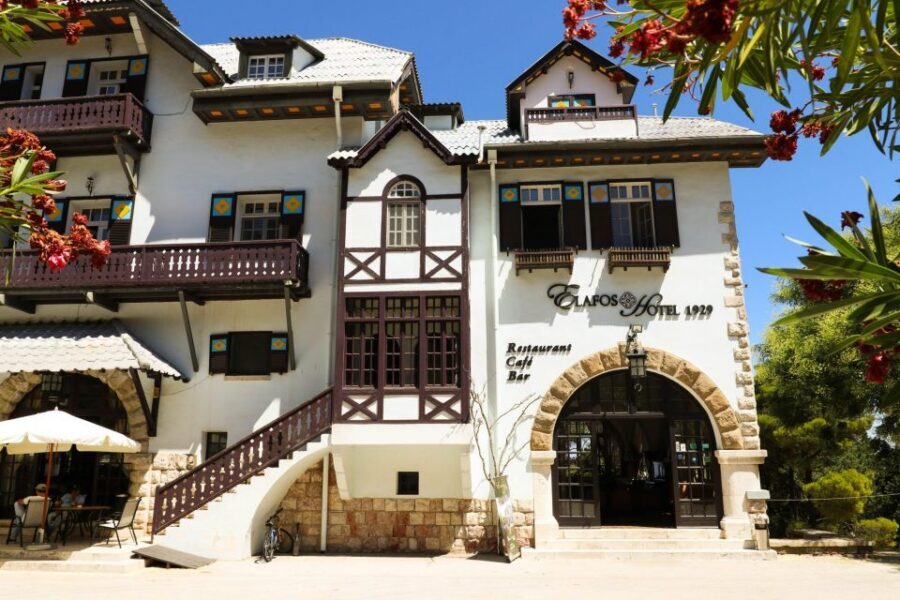
- Mt. Profitis Ilias and the 1929 Italian hotel story in the forest
- Byzantine frescoes at Agios Nikolaos Fountoukli: small stop, strong impression
- Kallithea Springs: mosaics, sea access, and whether swimming works for you
- Getting to all these places: the bus ride itself is part of the point
- Price and logistics: what’s included, what isn’t, and how to budget
- Who this tour is best for (and who should think twice)
- Should you book this Rhodes West Coast and inland day tour?
- FAQ
- How long is the Rhodes: Kamiros, Embona, Mt. Profitis Ilias & Kallithea Tour?
- Is hotel pickup and drop-off included?
- Are entrance fees included in the price?
- What entrance fees should I budget for?
- Is lunch included?
- Will I have time to swim at Kallithea Springs?
- What language is the tour guide?
- Is this tour suitable for wheelchair users?
- What should I bring?
Key highlights worth getting excited about
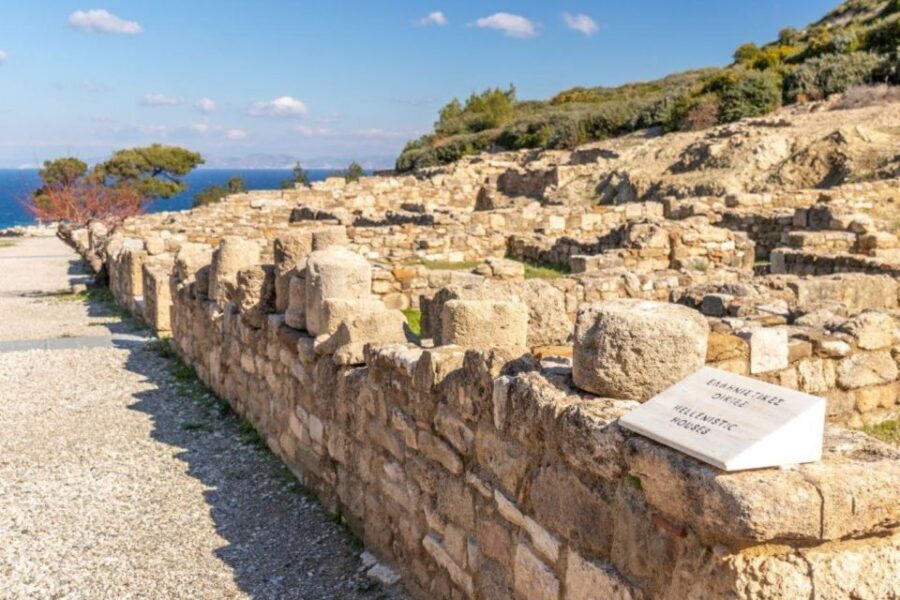
- Ancient Kamiros on three levels: a guided walk plus time to wander and take in the Acropolis area.
- Empona’s historic winery tasting: wine, olive oil, ouzo, and local treats in a real production setting.
- Kritinia Castle views and wall art: Venetian-era structure, big viewpoints, and a hidden chapel with 16th-century fresco-style wall paintings.
- Profitis Ilias in Italian-era forest: the 1929 hotel world at Elafos and Elafina, with pine and cypress around you.
- Kallithea Springs mosaics and a swim option: a restored complex by the sea with an entrance fee of 3 euros.
- Mountains that feel far from the resort strip: guides often point out plants and explain what you’re seeing while you travel.
The real value: a car-free Rhodes best-of route for $53
At $53 per person (for an 8-hour, guided day), the value is mostly in the logistics and pacing of the highlights. You’re paying for transportation, hotel pickup/drop-off, and a guide—not for entrance tickets or meals. That matters because Rhodes can sprawl, and driving yourself means navigating routes you might not find on your own, plus dealing with parking and timing.
This itinerary is built for people who want variety in one day: ancient Greek remains, Venetian fortifications, village life in Embona, and then the sea-side restoration work at Kallithea Springs. The bus route also gives you that inland perspective you miss when you stay strictly on the coast.
The trade-off is that it’s a packed day. It’s not a “slow travel” plan. If you’re the kind of traveler who likes to linger, you’ll feel the pressure at the stops where time is set. And yes, if the bus is full, seats and legroom can feel tight.
You can also read our reviews of more tours and experiences in Rhodes.
Ancient Kamiros: three levels, an Acropolis, and a walk you’ll remember
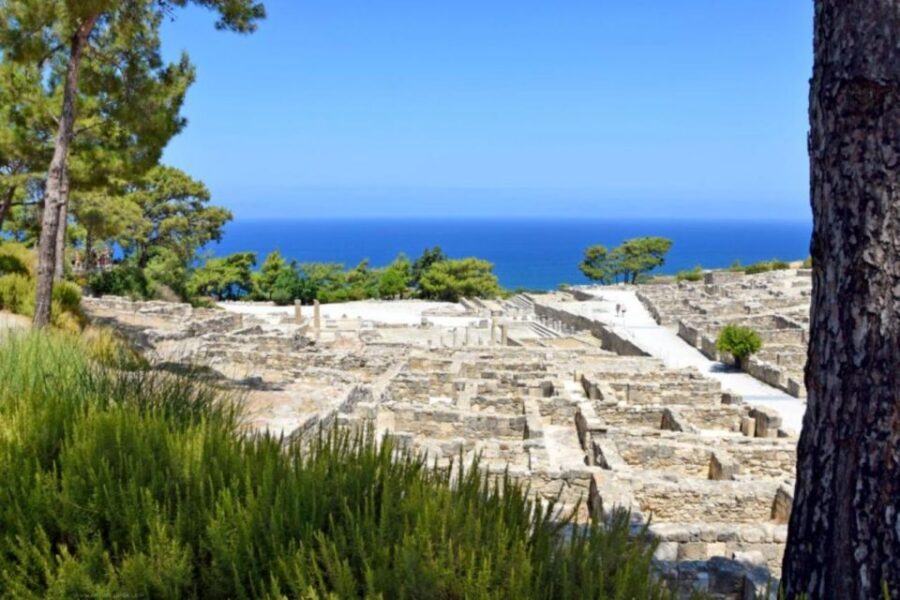
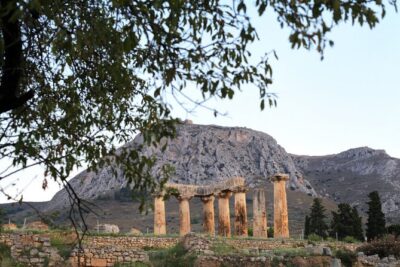
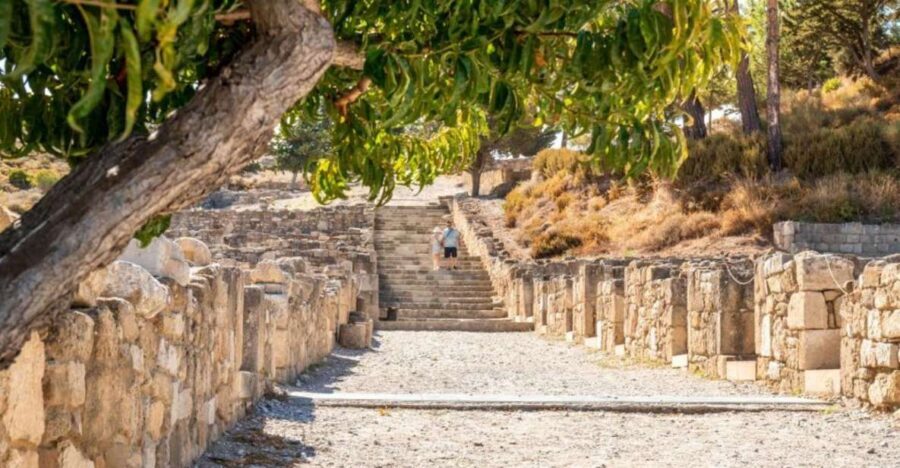
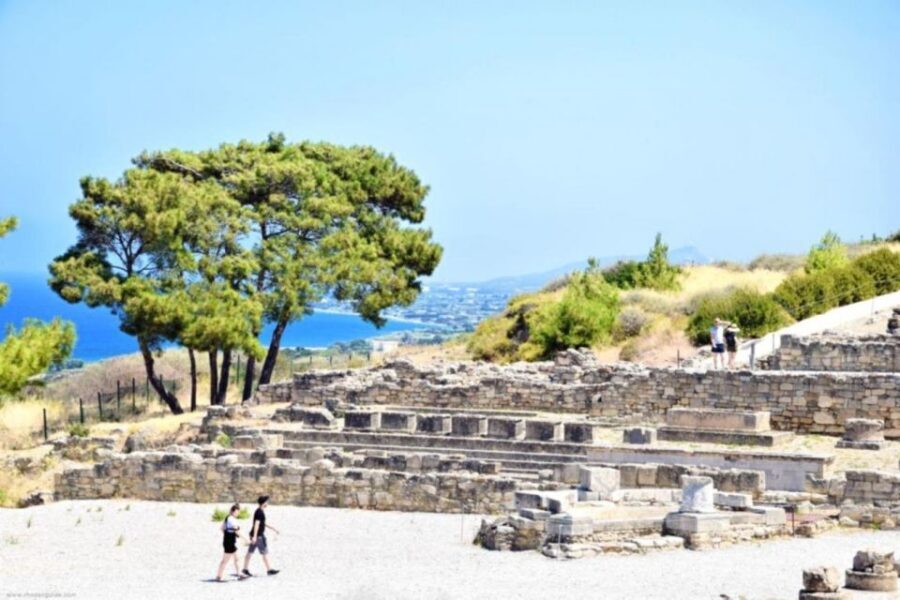
Ancient Kamiros is one of those places that makes ruins feel readable. You’re not just looking at scattered stones—you’re moving through a city that’s built on three levels, with an Acropolis area above.
On the guided part of the visit, you’ll spend time around the temple complex dedicated to Athena. That detail helps you see what you’re looking at instead of treating everything like a random pile of rocks. After the guide, you get free time to roam the grid-like streets and residential blocks below the Acropolis.
Why this stop works: Kamiros gives you both scale and structure. You can understand where people lived, where power and religion likely centered, and how the site’s layout changes as you move up and down. It’s also a great “photo + slow walking” stop as long as you’re comfortable with uneven ground and stairs.
Practical heads-up: there’s an entrance fee for Kamiros (listed at 6 euros). Bring cash, and wear shoes with grip because some areas aren’t smooth.
Kritinia Castle: Venetian fort vibes with big Aegean views
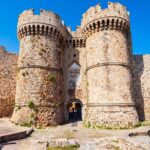
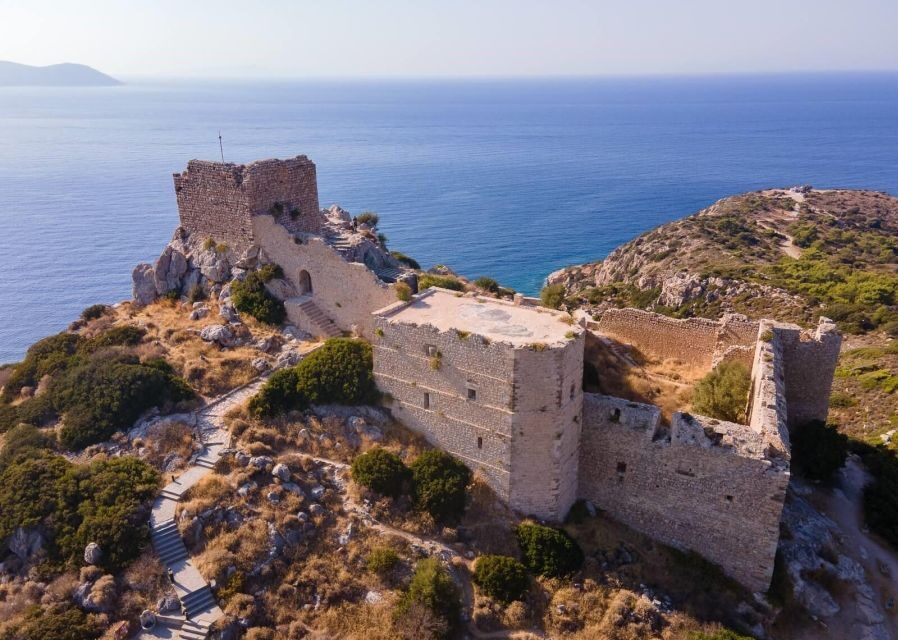
Kritinia Castle sits high above the village of Kritinia, and the payoff is obvious the moment you look out. The fortress is a 16th-century Venetian-style stronghold, perched about 131 meters above the area below, with panoramic views toward the Aegean and nearby islands.
The experience here isn’t just sightseeing from a single point. You get a guided tour plus time to wander and take in the medieval remnants. What I’d personally prioritize are the surviving outer walls and the symbolic details that survived through centuries—coats of arms from the Grand Masters are mentioned as part of what you can spot.
Then there’s the surprise element: a hidden chapel with wall paintings dating to the 16th century. Even if you’re not a devoted art historian, seeing preserved interior wall decoration in a fortress setting hits differently.
Timing note: some visitors have felt the castle stop can feel short compared to what you might want for climbing slowly. If you’re planning to really scramble for angles, consider that you may need to move efficiently.
Embona wine and olive oil tasting: where the stop becomes the day’s mood shift
Empona is one of those villages where the day suddenly feels warmer and more human. The tasting stop is at one of Rhodes’ oldest wineries, and the point isn’t fancy performance—it’s product, place, and taste.
You’ll sample wine, olive oil, ouzo, and more. It’s paired with time to stroll Embona, browse souvenir shops, and stop for lunch at a nearby tavern on your own.
What makes this stop especially good value: it breaks up the history-and-stairs rhythm. You’re learning while you eat and drink. And unlike a lot of “tourist tasting” setups, the tasting is part of a village rhythm—so you get to look around, not just sit and taste.
If you’re the kind of person who likes to understand flavor, ask questions during the tasting. Guides often connect what you’re drinking to local traditions, and it can turn a 45–75 minute stop into an experience you can talk about afterward.
Mt. Profitis Ilias and the 1929 Italian hotel story in the forest
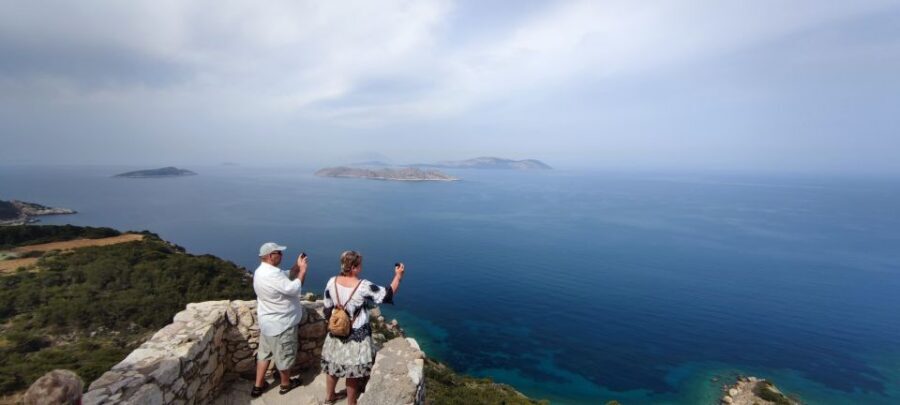
From vine-and-olive country, the tour rises into pine, cedar, and cypress. Mt. Profitis Ilias is quieter in feel than the coast—more shade, more winding roads, and a forest mood.
The big focal point is the summit area and the small summer resort of Elafos and Elafina, created by Italians in 1929. That detail matters because you’re not just walking through trees—you’re walking through a specific chapter of Rhodes tourism history. The Italian-era hotel setting gives the forest stop a human timeline, not just a view.
You also get scenic views on the way, so even if you don’t spend forever at the summit, you’ll still capture that “Rhodes isn’t just beaches” moment from the road and viewpoints.
Realistic expectation: this isn’t a hike tour. It’s a viewpoint and short exploration day. If you want nature on foot, plan to treat the stop as scenic and photo-focused rather than long trails.
Byzantine frescoes at Agios Nikolaos Fountoukli: small stop, strong impression
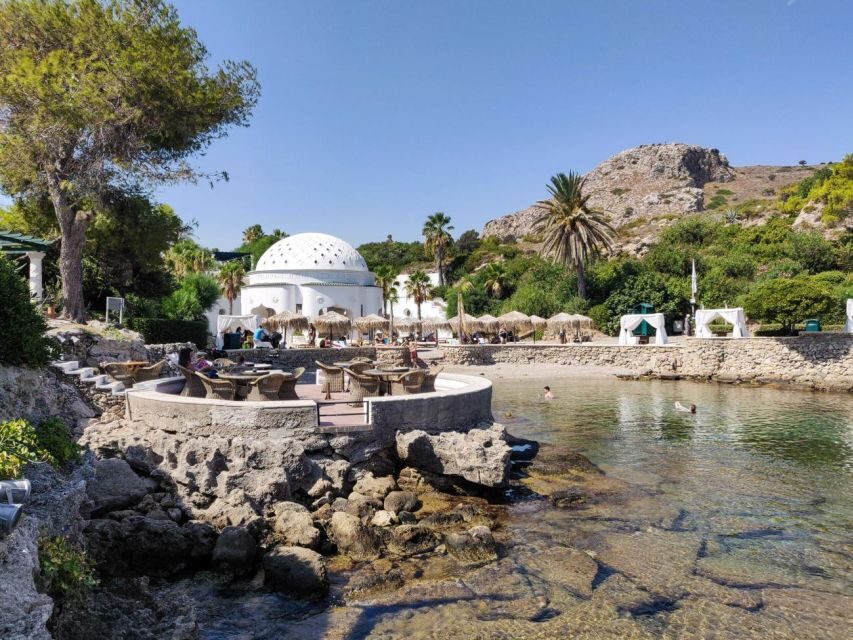
After the Italian forest story, you head toward Fountouklis area for Agios Nikolaos (Saint Nikolaos) church. This is where the day gets more intimate again—less wide view, more art and detail.
You’ll have a guided visit and sightseeing time, with attention on the church’s frescoes. Frescoes in smaller churches can feel more personal than the big-ticket museum version. You’re looking at painted history in a living setting, and it helps close the loop between ancient Rhodes and later Byzantine influence.
Time here is shorter than the bigger anchors like Kamiros or the castle. Still, it’s the kind of stop that sticks because it’s unusual on a standard resort day.
Kallithea Springs: mosaics, sea access, and whether swimming works for you
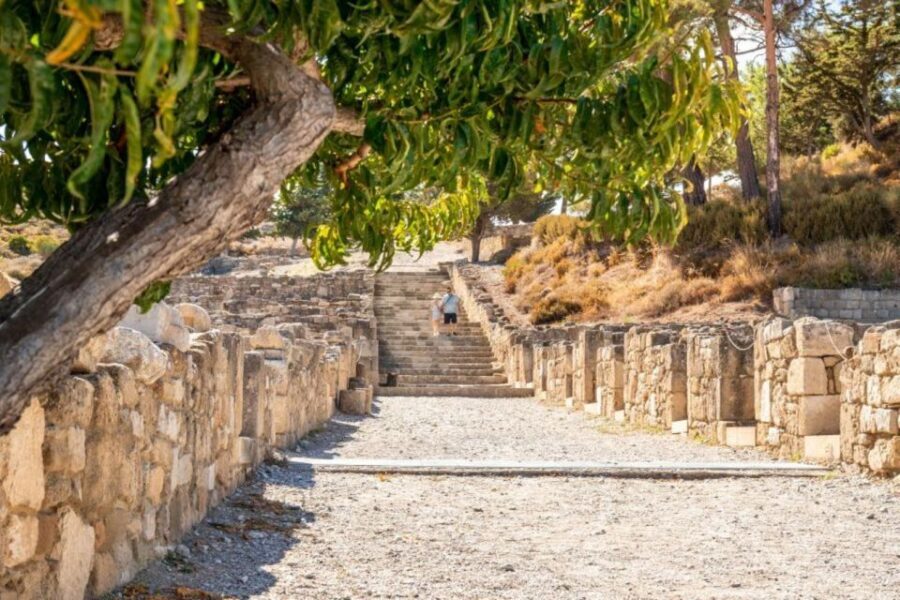
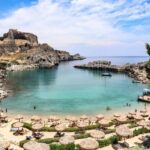
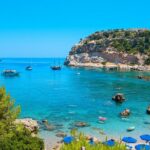
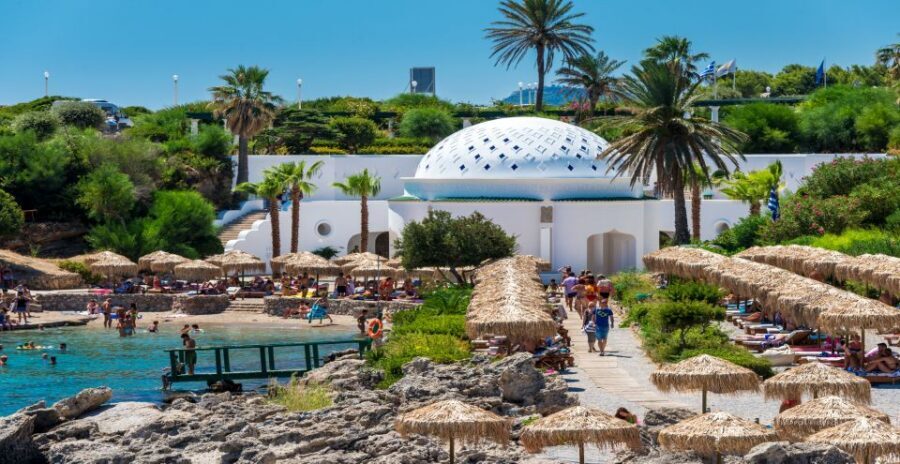
Kallithea Springs is the most “sea beside a restored site” moment of the tour. You’ll visit the complex, get time for sightseeing, and there’s an option to swim in the coves. The entrance fee is 3 euros.
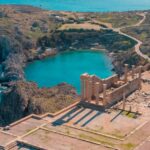
A key part of why this is popular: it’s presented as a carefully restored structure, with unique mosaics and monumental architecture that makes you feel like you’re stepping into another era near the water.
What to expect in real life: your season matters. In cooler months, swimming may be tempting only briefly. Some people found the water too cold and focused more on the restored setting and views instead. That’s not a failure of the tour—just a reminder to pack accordingly.
Also, it’s one of the stops where you might want to plan your time well. People have pointed out that the stop at the very end of the day can feel less useful if you’re tired and just want to head home. If you still want the swim, arrive with a towel and a quick plan for changing.
Getting to all these places: the bus ride itself is part of the point
This tour is designed around moving efficiently across Rhodes. The route includes mountain roads and inland scenery, and that’s a highlight even between stops.
A pattern from the better experiences: the guide often adds context while you travel—explaining what you’re seeing in terms of plants and local life. Some guides also bring small plant cuttings or dried herbs for you to smell and recognize, which turns the bus ride from dead time into an “on the way” lesson.
The downside: when the bus is full, seating can feel tight. Legroom limitations can show up most for passengers toward the back. If you’re tall or hate cramped seats, consider asking where you’ll sit during pickup or aim for earlier boarding if possible.
Price and logistics: what’s included, what isn’t, and how to budget
Here’s the simple math behind the price:
- What’s included: hotel pickup and drop-off, guide, and bus transportation.
- Not included: entrance fees and food/drinks.
Entrance fees mentioned in the tour info:
- Ancient Kamiros: 6 euros
- Kallithea Springs: 3 euros
In other words, your ticket cost covers the heavy lifting of getting you to multiple major sites. You’re mostly paying extras for tickets at two stops, plus lunch and drinks on your own.
For budgeting, bring cash for entrances and snacks. The tour also calls for things like a hat, sunglasses, and swimwear, which is practical because you’ll have outdoor time at several points.
Who this tour is best for (and who should think twice)
This is a great fit if:
- You want a car-free day that hits multiple icons across Rhodes.
- You like guided context more than solo wandering.
- You’d enjoy a mix of ancient ruins, medieval viewpoints, a winery stop, and a sea-side restored complex.
It may be less ideal if:
- You hate tight schedules and want lots of lingering time at each stop.
- You’re sensitive to cramped seating on a full bus.
- You need wheelchair access (this tour is not suitable for wheelchair users).
If you’re traveling with kids or multigenerational group members, plan around walking steps and uneven surfaces at older sites.
Should you book this Rhodes West Coast and inland day tour?
Book it if you want one strong day that combines history, countryside roads, and a real tasting stop without renting a car. The value is in the coverage: Ancient Kamiros plus Kritinia Castle plus Embona plus Profitis Ilias plus Kallithea Springs is a lot to fit into 8 hours, and the guided explanations can make the time feel worthwhile rather than rushed.
Skip it or reconsider if you’re mostly after one place and want a slower pace. Also, if you know you’ll be uncomfortable in tight seating, you’ll likely feel that during the driving portions.
If you want Rhodes in a single “best-of” day, this one delivers.
FAQ
How long is the Rhodes: Kamiros, Embona, Mt. Profitis Ilias & Kallithea Tour?
It lasts 8 hours.
Is hotel pickup and drop-off included?
Yes. Pickup and drop-off are included near your hotel.
Are entrance fees included in the price?
No. Entrance fees are not included.
What entrance fees should I budget for?
The tour information lists Ancient Kamiros at 6 euros and Kallithea Springs at 3 euros per person.
Is lunch included?
No. Food and drinks aren’t included, so you’ll use free time at stops for meals.
Will I have time to swim at Kallithea Springs?
There is time for swimming at Kallithea Springs, but water temperatures can make it less enjoyable in cooler seasons.
What language is the tour guide?
The live guide is English.
Is this tour suitable for wheelchair users?
No, it’s not suitable for wheelchair users.
What should I bring?
Comfortable shoes, sunglasses, a sun hat, swimwear, a towel, and cash are recommended, plus passport or ID.