REVIEW · ATHENS
Semi-Private Balkans Tour; From Athens to Sarajevo or Belgrade
Book on Viator →Operated by Choose Balkans · Bookable on Viator
Seven countries in 14 days is a bold plan, but this tour makes it workable by handling the roads, hotels, border crossings, and sightseeing for you. You move from Greek antiquity to Ottoman towns, communist-era bunkers, mountain monasteries, Adriatic cities, and Sarajevo’s layered past without having to rebuild your itinerary every morning.
I like the small maximum of 10 people, which should make a long road trip more personal and easier to manage. I also like the mix of famous places such as Delphi, Meteora, Ohrid, Kotor, Mostar, and Sarajevo with less obvious stops such as Skenduli House, Drilon National Park, Rahovec’s wine country, and Mrizi i Zanave farm. The main drawback is the pace: several days involve long drives and short visits, so you will see a lot but rarely settle into one place for long.
In This Review
- Key points to know before booking
- Why this route works for a first look at the Balkans
- Delphi and Meteora: a dramatic first day in Greece
- Ioannina and Gjirokaster bring Ottoman Greece and Albania together
- Berat offers Albania at its most photogenic
- Lake Ohrid combines water, monasteries, and faith
- Tirana shows the everyday side of Albania
- Kruja and Prizren reveal medieval trade routes
- Gjakova, Decan, and Rahovec add depth to Kosovo
- A farm lunch stop makes northern Albania feel personal
- Montenegro delivers the coast, from Sveti Stefan to Kotor
- Mostar and Sarajevo close the trip with memory and meaning
- What the $5,142.79 price covers
- Who should book this Balkan road trip
- FAQ
- How long is the tour?
- Which countries does the tour visit?
- What is included in the price?
- Are meals included?
- How many people can join the tour?
- What room occupancy is used for the listed price?
- Can I finish in Sarajevo or Belgrade?
- Can I cancel after booking?
- Should you book it?
Key points to know before booking
- Seven countries in one trip: Greece, North Macedonia, Kosovo, Albania, Montenegro, Bosnia and Herzegovina, and Serbia are covered.
- A group capped at 10: The semi-private format gives you more room for questions and small changes than a large coach tour.
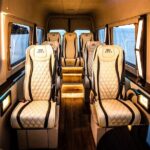
- Private road transport: Petrol, road taxes, international car insurance, and border travel are included.
- Breakfast and 3-star hotels: Thirteen breakfasts and overnight stays are covered, based on double, twin, triple, or quadruple occupancy.
- Strong cultural range: Ancient Greek sanctuaries, Orthodox monasteries, Ottoman bazaars, communist museums, vineyards, and war history all appear.
- Two possible endings: You can finish with airport transfer in Sarajevo or hotel drop-off in Belgrade, depending on your preference.
Why this route works for a first look at the Balkans
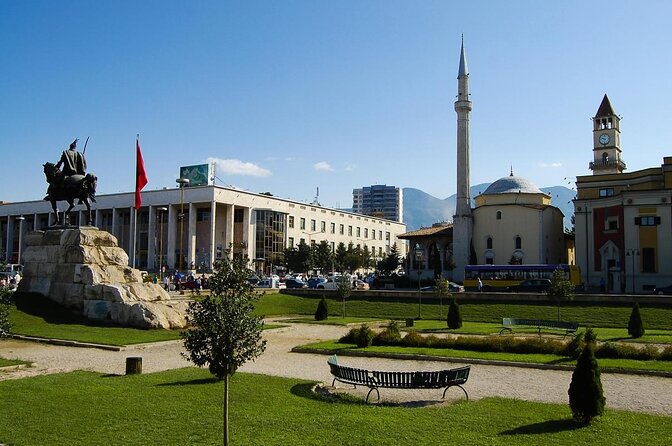
The Balkans are not one single travel experience. Greece brings ancient temples and Orthodox monasteries. Albania adds Ottoman stone towns and a close look at life under communism. Kosovo brings lively bazaars and contested heritage. Montenegro gives you the Adriatic coast, while Bosnia and Herzegovina closes the trip with Mostar and Sarajevo.
That range is the real strength of the route. You are not spending two weeks seeing variations of the same old town. One day you may be looking at a fourth-century archaeological site, and the next you may be eating qofte in a market or learning how a Cold War bunker became a museum.
The tour begins at 9:00 a.m. with hotel pickup in Athens. Athens itself is not part of the 14-day route, so plan to arrive early enough to explore the capital on your own before the road trip starts.
You can also read our reviews of more private tours in Athens

Delphi and Meteora: a dramatic first day in Greece
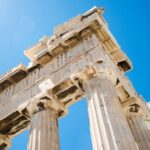
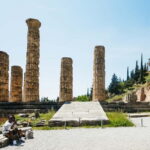
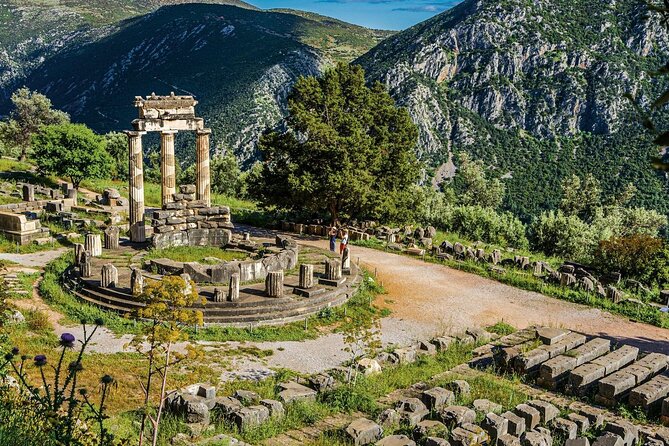
Your first day covers two of Greece’s most memorable sights. Delphi sits on the slopes of Mount Parnassus and was the ancient religious center associated with Apollo. You will see the Temple of Apollo, the Castallian Fountain, the Treasury of the Athenians, the theater, the stadium, and the museum’s famous Charioteer statue.
The scheduled Delphi visit is about one hour. That is enough for a guided introduction and the major highlights, but not enough for a slow archaeological study. If ancient sites are your main interest, you may wish the stop were longer.
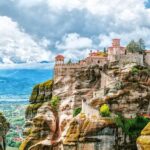
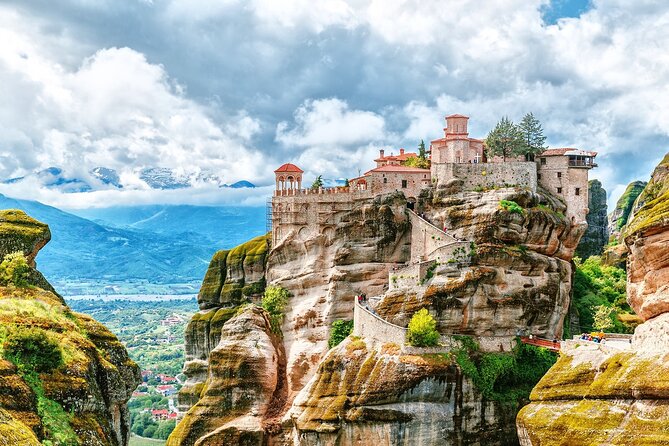
The road then continues to Meteora, where monasteries perch on towering rock formations. The planned visit is about two hours, with sunset as a major part of the experience. This is an excellent opening to the trip because the setting changes quickly from classical Greece to a more remote world of cliffs, monks, and Orthodox faith.
The first day is also one of the longest and most demanding. You get two major sights, but the price is limited time at each and plenty of time on the road.
Ioannina and Gjirokaster bring Ottoman Greece and Albania together
Day two takes you to Ioannina, a city shaped by Byzantine and Ottoman rule. You will walk through the old town, see the Byzantine-era castle, and have free time for a café or local meal. The two-hour stop gives you enough room to wander rather than simply take a photograph and leave.
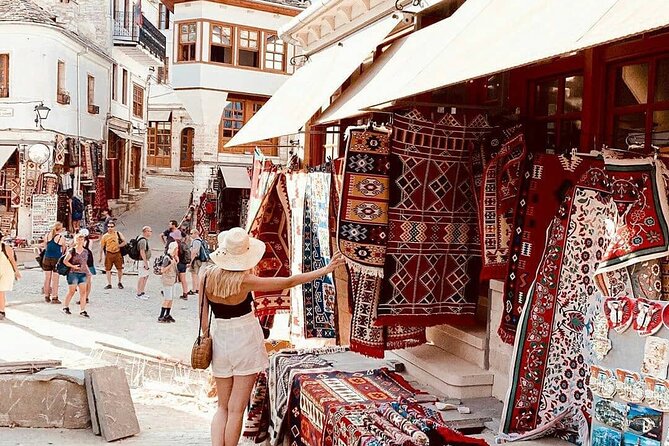
The afternoon drive continues to Gjirokaster in southern Albania, known for its slate-roofed stone houses and steep streets. Gjirokaster feels fortified because many of its traditional homes were built like small defensive structures.
The following morning is devoted to Gjirokaster itself. You will see the castle, pass through the medieval bazaar, and visit Skenduli House, one of the best-preserved traditional homes in town. The house visit is especially useful because it shows how people lived inside these large stone residences, rather than leaving you with only broad comments about architecture.
The schedule gives the town one hour, the bazaar two hours, and Skenduli House one hour. Wear shoes with a good grip. The old streets are narrow, sloped, and paved with stone, and shopping can easily use up your free time.
Berat offers Albania at its most photogenic
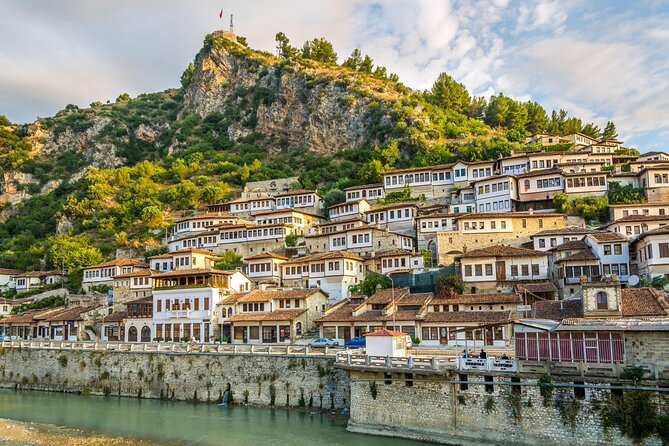
Berat is known as the town of 1,001 windows, a nickname earned from the tightly packed houses climbing the hillsides. The old town and castle area are protected by UNESCO, and people still live inside the castle walls.
You will visit Berat Castle and the National Iconographic Museum Onufri. The museum is dedicated to Onufri, a church painter associated with a distinctive red pigment. The collection adds meaning to the churches and religious buildings you see elsewhere in the Balkans.
The Gorica neighborhood and its old stone bridge complete the visit. Berat is one of the places where the schedule may leave you wanting more time. The listed stops total only a few hours, and the town rewards slow walking, quiet viewpoints, and time at a café. Still, the route gives you the essential castle, museum, bridge, and hillside streets.
Lake Ohrid combines water, monasteries, and faith
Day five includes a peaceful change of pace at Drilon National Park. Springs feed a small lake surrounded by greenery and willow trees. You then stop in Tushemisht before crossing into North Macedonia and reaching the Monastery of Saint Naum.
Saint Naum sits near the springs of the Crni Drim River, where clear water reflects the surrounding mountains. The monastery is part of Galicica National Park and remains a protected religious site. The one-hour visit is brief, but the setting is one of the route’s most memorable.
The next day is focused on Ohrid, a UNESCO-listed city and lake area with ancient roots and a major Orthodox tradition. You will see viewpoints near St. John’s Church, visit St. Nicholas Church, and see the Halveti Hayati Tekke, an Islamic religious site.
Ohrid is one of the itinerary’s cultural crossroads. Orthodox churches, Ottoman buildings, lake views, and old streets all sit close together. The three-hour visit is more generous than several other stops, though you should not expect to cover every church or fully explore the lakeshore.

Tirana shows the everyday side of Albania
Tirana is presented through food, markets, coffee, and recent political history. A local companion takes you to Tregu Çam for byrek, a pastry filled with cheese, meat, or spinach. You then continue through markets and neighborhoods before trying Albanian coffee and a traditional dessert.
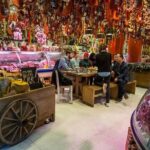
At Pazari i Ri, you can browse stalls and try qofte with bread. Vegetarians are offered bread with gjize, a local cottage cheese. There is also a taste of Albanian raki. Lunch and drinks are not generally included in the tour price, but this food-focused day includes the listed tastings and gives you a practical sense of how meals fit into local life.
Bunk’Art 2 is the historical anchor. The former nuclear bunker was built to protect Enver Hoxha and senior communist officials and later became a museum about the communist army and daily life under the regime. It is a useful stop because Albania’s recent past can otherwise be easy to miss among castles and old bazaars.
The Tirana day is structured around short visits, so it feels more like a guided introduction than a full city tour. If you want museums, nightlife, or independent shopping, you will need extra time before or after the organized route.
Kruja and Prizren reveal medieval trade routes
Kruja sits on rocky high ground and is closely linked with Albanian resistance to Ottoman expansion. Its old bazaar is one of the best places on the route for handmade souvenirs, including carpets and jewelry.
The castle visit includes local paths once used to leave the stronghold during sieges. The tour gives you one hour at the castle and one hour in the bazaar, a sensible balance for a half-day stop.
After crossing into Kosovo, you reach Prizren, a city shaped by Illyrian, Byzantine, and Ottoman periods. The river, stone bridges, old houses, and religious buildings make it one of the most atmospheric towns on the route.
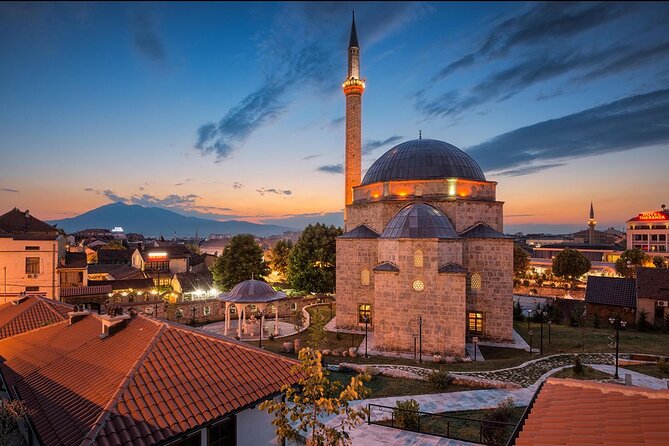
The Sinan Pasha Mosque is the main religious site, while Kalaja Fortress gives you a wide view over the city. Prizren is also known for filigree metalwork, so this is a good place to look for a small, locally made purchase rather than a generic souvenir.
Border crossings are part of the appeal and the inconvenience. You get to see how close these cultures are, but crossing seven countries can slow the schedule. Keep your passport handy and expect the daily plan to shift if border controls take longer than expected.
Gjakova, Decan, and Rahovec add depth to Kosovo
Gjakova is home to Kosovo’s oldest and largest bazaar. It has been destroyed and rebuilt more than once, including after the Kosovo War, and today its shops sell handmade goods and local products.
The Monastery of Decan brings a different side of Kosovo. Orthodox monks still live there, and the monastery is known for its white exterior and 14th-century frescoes. The visit has added weight because the paintings show both religious scenes and details of medieval life.
Rahovec gives you a taste of Kosovo’s wine country. Grapes have been grown in the valley since Illyrian times, and vineyards cover gentle hills at elevations between 350 and 520 meters. The schedule includes the valley for about an hour, but it does not clearly promise a winery tasting, so do not book this day expecting a full wine tour.
A farm lunch stop makes northern Albania feel personal
Mrizi i Zanave is one of the route’s most distinctive stops. This agro-tourism farm preserves local food products, adapts old communist buildings for storage, and has created jobs in the surrounding area.
You will tour the farm, hear how the family business developed, and have free time for a traditional lunch or to buy local products. The meal itself is not included in the general tour price, so budget separately.
This stop matters because it connects Albania’s food traditions with present-day rural business. It also breaks up the long transfer toward Shkoder.
In Shkoder, you will visit Rozafa Castle, whose walls reach back to the first millennium BCE. From the castle, you get views toward Lake Shkoder and the rivers that run toward the Adriatic. The city also carries strong Venetian influence, including a tradition of handmade carnival masks.
Montenegro delivers the coast, from Sveti Stefan to Kotor
The view of Sveti Stefan is a quick photo stop rather than a visit to the island. The former fishing village is now an exclusive residential resort and is not open for general exploration.
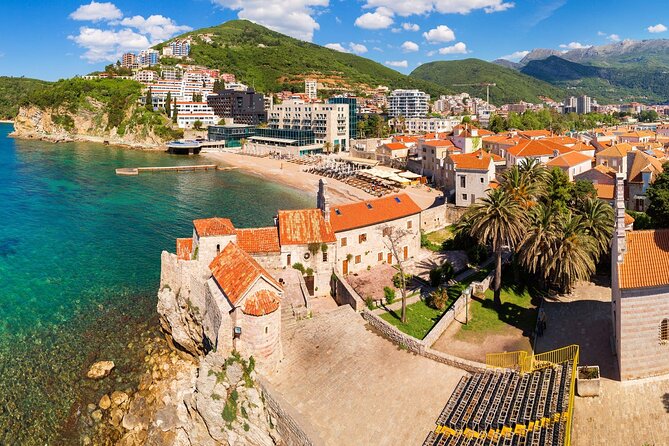
Budva follows, with one hour in its old town. You will see medieval churches and old stone buildings before moving on to Kotor, another UNESCO-listed stop.
Kotor’s old town is compact but maze-like, with narrow cobbled lanes, dated stone buildings, and churches tucked into the streets. The tour includes St. Luke’s Church, which has local importance as a symbol of unity.
The coastal section is scenic but short. You will get an introduction to Budva and Kotor, not a beach holiday or a full Bay of Kotor experience. If you want swimming, boat trips, or more time on the coast, add nights before or after this tour.
Mostar and Sarajevo close the trip with memory and meaning
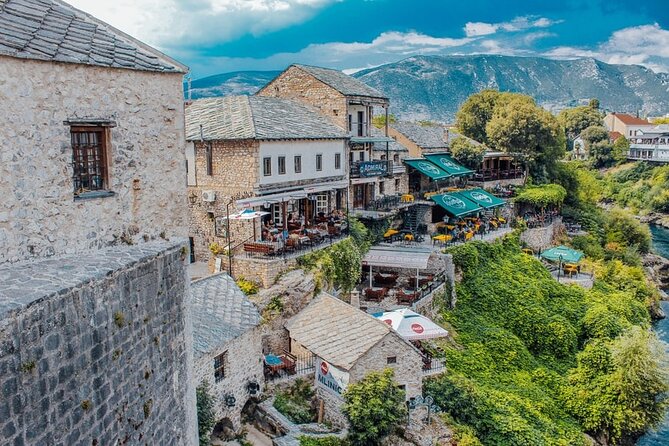
In Mostar, the Old Bridge is the main event. Built in the 16th century in an Islamic architectural style, Stari Most is now a UNESCO site and the city’s defining symbol.
You will also walk through the old bazaar, with stone lanes, mosques, shops, and reminders of the city’s wartime destruction. The stop at Blagaj Tekija adds a quieter setting beside the Buna River spring, beneath a cliff.
Sarajevo then brings the trip’s many themes together. You will walk through Ottoman and Austro-Hungarian quarters, passing mosques, churches, synagogues, markets, and remnants of the Yugoslav War. The city is often called a European Jerusalem because several faiths have long shared the same urban space.
The Latin Bridge is a key historical stop connected with the event that triggered World War I. You also get free time for Bosnian meat dishes and desserts in the old town.
The Sarajevo walk includes uneven terrain and war-damaged areas. If you have trouble walking on rough surfaces, ask about the day’s route before departure. The tour ends after breakfast on day 14 with airport transfer to Sarajevo. You may instead choose hotel drop-off in Belgrade, Serbia.
What the $5,142.79 price covers
At $5,142.79 per person, this is not a budget trip. The value depends on how much you want to outsource.
The price includes private transportation, a professional guide, 3-star accommodation, 13 breakfasts, entry tickets for the sites scheduled for visits, tourist taxes, road taxes, petrol, and international car insurance. You also receive Athens hotel pickup and either Sarajevo airport transfer or Belgrade hotel drop-off.
The room rate is based on double, twin, triple, or quadruple occupancy. Solo travelers should confirm the extra cost, since the published price is calculated around shared rooms.
You still need to pay for lunches, dinners, drinks, snacks, souvenirs, and personal purchases. Add those costs before deciding. Group discounts may also affect the final figure.
For the right person, the price buys time and simplicity. You do not have to compare Balkan bus routes, arrange seven-country border travel, or find a new hotel every night. For an independent traveler who enjoys planning and wants long stays in fewer cities, the same price may feel harder to justify.
Who should book this Balkan road trip
I would recommend it to you if you want a broad first look at the region and prefer a guide to manage transport and sightseeing. It suits people who value UNESCO sites, local food, religious history, 20th-century politics, and changing scenery more than long periods of free time.
The group limit of 10 is a major advantage. Previous praise has focused on helpful staff and guides including Eri Veseli, Ervin, Julian, and Sirma. The strongest practical benefit is the responsive support before and during the trip, especially for special requests.
I would hesitate if you want a relaxed holiday. Fourteen days with seven countries means early starts, repeated hotel changes, road time, and border formalities. The tour is also non-refundable and cannot be changed after booking, so confirm your dates, room arrangement, ending city, and personal stamina first.
FAQ
How long is the tour?
The tour lasts approximately 14 days, beginning with hotel pickup in Athens and ending with either Sarajevo airport transfer or hotel drop-off in Belgrade.
Which countries does the tour visit?
The route includes Greece, North Macedonia, Kosovo, Albania, Montenegro, Bosnia and Herzegovina, and Serbia.
What is included in the price?
Accommodation and breakfast in 3-star hotels, private transportation, a professional tour guide, selected entry tickets, tourist taxes, road taxes, petrol, international car insurance, Athens hotel pickup, and the stated Sarajevo or Belgrade drop-off are included.
Are meals included?
Thirteen breakfasts are included. Lunches, dinners, drinks, and snacks are not included, although some scheduled food experiences and tastings are part of the program.
How many people can join the tour?
The maximum group size is 10 people.
What room occupancy is used for the listed price?
Prices are calculated for double, twin, triple, or quadruple room occupancy in 3-star hotels.
Can I finish in Sarajevo or Belgrade?
Yes. You can be transferred to Sarajevo Airport on day 14, or choose hotel drop-off in Belgrade based on your preference.
Can I cancel after booking?
No. The experience is non-refundable and cannot be changed for any reason after booking.
Should you book it?
Book this tour if you want the Balkans explained and organized in one sweep, with private road transport, a small group, and a strong mix of famous sites and local experiences. The most valuable parts are the cultural range, the food stops in Albania, the personal scale, and the chance to reach places that are awkward to connect by public transport.
Skip it if you want to stay several days in each city or control every hour yourself. This is a fast, ambitious road trip, but for a first introduction to seven West Balkan countries, it offers an unusually full view of the region.