REVIEW · CORFU
Small Group Tour; Corfu to Tirana – 3 UNESCO Sites
Book on Viator →Operated by Choose Balkans · Bookable on Viator
Crossing from Corfu to Albania by ferry, then moving through three UNESCO-listed sites in three days, gives you a quick but rewarding taste of southern Albania. You’ll see Roman ruins, stone Ottoman-era towns, a hillside castle, a famous spring, and the Ionian coast before arriving in Tirana.
I like the small maximum of 10 people, which should make hotel pickups and sightseeing easier than on a large coach tour. I also like the practical pricing: ferry tickets, private transport, two nights in three-star hotels, breakfasts, entry fees, taxes, and a Tirana hotel drop-off are all covered. The trade-off is pace. Three days is enough for highlights, but not enough for lazy afternoons or long meals.
In This Review
- Key points to know before booking
- Why this Corfu to Tirana route works
- Day 1: Butrint ruins, Saranda, and the Blue Eye
- Butrint National Park
- Saranda and the Ionian coast
- The Blue Eye
- Day 2: Gjirokaster, the Stone City
- Gjirokaster’s old streets
- Gjirokaster Castle
- The medieval bazaar
- Skenduli House
- Day 3: Berat and the road to Tirana
- Berat old town
- Berat Castle and the Onufri Museum
- Gorica Bridge and neighborhood
- What the $962.54 price includes
- Who should book this tour?
- Should you book the Corfu to Tirana tour?
- FAQ
- Where does the tour start?
- What time does the tour start?
- Where does the tour end?
- Is the ferry from Corfu included?
- Which UNESCO sites are visited?
- Are hotels and breakfast included?
- Can I have a single room?
- What is not included in the price?
Key points to know before booking
- Three UNESCO sites in one short route: Visit Butrint, Gjirokaster, and Berat, each with a different story and setting.
- The ferry from Corfu is included: Meet the tour leader at the Corfu port after your ferry arrives in Albania.
- Fabio may be your guide: One detailed account specifically praised Fabio for leading the southern Albania portion.
- The Blue Eye is a memorable nature stop: Its clear water stays below 10 degrees Celsius, and its full depth remains unknown.
- The group is capped at 10 people: This suits you if you want a guided experience without a full-size bus.
- The route ends with a Tirana hotel drop-off: You do not need to arrange a separate transfer from Berat.
Why this Corfu to Tirana route works
This tour is built for people who have already spent time on Corfu and want to add Albania without planning a complicated cross-border journey. You start at the Corfu Port Authority Company on Eth. Antistaseos 24, take the prepaid ferry, and meet the tour leader when the boat reaches Albania.
From there, the route forms a sensible arc through the south. Butrint gives you the major archaeological site. Saranda adds a short look at the Ionian coast. The Blue Eye brings in Albania’s natural side. Gjirokaster supplies the strongest old-town atmosphere, and Berat closes the trip with another UNESCO town before the drive to Tirana.
That variety is the main reason I find the tour appealing. You are not spending three days looking at similar ruins or repeating the same type of town. Each stop changes the mood, though the schedule leaves little room to wander far beyond the planned sights.
The group limit of 10 is important here. You still have a set route, but a small vehicle and a small group usually make port pickup, hotel arrival, and short sightseeing stops less cumbersome. The tour includes a professional tour leader, and Fabio is the guide name connected with one of the positive accounts about this route.
You can also read our reviews of more tours and experiences in Corfu.
Day 1: Butrint ruins, Saranda, and the Blue Eye
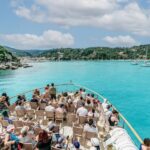
Your first day begins with the ferry connection from Corfu. The ferry ticket is included, and the tour leader collects you at the port after arrival. The exact meeting detail matters, since this is not a tour that begins with a standard hotel pickup in Corfu. You need to reach the stated port meeting point and be ready for the crossing.
Butrint National Park
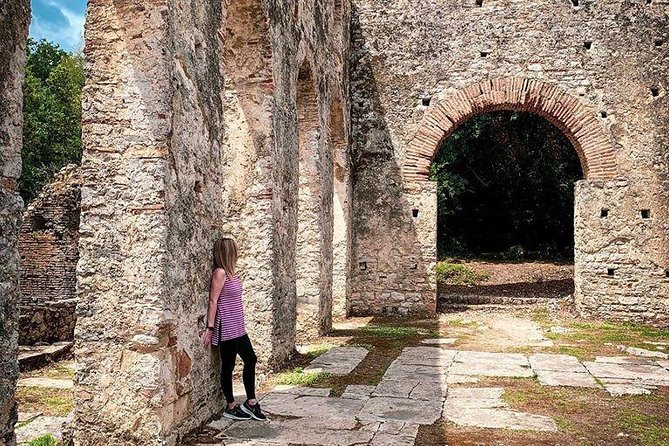
Butrint is the day’s strongest cultural stop. It is Albania’s most important archaeological site and the country’s first UNESCO-listed place. The ruins sit within a national park, so the setting is part of the appeal. You get ancient remains framed by trees and open surroundings rather than a city street packed with modern buildings.
The planned visit lasts about one hour, with admission included. That is enough for an introduction, but it is not a long archaeological study. If you like to read every sign and inspect every remaining wall, you may want more time than the schedule allows.
Still, Butrint earns its place on the route. It gives you a direct connection to Albania’s ancient past before the trip turns toward medieval and Ottoman-era towns. Wear comfortable shoes, since the experience centers on walking through an archaeological park rather than sitting in one compact museum.
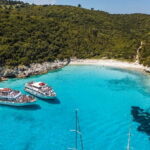
Saranda and the Ionian coast
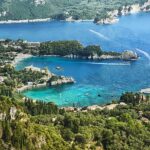
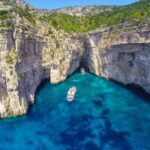
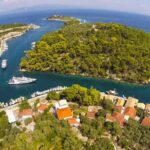
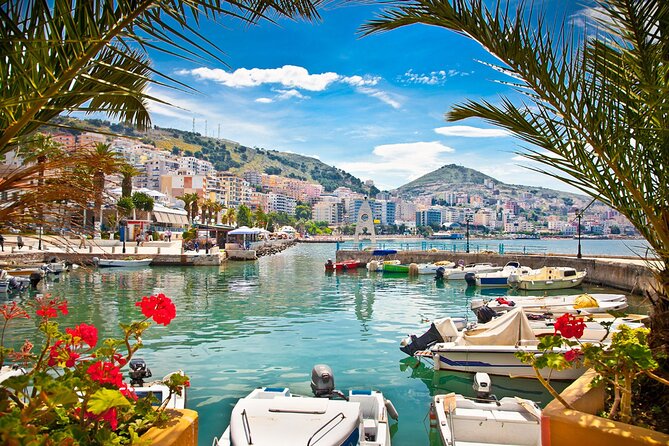
The drive continues to Saranda, a resort city set on a bay with views toward Corfu. You get about an hour here, with no admission fee. This is more of a scenic and orientation stop than a full city tour.
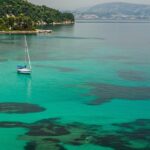
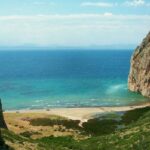
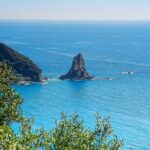
Saranda is known for rocky beaches, small bays, citrus groves, olive plantations, vineyards, and a long sunny season. The stop helps you see the coastal side of southern Albania, which feels quite different from the inland stone towns coming later.
Do not expect a full beach day. The schedule gives you a brief look at the city before moving on. If your main reason for visiting Albania is swimming or sitting beside the Ionian Sea, this tour will feel too busy. If you want a quick coastal view as part of a wider route, the timing makes sense.
The Blue Eye
The Blue Eye is one of the trip’s most unusual stops. It is a freshwater spring surrounded by evergreen trees, with water so clear and intensely blue that the pool looks almost unreal. The source comes from Mali i Gjere, and divers have reached 50 meters without finding its full depth.
The water temperature stays below 10 degrees Celsius. That detail is useful because it tells you what kind of visit this is: admire the spring, take photographs, and enjoy the setting rather than planning a swim.
You have about one hour here, and admission is included. The Blue Eye breaks up the day’s historical focus with a natural attraction. It also gives you one of the most visually memorable scenes on the route, though the short stop means you will not have much time to explore beyond the main spring.
After the Blue Eye, you continue toward Gjirokaster for the overnight portion of the trip. Accommodation is in three-star hotels, with breakfast included for both nights.


Day 2: Gjirokaster, the Stone City
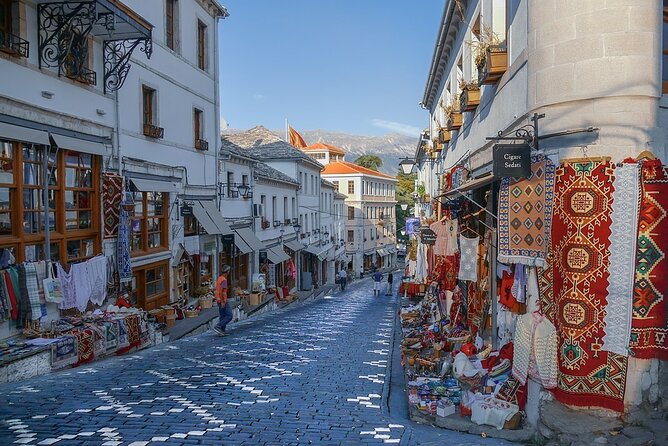
Gjirokaster receives the fullest treatment on the tour, and rightly so. The town is a UNESCO World Heritage site on the eastern side of Mali i Gjere. Its steep streets and gray stone houses create a townscape unlike Berat and unlike the coastal cities.
The old homes look almost like small fortresses. That is not just a poetic description. The stone construction, compact windows, and heavy roofs make the town feel defensive, even when you are simply walking between shops and houses.
Gjirokaster’s old streets
The general town visit lasts about an hour and is free of admission charges. Expect uphill and narrow streets, with stone underfoot and a strong sense of the town’s traditional design.
This is a place where the walking itself matters. You are not only going from one monument to another. You are seeing how the homes, lanes, and slopes fit together. The old town can be hard work if you dislike hills, so comfortable footwear is a good idea.
Gjirokaster Castle
The castle is tied to the origins of the city and is described as dating to the fourth century AD. It is considered one of the best-preserved medieval towns in the Balkans, and the fortress gives you a broad view over Gjirokaster and its surrounding area.
Entry is included, and the scheduled visit lasts about an hour. The castle is more than a quick photo stop. Its position helps explain why Gjirokaster developed where it did, and why the town’s houses have such a fortified look.
Every five years, Gjirokaster also hosts a major folklore and traditional music gathering. You should not assume that this festival will take place during your visit, but the detail shows how strongly local music, dance, and costume remain tied to the town’s identity.
The medieval bazaar
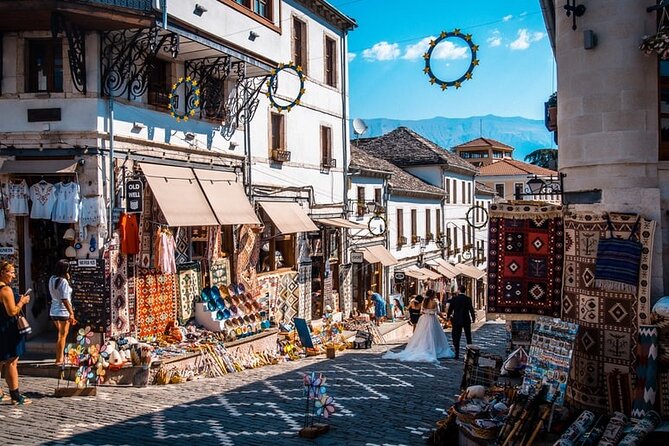
Before entering the castle, you pass through the Gjirokaster Bazaar. The tour allows about two hours here, making it the best chance to slow down and browse.
The bazaar runs through a hilly old quarter with narrow stone lanes and local craft shops. You may find handmade goods from local artisans and producers. This is also one of the few parts of the itinerary where you have room for personal browsing, so keep some spending money available if crafts or small souvenirs appeal to you.
The bazaar is not simply a shopping break. Its layout helps you understand the old town as a working place, not just a preserved monument. At the same time, two hours can feel long if you are not interested in shops or if the weather is hot. You can use the time for a drink or a slower walk through the lanes, though drinks and snacks are not included.
Skenduli House
The visit to Skenduli House lasts about 30 minutes and includes admission. It is one of Gjirokaster’s best-preserved traditional houses, with its original features still in place.
This stop adds detail that a castle cannot provide. The fortress shows public power and defense. Skenduli House shows domestic life and the way a wealthy local home was organized. Half an hour is short, but the visit gives you a clearer picture of how people lived inside the stone city.
Day 3: Berat and the road to Tirana
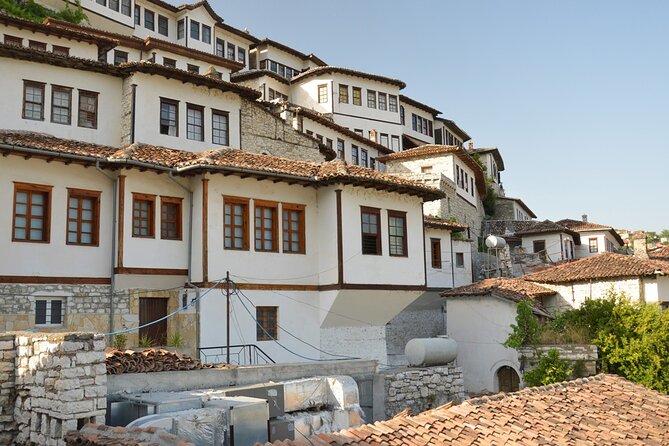
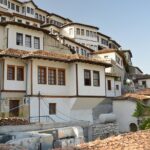
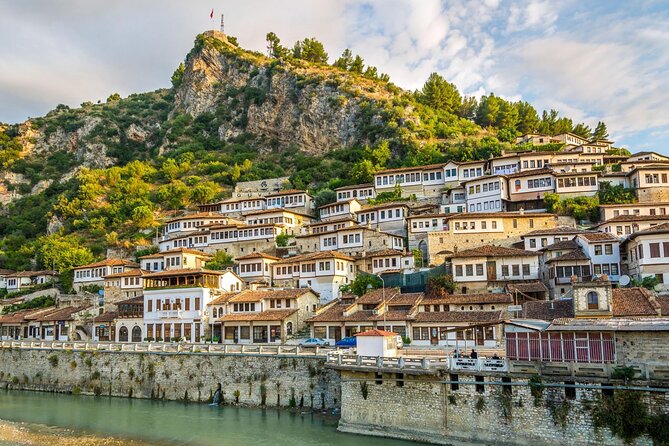
The final day shifts to Berat, another UNESCO-listed town. It is often called the town of 1001 windows because its old houses climb the hills in layers, with windows seeming to stack above one another.
Berat’s story reaches back to an Illyrian settlement from the sixth or fifth century BC. In the third century BC, it became a castle city known as Antipatrea. What makes the town especially interesting today is that people still live inside the castle walls.
Berat old town
The town visit lasts about an hour and is free of admission charges. You will walk through narrow stone streets and see the old houses rising across the slopes.
Berat differs from Gjirokaster in feel. Both have stone streets and historic homes, but Berat is known for its rows of windows and its relationship between the hilltop castle and the lower town. You can also see traces of several religious and political periods, including churches, mosques, museums, and remains from Albania’s communist era.
The short visit means you should focus on the overall character of the town rather than trying to inspect every lane. Berat rewards looking across the hillside as much as looking at individual buildings.
Berat Castle and the Onufri Museum
The castle is included, along with entry to the National Iconographic Museum Onufri. The supplied schedule lists only one minute for the castle stop, which is clearly too brief to describe a meaningful castle visit, so you should confirm the exact timing before departure. The castle itself is a central part of Berat, with ancient religious buildings and residents still living within its walls.
The Onufri Museum takes about 30 minutes. It is dedicated to Onufri, a famous church painter born in Berat. His work is known for a distinctive reddish color that remains difficult to reproduce.
For me, this museum is valuable because it adds a focused artistic stop to the town walk. You are not just seeing old walls. You are learning about a local painter whose influence reached churches across the Balkans. The visit is brief, but it gives the castle a cultural center.
Gorica Bridge and neighborhood
The final listed stop is the Gorica neighborhood, reached by the old stone Gorica Bridge. You have about 30 minutes, with no admission fee.
This is a useful closing view of Berat because it lets you see the town from another side. The bridge and neighborhood help connect the lower city to the river and the hills beyond. As with much of the tour, the time is enough for a compact introduction, not an extended neighborhood walk.
After Berat, the vehicle continues to Tirana. Hotel drop-off in Tirana is included, which is a real convenience after three active days. It also makes the tour useful as a transport bridge between Corfu and Albania’s capital.
What the $962.54 price includes
At $962.54 per person, this is not a budget independent trip. The value depends on how much work you want someone else to handle.
The price includes:
- Ferry tickets from Corfu
- Port pickup in Albania
- Private transport during the tour
- A professional tour leader
- Two nights in three-star hotels
- Two breakfasts
- Entry tickets for the included sights
- Tourist taxes, road taxes, and petrol
- Hotel drop-off in Tirana
That package covers many costs that can add up quickly on a cross-border trip. You do not need to arrange the ferry, find transport between Butrint and Gjirokaster, book separate hotels, or organize a Tirana transfer.
Rooms are priced on double, twin, triple, or quadruple occupancy. Single occupancy costs an extra 35 euros per night, or 70 euros for the two-night stay. Lunches, dinners, drinks, snacks, souvenirs, and personal spending are extra, so budget for those separately.
I would compare this price with the cost of arranging three days of private transport, ferry connections, admission tickets, and hotels on your own. If you value a guide and want a ready-made route, the price is easier to justify. If you are comfortable using buses, arranging your own lodging, and traveling at a slower pace, independent travel may cost less and give you more freedom.
Who should book this tour?
I would recommend it to you if:
- You have already visited Corfu and want to add Albania.
- You want to see the three major UNESCO sites in southern Albania.
- You prefer a guide to explain the historical and cultural context.
- You have only three days.
- You like small groups rather than large coaches.
- You want to finish in Tirana without arranging another transfer.
I would think twice if you want long meals, beach time, spontaneous detours, or several hours at each archaeological site. The route is full, and several visits last only 30 to 60 minutes.
The walking also deserves attention. Gjirokaster and Berat both involve old stone streets and slopes. Most people can participate, according to the tour information, but the schedule is not designed around limited walking.
The cancellation terms are strict: the experience is non-refundable and cannot be changed for any reason. If bad weather forces cancellation, you are offered another date or a full refund. The same applies if the minimum number of people is not reached. Weather, strikes, holidays, closures, or other outside events can also change the schedule.
Should you book the Corfu to Tirana tour?
Book it if your goal is to cover southern Albania’s main sights in a tidy three-day route with transport, hotels, ferry tickets, and admissions handled for you. The best features are the small group, the mix of ruins, towns, art, coast, and nature, and the easy final drop-off in Tirana.
Do not book it expecting a relaxed holiday. This is a fast historical journey. You will see a great deal, but you will also spend time on the road and make quick visits. For a first look at Albania from Corfu, I think that trade is reasonable, especially if you can secure a guide such as Fabio and want the trip’s history explained as you go.
FAQ
Where does the tour start?
The tour starts at Corfu Port Authority Company, Eth. Antistaseos 24, Kerkira 491 00, Greece.
What time does the tour start?
The listed start time is 10:00 pm. Confirm the exact ferry and meeting arrangements when booking, since the tour begins with the crossing from Corfu to Albania.
Where does the tour end?
The tour ends in Tirana, Albania, with hotel drop-off included.
Is the ferry from Corfu included?
Yes. Ferry tickets from Corfu are included, and the tour leader picks you up at the Albanian port when the ferry arrives.
Which UNESCO sites are visited?
The tour visits Butrint National Park, the UNESCO-listed town of Gjirokaster, and the UNESCO-listed town of Berat.
Are hotels and breakfast included?
Yes. The package includes two nights in three-star hotels and two breakfasts. Room pricing is based on double, twin, triple, or quadruple occupancy.
Can I have a single room?
Yes. Single occupancy is available for an additional 35 euros per night per person in three-star accommodation.
What is not included in the price?
Lunches, dinners, drinks, snacks, souvenirs, personal spending, and anything not specifically listed as included are extra.