REVIEW · ATHENS
Splendid off-season tour in Greece: UNESCO sites in 19-days tour from Athens
Book on Viator →Operated by Monterrasol Travel · Bookable on Viator
Greece’s greatest surprise on this 19-day private tour is how far beyond Athens and the islands you can go. You’ll trace ancient Greece, Byzantium, Venetian rule, Orthodox faith, and modern village life from Corinth to Delphi, with seven UNESCO World Heritage Sites built into the route.
I like the small group size, capped at five, and the chance to see places such as Monemvasia, Mani, Ancient Messene, Arta, and Ioannina that many short Greek trips skip. I also like the off-season timing, when the mainland can feel calmer and more local. The tradeoff is simple: you spend many days in a vehicle, and entrance fees, lunches, dinners, and single-room costs are extra.
In This Review
- Key points at a glance
- Why this route is different from a standard Greece tour
- Corinth, Epidaurus, and the first ancient theaters
- Mycenae, Tiryns, and Nafplio’s three fortresses
- Mystras and the stone towns of Laconia
- Ancient Messene, Koroni, Methoni, and Pylos
- Olympia, Patras, and the road across the Gulf
- Arta, Dodoni, Ioannina, and Metsovo
- Meteora and the final approach to Delphi
- What the $7,043 price really covers
- Practical details before you commit
- Should you book this 19-day Greece tour?
- FAQ
- Where does the tour begin and end?
- How long does the tour last?
- How many people can join the private tour?
- Is transportation included?
- Is accommodation included?
- Are entrance fees included?
- Is the tour available in English?
- When is this tour unavailable?
- Can the tour be customized?
Key points at a glance
- Seven UNESCO World Heritage Sites: Visit Epidaurus, Mycenae and Tiryns, Mystras, Olympia, Meteora, Delphi, and Hosios Loukas.
- Eight UNESCO Tentative List places: The route adds important sites such as Nafplio’s fortresses, Ancient Messene, Koroni, Methoni, Oeniadae, and Dodoni.
- Private transport for up to five people: You travel only with your own party, with pickup in Athens at a hotel, airport, or marina.
- Off-season Greece: The tour runs outside May 12 through August 31, making it a strong choice for cooler months and quieter archaeological visits.
- Hotels and pensions with breakfast: Accommodation is in three-star properties or pensions, with Wi-Fi provided by the property.
- A demanding but manageable route: The physical rating is easy, though fortresses, ruins, cobbled streets, and monasteries bring plenty of walking and stairs.
Why this route is different from a standard Greece tour
Most first visits to Greece focus on Athens, Santorini, Mykonos, and perhaps a quick stop at Delphi. This journey takes another path. It treats mainland Greece as the main event, linking famous ruins with places that feel tied to everyday Greek life.
You begin among the ancient sites of the northeast Peloponnese, then work south through Laconia and the Mani Peninsula. From there, the route crosses western Greece before turning north to Epirus, Meteora, Delphi, and the monastery of Hosios Loukas.
That broad sweep is the tour’s greatest strength, but also its main challenge. You get a remarkable range of places, yet you do not stay long in most towns. This works best if you enjoy a moving trip and want a wide view of Greek culture rather than a relaxed beach holiday.
The timing matters. The tour is not available from May 12 through August 31, so you are looking at the cooler part of the year. Some coastal stops may be quiet, and mountain areas can feel chilly. In return, you get a better chance of peaceful visits at major archaeological sites and a more everyday view of Greece.
You can also read our reviews of more tours and experiences in Athens.



Corinth, Epidaurus, and the first ancient theaters
Day one starts with pickup in Athens, followed by a stop at the Corinth Canal. You get about 30 minutes for views over the canal and the Saronic Gulf. Admission is free, and it is a useful first pause before the longer drive into the Peloponnese.
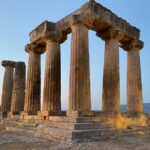
Ancient Corinth receives much more time. Allow about four hours for the archaeological site and museum, followed by lunch at a local tavern. The Temple of Apollo is the star, with seven surviving Doric columns from an original 38. Fountains, temples, and other remains help show how large and active this ancient city once was.
The next stop is Palaia Epidavros, a small coastal town where you spend the night. This is a sensible first overnight because it breaks up the journey and gives you time to settle in after your Athens pickup.
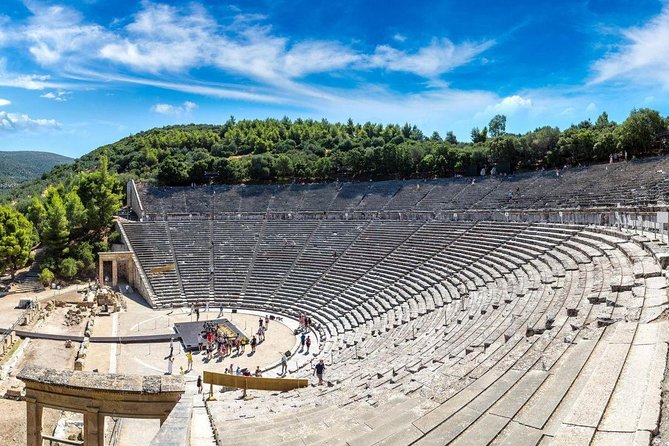
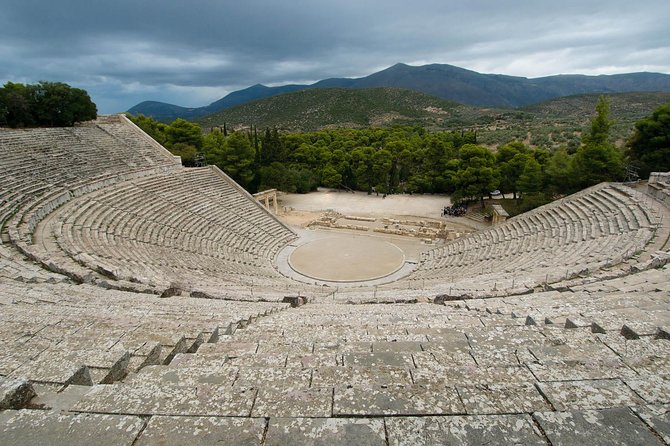
Day two focuses on the Sanctuary of Asklepios at Epidaurus. This was the best-known healing center of the Classical world, with temples and medical buildings dating mainly from the fourth century BC. The ancient theater is the highlight. Its design and acoustics are so impressive that performances still take place there.
You have time for the sanctuary, theater, and archaeological museum. The museum holds works found at the site and helps explain the buildings around you. Admission to the main attractions is not included, so keep room in your budget for tickets.
Mycenae, Tiryns, and Nafplio’s three fortresses
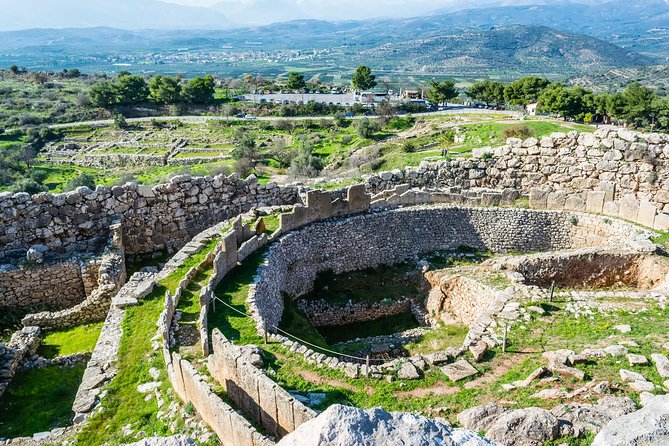
Mycenae arrives on day three, and this is one of the most important stops for understanding Bronze Age Greece. The Lion Gate is the famous entrance, but the tombs, walls, and hilltop setting are just as useful for picturing the Mycenaean world of the 14th and 13th centuries BC.
The site is large and exposed, so wear shoes with a good grip and bring water even in cooler months. You get about four hours here, enough time to see the main remains without treating the visit as a quick photo stop.
Tiryns follows, with its huge Cyclopean walls, palace remains, and tunnels. It is less visually complete than Mycenae, yet its massive stonework gives the place a different kind of power. You then return to Nafplio, one of the most appealing towns on the route, with free time to explore on your own.
Day four is devoted to Nafplio’s fortifications. Palamidi Castle sits high above the town and offers wide views across the harbor and surrounding area. The climb and uneven surfaces require care, though the tour uses private transport to get you to the fortress area.
Akronafplia forms the older fortified core of Nafplio, while Bourtzi sits on a small island in the harbor. Reaching Bourtzi requires a local boat, and the ticket is extra. Check whether the boat is operating during your travel dates, since off-season services can be more limited.
After Nafplio, you continue to Sparta for the night. The ancient site includes remains from different periods, the Acropolis, Roman and Byzantine baths, and the statue of King Leonidas. Sparta is not as visually intact as Mycenae or Olympia, so it rewards visitors who enjoy historical context more than grand ruins.
Mystras and the stone towns of Laconia
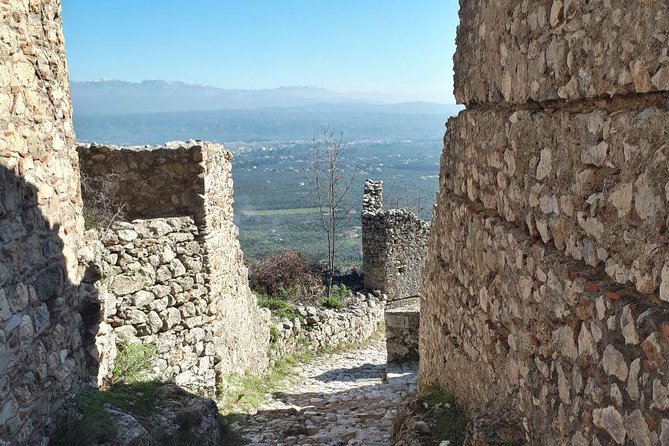
Mystras is one of the tour’s strongest stops. This medieval Byzantine city spreads across a steep slope beneath a fortress built in 1249. Churches, monasteries, chapels, palaces, houses, and defensive walls remain in a setting that makes the site feel like an abandoned mountain city rather than a single monument.
You receive about five hours here, which is welcome. Mystras involves slopes and uneven paths, so the stated easy physical rating should not be mistaken for flat walking. Anyone with limited mobility should discuss the route with the operator before booking.
After lunch, the Museum of the Olive and Greek Olive Oil adds a useful cultural change of pace. You then continue to Monemvasia, where you spend the night.
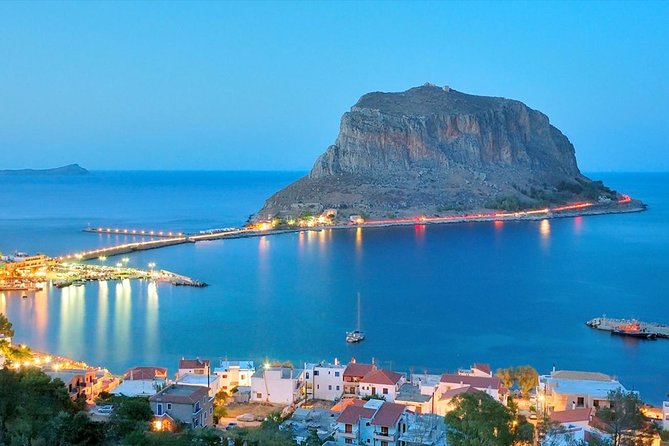
Monemvasia occupies a huge rock linked to the mainland by a causeway. Cars do not enter the old town, and you walk from the access point toward the main gate. Inside, cobbled lanes lead past preserved houses, restaurants, shops, churches, and small squares. The upper town requires a steep climb, but it rewards you with broader views and a quieter feel.
The next day continues through the Mani Peninsula, famous for stone tower villages, Byzantine churches, caves, beaches, and rugged coastal scenery. This is one of the places where the off-season schedule makes good sense. You can experience the area for its villages and scenery without treating it only as a summer beach stop.
Kardamyli is another fine pause. The older town includes Mourtzinos Castle, the church of Saint Spyridon, and traditional buildings with Venetian touches. The town also serves as a base for mountain paths, though hiking is not presented as a formal part of the tour.
Kalamata provides a larger city stop, with time for sightseeing, food, and independent wandering. You spend one night here before moving toward Messenia’s archaeological sites.
Ancient Messene, Koroni, Methoni, and Pylos
Ancient Messene deserves the four hours assigned to it. It is a broad archaeological site at the foot of Mount Ithomi, with impressive walls, the Arcadian Gate, surviving towers, temples, a theater, and a stadium. The remains are in good condition, and the site gives you a clearer sense of a complete ancient city than some smaller ruins.
Koroni follows as a coastal overnight. Its castle is included among the UNESCO Tentative List places, and the town has an island-like feel. The listed stop time is unusually short, so the real value comes from staying overnight and having time to explore independently rather than treating the castle as a fully guided visit.
Methoni Castle receives a fuller visit on day nine. The Venetian fortress covers the end of a coastal cape, with an octagonal tower on a small fortified islet. Its position beside the sea makes it one of the most striking defensive sites in the route.
You then check into your accommodation and have free time. That break is welcome after several archaeological visits in a row. You can walk, eat, and enjoy the coast at your own pace, though meals and personal expenses are not included.
Pylos brings another castle, Niokastro, built in 1572 to guard the Bay of Navarino. Museums, exhibits, a church, and views are part of the visit. The nearby Divari Beach separates the bay from Gialova Lagoon, a protected Natura 2000 area. The lagoon is important for birds and is described as the only place in Europe where the African chameleon is found.
This part of the route adds nature to the history. You should not expect a beach holiday in the off-season, but the coast and lagoon provide a useful change from stone walls and temples.



Olympia, Patras, and the road across the Gulf
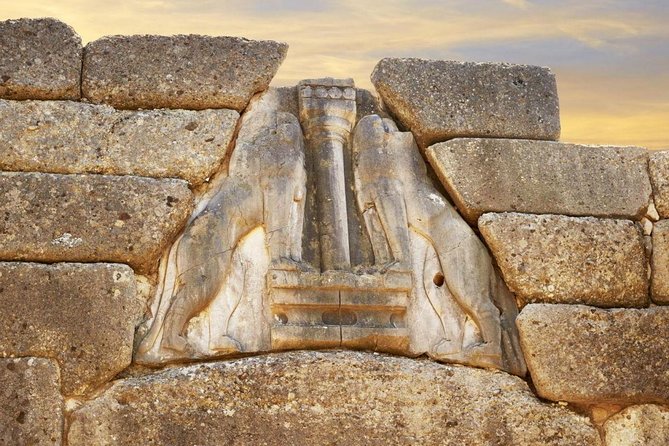
Olympia is a required stop for anyone interested in the ancient Greek world. The sanctuary was the birthplace of the Olympic Games, held every four years from 776 BC. The archaeological site includes temples and the remains of sporting facilities, so you can connect the religious and athletic sides of the ancient festival.
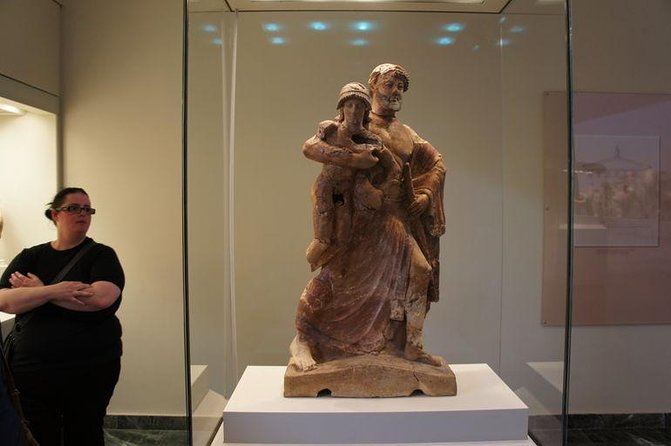
The Archaeological Museum of Olympia is especially important. It contains major works connected with the sanctuary of Zeus and gives shape to what can otherwise be a spread of foundations and columns. A second museum focuses on the ancient and modern games, though the schedule specifically highlights the archaeological museum.
You spend the night in Olympia, then continue to Patras. The city combines a medieval castle, a long urban history, and the important Church of Saint Andrew, which holds the apostle’s relics and the cross associated with his martyrdom.
The castle provides views over the city and the Ionian Sea. At Rio, you see another medieval fortress and the Rio-Antirrio Bridge, one of the world’s longest multi-span cable-stayed bridges. The bridge crossing links the Peloponnese with mainland Greece and is an impressive piece of modern engineering after so many ancient sites.
Nafpaktos is your next overnight. Its Venetian castle rises above a picturesque old port, and the town is tied to the Battle of Lepanto. A statue honors Miguel de Cervantes, who fought in that battle. The castle involves uphill walking, but the port gives you an easier place to stroll afterward.
The route then passes through Messolonghi’s lagoons and the ancient theater of Oeniadae. The theater is unusual for its hillside position, horseshoe plan, and 27 surviving rows of seats. It is a quieter stop than Olympia or Delphi, which is precisely the point for people who want lesser-known ancient sites.
Arta, Dodoni, Ioannina, and Metsovo
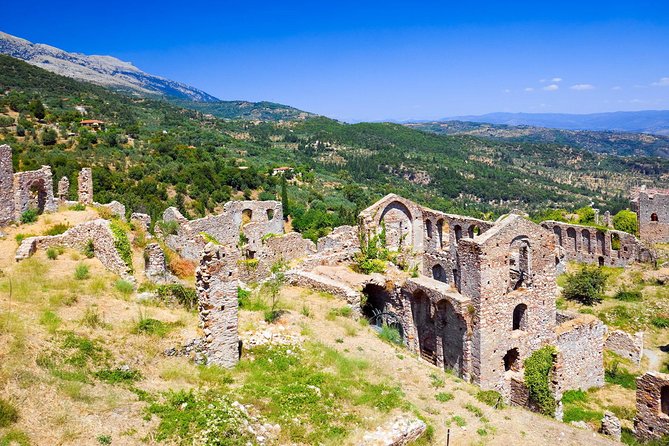
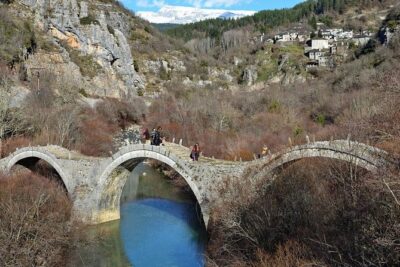
Arta introduces a different Greece. Its medieval stone bridge crosses the Arachthos River, while Byzantine churches, a 13th-century castle, ancient Ambracia remains, and the Archaeological Museum fill out the visit.
The museum covers a long period from the Paleolithic era to Roman times, with particular attention to the Hellenistic period. Since admission is extra, check the day’s opening arrangements with the tour director.
Dodoni is an important ancient sanctuary at the foot of Mount Tomaros. Its oracle was considered the oldest Hellenic oracle, and its theater could hold roughly 15,000 to 17,000 people. The site also includes an Acropolis and stadium.
Ioannina offers one of the tour’s best urban breaks. The old town reflects Christian, Muslim, and Jewish influences, with cafes, shops, taverns, and restaurants. Its castle, built in 528 AD, is described as the oldest Byzantine fortress in Greece and contains several museums.
Metsovo is a traditional mountain village with cobbled streets and time for an optional wine tasting at Katogi Averoff Winery. The guided cellar visit explains the winery’s history and winemaking process. The tasting is optional, and the listed admission is free, but confirm whether tasting charges apply for your date.
Meteora and the final approach to Delphi
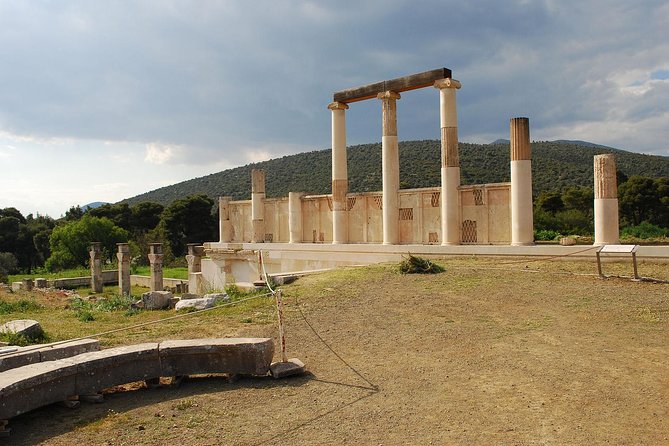
Meteora receives two days, and that is a major benefit. Six monasteries remain on the dramatic sandstone formations, and each has its own opening days and hours. Trying to see them all in one day would turn a remarkable visit into a race.
You should expect stairs, uneven ground, and conservative dress requirements at the Orthodox monasteries. The operator calls the tour physically easy, but Meteora and Mystras are the places where footwear and stamina matter most.
From Meteora, you continue to Loutra Ypatis, a small spa town on the northern slopes of Mount Iti. Hot springs flow through natural pools near a waterfall. The stop gives you a quieter evening after two days of monasteries and mountain roads.
Thermopylae follows on day 18. The battlefield is tied to King Leonidas and the 480 BC conflict with the Persian army. The visit is brief, about 30 minutes, so treat it as a historical pause rather than a full museum experience.
Delphi then receives about five hours, including the archaeological museum and site. The sanctuary was the most famous oracle in ancient Greece and was regarded as the center of the ancient world. Its setting below Mount Parnassos adds drama, though the site requires walking on uneven ground.
You spend the night in modern Delphi, with free time for restaurants, taverns, bars, and shops. That overnight is useful because it keeps the Delphi visit from becoming a rushed stop between Athens and another destination.
The final day begins at Hosios Loukas, a walled Byzantine monastery in a valley of olive trees. Its mosaics, architecture, and art represent an important period of Middle Byzantine culture. Afterward, Livadeia offers a stroll beside the Erkynas River and around its small medieval castle before you return to Athens.
What the $7,043 price really covers
At $7,043.06 per person, this is a costly trip, but it is not a standard group bus tour. The price reflects private transport, a private group of no more than five, an English or Spanish-speaking tour director and driver, 18 nights of accommodation, and breakfast.
The included van matters on a route this wide. Public transport would make many of these stops difficult or impossible to combine, especially in the Mani, Messenia, Epirus, and Central Greece. You also avoid sharing the vehicle with strangers.
The price does not include entrance fees, lunches, dinners, drinks, flights, ferries, insurance, tips, tourist tax, or a professional local guide. Single rooms cost extra. If two or more people book, ask Monterrasol Travel about group discounts, and ask about the special pensioner discount.
The attached comments connected with this activity are not useful evidence of tour quality. One describes a restaurant meal, wine, service, and a night view of the Acropolis, while another discusses a pool and food. The operator says both were posted to the wrong business. That means you should judge this trip by its structure and inclusions, not by those comments.
Practical details before you commit
Pickup is available in Athens at your hotel, airport, or marina. The tour begins between 8:00 and 9:00 in the morning, and the final drop-off is back in Athens, subject to your schedule and prior request.
Bookings are manually confirmed within 48 hours, subject to availability, and the stated booking cutoff is at least 30 days before departure. The tour accepts groups from one to five people, though solo bookings involve a private-tour price and a single-room supplement unless otherwise arranged.
The physical rating is easy, with light activity expected. Still, you should be prepared for fortress climbs at Palamidi and Nafpaktos, steep paths at Mystras and Monemvasia, and steps at Meteora. If mobility is a concern, contact the operator before booking.
Cancellation is especially important here: the experience is non-refundable and cannot be changed for any reason. You should not book until your dates and room needs are firm.
Should you book this 19-day Greece tour?
Book it if you want a long, private survey of mainland Greece and care more about archaeology, monasteries, castles, and regional towns than about island resorts. The route is unusually ambitious, and the private van makes its remote corners practical.
Think twice if you dislike frequent hotel changes, long drives, or paying admission fees separately. You should also budget carefully for meals, single occupancy, tips, tourist tax, and site tickets.
For a couple or small family with 19 days, this can be a strong way to see the Greece that many visitors miss. Ask for the exact hotel list, daily driving times, admission estimates, and single supplement before paying. If those details fit your budget, the tour offers an impressive sweep of Greek history with the freedom of a private group.
FAQ
Where does the tour begin and end?
The tour starts in Athens, Greece, with pickup from a selected hotel, airport, or marina. It ends back in Athens, with hotel drop-off available depending on your schedule and prior request.
How long does the tour last?
The tour lasts approximately 19 days, with accommodation provided throughout the route.
How many people can join the private tour?
The tour is designed for a minimum of two people and a maximum of five. Solo participants are also accepted, with special arrangements and pricing.
Is transportation included?
Yes. Private transportation in a van is included, with transport for your group only and no unrelated passengers in the vehicle.
Is accommodation included?
Yes. Accommodation is included in three-star hotels or pensions with Wi-Fi supplied by the property. The stated price is based on a double or twin room and includes breakfast.
Are entrance fees included?
No. Entry fees and tickets are not included. You must also pay separately for lunches, dinners, drinks, snacks, tourist tax, and personal expenses.
Is the tour available in English?
Yes. The tour is available in English and Spanish. An English-speaking or Spanish-speaking tour director and driver is provided.
When is this tour unavailable?
The tour is not available from May 12 through August 31. It is intended for off-season travel outside those dates.
Can the tour be customized?
Yes. As a private activity, it can be adjusted to fit your travel plans, personal interests, and schedule. Contact Monterrasol Travel before booking to discuss changes, discounts, accessibility, or solo arrangements.