REVIEW · IOANNINA
Epirus region (3 days)
Book on Viator →Operated by Epirus Traveller · Bookable on Viator
Epirus gives you Greece in broad strokes: sixteenth-century stone bridges, remote mountain villages, a cliffside monastery, river-cut caves, waterfalls, and Ionian beaches. The route moves from Zagori and Tzoumerka to Parga and Sivota, showing how much variety fits inside one northern Greek region.
I like the strong mix of nature and local history, especially the old bridges and small settlements that give the first two days a real sense of place. I also like the private format, since your group can explore with guide Yannis rather than being folded into a large coach party. The main drawback is pace: this is a full three-day sweep, and some stops receive only 30 minutes.
In This Review
- Key points to know before booking
- Why Epirus works so well in three days
- Day one: Zagori bridges and the road to Konitsa
- Kapesovo, Tsepelovo, and a look at Sarakatsani life
- Iliochori waterfall and the Konitsa Bridge
- Day two: Kipinas Monastery and the villages of Tzoumerka
- Pramanta and the river inside Anemotrypa Cave
- Frasta, Plaka Bridge, and Epirus through local art
- Day three: from mountain roads to Parga and Sivota
- What the $465.43 price means
- Who should choose this Epirus tour?
- Booking details and weather rules
- Should you book it?
- FAQ
- Where does the tour start and finish?
- Is this a private tour?
- Is pickup available?
- Are entrance tickets included?
- Does the tour require good weather?
- How late can I cancel for a full refund?
Key points to know before booking
- Seven stops on day one: Stone bridges, Zagori villages, a Sarakatsani cultural site, the Iliochori waterfall, and Konitsa make for a packed opening day.
- Kipinas Monastery requires a short climb: The road reaches the cliff base, but the monastery is reached by a rock-cut path and wooden bridge.
- Anemotrypa Cave and the Papagiannis Museum cost extra: Most stops have free admission, but these two do not.
- You get both mountains and sea: The final day shifts from Epirus’s high villages to Parga and the small beaches around Sivota.
- It is a private experience: Only your group participates, with a 9:00 am start from Mavili Square in Ioannina.
- The route suits active sightseers: Expect walking at bridges, waterfalls, villages, and Kipinas rather than a stay-in-the-vehicle tour.
Why Epirus works so well in three days
Epirus is one of Greece’s best choices if you want more than the familiar island-and-ruins circuit. The region combines the Pindus mountains, stone-built villages, rushing rivers, old trade routes, and the Ionian coast. This tour makes that variety its main idea.
You begin in Ioannina and spend the first two days in the mountains. Day one centers on Zagori and Konitsa. Day two moves through Tzoumerka, where monasteries, villages, caves, bridges, and art fill the route. Day three heads west to Parga and Sivota for a completely different mood.
I see the private setup as a major advantage here. Epirus is spread out, and the appeal lies in small places that are not always easy to connect on your own. A private group also gives you a more personal setting with Yannis, the guide named in the experience information. Just keep in mind that this is not a slow village holiday. It is a broad regional introduction.
You can also read our reviews of more tours and experiences in Ioannina.

Day one: Zagori bridges and the road to Konitsa
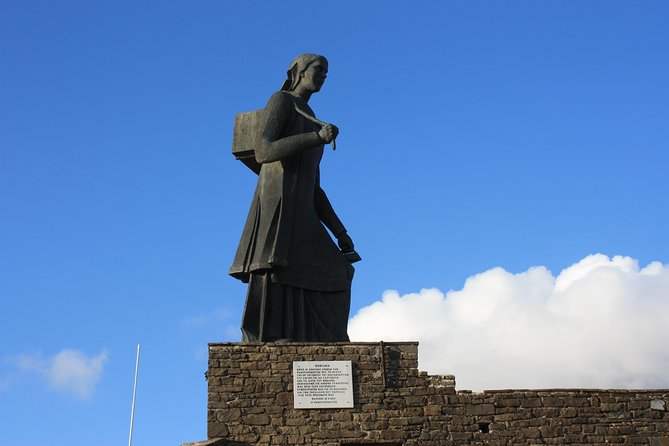
The first morning starts at 9:00 am from Mavili Square in Ioannina. Pickup is offered, but the stated meeting point is Mavili Square, so confirm the exact arrangement when you book.
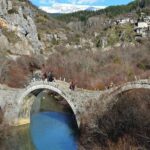
The opening stop is Kokkori Bridge, also called Noutsos or Kokoris Bridge, near Koukouli on the Voidomatis River. Built in the sixteenth century, it is the kind of structure that explains Zagori better than a long museum panel could. Its single stone arch reflects the old need to connect mountain communities across difficult river country.
You have about 30 minutes here, enough for photographs and a close look. Do not expect a long walk or a formal guided visit at every bridge. The appeal comes from the setting, the masonry, and the chance to see how practical infrastructure became part of the region’s character.
Next comes the Bridge of Plakidas, another stone landmark in Zagori. A monk from the Prophet Elias monastery built it in 1814, and Alexios and Andreas Plakidas repaired it substantially in 1865. Again, the visit lasts about 30 minutes and admission is free.
The short time at each bridge makes the day efficient, but it also means you should not expect extended hiking between them. If you love old construction and quiet mountain scenery, these early stops are likely to be among the day’s highlights. If you prefer one long walk over several brief visits, the schedule may feel hurried.
Kapesovo, Tsepelovo, and a look at Sarakatsani life
Kapesovo is a traditional village with few residents and plenty of old-world character. It is also near Vradeto and the Vradeto Steps, a notable run of stone steps in the area. The stop is listed at about 30 minutes, so you may get an introduction to the village and its setting rather than a detailed exploration of every lane.
That brief visit still matters. The villages are not simply photo stops. Their stone buildings and mountain setting help explain how people lived in Zagori, where roads and bridges had to be shaped around steep ground and seasonal rivers.
Tsepelovo follows, on the south side of Kazama peak on Mount Tymfi. The village had a school as early as 1700, at a time when schools were rare in the Zagori region. That detail gives the stop a useful human angle. You are not only looking at a pretty settlement, but also at a place with a long tradition of education and local civic life.
The next stop is the Sarakatsani Stani, a forest complex covering about 20 acres of fir and pine woodland. It aims to recreate the setting and way of life of the Sarakatsani, a traditionally pastoral people. The visit is free and lasts about 30 minutes.
This is a different kind of stop from the bridges and villages. It focuses on cultural memory and rural life rather than dramatic scenery. I would pay attention to how the site presents buildings and daily routines, since that can give context to the mountain communities you see elsewhere in Epirus.
Iliochori waterfall and the Konitsa Bridge
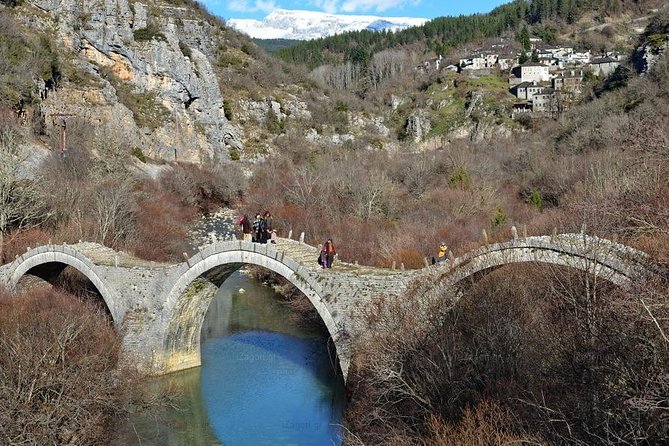
From Iliochori, you walk toward Balta di Striga waterfall. This is the longest stop on day one, at about one hour, and it breaks up the succession of short village visits with a more active outdoor section.
The supplied details do not give the trail length or difficulty, so you should ask the operator for current walking conditions before departure. The route is described as a visit from the village to the waterfall, and the day is best approached with shoes suitable for uneven ground. Admission is free.
The final stop is the Konitsa Bridge, at the entrance to the Aoos Valley. Built in 1870 and 1871 by a workshop of 50 craftsmen, it replaced an earlier wooden bridge from 1823 that had been destroyed. The stone bridge has a 36-meter opening and rises 20 meters above the river.
This is an excellent close to the first day because it brings together engineering, river scenery, and the scale of Epirus’s mountain country. The bridge was funded by donations from local residents, which also tells you something about its importance to the town. You have about 30 minutes here.
A practical point: day one includes seven stops. The route is full of variety, but you should expect a succession of focused visits rather than long, unhurried stays. The upside is that you see a great deal of Zagori and Konitsa in one day. The tradeoff is less free time in each village.
Day two: Kipinas Monastery and the villages of Tzoumerka
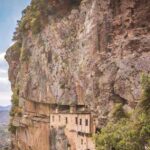
Day two turns to Tzoumerka, another mountain area with its own look and traditions. The first stop is Kipinas Monastery near Kalarites, one of the most striking places on the tour.
The small wooden-and-stone church is built into a cliff, and the approach includes a path cut into the rock followed by a wooden bridge. The road reaches the base of the cliff, but you must walk onward if you want to enter the monastery. The visit is scheduled for about 30 minutes.
This is one of the stops where the short timing deserves attention. You may have enough time for the approach and a look around, but conditions at the site can affect how much you see. The path and bridge also mean that the monastery is not a simple roadside photo stop. Ask about access when booking if anyone in your group has difficulty with uneven paths or heights.
Kalarites comes next. The village is known for tailors, builders, merchants, stone craftsmen, and silversmiths. Along with nearby Syrrako, it is one of the traditional settlements of mountainous Tzoumerka.
You have about 30 minutes here. That is enough to see the village atmosphere and appreciate its craftsmanship traditions, though not enough for a long wander. I like this part of the route because it gives the mountains a human story. The buildings are attractive, but the old trades explain why these communities mattered.
Pramanta and the river inside Anemotrypa Cave
Pramanta is the longest village stop on day two, with about an hour. The settlement sits at 840 meters at the foot of Strogoula, a 2,107-meter peak described as one of Tzoumerka’s most imposing summits.
The central square features a 500-year-old plane tree and the historic Arapis fountain, beside the church of Agia Paraskevi. This is a good place to slow the rhythm for a little while. You have more time here than at Kalarites or Tsepelovo, so you can take in the square rather than simply step out, photograph, and leave.
Anemotrypa Cave is the day’s main natural attraction. It was discovered after cool air emerged from a small opening in the rock in 1960. The name refers to that wind-filled opening. The cave is also described as the only cave in Greece penetrated by a river, which allows it to clean itself without human intervention.
The cave visit lasts about one hour. Admission is not included, unlike most of the outdoor and village stops. Make sure you budget for that separate ticket.
I would treat the cave as a genuine visit, not a quick add-on. The underground river is the feature that makes it special, and the hour gives the stop more weight than the brief bridge visits. The details do not specify the ticket price, so ask for the current cost before the tour.
Frasta, Plaka Bridge, and Epirus through local art
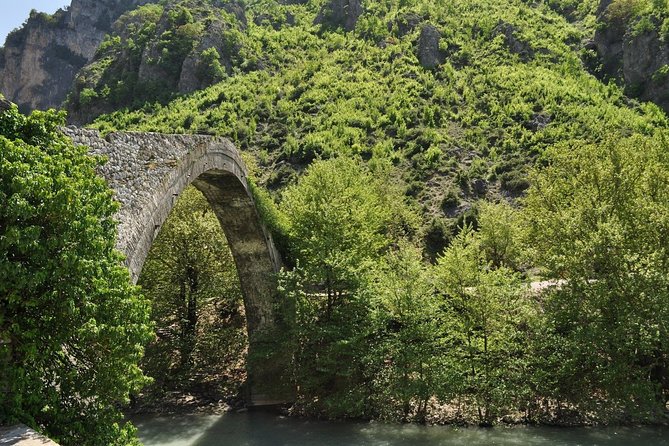
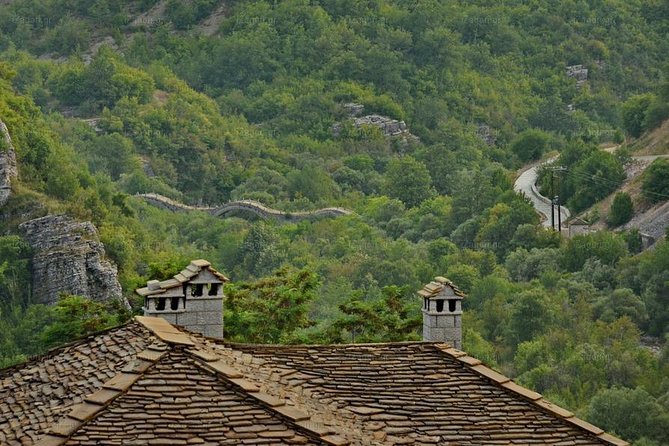
Frasta brings another major bridge into the day. Plaka Bridge was built in 1866 and was considered the largest single-arched bridge in the Balkans, with a 40-meter opening and a height of 19 meters. The opening at the top measures 3.2 meters.
From 1881 to 1913, the bridge marked the border between the Greek and Turkish states. That fact adds political context to what might otherwise look like another beautiful stone crossing. You have about 30 minutes, and admission is free.
Theodoros Papagiannis Museum of Contemporary Art is the last stop on day two. Its focus is Epirus and the people who shaped it. The works address bread, benefactors, exile, intellectual life, local craftsmen, shepherds, farmers, mothers, and education.
That subject matter makes the museum a useful counterpoint to the mountain scenery. You get a chance to consider the region through art and social memory rather than only through buildings and views. Admission is not included, and the visit lasts about 30 minutes.
The museum may appeal most to people who enjoy regional art and cultural themes. If your priority is outdoor scenery, this is the stop you are most likely to value less. Still, it gives the tour a more thoughtful finish than another viewpoint would.
Day three: from mountain roads to Parga and Sivota
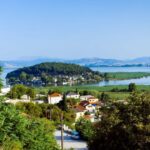
The final day changes the mood completely. Parga is the first stop, with about two hours to enjoy the Ionian coast. The town is presented as one of Epirus’s traditional summer choices, offering relaxation and coastal fun.
The supplied details do not specify a boat trip, beach club, or guided walk in Parga. You should think of this as free time in the coastal municipality rather than a tightly programmed attraction. Two hours gives you a chance to take in the waterfront atmosphere and choose how you want to spend the stop.
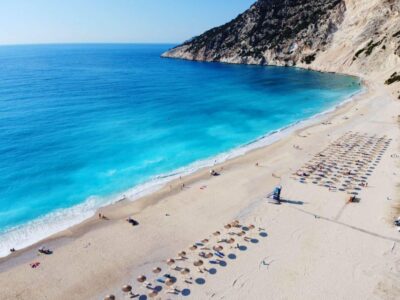
Sivota follows, also with about two hours. The area is known for numerous beaches and small, isolated coves. The description emphasizes quiet bays where you can spend time with the sun, sand, and sea.
This coastal pairing is a smart way to finish the trip. After two days of high villages, bridges, cliffs, waterfalls, and caves, you get a slower stretch beside the Ionian Sea. At the same time, the limited information about included activities means you should not book expecting a specific cruise or water sport. The attraction is the coast itself.
The route ends back at the meeting point in Ioannina. Since the tour covers a wide part of Epirus, I would ask how much time is spent on the road between major areas. The published schedule tells you the stops and their approximate durations, but not the transfer times.
What the $465.43 price means
At $465.43 per person, this is not a budget day trip. The value depends on how much you would otherwise spend arranging transport between remote villages, bridges, mountain sites, and the coast.
You are paying for a private three-day experience rather than a single attraction. The group is limited to your own party, pickup is offered, and the route connects places that are difficult to combine without your own vehicle. That makes the price more reasonable for a small group that wants a broad introduction to Epirus.
Do remember that the price does not cover every entrance. Admission is free at the bridges, villages, Sarakatsani site, waterfall, Kipinas Monastery, Pramanta, Frasta, Parga, and Sivota. Tickets for Anemotrypa Cave and the Theodoros Papagiannis Museum of Contemporary Art are not included.
Group discounts are available, so the final value may improve if you are booking with several people. The tour also uses a mobile ticket, and confirmation is received at booking.
Who should choose this Epirus tour?
I would recommend it to someone staying in Ioannina who wants to see far beyond the city without arranging several separate excursions. It works especially well for people who enjoy old bridges, stone villages, mountain scenery, waterfalls, caves, and cultural sites in one trip.
It also suits a private group that values flexibility and a personal guide. The mention of Yannis is useful if you are trying to understand the tone of the experience: the tour is designed around a named local guide rather than an impersonal coach operation.
You should think twice if you want a relaxed schedule with long meals, extended beach time, or hours in each village. The tour has many 30-minute stops, and the large geographic range means the days may feel full.
The walking demands are not fully described. You should be prepared for walking at the Iliochori waterfall and for a rock-cut approach and wooden bridge at Kipinas Monastery. Ask the provider about current conditions if your group has specific mobility concerns.
Booking details and weather rules
The tour starts at 9:00 am from Mavili Square in Ioannina and ends there. Pickup is offered, so confirm the exact pickup point after booking. It is near public transportation, and the activity is private, with only your group participating.
Most people can take part, but the mountain paths and waterfall visit mean you should plan sensible footwear. The experience requires good weather. If poor weather forces cancellation, you can choose another date or receive a full refund.
Free cancellation is available up to 24 hours before the start time. Cancellations or changes made less than 24 hours in advance are not accepted for a refund, and the cut-off follows local time.
Should you book it?
Book this tour if you want Epirus presented as a complete region, not just as a mountain village or beach resort. Its strongest feature is the range: Zagori bridges, Kapesovo and Tsepelovo, Iliochori waterfall, Konitsa, Tzoumerka, Kipinas, Anemotrypa, Plaka Bridge, regional art, Parga, and Sivota.
I would choose it for a small private group with three days available and an appetite for full sightseeing days. I would skip it if you prefer to settle into one base and explore slowly. For the right pace, the $465.43 price buys access to a part of Greece that is hard to connect on your own, with the bonus of a private guide and a route that includes both mountains and sea.
FAQ
Where does the tour start and finish?
It starts at 9:00 am at Mavili Square in Ioannina, Greece, and ends back at the same meeting point.
Is this a private tour?
Yes. Only your group participates in the activity.
Is pickup available?
Pickup is offered. The stated meeting point is Mavili Square, so confirm the pickup details when you book.
Are entrance tickets included?
Admission is free at most stops. Tickets for Anemotrypa Cave and the Theodoros Papagiannis Museum of Contemporary Art are not included.
Does the tour require good weather?
Yes. If poor weather causes cancellation, you will be offered another date or a full refund.
How late can I cancel for a full refund?
You can cancel at least 24 hours before the experience start time for a full refund. Changes or cancellations made less than 24 hours before the start time are not accepted for a refund.