REVIEW · IOANNINA
Tzoumerka villages tour (1 day)
Book on Viator →Operated by Epirus Traveller · Bookable on Viator
Tzoumerka is the kind of Greece many visitors never see. This private day tour leaves Ioannina for mountain villages, rushing water, old stonework, and monasteries clinging to rock. The scenery can feel almost mythical in mist or rain, especially around the high peaks and the wild gorge of the Kalarrytikos River.
I like the way the route mixes nature and village life, rather than stopping at one famous monument and rushing back. I also like the private format: with guides such as Ioannis or Kostas, you can have a more relaxed day and help shape the exact flow of the outing. The main drawback is simple: six stops in six to eight hours means some visits are fairly brief, and Anemotrypa Cave costs extra.
In This Review
- Key points to know before booking
- Leaving Ioannina for the Tzoumerka mountains
- Kouiassa Springs and the Chrousias tributary
- Kipinas Monastery on the Kalarrytikos gorge
- Pramanta, the largest village in Northern Tzoumerka
- Anemotrypa Cave and its underground river forms
- Plaka Arched Bridge and a changing frontier
- Tsoukas Monastery above Elliniko
- What the private format adds to a $150.51 day
- Weather, pace, and what to bring
- Who will get the most from this outing
- Should you book the Tzoumerka villages tour?
- FAQ
- Where does the Tzoumerka villages tour begin?
- Where does the tour end?
- Is hotel pickup available?
- How long does the tour last?
- Is admission to Anemotrypa Cave included?
- What happens if the weather is poor?
Key points to know before booking

- Kipinas Monastery is built into a huge cliff, making it one of the most striking stops of the day.
- Pramanta provides a genuine village pause, with a historic plane tree, fountain, church, and mountain setting.
- Anemotrypa Cave includes visible river formations, but its admission fee is not part of the tour price.
- The private car format allows some flexibility, useful when weather or road conditions affect the mountain route.
- Plaka Bridge connects scenery with history, having once marked the border between Greece and the Ottoman Turkish state.
- Pickup can be arranged, but transportation from your accommodation is optional and the cost depends on distance.
Leaving Ioannina for the Tzoumerka mountains
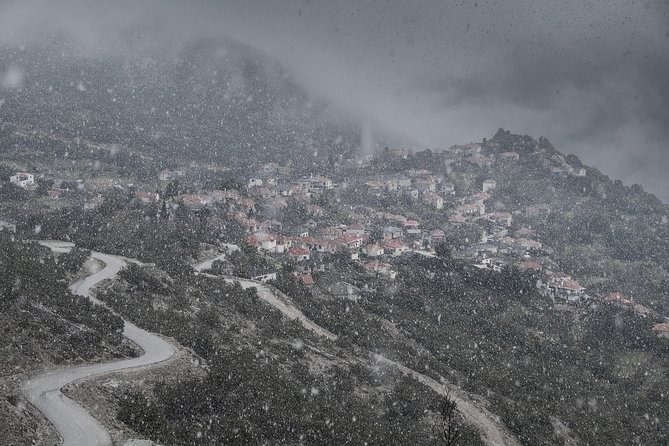
The tour begins at 9:00 am from Mavili Square in Ioannina and returns there at the end of the day. The advertised duration is about six to eight hours, so you get a full day outside the city without committing to a multi-day mountain trip.
Transportation is by car. You can meet at Mavili Square, or ask about pickup from your accommodation. Pickup is optional, and the price varies according to distance. That detail matters if you are staying outside central Ioannina, so confirm the arrangement before you pay.
This is a private activity for your group only, not a coach excursion with a fixed crowd. That gives the guide room to adjust the timing and talk with you along the way. Past guide experiences have included Ioannis, described as a careful and confident driver, and Kostas, who brought strong local knowledge and a willingness to explain the region.
The road into Tzoumerka is part of the experience, but it also sets the limits of the day. Mountain routes take time, and the schedule includes several separate stops. You should expect a scenic road trip with short walks and visits, not a long hike or a slow village stay.
You can also read our reviews of more tours and experiences in Ioannina.
Kouiassa Springs and the Chrousias tributary
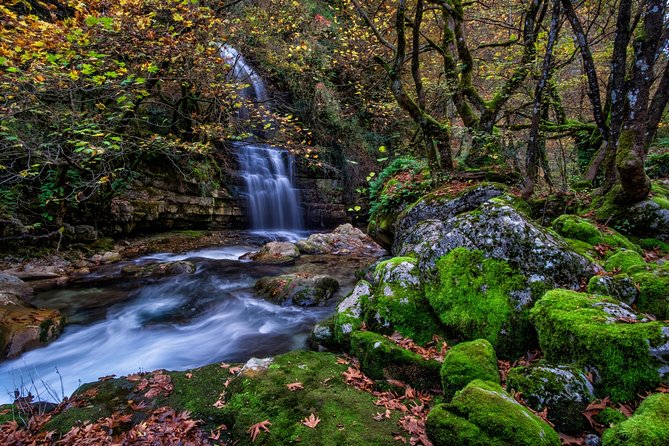
The first stop is the Kouiassa Pouliana Path, where springs meet the Chrousias tributary. You have about 45 minutes here, with no admission charge.
This is a good opening stop because it introduces the water that shapes much of Tzoumerka. The Chrousias name comes from Chrousios, the legendary grandson of Achilles and, according to local tradition, the first king of Epirus. Your guide can add the story behind the name while you take in the cool, wooded setting.
The stop is short, so do not expect a long walk through the area. It works best as a chance to stretch your legs, see the springs, and begin to understand the region’s connection to rivers and mountain ravines.
Wear shoes that feel secure on a damp path. The tour requires good weather, and rain can affect both comfort and footing. On a wet day, the water and mist may add drama, but they can also make a brief walk less carefree.
Kipinas Monastery on the Kalarrytikos gorge
Kipinas Monastery is the most visually arresting stop for many people. It was founded in 1212 by Archbishop Gregory and built halfway up a huge rock on the northeast side of the Kalarrytikos River gorge.
You get around 30 minutes here, with admission included. The short visit is enough to see the monastery’s unusual position and ornate construction, but it is not a long religious or architectural tour. I would pay close attention to the approach and the surrounding rock as well as the building itself. The setting explains why this site feels sacred and imposing.
The monastery combines practical defense, religious devotion, and a dramatic use of natural rock. It is not simply an old church placed in a village square. The cliff gives the stop its force, and the wild gorge below helps you understand why remote monasteries were built in such places.
Your guide’s explanation adds real value here. Without context, you might see only a beautiful building in a difficult-to-reach location. With the founding date and local background, the visit becomes part of the wider story of Epirus.
Allow for the possibility that access or the exact viewing experience can be affected by weather. The tour is cancelled or rescheduled in poor conditions, and that is sensible for a route through mountain country.
Pramanta, the largest village in Northern Tzoumerka
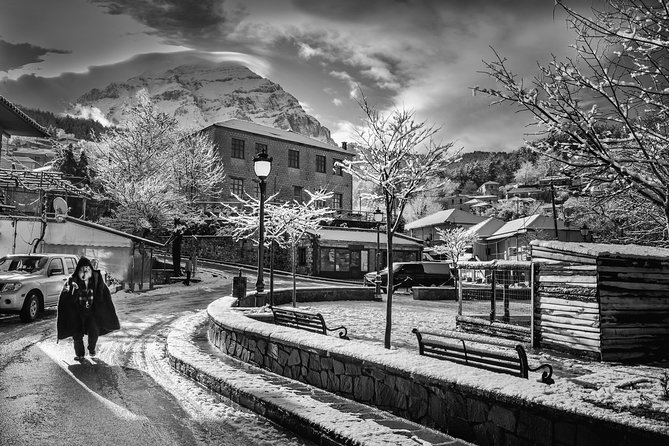
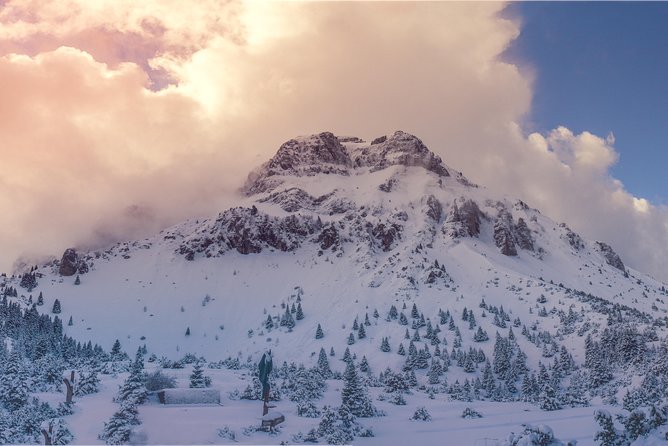
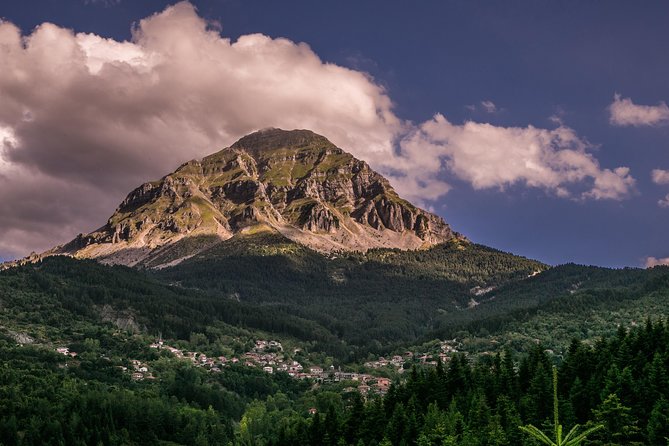
Pramanta gives the day a human scale. The village sits at about 840 meters, built in an amphitheater-like position below Mount Strogoula, which reaches 2,107 meters.
You have roughly 45 minutes to look around. Pramanta is known for craftsmen and livestock farms and has the largest population in Northern Tzoumerka. That makes it more than a photo stop. It is a place where you can see how mountain communities still function beyond the main tourist routes.
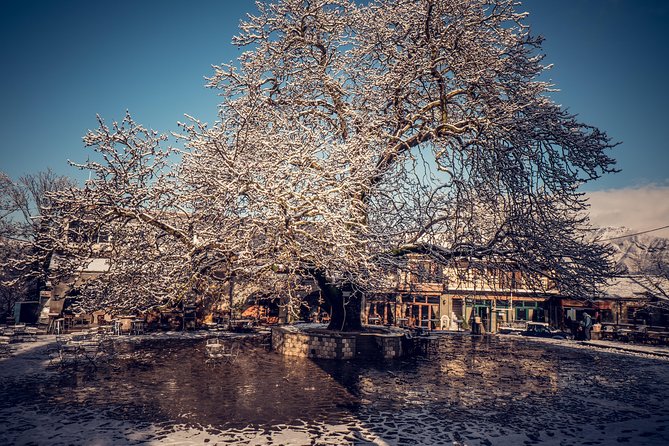
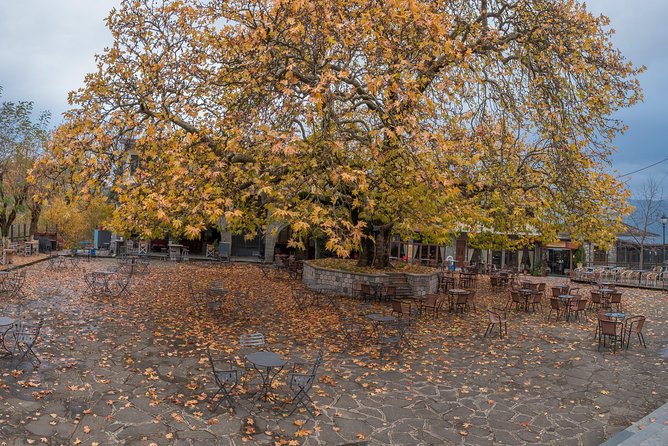
In the central square, look for the 500-year-old plane tree and the historic fountain called Arapis. The main church of Agia Paraskevi is beside them. These are compact sights, so the visit does not demand a long walk, yet the combination gives you a useful picture of village life, local gathering places, and older stone traditions.
I like this stop because it breaks up the natural scenery. After springs, cliffs, and a river gorge, you get a chance to pause in a living settlement. The tradeoff is that 45 minutes passes quickly. If you enjoy browsing village streets or sitting down for a long coffee, you may wish the schedule allowed more time.
Anemotrypa Cave and its underground river forms
Anemotrypa Cave is located in Pramanta and is described as a cave of exceptional beauty, with explicit river shapes running through it. It is also presented as the only cave in Greece intersected by such river forms.
The visit lasts about 45 minutes. Unlike the other listed stops, admission is not included in the tour price. Factor that extra cost into your budget, particularly if you are comparing the $150.51 per-person price with other day trips.
This is a strong stop for anyone who likes geology and unusual natural spaces. The cave adds variety to the day, showing how water has shaped the region below ground as well as above it. Your guide can connect the cave to the springs and tributaries you saw earlier, giving the route a clear thread.
The cave is still an enclosed attraction, so it may not suit you if you prefer to spend every minute outdoors. On the other hand, it can be especially welcome if the mountain weather turns cool or wet. Ask the operator about the current admission charge and access conditions when booking, since those details are not specified here.
Plaka Arched Bridge and a changing frontier
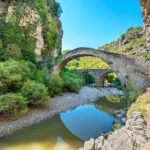
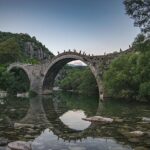
Built in 1866, Plaka Bridge was once considered the largest single-arched bridge in the Balkans. Its arch measures 40 meters across, reaches 19 meters in height, and has an opening at the top of 3.2 meters.
You get about 30 minutes at the bridge, with no admission fee. That is enough time to appreciate the span, the river setting, and the engineering. It is also a good place to let the guide explain the bridge’s political role.
From 1881 to 1913, Plaka Bridge marked the border between the Greek and Turkish states. The bridge was therefore more than a way across the river. It sat on a frontier that changed as modern Greece expanded, adding a serious historical layer to what first looks like a simple stone crossing.
This stop rewards patience with details. Look at the curve of the arch and the way the stone structure relates to the river below. The 30-minute visit is short, but the site does not require a formal museum visit to make an impression.
Tsoukas Monastery above Elliniko
The final stop is Iera Moni Panagias Tsoukas, also called Tsoukas Monastery. It sits at an altitude of 760 meters near the village of Elliniko and receives about 45 minutes of the schedule.
The monastery was founded in 1190 by Emperor Isaac II Angelos. It was destroyed in 1736 and renovated in 1779. Those dates give you a quick sense of the site’s long, unsettled past. This is not a single-period monument preserved without change. It has been damaged, rebuilt, and carried forward over centuries.
The monastery is also linked to water. The poet K. Krystallis wrote that it was famous for its water, an apt detail after a day built around springs, streams, caves, and a river bridge. I would listen for the local stories here, since a guide can make the connection between place, memory, and tradition more meaningful than a quick photograph.
Because this is the last listed stop, the 45-minute visit also gives the day a quieter ending before the return to Ioannina. The schedule remains tight, so do not count on a long independent exploration of Elliniko unless your guide agrees to adjust the plan.
What the private format adds to a $150.51 day
At $150.51 per person, this is not the cheapest way to see Tzoumerka. The value depends on what you want from the day.
You are paying for a private car outing, a dedicated guide, transport between widely separated mountain sights, and local interpretation. You also get a route that would be difficult to organize efficiently without your own vehicle. The private setup can be especially useful for couples, families, or a small group that prefers not to follow a large fixed schedule.
The format also gives you some say in the exact flow. The guide can help decide how to use the available time, within the limits of the route and weather. That flexibility was a major strength in the experience described by a German-speaking couple, who found the organization strong before and during the outing and appreciated being able to help shape the day.
The price becomes less attractive if you want long walks, extended meals, or lots of unscheduled village time. This route covers six stops, and the longest scheduled visit is only 45 minutes. You are buying breadth and private transport more than slow travel.
The cave admission is extra, and optional pickup may carry an additional distance-based charge. Check both before booking so the final cost is clear.
Weather, pace, and what to bring
The tour requires good weather. That is important in Tzoumerka, where fog, cloud, and rain can change the feel of the mountains quickly. One account of the experience described a rainy, misty day in which clouds around the Tzoumerka peaks created a mysterious, almost legendary mood. That sounds atmospheric, but poor weather can also reduce views and make outdoor stops less comfortable.
Bring sturdy footwear, a light waterproof layer, and something warm enough for mountain conditions. These items are practical suggestions based on the route’s springs, gorge, cave, monasteries, and high elevations. They are not a promise that every stop will be wet or cold.
The itinerary is best for people comfortable with a fairly active sightseeing day. You do not need to be a serious hiker, and the information says most people can participate. Still, the route includes mountain roads and short outdoor visits, so it is not designed as a fully stationary excursion.
The driver matters on a route like this. The experience associated with Ioannis specifically praised his safe, practiced driving and modern car suited to the outing. That is useful reassurance when the road itself is a major part of the day.
Who will get the most from this outing
I would recommend this tour to you if you want to see rural Epirus without renting a car. It is also a good fit if you enjoy old monasteries, village squares, mountain water, bridges, and local stories more than standard city attractions.
It suits couples and private groups particularly well. You can ask questions, adjust the rhythm, and avoid spending the day with strangers. English is offered, and the guide can provide information on several different subjects without turning every stop into a lecture.
The tour may be less suitable if you want a serious hiking day. The Kouiassa stop is only 45 minutes, and the other visits are also structured as short sightseeing breaks. You will see a lot, but you will not have hours to follow trails or linger in one village.
It is also worth thinking about your priorities. If your main goal is dramatic architecture, Kipinas Monastery may be the highlight. If you prefer village culture, Pramanta gives you the best pause. If you like natural formations, the cave and springs provide the strongest material. The route works because it offers all three types, but no single stop receives a full day.
Should you book the Tzoumerka villages tour?
Book it if you want a private, well-organized introduction to Northern Tzoumerka from Ioannina, especially if you do not have a car. The mix of Kipinas Monastery, Pramanta, Anemotrypa Cave, Plaka Bridge, and Tsoukas Monastery gives you a strong first look at the region’s nature, faith, village life, and history.
I would hesitate only if you dislike compact schedules or extra costs such as cave admission. For the best experience, go with realistic expectations: this is a scenic mountain circuit, not a leisurely village holiday. If mist rolls over the peaks, enjoy the mood, but remember that the outing can be rescheduled or refunded if weather makes the route unsuitable.
The tour has received a five-star rating from all 10 recorded ratings, with 100 percent recommending it. That is a small sample, but it fits the tour’s strongest features: careful organization, a capable driver, strong local storytelling, and the freedom of a private day on the road.
FAQ
Where does the Tzoumerka villages tour begin?
The tour begins at Mavili Square, Ioannina 454 44, Greece, at 9:00 am.
Where does the tour end?
The activity ends back at the meeting point at Mavili Square.
Is hotel pickup available?
Pickup from your place of residence can be arranged as an optional service. The price depends on the distance.
How long does the tour last?
The tour lasts approximately six to eight hours.
Is admission to Anemotrypa Cave included?
No. Admission to Anemotrypa Cave is not included in the tour price. The other listed stops have no admission charge.
What happens if the weather is poor?
The experience requires good weather. If it is cancelled because of poor weather, you can choose a different date or receive a full refund. You can also cancel up to 24 hours before the start time for a full refund.