REVIEW · IOANNINA
Ioannina Astronomy: Telescope Stargaze Greece’s night sky
Book on GetYourGuide →Operated by Planetarium On The Go · Bookable on GetYourGuide
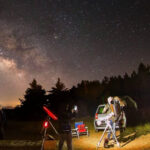
The best part of this Ioannina night tour is its reach. With a smart telescope, you may look at distant galaxies, nebulae, and star clusters, including galaxies so far away that each contains hundreds of billions of stars. This is not just a quick look at the Moon through a backyard telescope.
I like the Greek mythology constellation tour, which gives the star patterns a human story, and I like the chance to save images of the Cosmos straight to your phone. The main drawback is the remote setting: there are no toilets or cafes near the stargazing point, and even a summer night can turn cold.
In This Review
- Key points
- Why Kastritsa works for stargazing near Ioannina
- The first look: Moon, planets, and colored stars
- The green laser tour and Greek mythology
- The Milky Way without a telescope
- Smart telescope images of galaxies and nebulae
- A two-hour pace for beginners and families
- Seasonal start times and the changing sky
- What $47 buys you
- The practical details that shape the night
- Who should book this Ioannina astronomy tour
- Should you book it?
- FAQ
- Where does the Ioannina astronomy tour take place?
- How long does the stargazing session last?
- What time does the tour start?
- Is the tour conducted in English?
- What can I see through the telescopes?
- Is the tour suitable for children?
- What should I bring?
- Can the tour be canceled because of weather?
Key points
- Smart telescope views: Use an Unistellar eVscope to see deep sky objects that are difficult to make out with the naked eye.
- Sotiris leads the evening: The English-speaking astronomer combines science, storytelling, and clear explanations for beginners.
- Greek myths in the sky: A green laser points out constellations and connects them with familiar stories from Greek mythology.
- Kastritsa is a strong setting: The free archaeological site offers dark skies and views toward Ioannina and Lake Pamvotis before the stars appear.
- Timing changes with the season: Start times are around 21:30 in summer, 20:00 in spring and autumn, and 18:30 in winter.
- Bring serious warm clothing: Chairs are provided, but warm clothes and warm shoes are not.
Why Kastritsa works for stargazing near Ioannina
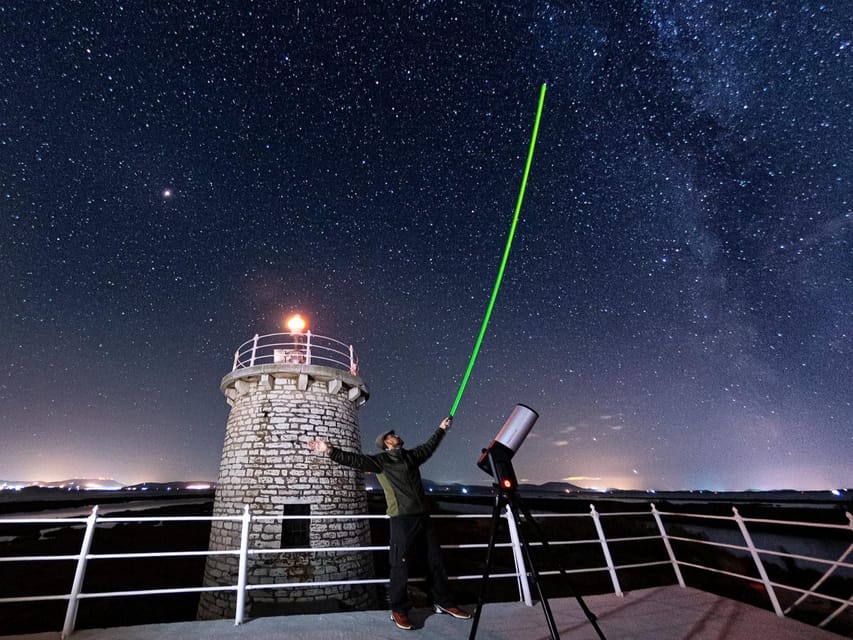
The meeting point is the Acropolis of Kastritsa, outside Ioannina. It is an archaeological site with views over the city and Lake Pamvotis, and it is free to visit whenever it is open. For this experience, its most useful feature is its darker sky compared with the city.
That matters because city lights wash out the faintest stars. At Kastritsa, you have a better chance of seeing the Milky Way with your own eyes, along with more stars than you may notice from central Ioannina. The site also gives you something to look at before the astronomy begins: the lake and city views are part of the setting.
You should not expect a cafe, restaurant, or toilet beside the telescope. Plan ahead before leaving town. The information provided does not include transport from Ioannina, so you should confirm how you will reach the meeting point when you book.
The archaeological site is also worth treating with care. It is not simply an empty field selected for convenience. You are meeting at a place with ancient remains and a broad outlook, so arrive with enough time to find the point without rushing into the start of the session.
You can also read our reviews of more tours and experiences in Ioannina.



The first look: Moon, planets, and colored stars
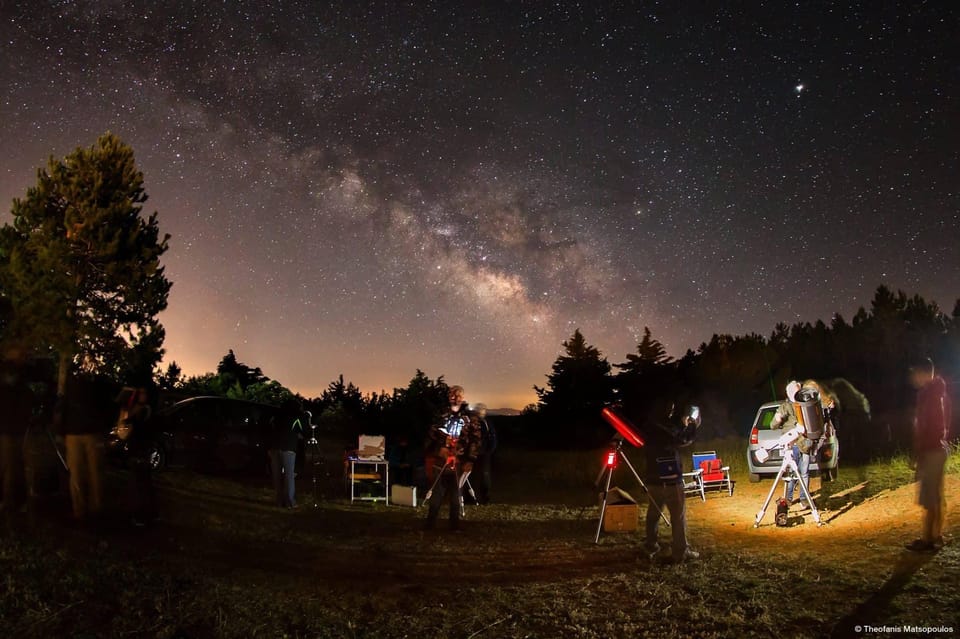
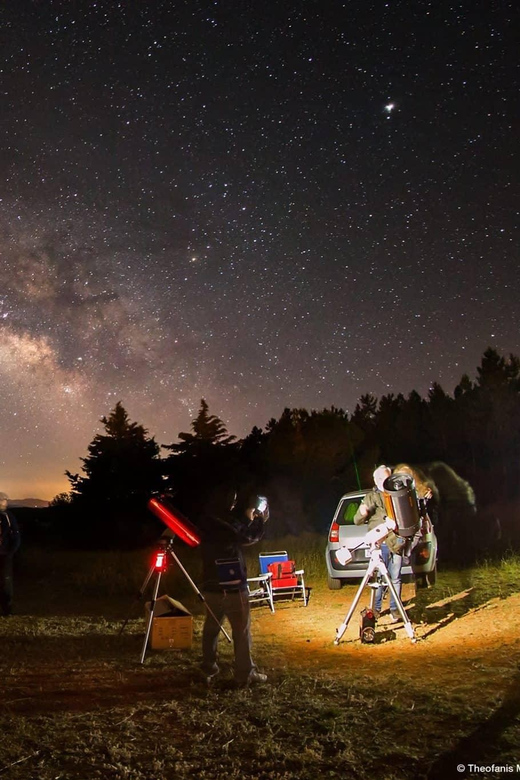
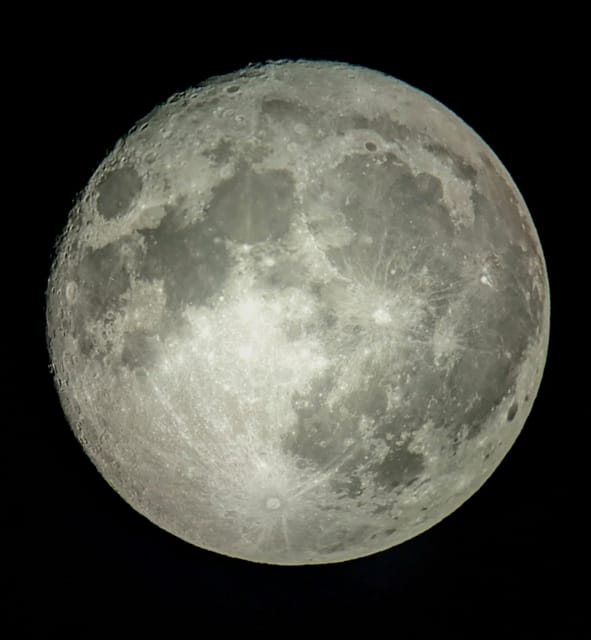
The evening usually begins with the most familiar objects in the sky. If the Moon or planets are visible, the guide uses an eight-inch telescope to bring them closer. The exact objects depend on the date and the sky, so no particular planet is guaranteed.
The Moon is often a strong introduction because its surface has visible detail through a telescope. It also gives children and first-time stargazers an immediate sense of what magnification can do. If a planet is in the right part of the sky, that may become the evening’s main target instead.
The guide also points out bright stars and explains why stars can appear in different colors. This moves the session beyond simple identification. You begin to connect what your eyes see with questions about what stars are made of and how they change.
That section includes the stories of red giants and white dwarfs. These terms can sound technical, but they help explain that stars are not all at the same stage. For a beginner, this is useful context before the telescope turns toward much fainter objects.
The green laser tour and Greek mythology
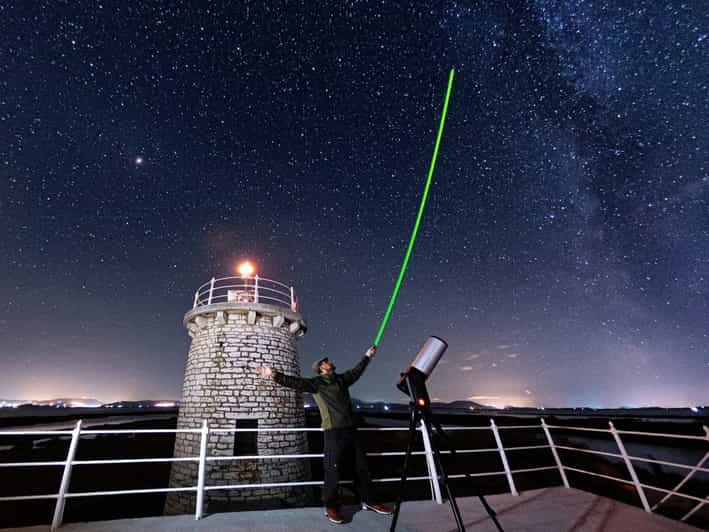
The green laser constellation tour is one of the most distinctive parts of the night. In a dark setting, the beam gives you a clear line to follow as the guide connects stars into recognizable patterns.
The Greek mythology link suits Ioannina especially well. Instead of memorizing isolated names, you get stories that explain why constellations were given their identities. The myths turn a broad sky into a set of characters and scenes that are easier to remember.
I like this format because it works for people who are not already interested in astronomy. You do not need to know a constellation in advance. You simply follow the laser, listen to the story, and start learning where certain patterns sit above you.
The tour takes place in English. The guide, Sotiris, is described as enthusiastic, clear, and skilled at explaining difficult ideas in an accessible way. That matters during a subject-heavy activity. A telescope can show you an object, but a good explanation helps you understand why it matters.
The Milky Way without a telescope
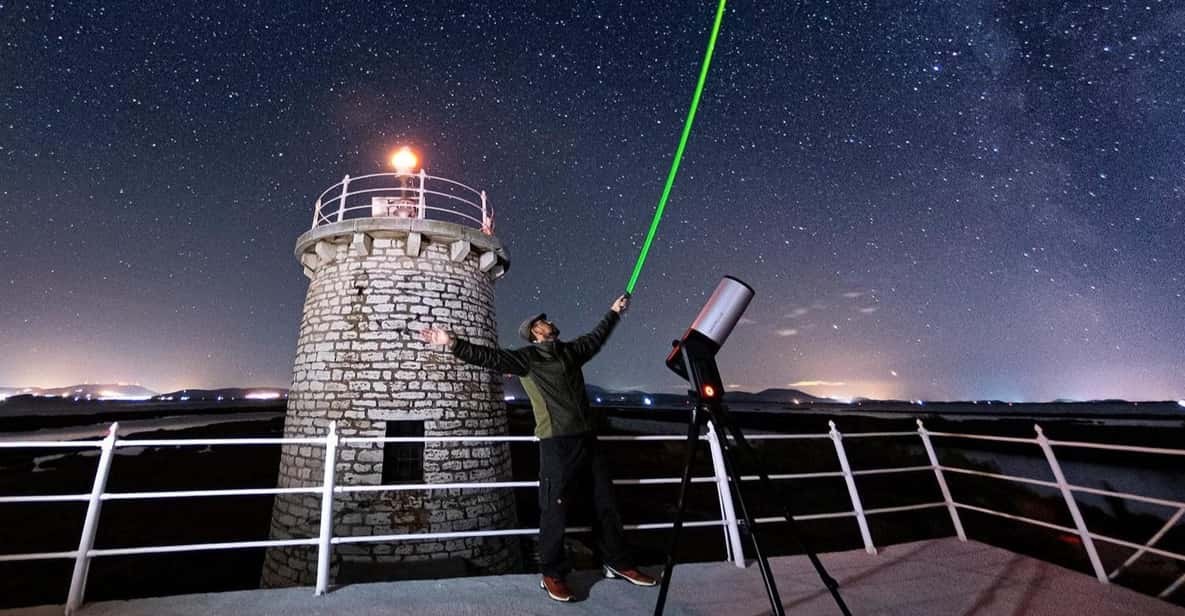
The Milky Way may be the most impressive sight of the evening, and you see it without any equipment. Its visibility depends on weather, darkness, and the time of year, but Kastritsa gives it a better chance than a bright urban location.
This is a useful reminder that stargazing is not only about machinery. The telescope reveals selected objects, while the unaided sky gives you scale. You can look up and see a band of light made by the combined glow of countless stars in our own galaxy.
The contrast between the naked-eye view and the telescope view is important. First, you gain a sense of the whole sky. Then the telescope directs your attention to a specific cluster, cloud, or galaxy. The two experiences support each other.
If you are bringing children, this can help keep the evening varied. The laser stories offer movement and narrative, the Milky Way offers a broad visual moment, and the telescope provides close-up targets.
Smart telescope images of galaxies and nebulae
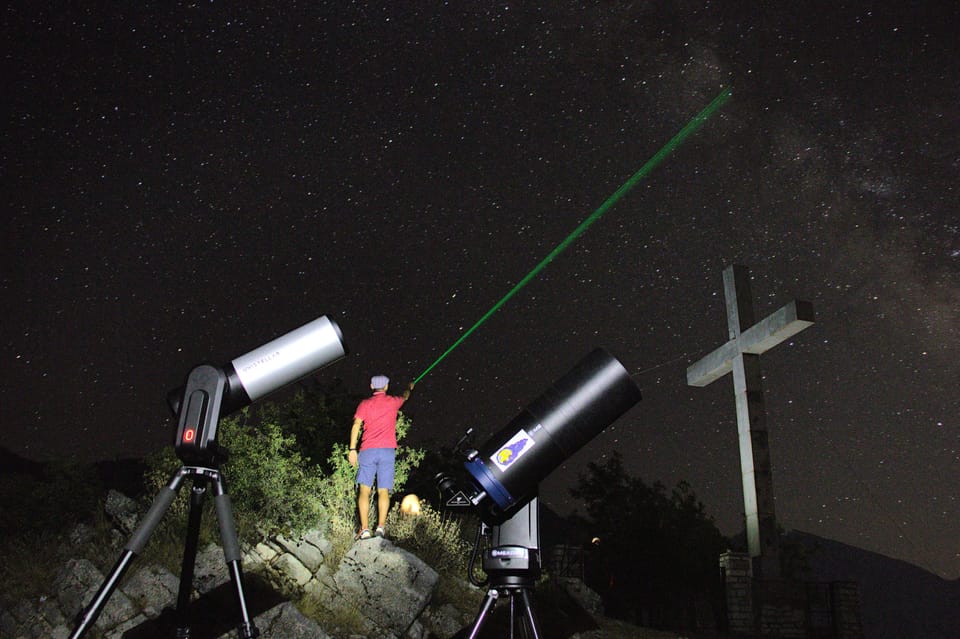
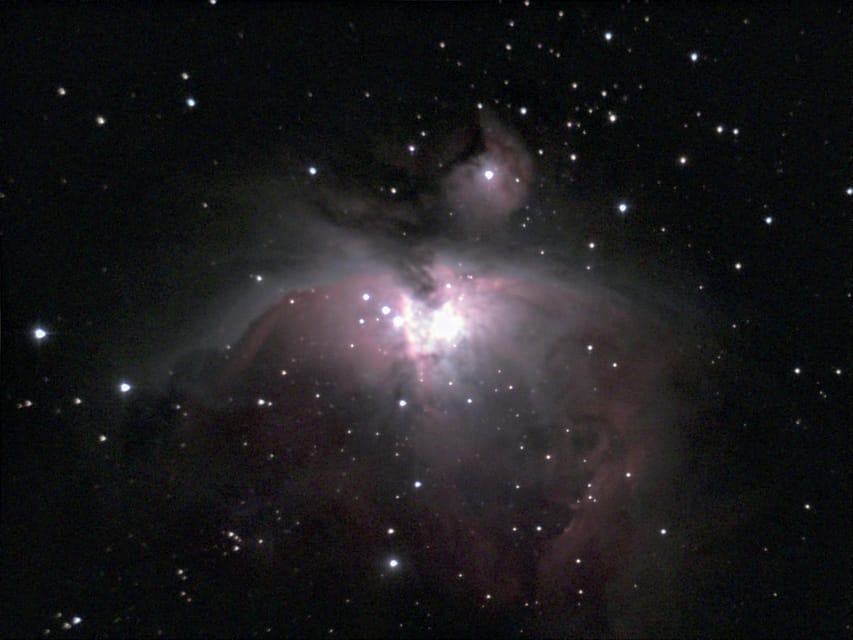
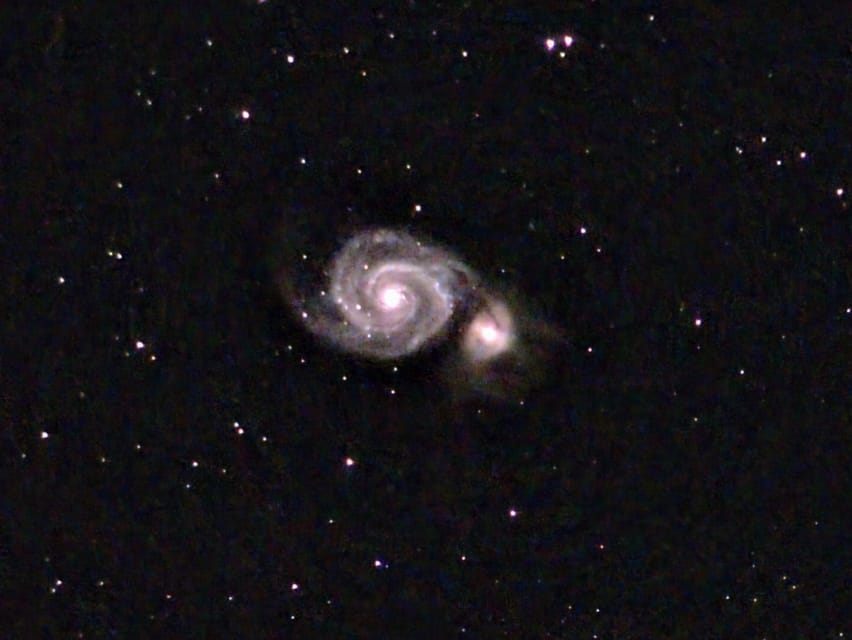
The Unistellar eVscope is the main tool for deep sky observation. You may use it to see star clusters, nebulae, and other galaxies. Some targets can include colliding galaxies, a striking reminder that the night sky is not static.
The eVscope also allows images of the Cosmos to be saved directly to your mobile phone. This is a practical touch. You leave with more than a memory of a faint blur in an eyepiece. You can keep a record of what the group observed and share it later.
Keep your expectations realistic. Deep sky objects do not look exactly like colorful space photographs from major observatories. Through a small public stargazing setup, you might see a soft patch, a compact cluster, or a hazy shape. The value is in seeing the actual object through a telescope and understanding its place in space.
That is where the guide’s explanations become important. A galaxy may appear as a small mark of light, but it can contain hundreds of billions of stars. A nebula may look faint, yet it represents a huge cloud connected with the life cycle of stars. The session gives those small views a much larger meaning.




A two-hour pace for beginners and families
The advertised duration is two hours, although the stated range is one to two hours. One recent booking described an evening that lasted three hours, so the exact length can vary. If you have a late dinner reservation or an early morning departure, leave some flexibility.
The tour is designed for beginners, which I consider a real strength. You do not need to know star names, understand optics, or arrive with astronomy experience. The guide explains the basic ideas as the night develops.
Children from age six are welcome. The chairs provided are helpful because standing outside in darkness for a long period can become tiring, especially for younger children. Still, families should bring warm layers and shoes. A child who is cold will not care how impressive a galaxy is.
The activity is not suitable for children under six or for people with visual impairments. Those limits make sense for an experience built around visual observation through telescopes and laser-guided sky viewing.
Seasonal start times and the changing sky
The starting time follows sunset and the season. Plan for approximately:
- 21:30 in summer
- 20:00 in spring and autumn
- 18:30 in winter
These are useful guide times, not something to treat as fixed. The exact meeting time is sent by WhatsApp on the day of the tour after 10:00. The time can change during the year as sunset shifts.
That same-day update is important. Keep your phone available and check WhatsApp after the stated time. Do not assume that the time shown when you first book will remain unchanged.
Winter starts early, but the cold is more serious. Summer starts late, and you may enjoy a longer evening before or after the session, but darkness does not mean warmth. The guidance specifically warns that nights can feel cold even in summer, particularly at a higher site such as Kastritsa.
Weather is the other variable. Poor conditions can lead to cancellation as late as the same day at 10:00. This is frustrating if you have built your schedule around the activity, but cloudy skies would make the telescope portion poor or impossible. The free cancellation policy allows you to cancel up to 24 hours in advance for a full refund, and you can reserve now while paying later.
What $47 buys you
At $47 per person, this is not the cheapest way to spend an evening in Ioannina. You are paying for an astronomy guide, specialized equipment, a selected dark-sky location, and time to ask questions and examine several types of objects.
The value is strongest if you want more than a quick telescope look. The session combines naked-eye stargazing, a laser constellation lesson, Greek mythology, explanations of stellar life, and smart telescope imaging. Those parts give the evening a clear progression instead of making it a single repeated view through an eyepiece.
The price includes the stargazing tour, the Unistellar eVscope, an eight-inch telescope when the Moon or planets are visible, the green laser tour, phone images, and chairs. Dinner, cafes, toilets, warm clothes, and any transport to the site are not included.
I would compare the cost with the kind of evening you want. If you already own a telescope and prefer quiet, independent observation, the price may feel high. If you are new to astronomy and want a guide to explain what you are seeing, the combination of equipment and instruction makes the fee easier to justify.
The practical details that shape the night
Wear more than you think you need. Bring a warm jacket, extra layers, and warm shoes. You may be standing or sitting outside for much of the session, and mountain or hilltop air can feel sharply colder after sunset.
Eat before you arrive and use a toilet in Ioannina before heading out. There are no nearby cafes or toilets at the stargazing point. That is a small detail, but it can determine how comfortable the entire two hours feels.
The tour is conducted in English. Sotiris is the named guide associated with the session, and his role is more than operating the telescope. He explains the science, tells the myths, points out the stars, and helps you understand the faint objects shown through the eVscope.
You should also accept that astronomy is controlled by conditions you cannot control. Clouds, poor visibility, and changing sunset times can affect the plan. The weather cancellation rule protects you from paying for a session that cannot deliver its main purpose, but it also means you need some flexibility in your Ioannina schedule.
Who should book this Ioannina astronomy tour
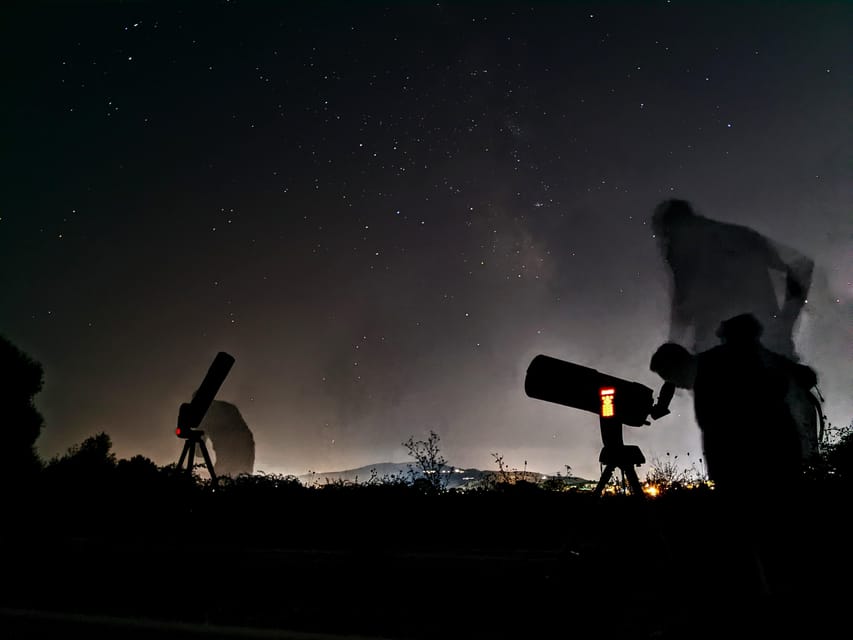
I would recommend it to first-time stargazers, couples looking for a quiet evening outside the city, and families with children aged six or older who can manage a late or cold outing. It is also a good choice if Greek mythology interests you and you want a local connection rather than a purely technical lecture.
You should book it if the idea of seeing a galaxy or nebula through a telescope excites you, even if you cannot yet identify a single constellation. The format does not demand prior knowledge.
I would be more cautious if you dislike late starts, cold outdoor activities, uncertain weather, or a meeting point without facilities. The session also depends heavily on sight. If you want a guaranteed view of a particular planet or a long list of named objects, this experience cannot promise that because the program follows the actual sky.
Should you book it?
Book this tour if you want a guided introduction to the night sky with real equipment, clear storytelling, and a dark setting outside Ioannina. The strongest reasons are the Unistellar eVscope, the Greek mythology constellation tour, and the chance to save telescope images to your phone.
Skip it if you prefer a self-guided evening, need indoor comforts, or cannot adjust your plans for weather and seasonal timing. For everyone else, $47 is a fair price for a focused two-hour astronomy experience, provided you arrive fed, warmly dressed, and ready to let the sky set the schedule.
FAQ
Where does the Ioannina astronomy tour take place?
The meeting point is the Acropolis of Kastritsa, outside Ioannina. It is an archaeological site with views of Ioannina and Lake Pamvotis, and it is considered the darkest nearby place for stargazing.
How long does the stargazing session last?
The advertised duration is two hours, with the stated activity range listed as one to two hours. The exact length can vary.
What time does the tour start?
The usual start is around 21:30 in summer, 20:00 in spring and autumn, and 18:30 in winter. The exact meeting time is sent by WhatsApp on the day of the tour after 10:00.
Is the tour conducted in English?
Yes. The instructor and tour are in English.
What can I see through the telescopes?
Depending on the night, you may see the Moon, planets, bright stars, star clusters, nebulae, and distant galaxies. Some galaxies may even be colliding.
Is the tour suitable for children?
It is suitable for children aged six and older. Children under six are not accepted.
What should I bring?
Bring warm clothing and warm shoes. Even summer nights can become cold, particularly at a higher outdoor location.
Can the tour be canceled because of weather?
Yes. Poor weather can cause cancellation as late as 10:00 on the day of the tour. You can also cancel up to 24 hours in advance for a full refund.