REVIEW · IOANNINA
4 Hour Ioannina Private Culinary City Experience
Book on Viator →Operated by Alpine Zone · Bookable on Viator
Ioannina’s food is best understood one small plate at a time. This private, four-hour walk begins at the Clock Tower, then links city history with bougatsa, Epirus cheeses, tsipouro, gyros, lamb souvlaki, and siropiasta. I like the private format and the way the food stops break up the sightseeing. I also like that you get both familiar Greek street food and regional specialties, not just a parade of standard restaurant dishes.
The main consideration is the price: $107.23 per person is a serious spend for a walking food tour. You are paying for a private experience, several tastings, and a guide focused on your group, so the value is strongest if you want a guided introduction to Ioannina rather than a cheap lunch.
In This Review
- Key points at a glance
- Starting at Ioannina’s Clock Tower at noon
- Bougatsa and the first city story
- Local cheeses with tsipouro
- Gyros by way of Greek street food
- Lamb souvlaki and a charcoal-cooked classic
- A modern turn using local ingredients
- Finishing with siropiasta
- What the private format adds
- How much value do you get for $107.23?
- Walking, timing, and practical comfort
- Who should book this Ioannina food walk?
- Should you book it?
- FAQ
- Where does the Ioannina culinary tour start?
- What time does the tour begin?
- How long does the experience last?
- Where does the tour end?
- Is this a private tour?
- Is the tour conducted in English?
- What foods and drinks are included?
- Does the tour require walking?
- Can I cancel for a full refund?
Key points at a glance
- Clock Tower starting point: Meet at noon at Ioannina’s old administrative center, a useful place to begin learning how the city developed.
- Seven-part tasting route: Expect bougatsa, local cheeses, tsipouro, gyros, lamb souvlaki, a modern local preparation, and siropiasta.
- Epirus dairy focus: The cheese stop explains how local herbs and pasture affect the milk and dairy products of the region.
- History with a view: The first food break is paired with a view toward southeast Ioannina.
- Private guiding: Only your own group takes part, with guides including Alexis, Alexander, Katerina, and Vasilis.
- Entirely on foot: Wear comfortable shoes and tell the operator about food allergies before you go.
Starting at Ioannina’s Clock Tower at noon
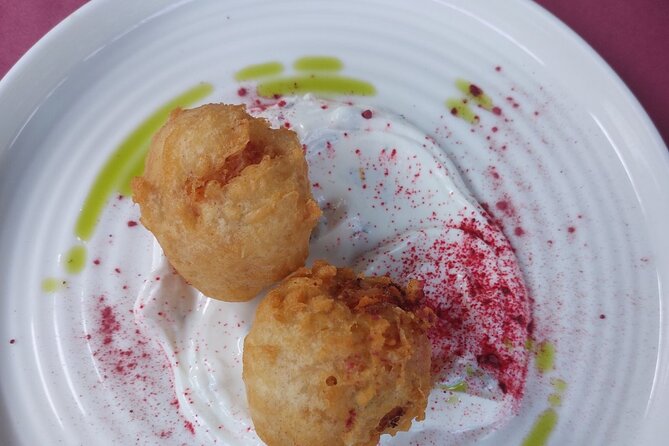
The tour starts at the Clock Tower of Ioannina at 12:00 p.m. This is more than a simple meeting point. It sits around the old administrative center of the city, giving your guide a natural place to set the scene before the eating begins.
Ioannina is a city where food and civic life sit close together. Starting here lets you connect the streets, public buildings, and old center with the dishes you are about to taste. A private guide can also adjust the amount of background information to your interest. If you want more history, ask for it. If you are mainly here for the food, the route keeps moving.
The timing makes sense for a culinary walk. You are not being asked to eat a full breakfast and then tackle a long list of samples at dawn. Instead, the first bite arrives around midday, when bougatsa works as a light meal, snack, or sweet opening.
You can also read our reviews of more tours and experiences in Ioannina.



Bougatsa and the first city story
Your first taste is bougatsa, a pastry that can be sweet or savory. It is especially popular as a morning pick-me-up, but here it serves another purpose: it gives you an easy introduction to the food culture of Ioannina while your guide begins tying the city to the route.
Bougatsa is a good first stop because you can learn something from the contrast between versions. A sweet preparation and a savory one can feel like two different foods, even though both use pastry. The tour description does not promise a particular filling or style, so you should treat this as an introduction rather than a formal pastry lesson.
After this bite, the route includes a first look at Ioannina’s past and a fine view toward the southeast of the city. That pairing is one of the smarter features of the experience. You are not simply walking between eateries. You are given a pause to see the city and connect the setting with what your guide is explaining.
Local cheeses with tsipouro
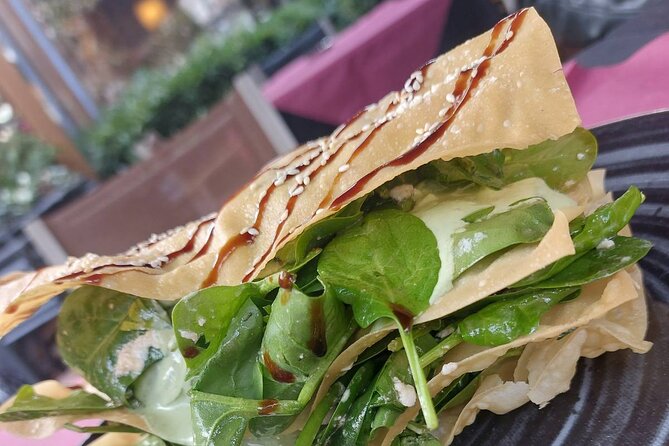
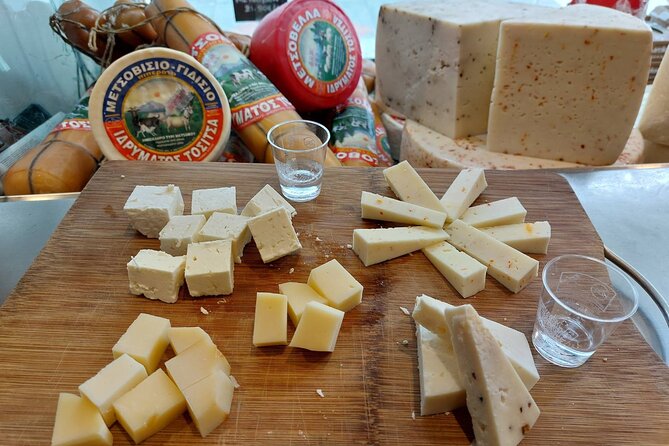
The cheese tasting is likely to be the most region-specific part of the route. Epirus is known here for dairy shaped by the surrounding countryside, where herbs contribute to the quality of the milk. That gives the stop more purpose than a generic cheese plate.
You will sample a platter of local cheeses and pair it with tsipouro, the local aperitif. Tsipouro can be a sharp introduction if you have never tried it, so take your first sip slowly. One useful feature of the private setting is that you can ask about the drink, the cheeses, and the customs around serving them without worrying about holding up a large group.
This is also where the tour moves beyond the most familiar Greek foods. Gyros and souvlaki are easy to find across Greece, but a regional cheese tasting gives you a better sense of Epirus. I would pay close attention to differences in texture, salt, and strength rather than rushing through the plate.
The alcohol matters when planning your day. The tour includes tsipouro, and the route contains several more food stops. You may want to keep the rest of your schedule light, especially if you are not used to strong aperitifs.
Gyros by way of Greek street food
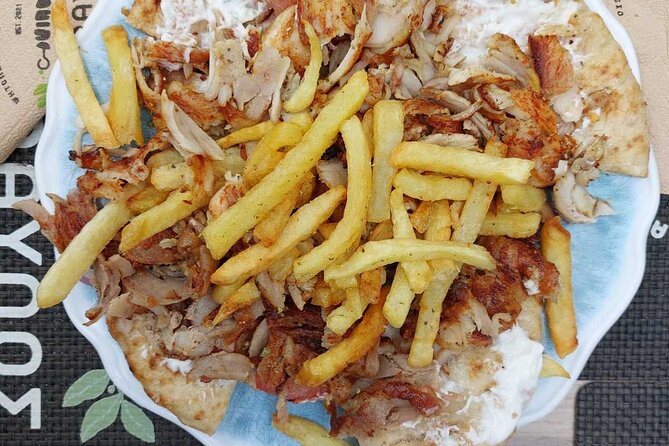
Next comes gyros, described as thin-cut grilled meat served with tzatziki in pita. This is Greek street food in its most familiar form, and it provides a useful change after the cheese and tsipouro.
A good culinary tour should not make every stop feel exotic. Gyros gives you something recognizable, but the guide can place it in the local setting and help you notice what makes the version in front of you different. The reviews specifically describe a delicious kebab by the waterfront, although the supplied route information does not promise that every group will eat at the exact same spot. You should expect the food to be part of a walking city route, not a seated meal at one restaurant.
The portion sizes are not stated. Since the tour includes several tastings, you should expect a succession of samples rather than a single large lunch. That is useful if you want variety, but less ideal if you are looking for one substantial meal.
Lamb souvlaki and a charcoal-cooked classic
The next street-food stop is lamb souvlaki. The meat is cut into cubes, marinated, threaded onto wooden skewers, and cooked over charcoal. This detail matters because it gives you a clear point of comparison with gyros: one is thin-cut meat in pita, while the other focuses on skewered lamb and the flavor of the grill.
Lamb also gives the route a stronger regional feel than a standard chicken or pork souvlaki might. You get to taste how marinade, charcoal, and the character of the meat work together. If you like grilled food, this should be one of the stops to anticipate.
The tour is not designed for people who want to avoid meat. The listed tastings include gyros and lamb souvlaki, and no vegetarian alternative is described. Food allergies should be reported in advance, but you should also ask about dietary restrictions before booking if you need more than an allergy accommodation.


A modern turn using local ingredients
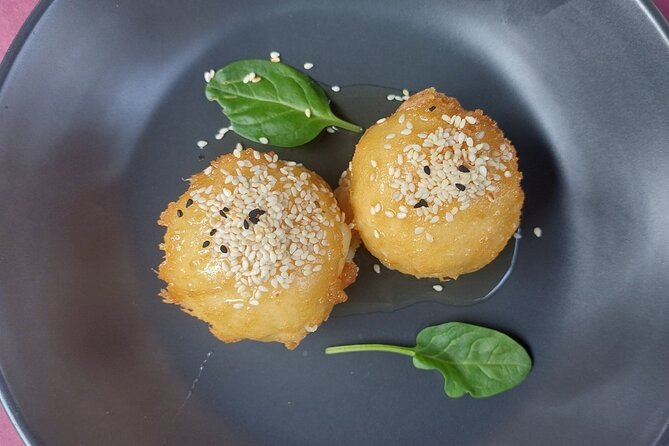
After the more traditional street foods, the route includes a dish that combines local ingredients and recipes in a new form. The exact dish is not specified, which is a small drawback for anyone planning around particular foods.
Still, this stop has a clear role. It shows that local cooking is not frozen in the past. A food walk that includes only old recipes can become a history lesson with snacks. This newer preparation gives the route some contrast and may be the point where you see how regional products can be used in a less traditional way.
Because the dish is not named, do not book this tour expecting a fixed tasting menu with every item spelled out. The known list is enough to understand the style of the experience, but the final creative course remains a pleasant unknown.
Finishing with siropiasta
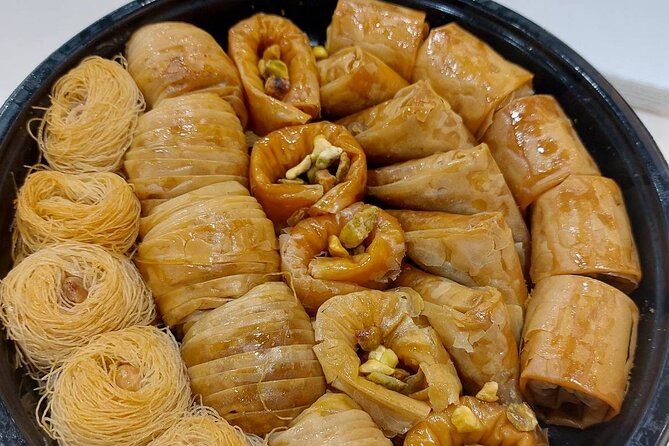
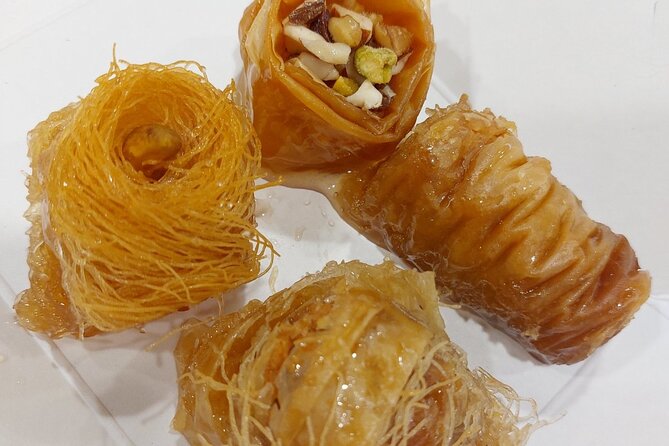
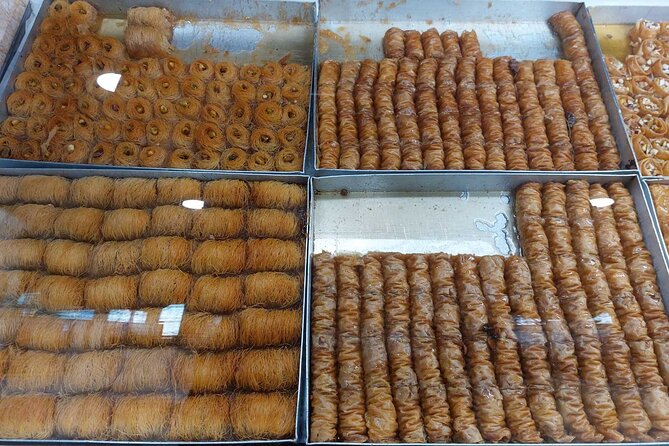
Dessert is siropiasta, made with thin pastry leaves and nuts, then finished after baking with syrup, lemon, and water. It is a fitting end to a route that has moved from pastry to dairy, grilled meat, and street food.
The lemon is important here. Syrup-heavy desserts can be very sweet, while lemon adds a sharper edge. You get the familiar Greek combination of crisp pastry, nuts, and syrup, but with a regional name and a clear place at the end of the meal.
This is not just a sweet extra. Ending with a local dessert helps give the route a complete shape. You begin with bougatsa, another pastry that may be sweet or savory, and finish with a more elaborate syrup-soaked preparation. If you enjoy comparing textures, notice how the two pastries differ.
What the private format adds
Only your group participates, which is the strongest reason to choose this tour over a larger food walk. A private format makes it easier to ask for explanations, slow down at a historical stop, or move along when everyone is ready.
The named guides associated with the experience include Alexis, Alexander, Katerina, and Vasilis. Alexis is specifically praised for linking food and drink with the history of Ioannina, while Alexander is described as friendly and informative during an old-city overview. Katerina and Vasilis are associated with a gastro-historical walk and with sharing local food customs.
You should not assume that a particular guide is guaranteed unless the operator confirms it. If guide choice matters to you, ask when booking. The important point is that the experience is built around personal guiding rather than a recorded commentary or a large group moving from stop to stop.
How much value do you get for $107.23?
At $107.23 per person, this tour costs more than buying gyros, souvlaki, and dessert on your own. That comparison is fair, but incomplete. The price also covers a four-hour private walk, multiple tastings, historical interpretation, and help choosing places and foods in a city you may not know well.
The value is best if you have limited time in Ioannina and want an efficient first look at the old city. You eat as you go, rather than spending four hours on a standard sightseeing walk and then having to find lunch afterward. You also receive local context that is hard to get by ordering dishes without guidance.
The value is weaker if you are comfortable exploring alone, mainly want a large meal, or are traveling on a tight budget. The portions are not listed, and the experience is structured around several bites rather than a guaranteed full lunch. Group discounts may improve the cost for a larger party, but the exact discount is not provided.
A private food walk can also help you plan the rest of your stay. The guiding team has been able to offer suggestions for restaurants and nearby things to do, which is useful if this is your first day in Ioannina. Think of the tour as both a meal in stages and a practical orientation to the city.
Walking, timing, and practical comfort
The whole experience takes place on foot and ends back at the Clock Tower meeting point. There is no included transport, so comfortable shoes are essential. The duration is approximately four hours, which is long enough to feel like a substantial half-day activity.
You should avoid scheduling a tight appointment immediately afterward. Food stops, conversation, and history can make the timing less exact than a simple point-to-point transfer. The noon start also carries you through the main part of the day, so keep that in mind when planning a museum visit, boat trip, or afternoon departure.
The activity is offered in English and uses a mobile ticket. Confirmation is provided at booking, and the starting location is near public transportation. Most people can take part, but the operator says the route is entirely on foot, so anyone who has difficulty walking should consider that before reserving.
Tell the operator about any food allergy in advance. That is especially important here because the route includes pastry, dairy, nuts, meat, and alcoholic drinks. The supplied information does not promise substitutions, so ask what can be adjusted rather than assuming every tasting can be changed.
The experience requires good weather. If poor weather causes cancellation, you are offered another date or a full refund. You can cancel for a full refund up to 24 hours before the start time, but cancellations or changes made less than 24 hours ahead are not accepted and are not refunded.
Who should book this Ioannina food walk?
I would recommend it to couples, families, and small groups who want a private introduction to Ioannina through food. It also suits anyone who values conversation with a guide and wants history mixed into the meal rather than separated into a formal sightseeing tour.
Food lovers will get the most from the regional cheese and tsipouro stop, the lamb souvlaki, and the chance to compare traditional foods with a newer preparation. If you are curious about Epirus but do not know where to start, this route gives you several useful reference points.
It is less suited to strict vegetarians, people avoiding alcohol, or anyone who wants a fixed menu with exact portion details. It may also feel expensive if your main goal is simply to eat gyros and dessert. In that case, you can spend less on your own, though you will give up the guide’s historical context and the convenience of a planned route.
Should you book it?
Book this tour if you want a private, food-led introduction to Ioannina and value a guide who can explain both the city and the table. The strongest parts are the range of tastings, the Epirus cheese and tsipouro pairing, and the personal approach associated with guides such as Alexis, Alexander, Katerina, and Vasilis.
Skip it if you need a low-cost meal, a vegetarian route, or a fully specified menu. For everyone else, the price is reasonable when you treat the experience as a four-hour private city orientation with food included, not as a simple restaurant crawl.
FAQ
Where does the Ioannina culinary tour start?
It starts at the Clock Tower of Ioannina, Ioannina 452 21, Greece.
What time does the tour begin?
The start time is 12:00 p.m.
How long does the experience last?
The experience lasts approximately four hours.
Where does the tour end?
It ends back at the Clock Tower meeting point.
Is this a private tour?
Yes. Only your own group participates in the activity.
Is the tour conducted in English?
Yes, the experience is offered in English.
What foods and drinks are included?
The route includes bougatsa, local cheeses, tsipouro, gyros, lamb souvlaki, a dish combining local ingredients and recipes in a newer form, and siropiasta.
Does the tour require walking?
Yes. The whole tour takes place on foot.
Can I cancel for a full refund?
Yes, if you cancel at least 24 hours before the experience start time. Cancellations made less than 24 hours ahead are not refunded. If poor weather causes the operator to cancel, you are offered another date or a full refund.