REVIEW · GREECE
Kavala: Authentic City Tour by Eco Friendly Tuk Tuk
Book on GetYourGuide →Operated by Xplora City · Bookable on GetYourGuide
Kavala is best seen from a tiny tuk-tuk. This one-hour loop mixes an eco-friendly tuk-tuk ride with a multilingual SmartGuide audio app, so you’re not just moving between sights—you’re learning while you go.
I especially like two things about this tour: the comfortable, open-air way it gets you around town, and the SmartGuide audio that’s available in several languages through disposable headphones. You get enough structure to feel oriented fast, even if Kavala is your first Greek stop.
One thing to consider: the commentary isn’t always perfectly clear while you’re cruising, since the tuk-tuk makes noise in motion.
In This Review
- Key things to know before your Kavala eco tuk tuk ride
- Meet at Xplora CitySpot, then roll out with coffee in hand
- How the 1-hour route actually feels on the ground
- Apostle Paul’s Monument: the first step into Kavala’s Christian story
- Imaret and the Aegean viewpoint: Ottoman-era details plus a sky-and-sea reward
- Mehmet Ali’s Residence Museum: a longer stop for architecture lovers
- Kamares Aqueduct: the 16th-century Ottoman engineering you can spot instantly
- A secret stop for a quick, different perspective
- Tobacco warehouses: how Kavala grew beyond the seaside postcard
- Great Club Kavala and the port area: where the city meets the sea
- Municipal Garden: the calm reset before you head back
- Price and value: what you really get for $47
- Who this tour suits (and who should skip it)
- Final call: should you book the Kavala eco tuk tuk tour?
- FAQ
- What’s the duration of the Kavala Authentic City Tour by Eco Friendly Tuk Tuk?
- Where do I meet for the tour?
- Is the tour private or small-group only?
- What languages are included in the audio guide?
- What’s included in the price?
- What should I bring?
- Is food or alcohol allowed on the vehicle?
- Is the tour suitable for wheelchair users or mobility impairments?
- Can I cancel and get a full refund?
Key things to know before your Kavala eco tuk tuk ride
- Eco-friendly, open-air tuk-tuk makes short hops between viewpoints feel easy
- SmartGuide audio runs through disposable headphones in multiple languages
- Photo stops are built in so you’re not stuck rushing past the good angles
- Apostle Paul’s Monument + Ottoman-era waterworks give you major history in a small time window
- Tobacco-industry architecture shows how Kavala grew beyond the seaside postcard
Meet at Xplora CitySpot, then roll out with coffee in hand
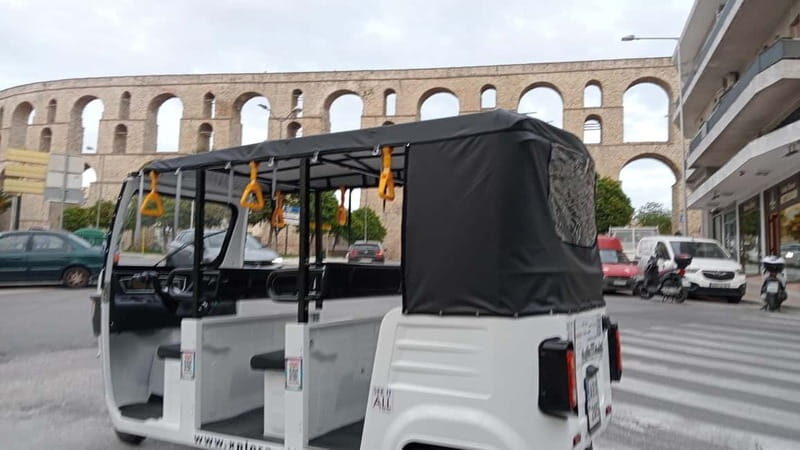
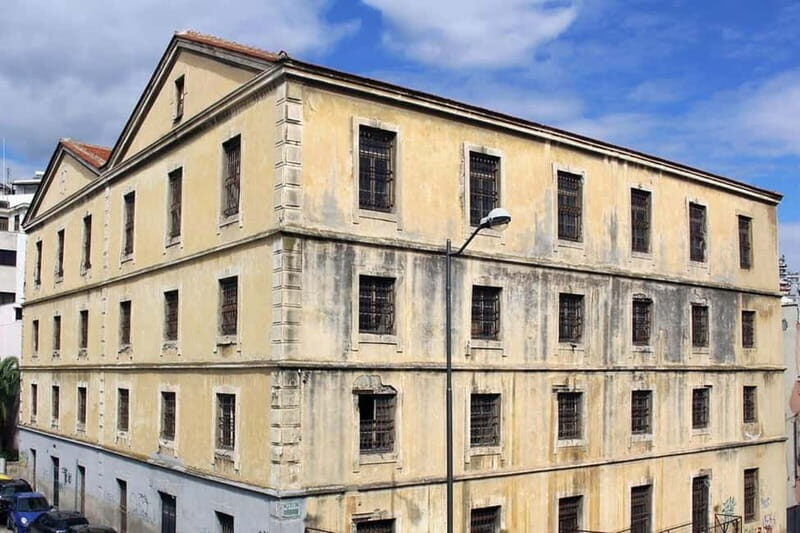
Your tour starts at CitySpot by Xplora, behind the old courthouses and across from the Kamares. It’s easy to spot when you’re looking for the large LED sign and the friendly faces on it. You’ll get a briefing, and yes, there’s coffee and a warm welcome while everyone gets sorted.
This matters because Kavala has hills and viewpoints. Instead of jumping straight into the streets without context, you get a quick orientation first—what you’ll see, how the timing works, and how to get your photos without chaos. Then you’re off in the eco-friendly tuk-tuk, which feels like a fun local shortcut rather than a stiff bus tour.
You can also read our reviews of more city tours in Greece
How the 1-hour route actually feels on the ground
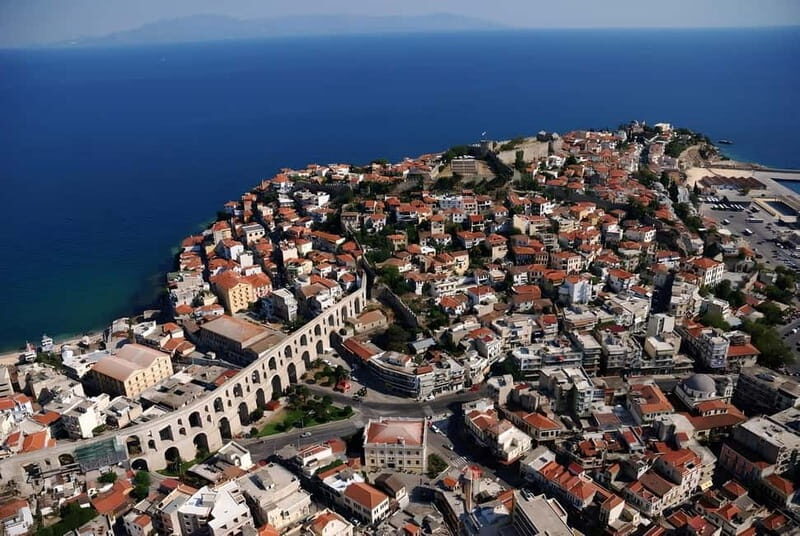
This is a short, concentrated city circuit. Expect a mix of photo stops and short pass-bys, with enough time at key spots to take pictures and listen before moving on. The route is designed for quick “see it, understand it, move on,” which is ideal if you’re on a tight schedule or you’re basing yourself in town for only a day or two.
There’s a practical rhythm to it:
- When you stop, you can hear the story better and ask questions.
- When you drive, the tuk-tuk noise can make audio harder to catch, so it helps to keep an eye on the sights as much as the soundtrack.
If your goal is a deep, multi-hour museum-style history day, this won’t replace that. But if you want to get your bearings and understand Kavala’s major chapters fast, this format hits the mark.
Apostle Paul’s Monument: the first step into Kavala’s Christian story
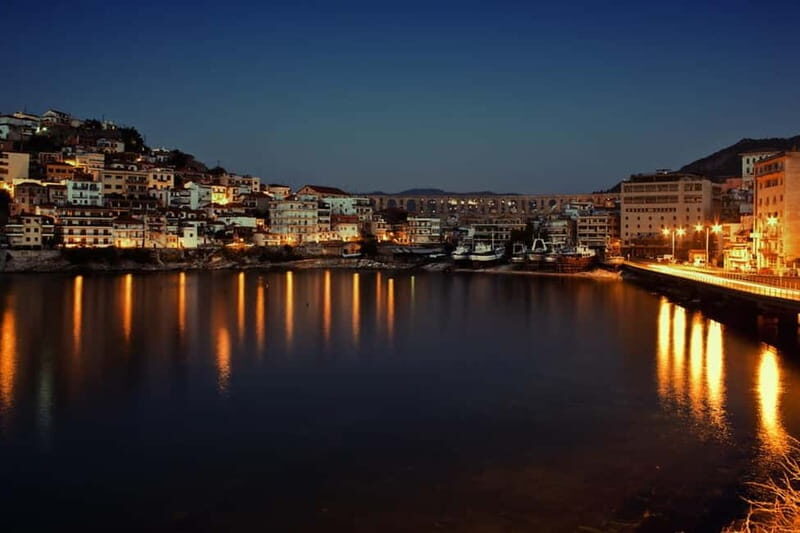
The tour begins with a photo stop at Apostle Paul’s Monument. This site marks the place where Apostle Paul first set foot in Europe—a big deal for Christian history and a key reference point for understanding why Kavala shows up in religious maps.
What I like about this stop is how it gives you a “why here?” anchor right away. After this, the rest of the tour makes more sense: you’re moving through a city that has layered identities—Greek, Ottoman, maritime, and industrial—rather than just collecting random old buildings.
You’ll have only a short window here, so bring your camera ready. Look for good angles that include the monument with surrounding context, not just a close-up.
Imaret and the Aegean viewpoint: Ottoman-era details plus a sky-and-sea reward
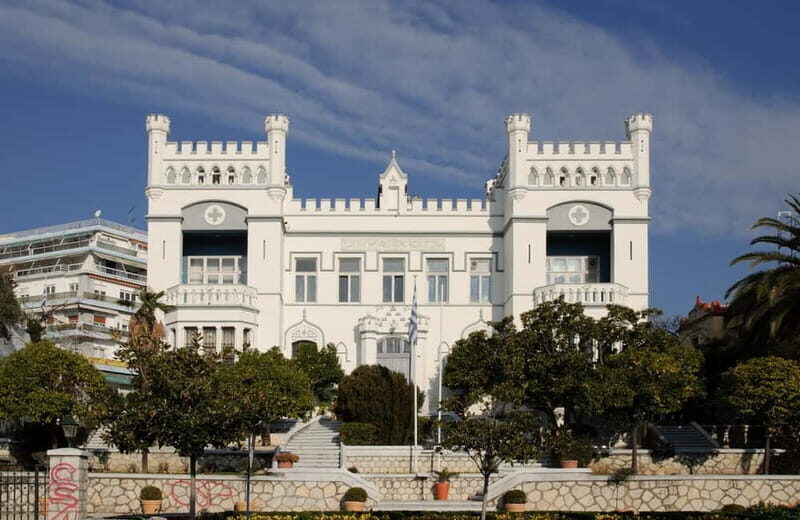
Next you pass by Imaret Kavalas, an important landmark connected to Kavala’s Ottoman past. You don’t linger long here, but it’s still worth noticing because Imaret-style architecture often signals more than a building—it hints at how power, religion, and community life were organized in the city over time.
From there, you’ll be in the area for the Aegean view from Mohammed Ali’s Square. Even if you’re not a “take-a-thousand-photos” person, this is the part where the city opens up visually. It’s one of those moments where the photo doesn’t just document a sight—it helps you understand Kavala’s position on the coast and why the port matters so much.
Mehmet Ali’s Residence Museum: a longer stop for architecture lovers
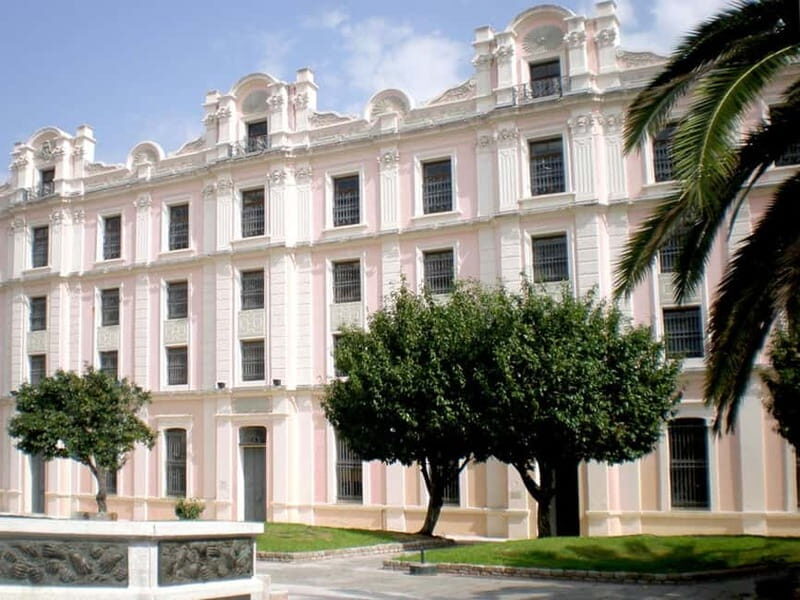
You get a more substantial photo stop at Mehmet Ali’s Residence Museum (about fifteen minutes). This is the time slot where you can slow down a bit and focus on what you’re seeing, rather than simply arriving and leaving.
Why it’s a good use of time: residence museums tend to show you not just history, but taste—how people lived, how the city wanted to present itself, and what the elite landscape looked like from the inside and out. Even if you don’t go inside (the tour is structured around stops and sight views), you’ll still get plenty to work with for photos and context.
Also, this is the moment to ask your driver questions if you have them. Many drivers are happy to explain what matters most about the buildings you’re seeing.





Kamares Aqueduct: the 16th-century Ottoman engineering you can spot instantly
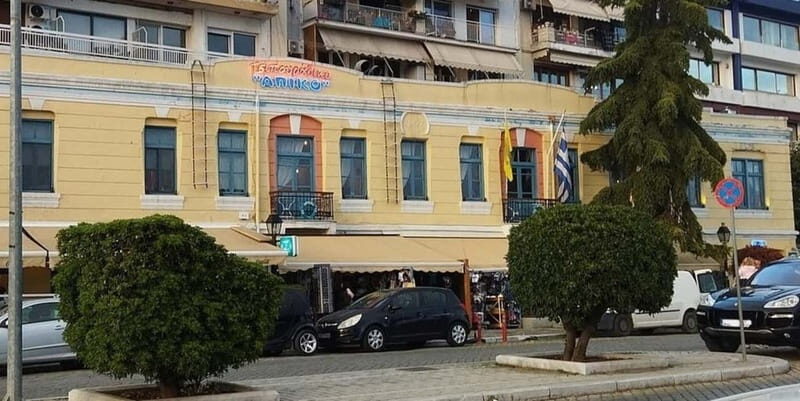
Then comes the Aqueduct of Kavala, known for the Kamares. Dating back to the 16th century, it’s one of those sights you recognize even if you can’t place it yet—long stone arches carrying water where it needed to go.
This stop is short, but it’s impactful because the aqueduct isn’t just a pretty structure. It’s practical history you can visually follow. You can trace the arches and imagine the system working at full capacity, long before modern plumbing existed.
If you’re the type who likes architectural “geometry,” this is your moment. Try a photo that shows the aqueduct against the street lines so you get a sense of scale.
A secret stop for a quick, different perspective
There’s also a secret stop built into the route—about five minutes—designed for an Instagram-style angle and a different view of the city. You might not get a huge amount of time here, but the point is variety.
I treat short “extra” stops as photo currency. If you already have photos you like from the main sights, use this one for something different: a skyline angle, a viewpoint over rooftops, or a composition that makes Kavala feel more layered.
Tobacco warehouses: how Kavala grew beyond the seaside postcard
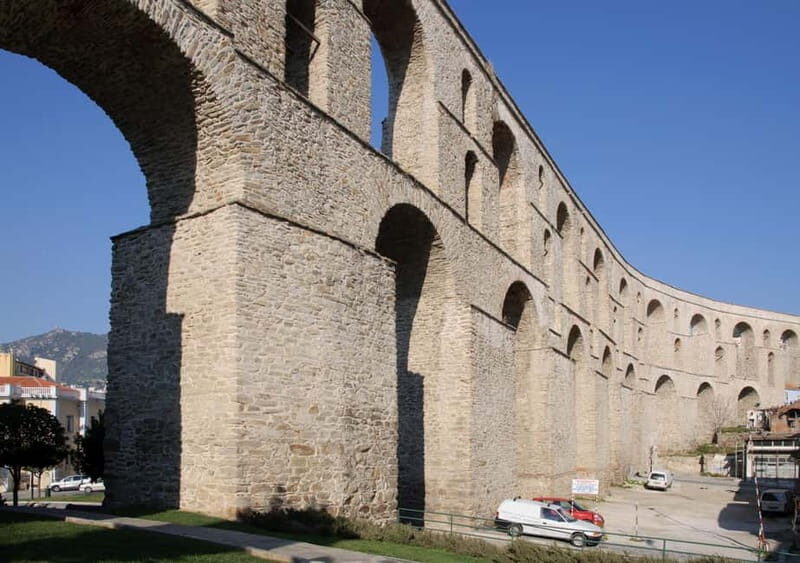
Kavala’s industrial story shows up through tobacco-related architecture. Along the way you pass by Tsimino Aaron Warehouse, and later you see the Municipal Tobacco Warehouse.
These buildings aren’t just old. They’re evidence of how trade and production shaped the city’s economy, its urban design, and even how neighborhoods developed. Tobacco warehouses are often sturdy, repetitive in shape, and visually strong—perfect for photos because they have lines, rhythm, and texture.
It’s also a reminder that Kavala’s identity isn’t only about beaches and viewpoints. You’re seeing the working city as much as the scenic city.
Great Club Kavala and the port area: where the city meets the sea
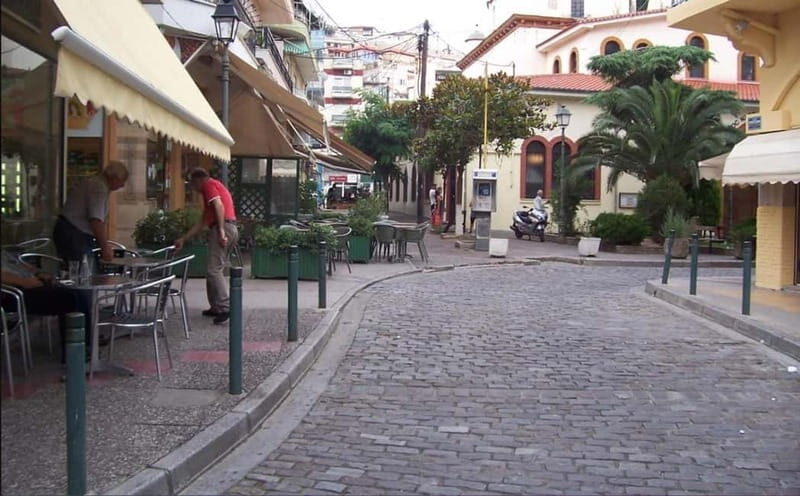
The tour includes a photo stop at Great Club Kavala, with time to capture it properly (around ten minutes). That pause helps because it’s often easier to photograph a building with a longer moment than it is at a quick street corner.
Finally, you head to the port area for a photo stop at Λιμάνι Καβάλας. This is where maritime history comes into play. Ports are where goods move, people meet, and the city’s trade links become visible. Even if you’re not going to sea today, it helps to stand where shipping life once shaped daily rhythms.
I like ending near the water because it wraps the story up. After monuments, Ottoman structures, and warehouses, the port brings you back to the big organizing theme of Kavala: connection to the Aegean.
Municipal Garden: the calm reset before you head back
For the last part of the tour, there’s time for a stroll through the Municipal Garden. It’s a welcome break from roads, hills, and constant looking.
This is the practical “cool down” moment. You can catch your breath, refocus your feet for the walk-back if needed, and even review the photos you’ve taken so far—so when you leave the tour, you know exactly what you want to see again on your own.
Price and value: what you really get for $47
At $47 per person and about one hour, this tour is priced like a focused experience, not a long sightseeing day. For that money, you’re getting:
- an eco-friendly tuk-tuk ride
- a driver (Greek and English)
- the SmartGuide multilingual audio app via disposable headphones
- bottled water
You’re also getting time designed for understanding, not just transportation. That’s the value part: the route hits major categories quickly—religious history, Ottoman-era architecture, industrial tobacco sites, and the port—plus photo stops so you can actually remember what you saw.
Is it cheap? Not exactly. But it’s fair for the mix of transport + narration + guidance within a single hour, especially if you want a quick start before exploring independently later.
If you’re traveling solo, a tour like this can be a shortcut to confidence. You’ll know where things are, what the main sights mean, and which areas are worth revisiting.
Who this tour suits (and who should skip it)
This tour is a strong fit if you:
- want a first-timer orientation to Kavala
- like history and architecture but don’t want a half-day commitment
- enjoy photo stops with just enough time to get the shot
- prefer a small, structured experience with multilingual audio
It’s also a fun choice if you like guided storytelling. You’ll hear explanations and you’ll have a chance to ask questions during stops, and the experience can feel friendly rather than rigid.
Skip it if you have mobility, wheelchair, visual, or hearing-impaired needs. The tour isn’t listed as suitable for those situations, and the tuk-tuk format plus street environments may not work for everyone.
Final call: should you book the Kavala eco tuk tuk tour?
If you’re short on time and want a smart introduction to Kavala’s major sights, I’d book this. It’s built for getting your bearings fast, and the combination of eco tuk-tuk transport plus multilingual SmartGuide helps you understand what you’re seeing instead of just collecting images.
If you want a museum-deep day, or you’re sensitive to audio clarity while moving, you might prefer longer independent exploring or a different format. But for a one-hour “see and understand” city circuit, this is a practical way to get real value out of your time in East Macedonia and Thrace.
FAQ
What’s the duration of the Kavala Authentic City Tour by Eco Friendly Tuk Tuk?
The tour lasts 1 hour.
Where do I meet for the tour?
You meet at CitySpot by Xplora, behind the old courthouses and across the street from the Kamares. There is a large LED sign you can look for.
Is the tour private or small-group only?
It’s listed as private or small groups available.
What languages are included in the audio guide?
SmartGuide audio is available in Greek, English, Bulgarian, Romanian, Russian, and Turkish. The driver is listed as Greek and English.
What’s included in the price?
Included items are the driver, the eco-friendly tuk-tuk tour, the SmartGuide multilingual audio guide app, disposable headphones, and bottled water.
What should I bring?
Wear comfortable shoes and consider bringing a hat.
Is food or alcohol allowed on the vehicle?
Food and drinks are not allowed in the vehicle, and alcoholic drinks are not allowed in the vehicle.
Is the tour suitable for wheelchair users or mobility impairments?
No. It is listed as not suitable for people with mobility impairments or wheelchair users.
Can I cancel and get a full refund?
Yes. Free cancellation is available up to 24 hours in advance for a full refund.