REVIEW · KIPOI
Stone Bridges of Zagori
Book on GetYourGuide →Operated by Hikes 4 All · Bookable on GetYourGuide
The best part of this Zagori walk is its mix of old stone bridges and village life. You are not simply stopping for photographs at one famous structure. Starting in Kipi, you follow old paths, cross five traditional bridges, climb the Koukouli rocksteps, and reach the small villages of Koukouli and Kipi on foot.
I like the way the route connects architecture with the terrain. I also like that it is a private walk, so the guide can adjust the pace. George was praised for watching each person’s skill level, while Nikos set a comfortable pace and made time for easy conversation about the area. The main consideration is that this is a real hike, not a gentle village stroll, and the long list of health restrictions deserves careful attention.
In This Review
- Key points to know before booking
- Why Zagori’s bridges are worth a dedicated walk
- Beginning in Kipi and crossing Kontodimou Bridge
- Climbing the Koukouli rocksteps
- A coffee pause beneath Koukouli’s plane tree
- Following old trails beside Vikos Gorge
- Three arches at Plakida Bridge
- The impressive Kokkori Bridge and the remaining crossings
- What the guide adds to the five-hour walk
- Is $94 per person good value?
- Who should book this Zagori hike?
- Should you book the Stone Bridges of Zagori?
- FAQ
- Where does the Stone Bridges of Zagori tour meet?
- How long does the tour last?
- How many bridges will I see?
- Which villages does the walk visit?
- Is the tour private?
- Which languages are available?
- What should I bring?
- Can children join the tour?
- Can I cancel the booking?
Key points to know before booking
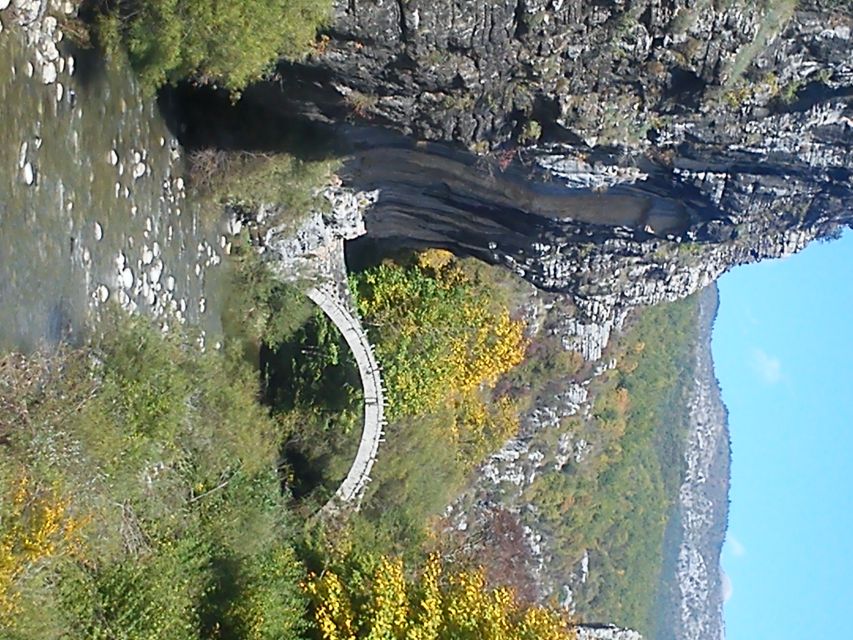
- Five bridges on one circular route: See Kontodimou, Plakida, Kokkori, and other traditional stone crossings without repeating the same path.
- The three-arch Plakida Bridge: One of Zagori’s most recognizable structures and a major reason to bring your camera.
- Koukouli’s stone rocksteps: The route includes a climb on old steps, so good footwear and steady footing matter.
- A quiet village pause: Stop in Koukouli for a short coffee break under the plane tree in the main square.
- Private guiding in English or Greek: The pace can be shaped around the people in your group, with George and Nikos among the guides named for this experience.
- Five hours and $94 per person: A fair price if you want a guide, local context, and a full walking route rather than a quick bridge visit.
Why Zagori’s bridges are worth a dedicated walk
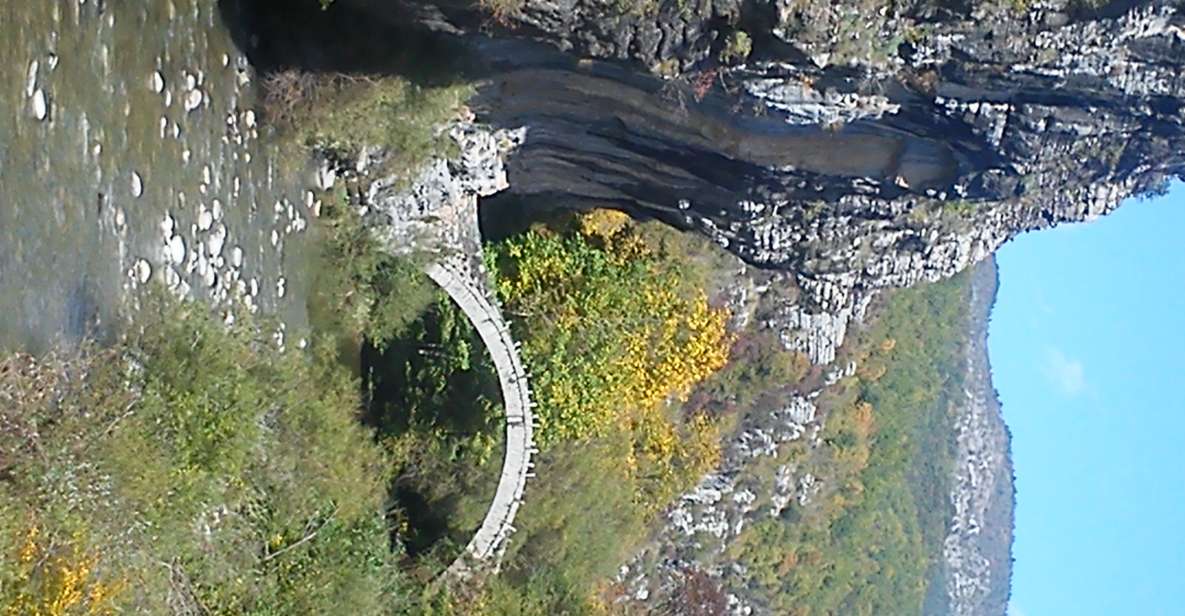
Epirus is known for stone villages, mountain paths, and bridges built to link communities across streams and ravines. These bridges are not modern monuments placed for decoration. They were practical pieces of village life, built in a style that fits the rough terrain and carried people, animals, and goods between settlements.
That is what makes this walk more rewarding than a short drive to a bridge viewpoint. You see how the crossings relate to the trails and villages around them. Your guide explains the construction of the bridges, the architecture of the area, and local traditions as you go. The walk gives those details a setting, rather than presenting them as a list of facts.
The route is circular, beginning and ending in Kipi. That matters because you spend the day moving through the area instead of returning along the same track. You also get a better sense of Zagori as a group of connected communities, not just a collection of scenic stops.
Beginning in Kipi and crossing Kontodimou Bridge
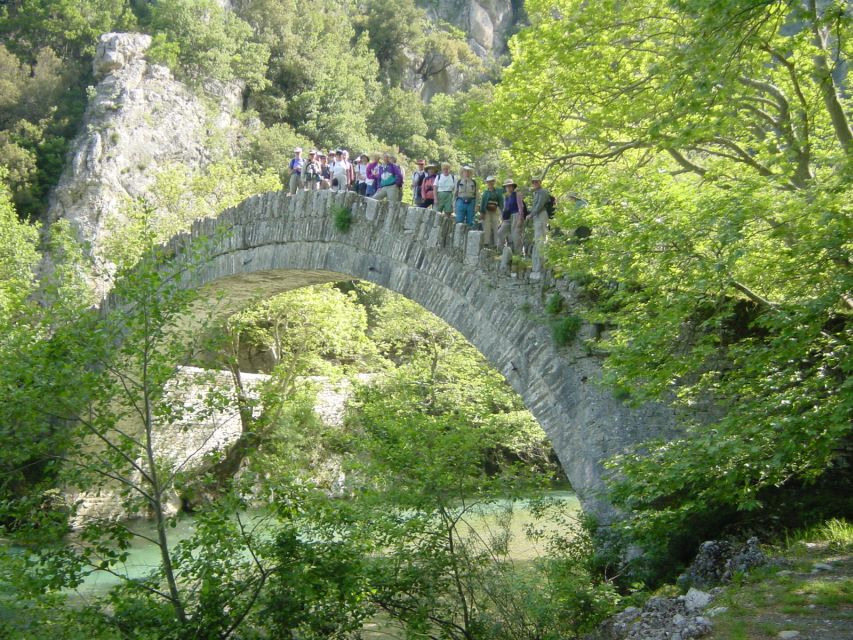
The meeting point is the main square of the village, where your guide waits for you. The walk begins in Kipi, one of the traditional villages included in the route, and quickly moves onto the old paths leading toward Kontodimou Bridge.
This opening section gives you a useful introduction to the tone of the day. You leave the village behind, follow a historic trail, and reach one of the traditional stone bridges before the main climb. The bridge is part of the route rather than an isolated stop, so you experience it as the villagers once would have, by approaching it on foot.
You should expect uneven ground and a walking pace suited to a half-day hike. Wear hiking shoes or sturdy closed-toe shoes, not casual sandals. A reusable water bottle, sun protection, snacks, and a small daypack will make the outing easier.
The guide’s role begins here. You can expect explanations about how the bridges were constructed and why this style of architecture became important in Zagori. The exact amount of discussion will depend on your guide and group, but the experience is designed around local history, architecture, and tradition rather than a simple transfer between viewpoints.
Climbing the Koukouli rocksteps
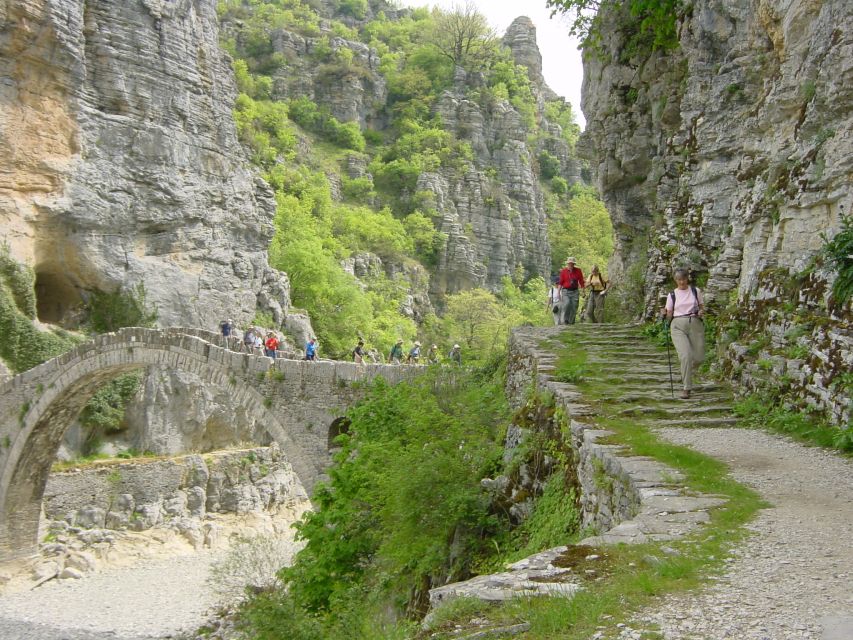
After Kontodimou Bridge, the route climbs the rocksteps of Koukouli. This is one of the sections that separates the outing from an easy sightseeing walk. The steps are part of the old trail and add a physical challenge, especially if you are not used to walking on uneven stone.
The climb also gives the route a strong sense of progression. You begin beside the bridge, gain height through the old steps, and then reach Koukouli. That change in elevation helps explain why these paths mattered: the villages were connected by foot routes shaped to the slopes, not by broad modern roads.
I would treat the rocksteps as a serious planning point. The tour information specifically excludes people with low fitness levels, vertigo, fear of heights, several medical conditions, and recent surgeries. People over 70 or 75 are also listed as unsuitable, along with those over 130 kilograms. The repeated age limits are not perfectly clear, so anyone near those limits should ask the provider before booking.
The route is also not suitable for wheelchair users, pregnant women, people with back or heart problems, people with respiratory issues, epilepsy, altitude sickness, or insect allergies. That may sound like a long list, but it tells you plainly that the walk has real physical demands and outdoor exposure.
A coffee pause beneath Koukouli’s plane tree
Koukouli offers a welcome change of pace. After the climb, you reach the small village and can take a short coffee break in the shade of the plane tree in the square.
This pause is valuable because the tour is not arranged as a race from one bridge to the next. You have a moment to sit, catch your breath, and look at the village architecture. Koukouli is one of the traditional settlements that gives the walk its character. The village stop also lets you reset before continuing along the edge of Vikos Gorge.
The break is described as short, so do not plan on a long meal or extended free time. Bring snacks if you need regular food during the five-hour outing. The suggested packing list includes outdoor clothing, hiking pants, sunscreen, sunglasses, a sun hat, rain gear, and personal medication. Weather can change the feel of a mountain walk, so rain protection belongs in your pack even on a clear morning.
Following old trails beside Vikos Gorge
From Koukouli, the route continues along the edge of Vikos Gorge, following ancient trails and crossing more bridges before returning to Kipi. The gorge setting adds scale to the day, while the old paths keep the focus close to the ground: stone underfoot, bridge arches, and village routes shaped by earlier generations.
The information provided does not give a precise distance or elevation gain. That makes it hard to judge the hike by numbers alone. The five-hour duration, the Koukouli rocksteps, and the warnings about fitness and medical conditions are better clues. If you are comfortable with a moderate outdoor walk but want the guide to manage the route, this format should suit you better than a self-guided outing.
You should also bring closed-toe footwear with good grip. Sunglasses and a hat protect you in exposed sections, while rain gear helps if the weather turns. The tour is not intended for people with motion sickness, a cold, visual impairment, or a fear of heights. Those limits may affect who can join, but they also make clear that the route is not designed as an accessible or low-risk village tour.
Three arches at Plakida Bridge
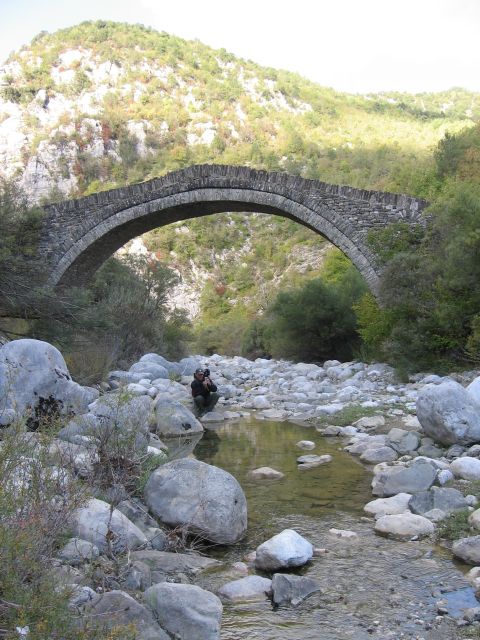
Plakida Bridge is one of the visual highlights. Its three-arch design makes it immediately different from a simple single-span crossing, and the repeated arches are likely to be the day’s most memorable architectural feature.
This is where a guide adds useful value. You can photograph the bridge on your own, but the explanation of construction, local building methods, and the role of the bridges gives the stop more meaning. Look beyond the central arch and notice how the stonework meets the surrounding ground. The appeal comes from the structure and its setting together.
The route does not treat Plakida as the only attraction. That is important if you are comparing this outing with a short sightseeing stop. You see the three-arch bridge as one part of a wider circuit that includes villages, rocksteps, gorge paths, and other crossings.
The impressive Kokkori Bridge and the remaining crossings
Kokkori Bridge is another major stop, described as impressive and included among the best-known bridges in the area. By this point, the bridges begin to work as a group. You can compare their shapes, settings, and approaches instead of judging one structure in isolation.
The route is advertised as including five of Zagori’s most famous traditional bridges. The named stops are Kontodimou, the three-arch Plakida, and Kokkori, while the remaining crossings are part of the same circuit. Since the exact names and order of every bridge are not specified, ask your guide for the full bridge list when you meet in Kipi.
That small uncertainty is worth noting for people booking around one particular bridge. If your main goal is Plakida or Kokkori, this walk includes them. If you want a precise photographic itinerary with exact timing at each bridge, a private guide can clarify the order, but the five-hour route is built more as a connected hike than as a timed photo tour.
What the guide adds to the five-hour walk
The guide is central to the experience. Without one, you could still see stone bridges and villages, but you would lose much of the explanation about the area’s architecture, traditions, and history.
The two named guides in the available feedback offer useful clues about the guiding style. George paid attention to each participant’s ability and focused on making the walk safe and enjoyable. Nikos kept a comfortable pace and was personable during conversations about life and the area. Those details matter more than a generic promise of a professional guide because pace is often the difference between a pleasant hike and a tiring one.
The tour operates as a private group, with English and Greek available. A private format is especially helpful if your party has mixed walking speeds. It can also make questions easier, since you are not waiting for a large group to gather at each bridge.
Still, private does not mean effortless. The route remains outdoors, includes old steps, and lasts five hours. Ask for a slower pace before setting out if anyone in your group needs it. The guide can respond to ability, but the basic character of the route cannot be changed into a flat walk.
Is $94 per person good value?
At $94 per person, this is not the cheapest way to see a Zagori bridge. The value comes from the amount packed into five hours: five traditional crossings, two villages, the Koukouli rocksteps, paths beside Vikos Gorge, a private group, and a live guide in English or Greek.
I would consider the price reasonable if you want context and route-finding as well as scenery. A self-guided visit may cost less, but it would not include the same focused explanation of bridge construction, local architecture, and traditions. You would also need to plan the route yourself and judge the old paths and crossings without a guide.
The price is less compelling if you only want a quick look at Plakida Bridge or Kokkori Bridge. In that case, a full five-hour hike may be more walking than you need. This experience is aimed at people who want to connect the bridges into one day outdoors.
Free cancellation up to 24 hours before the start gives you some protection if the weather or your plans change. You can also reserve now and pay later, which helps if you are arranging several activities in Epirus.
Who should book this Zagori hike?
I would choose this walk if you enjoy old paths, stone architecture, village squares, and a guide who can explain what you are seeing. It suits adults and children aged eight or older who are comfortable with a five-hour hike and uneven stone steps.
It is a good match for a private family group with active older children, couples who want a day outside, or friends interested in the building traditions of Epirus. The coffee stop in Koukouli adds a pleasant social pause, while the bridge circuit gives the day a clear purpose.
I would not book it for a very casual stroll, a wheelchair-accessible outing, or a group with serious health concerns. People with vertigo or a fear of heights should take the gorge-edge sections and rocksteps seriously. Babies under one year are not suitable, and the activity also excludes people with several pre-existing conditions, recent surgery, low fitness, and insect allergies.
Bring a daypack with water, snacks, medication, sunscreen, and rain gear. The provider also advises travel insurance. Wear hiking shoes, hiking pants, and closed-toe footwear, and do not rely on a village stop for all your food or supplies.
Should you book the Stone Bridges of Zagori?
Book it if you want to understand Zagori on foot rather than collect a few bridge photographs from the roadside. The combination of five bridges, two villages, old trails, and local guiding gives you a fuller picture of the area than a single landmark visit.
The strongest reason to choose it is the private guiding. George’s careful attention to ability and Nikos’s comfortable pace suggest that the human side of the walk is handled well, though your experience will depend on the guide assigned that day. The main reason to skip it is physical: five hours, rocksteps, uneven paths, and gorge-edge walking are not minor details.
For an active visitor who wants architecture, tradition, and scenery in one outing, $94 is a sensible spend. For anyone seeking a flat, short, or highly accessible tour, choose another way to see Zagori.
FAQ
Where does the Stone Bridges of Zagori tour meet?
Your guide waits at the main square of the village. The walk starts in Kipi and returns there at the end of the circular route.
How long does the tour last?
The tour lasts five hours. Starting times vary, so you need to check availability when booking.
How many bridges will I see?
The route includes five of the most famous traditional bridges in the area. Named highlights include Kontodimou Bridge, the three-arch Plakida Bridge, and Kokkori Bridge.
Which villages does the walk visit?
The route starts in Kipi and includes the traditional village of Koukouli before returning to Kipi.
Is the tour private?
Yes. The activity is operated as a private group.
Which languages are available?
Live guiding is available in English and Greek.
What should I bring?
Bring sunglasses, a sun hat, snacks, hiking shoes, sunscreen, rain gear, outdoor clothing, a daypack, hiking pants, personal medication, closed-toe shoes, a reusable water bottle, and travel insurance.
Can children join the tour?
Children under eight are not suitable for this activity. The tour information does not provide a maximum child age, but all participants should be able to manage a five-hour hike with rocksteps and uneven paths.
Can I cancel the booking?
You can cancel up to 24 hours in advance for a full refund. You can also reserve now and pay later.