REVIEW · CORFU TOWN
Symphony of Flavors – Olive Oil & Food Pairing at Corfu Town
Book on GetYourGuide →Operated by Corfu Olive Tour · Bookable on GetYourGuide
Olive oil can taste like a whole meal. At The Olive House by The Governor, you get olive oil and food pairing done the smart way: each bite is matched to the oil, with a Corfu-inspired menu that runs from bread starters to sweet finishes. I also love that the experience feels personal, with founders and hosts like Georgios and guide Helen bringing real passion, not just facts.
One possible consideration: this is built as a tasting menu (3 savory first dishes and 3 desserts), so if you’re truly starving and want a full lunch-sized meal, plan to eat beforehand or afterward.
In This Review
- Key highlights to look for
- Why this Corfu olive oil tasting feels different
- The Olive House by The Governor: what you’ll do first
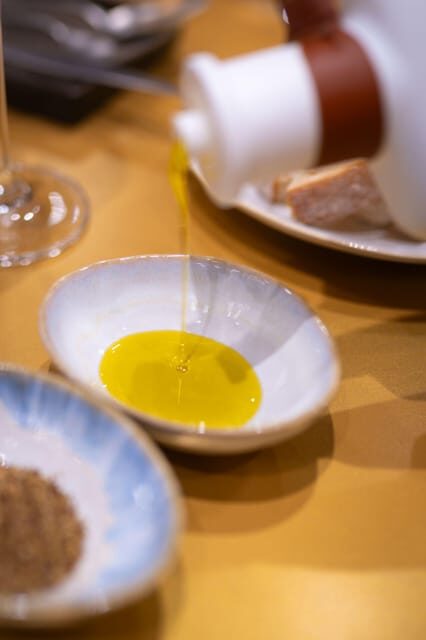
- Bread & olive oil, bitter orange salad, and fava puree: the savory half
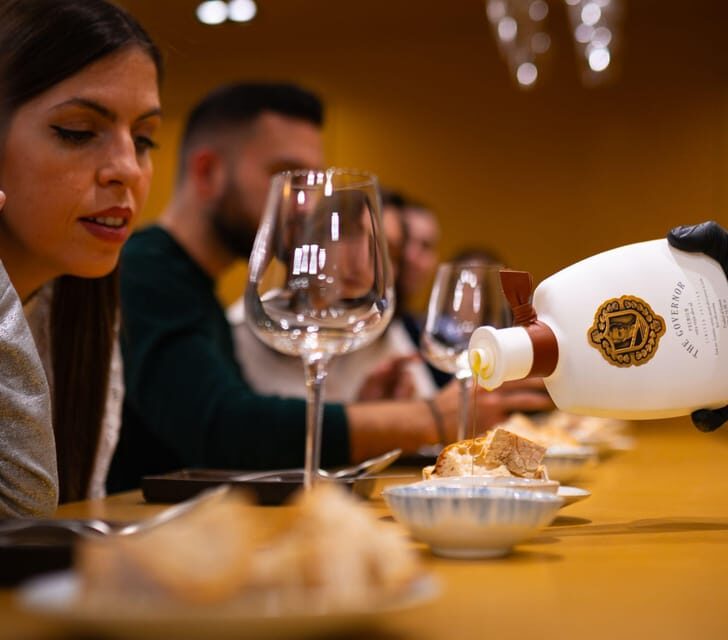
- 1) Bread & olive oil: the starter that teaches you how to taste
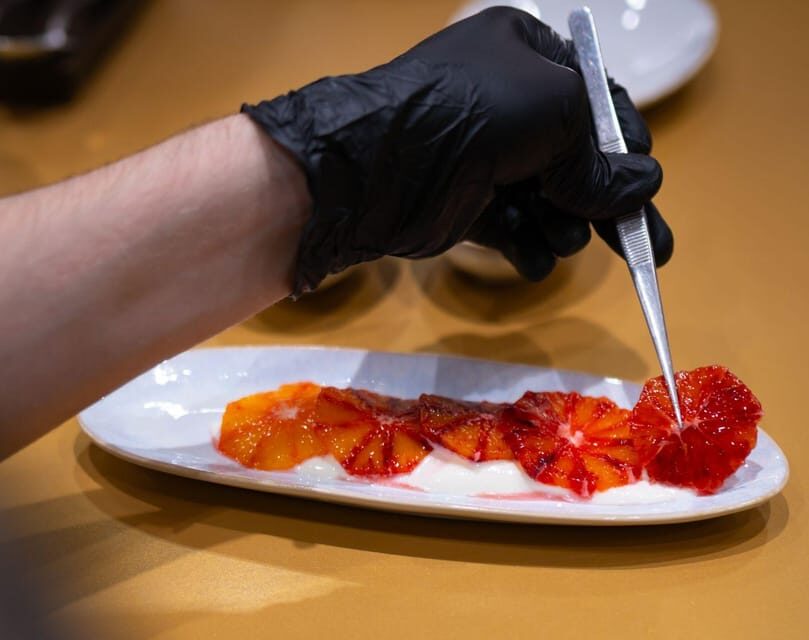
- 2) Bitter orange salad: how oil links tart and creamy
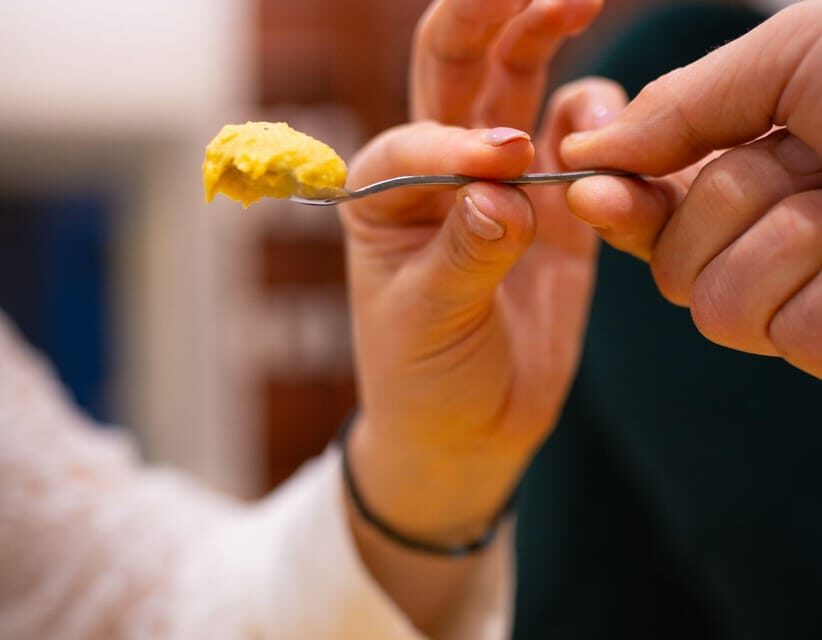
- 3) Fava bean puree: legumes + olive oil, ancient friendship
- Lemon fanouropita cake and The Governor’s ice cream: olive oil goes sweet
- 4) Lemon ‘Fanouropita’ cake: tradition with a twist
- 5) The Governor’s ice cream: early-harvest meets vanilla
- Chocolate textures with sea salt: the pairing finale that sticks
- Price and value: why $40 can make sense in Corfu Town
- Who should book, and who might want a different plan
- Practical tips for getting the most out of your pairing
- Should you book Symphony of Flavors at Corfu Town?
- FAQ
- How long is Symphony of Flavors in Corfu Town?
- How much does it cost?
- Where do I meet the guide?
- Is this a private experience?
- What’s included in the menu?
- Do I have to buy olive oil products?
- What language is the tour in?
- Is it easy for people with limited mobility, and can I cancel?
Key highlights to look for
- Corfu-inspired 6-course pairing: 3 first meals + 3 desserts, each designed to match the oil
- Bread & olive oil as the anchor: a classic start that sets up how you’ll taste all the rest
- Bitter orange + fava puree pairings that show how oil can change fruit and legumes
- Olive oil in desserts: lemon-olive oil-style cake, olive-oil ice cream, and chocolate with sea salt
- Small private setting: designed for groups of up to 8 in the tasting space
- Hosts who explain the why, including production background and how to taste quality oil
Why this Corfu olive oil tasting feels different
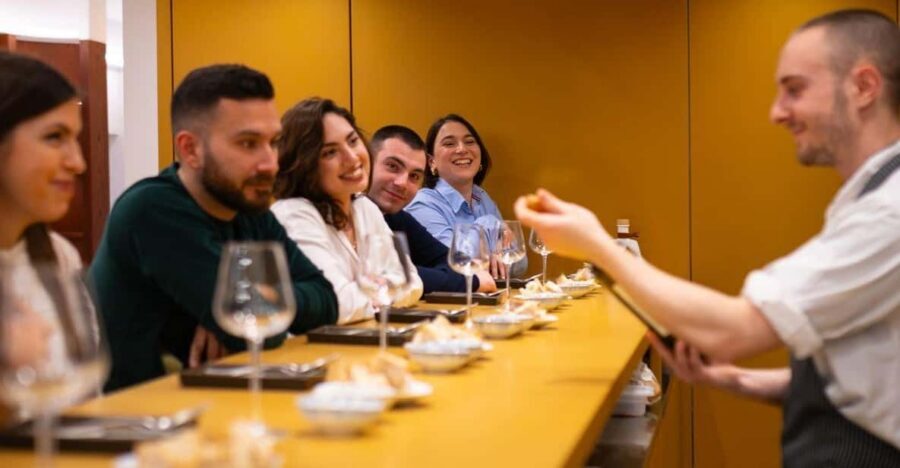
Most olive oil tastings give you a few pours and a quick nod to food. Here, the point is pairing. You don’t just taste oil in isolation—you taste oil, then you taste food designed to work with it. That changes everything, because extra virgin olive oil has different levels of bitterness, peppery kick, and fruitiness depending on the character of the oil.
The experience is also built around the way people actually eat in Corfu: bread first, legumes and citrus next, then something sweet. Instead of treating olive oil like a trendy ingredient, it’s treated like daily food—basic, practical, and worth learning.
And yes, the setting matters. The Olive House is described as a calm, comfortable space in Corfu Town, which is a nice break when you’re walking streets all day.
You can also read our reviews of more food & drink experiences in Corfu Town


The Olive House by The Governor: what you’ll do first
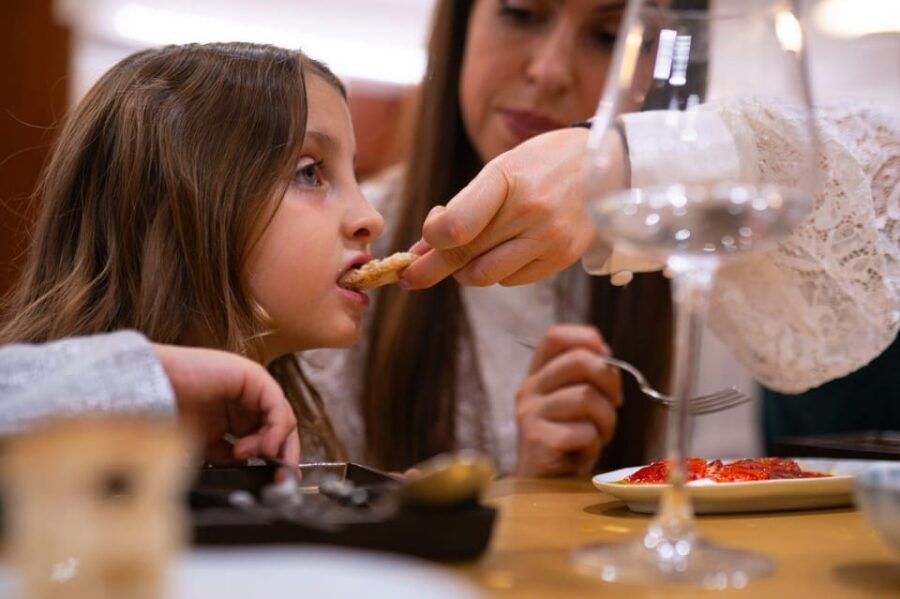
You’ll meet at The Olive House by The Governor, Nikiforou theotoki 29, across from the famous sweets shop Papagiorgis. From there, your guide sets the tone: this is not a rushed “grab a taste and go” event. It’s a structured tasting where you build the skill while you eat.
Expect a mix of:
- Context on olive oil and Corfiot tradition
- A guided way to taste quality extra virgin olive oil
- Pairing the oils with each course
Some hosts also explain the broader production process as part of the lesson—how olives become oil—before the tasting gets technical. That’s helpful, because once you understand what affects flavor in the orchard and the pressing, you’re less likely to judge a pour by one moment. You start tasting patterns.
Timing-wise, the experience is listed as 1 hour, and the tasting segment is described in the flow as lasting longer on-site. Either way, you should plan for a focused sitting where you’ll eat slowly enough to notice the changes.
Bread & olive oil, bitter orange salad, and fava puree: the savory half
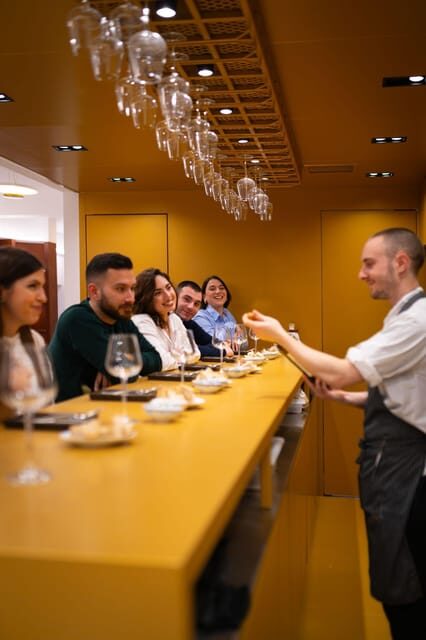
The menu is clearly split into two moods. The first half leans into History – Tradition – Culture, with three first dishes that show how oil acts like a “flavor connector.”
1) Bread & olive oil: the starter that teaches you how to taste
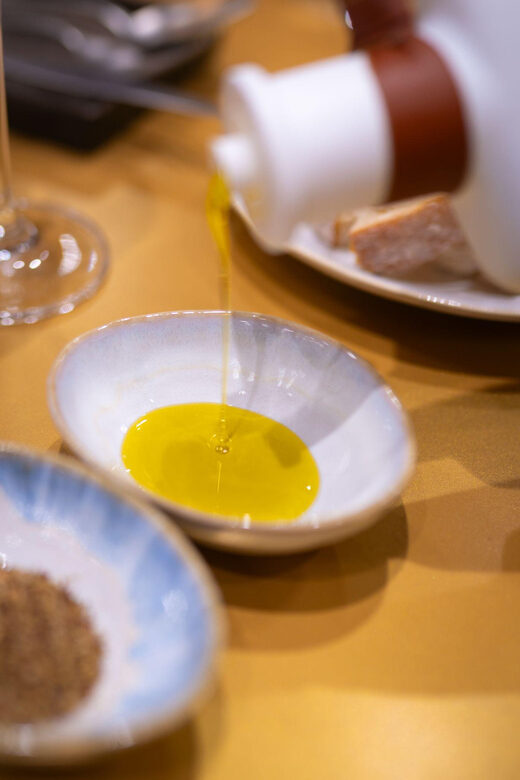
This is the foundation course: bread and olive oil. It sounds simple because it is simple, but that’s the point. Olive oil is introduced as the kind of food that becomes an essential energy boost snack and the start of family meals.
When you start here, your senses calibrate. If an oil is grassy and fresh, you notice it against warm bread. If it’s more bitter or peppery, you feel it right away. This first dish sets up why the next courses make sense.
2) Bitter orange salad: how oil links tart and creamy
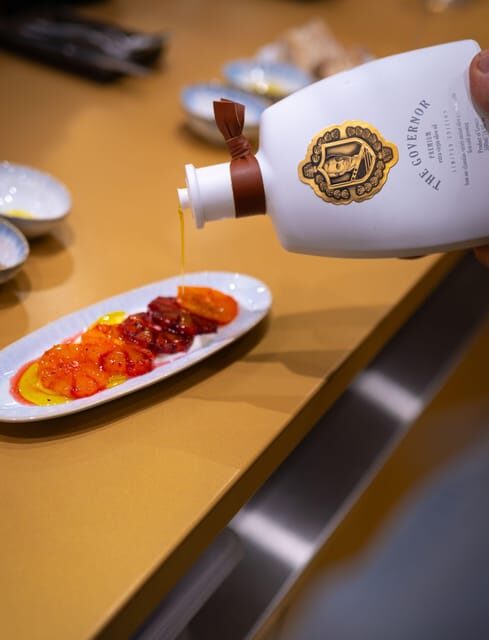
Next comes bitter orange salad. The key idea is that good olive oil can unite flavors and enhance them, especially with tart fruit and pairings like yogurt and white cheeses (those are mentioned as the kinds of textures and tastes this course is built for).
This is one of the smartest pairing lessons you’ll get: citrus can be sharp on its own, and dairy can either soften or highlight that sharpness. Olive oil sits in the middle. It rounds out edges while still letting you taste the bite of the fruit.






3) Fava bean puree: legumes + olive oil, ancient friendship
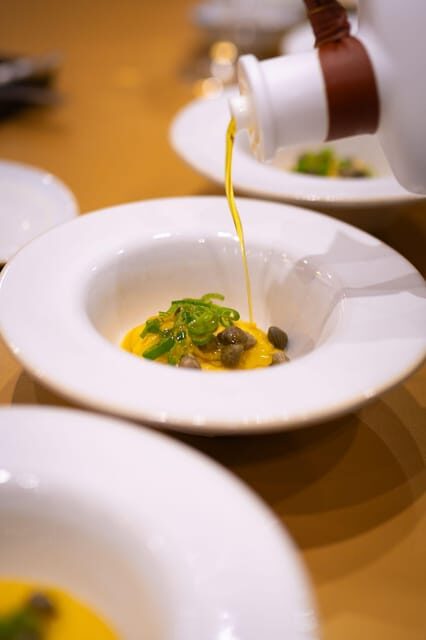
Then you get fava bean puree. The lesson here is classic: olive oil and legumes have been friends since ancient times. By mixing them, you get a texture that feels grounded and satisfying—more than just “healthy.” It’s also a way to taste oil as something more than a condiment.
If you’ve only used olive oil as a finishing drizzle at home, this course changes your brain. It shows how oil can become part of the body of a dish, not just the top layer.
Savory takeaway for you: if you want to cook like a local, these three courses basically teach an approach: start with bread, use citrus to brighten, and don’t be afraid of legumes paired with real olive oil.
Lemon fanouropita cake and The Governor’s ice cream: olive oil goes sweet
The second half shifts into Creativity – Discovery – Cheerfulness. This is where a lot of people get surprised, because olive oil doesn’t just belong in savory dishes. Here, it’s treated as a flavor tool for sweets.
4) Lemon ‘Fanouropita’ cake: tradition with a twist
The Lemon ‘Fanouropita’ Cake is inspired by Greece’s classic lemon-olive oil dressing, but served as a sweet version with innovation. If you like desserts that aren’t overly heavy, this should land well because lemon keeps the sweetness from feeling flat.
What I’d watch for as you taste: whether the olive oil flavor feels fruity and gentle or more bitter and peppery. Either way, it’s a reminder that olive oil doesn’t have to be invisible to work in dessert—it just needs to be the right one.
5) The Governor’s ice cream: early-harvest meets vanilla
Next is The Governor’s ice cream, served with the idea that low temperatures preserve nutrients. Then comes the practical tasting note: even ice cream adores olive oil—try vanilla with early-harvest olive oil.
That combo is a great lesson for home cooking. Early-harvest olive oil typically brings stronger green notes and a peppery finish. When you pair that with vanilla and creamy texture, the oil becomes a kind of aromatic accent—not just a fat component.
Sweet takeaway for you: if you thought “olive oil desserts” sounded odd, this portion is built to show you it’s not weird—it’s just using flavor in a new place.
Chocolate textures with sea salt: the pairing finale that sticks
Finally, you reach Chocolate Textures, made from just three key ingredients: chocolate, olive oil, and sea salt. The menu describes multiple textures: namelaka cream, powder, and aerated rocks.
That variety matters. Chocolate with olive oil can taste smooth and round, but sea salt keeps it from going one-note. Adding different textures makes you perceive the flavors differently with each bite, so the olive oil flavor doesn’t blend into the background.
If you want a mental “rule” for buying olive oil, this is one of the best moments to learn it. A good extra virgin olive oil doesn’t just make food taste better—it leaves you noticing details.
Price and value: why $40 can make sense in Corfu Town
At $40 per person for a full pairing experience, the value isn’t in the price tag alone. It’s in what you actually get:
- You get six courses total, split into savory and dessert
- You get a structured pairing education, not just tasting
- It’s designed for a private group setting, described as up to 8 people
In practice, this can be a great buy because you’re paying for two things at once: food you’ll enjoy and guidance that helps you repeat it later at home. And one review-style pattern (built into the overall experience) is that the staff doesn’t push hard on sales. Instead, the learning makes it easier to choose what to buy—if you want to buy anything.
Also, because the menu is pairing-focused, you’ll likely eat it as your main planned “food moment” of the day. More than one person has said you won’t really need lunch afterward, which makes this easier to budget if you’re already doing attractions.
Who should book, and who might want a different plan
This works best if you:
- Love food pairings and want to understand why flavors work together
- Want a Corfu-focused experience that goes beyond souvenir shopping
- Like tasting in a small, calm setting rather than a big group rush
- Enjoy both savory and sweet, since the menu covers both
It may not be the best fit if you:
- Need a full lunch or dinner volume (this is a tasting menu)
- Have mobility needs—this experience is noted as not suitable for wheelchair users
- Are traveling with someone in the “over 95” age group, since it’s also noted as not suitable
Practical tips for getting the most out of your pairing
These are small things that make a big difference with olive oil tastings:
- Go in with curiosity, not pre-judgment. Some oils taste more bitter or peppery, and that doesn’t mean “bad.”
- Take tiny sips/bites and pause. Olive oil flavor changes as it warms in your mouth.
- Pay attention to contrast. Citrus, dairy, legumes, and chocolate all react differently to oil.
- Ask your guide what to notice. Names like Vassiliki, Victoria, Helen, and George/Georgios show up across the experience, and each host’s style seems to shape the lesson. If your guide leans more story-based, ask how the production affects the flavor you’re tasting.
Also, if it’s hot in Corfu Town, you’ll likely appreciate that the tasting space is described as comfortably cooled in reviews. It’s a nice “sit down, eat, learn” break.
Should you book Symphony of Flavors at Corfu Town?
If you want a Corfu experience that’s not just scenic and not just generic food sampling, this is a strong pick. For $40, you get a real pairing lesson with a tailor-made Corfu-inspired menu—bread starters, citrus and legumes, then desserts that use olive oil on purpose.
Book it if you’re the type of person who likes to learn something you can use. After this, you’ll understand why “good olive oil” isn’t a single flavor—it’s a range you can taste and match.
Skip it if you’re expecting a big meal or if mobility needs mean you can’t comfortably use the space.
FAQ
How long is Symphony of Flavors in Corfu Town?
The activity is listed as 1 hour. The tasting portion is also described in the experience flow, so expect it to be a focused, seated hour rather than a quick stop.
How much does it cost?
It costs $40 per person.
Where do I meet the guide?
Meet at The Olive House by The Governor, Nikiforou theotoki 29, across from Papagiorgis sweets house.
Is this a private experience?
Yes. It’s a private group experience, designed for up to 8 people.
What’s included in the menu?
You’ll have bread & olive oil, bitter orange salad, fava bean puree, lemon ‘Fanouropita’ cake, The Governor’s ice cream, and chocolate textures.
Do I have to buy olive oil products?
No. Purchases are not included; you can buy products if you want, but they’re not required.
What language is the tour in?
The tour is conducted in English with a live guide.
Is it easy for people with limited mobility, and can I cancel?
It’s not suitable for wheelchair users and it’s also noted as not suitable for people over 95 years. You can cancel up to 24 hours in advance for a full refund, and there is an option to reserve now & pay later.