REVIEW · ATHENS
Argolis Olympia & Delphi Three-Day Tour
Book on Viator →Operated by H.P.Tours - Hellenic Private Tours · Bookable on Viator
The best thing about this three-day trip is its sweep: in one private vehicle, you move from the Bronze Age citadel of Mycenae to Olympia, birthplace of the ancient Games, then on to Delphi and its famous oracle. You also get small coastal towns, mountain roads, and major archaeological sites without being tied to a large coach group.
I like the flexible private setup, and I like the chance to reach important monuments at quieter times than big bus tours. Drivers such as Panos and Michael have been praised for being helpful, good with restaurant suggestions, and attentive to the group’s needs. The main drawback is the pace: this is a packed route, and the first two days involve long hours in the car.
In This Review
- Key points to know before booking
- A three-day route built around ancient Greece
- Corinth Canal: a quick but worthwhile opening stop
- Ancient Corinth and the Archaeological Museum
- Epidaurus and the sound of the ancient theater
- Nafplio and Tolon: a change of pace
- Mycenae: kings, legends, and steep paths
- Olympia after a long mountain drive
- Olympia’s temples, workshop, and museum
- Across the Gulf of Corinth to Delphi
- Delphi and the oracle of Apollo
- Arachova and Hosios Loukas
- Drivers, guides, and the private format
- What the $2,388.27 price really covers
- Who should book this tour?
- FAQ
- Where does the tour begin?
- How long does the experience last?
- Is the tour private?
- How many people does the listed price cover?
- Is accommodation included?
- Are meals included?
- Are entrance fees included?
- Can I hire licensed guides for the archaeological sites?
- Is the driver licensed to guide inside the sites?
- What is included in the vehicle service?
- What is the cancellation policy?
- Should you book it?
Key points to know before booking
- A full Peloponnese sweep: Corinth, Epidaurus, Nafplio, Tolon, Mycenae, and Olympia all fit into the first two days.
- Two major ancient sanctuaries: Olympia and Delphi each receive a site visit plus time in the archaeological museum.
- Private transportation: Your group has the air-conditioned vehicle to itself, with bottled water and WiFi on board.
- Drivers, not site guides: English-speaking professional drivers accompany you, but they are not licensed to guide inside the monuments.
- Extra costs matter: The quoted price excludes hotels, meals, entrance fees, and optional local guides.
- A strong fit for couples: The price is $2,388.27 for up to two people, making privacy and flexibility the main benefits.
A three-day route built around ancient Greece
This is not a relaxed village-hopping holiday. It is a concentrated tour of the Peloponnese and central Greece, designed for you to see several of the country’s most important ancient sites in a short time.
The route starts in Athens and heads west across the Corinth Canal. From there, it follows the eastern Peloponnese to Ancient Corinth, Epidaurus, Nafplio, Tolon, and Mycenae before reaching Olympia for the first night.
Day two continues from Olympia across the Gulf of Corinth and north toward Delphi. The road includes the Charilaos Trikoupis Bridge, Nafpaktos, Galaxidi, and Itea. You sleep in Delphi, then visit the sanctuary and museum on day three before continuing to Arachova and Hosios Loukas Monastery.
The private format gives you more control than a standard coach excursion. You can stop for photos, take a coffee break by the sea, or adjust the rhythm within the day’s route. Still, flexibility does not remove the distances. You should expect a busy sightseeing schedule, not long stretches of free time at each stop.
You can also read our reviews of more tours and experiences in Athens.



Corinth Canal: a quick but worthwhile opening stop
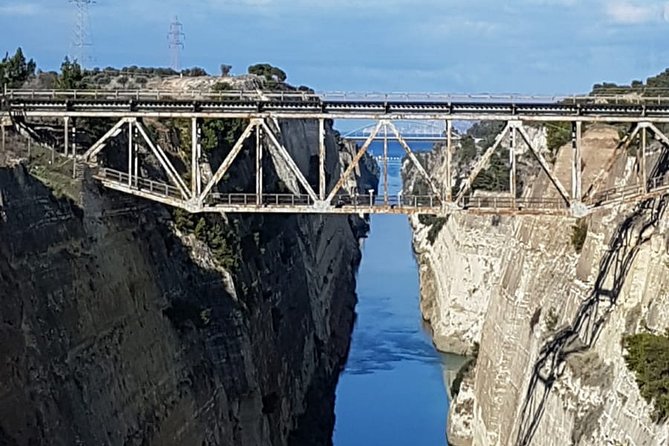
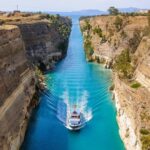
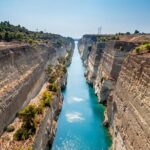
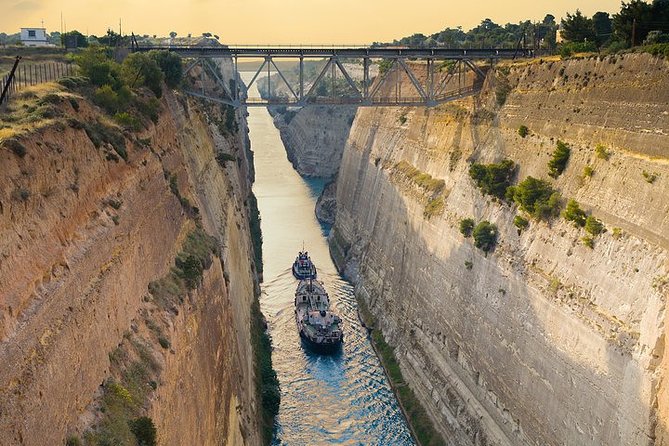
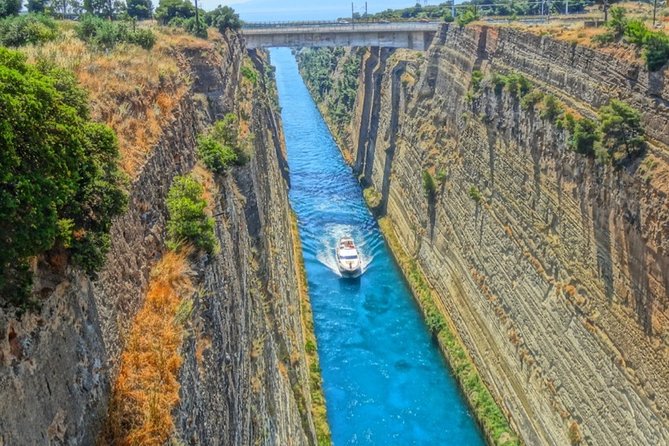
The Corinth Canal is only scheduled for about 20 minutes, which is enough for a look and photographs. The waterway cuts through the Isthmus of Corinth and separates the Peloponnese from mainland Greece in a way that makes the peninsula feel almost like an island.
At its base, the canal is only about 21.4 meters wide. It has no locks and runs at sea level, but its narrow size limits modern commercial use. Its story is also older than the visible canal. Ancient rulers considered the idea, a first-century attempt failed, and the present channel was finally completed after construction began in 1881.
This is a good first stop because it gives you a clear sense of the geography ahead. Do not expect a long visit or a major historical presentation. It is a short orientation point before the ancient sites begin.
Ancient Corinth and the Archaeological Museum
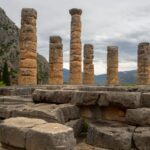
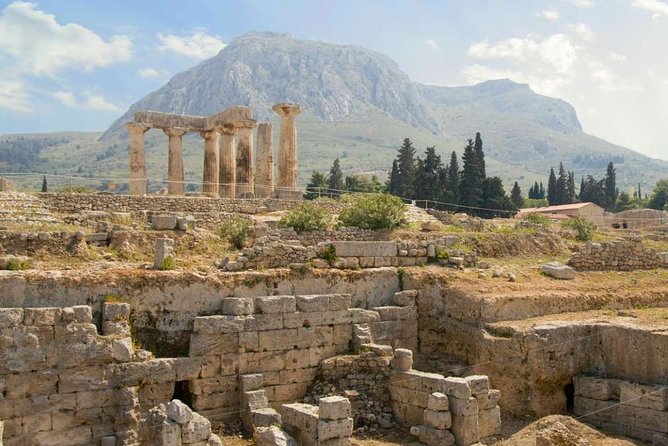
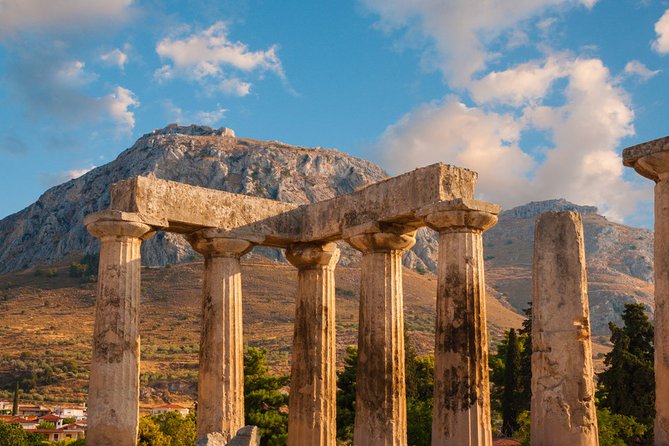
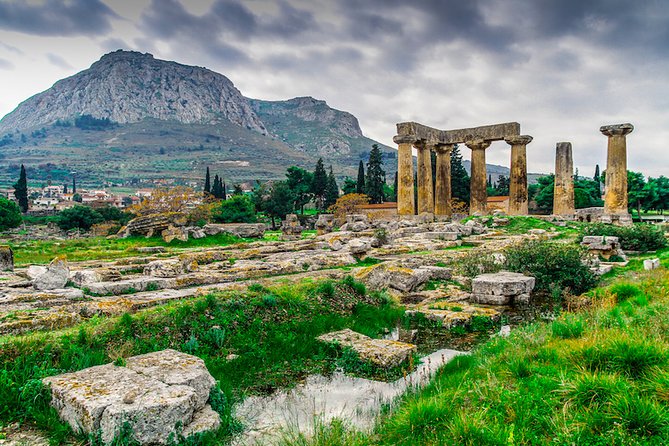
Ancient Corinth deserves more attention than the 45-minute site visit may suggest. The Temple of Apollo, built around 560 BC, is one of the earliest Doric temples in the Greek mainland and the Peloponnese. Its surviving columns sit on high ground near Acrocorinth, giving the place a strong visual presence even when much of the city is in ruins.
You can also see the Bema, or speaker’s platform, traditionally associated with Saint Paul’s trial before the Roman proconsul Gallio. The Roman Forum once formed the heart of the city, and the Bema helps you picture Corinth as a busy Roman center rather than simply a collection of fallen stones.
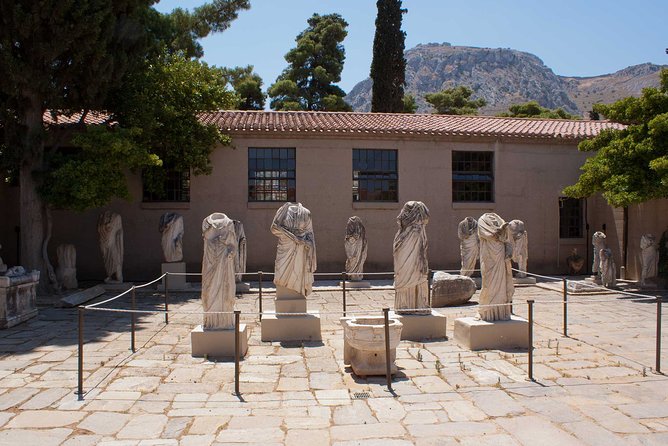
The nearby Archaeological Museum of Corinth adds useful context. Its collections cover prehistoric finds, the Geometric through Hellenistic periods, Roman and later material, the Sanctuary of Asklepios, early Christian remains, sculpture, inscriptions, and objects connected with the Jewish community.
The scheduled museum visit lasts about 30 minutes. That is enough for a brisk look at key pieces, but not enough for a slow museum visit. If ancient sculpture and archaeology are central to your interests, ask in advance if the driver can help protect more time here. Entrance is not included.
Epidaurus and the sound of the ancient theater
The Ancient Theatre of Epidaurus is one of the most memorable stops on the route. Built in the third century BC, it formed part of the Sanctuary of Asklepios, a place connected with healing, worship, and culture.
The theater retains its circular orchestra and is still used today. Its acoustics are the feature you will notice first. A quiet sound from the center can carry remarkably well toward the upper seating, though the short 45-minute stop means you may not have much time to explore the wider sanctuary.
Epidaurus works best when you pay attention to the setting as well as the theater itself. The site was not built only for entertainment. It belonged to a healing center where architecture, religious practice, and performance shared the same space.
Wear comfortable shoes. The itinerary contains several archaeological sites, and the day keeps moving.
Nafplio and Tolon: a change of pace
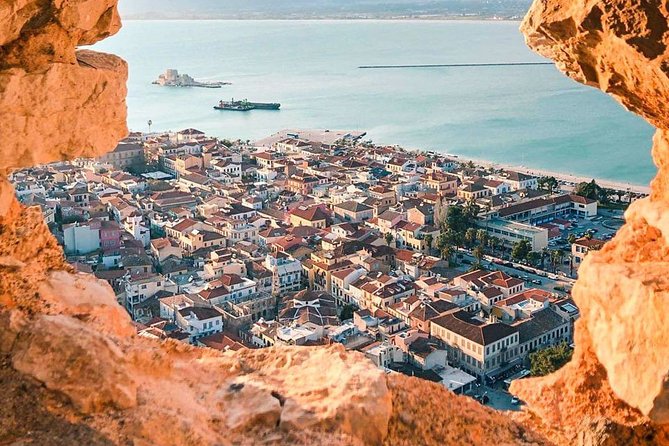
After the ruins, Nafplio offers a welcome shift. The seaport rises along the hills at the northern end of the Argolic Gulf and served as the capital of the newly independent Greek state from 1821 until 1834.
The planned stop is about 40 minutes. That gives you time to see the town center and get a feel for its waterfront character, but not enough for a full visit to its fortifications or museums. Think of Nafplio as a scenic pause between major ruins.
Lunch is scheduled in Tolon, about seven kilometers east of Nafplio, at a traditional family-owned restaurant with a view over the Saronic Gulf. Meals are not included, so budget separately for lunch. This arrangement gives you some choice, though the tight timetable may limit how long you can linger over the meal.
I like this part of the day because it prevents the trip from becoming one ancient site after another. The seaside stop brings in modern Greek life, food, and views, even if the time is brief.
- All Day Cruise -3 Islands to Agistri,Moni, Aegina with lunch and drinks included
★ 5.0 · 4,958 reviews



Mycenae: kings, legends, and steep paths
Mycenae is one of the strongest stops on the tour. It was a major center of power during the Late Bronze Age, from roughly the 16th to the 11th century BC. Its massive Cyclopean walls were so large that later Greeks attributed them to the Cyclopes.
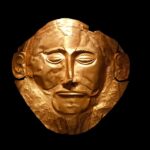
You enter through the Lion Gate and follow a steep route through the remains of the citadel. The site is linked by legend with Agamemnon, the Greek leader in the Trojan War, though the stories of Agamemnon and Clytemnestra belong to myth and later literature as much as to archaeology.
A short drive away, the Treasury of Atreus provides another powerful sight. This beehive-shaped tomb, also called the Tomb of Agamemnon, shows the engineering skill of the Mycenaean period and is one of the best-preserved monumental tombs associated with the site.
The scheduled visit lasts about an hour. That is workable for the main points, but the steep path and uneven ground deserve attention. If you want time to study the walls, tombs, and views slowly, this will feel compressed.
Olympia after a long mountain drive
After Mycenae, the vehicle continues through the mountains of the central Peloponnese to Olympia. The first day ends with an overnight stay in the village, but the hotel is not included in the tour price.
Olympia is tied to the ancient Olympic Games, held every four years in honor of Zeus from 776 BC. Its importance is not only athletic. The sanctuary was a major religious center, and the games brought people from across the Greek world together under sacred rules.
The overnight stop is practical. It means you can visit the site the next morning instead of trying to add Olympia to an already overloaded afternoon. Still, day one is long, and the itinerary lists about 10 hours for the Olympia portion and overnight transition. You should be ready for a full day on the road.
Olympia’s temples, workshop, and museum
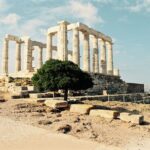
The next morning begins at the Archaeological Site of Olympia, with about 90 minutes scheduled. The Temple of Zeus was the largest temple in the Peloponnese and a prime example of Doric architecture. Its ruined columns and fallen blocks make the original scale easier to imagine than the surviving height might suggest.
The Temple of Hera is one of Greece’s oldest monumental temples. It is also the place where the Olympic Flame is lit every four years, linking the modern Games with the ancient sanctuary.
The Workshop of Pheidias sits west of the sacred enclosure. The sculptor created the enormous gold-and-ivory statue of Zeus there, one of the Seven Wonders of the ancient world. The workshop gives you a rare connection between an ancient artist’s working space and the monumental sculpture associated with him.
The Archaeological Museum of Olympia follows with a 45-minute visit. It contains finds from prehistoric times through the Early Christian period, including sculpture, bronze objects, terracottas, architectural pieces, and material from the Altis sanctuary.
The museum’s bronze collection is especially important, and the sculptures help you understand what the sanctuary looked like before earthquakes, weather, and later reuse reduced it to ruins. Again, admission is extra, and the time is short. If Olympia is your main reason for booking, a private licensed guide could make the visit more rewarding.
Across the Gulf of Corinth to Delphi
The drive from Olympia to Delphi is one of the tour’s major transitions. You cross the Charilaos Trikoupis Bridge, a long multi-span cable-stayed bridge linking Rio on the Peloponnese with Antirrio on mainland Greece.
The bridge opened just before the 2004 Athens Olympics and carried the Olympic Flame. It is a modern counterpoint to the ancient sanctuaries, and the crossing gives you a useful sense of how Greece’s regions connect today.
Nafpaktos is a short stop of about 10 minutes. You can take photographs or have coffee by the sea. The town, also known as Lepanto, sits around a bay on the north coast of the Gulf of Corinth.
Galaxidi receives about 20 minutes. Its narrow cobbled streets and two sheltered harbors reflect its past as a shipbuilding center. The old harbor is called Hirolakas, or Widows’ Port, a name connected with the wives of sailors whose ships never returned.
Itea is described as another point along the route. It was founded in 1830 and is now a resort and commercial port, with bauxite shipped from regional mines. The schedule does not give a separate visit length, so treat it as a passing point unless your driver adjusts the day.
Delphi and the oracle of Apollo
You spend the second night in Delphi, again with hotel accommodation arranged separately. This overnight stay is valuable because Delphi is best approached with enough time to see both the sanctuary and museum instead of rushing through during a single long transfer.
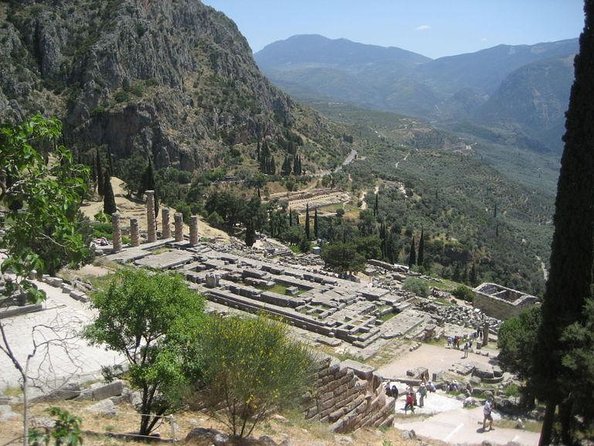
The site lies on the southwestern slope of Mount Parnassus. In Greek mythology, Delphi was the navel of the earth and the home of the oracle of Apollo. The sanctuary became a major religious and political center, where Greek communities consulted the oracle and dedicated valuable offerings.
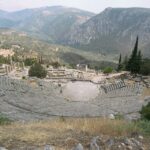
The day-three visit includes Castalia Spring, the Sanctuary of Apollo, the Treasury of the Athenians, the ancient stadium, and the theater. The Treasury of the Athenians is especially useful for understanding how city-states displayed their wealth and loyalty at Delphi.
The stadium sits higher on the site, and the ancient theater provides broad views across the valley. The 90-minute site visit covers the main points, but Delphi is built on slopes and includes uneven paths. Give yourself time to move carefully, particularly if you want to reach the upper sections.
The Delphi Archaeological Museum receives about 45 minutes. Its displays include statues, architectural sculpture, and smaller offerings from the sanctuary, dating from the eighth century BC into Late Antiquity. The bronze Charioteer of Delphi is the star object, a remarkably controlled sculpture that gives the museum a strong finish after the outdoor ruins.
Arachova and Hosios Loukas
Arachova is only about 10 kilometers from Delphi and receives a 30-minute stop. The mountain town combines older buildings with newer activity and offers a final look at the region around Mount Parnassus.
The final major visit is Hosios Loukas Monastery, about 45 minutes. Founded by the Greek monk Loukas, who died in AD 953, the monastery includes the Katholikon, the smaller Church of the Theotokos, a crypt, frescoes, and mosaics.
Look up as you enter for the gold mosaic of the saint. Inside, the preserved decoration is the reason to make this stop. The architecture may remind you of Hagia Sophia in Istanbul or Saint Mark’s Basilica in Venice, though the monastery has its own Greek setting and scale.
Admission is not included. The final stop also means this is not simply an ancient Greece tour. You finish with Byzantine art, Christian worship, and medieval craftsmanship, which broadens the trip beyond temples and stadiums.
Drivers, guides, and the private format
The company supplies professional English-speaking drivers with the required certifications. They drive the well-maintained, air-conditioned vehicle and can help with timing, stops, practical questions, and restaurant choices.
The important limit is that drivers are not licensed to accompany you inside the archaeological sites. You can visit independently, or you can request three local licensed guides, subject to availability, for an additional 620 euros.
That extra cost is significant. The guide option makes the most sense if you want detailed explanations at Corinth, Epidaurus, Mycenae, Olympia, and Delphi. Without it, the trip is closer to private transportation with route planning and local assistance than to a traditional guided tour.
Specific drivers named in past feedback include Panos and Michael, while Frank handled arrangements and Nick was connected with another Athens tour. You should not assume a particular person will be assigned, but these names are useful when discussing preferences with H.P. Tours.
What the $2,388.27 price really covers
The listed price is $2,388.27 per group of up to two people. For a couple, that is about $1,194 per person before hotels, food, admission fees, and optional guides.
Included are:
- Private transportation
- Air-conditioned vehicle
- Bottled water
- WiFi on board
- Pickup service
- Mobile ticket
- Professional English-speaking driver
Not included are hotel accommodation, meals, entrance fees, airport transfers, and licensed site guides. Entrance fees are listed at a total of 60 euros per adult, so two adults should allow 120 euros for admissions. Adding the optional 620 euros for local guides brings the known extras to 740 euros for two, before hotels and meals.
The value depends on what you want. If you want a private vehicle, no unknown passengers, flexible stops, and a route that would be awkward to arrange by public transport, the price can make sense. If you mainly need a driver and plan to use your own guidebooks, the cost is harder to justify.
For a group larger than two, the per-person value improves, though the listed price is specifically for up to two people. Confirm vehicle capacity and the exact price before booking if your party is larger.
Who should book this tour?
I would recommend it to a couple or small private group that wants to cover the major ancient sites around Athens without changing transportation at every stage. It suits people who value privacy and convenience more than a slow pace.
It is especially good for first-time visitors who want Corinth, Mycenae, Olympia, and Delphi in one continuous journey. It also works well if you prefer a driver who can adjust photo stops and meal timing rather than a fixed coach schedule.
I would hesitate if you dislike long drives, need generous time in museums, or want detailed history at every monument. In that case, shorten the route, add licensed guides, or choose fewer sites.
The cancellation terms are strict near departure. A full refund requires cancellation at least six full days before the start, a 50 percent refund applies two to six days beforehand, and cancellations less than two full days before departure receive no refund.
FAQ
Where does the tour begin?
The tour is based in Athens, and pickup is offered.
How long does the experience last?
The tour lasts approximately three days.
Is the tour private?
Yes. Only your own group participates, with no unknown passengers.
How many people does the listed price cover?
The price of $2,388.27 covers a group of up to two people.
Is accommodation included?
No. Hotel accommodation for the nights in Olympia and Delphi is not included.
Are meals included?
No. All meals are excluded from the tour price.
Are entrance fees included?
No. Entrance fees are extra, with a listed total cost of 60 euros per adult.
Can I hire licensed guides for the archaeological sites?
Yes. Three local licensed guides may be requested, depending on availability, for an additional 620 euros.
Is the driver licensed to guide inside the sites?
No. The professional drivers are qualified to provide the driving service but are not licensed to accompany you inside the archaeological sites.
What is included in the vehicle service?
The service includes an air-conditioned vehicle, private transportation, bottled water, WiFi on board, and professional English-speaking drivers.
What is the cancellation policy?
You can receive a full refund by cancelling at least six full days before the start time. Cancelling two to six full days beforehand allows a 50 percent refund, while cancelling less than two full days before the start time is nonrefundable.
Should you book it?
Book this tour if you want a private, ambitious circuit through the Corinth Canal, Argolis, Olympia, Delphi, and Hosios Loukas, and you are comfortable paying extra for hotels, food, admissions, and perhaps guides.
Before paying, ask H.P. Tours to confirm the driver, vehicle, hotel arrangements, final route, and guide availability. If possible, add licensed guides at least for Mycenae, Olympia, and Delphi. Those are the places where a little explanation can turn a quick stop into a meaningful visit.