REVIEW · LEFKADA
Traditional Greek Cooking Class @ Lefkada Micro Farm
Book on Viator →Operated by Lefkada Micro Farm · Bookable on Viator
Good food starts with the soil. This farm-to-table Greek cooking class at Lefkada Micro Farm ties a hands-on tour to a meal you actually make, in an open-air kitchen with a wood-burning oven. You get the English-led overview of the land first, then you cook, then you eat family-style at the Farmer’s Table.
What I love most is the way the day connects ingredients to farming choices, not just recipes. I also like how the class stays practical and focused on simple, Greek staples like bread, tzatziki, Greek salad, and briam—so you leave with food you can reproduce at home.
One consideration: this runs outdoors and depends on good weather, so if the forecast turns, you’ll want flexibility.
Key things that make this class special
- Regenerative farming first: you learn about soil and ecosystem care before you cook
- Small group energy (max 10): enough hands-on time without feeling rushed
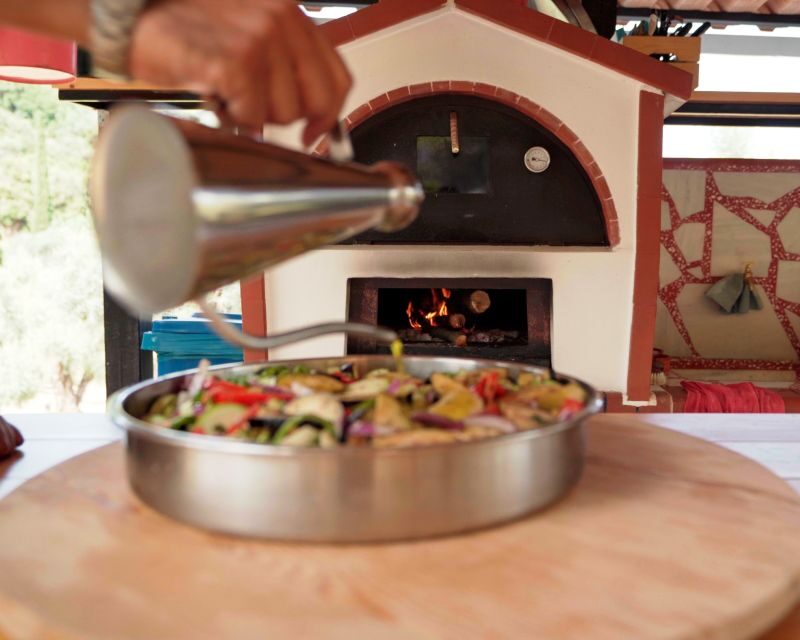
- Wood-fired cooking: bread and briam come out of a traditional oven
- Real Greek basics: tzatziki with sheep’s yoghurt, plus Greek salad with goat cheese and oregano
- Family-style Farmer’s Table meal: you share what you cook, together
- A relaxed host-led flow: the day feels like a guided farm visit that turns into dinner
In This Review
- Lefkada Micro Farm’s recipe is simple: land, then lunch
- Where you’ll meet, how long it takes, and how the day flows
- Open-Air Museum time: meeting Andreas and learning your ingredients’ story
- Harvest to oven: how Greek staples become your hands-on lesson
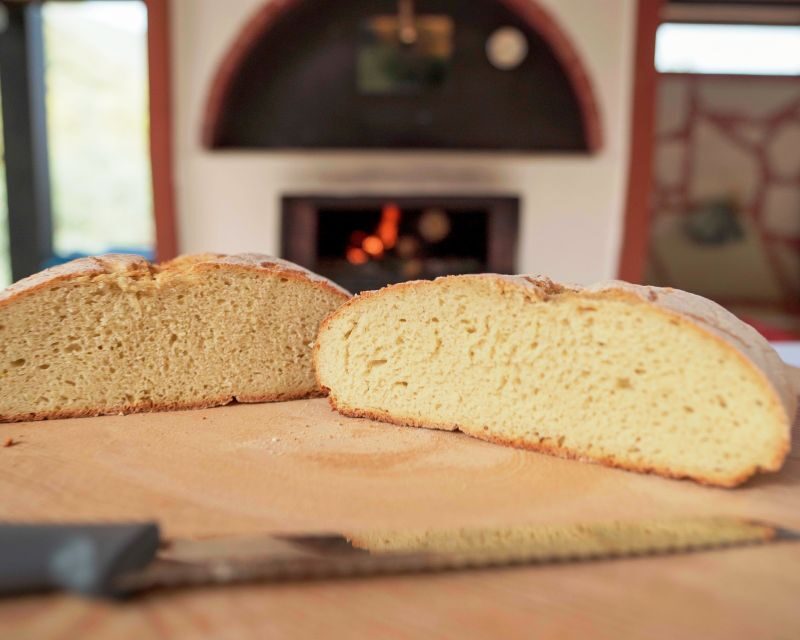
- Bread baked in the wood-burning oven
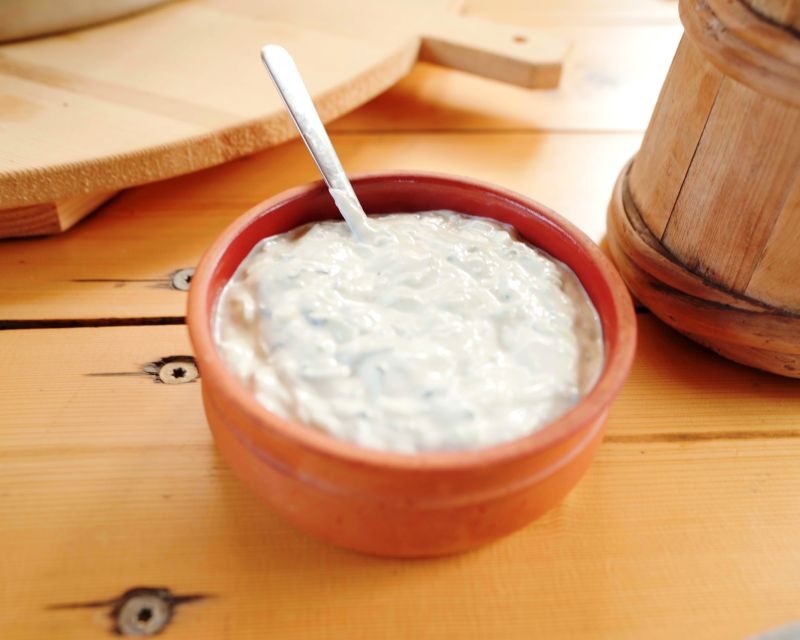
- Tzatziki: sheep’s yoghurt + farm-to-table freshness
- Greek salad with goat cheese, oregano, and extra virgin olive oil
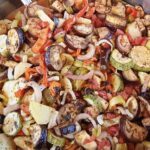
- Briam: mixed vegetables roasted in the oven
- The shared Farmer’s Table meal: eating like you belong
- Price and value: what you’re paying for at $152.58
- Who this class fits best (and who might want a different option)
- Practical tips so your day runs smoothly
- Should you book Lefkada Micro Farm’s Greek cooking class?
- FAQ
- How long is the cooking class?
- How much does the traditional Greek cooking class cost?
- What is the group size?
- Is the class offered in English?
- What dishes are included in the menu?
- Where does the experience start?
- Is there a mobile ticket?
- Can I bring a service animal?
- What happens if the weather is poor or I need to cancel?
Lefkada Micro Farm’s recipe is simple: land, then lunch
If your usual vacation plan is beach, dinner, repeat, this class gives you a different rhythm. You start on the farm, learn the “why” behind what ends up on the plate, then you cook the “how.” It’s traditional Greek cooking with a modern farming mindset: seasonal, organic ingredients and regenerative practices that aim to keep the ecosystem healthy.
The pitch here is not fancy technique. It’s the Greek approach: freshness, seasonality, and simplicity. You’ll move through the day at a gentle pace—soil to harvest to an open-air kitchen—so you get why wood-burning heat and good olive oil matter, not just what buttons to press.
And yes, you’ll eat well. The menu includes bread baked in the wood-burning oven, tzatziki, Greek salad, and briam (mixed vegetables roasted in the oven). It’s the kind of meal that makes you pay attention, not just chew.
Where you’ll meet, how long it takes, and how the day flows
This experience is about 4 hours. The pacing is built around farming time and cooking time, so it doesn’t feel like a snack demo stretched into a “tour.” It’s structured, but relaxed.
You’ll start at Lefkada Micro Farm, at Ε.Ο. Νυδριου Βαυκερής Ράχη, Nidri 311 00, Greece, and the activity ends back at the meeting point. You’ll have a mobile ticket, and the class is offered in English.
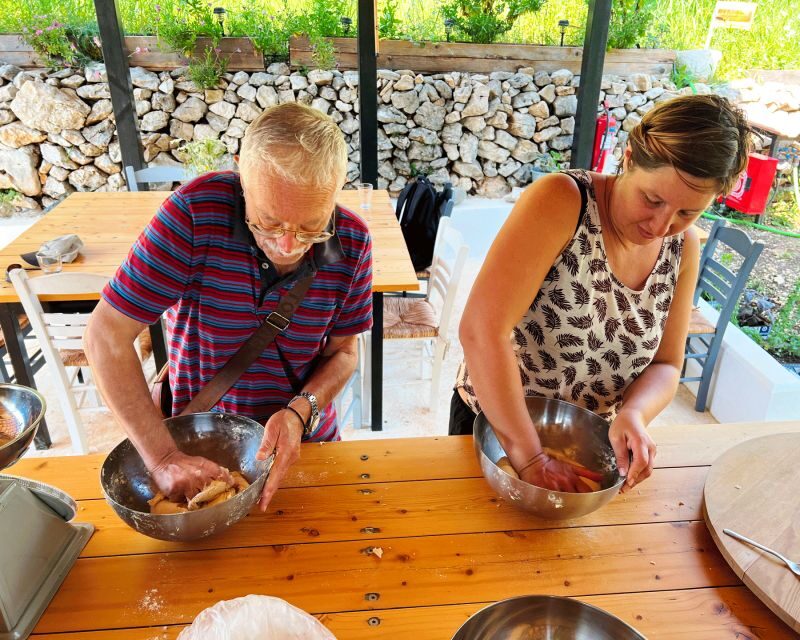
Group size is capped at 10 travelers, which is the sweet spot for cooking classes. You get enough attention to follow along, but the day still feels personal—like you’re joining a small household project, not lining up for a performance.
A practical note: plan for time outdoors. Even though the main cooking happens in an open-air kitchen, you’ll still spend part of the day on the farm. Comfortable shoes help if the ground is uneven, and sun protection is smart.
You can also read our reviews of more cooking classes in Lefkada

Open-Air Museum time: meeting Andreas and learning your ingredients’ story
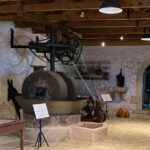
The day kicks off at Lefkada Micro Farm in what feels like an open-air museum of how food connects to place. The host, Andreas, leads the farm portion with passion and practical knowledge about the environment and your place within it.
You start with the regenerative farming philosophy used on the land—how they aim to keep the ecosystem healthy. You don’t just hear eco-talk. You connect it to what you’ll cook later. That’s the point: you learn why seasonal, organic ingredients taste different when they’re grown with care.
If you arrive a bit early, you might get an extra farm moment. One account describes Andreas inviting people to feed the animals, plus coffee, fresh fruit, and cakes before the farm tour. That’s not guaranteed for every schedule, but it fits the overall vibe: slow welcome, then education, then hands-on cooking.
This farm segment also matters because it sets expectations. When you later handle ingredients, it feels purposeful. You’re not cooking random supermarket items. You’re cooking what the farm helped bring into season.
Harvest to oven: how Greek staples become your hands-on lesson
After the farm tour, the focus shifts to the open-air kitchen. This is where you’ll see the pillars of Greek gastronomy in action: freshness, seasonality, and simplicity.
Instead of complex techniques, you learn through direct connection—what to prepare, how to assemble, and why the oven and olive oil are doing real work. Wood-burning heat isn’t just romantic. It drives flavor through steady, direct cooking, and it creates that “I can taste the process” difference.
Here’s what you’ll make and what to watch for:
Bread baked in the wood-burning oven
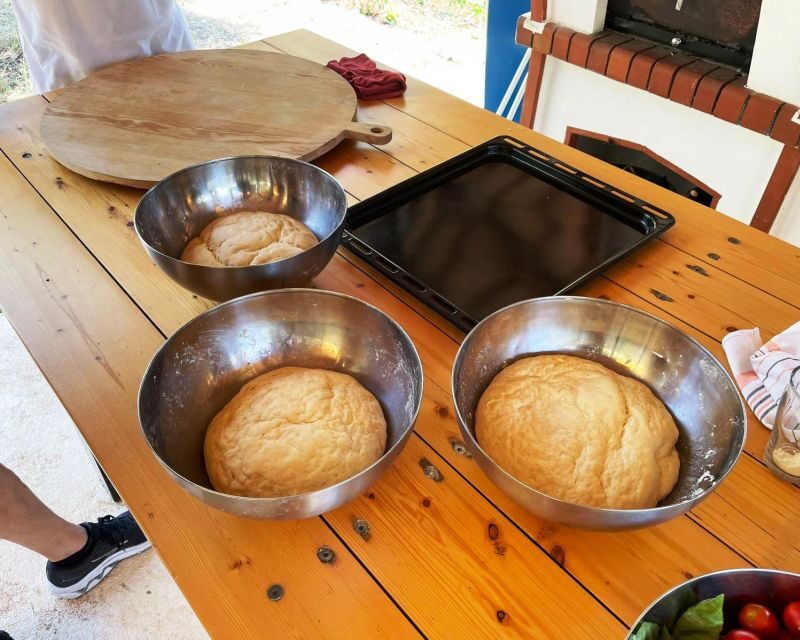
Bread is often the easiest way to understand this class’s philosophy. The dough, the timing, the heat control—everything points back to the farm-to-oven idea. When bread comes out of a wood-burning oven, it’s aromatic and immediate, and it makes the whole meal feel rooted.
Even if you don’t leave with a full bread recipe in your pocket, you’ll learn what good bread means here: warmth, texture, and simple ingredients treated seriously.
Tzatziki: sheep’s yoghurt + farm-to-table freshness
Tzatziki is classic Greek comfort, and in this menu it’s built with farm-to-table vegetables and sheep’s yoghurt. You’ll taste how the yogurt’s richness balances the freshness of the vegetables.
The useful takeaway for you: tzatziki isn’t about “more ingredients.” It’s about getting the balance right—cool, creamy, and bright. When you cook later at home, you’ll remember this isn’t heavy or complicated. It’s clean and seasonal.
A few more Lefkada tours and experiences worth a look
Greek salad with goat cheese, oregano, and extra virgin olive oil
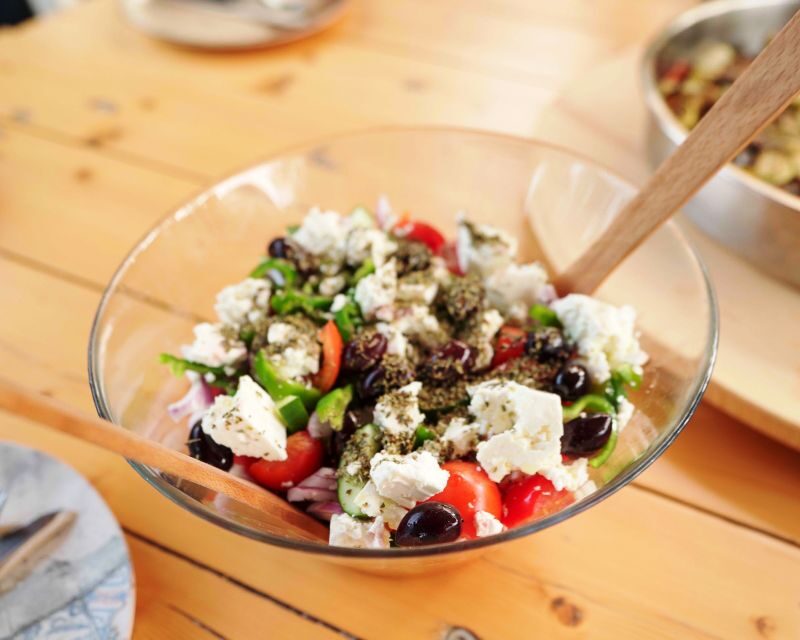
Greek salad is where many cooking classes rush. This one doesn’t. You’ll make it using farm-to-table vegetables, goat cheese, oregano, and their extra virgin olive oil.
Pay attention to the olive oil. One theme in the experience description is how their award-winning oil elevates garden-fresh produce. That’s not marketing fluff. It’s flavor chemistry you can feel: fruity, peppery, and rounded. When oil is great, you don’t need “dressing tricks.” You need good ingredients and restraint.
Briam: mixed vegetables roasted in the oven
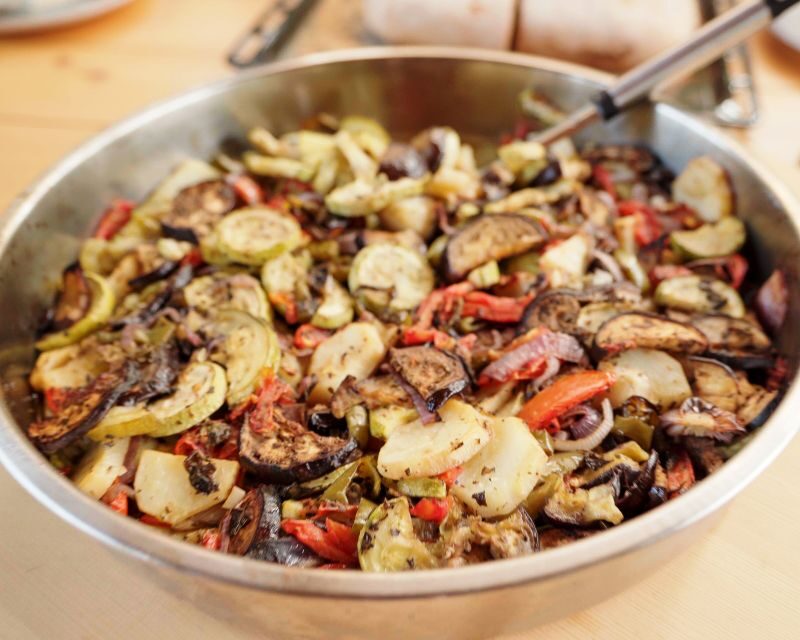
Briam is mixed vegetables roasted in the wood-burning oven. It’s the kind of dish that feels humble but tastes deeply satisfying. Roasting turns vegetables sweeter and more concentrated, and the oven’s heat gives everything a soft, comforting finish.
If you’re the type who usually thinks of vegetables as side dishes, briam changes that. It plays well with bread, and it makes the whole meal feel complete without meat-heavy heaviness.
The shared Farmer’s Table meal: eating like you belong
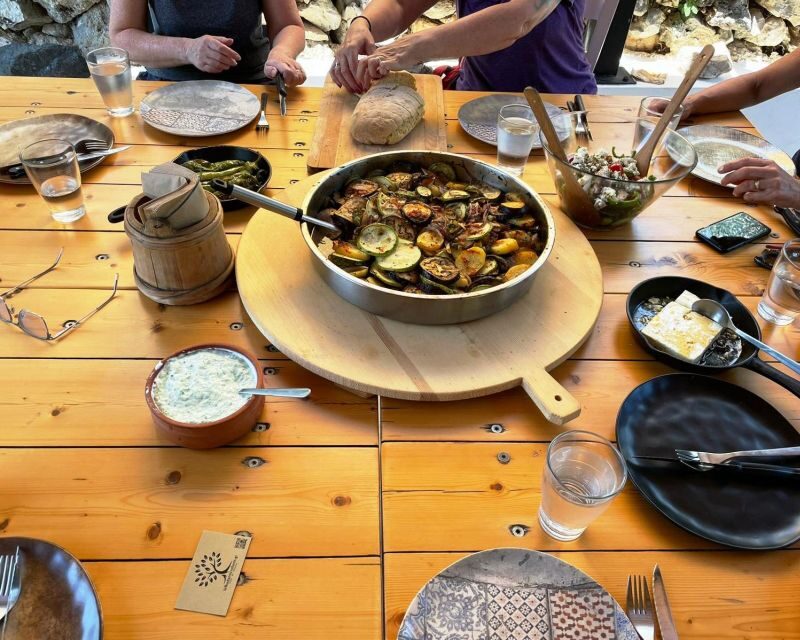
Once cooking is done, you all gather and share the meal like family at the Farmer’s Table. This part matters for two reasons.
First, it reinforces the farm-to-plate lesson. After you cook bread, mix tzatziki, build salad, and roast briam, you finally taste the result in the context it was intended for: simple, seasonal food eaten together.
Second, it removes the awkward “work-and-wait” feeling that some classes have. You’re not just producing dishes for a quick bite and then leaving. You sit down and eat what you made.
If the farm welcome included coffee, fresh fruit, and cakes, you’ll likely find the full day stays warm and human from start to finish. The best meals on vacation aren’t just delicious; they make you feel taken care of. This one aims for that tone.
Price and value: what you’re paying for at $152.58
At $152.58 per person for about four hours, this isn’t a bargain-bin activity. But it also isn’t overpriced “just because it’s a class.”
Here’s where the value comes from:
- You’re not only cooking; you’re getting a farm education tied to regenerative practices and seasonal harvests.
- The food isn’t theoretical. You’re making bread baked in a wood-burning oven, plus tzatziki, Greek salad, and briam—then you eat as a group.
- The group size is capped at 10, which usually makes a hands-on cooking class more satisfying than large-batch experiences.
- You’re included in a full meal experience, not a few bite-sized samples.
If you normally pay for a nice Lefkada dinner for two, then add a guided farm visit, this starts to look like a combined value package. You leave with both the meal and the context behind the meal, which is what most cooking-class money is supposed to buy.
Who this class fits best (and who might want a different option)
This experience fits best if you want more than food. You want the connection: land to plate, season to flavor, and a slower pace that feels like part of everyday life in Greece.
You’ll likely enjoy it if:
- you like cooking but hate overly complicated steps
- you’re food-motivated and want ingredients that taste “grown for a reason”
- you enjoy small-group experiences where you can ask questions and actually participate
It may not be ideal if:
- you’re short on time and can’t spare about four hours outdoors
- you want purely hands-on technique with a heavy focus on advanced cooking skills (this stays simple and traditional)
The overall style is “come learn our way,” not “compete in a masterclass.” That’s a feature, not a flaw.
Practical tips so your day runs smoothly
A few small choices can make the whole experience better:
- Wear closed-toe shoes for farm paths.
- Bring sun protection (hat, water, sunscreen). Outdoor time adds up.
- Tell them your dietary restrictions early. They ask you to let them know allergies or dietary needs.
- Arrive a little early if you can. You might catch a friendlier farm welcome—coffee, fruit, and cakes, and possibly feeding the animals.
- Plan for weather. The experience requires good weather, so if rain hits, be ready for date changes or a refund option.
That’s it. Nothing fancy. Just help your body handle the outdoors and you’ll enjoy the cooking part more.
Should you book Lefkada Micro Farm’s Greek cooking class?
I think you should book if you want a Lefkada experience with substance. The best reason is the structure: regenerative farming learning, wood-fired traditional cooking, and a shared meal you helped create. It’s not just a recipe stop—it’s a land-and-lunch story you can taste.
Choose a different option if your priority is a quick activity, you’re not comfortable spending time outdoors, or you’re chasing advanced culinary technique. This class is about Greek basics done thoughtfully, with ingredients that actually come from the place you’re standing on.
If that sounds like your kind of travel day, this one’s worth it. You’ll leave with a fuller sense of how food connects to the rhythms around it—and with dinner that tastes like the whole process mattered.
FAQ
How long is the cooking class?
The class is about 4 hours.
How much does the traditional Greek cooking class cost?
It costs $152.58 per person.
What is the group size?
The experience has a maximum of 10 travelers.
Is the class offered in English?
Yes, it’s offered in English.
What dishes are included in the menu?
You’ll make bread baked in a wood-burning oven, tzatziki (with farm-to-table vegetables and sheep’s yoghurt), Greek salad (with goat cheese, oregano, and extra virgin olive oil), and briam (mixed vegetables roasted in the wood-burning oven).
Where does the experience start?
The meeting point is Lefkada Micro Farm, Ε.Ο. Νυδριου Βαυκερής Ράχη, Nidri 311 00, Greece.
Is there a mobile ticket?
Yes, the experience uses a mobile ticket.
Can I bring a service animal?
Service animals are allowed.
What happens if the weather is poor or I need to cancel?
The experience requires good weather. If it’s canceled due to poor weather, you’ll be offered a different date or a full refund. For cancellation, you can cancel up to 24 hours in advance for a full refund.