REVIEW · ATHENS
2-Day Tour of Ancient Messene and Olympia in Greece
Book on Viator →Operated by 4 Seasons Greece Tours · Bookable on Viator
The best reason to choose this two-day trip is that it reaches Ancient Messene, one of Greece’s most impressive archaeological sites, while also covering Olympia, Corinth, Kapsia Cave, and the Rio-Antirrio Bridge. You get a wide look at the Peloponnese without changing hotels every night.
I like the private vehicle and flexible pace, especially for a route with several far-flung stops. I also like the overnight stay and breakfast in Olympia, which keeps the second day from becoming one enormous Athens return drive. The main drawback is cost: at $867.61 per person, this is a serious purchase, and entrance fees, most meals, and site guiding are extra.
In This Review
- Key points to know before booking
- Why Ancient Messene makes this route special
- From Athens to the Corinth Canal
- Kapsia Cave brings cool air and color
- Ancient Messene deserves the afternoon
- An Olympia overnight keeps day two sensible
- Walking through the ancient Olympic site
- Crossing the Rio-Antirrio Bridge
- Ancient Corinth closes the circuit
- What the private vehicle adds
- Is $867.61 per person a fair price?
- Who should book this two-day route?
- Should you book it?
- FAQ
- How long does the tour last?
- Where can pickup and return be arranged?
- Is accommodation included?
- Are entrance fees included?
- Does the driver guide visitors inside the sites?
- Are meals included?
- Is the tour private?
Key points to know before booking
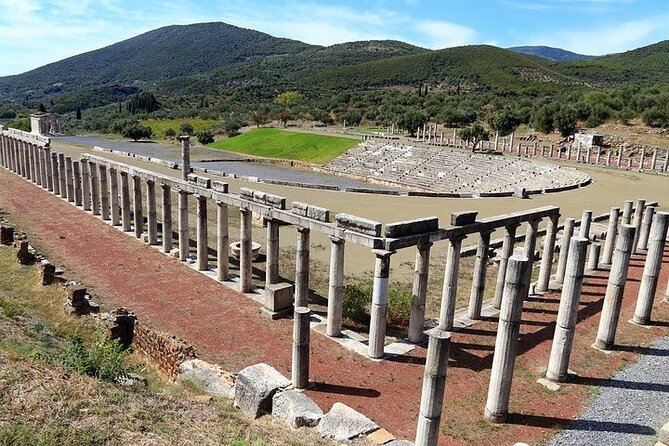
- Ancient Messene is the star stop: Spend about two hours among sanctuaries, public buildings, fortifications, houses, and tombs in a remarkably preserved ancient city.
- Olympia includes both site and museum: You see the stadium and temples, then artworks such as the Nike of Paionios and Hermes with the infant Dionysus.
- A private luxury vehicle covers the long miles: Wi-Fi, air conditioning, mineral water, and pickup from your hotel, airport, or port are included.
- Kapsia Cave adds a change of mood: Expect colorful stalactites, stalagmites, and small pools, but bring warm clothing and pay the entrance fee separately.
- The overnight hotel is in Olympia: A 4 or 5-star hotel and breakfast are included, while lunch and dinner are not.
- Your driver does not enter the archaeological sites with you: You explore independently unless you arrange additional guiding.
Why Ancient Messene makes this route special
Many tours from Athens focus on the famous names and rush through the Peloponnese. This one gives Ancient Messene a proper place in the plan. Founded in 369 BC by the Theban general Epaminondas, the city became the capital of the free Messenian state after Sparta’s defeat at the Battle of Leuctra.
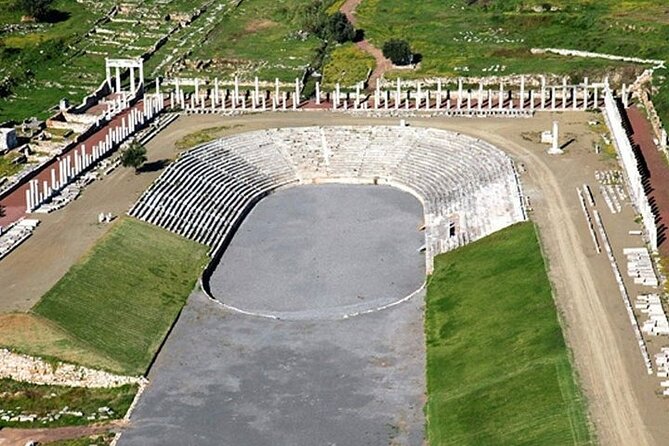
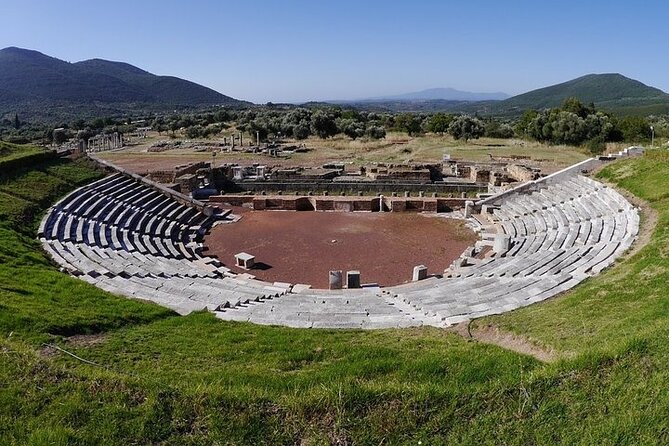
The site is large and unusually intact. You can see the Agora, temples to Zeus Soter and Poseidon, the Asklepieion, Arsinoe Fountain, the sanctuary of Demeter and the Dioskouroi, and the great Doric temple. The remains are not limited to one grand monument. They show how an ancient city functioned, with religious, civic, residential, and defensive areas close together.
That matters because you get more than a quick photo stop. Ancient Messene rewards time and attention, and the two-hour visit gives you a fair chance to understand its scale. Still, two hours is not enough for every corner, especially if you like reading every sign or stopping often for photographs.
Your driver takes you to the entrance but cannot escort you inside the site. That arrangement gives you privacy, but it also means you should be comfortable exploring on your own. If you want a detailed explanation of the city’s politics, buildings, and religious life, ask in advance about adding a licensed guide.
A few more Athens tours and experiences worth a look


From Athens to the Corinth Canal
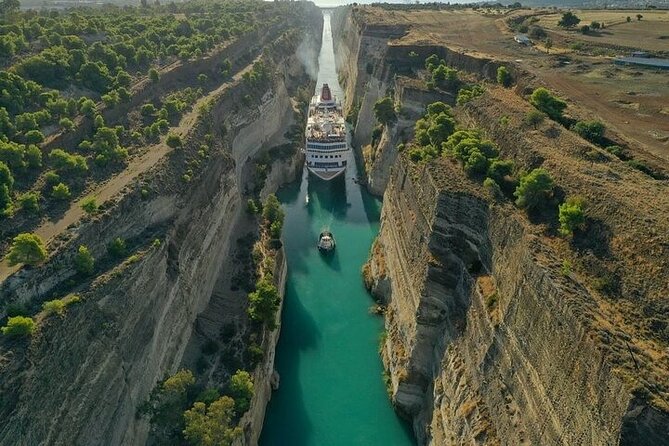
The first stop comes about an hour from Athens at the Corinth Canal. The canal is roughly six kilometers long and has operated since 1893, cutting through the narrow land bridge between mainland Greece and the Peloponnese.
You have about 20 minutes here, with no admission charge. That is enough for a look at the steep cut and the waterway below, but not a long visit. Treat it as a useful first pause after leaving Athens rather than a full sightseeing session.
The canal also gives the journey a clear sense of place. You are no longer simply driving toward ancient sites. You are crossing into the Peloponnese, a region shaped by mountain routes, coastal connections, and rival ancient city-states.
Kapsia Cave brings cool air and color
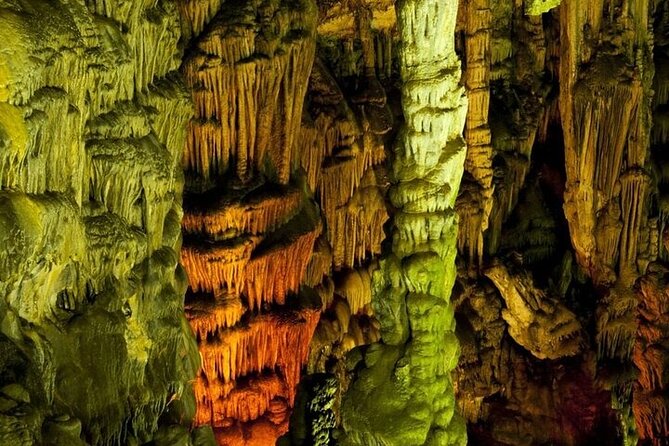
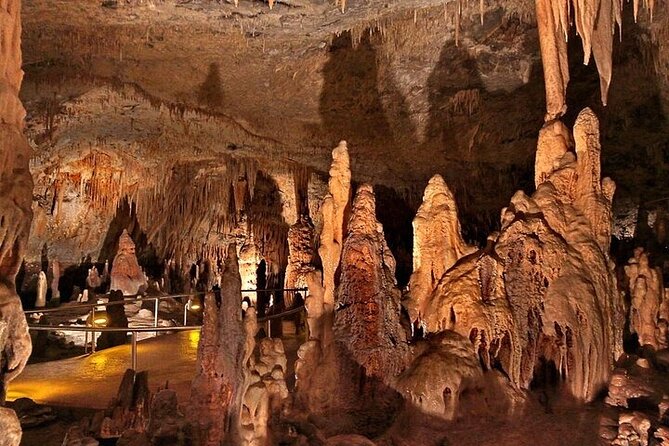
The route then turns toward Kapsia Cave in the Mantineia mountain range. The cave is a system of swallow-holes with stalactites, stalagmites, and small pools that reflect the cave’s colors.
The planned visit lasts about an hour. Bring a warm layer, even if Athens is hot, because the cave temperature can feel sharply different from the outside. Comfortable shoes are also sensible for any cave visit, although the supplied information does not specify the exact path or surface.
Kapsia is a good contrast to the outdoor ruins. After temples and foundations under the sun, you get a darker, cooler setting shaped by water and stone. The limitation is practical: admission is not included, so you will need to budget for the ticket. The tour information also does not state the fee, so confirm the current amount before departure if you are keeping close track of costs.
Ancient Messene deserves the afternoon
The two-hour Ancient Messene visit is the heart of the first day. The ruins are spread across a large area, so you will want to use the time well rather than lingering too long at the first monument.
Look for the remains of the Agora and the major sanctuaries. The Asklepieion is especially useful for understanding how religious practice and public life could share the same civic space. The fortifications and tombs add another layer, showing that this was a functioning city, not merely a ceremonial complex.
The city was founded soon after Sparta’s defeat, which gives the site a strong political story. Messene was part of a new Messenian state, and its planning reflected that fresh start. Even without a guide inside, the size and organization of the ruins help make that story visible.
Since your driver is not a site escort, you may want to read a little about Ancient Messene before leaving Athens. A short background note can make the visit much more rewarding. If Vasilios is assigned to your group, his role may add useful context during the drives. The available feedback describes him as professional, good-humored, and able to bring Greek history to life, but a particular driver should be confirmed rather than assumed.
An Olympia overnight keeps day two sensible
Your overnight stay is in Olympia, with breakfast included at a 4 or 5-star hotel. That is an important part of the route’s value. Olympia is far enough from Athens that trying to visit it, Ancient Messene, and the other stops in one day would make for a punishing schedule.
The hotel category gives you a more comfortable night than a basic roadside stop, but the exact property is not identified. If room style, location, or hotel facilities matter to you, ask the operator for the name before booking.
Breakfast is included, but other meals and drinks are not unless you select the lunch option. Plan for that gap. The tour provides mineral water in the vehicle, but that does not replace a proper lunch or dinner budget.






Walking through the ancient Olympic site
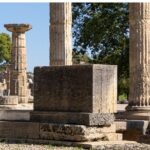
After breakfast, you visit the UNESCO site of Ancient Olympia. The site lies in the valley of the Alpheios River and was the setting for the ancient Olympic Games, making it one of the most important archaeological stops in Greece.
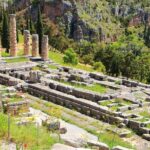
The visit includes both the outdoor ruins and the archaeological museum. At the site, you see the Doric temples of Zeus and Hera, the Bouleuterion, Prytaneion, stadium, gymnasium, palaestra, and the workshop of Pheidias.
The stadium is the obvious focus, but do not rush straight there. The surrounding buildings explain the religious and athletic world that made the games possible. The palaestra and gymnasium show the training side, while the temples reflect Olympia’s sacred role.
The museum adds essential pieces that are easier to appreciate after seeing the ruins. The Nike of Paionios and Hermes with the infant Dionysus are among the major works you will encounter. The planned visit lasts about two hours for both the archaeological site and museum, so you will need to keep moving.
Entrance fees are not included. The driver drops you off and waits according to the private-tour plan, but does not guide you through the museum or ruins. For some people, that independence is ideal. If you prefer a clear narrative and help identifying details, arrange a licensed guide separately or ask what guiding options are available.
Crossing the Rio-Antirrio Bridge
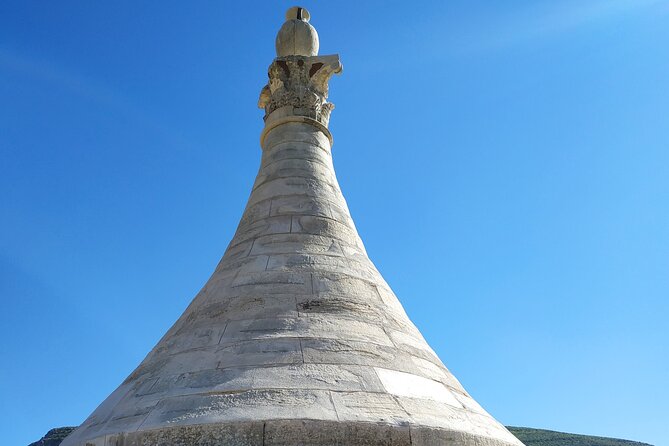
The Rio-Antirrio Bridge is a short stop of about 20 minutes, with no admission fee. Opened in August 2004, just before the Athens Olympic Games, it carried the Olympic Flame and links the Rio and Antirrio sides of the Gulf of Corinth.
This is not an ancient monument, but it gives the trip a welcome modern counterpoint. The bridge is a major engineering work, with multiple cable-stayed spans and a long suspended structure. Your stop is brief, so expect a view and photographs rather than a full engineering tour.
The bridge also breaks up the drive toward Ancient Corinth. On a route packed with temples and ruins, a contemporary structure helps you notice how Greece connects its regions today.
Ancient Corinth closes the circuit
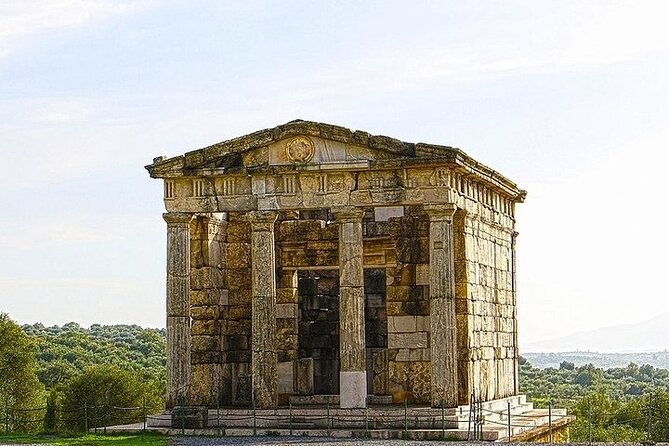
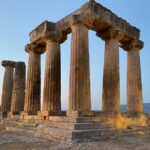
The final sightseeing stop is Ancient Corinth, visited for about an hour and 30 minutes. The main sights include the Doric Temple of Apollo and the Bema, the platform associated with Apostle Paul’s preaching and his First Epistle to the Corinthians.
Corinth is a strong final stop because it joins classical Greek, Roman, and early Christian stories in one place. The Temple of Apollo gives you a clear example of ancient Greek architecture, while the Bema connects the site to the history of early Christianity.
The visit is shorter than the Olympia and Ancient Messene stops, so focus on the key monuments rather than trying to cover everything. Admission is not included. Afterward, the vehicle returns you to Athens, with drop-off at your residence or the airport.
That airport option can be useful if you are ending your Greek stay, but do not assume the timing will suit a tightly scheduled flight. Since the tour duration is approximate and the route covers long distances, confirm the expected return time before booking an onward departure.
What the private vehicle adds
The tour uses a brand-new luxury vehicle with air conditioning, Wi-Fi, and free mineral water. Those features matter here because the route involves substantial road time across the Peloponnese.
A private vehicle also lets your group avoid the fixed pace of a large coach. You can ask for a short pause when needed, spend your energy at the most important ruins, and return directly to your own hotel or the airport. Group discounts may be available, which could improve the per-person price if you are traveling with family or friends.
The tradeoff is that private comfort does not turn the route into a guided archaeological tour. Your English-speaking driver handles the transfer and can provide information during the journey, but cannot escort you inside the sites. This is best for people who value transport, privacy, and flexibility more than a continuous expert lecture.
The tour offers pickup and return from an airport, hotel, or port. Confirmation is provided at booking, and the activity is private, with only your group participating. Most people can take part, and the route is near public transportation, although the vehicle is the practical way to complete all these stops.
Is $867.61 per person a fair price?
At $867.61 per person, this is not a budget excursion. The price makes more sense if you are comparing it with the cost of arranging a private car, fuel, intercity transfers, hotel accommodation, and airport or port transport on your own.
You receive one night in a 4 or 5-star hotel, breakfast, a luxury vehicle, Wi-Fi, air conditioning, mineral water, an English-speaking professional driver, and pickup and return service. For a small private group, that can be a reasonable way to cover a difficult route without managing several separate bookings.
You still need to pay entrance fees and most meals. You may also want to pay for a licensed guide at Olympia or Ancient Messene if you want detailed site interpretation. Those extra costs should be included in your real trip budget.
The strongest value comes from the route itself. Ancient Messene and Olympia are not convenient day trips from Athens when combined with Corinth and Kapsia Cave. If you have only two days and want private transport, the package is easier than building the same plan independently.
Who should book this two-day route?
I would recommend it to you if you want to see more than the standard Athens highlights and prefer a private journey. It suits couples, families, and small groups who appreciate air conditioning, door-to-door pickup, and the freedom to explore without a large group.
It is also a good choice if Ancient Messene is high on your list. That site is the reason to choose this route over a simpler Olympia and Corinth outing.
I would hesitate if you want slow archaeological study. The itinerary packs several major stops into two days, and each site visit has a set time. I would also think twice if the price leaves no room for admission tickets, meals, or optional guiding.
The cancellation policy is flexible up to 24 hours before the start time, with a full refund. Changes or cancellations within 24 hours are not accepted for a refund.
Should you book it?
Book this tour if you want maximum Peloponnese coverage in two days and are willing to pay for private comfort. The combination of Ancient Messene, Olympia, Corinth, Kapsia Cave, and the Rio-Antirrio Bridge is unusually broad, and the Olympia overnight keeps the plan from becoming a frantic single-day drive.
Before paying, confirm the hotel name, current entrance fees, lunch arrangements, expected return time, and whether Vasilios or another particular driver will be assigned. If you are happy exploring ruins independently, this is a convenient and well-planned private route. If you need an expert guide at every site, budget for that separately or choose a tour with guiding included.
FAQ
How long does the tour last?
The tour lasts approximately two days and includes one overnight stay in Olympia.
Where can pickup and return be arranged?
Pickup and return are offered from your hotel, airport, or port. Return to Athens can also be arranged at your residence or the airport.
Is accommodation included?
Yes. One night in a 4 or 5-star hotel is included, along with breakfast.
Are entrance fees included?
No. Entrance fees for Kapsia Cave, Ancient Messene, Ancient Olympia, and Ancient Corinth are not included.
Does the driver guide visitors inside the sites?
No. The tour driver cannot escort you into the archaeological sites. The service includes a professional English-speaking tour driver for the private transfers.
Are meals included?
Breakfast at the hotel is included. Meals and drinks are not included unless you choose the lunch option. Mineral water is provided in the vehicle.
Is the tour private?
Yes. Only your group participates in the private tour. Group discounts may also be available.