REVIEW · ATHENS
2-Day Delphi and Meteora Tour from Athens
Book on Viator →Operated by Keytours - Greece · Bookable on Viator
Two days, two ancient worlds. This Delphi and Meteora trip is built for big history hits without the hassle of renting a car, and you’ll get guided time at the Delphi ruins and the UNESCO Meteora monasteries. I love how the pace forces you to see the essentials in daylight hours, and I love that your trip includes an overnight in Kalambaka so you’re not trying to cram everything into one exhausting ride. The only real drawback: Delphi can feel rushed if you want extra time wandering the museum and stadium.
The drive itself is part of the deal. You’ll leave Athens early enough to still enjoy a full second day, and along the way your guide (I’ve seen guides like Marianna, Christina, Evan, and Irini) tends to explain what you’re seeing and why it mattered—from sacred springs to monastery life on the rock towers. One more consideration: Meteora involves real climbing, and the monasteries require specific clothing, so pack for stairs and dress code, not comfort fashion.
If you want a smooth, guided route to Delphi and Meteora with built-in logistics, this tour checks the boxes. Just go in knowing you’re trading some slow strolling for a high-impact two-day plan.
In This Review
- Key points to know before you go
- Delphi and Meteora in 2 days: does the math work?
- Getting out of Athens: pickup, timing, and bus reality
- Stop 1 on Day 1: Delphi’s Temple of Apollo and the oracle setting
- Crossing central Greece to Kalambaka: Lamia, Trikala, and the long but useful ride
- The Kalambaka hotel night: what’s included and what to watch
- Stop 1 on Day 2: Meteora’s rocktop monasteries and the staircase test
- Dress code: don’t get stuck outside the door
- Bring the right shoes (and plan for stairs)
- Stop 2 on Day 2: Thermopylae Leonidas, plus an optional icon stop
- Price and value: what you’re really paying for
- What to pack and how to avoid the usual annoyances
- Who should book this Delphi and Meteora tour?
- Should you book this Delphi and Meteora tour?
- FAQ
- What time does the tour start and where do I meet?
- Do they offer pickup from hotels in Athens?
- Is the Delphi Museum ticket included?
- Are Meteora monastery entrance fees included?
- How much of Day 1 is spent at Delphi?
- What meals are included?
- What kind of hotel do I stay in overnight?
- Is there a hotel accommodation tax?
- What are the clothing rules for Meteora?
- Is the bus comfortable and does it have Wi-Fi?
- How large is the group?
Key points to know before you go
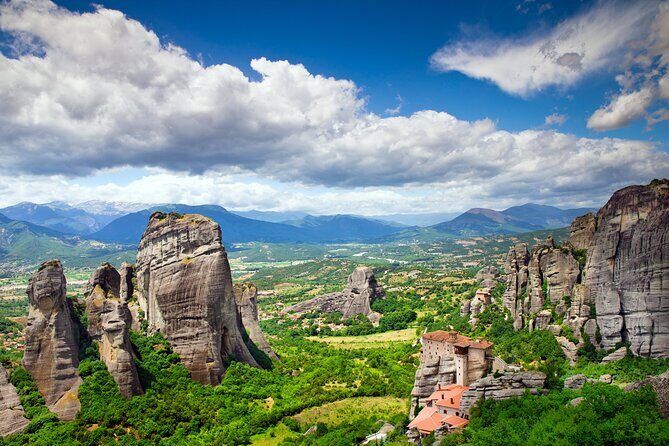
- Delphi ruins + Temple of Apollo in a guided window that still gives you time to take it in
- Two Meteora monasteries on rocktops, UNESCO territory with big step-climbing
- Overnight in Kalambaka (with breakfast and dinner) so the second day isn’t a blur
- Free Wi‑Fi on the luxury bus plus multiple scheduled breaks on the long ride
- Entrance included for Delphi (archaeological site and Delphi museum), while Meteora monastery entry costs extra
- Real clothing rules for Meteora (bring long sleeves; no shorts)
Delphi and Meteora in 2 days: does the math work?
This kind of tour works when you’re clear about what you want. Delphi and Meteora are both major “once-in-a-lifetime” stops, but they’re also spread out and physically demanding. A two-day format lets you do both without feeling like you’re sprinting from one ticket line to the next.
What I like about the structure is the split:
- Day 1 focuses on Delphi’s core ruins and sacred setting, then moves you toward Kalambaka.
- Day 2 is about Meteora’s monasteries, with the return to Athens timed for a late-afternoon drop.
The tour’s value comes from what it bundles: round-trip transportation by air-conditioned bus, a one-night hotel in Kalambaka, breakfast and dinner, and guided time at Delphi’s main archaeological site. That means you’re paying for the hard parts—distance, logistics, and expert explanation—rather than just a bus ticket.
A few more Athens tours and experiences worth a look

Getting out of Athens: pickup, timing, and bus reality
Your day starts early—pickup is offered from select central hotels about an hour before departure, and otherwise you meet at Athanasiou Diakou 26, Athina 117 43. The tour begins 8:15 am, and the return to Athens is around 6:30 pm.
The bus setup matters more than people expect. You’ll be on a luxury air-conditioned coach with free Wi‑Fi, and the group size is capped at 42. In practice, you might get a smaller group depending on the departure (some reviews describe very small groups), which can make photo stops and movement feel easier.
Now the honest part: the road to central Greece is mountainous in places, and rides can feel twisty. If you’re prone to motion sickness, plan ahead. I’d pack travel medicine like Dramamine because you’re dealing with windy roads and steep stretches, not just highway cruising. Also, bring your own water or plan to buy it during stops—don’t assume you’ll have water handed to you.
Stop 1 on Day 1: Delphi’s Temple of Apollo and the oracle setting
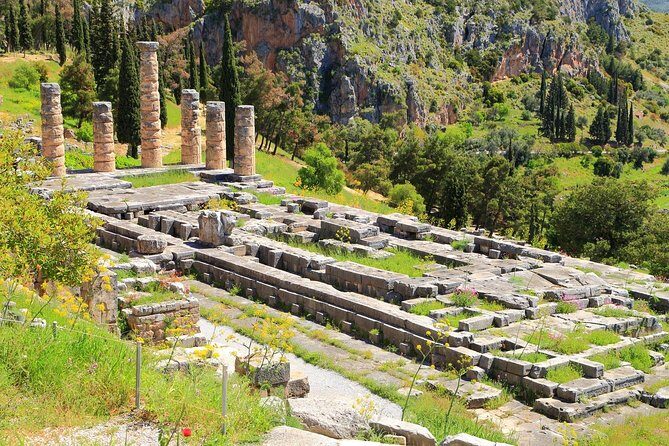
You arrive at Delphi around noon, which is a decent compromise. It’s late enough that the day feels calm, but early enough that you still get meaningful daylight time at the ruins.
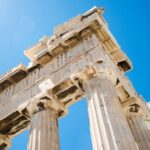
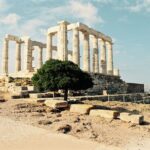
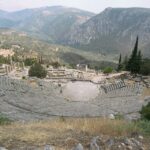
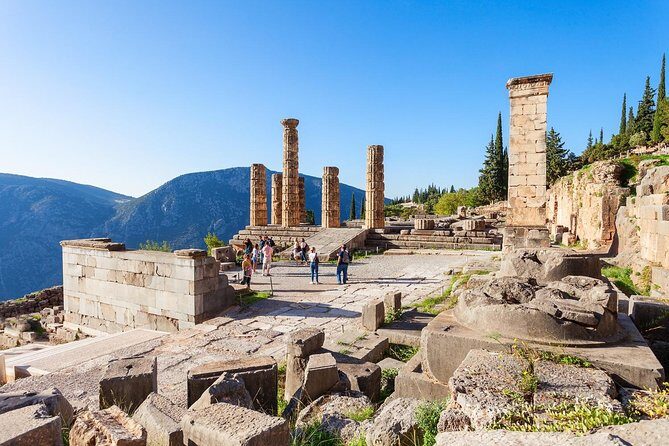
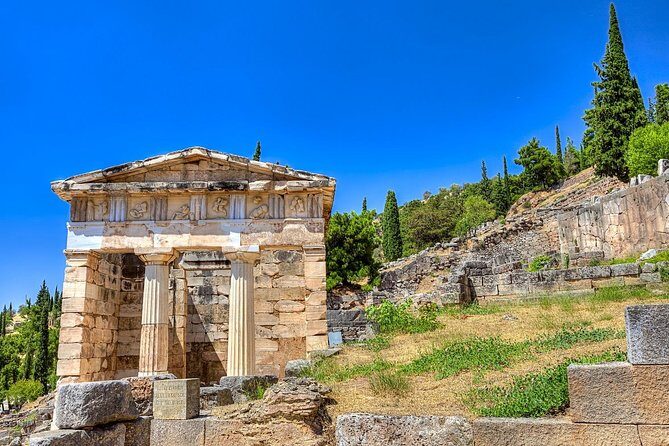
At Delphi, you’re taken to the mountainside archaeological site where the Temple of Apollo is the headline. This is the place tied to the oracle—the spiritual and cultural gravity point that made Delphi famous in the classical Greek world. You’re also likely to see the broader context of the site (there’s mention of features like the theater), and the guide’s job is to connect those dots so it doesn’t feel like random stones.
Here’s how to make your time count with the schedule you get:
- Do the walk to key viewpoints early so photos don’t eat your main focus time.
- If you care about the oracle story, listen closely to the guide’s framing—Delphi’s power isn’t just architectural, it’s the meaning people attached to it.
Important practical note: the Delphi archaeological site and Delphi museum admission are included, but guidance inside the Delphi Museum isn’t part of the tour. If you want museum time with no rush, plan for the fact that the overall Day 1 flow is tight. Some departures end up feeling rushed at Delphi, so if museums are your top priority, you may prefer a different plan that gives you longer Delphi hours.
Crossing central Greece to Kalambaka: Lamia, Trikala, and the long but useful ride
After your Delphi stop, you head into central Greece for the overnight base. Lunch is on you, so treat it as a budget item and bring snacks if you’re the kind of person who hates waiting for a meal.
The route includes a short stop in Lamia, a quick stop in Trikala, then you cross the Thessalian Plain toward Kalambaka, a town at the foot of the rock formations crowned by Meteora monasteries. You’ll also get a stop for souvenir shopping near the way in.
This is one of those “not glamorous, but valuable” parts. Why it matters: Kalambaka positions you perfectly for Meteora the next day, and staying overnight means you don’t have to return to Athens right after a steep monastery morning.
Also, the hotel location is meant to be convenient—staying centrally in Kalambaka keeps you close to dinner options on your free time. (Your included dinner handles one meal, but you still might want alternatives.)
The Kalambaka hotel night: what’s included and what to watch
You’ll sleep in a centrally located 3- or 4-star hotel in Kalambaka. The tour includes breakfast and dinner, plus the hotel is categorized as A class / T class in the booking details.
What you’re paying for is straightforward: rest, food, and a location that makes Meteora manageable.
But hotels vary, and a few patterns show up in feedback:
- Some rooms are fine for the purpose, but may feel basic (like missing small amenities such as a hair dryer).
- Some beds have been described as older or uncomfortable, even in higher categories.
- Dinner can be buffet-style and not always a highlight.
My practical take: if you’re the type who needs a great mattress and quiet sleep, compare hotel options carefully when choosing between 3-star and 4-star. If you mostly care about location and not waking up in a luxury room, the included night is a solid value.
One extra cost to budget for: hotel accommodation tax is paid directly to the hotel. It’s €10 per room per night for 4-star and €5 per room per night for 3-star (prices can change).
- All Day Cruise -3 Islands to Agistri,Moni, Aegina with lunch and drinks included
★ 5.0 · 4,958 reviews


Stop 1 on Day 2: Meteora’s rocktop monasteries and the staircase test
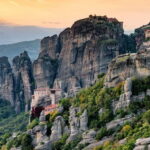
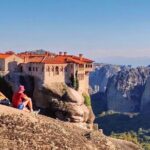
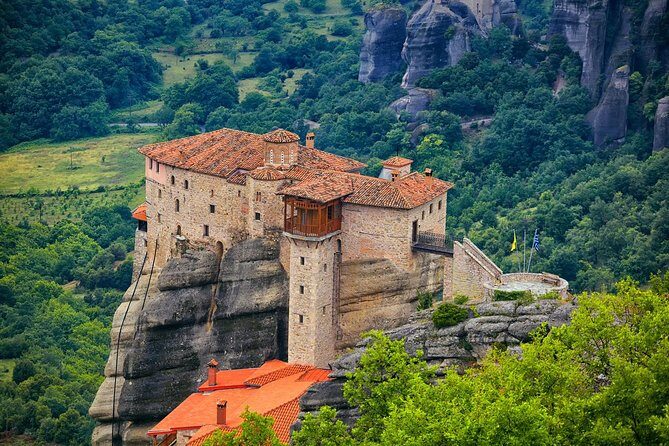
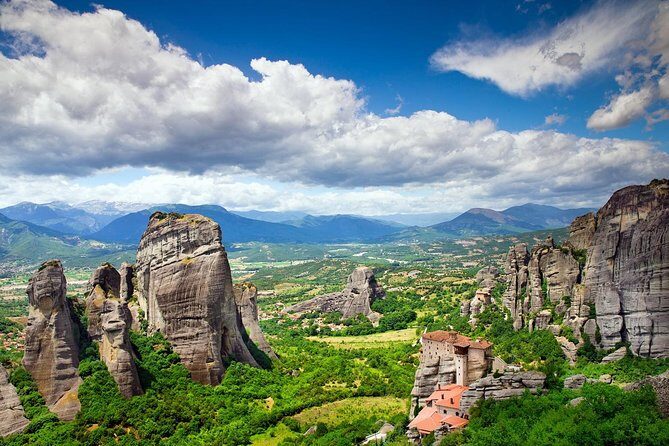
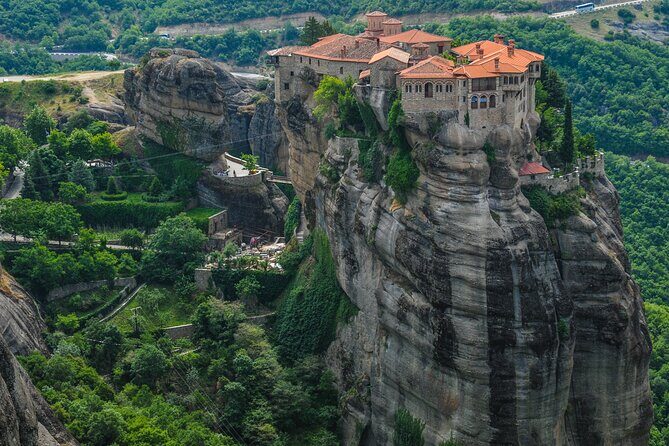
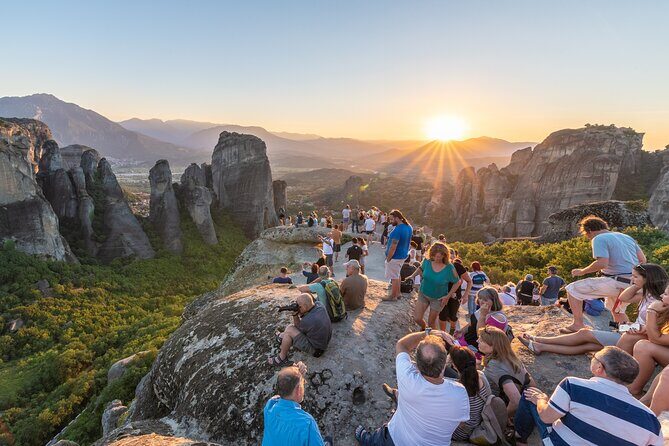
Meteora is the reason many people book this tour. UNESCO-listed rock-top monasteries look unreal even in photos—then you step onto the paths and realize how steep and exposed it really is.
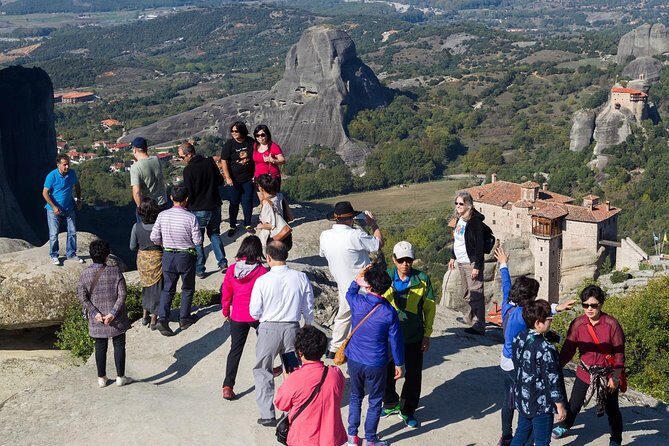
The tour visits two different Byzantine monasteries. These are built on sandstone pillars, and they were famously hard to reach—perfect for monks seeking isolation and protection. Today, you get a guided visit plus views that feel like you’re hovering above the plain.
Timing on Day 2 is set for a morning departure, then about two and a half hours for the monastery visits. That’s enough to feel the wow-factor, but not enough for ultra-slow wandering of every side detail. You’ll likely choose to focus on the main viewpoints and the key interior art.
Dress code: don’t get stuck outside the door
This is not optional at Meteora. You need appropriate clothing:
- Women should not wear short skirts and should have long sleeves.
- Men are not allowed to wear shorts.
Some monasteries may provide alternatives like borrowed skirts, but don’t depend on that. Pack for compliance so you don’t lose time at the entrance.
Bring the right shoes (and plan for stairs)
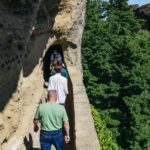
You should expect steep inclines and steps. Even if you’re not a big hiker, you’ll be walking on uneven surfaces and climbing. I strongly recommend supportive walking shoes with grip because you’ll want traction on stone paths.
Stop 2 on Day 2: Thermopylae Leonidas, plus an optional icon stop
On the return to Athens, you’ll make a brief stop at the Leonidas Monument at Thermopylae for photos. This is quick—think photo stop and a bit of context, not a full deep-dive.
There’s also an optional visit to a factory making Byzantine-style icons. Whether you take that detour depends on your interests and how your group day is running, but it’s a nice add-on if you like religious art and local craft traditions.
The return to Athens lands late afternoon, with drop-off back at/near your start point timing. The tour return is listed at around 6:30 pm, which usually means you can still have a normal dinner plan in Athens if you time it right.
Price and value: what you’re really paying for
At $265.49 per person, you’re buying a bundle of the things that usually cost time and energy when you travel independently:
- Round-trip transport by air-conditioned bus (long distances included)
- Hotel for one night in Kalambaka
- Breakfast and dinner
- Professional guide
- Entrance tickets for Delphi (Delphi archaeological site and Delphi museum admission)
What costs extra in the known details:
- Meteora monastery entrance fee: €10 per person
- Lunches and drinks (you’ll cover lunch on Day 1 and any drinks)
- Hotel accommodation tax (varies by 3-star vs 4-star)
If you’ve ever tried to DIY Delphi + Meteora from Athens, you know the pain points: timing, transport, and the lack of meaningful context unless you hire a guide. This tour solves those problems with a single booked plan.
About upgrading hotel categories: it can be worth it if you care about bed comfort and basic room quality. But even then, the included meals may not satisfy your food standards. I’d treat hotel upgrades as a “sleep quality and room comfort” decision, not a “great dining” promise.
What to pack and how to avoid the usual annoyances
This is a sightseeing-heavy trip with stairs and a lot of moving. I’d pack like you’re doing one day of ruins and one day of climbing.
Bring:
- Comfortable walking shoes (real traction)
- A light layer for monasteries and indoor church spaces
- Clothing that matches Meteora rules (long sleeves; no shorts)
- A small daypack for water and snacks
- Motion sickness medication if you’re sensitive to windy roads
- Any reusable water bottle strategy you prefer
Small planning tip: don’t assume you’ll have free time to do everything inside Delphi Museum. Since you’ll be guided at the main archaeological site, treat the museum as bonus time, not the main event.
Who should book this Delphi and Meteora tour?
This tour is a strong fit if you:
- Want a guided introduction to both Delphi and Meteora without planning transport
- Prefer having hotel and dinner handled for the night away from Athens
- Like learning the stories behind the ruins—especially when you’re walking in place where the meaning is bigger than the stones
It may not be ideal if you:
- Want lots of museum time at Delphi (the flow can feel tight)
- Hate stairs and steep walks (Meteora requires climbing)
- Are picky about hotel bed comfort and included buffet dinners
If you’re traveling with limited time in Greece and you want the “big hits” efficiently, this is one of the more practical ways to do it.
Should you book this Delphi and Meteora tour?
I’d book it if your top goal is to see Delphi’s Temple of Apollo and Meteora’s rocktop monasteries in one logical, guided two-day package from Athens. The included transport, hotel, breakfast, dinner, and Delphi entrances make it a sensible value, especially when you add up how hard it is to piece this together yourself.
I’d hesitate only if you’re museum-first at Delphi or you’re not prepared for stairs and dress-code rules at Meteora. If you go in with the right shoes, the right clothing, and realistic expectations about timing, you’ll come away with two of Greece’s most unforgettable sights—done the low-stress way.
FAQ
What time does the tour start and where do I meet?
The tour starts at 8:15 am. If you are not picked up from a hotel, the meeting point is Athanasiou Diakou 26, Athina 117 43, Greece.
Do they offer pickup from hotels in Athens?
Yes. Pickup is offered from select centrally located hotels, about one hour before departure. You’ll receive pickup details by email.
Is the Delphi Museum ticket included?
Yes. Entry/Admission for the Delphi archaeological site & Delphi museum is included, but guidance inside the Delphi Museum is not included.
Are Meteora monastery entrance fees included?
No. The entrance fee for Meteora Monasteries (€10.00 per person) is not included.
How much of Day 1 is spent at Delphi?
You visit the Delphi area for about 1 hour 30 minutes, arriving at Delphi around noon.
What meals are included?
The tour includes breakfast and dinner. Lunches and drinks are not included, so you’ll pay for lunch on your own.
What kind of hotel do I stay in overnight?
You stay in a centrally located 3- or 4-star hotel in Kalambaka, with hotel category listed as A class / T class in the booking details.
Is there a hotel accommodation tax?
Yes. A hotel accommodation tax is paid directly to the hotel: €10 per room per night for 4-star and €5 per room per night for 3-star.
What are the clothing rules for Meteora?
To enter the monasteries, you need appropriate clothing: women should not wear short skirts and should have long sleeves. Men cannot wear shorts.
Is the bus comfortable and does it have Wi-Fi?
The tour uses a luxury air-conditioned bus and the bus includes free Wi‑Fi.
How large is the group?
The maximum group size is 42 travelers.