REVIEW · ATHENS
Athens: Mythology Tour for Families
Book on GetYourGuide →Operated by Alternative Athens · Bookable on GetYourGuide
Mythology on the Acropolis turns stone into stories you can actually follow. This family-focused walking tour connects the big names you’ve heard about—Zeus, Athena, Dionysus—to the specific places where Greek legends were shaped into culture. You’ll move through the Acropolis with a kid-friendly guide, then head to the ancient Pnyx for a hands-on activity inspired by what you just learned.
I especially like that it’s built for real families, with a small group of up to 15 so your guide can handle questions without rushing kids. I also love the pacing and the mix: you get long enough at the Parthenon to notice real details, then an imaginative activity at Pnyx that keeps children engaged (and helps adults remember the myths too). One drawback to keep in mind: the tour runs about 3 hours, and in summer it can feel hot—so plan for sun and limited water stops.
In This Review
- Why This Acropolis Mythology Tour Works for Families
- Why a Mythology Walk on the Acropolis Actually Helps Kids
- Small-Group Guiding: The Real Value Is the Attention
- Prepping for the Acropolis: What to Bring and What to Skip
- Stop by Stop: From Dionysus Theater to the Parthenon
- The Theatre of Dionysus (about 15 minutes)
- Propylaea (about 10 minutes)
- Temple of Athena Nike (about 15 minutes)
- Erechtheion (about 10 minutes)
- The Parthenon Moment: The 70 Minutes That Actually Matter
- Pnyx: Where Myth Meets Democracy and an On-Site Activity
- Pnyx guided time (about 45 minutes)
- Price and Value: Is $79 Worth It for an Acropolis Family Tour?
- Who Should Book This Family Mythology Tour (and Who Shouldn’t)
- Should You Book This Tour?
- FAQ
- How long is the Athens Mythology Tour for Families?
- What group size is this tour limited to?
- Is this tour suitable for kids of all ages?
- What languages are available for the live guide?
- What’s included in the tour price?
- Do I need to pay Acropolis entry fees?
- Are strollers or backpacks allowed?
- What if my plans change and I need to cancel?
Why This Acropolis Mythology Tour Works for Families
- Small group size (15 max) means more interaction and fewer kids getting lost in the shuffle
- Kid-friendly storytelling ties gods and heroes to the exact monuments you’re standing in front of
- Parthenon time that’s actually useful (about 70 minutes) so you can see more than just selfies
- Pnyx as the payoff zone, where democracy stories meet Theseus, the Minotaur, Zeus, Hera, and Aphrodite
- A family activity on-site uses the legends you heard, so kids stay part of the story
Why a Mythology Walk on the Acropolis Actually Helps Kids

Athens can be overwhelming for children. Big stairs. Strong sun. Too many ruins that look similar. This tour fixes that by giving kids a narrative thread: gods and heroes move from story to place, not the other way around.
You’ll start high on the Acropolis and work landmark to landmark. The guide doesn’t treat mythology like extra homework. Instead, the myths explain why these sites matter. That matters because kids don’t just need facts. They need a reason the facts connect.
And for parents, it helps too. When you hear a story linked to a building, you remember it. You stop thinking, I’m just reading signs in the heat, and start thinking, Oh, that’s why they built it here.
You can also read our reviews of more tours and experiences in Athens.


Small-Group Guiding: The Real Value Is the Attention

This tour caps at 15 people, which is a big deal on the Acropolis. You’re not competing with a crowd for your guide’s time. Your guide can pause, answer questions, and adjust the pace to the group.
The guides have a strong track record with kids. From the experience of past groups, guides like Christina, Kelli, Chrysa, Maria, Demi, Dani, and Sophia were singled out for patient, funny, engaging storytelling. That shows up in the way the tour is designed: short guided segments at key monuments, with time for explanations that match how kids absorb information.
Also, you’re not stuck with a single type of explanation. The stories cover major figures like Zeus, Athena, Poseidon, and Dionysus (god of wine and theater). Then you get the human myths too, like Theseus and the Minotaur, plus famous women in the stories like Hera and Aphrodite.
If your family tends to ask a lot of questions, this format is a relief. You get time to ask. You get answers in kid-friendly language.
Prepping for the Acropolis: What to Bring and What to Skip

This tour has a few rules that are worth understanding before you show up.
You’ll want:
- Comfortable shoes (real walking on uneven ground)
- Sunglasses and a sun hat (the hill gets bright)
- A passport or ID card (useful for age-based entry rules)
You also need to know what you cannot bring:
- No baby strollers
- No backpacks and no big bags at the Acropolis
That’s not just a nuisance. It affects how pleasant your morning will be. If you travel with a lot of stuff, plan to travel lighter than you might expect. Bring only what you’ll actually use: a small water bottle if you can manage it, wipes, and whatever keeps your kids comfortable.
One more practical reality: this is a 3-hour walk in and around the Acropolis area. In hot weather, it can feel like a lot. So treat it like a sun-and-stamina outing, not a casual stroll.
Stop by Stop: From Dionysus Theater to the Parthenon
The route is structured so the story keeps moving. You’re not just walking to see buildings—you’re walking because each place sets up the next legend.
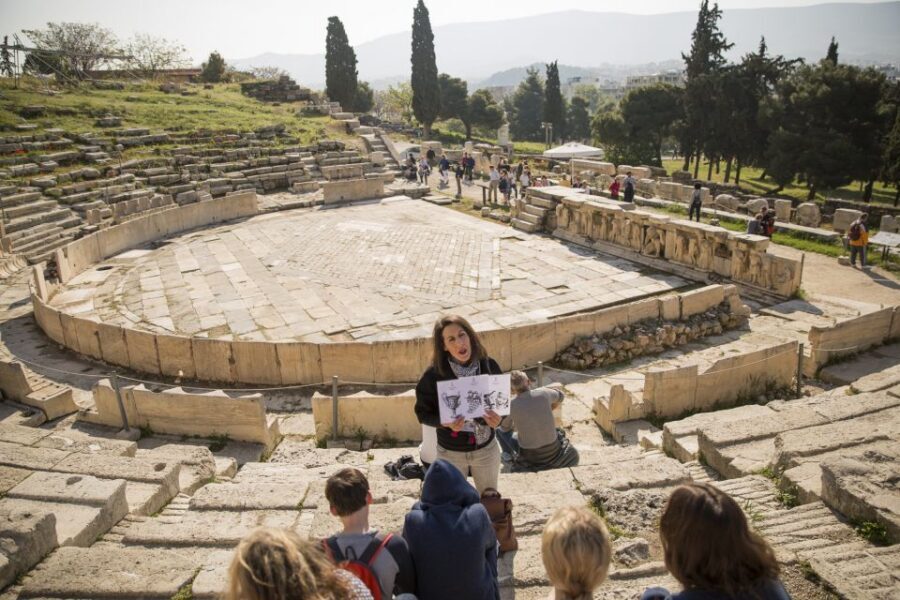
The Theatre of Dionysus (about 15 minutes)
You start at the Theatre of Dionysus, often described as drama’s first home. This is a clever first stop because theater is a theme kids understand. Even if they don’t know the history, they get the idea: this is where performance and myth intersected.
Your guide connects Dionysus to why the Greeks turned stories into plays. You’ll hear mythology explained through the lens of culture: where people gathered, what they valued, and how stories became public entertainment.
Tip for families: ask your kids to tell you the version of the story they heard. You’ll learn fast what stuck.
- All Day Cruise -3 Islands to Agistri,Moni, Aegina with lunch and drinks included
★ 5.0 · 4,958 reviews




Propylaea (about 10 minutes)
Next is the Propylaea, the grand gateway area. This segment is shorter, but it matters. It helps orient you and sets the sense of arrival.
If your kids are restless, this is where a strong guide helps them reset. A quick landmark explanation can turn impatient foot-shuffling into attentive standing.
Temple of Athena Nike (about 15 minutes)
Then you reach the Temple of Athena Nike. Athena is a favorite for many families because she’s tied to wisdom and strategy—traits kids like to point out when they play games or solve problems.
This stop works well as a transition: you get mythology, but grounded in a specific monument and theme.
Erechtheion (about 10 minutes)
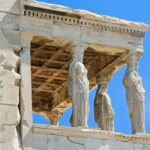
The Erechtheion is another quick but important piece of the puzzle. You’re learning not just that myths existed, but that different stories and deities had real physical places in the city.
For kids, this can click as the idea of a myth map. For adults, it helps connect the dots across the Acropolis.
The Parthenon Moment: The 70 Minutes That Actually Matter

You’ll spend about 70 minutes at the Parthenon. That’s the longest segment in the whole tour, and for a reason.
This isn’t a quick stare-and-go. With this much time, your guide can do more than recite facts. You can start noticing architectural details, and the stories can land emotionally instead of bouncing off like background noise.
This is where your guide’s storytelling really pays off. The Parthenon can feel like a famous building you already know. But when you hear how myths tie to civic pride, power, and identity, you experience it differently.
What to listen for: the way the guide links the gods to the city. The Acropolis wasn’t just built to impress tourists centuries later. It was part of how Athenians understood themselves.
If your kids are the type who need constant stimulation, the guide’s job gets easier here because the Parthenon has built-in visual interest. There’s plenty to look at while the story keeps flowing.
Pnyx: Where Myth Meets Democracy and an On-Site Activity
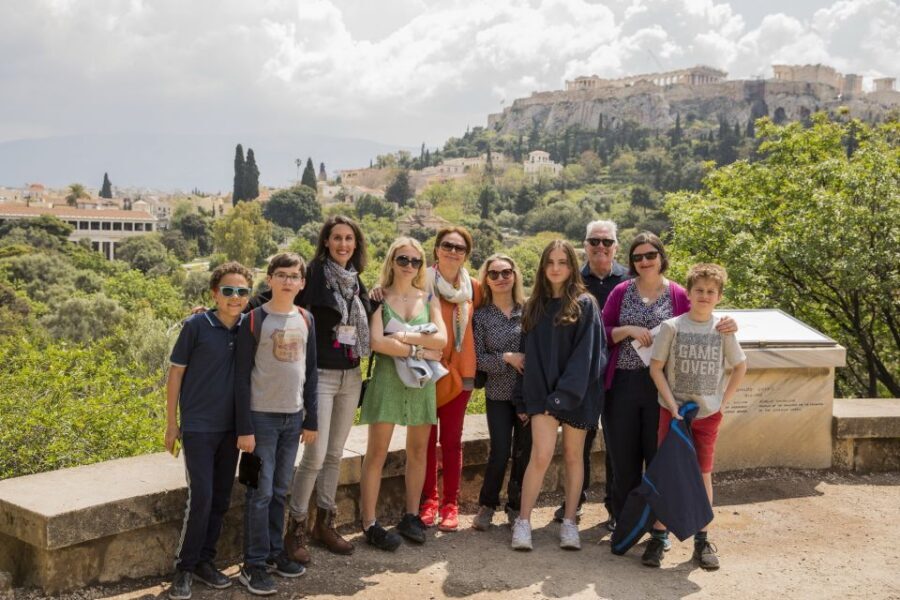
After the Acropolis stops, you take a short walk (about 15 minutes) to Pnyx. The big shift here is tone. The Acropolis is gods and heroes. Pnyx is where everyday Athenians gathered to discuss politics, often described as the birthplace of democracy.
That contrast is powerful for families. It shows that Greek mythology wasn’t only bedtime storytelling. It shaped how people thought about leadership, justice, courage, and society.
Pnyx guided time (about 45 minutes)
At Pnyx, the stories keep coming: you’ll hear mythical material tied to Theseus and the Minotaur, plus the jealousy and drama associated with Hera, and the love-and-beauty sphere often connected with Aphrodite.
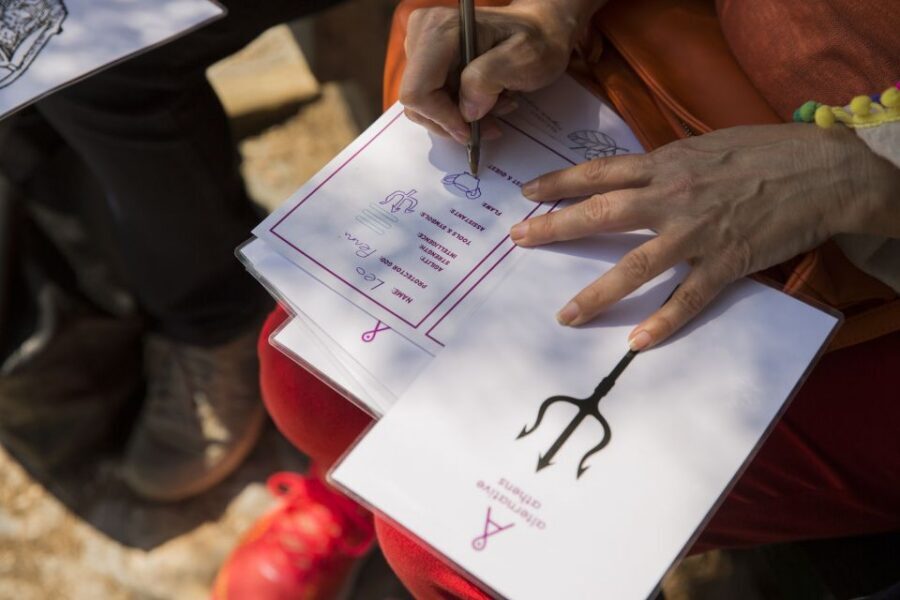
But the best part is what happens after the listening. This is where your guide leads a group family activity inspired by the gods and heroes you’ve covered. Kids get to interact imaginatively with the surroundings instead of just standing still and trying to read.
For parents, it’s a win because you’re not forced to entertain your child through the most challenging part of the morning. You can participate, learn, and still enjoy the scenery.
And yes, the setting helps. Pnyx is a place where you can feel the scale of gatherings. Even if you don’t memorize every detail, you remember the moment.
Price and Value: Is $79 Worth It for an Acropolis Family Tour?

At $79 per person for a 3-hour guided experience, this is priced like a serious guided outing, not a budget stroll.
Here’s why it can still be good value:
- The tour is designed around family attention spans, so you spend your time efficiently.
- You get across-the-site guidance through multiple key monuments instead of picking stops on your own.
- You receive fun and educational activity material for children, which is often where the value hides on family tours.
- Entry tickets can be included depending on the option you choose (you can also ask for tickets to be prepared for you).
If you’ve ever tried to do the Acropolis with kids without a guide, you know the friction: the history is real, but it’s hard to turn into a story your child cares about. Paying for a guide doesn’t just buy information. It buys momentum.
One thing to consider: entrance fees to archaeological sites are not always included, depending on which option you select. If you’re eligible for free Acropolis access due to age rules, you’ll want to plan around that so you don’t double-pay. (EU citizens under 25 get free access; under-18 rules are also listed for non-EU visitors, with ID requirements and a start date noted for 2025.)
Who Should Book This Family Mythology Tour (and Who Shouldn’t)
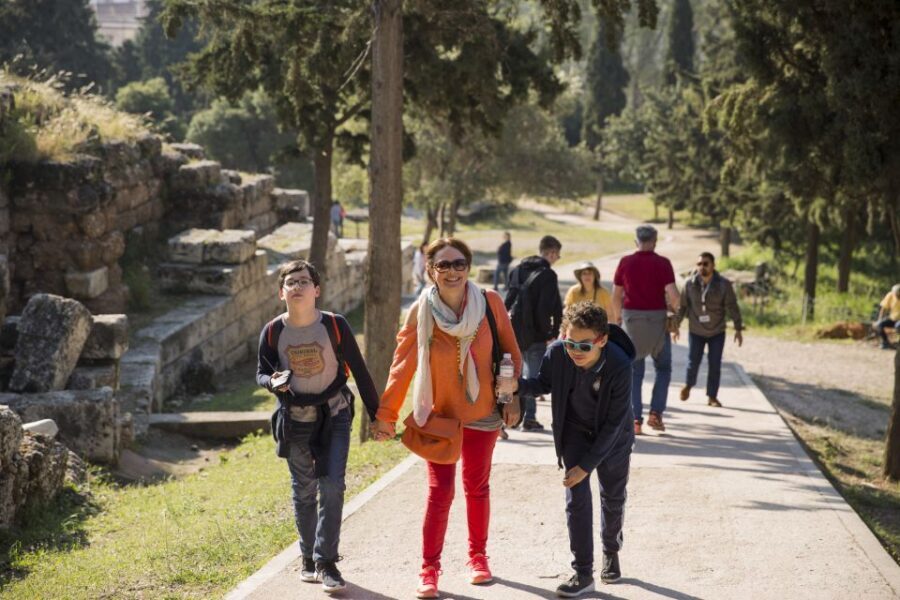
This tour is more suitable for children ages 5–11. If you’re traveling with that age range, you’ll likely get the best match between storytelling style and attention span.
It’s also a smart choice if:
- You want your kids to learn Greek mythology in a way that feels like play
- You want a guide to handle the questions
- You want less wandering and more meaningful time on the Acropolis
You might want to look elsewhere if:
- You rely on a wheelchair (this tour is not suitable for wheelchair users)
- Your family needs strollers or you’re traveling with backpacks/big bags you cannot reduce
And if your kids are older teens who already know mythology, this could still be enjoyable—but the format is clearly tuned for younger learners.
Should You Book This Tour?
If you’re aiming for a family day that feels both educational and manageable, I think this is a strong pick. The combination of kid-friendly guides, small group size, and a myth-based route through the Acropolis and Pnyx is a practical way to get real understanding without turning the trip into a history lecture.
Book it if:
- You want Greek mythology connected to real places
- You prefer guided time over self-guided wandering
- You like the idea of an on-site activity, not just sightseeing
Skip it if:
- Your group needs stroller access or wheelchair-friendly routing
- You’re traveling with kids who don’t do well with sun and a full 3-hour walk
If you do book, show up with good shoes, sun protection, and an open mind. The best part is the moment when the myths stop being names and start feeling like a living part of Athens.
FAQ
How long is the Athens Mythology Tour for Families?
The tour lasts about 3 hours.
What group size is this tour limited to?
It runs as a small group, with a maximum of 15 people.
Is this tour suitable for kids of all ages?
It’s more suitable for children ages 5–11.
What languages are available for the live guide?
The live guide is available in English and French.
What’s included in the tour price?
The tour includes a family-friendly certified guide, Acropolis entry tickets if you choose the option, and activity material for children. Food and drinks are not included.
Do I need to pay Acropolis entry fees?
Entry tickets are included only if the option selected includes them. The information also notes you can have tickets pre-purchased for you if you let the provider know.
Are strollers or backpacks allowed?
Baby strollers are not allowed, and backpacks/big bags are not allowed at the Acropolis.
What if my plans change and I need to cancel?
You can cancel up to 24 hours in advance for a full refund.