REVIEW · ATHENS
Acropolis & Acropolis Museum sunset tour
Book on Viator →Operated by Eureka Athens · Bookable on Viator
The best part of this Athens outing is the timing. You see the Acropolis Museum before climbing the hill, then finish beside the Parthenon as the sun drops over the city. Sunset light softens the ancient stone, and the cooler evening hours make the uphill walk easier than a hot midday visit.
I like the private format, since your guide can answer questions without a large group slowing every stop. I also like the skip-the-line tickets, which remove the worry of spending the best light in a ticket queue. The main drawback is the price, $341.49 per person, and the non-refundable booking rule. This makes the tour a better fit for a special evening than for a budget day out.
In This Review
- Key points to know before booking
- Why the evening timing matters at the Acropolis
- Two hours inside the Acropolis Museum
- Climbing to the Propylaea and Temple of Athena Nike
- The Parthenon, Erechtheion, and Dionysus Theater
- Sunset from Athens’ sacred hill
- What the $341.49 price really buys you
- Who should choose this sunset tour
- Should you book the Acropolis Museum and sunset tour?
- FAQ
- How long does the Acropolis and Acropolis Museum sunset tour last?
- What time does the tour operate?
- Where does the tour start?
- Where does the activity end?
- Are entrance tickets included?
- Are skip-the-line tickets included?
- Is this a private tour?
- Is a guide included?
- Can I cancel for a refund?
Key points to know before booking
- Two major sights in one evening: You visit the Acropolis Museum and the archaeological site in a single four-to-five-hour program.
- Sunset is built into the schedule: The final 30 minutes are set aside for views and photos from the Acropolis.
- Private licensed guide: Only your group takes part, with a guide leading both the museum and hill visit.
- Skip-the-line admission: Museum and Acropolis entrance tickets are included, helping protect your sunset timing.
- Moderate physical effort: Expect an uphill walk and time on uneven ancient-site surfaces.
- Plan ahead: This experience is often booked about 66 days in advance and runs Tuesday through Saturday from 5:00 PM to 9:00 PM.
Why the evening timing matters at the Acropolis
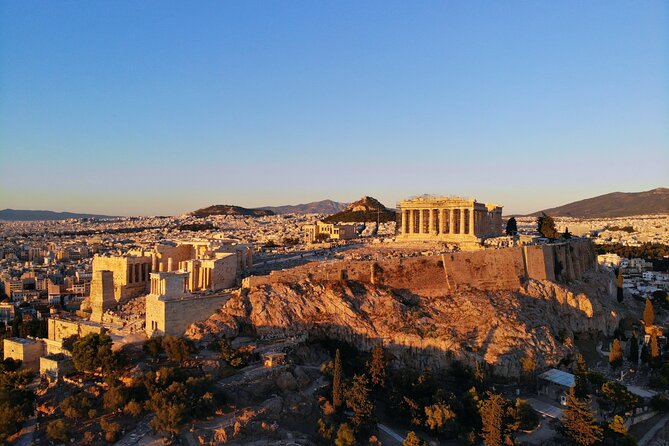
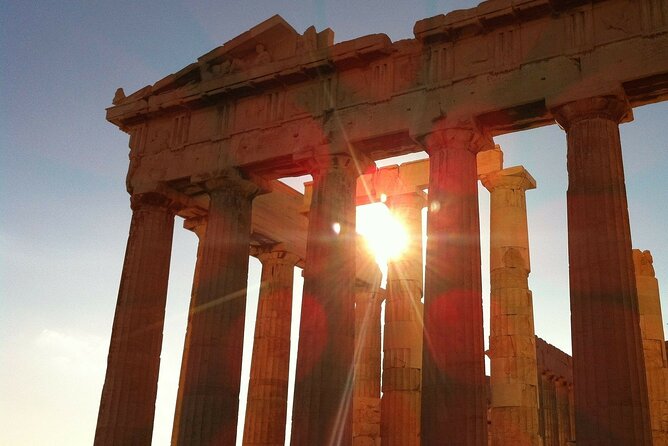
The Acropolis is impressive at any hour, but late afternoon changes the feel of the visit. The white marble takes on warmer tones, shadows become longer, and the city below begins to glow as daylight fades. You are not simply checking off an ancient monument. You are watching the site change while you stand inside it.
The schedule is built around that moment. You begin at the Acropolis Museum, spend about two hours there, then head to the hill for roughly 90 minutes of guided sightseeing. The final half-hour is reserved for sunset, so the photo stop is not an afterthought squeezed between monuments.
That timing also helps with the heat. Athens can be hard work in strong sun, especially when you are walking uphill over stone. The evening start is still not effortless, but it is likely to feel kinder than a midday climb. The tour operates from 5:00 PM to 9:00 PM, Tuesday through Saturday, during the published operating period.
Sunset time changes through the year, so the exact balance between museum time, monument explanations, and the final view will depend on the date. The guide handles the schedule, but you should still arrive ready to keep moving. This is a walking tour, not a bus ride with occasional photo stops.
You can also read our reviews of more museum experiences in Athens



Two hours inside the Acropolis Museum
The Acropolis Museum gives you the background you need before seeing the ruins above. Its collection includes thousands of artifacts from ancient Athens, and the visit places the Acropolis in a human setting rather than treating it as a collection of isolated stones.
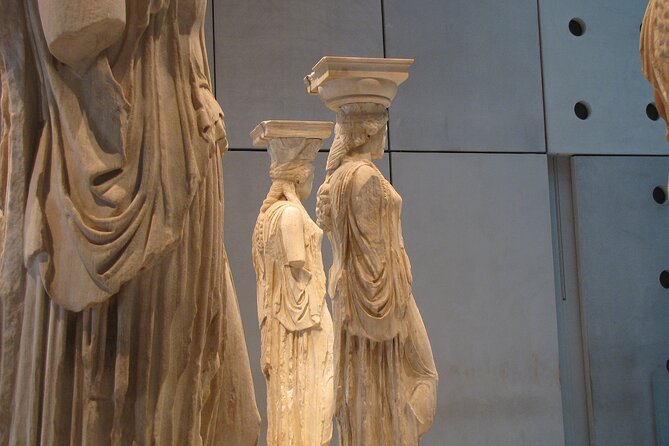
The most memorable pieces include the Caryatides, the sculpted female figures connected with the Erechtheion. Seeing them close up helps you notice the detail that disappears when you look at the originals from a distance on the hill. Your guide can also explain how the museum displays relate to the monuments you will visit later.
The top floor holds the Parthenon Gallery, the museum’s central attraction. Its layout helps you connect sculpture, architecture, and the temple itself. After seeing the gallery, the Parthenon above is easier to read. You begin to understand which parts were structural, which parts were decorative, and why the building has such power even after centuries of damage.
Two hours is a useful amount of time here. It gives the guide room to explain key pieces without forcing you into a rushed march through every display. The tradeoff is clear: you will not study every object in the museum at length. This is a guided introduction shaped to prepare you for the Acropolis, not a full day of museum research.
I like this order. Some tours take you straight to the hill and leave the museum as an optional extra. Here, you get the context first, then see the setting in person. The museum is air-conditioned and indoors, while the Acropolis portion requires climbing and exposure to the weather, so the change also gives you a useful pause before the harder walking.
Climbing to the Propylaea and Temple of Athena Nike
After the museum, you head up the Acropolis hill with your licensed guide. The climb is part of the experience, but it is also the part that demands the most from you physically. The tour asks for a moderate fitness level, and that is a fair description.
At the entrance, the Propylaea frames your arrival. This monumental gateway once served as the formal entrance to the sacred hill. It is easy to hurry through while staring at the Parthenon, but give it a moment. Its scale prepares you for the monuments beyond.
Nearby, the Temple of Athena Nike is small beside the Parthenon, yet it has a strong position near the entrance. Its name links the temple with Athena as a bringer of victory. Your guide can help you notice why this compact structure mattered, even though it does not dominate the skyline.
The walk includes ancient stone surfaces and an uphill route. Wear shoes with a firm grip, and keep your hands free for the climb. The supplied information does not promise a particular accessibility arrangement, so anyone with mobility concerns should confirm suitability before booking.
The Parthenon, Erechtheion, and Dionysus Theater
The Parthenon gets the headline, but the Acropolis is more than one temple. A good guide helps you read the whole hill as a connected sacred site, not just find the famous building and leave.
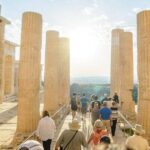
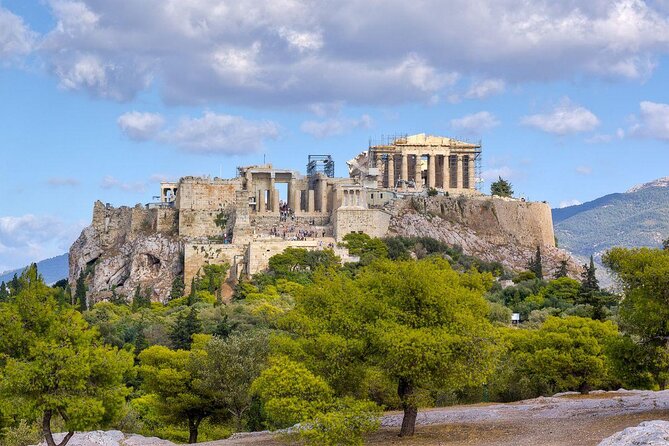
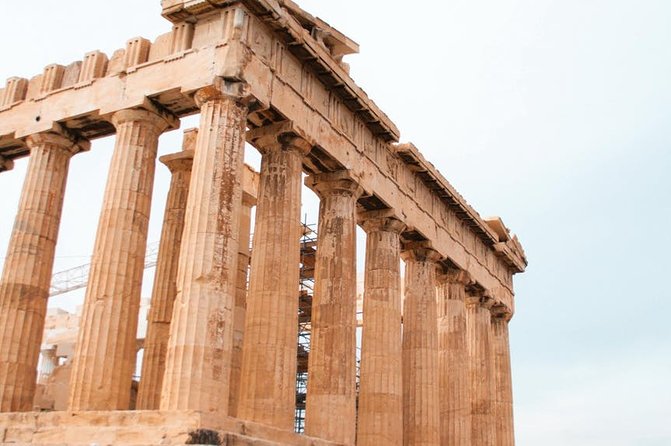
The Parthenon remains the visual center. Its columns, proportions, and damaged sculptures still show why it became a symbol of classical Athens. You will not see the building in its original condition, and restoration work may affect exactly what you can photograph on a given date. Even so, the setting gives you a direct sense of its scale and position above the modern city.
The Erechtheion brings a different mood. Its unusual design and the famous Caryatides make it one of the most distinctive buildings on the hill. Since you have already seen the Caryatides in the museum, you can compare the original setting with the carefully protected figures displayed indoors.
The Dionysus Theater lies below the Acropolis and connects the site with ancient performance. Including it broadens the visit beyond temples and religious ceremony. You begin to see the hill as part of a larger civic and cultural center.
The guided Acropolis portion lasts about 90 minutes, followed by another 30 minutes for sunset. That is enough for a well-shaped introduction, but not enough to inspect every corner at length. If you want long periods for sketching, detailed photography, or independent archaeology, a private tour with a longer site visit may suit you better.
The private format helps here. Your group can stop for questions, and the guide does not need to manage strangers with different interests. A guide named Dimitra led one particularly well-paced evening, giving the group time to see both the museum and the hill without feeling hurried. Guide assignments can change, so treat that as a useful name to know, not a guarantee.
Sunset from Athens’ sacred hill
The final 30 minutes focus on the view. You will have time to take photographs, look across Athens, and watch the light change over the Acropolis. This is the tour’s emotional high point, and it works because the earlier visits have given the monuments meaning.
The word sunset also needs a practical reading. This is not a separate secluded viewpoint away from the crowds. You are watching the sun from one of Athens’ busiest and most important archaeological places. The exact position of the sun, the weather, and the number of people at the site will shape the experience.
For photographers, the timing is useful. Warm light can bring out the texture of the Parthenon and the surrounding ruins, while the city below provides a broad backdrop. Bring a phone or camera with enough battery for several hours. The tour specifically suits people who want a golden-hour visit and strong photos, but you should still give yourself room to look without viewing everything through a screen.
The cooler air is another benefit. One recent evening with guide Dimitra was described as relaxed and unhurried, with the temperature making the visit more comfortable. That does not remove the need for water and sensible footwear, but it supports the case for choosing evening hours.
You can also read our reviews of more evening experiences in Athens





What the $341.49 price really buys you

At $341.49 per person, this is expensive for a museum visit and archaeological walk. The value comes from the combination of private guiding, two included admission tickets, skip-the-line access, and a carefully timed sunset.
If you are traveling alone, the cost may be difficult to justify. If you are sharing the private experience with family or friends, group discounts may improve the calculation, though the exact discount is not provided. The more people in your group, the more attractive a private guide can become compared with buying separate entry and trying to coordinate the timing yourself.
Skip-the-line access matters most on a sunset tour. A delay at the entrance is not merely annoying. It can shorten the Acropolis visit and cost you the light you came to see. The included access reduces that risk, though no ticket arrangement can control weather or conditions at the site.
You also pay for the guide’s structure. Without a guide, you could visit the museum and hill for less, but you would need to plan the order, manage admission, watch the clock, and decide what deserves your attention. This tour takes those tasks off your plate.
Gratuities are optional and private expenses are not included. The price also does not include transportation to the meeting point. You start at AcropoliAthens, Athens 117 42, Greece, near public transportation, and the activity ends back at that meeting point.
Who should choose this sunset tour
This tour suits you if you have one important Athens evening and want the Acropolis handled in a clear, organized way. It is also a strong choice for couples, families, and small groups who prefer a private guide to a crowded group with a fixed script.
Photographers and people who care about atmosphere will appreciate the golden-hour finish. So will anyone who finds Athens uncomfortable in the middle of the day. The museum-first order is especially useful if you want the monuments to make sense rather than simply taking a quick look at them.
It is less suitable if you are watching every euro, dislike fixed schedules, or want a long independent visit. The non-refundable policy is a serious consideration. Once booked, you cannot cancel or amend the experience for a refund. If poor weather forces cancellation, you are offered another date or a full refund, but ordinary changes of plan are not covered.
The physical demands also matter. You climb the Acropolis hill and walk across an archaeological site. A moderate fitness level is required, and the tour may not suit anyone who finds uphill walking or uneven ground difficult. Service animals are allowed, and the meeting point is near public transportation.
Because the experience is often reserved about 66 days ahead, book early if the sunset timing is central to your plans. The schedule is limited to Tuesday through Saturday, from 5:00 PM to 9:00 PM. There is no Sunday or Monday option in the supplied operating hours.
Should you book the Acropolis Museum and sunset tour?
Book it if you want the major Athens sights arranged into one private evening, especially if sunset photos and a relaxed pace matter more than saving money. The museum, guided hill walk, and final half-hour view form a sensible sequence, and skip-the-line entry protects the schedule.
Skip it if you prefer to explore alone, need a flexible cancellation policy, or want the lowest-cost way to see the Acropolis. For the right group, the price buys time, context, and less hassle. For a solo budget visitor, it is a luxury.
FAQ
How long does the Acropolis and Acropolis Museum sunset tour last?
The experience lasts approximately four to five hours. The museum visit takes about two hours, the guided Acropolis visit about 90 minutes, and the sunset portion about 30 minutes.
What time does the tour operate?
The published hours are Tuesday through Saturday, from 5:00 PM to 9:00 PM, during the stated operating period ending June 16, 2026.
Where does the tour start?
The meeting point is AcropoliAthens, Athens 117 42, Greece.
Where does the activity end?
The experience ends back at the meeting point.
Are entrance tickets included?
Yes. Admission to the Acropolis Museum and the Acropolis Archaeological site is included.
Are skip-the-line tickets included?
Yes. Skip-the-line tickets are included for the museum and archaeological site visit.
Is this a private tour?
Yes. Only your group participates in the private walking tour.
Is a guide included?
Yes. An expert licensed tour guide leads the experience.
Can I cancel for a refund?
The experience is non-refundable and cannot be changed for any reason. If poor weather causes the provider to cancel, you are offered a different date or a full refund.