REVIEW · SARONIC GULF ISLANDS
Aegina Ceramics Class – learn the magic of this art, be inspired & create!
Book on Viator →Operated by Kiki Rebel Tours · Bookable on Viator
The most appealing part of this Aegina experience is that you do not just watch pottery being made. You work the clay yourself, shape a small object by hand, decorate it, and may even get a turn at the potter’s wheel. Maria’s 30 years of experience gives the class a strong teacher at its center, while the two-hour format keeps the project manageable.
I like the mix of old and new: you begin with pottery history from ancient times to today, then move quickly into making something with your own hands. I also like that families can take part together. The main consideration is that your finished bowl or mug may not be ready to take home immediately, and you may need to arrange for it to be mailed later.
In This Review
- Key points at a glance
- Why this two-hour class works so well on Aegina
- Meeting Maria and starting with pottery history
- Shaping a mug or bowl with the pinching method
- Adding ceramic colors to your handmade piece
- Trying the potter’s wheel
- The family factor and the small-group advantage
- Is $58.38 a fair price?
- Who should book this Aegina ceramics class?
- Timing, cancellation, and practical planning
- The final call: book it for the making, not just the souvenir
- FAQ
- Where does the Aegina ceramics class meet?
- Where does the activity end?
- How long does the ceramics class last?
- Is the class offered in English?
- Do I need pottery experience to participate?
- What will I make during the class?
- Can I use a potter’s wheel?
- How many people can join the class?
Key points at a glance
- A hands-on Aegina pottery class: Make a bowl or mug using the traditional pinching technique rather than simply observing a demonstration.
- Maria leads the workshop: Your host has more than 30 years of ceramic experience and supports beginners as well as people who have worked with clay before.
- Ancient history meets modern making: The class opens with a look at pottery from ancient times through the present.
- Color and the potter’s wheel: After shaping your piece, decorate it with special ceramic colors and try throwing clay on the wheel if time allows.
- Small group setting: The class accepts a maximum of 10 participants, a useful size for personal help.
- Good for families: A 12-year-old took part with two adults, and the class suits mixed-age groups who enjoy making things together.
Why this two-hour class works so well on Aegina
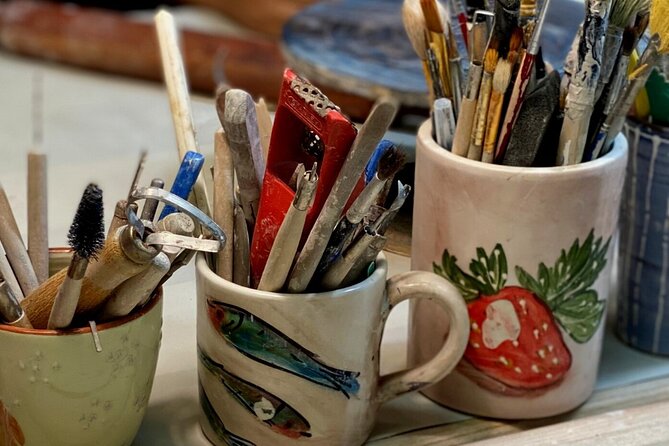
Aegina is an island in the Saronic Gulf, and pottery gives you a way to connect with Greek culture through a practical craft. You are not only hearing about ancient objects in a museum or walking past a shop display. You are handling clay, learning a basic technique, and seeing how a simple lump becomes a useful form.
The workshop begins with a historical review that covers pottery from ancient times to the present day. That introduction matters because it gives the craft a sense of place. A bowl is not just a souvenir when you understand that pottery has long been part of daily life, trade, art, and household work.
I also appreciate the short length. At about two hours, this is easy to fit into an Aegina day without giving up most of your time on the island. It is long enough to make a project and try more than one technique, but not so long that a first-time potter is likely to lose patience.
The group is limited to 10 people. That does not guarantee one-on-one teaching every minute, but it is small enough for Maria to watch the work, answer questions, and help when the clay begins to misbehave. Clay can be simple to understand and tricky to control. A small group gives you a better chance of getting useful guidance before a wall becomes too thin or a rim starts to collapse.
A few more Saronic Gulf Islands tours and experiences worth a look

Meeting Maria and starting with pottery history
Your meeting point is Aegina Cruises at the port, listed as Aegina CruisesΛιμάνι, Egina 180 10, Greece. The activity ends back at the same meeting point, so you do not need to figure out a separate return location after class.
Maria hosts the workshop. Her more than 30 years of experience is important here, especially if you have never touched clay before. A good pottery teacher does more than show hand positions. She can help you understand pressure, thickness, shape, and timing, all without turning a relaxed class into a technical course.
The first part is historical. You learn about pottery from ancient times to the modern day before making your own piece. This order makes sense. You get a little context first, then see the material as a living art rather than an old subject kept behind glass.
Do not expect a full archaeology lecture. The stated format is a review of pottery history, followed by practical work. The value is in the connection between the two: you hear how the art developed, then try a basic method for yourself.
Shaping a mug or bowl with the pinching method
The main project uses the pinching technique. This is one of the most direct ways to work with clay. You begin with a piece of clay and use your fingers to press, open, and shape it into a vessel.
That makes the method a good choice for beginners. You do not need prior experience with a potter’s wheel, and you do not have to master complicated equipment before creating something. The shape comes from your hands, so the final piece can retain a personal, handmade quality.
You will create an object such as a mug or bowl. The exact shape may depend on your pace, Maria’s guidance, and the amount of time available. A bowl may be the simpler first project, while a mug adds the challenge of forming a handle and keeping the piece balanced. The experience information does not promise a specific object for every participant, so arrive ready to follow the class rather than demand one particular design.
This part is also where patience helps. Your piece may not look perfect. That is part of the appeal, but it is worth knowing before booking. A beginner’s handmade bowl can have a slightly uneven rim or visible finger marks. Those details are not flaws in the same way they would be in factory pottery. They show that you made it.
The class is suitable for people with some previous experience as well. If you already know the basics, you can focus on shape, surface, and decoration, or use the class as a chance to try a different approach. Maria can support different skill levels within the same small group.
Adding ceramic colors to your handmade piece
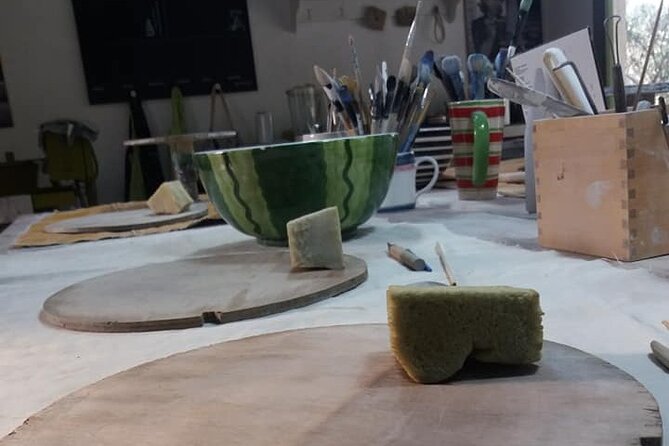
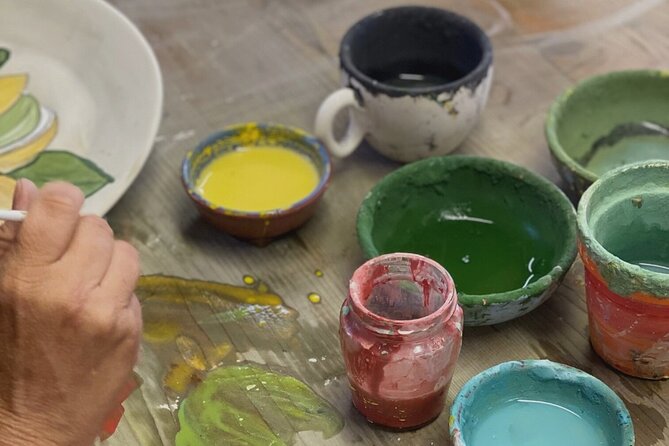
After shaping the clay, you decorate it with special ceramic colors. This gives the class a second creative stage. You are not finished once the vessel takes form, since color lets you add a personal design or simple surface treatment.
The available information does not specify a particular color range, pattern menu, or finished style. That is useful to keep in mind. You should expect guidance and ceramic colors, but not a fixed painting lesson with a guaranteed model to copy.
For families, this step can be especially enjoyable. A parent and child can make similar bowls but decorate them in completely different ways. One person may prefer a plain surface, while another may add bold marks or several colors. The activity allows the finished objects to feel personal without requiring advanced drawing skills.
There is one practical point to plan for: clay pieces need further handling before they become finished ceramics. A piece made during class may not be ready to pack into your suitcase at the end of the two hours. One family from Canada was waiting for their bowls to be completed and mailed home. If you are flying onward, ask Maria about the arrangements for your pieces and allow time for delivery.
Trying the potter’s wheel
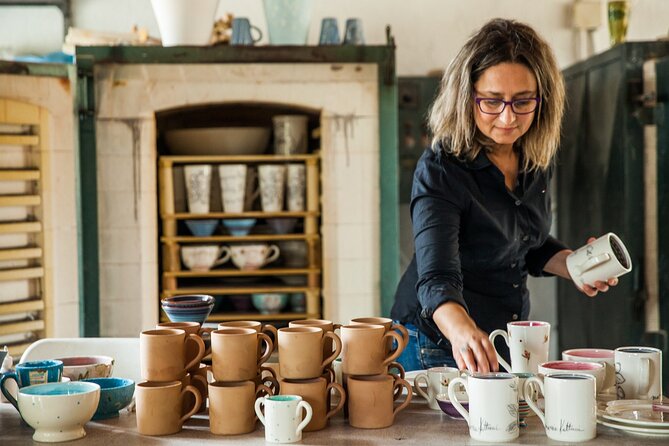
You can also try pottery throwing on the potter’s wheel. This is a different experience from pinching clay by hand. The wheel adds movement, speed, and a bit more coordination, so even a short turn can show you why wheel-thrown pottery takes practice.
The wording of the activity makes the wheel an opportunity, not a guaranteed full project for every participant. The class has only about two hours and may include several people, so the time available for each person can vary. Treat it as an introduction and a chance to feel the process rather than a promise that you will produce a perfect vase.
That distinction matters. Pottery videos often make wheel work look easy because an experienced potter can center clay quickly and shape it with confidence. For a beginner, the clay may wobble, spread, or refuse to stay centered. That is normal. The value is in trying the movement with Maria nearby, not in judging yourself by the finished form.
If you already have pottery experience, the wheel may be the part you most want to explore. If you are new to ceramics, the pinching project is likely to give you a more reliable finished object, while the wheel offers a fun extra challenge.





The family factor and the small-group advantage
This class has a clear appeal for families. A 12-year-old took part with two adults, and all three made bowls. That gives you a useful picture of the activity: it can work for a mixed-age group, and you do not need to be a serious art student to take part.
The best family activities give everyone something to do rather than leaving one person watching from the side. Here, each participant can handle clay, shape an object, add color, and possibly try the wheel. The finished work also gives the family a shared reminder of the day, even if the pieces arrive home later.
The maximum group size is 10 people. This is not a private class, but it is far more personal than a large demonstration. If you like quiet, individual instruction, the group size still may feel active when several people are shaping clay at once. If you enjoy a social workshop, the small class should provide a pleasant balance.
Service animals are allowed, and the meeting point is near public transportation. Most people can participate. The activity is offered in English, which keeps the instructions clear for English-speaking participants.
Is $58.38 a fair price?
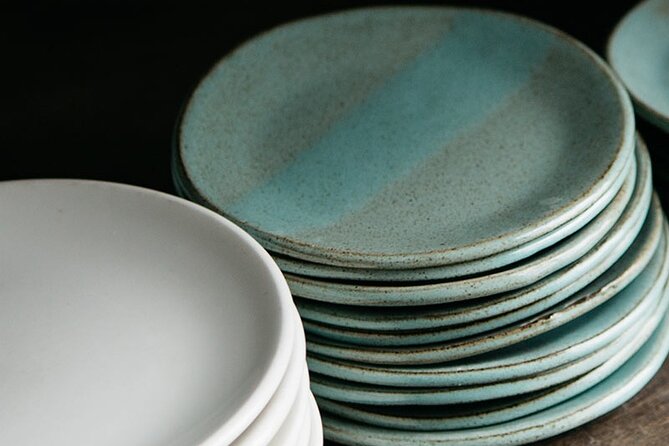
The price is $58.38 per person. For a two-hour class, that is not the cheapest way to fill time on Aegina, especially if you compare it with a free walk or a low-cost museum visit. But the price covers more than a talk. You receive instruction, clay work, ceramic colors, access to a potter’s wheel, and a guided creative activity led by an experienced host.
The value improves if you want an activity rather than another sightseeing stop. You leave with a piece you helped make, although it may need to be mailed later. You also get a short introduction to pottery history and a chance to learn a skill that can be difficult to sample casually during a Greek island visit.
I would see the cost as reasonable for people who enjoy workshops, families looking for a shared activity, and couples who want a break from standard sightseeing. It is less convincing for someone who only wants a quick photo opportunity or a guaranteed finished souvenir in hand before leaving the port.
The fact that the experience is often booked well ahead suggests that you should not leave it until the last minute if the class fits your schedule. It is booked an average of 110 days in advance. That does not mean every date sells out, but it is a useful warning for travelers building a fixed island itinerary.
Who should book this Aegina ceramics class?
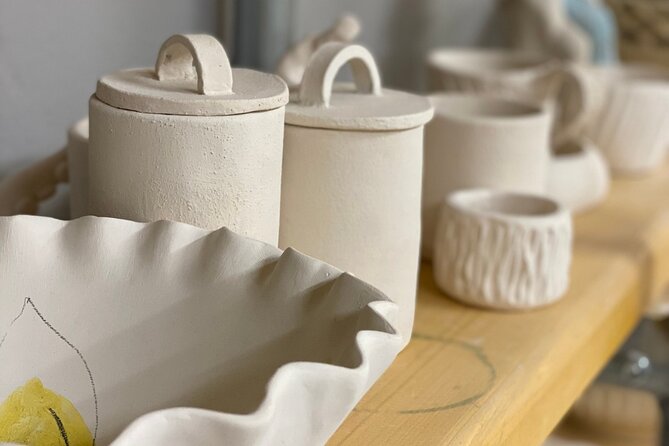
I would recommend this class to complete beginners who want patient guidance and a real project. You do not need to arrive with artistic training. The pinching method gives you a clear starting point, and Maria’s long experience should help you through the awkward first stages.
It is also a good pick for families with older children. The available example includes a 12-year-old, so the format has worked for that age group. Since the experience is offered in English, it is suited to English-speaking families who want an activity everyone can share.
Couples may like it for a simple reason: you can make two objects side by side and compare the results later. The class also works for people with some pottery experience who want to practice hand-building or test the wheel without committing to a longer course.
I would think twice if your schedule is so tight that a delayed finished piece would cause stress. I would also consider another activity if you dislike hands-on work, getting clay on your fingers, or making an object that may look different from what you pictured.
Timing, cancellation, and practical planning
Plan on about two hours, with the activity starting and ending at the Aegina Cruises meeting point in the port area. The mobile ticket is useful for keeping your booking details with you, and confirmation arrives within 48 hours, subject to availability.
Free cancellation is available if you cancel at least 24 hours before the start time. Cancellations or changes made less than 24 hours before the start are not refunded or accepted. The local time in Greece controls the cut-off, so do not rely on the time where you live.
The class requires a minimum number of participants. If that minimum is not reached and the activity is canceled, you are offered another date or experience, or a full refund. That rule is common for small workshops, but it is worth remembering if you have built a tightly timed day around the class.
The final call: book it for the making, not just the souvenir
You should book the Aegina Ceramics Class if you want to spend two hours making something with your hands and learning a little about Greek pottery along the way. Maria’s experience, the maximum group of 10, the pinching project, the ceramic colors, and the chance to try the wheel make this more useful than a quick craft demonstration.
Go in with realistic expectations. Your bowl or mug may need to be mailed later, and the wheel is an optional introduction rather than a guaranteed finished project. If that sounds fine, this is a thoughtful, family-friendly way to add a creative pause to your Aegina visit.
FAQ
Where does the Aegina ceramics class meet?
The meeting point is Aegina Cruises at the port, listed as Aegina CruisesΛιμάνι, Egina 180 10, Greece.
Where does the activity end?
The activity ends back at the meeting point.
How long does the ceramics class last?
The class lasts approximately two hours.
Is the class offered in English?
Yes. The experience is offered in English.
Do I need pottery experience to participate?
No. Complete beginners are welcome, as are people with some previous pottery experience.
What will I make during the class?
Using the pinching technique, you will create an object such as a mug or bowl. You will then decorate it with special ceramic colors.
Can I use a potter’s wheel?
You can try pottery throwing on the potter’s wheel during the class. The available information does not guarantee a set amount of wheel time for each participant.
How many people can join the class?
The activity has a maximum of 10 participants.