REVIEW · SARONIC GULF ISLANDS
Traditional Greek Cooking Class and Organic Lunch on Poros
Book on Viator →Operated by Odyssey Activities · Bookable on Viator
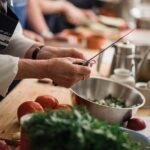
The best part of this Poros experience is that you do not simply sit down to eat Greek food. You help prepare a full meal in a family-owned bistro, then sit down to enjoy it. Recipes include tzatziki, spanakopita, fish or vegetarian plaki, salads, grilled vegetables, and bougatsa custard pastry.
I like the small group limit of 10, which gives the class a more personal feel than a large demonstration. I also like the connection between food and place: organic ingredients, family recipes, Poros lemonade, and a Nectar drink made with local wine. The main consideration is that this may be more of a guided cooking demonstration with hands-on work than a full kitchen lesson, so do not expect to prepare every dish from start to finish.
In This Review
- Key points at a glance
- A Greek lunch you help bring to the table
- Starting at Odyssey Bistro in Askeli
- The opening drinks and family recipes
- Learning tzatziki, spanakopita, and Greek meze
- Plaki brings the main course together
- Bougatsa finishes the meal
- What the two-and-a-half-hour format really means
- Price and what you receive for $77.95
- Who should book this Poros cooking class
- Practical details before you go
- Should you book it?
- FAQ
- Where does the cooking class begin?
- Where does the activity end?
- How long does the class last?
- How many people can join?
- What food is included?
- Are drinks included?
- Can I cancel for a refund?
Key points at a glance
- Cook in a family-run Poros bistro: Odyssey Bistro is in Askeli, close to the beach, in a traditional island hotel setting.
- Prepare a broad Greek menu: The meal includes meze, salads, seasonal vegetables, plaki, and bougatsa.
- Taste local drinks: You receive Poros lemonade and an alcoholic Nectar drink prepared with local wine.
- Expect a small group: Numbers are capped at 10, with a local English-speaking cook leading the class.
- Allow two and a half hours: The activity begins and ends at Odyssey Bistro, so plan your ferry and onward transport with care.
- Good for mixed ages and diets: The cook has adjusted recipes for allergies and prepared fish, vegetarian, or meat versions of plaki.
A Greek lunch you help bring to the table
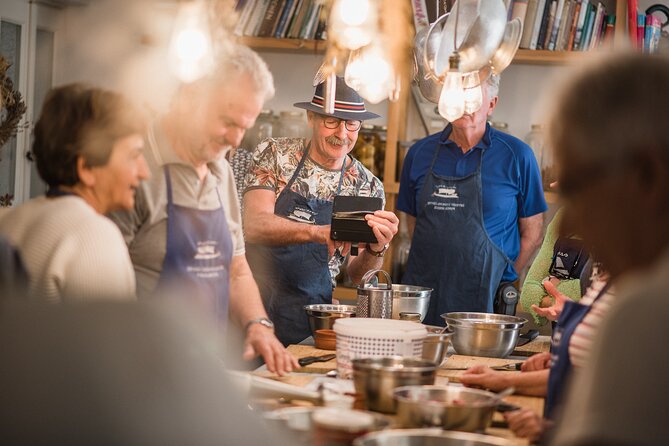
This class works because it links cooking with eating. You are not handed a recipe sheet and sent away after chopping one onion. You learn how several Greek dishes fit together, then taste the results as one generous lunch.
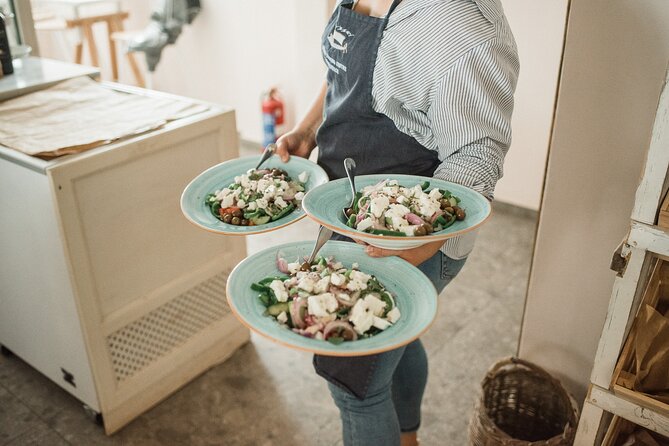
The menu covers the sort of food you want to understand on a Greek island. Tzatziki introduces the cool yogurt, garlic, and cucumber combination found across Greece. Spanakopita brings in greens and pastry. Plaki shows how fish, vegetables, and tomatoes become a simple baked dish with plenty of flavor.
The meal also includes Greek salad, beetroot salad, seasonal grilled vegetables, and bougatsa for dessert. That is a lot of food for a two-and-a-half-hour activity, and it helps explain why the experience feels like both a cooking lesson and a proper midday meal.
You should think of the class as a chance to learn the logic of traditional home cooking rather than as professional chef training. The focus is on familiar dishes, local ingredients, and the pleasure of eating together.
You can also read our reviews of more tours and experiences in Saronic Gulf Islands.

Starting at Odyssey Bistro in Askeli
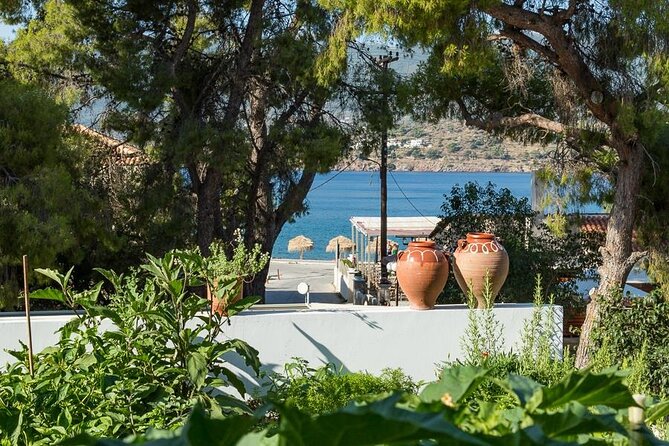
The meeting point is Odyssey Bistro at Askeli, Poros, on Leoforos Olympionikou Dimitriou, Mouyiou 180 20. The bistro sits just off the beach, in a small traditional hotel setting rather than a formal cooking school.
That location matters. You get a more direct sense of how food fits into island life, with the family that owns the place close at hand. The setting is part of the experience, but it also means you should not expect a purpose-built teaching kitchen with separate workstations for every person.
The restaurant is described as clean and well kept, and the kitchen has been praised for its tidy condition. Several cooks have led the class, including Katerina, Dora, and Katharina. The exact instructor may vary, but you can expect a local English-speaking cook and staff who may speak several languages.
If you are coming from another part of Poros, give yourself extra time. A late ferry once caused a group to miss only the opening lemonade, but the experience shows why a little breathing room helps. Taxi arrangements can also be less obvious if you do not know the island well.
The opening drinks and family recipes
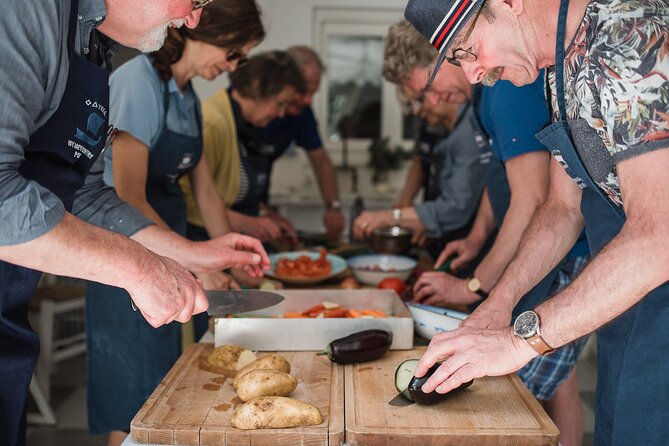
The class begins with Poros lemonade, a refreshing way to settle in before the food preparation starts. You also receive a Nectar drink made with local wine and inspired by the drinks of the Greek gods.
The Nectar is not just an extra beverage added to the price. It gives the class a small piece of Greek cultural context, linking a modern local drink with ancient Greek ideas. The class also explains how traditional recipes connect with ancient Greece, which adds meaning to ingredients and methods that might otherwise seem simple.
That cultural layer is useful because Greek cooking often depends on a few basic ingredients used well. Fresh vegetables, herbs, yogurt, tomatoes, pastry, and olive oil can look ordinary on their own. The lesson helps you see how they become recognizable Greek dishes through preparation and combination.
The alcoholic drink is included, but additional food and drinks are not. If you do not drink alcohol, the included lemonade provides another option, though you should not count on a long list of beverage choices.
Learning tzatziki, spanakopita, and Greek meze
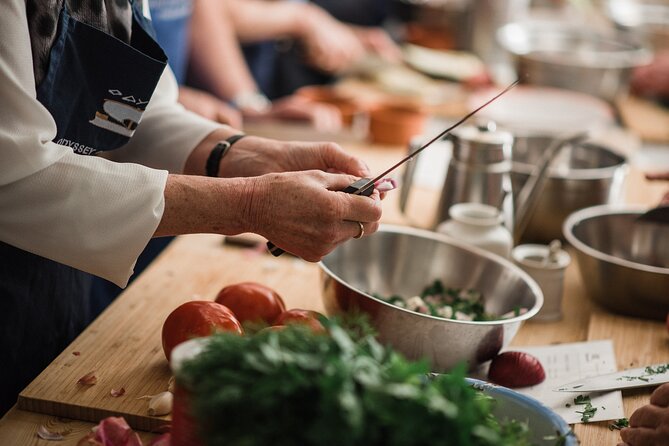
The first part of the food work centers on the lighter dishes and meze. Tzatziki is a good place to start because it is familiar, practical, and easy to recreate at home. You learn the balance behind the dip rather than merely tasting it from a bowl.
Spanakopita adds a different lesson. The combination of greens and pastry shows how Greek cooking can turn modest ingredients into something substantial. You may not personally complete every stage of each dish, but you will see how the recipes come together and take part in the preparation.
The broader meze spread includes Greek salad, beetroot salad, and seasonal grilled vegetables. This is one of the strongest parts of the meal for anyone who wants more than a single recipe. You get a sense of how a Greek table builds variety through several small plates, contrasting colors, textures, and temperatures.
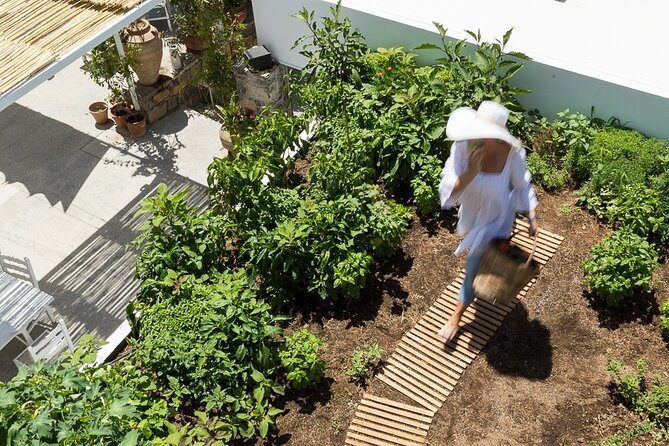
The organic, garden-to-table approach is central here. The food is presented as the product of seasonal ingredients rather than a fixed international menu. That means the exact vegetables or preparation may depend on what is available, which is a benefit for freshness but less suitable if you want a completely fixed class plan.
Plaki brings the main course together
Plaki is the main dish, with fish, vegetarian, or meat versions available. The common thread is food baked with tomatoes, a classic Greek method that lets a few ingredients carry the dish.
The fish version suits anyone looking for a taste of the surrounding sea, while the vegetarian option makes the class workable for people who do not eat fish or meat. The ability to adjust the menu for allergies is another practical strength. You should still state your needs when booking or before the class, since the cook may need to alter both the menu and individual dishes.
This part of the class may be more instructional than hands-on. One account described the experience as involving less cooking than expected, with the chef handling some of the work. That is not necessarily a flaw. It keeps the class moving and helps ensure that lunch arrives in good condition, but it matters if your priority is spending most of the session actively cooking.
I would choose this experience for its mix of participation and explanation, not for a strict, step-by-step culinary workshop. You will learn several family recipes, but you may not independently make every plate.
Bougatsa finishes the meal
Bougatsa is the sweet finish, a custard pastry with a soft filling and crisp pastry layers. Ending with a traditional Greek dessert gives the meal a satisfying shape, from savory dips to baked main course to pastry.
Dessert also makes this class more useful for home cooks. Many food tours stop after the main course, but bougatsa adds a recipe you may not encounter in an ordinary restaurant meal. It is one more reason to bring a notebook or use your phone to record the ingredients and method, if the cook permits it.
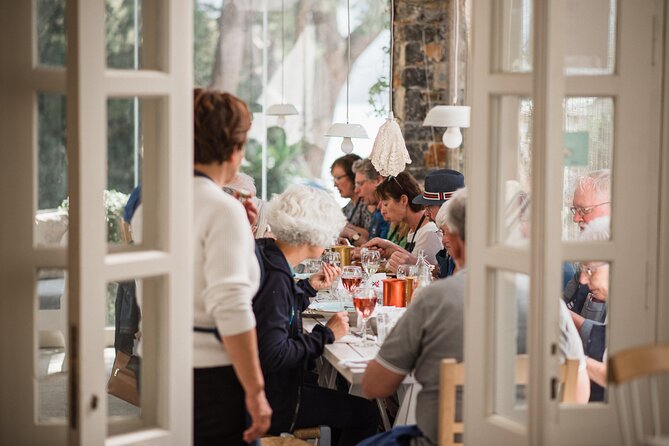
The lunch is served after the preparation, so you can sit down and eat what the group has made. That shared meal is a key part of the value. You are not rushing from one demonstration to the next. You have time to understand the dishes as a complete Greek table.
What the two-and-a-half-hour format really means
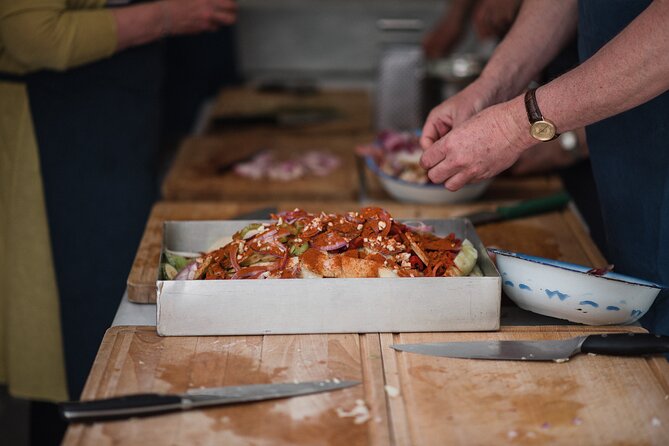
Two hours and 30 minutes is long enough for several dishes without taking an entire day from your Poros plans. You can fit it into a wider island visit, but the start time still deserves attention if you are arriving by ferry or arranging a connection afterward.
The time is likely to feel full rather than leisurely in a slow, restaurant-style way. There are multiple salads, vegetables, a main dish, dessert, drinks, and conversation with the cook. The group size helps, since a maximum of 10 people makes it easier to ask questions and get some individual attention.
A smaller group also suits solo visitors. One person who attended alone found the atmosphere welcoming, and a small group can make it easier to speak with the cook and other people at the table. Families can also fit comfortably into the format. The class has worked well for a group spanning ages 20 to 60, and children or teens who enjoy food may find the range of dishes more interesting than a single-recipe lesson.
Do not treat the 10-person limit as a guarantee that every date will be full. It simply keeps the maximum manageable. Some sessions may be much smaller, which can make the instruction more personal.
Price and what you receive for $77.95
At $77.95 per person, this is not the cheapest lunch on Poros. You are paying for more than the food, though. The price includes the cooking lesson, the local English-speaking cook, the drinks, the full organic meal, and the setting in a family-run bistro.
The included menu is substantial: tzatziki, Greek salad, beetroot salad, seasonal grilled vegetables, fish, vegetarian, or meat plaki, and bougatsa. Add Poros lemonade and the local-wine Nectar drink, and the meal itself accounts for a good part of the cost.
I see the value most clearly if you want an activity as well as lunch. If you only want a plate of Greek food, you can likely spend less at a restaurant. If you want recipes, local contact, cultural context, and a meal you helped prepare, the price is more reasonable.
The class also works well as a souvenir. You leave with techniques and ideas you can use at home rather than another small object in your luggage. The exact amount of hands-on work is the one factor that may affect your personal sense of value.
Who should book this Poros cooking class
I would recommend it to you if you like food, prefer small groups, and want a scheduled activity with a clear beginning and end. It suits people who want traditional Greek dishes explained in a friendly setting rather than a polished performance in a large culinary studio.
It is especially useful for:
- Couples and families who want to cook and eat together
- Solo visitors who prefer a social activity with a small group
- Vegetarians, provided dietary needs are shared in advance
- People who enjoy learning several dishes in one sitting
- Anyone staying near Askeli or willing to arrange transport there
- Visitors who want a cultural activity beyond sightseeing and beach time
You may want another kind of class if you expect every participant to prepare every dish personally. The cook may take over some stages, and the session can feel closer to a guided demonstration with selected hands-on tasks.
The activity is also less suitable if you have a tight ferry connection immediately afterward. It ends back at Odyssey Bistro, but you still need time to arrange a taxi or reach public transportation.
Practical details before you go
Confirmation is normally sent when you book. If you book within two days of the activity, confirmation can take up to 48 hours and depends on availability.
The tour uses a mobile ticket, and service animals are allowed. It is near public transportation, but the meeting point is specific, so check the address before setting out.
The activity requires a minimum number of participants. If that minimum is not reached and the class is canceled, you receive the choice of another date or experience, or a full refund.
You can cancel for a full refund up to 24 hours before the local start time. Changes or cancellations inside that 24-hour window are not accepted for a refund. That policy makes early planning worthwhile, especially when ferry schedules are part of your day.
Should you book it?
Book this class if you want a friendly food lesson with a full lunch, not a rigorous chef-training session. The family setting, small group, organic ingredients, adaptable plaki, and wide menu make it a strong choice for a relaxed Poros day.
I would be happiest booking it with enough time before or after ferry travel, and I would tell the cook about allergies or dietary needs in advance. If you want to make every dish yourself, ask how much hands-on work is planned. For most visitors, the chance to learn several Greek recipes and eat them in a family bistro makes the $77.95 fare worthwhile.
FAQ
Where does the cooking class begin?
The class begins at Odyssey Bistro in Askeli, Poros, at Leoforos Olympionikou Dimitriou, Mouyiou 180 20, Greece.
Where does the activity end?
The activity ends back at Odyssey Bistro, the same place where it begins.
How long does the class last?
The cooking class and lunch take approximately two hours and 30 minutes.
How many people can join?
The group is limited to a maximum of 10 participants.
What food is included?
Lunch includes tzatziki, Greek salad, beetroot salad, seasonal grilled vegetables, fish, vegetarian, or meat plaki, and bougatsa for dessert.
Are drinks included?
Yes. The price includes Poros lemonade and an alcoholic Nectar drink prepared with local wine. Additional food and drinks are not included.
Can I cancel for a refund?
Yes. You can cancel at least 24 hours before the local start time for a full refund. Cancellations or changes made less than 24 hours before the start are not accepted for a refund.