REVIEW · PELOPONNESE
Ancient Olympia: Archaeological Site and Museum Entry Ticket
Book on GetYourGuide →Operated by Key Tours · Bookable on GetYourGuide
Ancient Olympia hits you fast. A pre-booked ticket lets you spend your one day walking the UNESCO ruins and then sit down with the finds that explain how the sanctuary worked. You’ll go at your own pace with English audio for the two main stops.
What I really liked is how smooth the entry feels. Pre-paying helps you avoid the worst of the ticket-booth hassle, especially in peak season heat. I also loved the mix of big outdoor monuments—especially the Temple of Zeus—and the indoor museum pieces that put objects and context back into focus.
The main drawback to plan around is timing: the museum part uses time slots and you must enter during your selected window. If you miss it, you can’t just wander in later, so your day needs a little structure even though the tour itself is self-led.
In This Review
- Key highlights you should care about
- Pre-booked entry that keeps your day from getting stuck
- Ancient Olympia ruins: Temples, Doric details, and the stadium atmosphere
- Temple of Zeus: the biggest statement on the grounds
- Temple of Hera: one of Greece’s older monumental temples
- The “where athletes trained” zones
- A quick pacing tip
- Archaeological Museum entry: your finds-and-context payoff
- What you’ll see in the museum
- If you like sports, you’ll probably love it more
- Museum of the History of the Olympic Games: story at your own tempo
- Audio tour: helpful, but keep your map handy
- A small add-on you might want
- Timing rules that can make or break a smooth day
- The museum uses a strict time window
- The site and the Olympic Games History Museum are more flexible
- Your best strategy
- What to bring: heat, comfort, and staying focused on details
- Earbuds matter
- Keep navigation simple
- Value and price: what you’re really paying for
- Who should book this Ancient Olympia ticket (and who might want a different format)?
- Should you book this? My honest take
- FAQ
- FAQ
- Do I need a specific time slot for everything?
- Can I enter the archaeological site whenever I want on my visit day?
- What happens if I’m late for the Archaeological Museum time slot?
- Is an audio guide included, and do I need my own earphones?
- Is this ticket non-refundable?
- Can I amend my travel date or entry time after booking?
- Are there any free admission discounts included?
- Is the ticket wheelchair accessible?
- Are hotel transfers or a live guide included?
Key highlights you should care about
- Timed entry for the Archaeological Museum means you control what time you start indoors
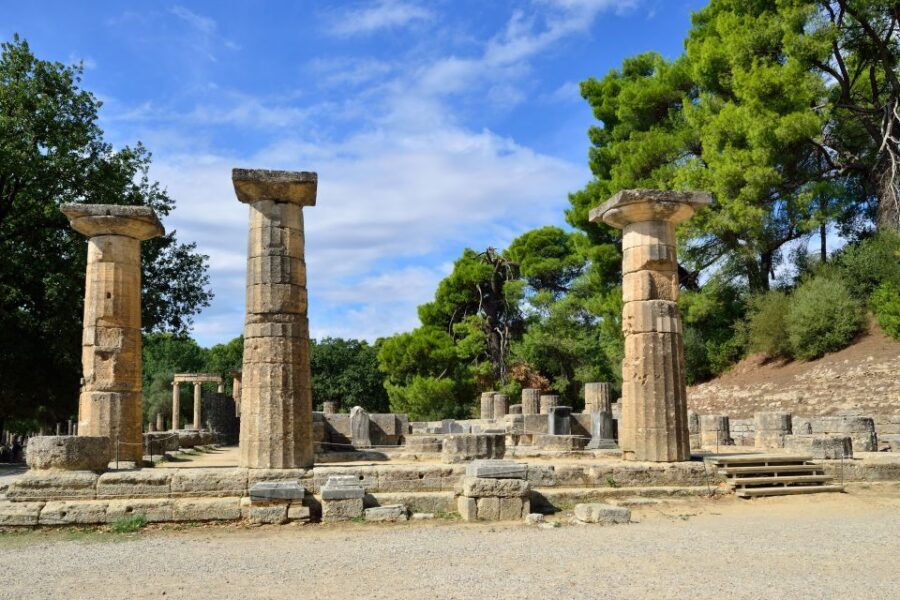
- Temples of Zeus and Hera give you classic Doric architecture to study in person
- Olympic training grounds include the stadium, hippodrome, wrestling school, and gymnasium areas
- Two self-guided audio tours (site + Olympic Games Museum, if selected) keep it flexible
- Audio is English but you bring earphones/device since the physical audio gear isn’t included
- Pre-purchased tickets reduce waiting when crowds and sun are at their worst
Pre-booked entry that keeps your day from getting stuck
Ancient Olympia is one of those places where the scale is the whole story. The ruins are spread out, the sun can be relentless, and when lines form you lose the prime hours you could be walking in cooler shade. That’s exactly why I appreciate this ticket setup: you come prepared, you get in with less friction, and you spend time where it matters.
Your one-day plan splits into three big components. You visit the archaeological site (anytime on your selected date) and the Archaeological Museum (within your chosen time slot), then you finish at the Museum of the History of the Olympic Games (also anytime on your selected date). The audio format is self-guided, so you can stop, look, and rewind your attention as you like.
Just know what kind of experience it is. This is not a live-guided story you follow step-by-step. If you crave narration from a human guide, you’ll likely want to pair it with a separate tour. But if you like reading the landscape yourself and letting audio do the talking, this works well.
You can also read our reviews of more tours and experiences in Peloponnese.


Ancient Olympia ruins: Temples, Doric details, and the stadium atmosphere
This is the heart of the ticket: walk the UNESCO-listed sanctuary and get your bearings the way ancient athletes and visitors once did—by moving between sacred buildings, training spaces, and stadium areas. You’re not dealing with a small “photo stop.” You’re dealing with a real archaeological site with multiple zones, paths, and viewpoints.
Temple of Zeus: the biggest statement on the grounds
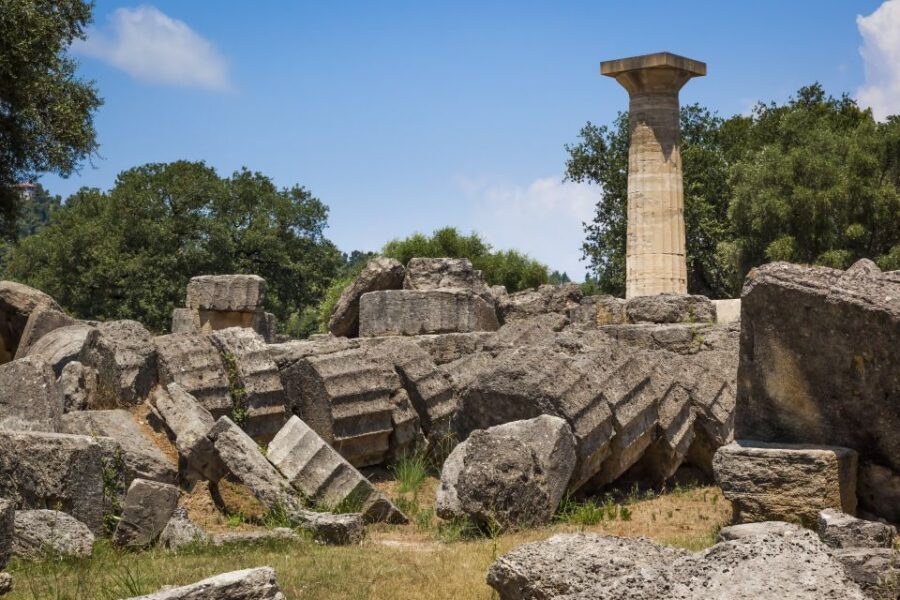
I love starting with the Temple of Zeus area because it’s a strong visual anchor. It’s described as the largest temple in the Peloponnese and often noted for being a strong example of Doric architecture. Even in ruins, you can still sense the original ambition: this wasn’t a minor shrine. It was the centerpiece of a major pan-Hellenic sanctuary.
Take your time here. Look at proportions and rhythm—how the structure feels built for symmetry and repetition. If you’re the type who likes noticing columns, spacing, and how ancient builders used simple geometry, this part will reward you.
Temple of Hera: one of Greece’s older monumental temples
Next comes the Temple of Hera, noted as one of the oldest monumental temples in Greece. It’s the sort of stop that feels quietly impressive—especially after you’ve seen the larger Zeus temple first. The contrast helps you understand the sanctuary as a place that developed over time, not a single finished monument frozen in one moment.
The “where athletes trained” zones
Then you move through the athletic layout: the stadium, hippodrome, wrestling school, and gymnasium areas. This is where the Olympics concept becomes physical. You can stand near spaces tied to training and competition and imagine the routines that would have filled the sanctuary.
One of the best things about the site experience is how it connects time layers. People walk these same paths and viewpoints while the archaeological remains quietly explain what’s left behind. Even if you’re not an Olympic fanatic, the idea of repeated rituals—training, gathering, competing—gives the stone meaning.

A quick pacing tip
Plan on slowing down. It’s easy to rush between points, then feel like you saw it all without really absorbing it. If the audio is sounding repetitive or you’re losing track, pause and use your eyes instead—especially in open areas where the layout becomes clearer.
Archaeological Museum entry: your finds-and-context payoff
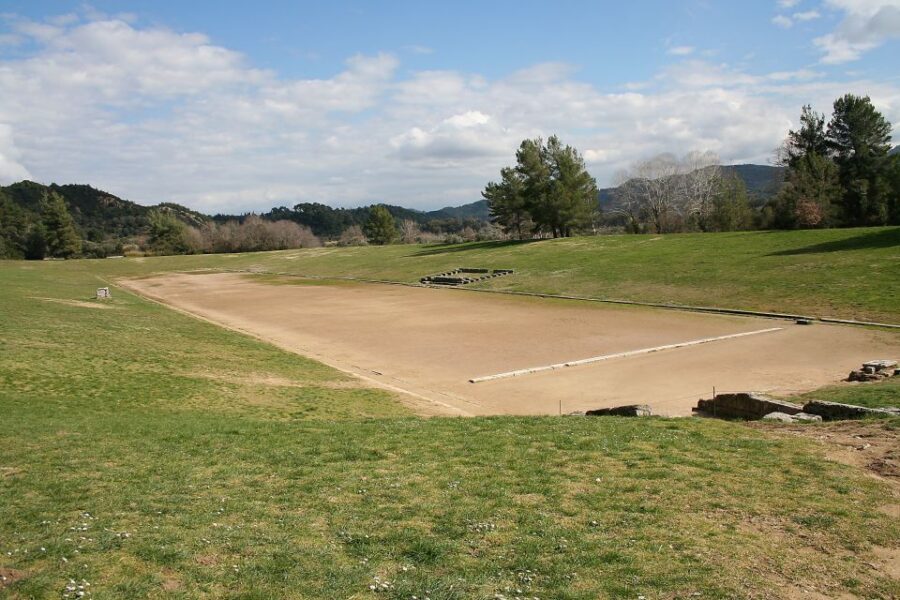
The Archaeological Museum is the indoor half of the “why this matters” equation. A lot of people only see the temples and think that’s enough—but the museum is where you learn what the excavations found and how the sanctuary worked as a sacred precinct over time.
This museum stop is also where the time slot matters most. You must enter during the selected window for the museum, not just on any time that day. The good news is that choosing the slot lets you plan around heat: early entry can feel calmer, while later entry can rescue you from mid-day sun.
What you’ll see in the museum
Expect prehistoric and archaeological finds tied to the sanctuary of Zeus and the excavated sacred precinct called the Altis. The museum is where objects stop being abstract and start acting like evidence.
The value here is simple: ruins tell you architecture. Museums tell you what people left behind—tools, dedications, sculpture fragments, and other material clues that help you connect daily life and religious practice to the athletic identity of Olympia.
If you like sports, you’ll probably love it more
One review stood out for a former gymnast who found the museum a bucket list moment, even while admitting the excitement might be less for people who aren’t sports-minded. That’s fair. But even if you’re not into athletics, museum displays can still convert Olympia from “beautiful stones” into “a system of belief and ceremony.”
If you’re coming with kids, this stop can be the easiest way to keep attention moving because you’re in a controlled environment. If you’re coming solo, it’s a great place to reset before heading back outside.
Museum of the History of the Olympic Games: story at your own tempo
The Museum of the History of the Olympic Games adds a focused narrative layer. It’s designed around the Olympic Games themselves and the period when the ancient games took place, plus findings linked to that era. Think of it as the bridge between the athletic spaces outside and the archaeological evidence inside.
Because entry is anytime on your selected date, you can use this museum strategically. I like treating it as a “flex stop” after the ruins, or as a mid-day indoor break when the light and temperature are working against you.
Audio tour: helpful, but keep your map handy
This ticket includes a self-guided audio tour for the Olympic Games Museum. It’s in English, but there are two practical notes you should know. First, you won’t get a physical audio device or earphones included, so bring earbuds you can use. Second, one review mentioned the audio stops felt like they weren’t in the most logical order, so I’d treat the audio as guidance rather than a strict route.
If you do like a plan, don’t rely solely on the audio sequence. Keep a quick eye on signage and be ready to turn around. The museum itself is the type where you’ll understand more when you’re matching what you hear to what you’re looking at.
A small add-on you might want
In one review, someone mentioned renting VR headsets from a place called Back in Time as a highlight. If that option is available during your visit, it can add a “how it might have looked” layer that’s hard to replicate just by reading plaques.
Timing rules that can make or break a smooth day
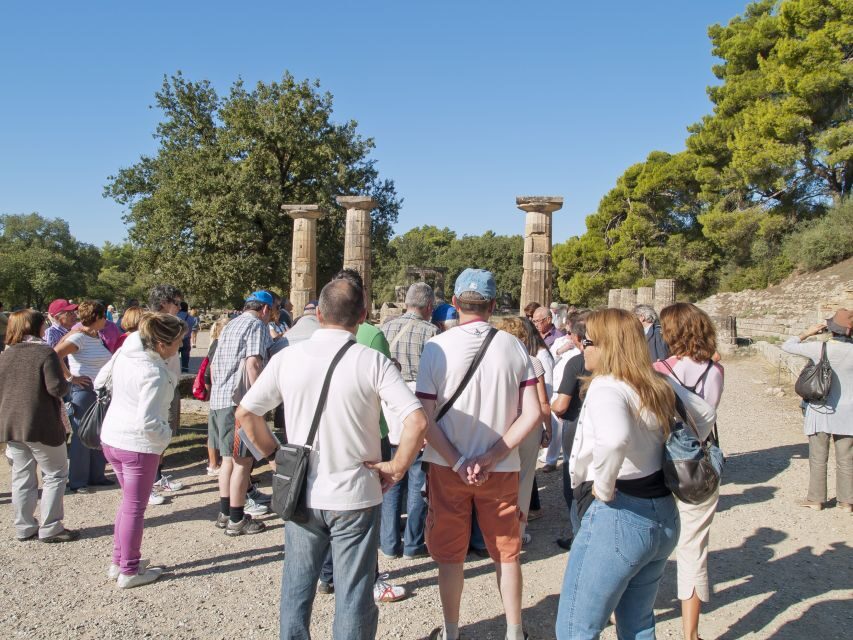
This is the one part you should respect, because it affects your stress level more than it affects the sites.
The museum uses a strict time window
For the Archaeological Museum, you choose a specific day and time slot when you book. Entrance is permitted only at that selected time, or up to 15 minutes before or after. If you plan a leisurely start and then realize you’re late, you might end up rushing or losing the window.
The site and the Olympic Games History Museum are more flexible
For the archaeological site, you can enter anytime on your chosen date. For the Museum of the History of the Olympic Games, entry is also anytime on the selected date. That flexibility is great because it lets you adjust your outside walking pace based on heat, crowd levels, and how quickly you move from temple to temple.
Your best strategy
To keep the day comfortable, I’d treat the museum slot as the anchor. Then build the outdoor ruins around it: either visit the site first (if your slot is later) or visit the site after (if your slot is early). The point is to avoid having your best walking time eaten by rushing.
What to bring: heat, comfort, and staying focused on details
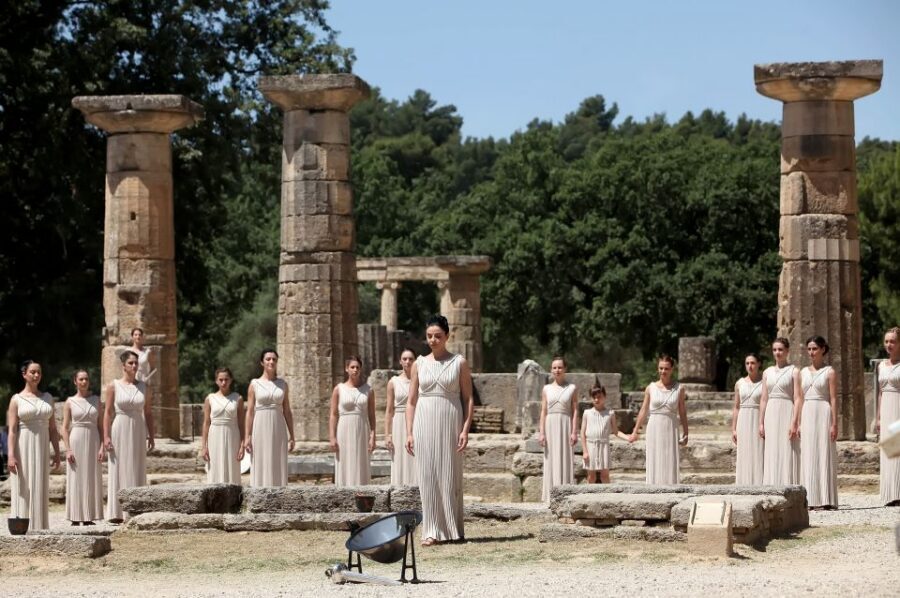
Olympia in warm months can be brutally hot. Even when crowds thin out, sun exposure doesn’t care about your schedule. Bring water and plan for sweating, because you’ll spend hours outdoors plus additional time inside the museums.
Here’s what I’d pack based on real on-the-ground advice I saw. Bring water, consider an umbrella, and consider a facecloth you can wet and cool with—one review specifically called that out as a game changer. Also bring sunscreen and a hat if you’re prone to sunburn.
Earbuds matter
This ticket includes English audio tours, but it does not include the physical audio device or earphones. That means your phone earbuds (or any small wired earbuds) can save you from standing there hoping you can improvise. If you prefer wireless, make sure they’re charged and ready.
Keep navigation simple
One review said directions to the museum and site could be clearer. Another mentioned the audio tour order felt random. Both point to the same practical takeaway: don’t assume you’ll instantly know where everything is once you’re there. Use your map app early, then let it guide you calmly between stops.
Value and price: what you’re really paying for
The price is listed as $30 per person, with pre-booked entry ticket access that covers the Archaeological Museum (time slot), the archaeological site (anytime), and the Museum of the History of the Olympic Games (anytime). You also get self-guided audio in English.
So is it worth it? For me, the value comes from reducing friction. Multiple reviews praised how easily the pre-purchased ticket helped avoid long lines at ticket points—especially in July heat. If you’ve ever stood in a queue in direct sun, you already know how costly that time feels.
Also, self-guided is a benefit. When you’re paying for admission plus audio, you can go at your own tempo rather than matching someone else’s group pace. That matters at Olympia because it’s easy to want more time on Zeus’s Doric lines or to linger near stadium features.
That said, this ticket isn’t about expert narration. If you want a guide to explain every sculpture fragment and historical nuance, you’d be adding something else on top. In other words, you’re paying for convenience and access, not for a live storytelling layer.
Who should book this Ancient Olympia ticket (and who might want a different format)?
This ticket fits best if you want an easy, structured day with control. I’d especially recommend it if you:
- Like exploring at your own pace with audio prompts
- Want to cut down on ticket-booth waiting
- Are happy spending time reading signs and pairing audio with what you see
- Prefer to plan around heat and timing yourself
It may feel less ideal if you:
- Want a live guide to connect everything into a tight narrative
- Need very specific routing assistance, since audio stops may not feel perfectly ordered
- Are likely to miss time windows, since the Archaeological Museum slot is strict
If you’re a family group, it can be a good balance. Museums give indoor breathing room, and the outdoor ruins provide space for kids to move, look, and burn energy.
Should you book this? My honest take
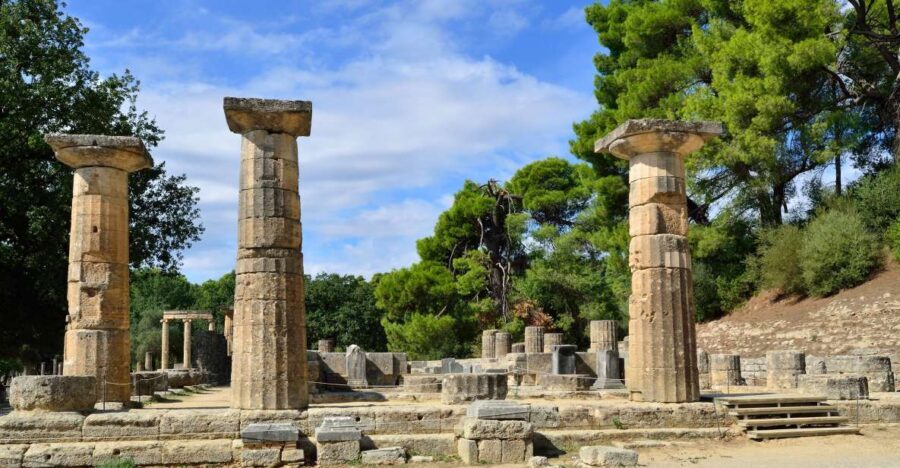
If you’re visiting Olympia for the first time, I think this is a strong choice—mainly because of how much stress it removes. The combination of pre-booked entry and self-guided audio lets you focus on the places that matter: Temple of Zeus, Temple of Hera, the athletic zones, and then the museum displays that explain what those ruins really represent.
I’d book it if you can commit to the museum time slot and you’re willing to bring earbuds. If you know you tend to run late, consider arriving earlier than you think you need to, because that 15-minute buffer can disappear faster than you expect.
FAQ
FAQ
Do I need a specific time slot for everything?
Only the Archaeological Museum of Ancient Olympia requires a chosen date and time slot. The archaeological site and the Museum of the History of the Olympic Games can be entered anytime on your selected date.
Can I enter the archaeological site whenever I want on my visit day?
Yes. You can enter the archaeological site of Ancient Olympia anytime on the selected date.
What happens if I’m late for the Archaeological Museum time slot?
Entrance is only permitted at your selected time slot, or within 15 minutes before or after. If you’re outside that window, you may not be allowed in for that museum visit.
Is an audio guide included, and do I need my own earphones?
An English self-guided audio tour is included. However, the physical audio device and earphones are not included, so you should plan to bring earphones.
Is this ticket non-refundable?
Yes. The activity is listed as non-refundable.
Can I amend my travel date or entry time after booking?
No. The travel date and/or entry time slot cannot be amended.
Are there any free admission discounts included?
The data states there is no option for reduced admission. It also lists free admission for certain age categories (EU citizens under 25 and non-EU citizens under 18 from April 1, 2025) with ID at the ticket booth, and free admission for people with disabilities with a disability certificate.
Is the ticket wheelchair accessible?
Yes. The experience is wheelchair accessible.
Are hotel transfers or a live guide included?
No. Hotel transfers are not included, and there is no live guide with this option.