REVIEW · NAFPLIO
Argolis: Full-Day Private Peloponnese Tour from Athens
Book on GetYourGuide →Operated by Timeless Athens Tours · Bookable on GetYourGuide
The best part of this tour is the way it links major Peloponnese sites into one long day: the Corinth Canal, ancient Corinth, Mycenae, Nafplio, and Epidaurus. You get a private car, hotel pickup, and an English-speaking driver who can explain Greek history, mythology, and culture along the way.
I like the private group format, especially for up to three people, and I like the mix of famous ruins, countryside roads, and a real town in Nafplio. Driver Markos also receives special praise for sharing his knowledge of traditional Greek life and going out of his way to help.
The main drawback is the schedule. Ten hours is a long day, and several major sites compete for your attention. Entrance tickets, food, drinks, and a licensed guide inside the monuments are not included, so the final cost will be higher than the headline price.
In This Review
- Key points at a glance
- Why this private Peloponnese day trip works
- The Corinth Canal: a quick look at a major cut through Greece
- Ancient Corinth and the world of Saint Paul
- Mycenae and the Cyclopean Walls
- Nafplio: time for a real Greek town
- Epidaurus and its celebrated ancient theater
- Arachova and the Karakolithos Monument
- What the driver adds to the day
- Timing, comfort, and what to bring
- What your $695 includes, and what it does not
- Who should book this tour?
- FAQ
- How long does the Argolis tour from Athens last?
- Is hotel pickup included?
- Is this a private tour?
- How much does the tour cost?
- What language does the driver speak?
- Is a licensed guide included inside the monuments?
- Are entrance fees included?
- Are meals and drinks included?
- What places are included in the detailed route?
- Is the tour suitable for people with mobility impairments?
- What happens if it rains?
- Can I cancel for a full refund?
- Should you book it?
Key points at a glance
- The Corinth Canal makes a striking first stop, giving you a quick look at the engineering project that cuts through the Isthmus of Corinth.
- Ancient Corinth connects archaeology with early Christianity, including the Temple of Apollo, the Ancient Agora, and Saint Paul’s time in the city.
- Mycenae brings Greek legend to life, with Cyclopean Walls, the Acropolis, and the Tomb of King Atreus.
- Nafplio adds time away from ruins, with attractive streets, harbor views, and the fortified islet of Bourtzi.
- Epidaurus gives the day a memorable finale, thanks to its celebrated ancient theater.
- The tour is best for active sightseers, since mobility is needed and the route runs rain or shine.
Why this private Peloponnese day trip works
This is not a single-site excursion. It is a broad introduction to the northeastern Peloponnese, the part of Greece where ancient cities, mythic royal centers, modern towns, and wartime memorials share the same roads.
You leave Athens by private vehicle and return there after about ten hours. That makes the day useful if you have limited time in Greece and want to see several important places without changing hotels or dealing with regional buses.
I especially like the private setup for families, couples, or a small group of friends. You are not sharing the vehicle with a large crowd, and pickup and drop-off at your Athens accommodation are included. The tradeoff is that the route is fixed by distance and time. You should expect a full day on the road rather than a leisurely stay in one town.
The price is $695 per group of up to three people. Split three ways, that is about $232 per person before admission tickets and meals. For two people, the per-person cost rises sharply, but you are paying for a private vehicle, fuel, tolls, parking, baggage charges, and an English-speaking driver for the day. I consider it most attractive when three people share the cost.
You can also read our reviews of more private tours in Nafplio



The Corinth Canal: a quick look at a major cut through Greece
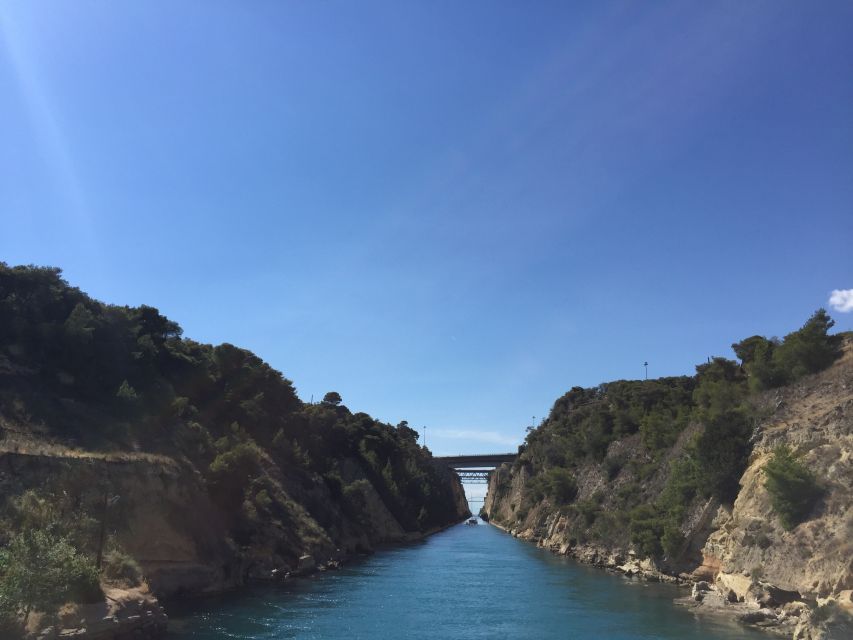
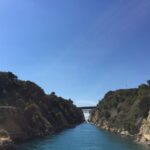
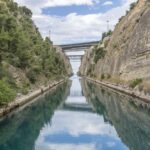
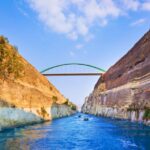
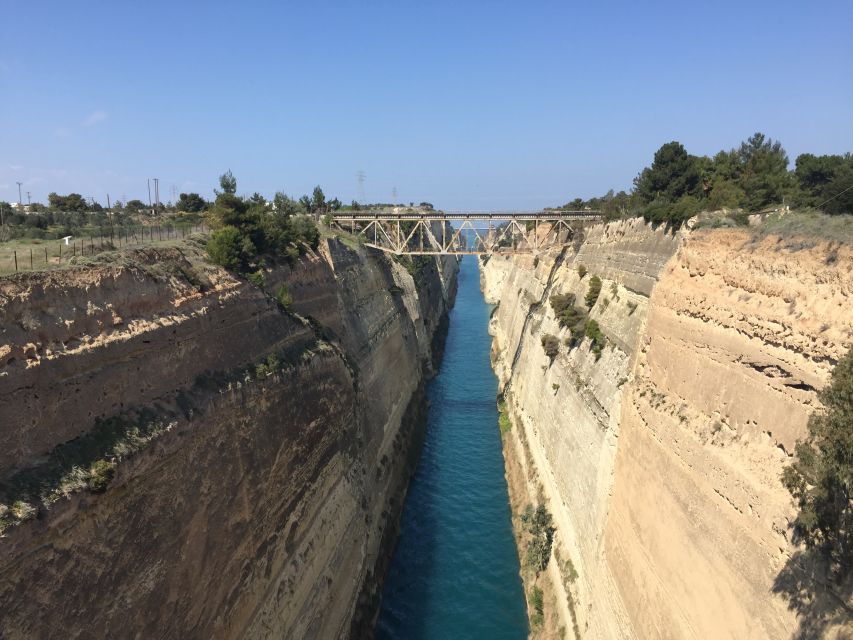
The first major stop is the Corinth Canal. The drive from Athens takes you west along a scenic route, and the canal provides an easy introduction to the geography of the Peloponnese.
You get a short break here rather than a long guided visit. The canal is narrow, straight, and dramatic, with steep sides that make the waterway easy to appreciate from above. It is a useful photo stop and a chance to stretch your legs before the archaeological sites begin.
Do not expect a full museum visit or a long history lesson at this point. The value is visual. You see how the waterway separates the Peloponnese from mainland Greece and understand why Corinth has long mattered as a crossing point.
Ancient Corinth and the world of Saint Paul
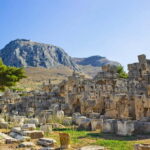
From the canal, you continue to ancient Corinth. In classical times, Corinth was considered one of Greece’s wealthiest cities, and the surviving remains help show why its position mattered.
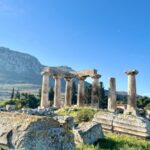
The archaeological area includes the Temple of Apollo and the Ancient Agora. The Agora was the center of public life, so this stop offers more than a single impressive building. You can picture a city organized around trade, politics, worship, and public debate.
Corinth also has a strong connection to early Christianity. Saint Paul preached and lived here for about two years. That gives the site a second layer of meaning, particularly if you are interested in biblical history as well as ancient Greek civilization.
The driver can explain the wider setting and point out the main features, but a driver is not the same as a licensed guide inside a monument. If you want detailed archaeological interpretation at each ruin, you will need to arrange and pay for a licensed guide separately. That distinction matters, since the tour includes driver and guide services but excludes entrance fees and licensed monument guiding.
Wear shoes with good support. You will be walking over ancient surfaces, and comfortable clothing will make the day easier.
Mycenae and the Cyclopean Walls
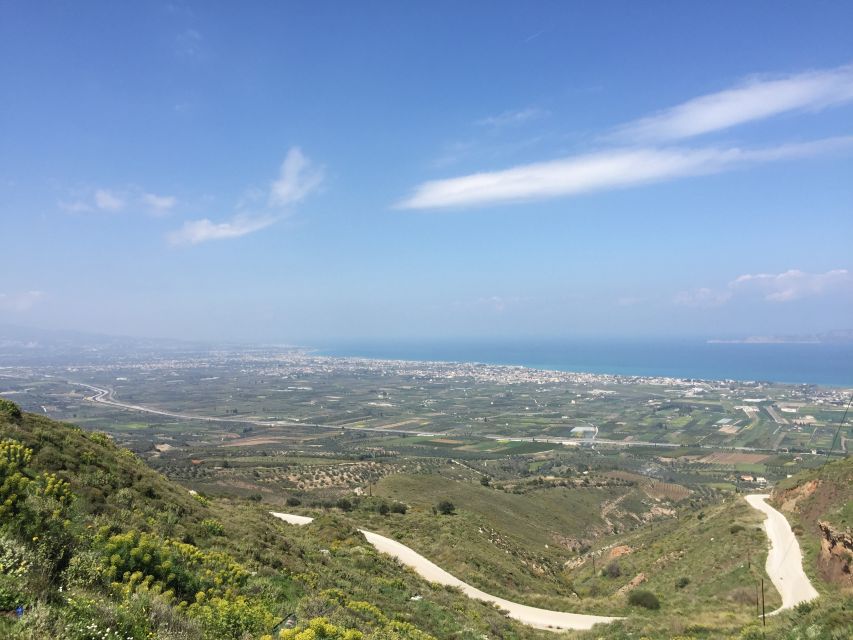
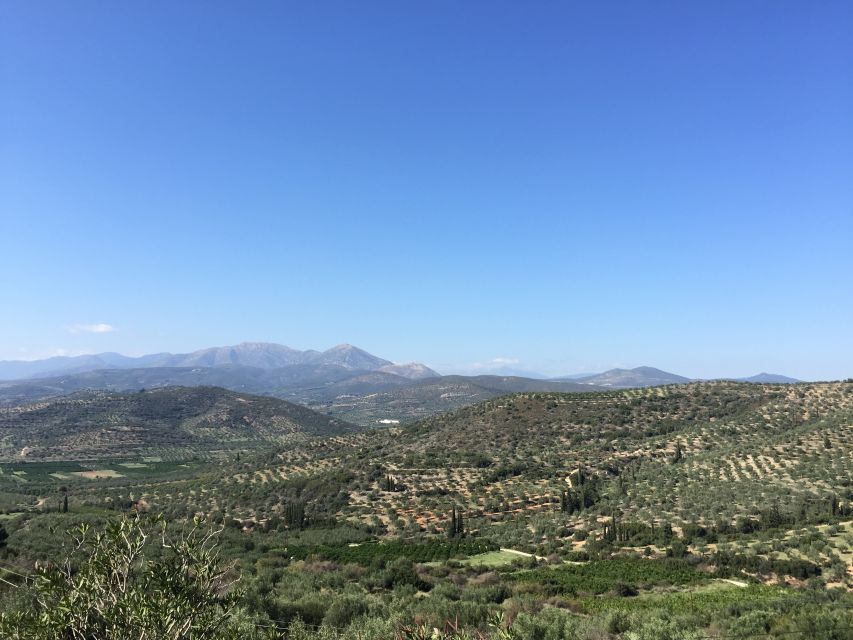
The road from Corinth to Mycenae passes through vineyards and olive trees. This is one of the pleasant parts of the trip because the route itself gives you a look at the agricultural side of the Peloponnese.
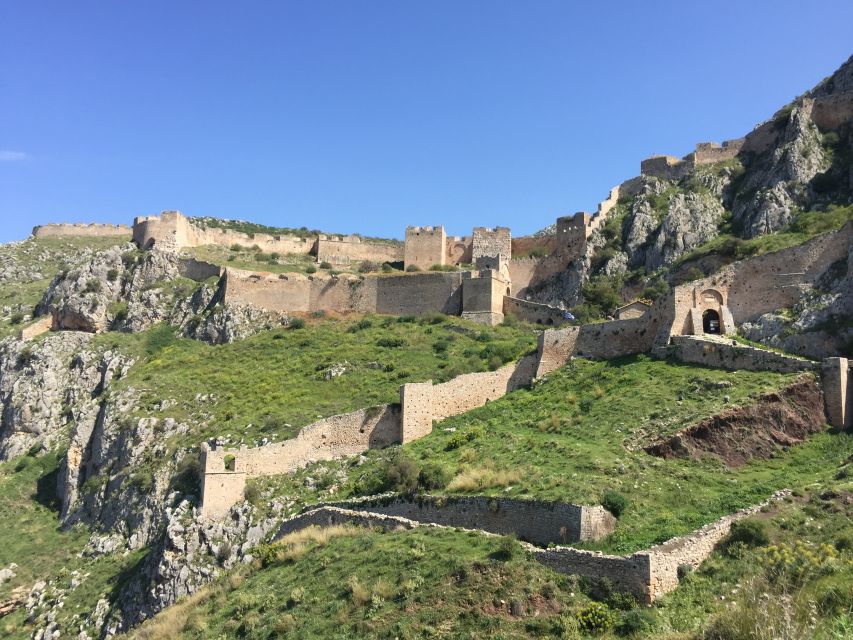
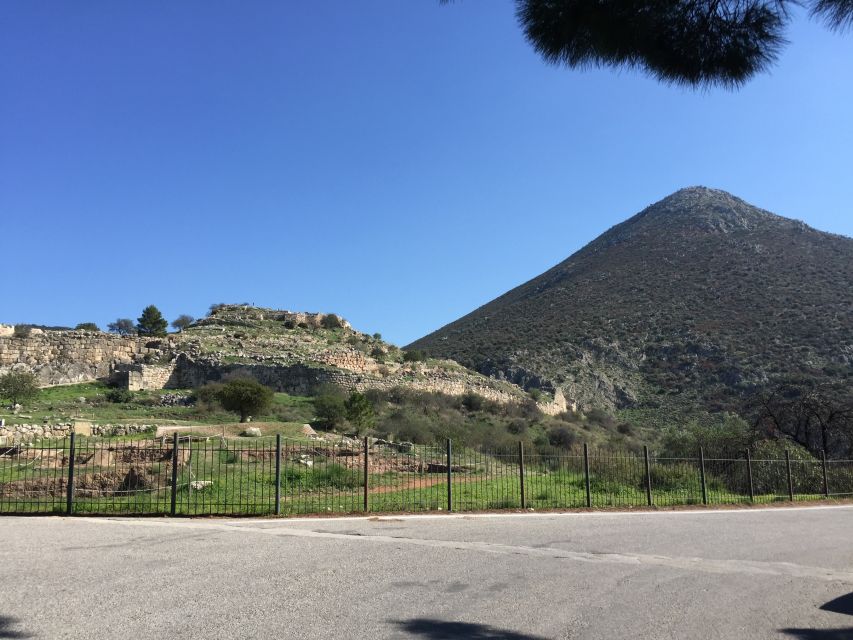
Mycenae is the day’s great myth-and-archaeology stop. You visit the Cyclopean Walls around the Acropolis of Mycenae, massive stone defenses traditionally said to be too large for ordinary humans to build. The name connects the site to the Cyclopes, the one-eyed giants of Greek mythology.
The scale of the walls makes the ancient citadel easy to picture. Even if you do not know every story connected with Mycenae, the ruins have a strong sense of place. This is the legendary kingdom linked with King Agamemnon and the Trojan War traditions, though the surviving stones are more useful for understanding Bronze Age power than for proving every later myth.
You also visit the Tomb of King Atreus. The tomb is one of the most memorable structures at Mycenae, with a monumental entrance and a large beehive-shaped interior. The name connects it with the royal family of Atreus, but the exact identities of many ancient burials remain a matter of archaeology rather than simple legend.
Mycenae requires walking and some uneven footing. The information provided for this tour specifically says it is not suitable for people with mobility impairments. If you have trouble walking or standing for long periods, this is an important reason to reconsider the trip.
Nafplio: time for a real Greek town
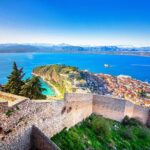
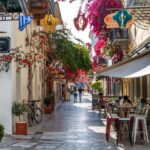
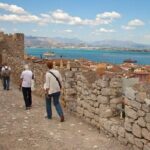
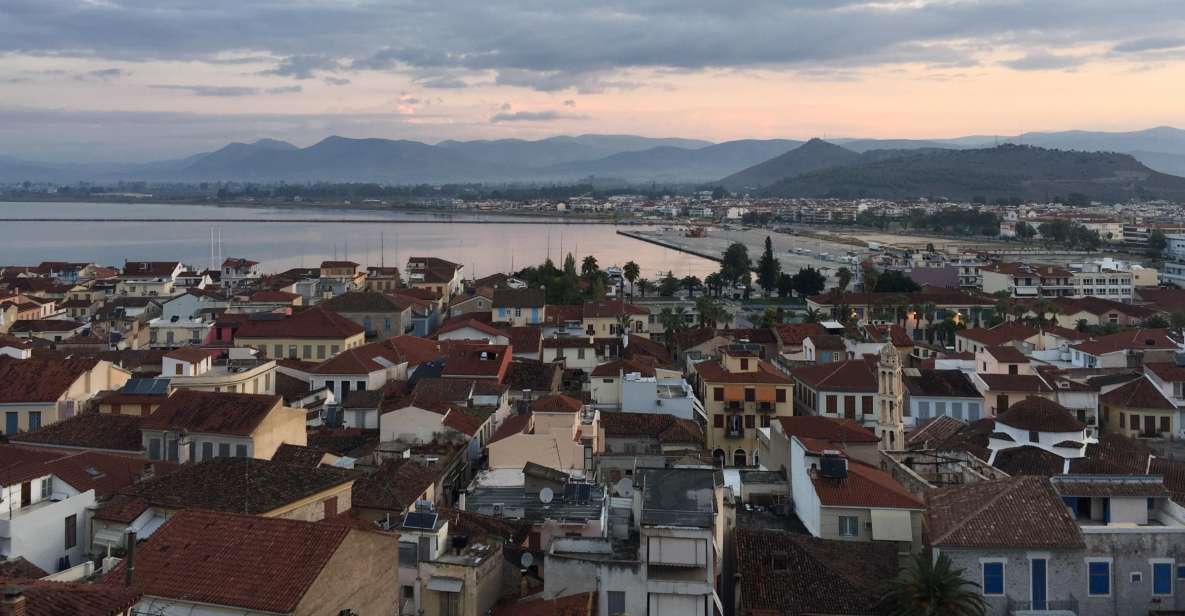
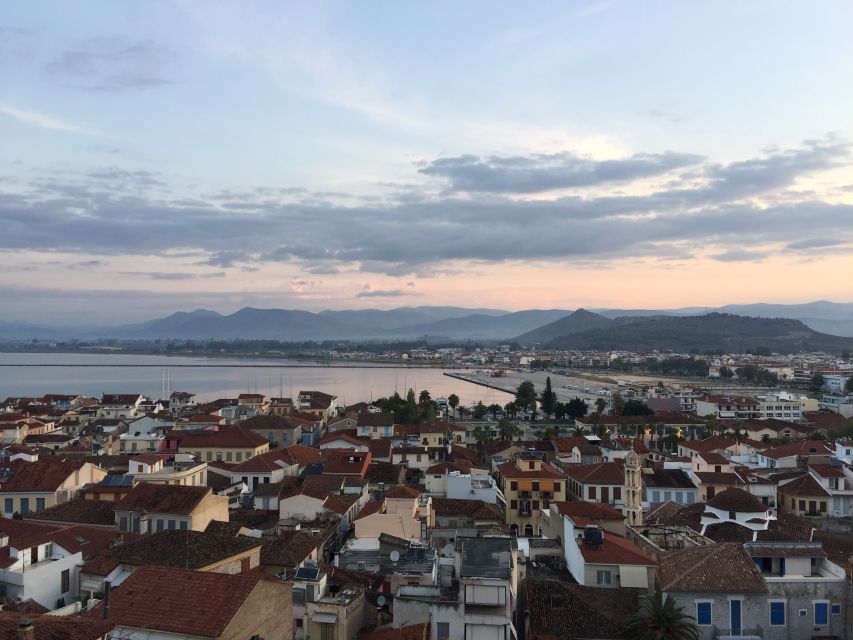
After Mycenae, the route continues to Nafplio, one of the most attractive places in Greece. This stop changes the rhythm of the day. Instead of moving from one archaeological site to another, you reach a historic coastal town with an active urban setting.
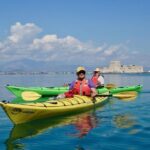
Nafplio was the first capital city of modern Greece after independence. The town is also known for Bourtzi, the fortified islet in the harbor. From shore, the small fortress gives the waterfront a distinctive focal point and reminds you that Nafplio was built in a place where defense and sea access mattered.
I like having Nafplio in the middle of this route because it gives you a chance to take in Greece as a lived-in country, not only as an outdoor museum. Depending on the timing arranged with your driver, you may have time to walk, look around, and find a meal or drink, but the tour does not include food or beverages. The exact amount of free time is not specified, so ask before departure if Nafplio is a priority for you.
This is also the place where the schedule can feel tight. You are covering several major locations in one day, so Nafplio may serve as a short town visit rather than a full exploration. If you want a slow afternoon of shopping, waterfront sitting, and wandering, an overnight stay in Nafplio would suit you better than this day trip.


Epidaurus and its celebrated ancient theater
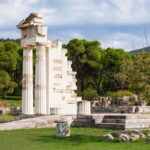
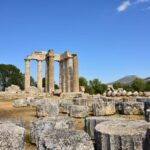
The detailed route ends with a visit to the ancient theater of Epidaurus on the way back to Athens. This is a smart final stop because the theater offers a clear, memorable sight after a day of walls, columns, and scattered ruins.
Epidaurus is famous for its theater and its remarkable acoustics. The site is connected with the sanctuary of Asclepius, the ancient Greek god of healing, although the supplied tour details focus specifically on the theater visit.
You can expect another archaeological stop with walking and outdoor exposure. The tour operates rain or shine, so comfortable clothing and shoes are sensible in every season. Since the itinerary is long, you may also feel tired by this point. That is not a flaw in Epidaurus itself, but it is part of the practical cost of fitting so much into ten hours.
Arachova and the Karakolithos Monument
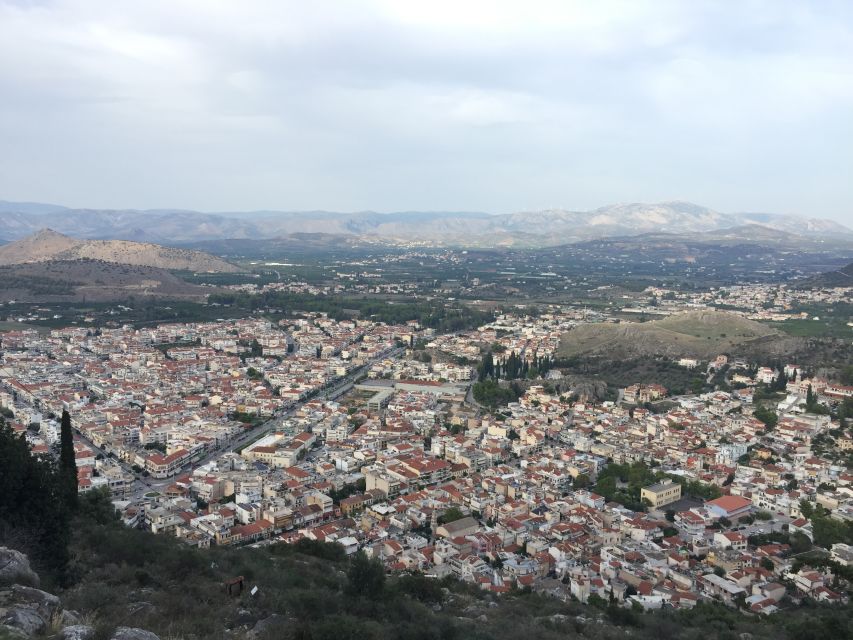
Arachova and the Karakolithos Monument are named among the tour highlights, but the detailed route provided for the day lists Corinth, Mycenae, Nafplio, and Epidaurus. Because of that difference, I would confirm with Timeless Athens Tours whether Arachova and Karakolithos are included on your specific departure or represent additional route highlights.
Arachova is described as a fairytale village. If it is included, it would add a mountain village setting to a day otherwise focused on ancient and coastal sites.
The Karakolithos Monument commemorates 134 men from Karakolithos who were executed by the Nazis in 1944. This is a sobering modern memorial, and it gives the route a different kind of historical weight. It is not interchangeable with an ancient ruin. If this memorial matters to you, clarify the timing and exact route before booking, since the main description of the day does not explain how much time is spent there.
What the driver adds to the day
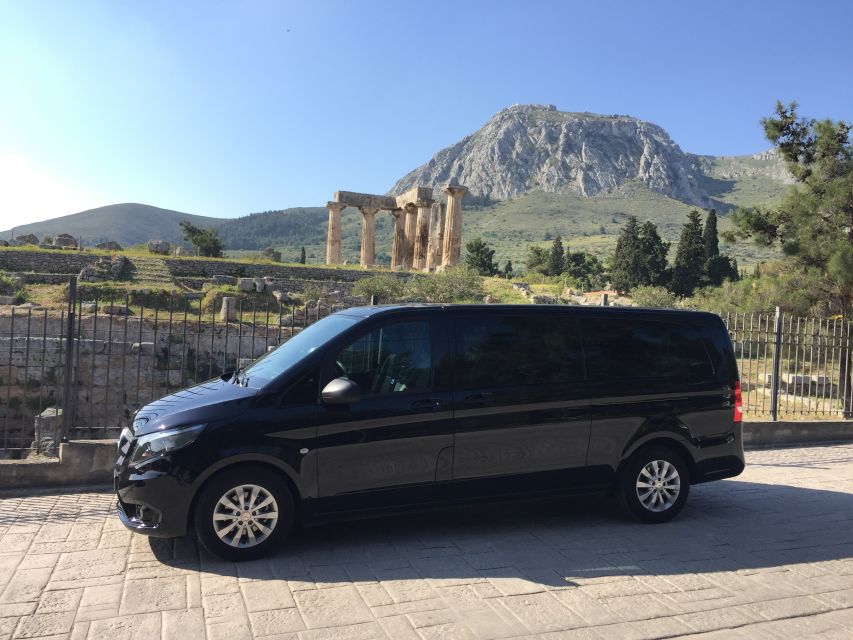
Your driver speaks English and is described as experienced, friendly, and familiar with Greek history, mythology, and culture. That makes the ride more than a simple transfer between ticket gates.
One driver named in the available information is Markos. Mike from the United States gave him especially strong praise, noting his traditional Greek upbringing, his family connection to those traditions, and the extra effort he made to share his understanding. Another verified booking described the trip as excellent and the driver as excellent.
Those comments point to the tour’s strongest human element. You are not booking a formal lecture service, and the driver is not automatically a licensed guide for the monuments. But you can expect conversation and background during the road sections, along with practical help during a long day.
I would treat the driver’s role as a major benefit if you enjoy asking questions and learning informally. If you want detailed site-by-site interpretation, arrange a licensed guide in advance.
Timing, comfort, and what to bring
The tour lasts ten hours, with pickup and return at your accommodation in Athens. That convenience saves you the work of finding a meeting point, but it does not make the day short. You will spend a substantial part of the experience in the vehicle.
Bring comfortable shoes and comfortable clothes. That advice is especially important at Corinth, Mycenae, and Epidaurus, where outdoor walking is part of the experience.
The tour does not allow pets or smoking. It runs rain or shine, so you should be ready for changing weather rather than assuming ideal conditions. Mobility is the key concern. The tour is specifically not suitable for people with mobility impairments, and the combination of several historic sites makes that restriction practical rather than merely formal.
Meals and drinks are not included. You should plan for that expense, particularly because a full day can make a forgotten lunch inconvenient. The supplied details do not specify a restaurant or meal stop, so ask the driver or provider how much time is normally available for food in Nafplio or elsewhere.
What your $695 includes, and what it does not
The $695 group price covers up to three people. Included are the private English-speaking driver, fuel, tolls, parking, baggage charges, and pickup and drop-off at your Athens accommodation.
Not included are entrance fees, food, drinks, and a licensed guide inside the historic monuments. These exclusions can affect the final budget, especially if all three people want to enter every site.
I see good value here when convenience matters. You avoid renting a car, navigating unfamiliar roads, paying tolls and parking charges yourself, and coordinating several separate day trips. A private vehicle also lets your group travel together from Athens and return there the same day.
The value is weaker if you are a solo visitor or if your main goal is a slow, deeply guided archaeological study. In that case, a smaller number of sites with more time at each one may serve you better.
Who should book this tour?
I would choose this tour if you have one free day from Athens and want a broad introduction to the Peloponnese. It fits people who enjoy ruins, Greek mythology, scenic driving, and a small-town stop, especially when three people can share the cost.
It also suits families or friends who prefer a private vehicle to a large group. The driver’s informal knowledge can make the road time more interesting, and pickup at your accommodation keeps the start and finish simple.
I would hesitate if you have limited mobility, dislike long road days, or want extensive free time in Nafplio. I would also confirm the status of Arachova and the Karakolithos Monument before paying, since those highlights are not clearly included in the detailed route.
Free cancellation is available up to 24 hours before the tour for a full refund, and you can reserve now and pay later. Those terms help if your Athens plans are still shifting.
FAQ
How long does the Argolis tour from Athens last?
The tour lasts 10 hours, including travel between Athens and the Peloponnese sites.
Is hotel pickup included?
Yes. Pickup and drop-off at your accommodation in Athens are included.
Is this a private tour?
Yes. It is a private group experience for up to three people.
How much does the tour cost?
The price is $695 per group of up to three people.
What language does the driver speak?
The driver speaks English.
Is a licensed guide included inside the monuments?
No. The driver provides tour and history services, but a licensed guide for the interiors of the historical monuments is not included.
Are entrance fees included?
No. Entrance fees must be paid separately.
Are meals and drinks included?
No. Food and drinks are not included in the tour price.
What places are included in the detailed route?
The detailed route includes the Corinth Canal, ancient Corinth, Mycenae, Nafplio, and the ancient theater of Epidaurus.
Is the tour suitable for people with mobility impairments?
No. The tour is not recommended for people with mobility impairments because the sites require walking and may have uneven surfaces.
What happens if it rains?
The tour operates rain or shine. Bring suitable clothing for the weather and wear comfortable shoes.
Can I cancel for a full refund?
Yes. You can cancel up to 24 hours in advance for a full refund. You can also reserve now and pay later.
Should you book it?
Book this tour if you want to see several major Peloponnese sights in one private day and can accept a fast pace. The strongest reasons are the efficient route, included transport costs, Athens pickup, and the chance to learn from an English-speaking driver such as Markos.
Before booking, confirm the planned time in Nafplio and whether Arachova and the Karakolithos Monument are part of your exact route. If you are traveling with two companions, enjoy outdoor archaeology, and value convenience over a relaxed schedule, the $695 group rate can make good sense.