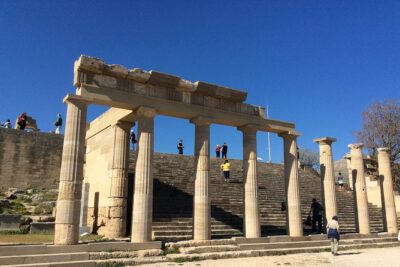
REVIEW · ATHENS
Athens: Acropolis and Mythology Highlights Small Group Tour
Book on GetYourGuide →Operated by Alternative Athens · Bookable on GetYourGuide
Myths turn into something you can point at. This small-group Athens walk links Greek stories to the exact buildings you’re standing in, led by licensed guides who know how to make stone feel human. I especially love the myth-and-architecture connection and the small group pace. A possible drawback: you’ll be on your feet for a few hours, and the sites can get crowded, so comfortable shoes matter.
Meet under Hadrian’s Gate, then you move through Athens like it’s a map, not a checklist. Guides in this series often bring strong storytelling energy, and I’ve seen names like Angelica, Irene, Stellios, and Antonia come up for clear explanations and great pacing. If you’re expecting a quiet museum visit, this tour is more walk-and-talk than slow-and-stare.
In This Review
- Key things I’d bet on in this tour
- Why Athens’ myths feel more real here
- Meeting Under Hadrian’s Gate: easy start, quick orientation
- Temple of Olympian Zeus: seeing the scale before the climb
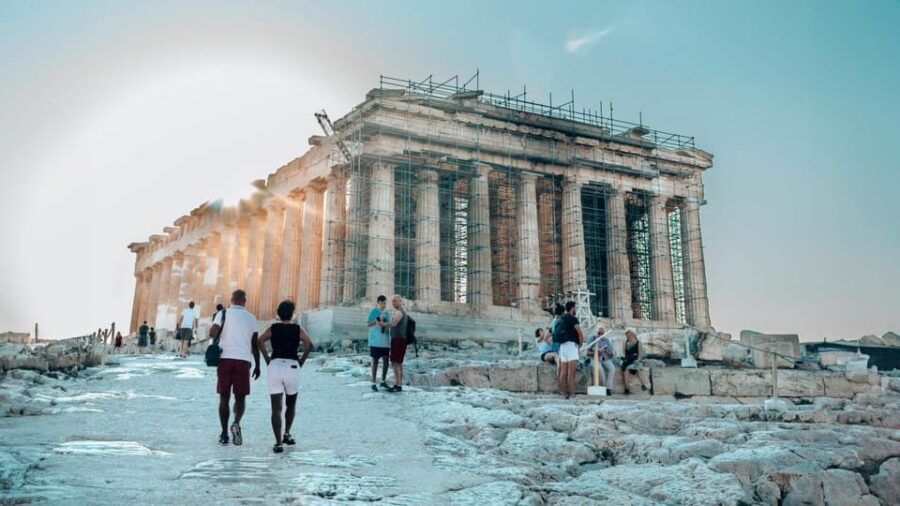
- Acropolis of Athens: Parthenon, Nike, and Erechtheion explained
- The Parthenon moment
- Temple of Athena Nike and the mood shift
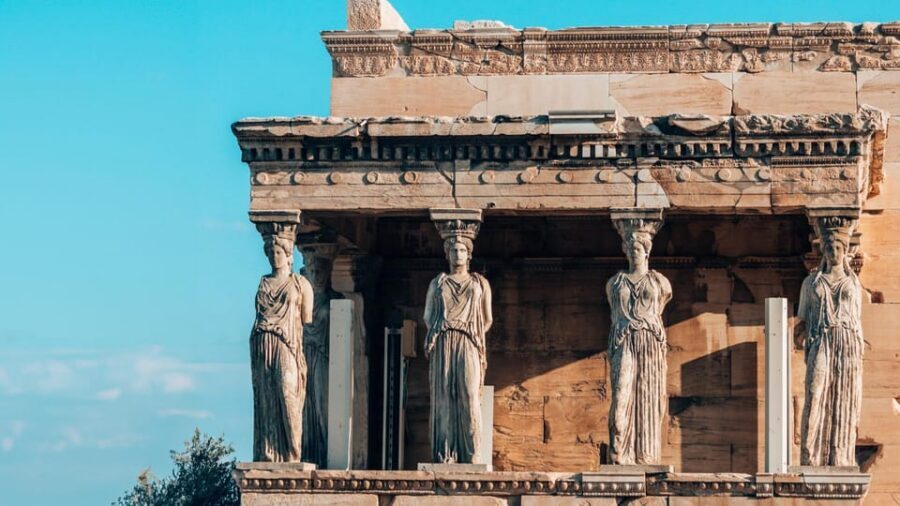
- Erechtheion: when ruins still tell a story
- Theatre of Dionysus: Athens as a city that staged ideas
- Ancient Agora of Athens: the everyday center behind the myths
- Temple of Hephaestus: a strong close to the walking loop
- Small group pace: why it matters at the Acropolis
- Price and value: $53, but what you actually get
- Tickets, timing, and what to bring for a smooth day
- Who should book this Athens Acropolis and Mythology Highlight tour
- Should you book it? My honest take
- FAQ
- Where is the meeting point for the tour?
- How long does the tour last?
- Is this a small group tour?
- What sites are included on the tour?
- Are Acropolis and Ancient Agora tickets included?
- Do you skip the ticket line?
- What languages are offered for the live guide?
- What do I need to bring?
- Can I bring a stroller, pets, or a backpack?
- Is admission free for some ages?
- What is the cancellation policy?
Key things I’d bet on in this tour
- Myths tied to specific structures so you don’t forget what you just saw
- Acropolis walking focus with a licensed guide and guided time at the top
- Ancient Agora + Temple of Hephaestus to balance the skyline views
- Small group format that keeps you from fighting for attention
- Hearing support in many groups, with headsets mentioned in recent experiences
- Early start option that can help you dodge the worst crush, especially in peak seasons
Why Athens’ myths feel more real here

Athens is one of those places where you can stare at ruins all day and still feel like you’re missing the point. This tour fixes that fast. Instead of treating mythology like separate reading material, it ties stories to the architecture and civic life that created them—so you understand why the Greeks built these sites where they did, and what they meant to the people living around them.
The guides really lean into translation between worlds. You’ll hear how gods and heroes show up in names, religious roles, and public spaces, and you’ll connect those meanings back to what you see on the ground. In a good guided format, that’s the difference between seeing a temple and understanding why a temple mattered.
You can also read our reviews of more tours and experiences in Athens.


Meeting Under Hadrian’s Gate: easy start, quick orientation
You meet under the Arch of Hadrian next to the Acropolis, at Leof. Vasilisis Amalias 50. The closest metro stop is Acropolis, then it’s about a 5-minute walk. Your guide is marked with a sign that says Alternative Athens.
I like this meeting point because you’re already at the edge of the Acropolis story. You’re not starting in some distant corner of Athens and then slowly traveling your way into the “real stuff.” You’re positioned to start with context, then climb and explore with momentum.
Practical note: this is a walking tour. Plan to arrive a few minutes early so you can get the group together without stress.
Temple of Olympian Zeus: seeing the scale before the climb
The first major stop is Temple of Olympian Zeus—but you’ll visit it from the outside. Even when parts are in ruins, the sheer idea of it lands quickly. This is the kind of monument that helps you understand Athens as a city that expressed power through stone.
A good guide uses the outside-view time well. You’ll get an explanation that helps you place the temple in the larger “why Athens mattered” story—why it grew into the center of its era, and how its identity was shaped by religion, politics, and myth.
If you’re short on time in Athens, this type of staged start is a win: you build context first, then the Acropolis stops hit harder.
Acropolis of Athens: Parthenon, Nike, and Erechtheion explained

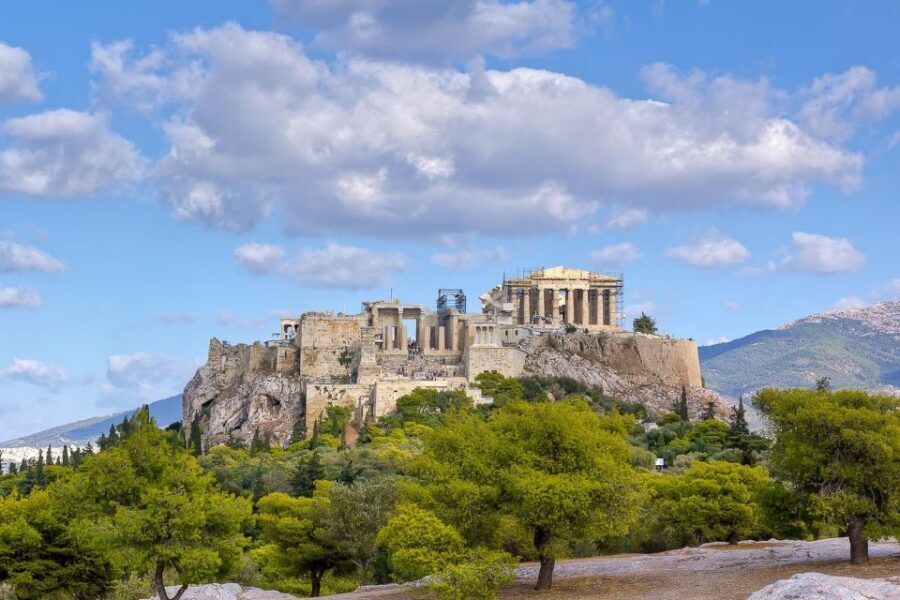
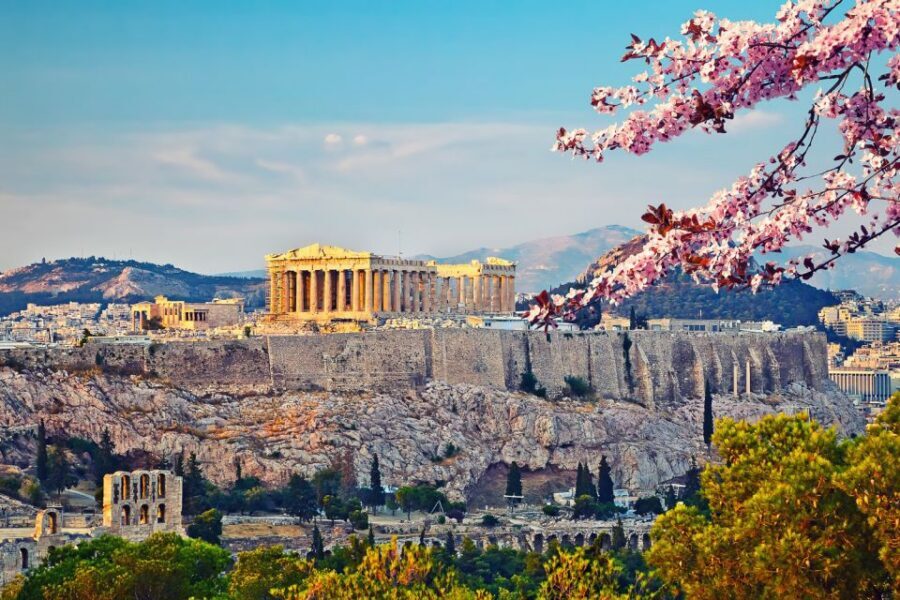
This is the star of the show, and the tour doesn’t treat it like a one-note photo stop. You get a walking segment to move through the hill area, then a longer guided visit on the Acropolis itself.
You’ll see key highlights including:
- Parthenon
- Temple of Athena Nike
- Erechtheion
- Ruins connected with Erechtheion-related areas (the tour also references smaller sacred spaces)
What makes this segment work is the way mythology is tied to the design and the meaning. Instead of only hearing names of gods, you learn how roles of deities connect to Athenian beliefs and civic identity. Guides often make you notice details: which elements signal religious devotion, how the buildings served public worship, and how these sites were meant to represent Athens’ ideals.
The Parthenon moment
The Parthenon can feel overwhelming without guidance, because it’s both huge and layered. With a guide, you don’t just see a masterpiece—you understand the “why” behind it. Expect a mix of architecture explanation and story connections that help you remember the site as a whole, not as isolated parts.
If you’re the type who likes to ask questions, this is where the tour format pays off: you can stop, look, and get answers while the meaning is still fresh.


Temple of Athena Nike and the mood shift
Temple of Athena Nike adds a different flavor. It’s tied to the idea of victory and divine favor, and your guide can connect that to how Athenians imagined success and protection. This helps the Acropolis feel like more than one big temple complex—it becomes a whole religious-and-identity system on one hill.
Erechtheion: when ruins still tell a story
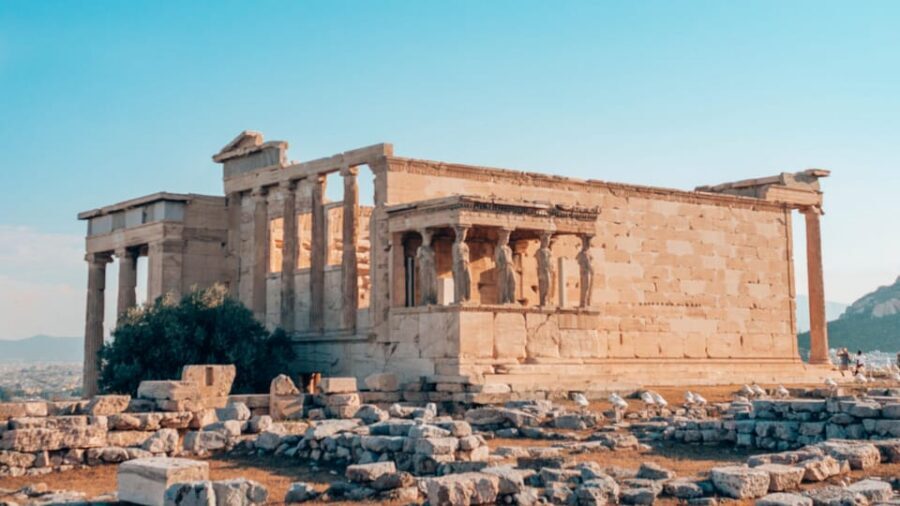
Erechtheion is a special stop because it’s dramatic in its remaining form. Guides often explain how sacred space works here, and how the mythology helps explain why this area held significance. The tour’s focus on story meaning is especially helpful with Erechtheion, because the ruins need interpretation.
Theatre of Dionysus: Athens as a city that staged ideas
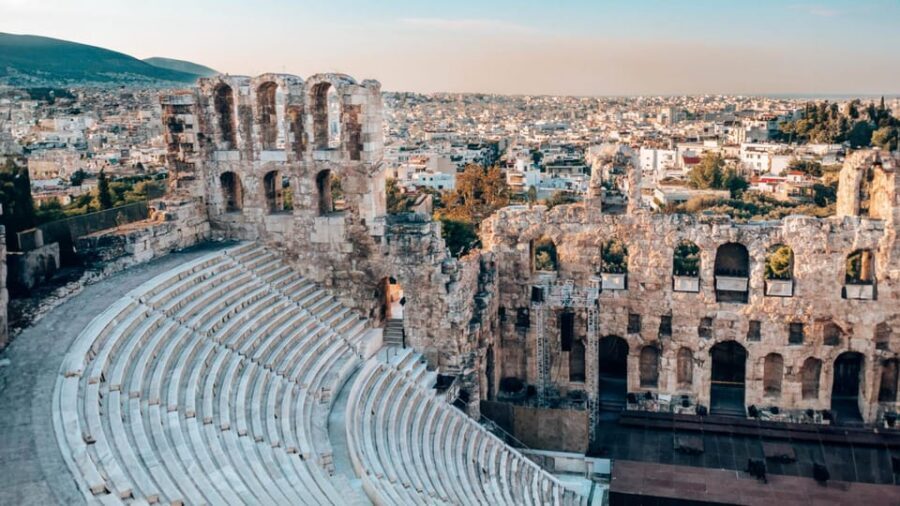
The tour also includes the Theater of Dionysus area (sometimes described as Eleuthereus depending on how the guide frames it). This matters because it broadens Athens beyond religion into public culture.
Greek theater wasn’t entertainment only. It was civic storytelling—stories, values, politics, and moral questions played out in a shared public setting. When your guide connects that to mythology and civic life, you start to see why Athens wasn’t just a city of temples. It was a city of ideas and performances too.
If you’re a fan of Percy Jackson or modern myth retellings, this is one of the most satisfying bridges between pop culture and the ancient world. You’ll feel how the stories were “lived,” not only read.
Ancient Agora of Athens: the everyday center behind the myths
After the Acropolis work, you move into the Ancient Agora of Athens area. This portion is a walk and exploration time, and it changes the rhythm. From temples high on the hill, you step into the civic heart where Athens’ public life happened.
What you gain here is balance. If the Acropolis is about divine representation, the Agora is about humans organizing daily society around shared beliefs, law, and community. Your guide’s myth-to-fact storytelling helps you connect sacred ideas to civic behavior.
You’ll also visit the Sanctuary of Asclepius area (as referenced in the tour descriptions). That’s the kind of site that makes the city feel practical: religion wasn’t just about big ceremonies. It touched health, healing beliefs, and everyday needs.
Temple of Hephaestus: a strong close to the walking loop
A highlight included in this experience is the Temple of Hephaestus, with guided time. Hephaestus is a god associated with craft and working life, which makes this temple a fitting ending mood. Your guide can connect the myth side to the reality of what a craft-centered culture represented.
Practically, it’s a good wrap-up stop because it helps you consolidate the tour: you’ve seen the skyline monuments and the civic spaces, and now you’re at a site that ties together myth, identity, and how Athenians valued skills.
Small group pace: why it matters at the Acropolis
The biggest practical advantage of this tour is that it’s built for a small group. That tends to mean less waiting, fewer “stand wherever you can” moments, and more chance to hear the guide without sprinting to the front.
Recent experiences also mention headsets so everyone can hear clearly. Hearing support is a big deal at the Acropolis, because wind, footsteps, and crowds can swallow normal voice volume fast.
The guides are also known for adjusting pace in real conditions. Names like Antonia and Alex show up tied to finding shaded stops, taking water breaks, and keeping the group moving without turning it into a race. If you’re visiting in hot months, that kind of pacing makes the difference between a fun morning and a tiring slog.
Price and value: $53, but what you actually get

The listed price is $53 per person, and the real value depends on what you select for tickets.
What’s included:
- Walking tour format
- Certified guide
- Ancient Athens city map
- Acropolis tickets or Acropolis & Ancient Agora entry tickets if that option is selected
- Skip the ticket line (when tickets are handled through the tour)
Not included:
- Entrance fees unless you select the ticket option (the company notes they can prepurchase if you let them know)
- Food and drinks
So here’s how I’d judge the deal: you’re paying not just for access, but for explanation at the exact spots where context matters. If you already know Greek mythology and can self-navigate easily, you might feel you could do it on your own. But if you want the myth meanings translated into what you’re physically looking at, a guided format tends to be worth it—especially in the Acropolis crowds where an organized entry and line-skip help.
If you qualify for free admission (EU under 25 or non-EU under 18), that can further increase the value of the guided time, since you’re paying mainly for the guide’s work.
Tickets, timing, and what to bring for a smooth day
Bring:
- Passport or ID card
- Comfortable shoes
- Comfortable clothes
Not allowed:
- Baby strollers
- Pets (assistance dogs allowed)
- Backpacks
Two practical tips that help most people:
- Wear shoes you can stand in for hours. The Acropolis surfaces are not forgiving.
- Keep your bag rules in mind. If you’re traveling with a larger backpack, plan ahead so you’re not scrambling on arrival.
Who should book this Athens Acropolis and Mythology Highlight tour
This is a great fit if you want:
- Mythology that connects to real places, not just generic storytelling
- A guided Acropolis that explains what you’re seeing (and why it matters)
- A balanced sweep that also includes the Ancient Agora
- A small group experience where you’re more likely to hear the guide and ask questions
It’s especially satisfying if you’re into:
- Greek mythology as a hobby or as a curiosity
- Myth-based pop culture like Percy Jackson (the stories become easier to map onto the landscape)
If you’re the type who prefers total freedom—wander at your own speed, sit and read, no talking—then you might not love the structure. But if you want “straight to the point” meaning while still seeing multiple iconic sites, this tour is built for that.
Should you book it? My honest take
I’d book it if you want to leave Athens with names, meanings, and story connections that actually stick. The mix of Acropolis highlights plus the Agora gives you more than a view—you get a sense of how Athens worked as a society and how myth shaped civic identity.
I would think twice only if you know you hate guided walking tours, or if you’re expecting a relaxed, slow pace with minimal crowd movement. Also, if you’re relying on a backpack or bulky bag, the no-backpack rule can be a dealbreaker unless you travel light.
FAQ
Where is the meeting point for the tour?
You meet under the Arch of Hadrian (Hadrian’s Gate), on Leof. Vasilisis Amalias 50. The closest metro station is ACROPOLIS, and you’ll walk about 5 minutes from there. Your guide will be waiting with a sign that says Alternative Athens.
How long does the tour last?
The tour duration is listed as 2 to 4 hours, depending on the time slot you choose.
Is this a small group tour?
Yes, it’s described as a small group tour for an optimal experience.
What sites are included on the tour?
The tour covers key Athens landmarks including the exterior of the Temple of Olympian Zeus, the Acropolis (including stops such as Parthenon and Temple of Athena Nike), Erechtheion, and the Ancient Agora area. It also includes the Temple of Hephaestus. Other referenced spots include the Theater of Dionysus and Sanctuary of Asclepius.
Are Acropolis and Ancient Agora tickets included?
Acropolis tickets or Acropolis & Ancient Agora entry tickets are included if you choose the option during booking. Entrance fees are otherwise noted as not included, though the company says they can help prepurchase tickets if you let them know.
Do you skip the ticket line?
Yes, the tour notes that you can skip the ticket line.
What languages are offered for the live guide?
The tour is available with live guides in English and French.
What do I need to bring?
You should bring a passport or ID card, plus comfortable shoes and comfortable clothes.
Can I bring a stroller, pets, or a backpack?
No strollers are allowed, pets are not allowed (assistance dogs are allowed), and backpacks are not allowed at the Acropolis and should not be taken on the tour.
Is admission free for some ages?
Access to the Acropolis & Ancient Agora is free for European Union citizens under 25 years and non-EU citizens under 18 years, with presentation of a valid ID or passport.
What is the cancellation policy?
The tour offers free cancellation up to 24 hours in advance for a full refund.