REVIEW · ATHENS
Acropolis & Ancient Agora Guided tour included all Entrances
Book on GetYourGuide →Operated by Athens Walks Tour Company · Bookable on GetYourGuide
Athens makes more sense with a good guide. This Acropolis & Ancient Agora tour stitches the big monuments together into one clear story, from the South Slopes to the civic heart of the city. You get a licensed archaeologist or historian, plus wireless headsets, so you can actually hear the explanations without yelling over crowds.
Two things I like a lot: first, the all-entrances access and skip-the-line setup at both the Acropolis and the Ancient Agora. Second, the guide-first format, where the history lands as you walk, not as a lecture you survive. English live guiding keeps the flow understandable, and the wireless audio helps even when it is hot and busy.
One thing to consider: this is a walking tour with a moderate climb on the Acropolis slopes. If you hate steep grades, or you’re sensitive to heat, plan your pace, bring water, and wear proper shoes.
In This Review
- Key highlights to know before you go
- Why this Acropolis and Agora pairing works so well
- Meeting at Porinou 5 (and finding the start fast)
- Theatre of Dionysus and Odeon of Herodes Atticus: Athens before the temples
- Temple of Athena Nike and the Propylaea gateway moment
- Erechtheion and the Caryatids: when details carry the meaning
- Parthenon time: democracy, design, and the story behind the view
- Acropolis break time: use it for shade, water, and one last scan
- Ancient Agora: the civic engine of Athens
- Price and value: what you actually get for $126
- Who this tour suits best (and who should plan another option)
- Practical tips that make the day easier on your feet
- Should you book this Acropolis and Ancient Agora tour?
- FAQ
- How long is the Acropolis & Ancient Agora guided tour?
- Where do I meet the guide?
- Does the price include entrance tickets?
- Is skip-the-line access included?
- Is the tour suitable for wheelchair users or people with mobility impairments?
- What should I bring, and can I use flash photography?
Key highlights to know before you go
- All entry tickets included: Acropolis + Ancient Agora tickets are covered in your booking
- Skip-the-line access: separate entrance routing saves time and stress
- South Slopes route: a scenic, less-crowded approach with city views along the way
- Icon stops with meaning: Parthenon, Erechtheion (Caryatids), and Athena Nike explained in context
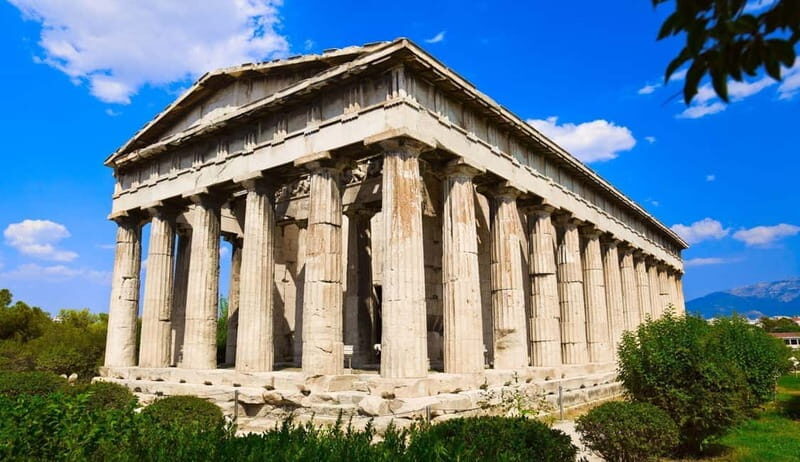
- Agora core landmarks: Stoa of Attalos (museum) and Temple of Hephaestus in one flowing route
- Wireless hearing headsets: you hear your guide clearly in noisy sections
Why this Acropolis and Agora pairing works so well
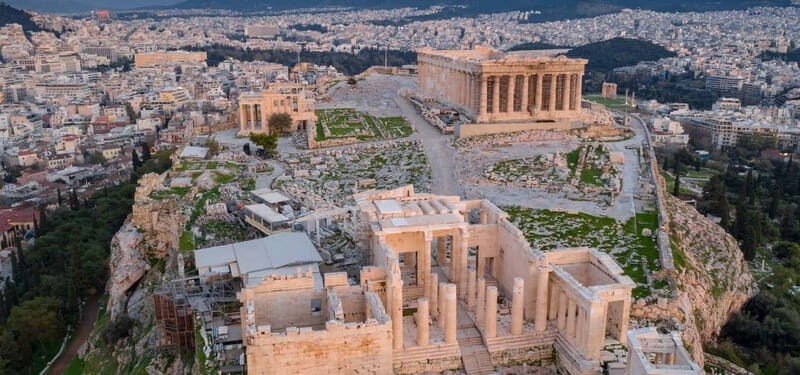
The Acropolis and the Ancient Agora can feel like two separate worlds. With a guide, they start to click as one connected Athens: sacred space above, civic space below, all tied to how citizens lived, argued, worshiped, and voted.
This tour is timed for that connection. In about 4 hours, you cover the headline sights without turning your afternoon into a logistics puzzle. The route also focuses on the parts that help you understand what you are seeing, not just where to stand for photos.
The best part is the pacing. Instead of sprinting, you get short guided moments at key stops, then enough time to look closely at details like temple alignment, sculptural features, and the layout of public spaces.
You can also read our reviews of more guided tours in Athens


Meeting at Porinou 5 (and finding the start fast)
You meet at the Office of Athens Walks at Porinou 5, a central spot near public transit. The location is handy because it is only about a 2-minute walk from the Acropolis Metro Station, so you are not stuck crossing the city from a far hotel.
Plan to arrive about 15 minutes early. That buffer matters because the start is where the guide sets expectations, explains the route, and helps you understand the flow for the next few hours. If you show up late, you lose that first context, and the day feels more random.
Once you’re in the group, you’ll get wireless hearing headsets. This is a big deal at Athens sites where the noise level changes constantly, from open viewpoints to tight ruins.
Theatre of Dionysus and Odeon of Herodes Atticus: Athens before the temples
The tour starts with the Theatre of Dionysus. This is not just an old building you pass by. It’s tied to the roots of Greek theatre and the way performances shaped civic and religious life. With a guided stop here (around 15 minutes), the Acropolis story stops feeling like pure architecture and starts feeling like culture.
Then you move on via a walk toward the Odeon of Herodes Atticus (about 15 minutes). Even when you do not go inside, you can feel the scale and purpose of these performance spaces. It’s a useful warm-up because it reminds you that Athens was not only temples and politics. It was also drama, music, and public gathering.
This early section also helps you physically prepare. You start with manageable distances, then the route tightens as you head toward the Acropolis proper.
Temple of Athena Nike and the Propylaea gateway moment
Next comes Temple of Athena Nike. It is a small temple compared to the Parthenon, but the point is exactly that: it is detailed, specific, and symbol-heavy. The short walk here (about 5 minutes) is designed for quick impact before you go deeper into the main complex.
From there, you reach Propylaea, the grand gateway into the Acropolis (about 10 minutes of guided time). This stop matters because gateways shape your first impression of sacred spaces. You understand that Athens did not just build monuments. It controlled movement, created thresholds, and framed what was important.
If you have ever felt confused on the Acropolis—where to look, what order to interpret things—Propylaea is the point where the “why” starts clicking.
Erechtheion and the Caryatids: when details carry the meaning
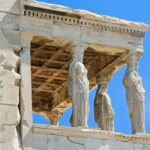
The Erechtheion is one of the most memorable stops on the tour. You get guided time here (around 15 minutes), with special attention on the temple’s unique architecture and the famous Caryatids.
What I love about this part is that it forces you to look beyond the headline silhouette. The Caryatids are not just impressive statues. They help you understand how sacred spaces expressed power, devotion, and artistic skill at a human scale.
Erechtheion also makes the transition from “I see a temple” to “I understand what kind of place this was.” Your guide connects the physical design to ancient religious and cultural life, so the stones feel less abstract.
- All Day Cruise -3 Islands to Agistri,Moni, Aegina with lunch and drinks included
★ 5.0 · 4,958 reviews

Parthenon time: democracy, design, and the story behind the view
Then comes the big one: the Parthenon, with about 30 minutes guided. The Parthenon is already iconic, but without context it can turn into a checklist stop. With a guide, you learn what its design tried to express and why it became a lasting symbol of Greek culture and democracy.
You’ll also get help noticing how the temple sits within the overall Acropolis layout. That matters because the Parthenon is not just a standalone structure. It’s part of a larger sacred plan, with viewpoints and alignments that guide how you experience the hill.
Photo lovers will appreciate this segment for the same reason. It’s not just where the best pictures are. It’s where the big picture starts to form—literally, as the city opens up behind and around you.
Acropolis break time: use it for shade, water, and one last scan
After the main temple work, there is a 15-minute break time. This is smart timing. By this point, you’ve climbed, concentrated, and listened for a while. The break is your chance to reset.
Use it for:
- Water and a quick hat adjustment
- A slower walk to take in how high the viewpoint feels
- One last look at features you might have missed during the guided focus
It can also be a good moment to mentally summarize. If you keep only three ideas, aim for: sacred space, civic symbolism, and how the site was designed for a specific kind of experience.
If it is hot (Athens often is), this is where your comfort depends most on what you brought—so don’t skip the basics like sunscreen and a water bottle.
Ancient Agora: the civic engine of Athens
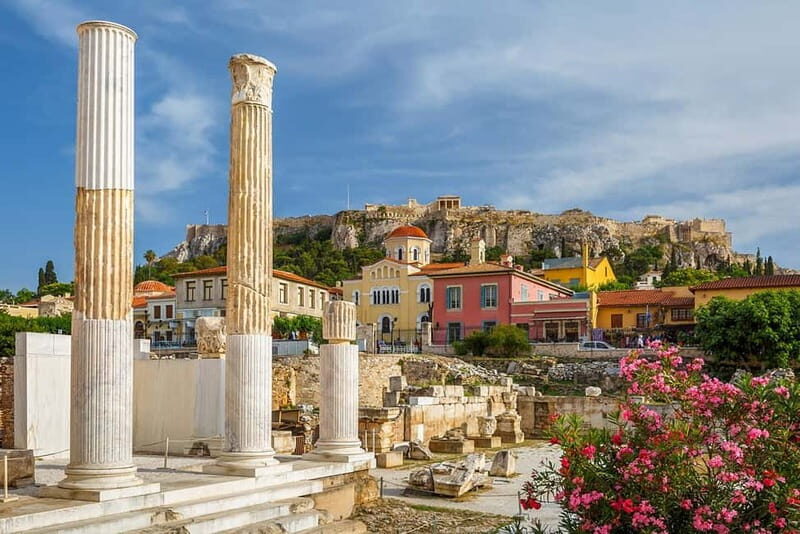
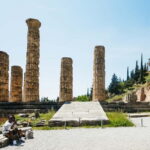
Once the Acropolis story sinks back down to street level, the mood changes. The Ancient Agora is where public life happened: politics, conversation, business, and philosophy. You get guided time here (about 30 minutes), and the focus stays on how citizens used the space.
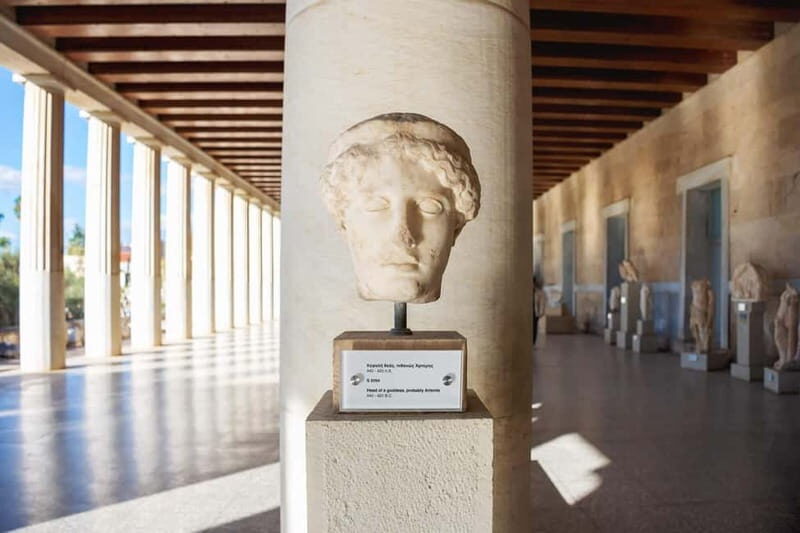
One of the standout buildings is the Stoa of Attalos. It is one of the better-preserved structures in the Agora area, and it now houses a museum where you can see artifacts from the site. Even if you do not have time to linger deeply, the stop is worth it because it links the ruins you are standing in with what archaeologists found there.
This section also tends to be the most relatable for modern visitors. The Agora is essentially a public forum and meeting grid, just with temples, markets, and political debate layered in.
The Temple of Hephaestus also enters the picture here. It is one of the best-preserved ancient temples, and the tour includes time as you head toward it (about 10 minutes of walking). It’s dedicated to the god of craftsmanship, which is a great reminder that Athens valued skilled work as much as politics.
Price and value: what you actually get for $126
At $126 per person for a roughly 4-hour guided experience, the value is mostly about time and friction.
First, you get all entry tickets included. That means you are not doing mental math while you’re standing near ticket counters, and you’re not surprised later by add-on costs. Second, you get skip-the-line access with separate entrances for both the Acropolis and the Ancient Agora. That time savings can be the difference between enjoying the day and feeling trapped in a queue.
Third, the wireless hearing headsets are a practical upgrade. On these sites, audio quality directly affects your understanding. If you can hear the guide clearly, you walk smarter because you know what to look for.
So the deal is not only about seeing the famous monuments. It is about getting a guided route that helps you interpret them without wasting hours.
Who this tour suits best (and who should plan another option)
This is ideal if you want the classic Athens highlights in one half-day and you like learning as you walk. It is also a solid choice for people who get overwhelmed by too many facts; the guide stops at the right moments so you can absorb details without feeling lost.
English speaking groups can be comfortable here too because the guiding is live and the headset system keeps the narration consistent.
But there are clear limits:
- Not suitable for children under 6
- Not suitable for wheelchair users or people with mobility impairments
- Expect moderate walking and climbing
If you are traveling with someone who struggles on steep routes, you’ll need to rethink the plan.
Practical tips that make the day easier on your feet
Even the best guide cannot change the basics of Athens outdoors. Come ready.
Bring:
- Comfortable shoes
- Hat
- Sunscreen
- Camera
- Water bottle
Know the rules:
- Flash photography is not allowed
- Wear clothes that handle heat and sun
Timing matters:
- Arrive at the meeting point 15 minutes early so the group can start smoothly
One more smart move: keep your water accessible. You will cover multiple sites in a short window, and the break time is brief.
Should you book this Acropolis and Ancient Agora tour?
I’d book it if you want an efficient route with all entrances and tickets included, plus a licensed guide who can connect what you see from the Parthenon down to the Agora. The combination of skip-the-line access and wireless headsets turns a popular itinerary into something you can actually enjoy instead of just survive.
I would skip it if you hate walking on hills, need wheelchair access, or you prefer to wander at your own pace for longer than four hours. In that case, a self-guided route might fit better.
If you can handle moderate walking and you want your Athens day to feel understandable instead of chaotic, this is a strong choice.
FAQ
How long is the Acropolis & Ancient Agora guided tour?
It lasts about 4 hours.
Where do I meet the guide?
You meet at the Office of Athens Walks at Porinou 5, which is about a 2-minute walk from the Acropolis Metro Station.
Does the price include entrance tickets?
Yes. Acropolis and Ancient Agora entrance tickets are included, with no additional fees mentioned.
Is skip-the-line access included?
Yes. You bypass long queues at both the Acropolis and the Ancient Agora through a separate entrance.
Is the tour suitable for wheelchair users or people with mobility impairments?
No. It is not suitable for people with mobility impairments and wheelchair users.
What should I bring, and can I use flash photography?
Wear comfortable shoes and bring a hat, sunscreen, camera, and water. Flash photography is not allowed.