REVIEW · ATHENS
Athens: Acropolis, Parthenon & Acropolis Museum Guided Tour
Book on GetYourGuide →Operated by Athens Walks Tour Company · Bookable on GetYourGuide
Stone, stories, and a view worth the climb. What I love most is how this tour uses a licensed guide to turn the Acropolis into a clear timeline, with frequent stop-and-explain moments that make the steep walk feel manageable. I also like the optional Acropolis Museum visit, because it helps you read the sculptures instead of just staring at them. One watch-out: the $70 tour price does not include monument entry, so you’ll want to budget for Acropolis and museum tickets.
You’ll meet the Athens Walks team at Porinou Street, get hearing devices, and move as a small assigned group. Expect a 2–4 hour experience focused on the big names—Parthenon, Caryatids, Temple of Athena Nike—and the stories behind them, with plenty of time for questions and photos.
In This Review
- Key things you’ll notice on this Acropolis + Parthenon tour
- Entering the Acropolis world: what the guide adds (and why it matters)
- Meeting at Athens Walks and getting sorted fast
- Walking the Acropolis monuments: Parthenon, Propylaea, and Athena Nike
- Erechtheion and the Caryatids: when details become the story
- Theater of Dionysus and Herodes Atticus: drama in the middle of city life
- Temple of Asclepius and the healing side of Athens
- Acropolis Museum option: why it makes the outdoor ruins easier
- Price and value: what the $70 really buys you
- Timing choices and the Monday museum switch
- What to bring (so the climb doesn’t beat you)
- Who this tour fits best (and who might want to rethink it)
- Should you book this Acropolis, Parthenon & Museum tour?
- FAQ
- How long is the Acropolis, Parthenon & Acropolis Museum guided tour?
- What is included in the tour price?
- Do I need to buy entrance tickets for the Acropolis and the Acropolis Museum?
- Will I be able to skip the ticket line?
- Where do I meet the guide?
- What should I bring for the tour?
- What languages is the tour offered in?
- Is the tour wheelchair accessible?
- What happens if I book on a Monday?
Key things you’ll notice on this Acropolis + Parthenon tour
- Licensed guide storytelling that ties myth, art, and buildings into one meaning
- Hearing devices so you can actually catch the details at outdoor stops
- Major Acropolis landmarks including Parthenon, Erechtheion, and Temple of Athena Nike
- Erechtheion Caryatids + photos where you’ll understand what you’re looking at
- Acropolis Museum option to see sculptures in context before you forget the shapes
- Skip-the-ticket-line for smoother entry when crowds are thick
Entering the Acropolis world: what the guide adds (and why it matters)

The Acropolis is famous for a reason, but it can also feel like a lot of stone at once. This tour’s value is that you don’t just walk past famous monuments—you get the why behind them. A good guide will point out what each site was for and what it symbolized in ancient Athens, then connect it to the statues and architecture you see up close.
I especially like that the tour is built around key stops that people miss when they go on their own. For instance, you’re not only seeing the Parthenon from the outside—you’re also walking by places tied to ceremony, civic life, and drama, like the Theater of Dionysus. That makes the Acropolis feel like a living system, not a single photo spot.
You can also read our reviews of more guided tours in Athens



Meeting at Athens Walks and getting sorted fast
Plan to arrive early. You meet at the Athens Walks office at Porinou 5 (ground floor) in Athens Walks’ workspace, and you should show up at least 15 minutes before departure. The instructions also say only one person from your group needs to check in indoors, which helps families and small groups move quickly.
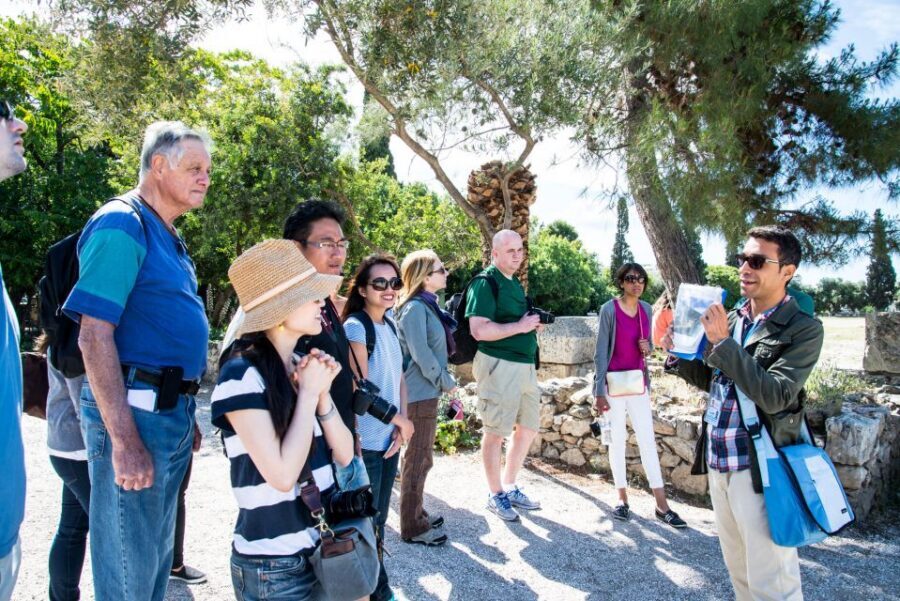
Once you check in, you’ll be assigned to a group and given hearing devices. That matters here because the Acropolis can be windy, loud, and crowded. Better audio means less guessing and more real understanding as the guide talks about gods, civic power, and how artists carved details thousands of years ago.
Walking the Acropolis monuments: Parthenon, Propylaea, and Athena Nike
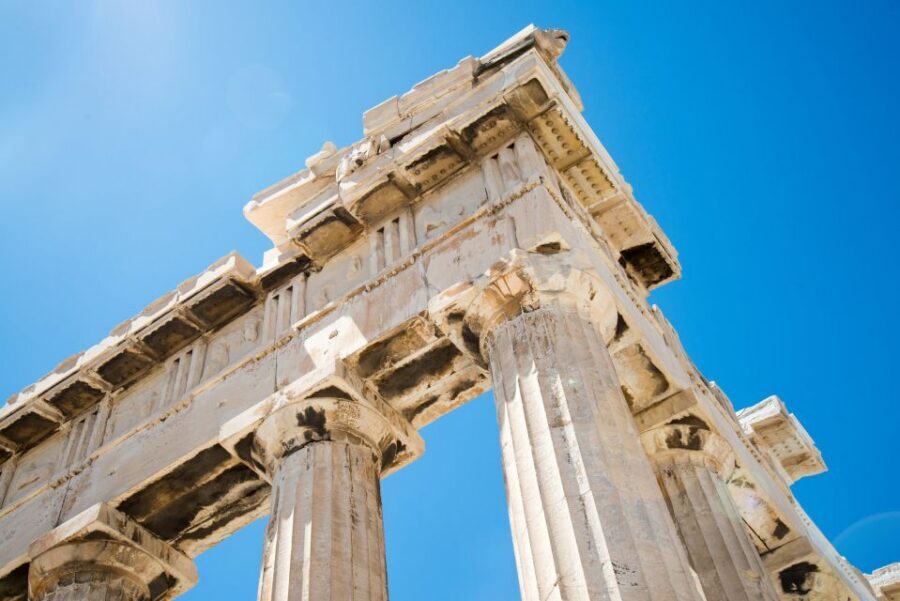
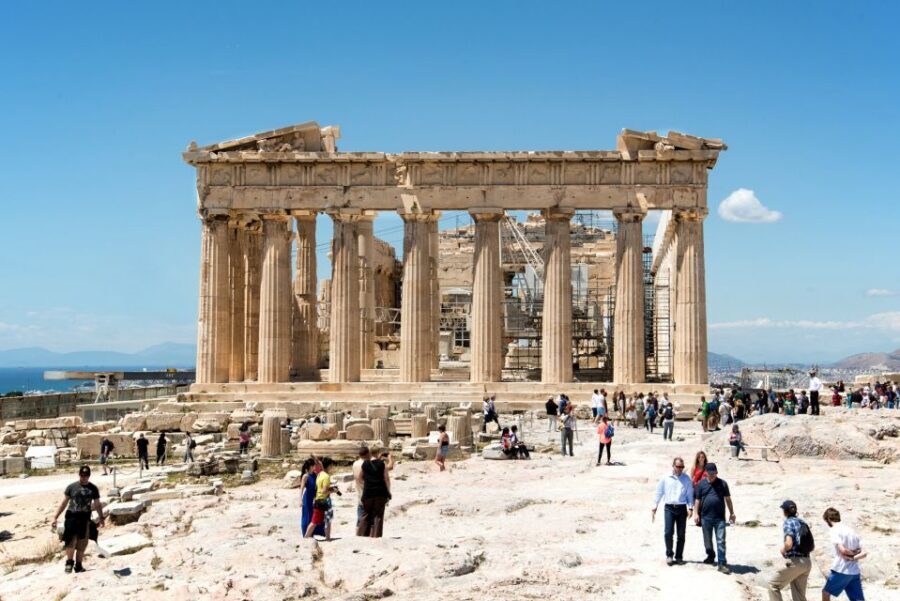
Most people think they know the Parthenon. The first moment you see it on site is still jaw-dropping, but the guide work makes it stick in your head. The tour is designed to walk you through the Acropolis as a sequence: the gateway structures, then the spaces connected to religious and civic life.
You’ll spend time around highlights like:
- The Parthenon (the crowning glory)
- The gateway of the Propylaea (the entry point that sets the tone)
- Temple of Athena Nike (Temple of Wingless Victory)
Here’s the practical benefit: when you understand that these buildings weren’t just decorations, your photos change. You start framing shots with the right “purpose” in mind—like seeing Temple of Athena Nike as a statement about victory and identity, not just a small temple perched near the route.
Also, expect the walk to feel steep and tiring if you’re not used to hills. Guides on this tour are known for taking breaks and stopping often to share facts without rushing you. That can be the difference between a stressed climb and a calm, steady pace that still feels fun.
Erechtheion and the Caryatids: when details become the story
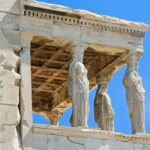
The Erechtheion is where the tour turns from big monuments into memorable details. The standout feature is the Caryatids—sculpted female figures used as architectural supports (they look simple until you realize how much work and symbolism is tied to them).
The guide will explain what you’re seeing in practical terms: why the porch matters, how the figures relate to the temple’s meaning, and what details the sculptors emphasized. When you can connect the visuals to the function, the carvings stop looking like random ornaments and start looking like deliberate choices.
This is also a strong photo stop because the Caryatids are hard to capture well if you don’t know where to look and how to frame the space. The tour experience is set up for people to pause, look closely, and get pictures that actually show the shapes you learned about.
Theater of Dionysus and Herodes Atticus: drama in the middle of city life
One of the most interesting parts of this tour is that it doesn’t treat the Acropolis as only religious architecture. You’ll also hear how classical Athens linked art and performance to civic life.
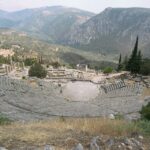
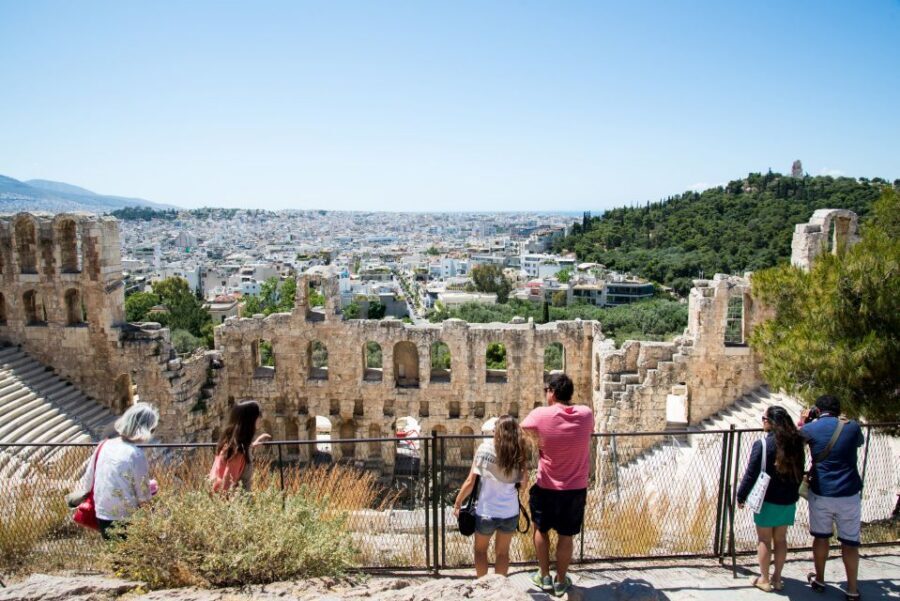
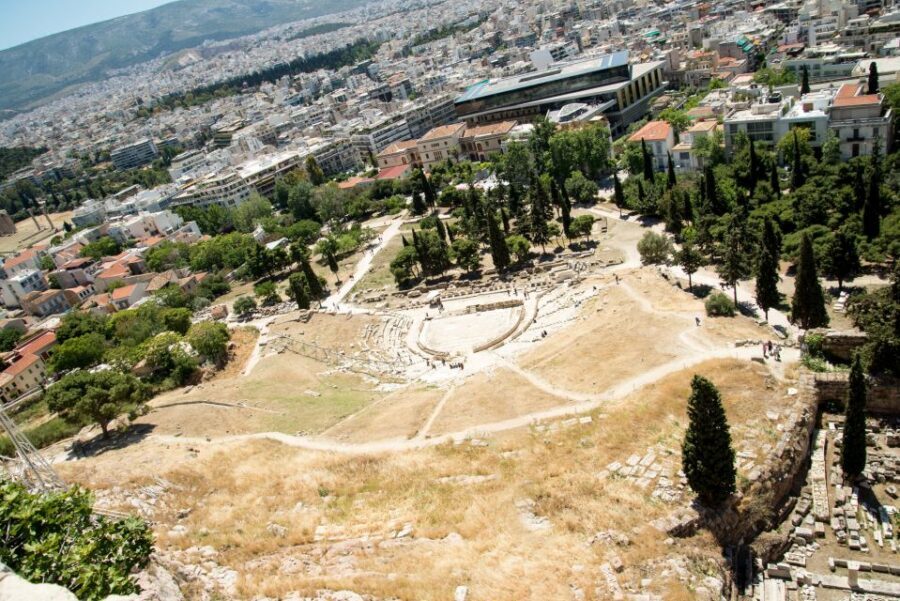
The tour includes time near the Theatre of Dionysus, often described as the first great stage of humanity’s theater. You’ll also walk by the area associated with the Odeon of Herodes Atticus. Even if you’ve seen photos of these venues before, it’s different when someone helps you picture the crowds and the role of performance in civic identity.
Why this matters for you: it puts the Acropolis into daily context. You’re not just touring “ancient religion.” You’re watching how Athens used public space—music, drama, storytelling—to reinforce values and community.
You can also read our reviews of more museum experiences in Athens


Temple of Asclepius and the healing side of Athens
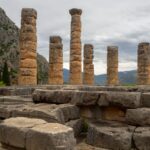
Another reason this tour feels more satisfying is that it covers more than the usual checklist. The experience description includes references to other sites tied to myth and function, including the Temple of Asclepius (a healing-related space).
You don’t need to memorize dates to enjoy this part. What you’ll get is a feeling for how the Greeks thought about wellbeing, ritual, and belief. When you see the architecture as part of a worldview, it stops being just sightseeing and starts feeling like cultural interpretation.
This is where guides often earn their praise. People talk about guides who can answer questions and keep the storytelling connected to what you’re standing near. If you like history that explains the “why,” this is the type of stop that tends to land well.
Acropolis Museum option: why it makes the outdoor ruins easier
If you add the Acropolis Museum, you’ll get a big payoff: you’ll see sculptures in modern, gallery-style displays after (or alongside) your outdoor walking. The tour’s museum plan is described as wandering “state-of-the-art” galleries with relics from Ancient Greece.
The practical advantage is simple. Outdoors, you’re often seeing fragments or building parts from a distance. Indoors, the museum helps you interpret shapes, facial expressions, and details that are hard to understand in harsh light and from far angles. That’s how you move from “pretty sculpture” to “this shows a scene and a message.”
Guides are also praised for making the museum visit feel logical rather than random. Even with your pace, you’ll usually get a framework for what to look for—so you don’t spend the museum guessing what’s important.
Price and value: what the $70 really buys you
At $70 per person for a 2–4 hour guided tour, this can be a great value if you care about meaning. But it’s not a cheap “just walk with someone” add-on, because you still need to cover entrance tickets.
Here’s the cost reality based on what’s listed:
- Acropolis entrance tickets: 30€ per person
- Acropolis Museum tickets: 10–20€ per person
- The tour includes a licensed guide, and it’s set up to skip the ticket line
- Entrance tickets and museum tickets are not included in the base price
So what are you paying for? Mostly for interpretation and time saved. You’re buying:
- A licensed guide who explains roles of monuments at the center of classical civilization
- Better use of limited daylight and limited sightseeing energy
- Hearing devices and a structured stop sequence
- Skip-the-ticket-line entry (useful when lines get brutal)
If you’re the type who likes to read signs and wander solo, you might question the extra cost. If you want the Acropolis to feel understandable—myth, architecture, sculpture, and all—then the guide fee can feel like the main event.
One more practical note: the tour price may feel easier to justify for couples and families because one guide turns a hard-to-decode site into something your group can enjoy together. For groups who don’t care about context, the same cost can feel tougher to defend.
Timing choices and the Monday museum switch
This tour runs in a 2–4 hour window, with starting times based on availability. If you’re planning for the museum, pay attention to the schedule rule that’s built in:
- On Mondays, the Acropolis Museum closes at 16:00.
- When that happens, the tour visits the Acropolis monuments and the Ancient Agora instead.
That means your museum plan might shift depending on the day and time. If museum galleries matter a lot to your trip, try to schedule your tour so the museum visit is realistic.
What to bring (so the climb doesn’t beat you)
This is one of those tours where comfort affects how much you get out of it. Bring:
- Passport or ID card (also relevant for reduced/free ticket eligibility)
- Comfortable shoes
- Sunglasses, sun hat, sunscreen
- Water (the instructions specifically suggest it)
Avoid luggage or large bags. Also, the rules state pets aren’t allowed, and smoking is not allowed.
And if you’re traveling with kids or you care about reduced/free access, note the eligibility details provided:
- People under 18 get free access.
- Anyone with an EU passport under 25 gets free access.
Who this tour fits best (and who might want to rethink it)
This is a strong fit if you want your Acropolis visit to feel like learning, not just photos. It’s also ideal when your group includes different ages, because guides here are described as patient and adaptive. For example, some people specifically mention guides like Anna, Hermes, Maria, and Rosa adjusting to children’s attention spans or extreme heat without turning the experience into a rushed sprint.
It can feel less ideal if:
- You use a wheelchair. The tour is listed as not suitable for wheelchair users.
- You hate walking. This is a walking tour, and the Acropolis terrain will test your legs.
- You just want a low-cost, quick pass. Entrance tickets are extra, and the guide adds a real component of cost.
Should you book this Acropolis, Parthenon & Museum tour?
I think you should book if you want the Acropolis to make sense. The big selling point is that you’re not left alone with labels. You get a licensed guide, hearing devices, a logical stop sequence, and help turning monuments and sculptures into clear stories.
I’d skip it (or at least reconsider) if your plan is purely casual strolling and you don’t care about myth, architecture, or the meaning behind what you’re seeing. Since tickets are separate, the total spend can climb fast.
If your goal is to leave Athens feeling like you truly understood what made classical Athens tick—religion, art, drama, civic identity—this tour is the kind of decision that tends to pay off the moment you reach the Parthenon steps and then keep paying off all the way through the museum.
FAQ
How long is the Acropolis, Parthenon & Acropolis Museum guided tour?
The duration is listed as 2–4 hours, depending on starting time and the option you select.
What is included in the tour price?
The tour includes a licensed tour guide.
Do I need to buy entrance tickets for the Acropolis and the Acropolis Museum?
Yes. Entrance tickets for the Acropolis are listed at 30€ per person, and Acropolis Museum tickets are listed at 10–20€ per person. Tickets are not included in the tour price.
Will I be able to skip the ticket line?
The tour is described as offering skip-the-ticket-line entry.
Where do I meet the guide?
Meet at the Athens Walks office at Porinou 5, 11742. The instructions say you should look for the ground floor office of Athens Walks at 5 Porinou Street.
What should I bring for the tour?
Bring passport or ID card, comfortable shoes, sunglasses, a sun hat, and sunscreen. The instructions also recommend water.
What languages is the tour offered in?
The tour is offered in English, Italian, German, French, and Spanish.
Is the tour wheelchair accessible?
No. The tour is listed as not suitable for wheelchair users.
What happens if I book on a Monday?
On Mondays, the Acropolis Museum closes at 16:00. The tour instead visits the Acropolis monuments and the Ancient Agora.