REVIEW · ATHENS
Athens City of Rebellion Small-Group Walk
Book on Viator →Operated by Culture Hunters · Bookable on Viator
Athens is more than ancient temples and sunny ruins. This small-group walk follows the city’s long fight against occupation, dictatorship, police violence, and social inequality, moving from Monastiraki to Exarchia. Along the way, you’ll connect famous squares and quiet corners to the forces that shaped modern Greece.
I like the clear bridge from Ottoman rule to present-day activism, and I like the intimate group size, capped at six people. Guide Maelle has earned strong praise for making the city’s recent past easy to follow and for giving the walk a personal, thoughtful tone. The main drawback is pace: two and a half hours on foot, with no special provision for walking difficulties, can feel demanding.
In This Review
- Key points to know before booking
- Why this Athens walk feels different
- Monastiraki begins the story
- The Tzisdarakis Mosque and the Ottoman past
- Ayìa Dynami and resistance under occupation
- Syntagma Square, from royal palace to Nazi headquarters
- The Tomb of the Unknown Soldier and the Evzones
- The Old Palace and the making of modern Greece
- The University and the role of students
- Navarinou Park and citizen action
- Exarchia, Athens’ present-day center of dissent
- What the $46.29 price buys you
- Timing, group size, and practical comfort
- Who should book this walk?
- Should you book Athens City of Rebellion?
- FAQ
- Where does the Athens City of Rebellion walk begin?
- Where does the tour end?
- How long does the walking tour last?
- What is the price?
- How many people are in the group?
- Does the tour include admission tickets?
- Who guides the tour?
- Is the tour suitable for people with walking difficulties?
- Is public transportation available near the tour?
- Can I cancel for a refund?
Key points to know before booking
- The route links eight important areas, beginning at Monastiraki and ending at Exarchia Square.
- Guide Maelle leads a discussion-based walk centered on modern Greek history and social change.
- Syntagma Square provides the strongest concentration of political and wartime stories.
- Exarchia brings the subject into the present, with street art, activism, gentrification, and citizen-led projects.
- The group is limited to six people, making it easier to ask questions and keep up with the guide.
- The $46.29 price is reasonable if you want context beyond ancient Athens, but less attractive if you prefer monuments and formal sightseeing.
Why this Athens walk feels different
Many first visits to Athens revolve around the Acropolis, the Agora, and classical mythology. Those places matter, but they leave a large gap between ancient democracy and the city you see today. This walk works in that gap.
You’ll hear how Greece moved from Ottoman rule toward independence, how the modern state took shape, and how ordinary Athenians responded to fascism, occupation, government pressure, and restrictions on civil liberties. The subject is not rebellion as a slogan. It is rebellion as a recurring part of city life.
That makes the walk useful early in your stay. After two and a half hours, Syntagma is no longer just the place where you watch the guards. Exarchia is no longer just a neighborhood with graffiti. University buildings, parks, churches, hotels, and public squares begin to carry political meaning.
I also like the small-group format. With a maximum of six people, this is not a guide speaking to a crowd at the back of a busy square. You can ask about a date, a protest, or a symbol without holding up 30 other people. The walk has received a top rating from all 15 recorded ratings, and the praise centers on its fresh approach and Maelle’s warm, passionate guiding.
Still, keep your expectations in line. This is not a museum tour, and it does not include admission to major attractions. You are paying for interpretation, conversation, and a carefully chosen route. If you want interiors, formal exhibits, or a long stop at an ancient monument, choose another tour.
You can also read our reviews of more walking tours in Athens


Monastiraki begins the story
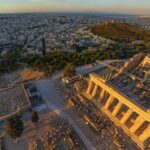
The meeting point is Pl. Monastirakiou 2, in the heart of central Athens. Your guide welcomes you here before introducing the city through one of its best-known public spaces.
Monastiraki is a useful starting point because it places several periods of Athens close together. The square is familiar to almost anyone visiting the city, but this walk uses it as a doorway into the political story of modern Greece rather than as a shopping or photo stop.
The first stop lasts about 10 minutes. That is enough time to get the group together and set the theme without using up your best walking energy. From here, you head toward the Ottoman chapters of the story.
The Tzisdarakis Mosque and the Ottoman past
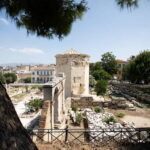
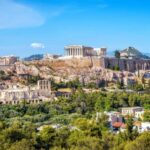
At the Tzisdarakis Mosque, the guide turns your attention to the period when Greece was under Ottoman rule. The discussion asks you to picture a very different Athens, including the Acropolis with a minaret on top.
That image is simple but effective. It helps you see the Acropolis not only as a classical monument, but also as part of a living city that changed hands, faiths, and political systems. The stop also covers how the Greek revolution against Ottoman rule began.
You spend about 10 minutes here, with no admission charge. The value is not in entering the building. It is in using the site to understand a period that often gets skipped between ancient Athens and the modern Greek state.
If your knowledge of Greek history begins and ends with Pericles, this is one of the most useful early stops. The guide helps place the revolution in a longer sequence instead of treating independence as an isolated event.
Ayìa Dynami and resistance under occupation
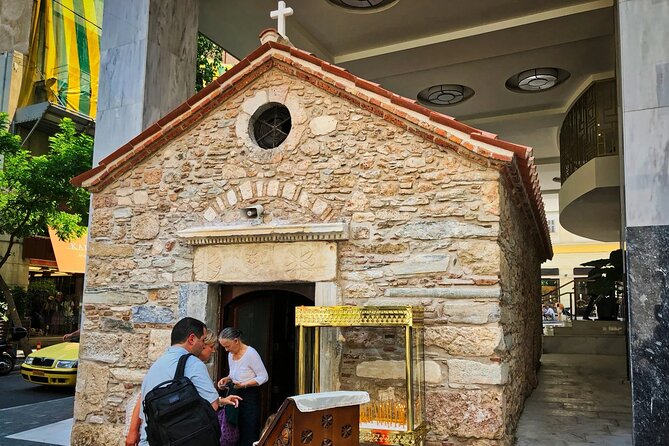
The walk continues to the Holy Church of the Sacred Power, also known as Ayìa Dynami. Here, you learn how the church was used by members of the Greek resistance during Ottoman occupation.
This is a quieter stop than Syntagma, and that is part of its appeal. The experience does not rely only on famous landmarks. A small religious building can carry a story about secrecy, survival, and resistance.
The stop lasts around 10 minutes. Since the route includes several short discussions, you get a steady flow of information rather than one long lecture. That format should suit you if you prefer to keep moving and see how separate places connect.
The limitation is that the itinerary gives only a short time at each location. If you want a full architectural or religious explanation of the church, this stop may feel brief. Its purpose is historical context, not a detailed building tour.
Syntagma Square, from royal palace to Nazi headquarters
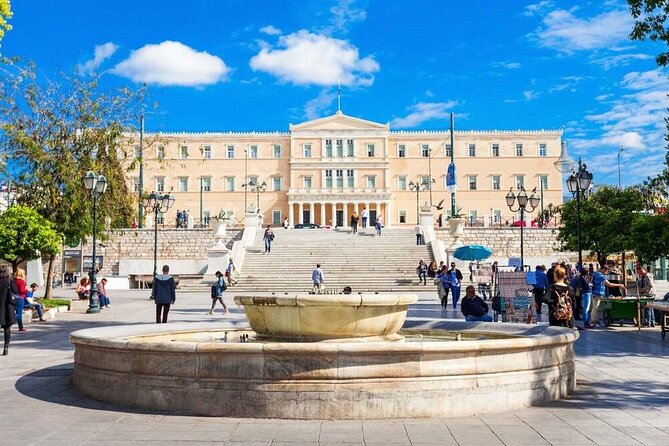
Syntagma Square is the central political stage of the walk. You spend about 15 minutes here, learning about the old royal palace, the Tomb of the Unknown Soldier, Nazi headquarters, and the many forms of resistance the square has witnessed.
This is where the tour’s themes become easiest to grasp. The square is still a place of ceremony and public life, but it also carries memories of occupation, political power, protest, and popular action. You are not just looking at a grand civic space. You are learning how Athenians have used it.
One nearby building is now a luxury hotel, but its past was much darker. During the Nazi period in Athens, it played a role connected to German power. The contrast between its present use and its wartime history is a pointed reminder that cities often hide difficult stories behind polished facades.
The tour does not turn Syntagma into a simple good-versus-bad tale. Instead, it shows how the same public places can serve kings, occupying forces, protesters, soldiers, and ordinary citizens. That makes the stop valuable for anyone trying to understand modern Athens beyond its postcard image.
You can also read our reviews of more city tours in Athens




The Tomb of the Unknown Soldier and the Evzones

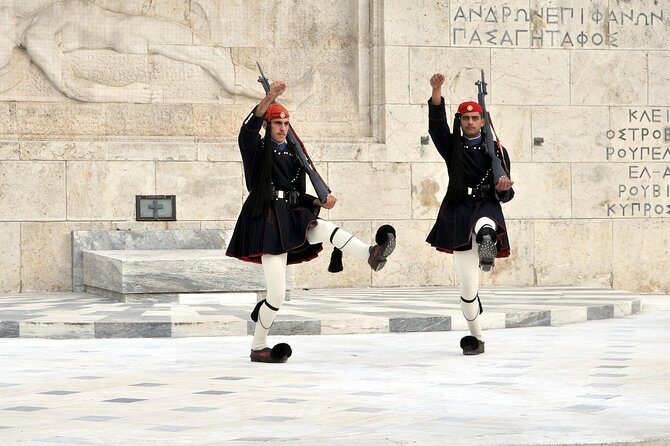
At the Monument to the Unknown Soldier, you watch the Evzones, Greece’s ceremonial guards, and learn about their distinctive uniforms and their role in guarding the tomb.
The stop is short, about five minutes. That is enough to understand what you are seeing without turning the walk into a long ceremony-watching session. The guards are a visual highlight, but the guide adds the historical meaning behind the ritual.
You may already know the Evzones as the soldiers in pleated skirts, wool stockings, and unusual shoes. Here, the clothing becomes part of the story rather than a quick photo opportunity. The guide explains why their appearance is distinctive and how the monument fits into the wider memory of national struggle.
This is a good example of the tour’s balance. It does not ignore familiar attractions, but it gives them a modern political setting.
The Old Palace and the making of modern Greece
The Old Palace of the first king of Athens adds another layer to the route. After the revolution’s victory, Greece needed more than independence. It needed a state, a government, and symbols of authority.
The palace helps frame that transition. You learn about the first king and the early years of the new Athens, including the way royal power was presented in the capital.
The stop is not listed with a separate time, so expect it to be part of the Syntagma discussion rather than a long visit. That is fine for a walking tour, but you should not expect a palace interior visit or an architectural tour.
I find this part especially useful if you have wondered how Greece moved from Ottoman rule to the kingdom that shaped modern Athens. The walk also helps explain where figures such as Lord Byron fit into the wider story, a question that often comes up when visitors try to connect the revolution, European support, and the new Greek state.
The University and the role of students
At the National and Kapodistrian University of Athens, the focus shifts to students and universities as forces in the fight for civil liberties. You spend about 10 minutes here.
This stop adds an important idea: political change does not happen only in palaces or on battlefields. Schools and universities can become places where citizens organize, challenge authority, and demand rights.
The university also prepares you for Exarchia, where student activism, police conflict, social movements, and artistic expression remain closely linked. The walk’s sequence works well here. You first see the institutional setting, then move into the neighborhood where many of these tensions are more visible on the street.
If you are mainly interested in ancient architecture, this may be less compelling than the Acropolis. If you want to understand why Athens has such a strong culture of protest and political debate, it is one of the route’s key stops.
Navarinou Park and citizen action
Navarinou is a small but telling stop in Exarchia. You learn how the park came from a citizen initiative in the middle of the neighborhood.
That detail matters because it shows resistance in a practical form. Not every act of civic opposition is a march or a dramatic confrontation. Sometimes it is the effort to shape a public space and decide how a neighborhood should function.
The stop takes about 10 minutes. It gives you a chance to see Exarchia through local action rather than through headlines alone. The area is often described only in terms of protest or unrest, but this part of the walk points to cooperation, public use, and community involvement.
You should come ready for an open discussion of urban change. The tour connects citizen initiatives with larger issues such as gentrification and control of public space, subjects that are especially relevant in a neighborhood under pressure.
Exarchia, Athens’ present-day center of dissent
The final section takes place at several stops in Exarchia and lasts about 20 minutes. The walk ends at Themistokleous 68, near Exarchia Square.
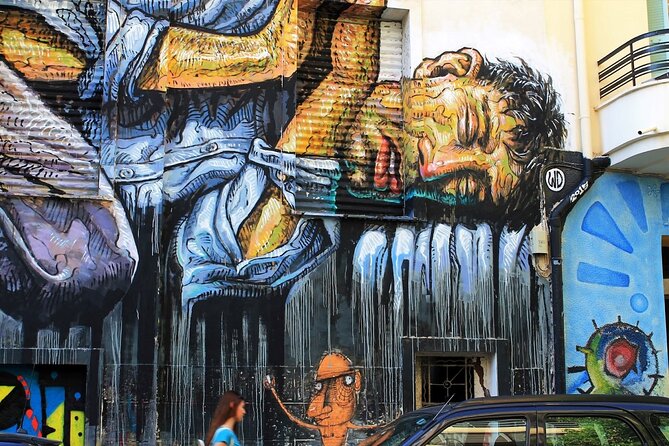
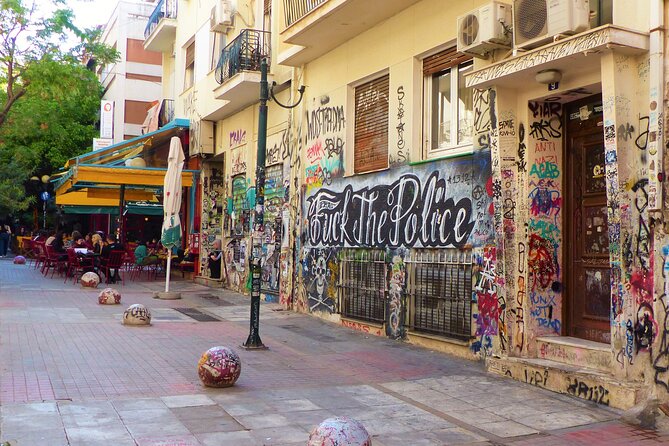
This is the part that gives the tour its strongest present-day focus. You examine how crisis, police violence, gentrification, and social justice shape the neighborhood. You also encounter street art and citizen initiatives that express the area’s political identity.
Exarchia is presented as a place that welcomes anarchists, refugees, queer communities, and artists. That does not mean every corner will feel comfortable or orderly. It means the neighborhood has become a meeting point for groups and ideas that often challenge official power.
I appreciate that the tour does not treat Exarchia as a stage set for rebellion. You are asked to look at how people use the streets, walls, parks, and local spaces to express their views and build community. The area’s creative energy is part of the story, but so are the conflicts surrounding it.
The Exarchia section is also where the tour becomes most subjective. Discussions of police violence, anarchism, migration, gentrification, and social justice can be politically charged. That is not a flaw, but you should book this experience because you want those subjects addressed directly. If you prefer a neutral sightseeing route that avoids current issues, this is not the right match.
What the $46.29 price buys you
At $46.29 per person, the walk costs more than a casual self-guided stroll but less than many large guided excursions. Since the group is limited to six, the price includes a level of personal attention that is hard to get in a crowded tour.
There are no paid attraction admissions listed, so the main product is the guide’s time and interpretation. That can be good value if you want a clear explanation of modern Greece and an introduction to Exarchia without researching every stop yourself.
I would book it for the first or second full day of an Athens visit if modern history matters to you. It can give the rest of your sightseeing more meaning. Afterward, Syntagma, the university, and Exarchia are easier to place in context.
The value is weaker if your main goal is to see as many famous monuments as possible. You will not be entering the Acropolis, a museum, or the palace. This is a conversation-led walk through public places.
Timing, group size, and practical comfort
The experience lasts about two hours and 30 minutes. The route includes several short stops, but you are on your feet for most of the time. The tour is not recommended if you have walking difficulties.
The meeting point is close to public transportation, and the end point is at Exarchia Square. Since the tour finishes in Exarchia rather than returning to Monastiraki, plan your next move from there.
A mobile ticket is available, and confirmation is provided at booking. Service animals are allowed, and most people can participate. The tour requires good weather. If poor weather cancels it, you are offered another date or a full refund.
Free cancellation is available up to 24 hours before the start time. Changes or cancellations made less than 24 hours before the tour do not qualify for a refund.
Who should book this walk?
I would choose this experience if you want to understand the Athens you see in everyday life, not only the Athens of classical monuments. It is a strong match for curious first-time visitors, repeat visitors who have already covered the Acropolis, and anyone interested in political history, civil liberties, social movements, street art, or urban change.
It also suits people who like asking questions. The group of six gives you a better chance to speak with Maelle and follow a topic that catches your attention.
I would skip it if you dislike walking, want a formal museum experience, or prefer a tour focused on ancient Greece. The subject matter can also feel politically direct, especially in Exarchia. That is the point of the walk, but it will not suit every mood.
Should you book Athens City of Rebellion?
Book it if you want the missing middle of Athens: the years between classical glory and the modern city, including Ottoman rule, independence, royal power, Nazi occupation, student activism, and today’s struggles over public space and social justice.
The best reason to go is the route’s unusual shape. It connects the Tzisdarakis Mosque, Syntagma, the Evzones, the university, Navarinou, and Exarchia into one story. Guide Maelle’s praised approach adds warmth and clarity, while the six-person limit keeps the experience personal.
At $46.29, it is a fair buy for context rather than admission tickets. Give it two and a half hours, wear comfortable shoes, and come ready to think as well as look. If that sounds like the Athens you want, this is a smart addition to your schedule.
FAQ
Where does the Athens City of Rebellion walk begin?
The walk begins at Pl. Monastirakiou 2, Athina 105 55, Greece.
Where does the tour end?
The tour ends at Themistokleous 68, Athina 106 81, Greece, near Exarchia Square.
How long does the walking tour last?
The experience lasts approximately two hours and 30 minutes.
What is the price?
The listed price is $46.29 per person.
How many people are in the group?
The tour has a maximum of six participants.
Does the tour include admission tickets?
The listed stops show free admission. The experience is a walking tour through public areas and does not list paid attraction entry.
Who guides the tour?
Guide Maelle leads the experience.
Is the tour suitable for people with walking difficulties?
No. The tour is not recommended for people with walking difficulties.
Is public transportation available near the tour?
Yes. The experience is near public transportation.
Can I cancel for a refund?
Yes. You can cancel up to 24 hours before the start time for a full refund. Cancellations or changes made less than 24 hours before the start time are not accepted for a refund.