REVIEW · ATHENS
Athens: Kerameikos E-Ticket & Audio Tour
Book on GetYourGuide →Operated by Clio Muse Tours · Bookable on GetYourGuide
Kerameikos is where ancient Athens met death, ceremony, and daily life. With this ticket, you can walk among the Sacred Gate, Pompeion, and ancient grave monuments, then use a phone-based audio tour to connect the stones with Athenian beliefs about the afterlife. I like the freedom to set your own pace, and I like that the ticket includes both the outdoor archaeological site and its museum.
The catch is the audio setup. You must download an app, save about 100 to 150 MB of content, and bring your own charged Android or iOS phone and headphones. One user found the download too complicated to use, so treat the audio guide as a useful extra, not the only reason to book.
In This Review
- Key points to know before you go
- Why Kerameikos deserves your time
- Entering through the Sacred Gate
- Understanding the Pompeion
- Meeting the Grave Stele of Dexileos
- The Tomb of Lacedaemonians and other burials
- The Tritopatreion and Athenian beliefs
- Inside the Kerameikos Museum
- How the phone audio tour really works
- Is $17.50 a fair price?
- Who will enjoy this format most?
- My practical plan for visiting Kerameikos
- Should you book this Kerameikos ticket?
- FAQ
- How long does the Kerameikos experience take?
- Is the museum included in the ticket?
- Do I need to visit the archaeological site at a fixed time?
- Is there a live guide?
- Which languages are available for the audio tour?
- What do I need to bring?
- Can I use a Windows phone for the audio tour?
- Is Kerameikos wheelchair accessible?
Key points to know before you go
- The Sacred Gate and Pompeion anchor the visit: These important structures introduce Kerameikos as both a city entrance and a ceremonial route.
- The audio tour works offline: Download the content before arriving, then listen without needing a live guide or an active connection.
- The museum is included: Your selected museum time is binding, while the outdoor archaeological site can be entered anytime on your chosen date.
- The route focuses on death and belief: Tombs, grave stele, grave markers, and monuments show how Athenians remembered the dead.
- You pay per device, not per person: Share one phone only if you are comfortable listening together.
- Allow one to two hours: The site works well as a focused stop, especially for independent visitors who do not want a group tour.
Why Kerameikos deserves your time
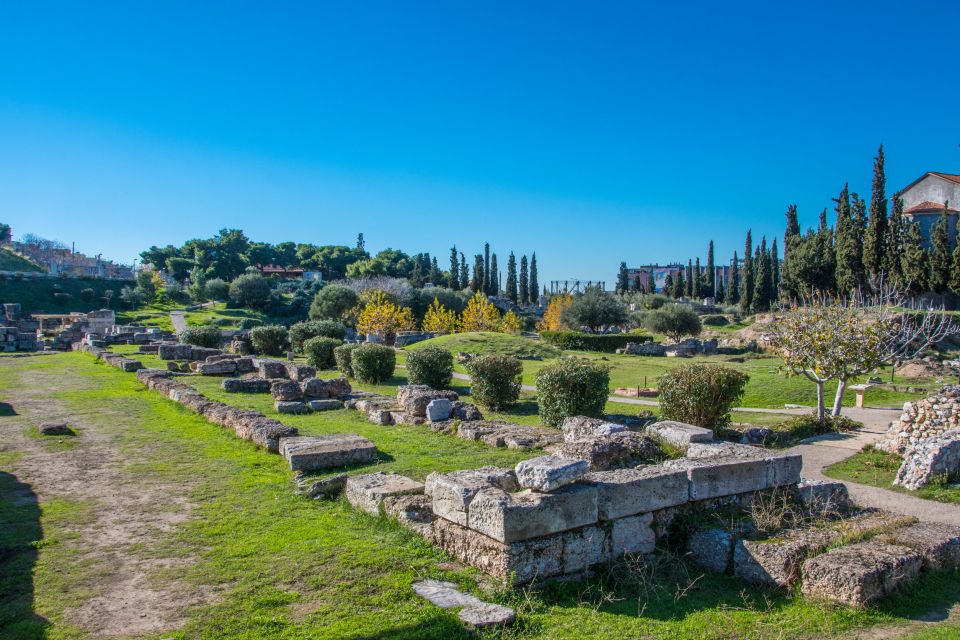
Many people come to Athens for the Acropolis and never make it to Kerameikos. That is a mistake if you want to understand the city beyond its temples. This archaeological site was connected with the ancient city’s boundary, public ceremonies, roads, and burial grounds.
The setting gives the visit a different mood from the Acropolis. You are not simply looking up at monumental buildings. You are looking closely at tombs, carved markers, foundations, and fragments that reveal how Athenians treated the dead and remembered family members.
The audio tour helps put these remains into a human frame. Instead of seeing a line of stones without context, you hear about ancient beliefs, customs, and stories connected to the site. The content is designed for independent use, so you can pause, replay, or continue when you are ready.
I would not expect a full live explanation at every stop. This is a self-guided product, and the quality of your visit depends partly on getting the app working before you arrive. Still, the combination of admission and recorded interpretation is a sensible choice for visitors who want more than a silent walk through ruins.
A few more Athens tours and experiences worth a look


Entering through the Sacred Gate
The Sacred Gate is one of the first major features to focus on. Its name points to the ceremonial importance of the route, and the audio tour uses the site to explain how movement through ancient Athens was tied to religion and public life.
Look carefully rather than rushing toward the next monument. The remains are not presented as a polished reconstruction, so you will need to pay attention to the layout and listen to the explanation. This is exactly where the audio content earns its place.
I like the fact that you can stop for as long as you need. If a section of the recording interests you, keep listening. If you prefer to study the stones in silence, pause the tour and continue later. A live group would set the pace for you. Here, you control it.
The outdoor site may be entered at any time on the date you select. That flexibility matters if you are fitting Kerameikos between other Athens sights. Only the museum time slot is binding, so plan around that appointment rather than treating the whole visit as a fixed timed entry.
Understanding the Pompeion
The Pompeion is another key stop. It was associated with important processions, and its presence helps you see Kerameikos as more than a cemetery. The site brought together public ceremony, city access, and remembrance of the dead.
This is one of the places where a few minutes of audio explanation can change your view. Without context, you might see foundations and imagine a simple building. With the tour, you get a clearer sense of why the structure mattered and how it fitted into ancient Athenian life.
The content is available in English, Greek, German, Italian, French, and Spanish. That language choice makes the experience more useful for mixed-language groups, although each person still needs access to a compatible device if they want to listen separately.
Because this is not a live tour, you will not be able to ask follow-up questions. If you enjoy conversation and back-and-forth explanations, a live guide may suit you better. If you prefer quiet sightseeing and a steady stream of background information, the self-guided format is less demanding.
Meeting the Grave Stele of Dexileos
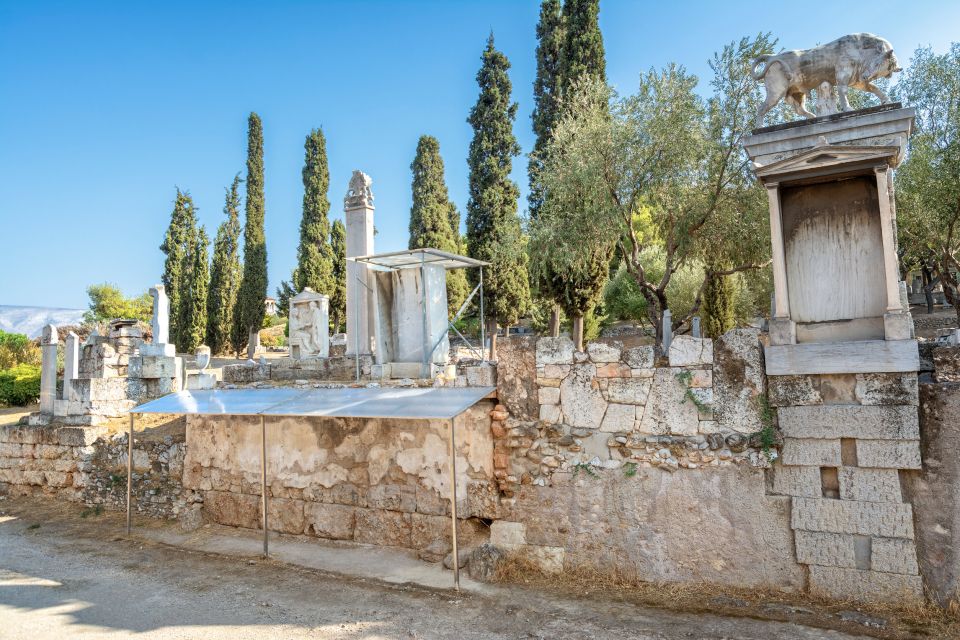
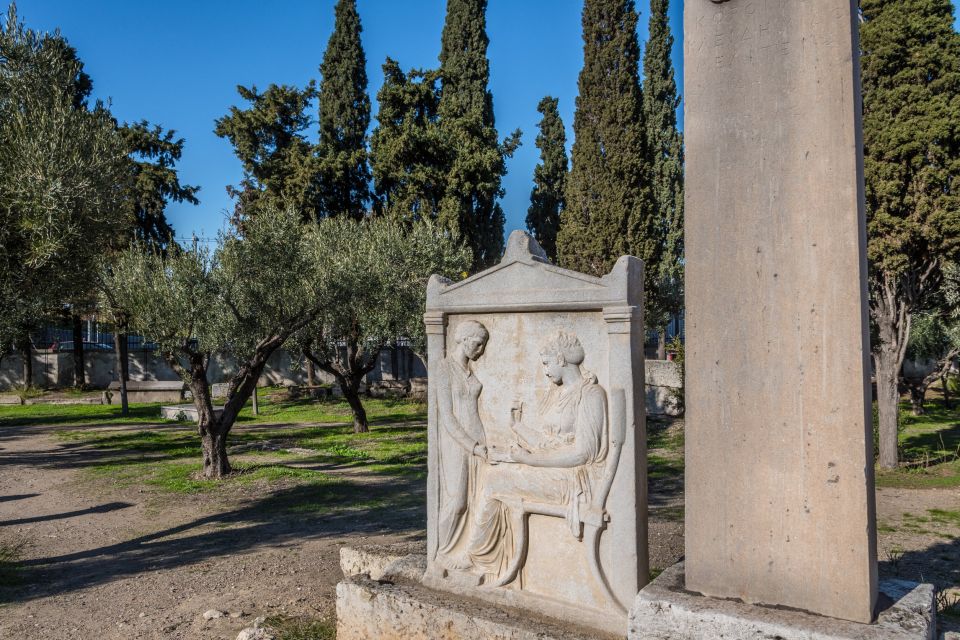
The Grave Stele of Dexileos gives the visit a personal focus. A grave stele is not only a marker. It also tells you how a person was presented to the community and how memory could be shaped through art.
The audio tour draws attention to this monument and helps you consider the story behind the name. Details such as these make Kerameikos feel less like a collection of ruins and more like a place filled with individual lives.
Give yourself time to look at the monument before moving on. Listen first if you want the main explanation, then pause and examine the carved details. The offline format is handy here because you are not forced to keep pace with a guide or group.
I find this kind of stop especially valuable for first-time visitors who are unsure how to read ancient funerary art. You do not need specialist knowledge. The recording supplies the basic framework, while the monument gives you something concrete to study.
The Tomb of Lacedaemonians and other burials
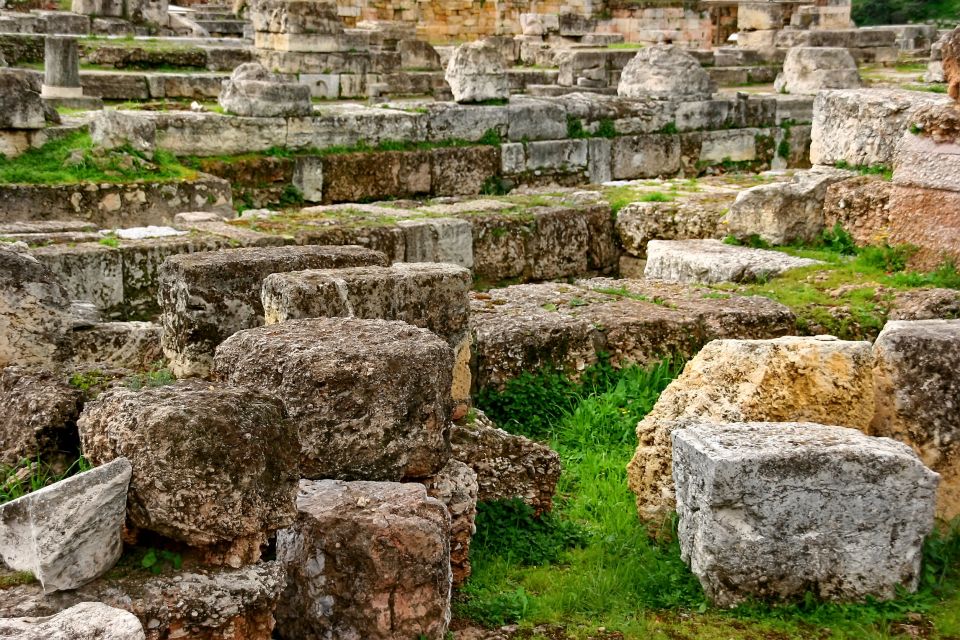
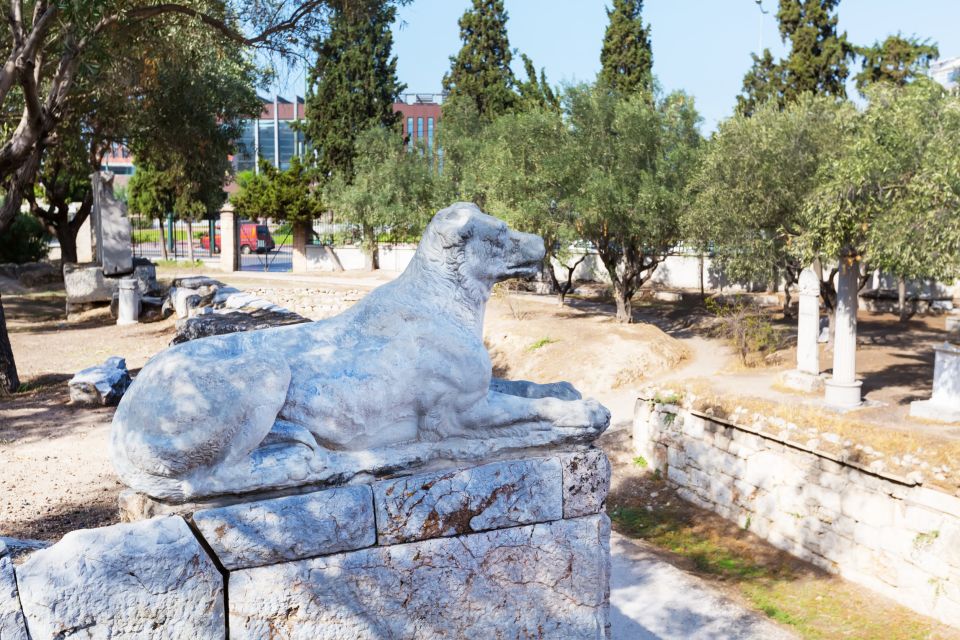
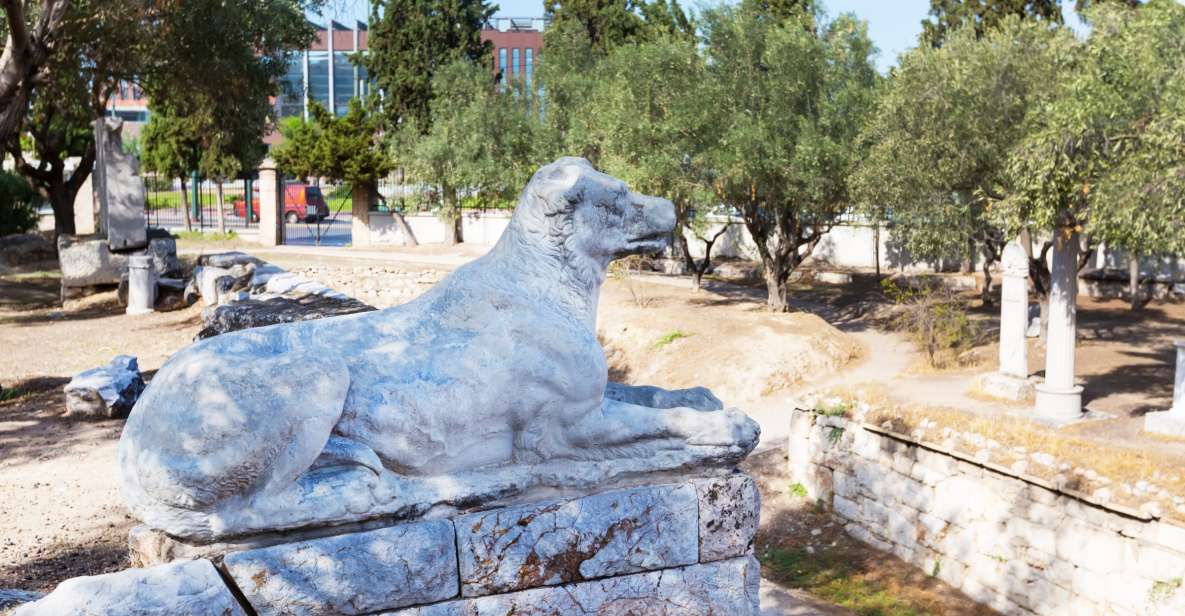
The Tomb of Lacedaemonians is among the named highlights of the route. Its presence adds another layer to the site, since the burial ground did not hold only anonymous remains. Tombs and markers could preserve names, status, relationships, and stories long after a person died.
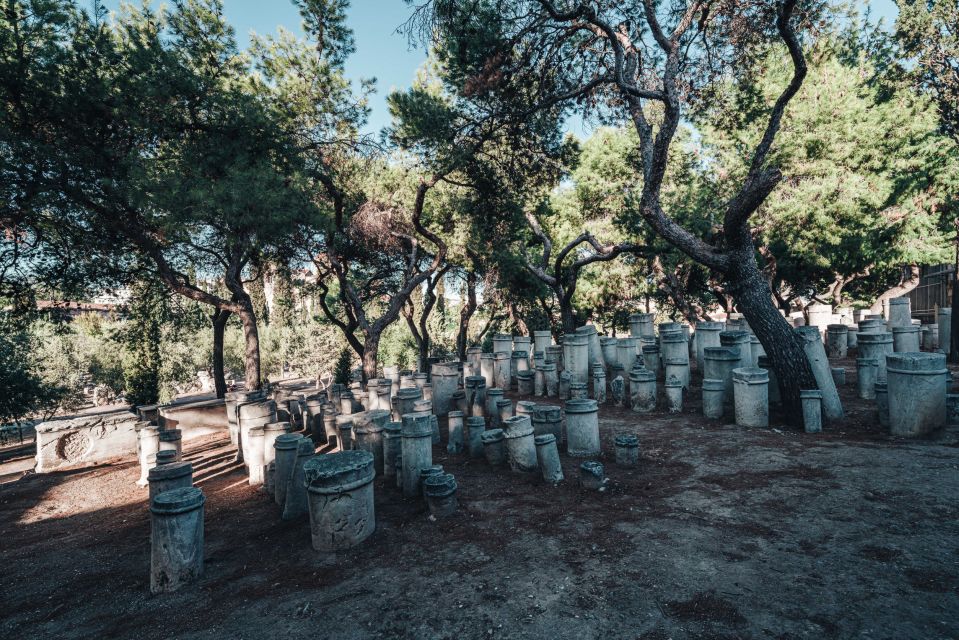
The audio tour also covers grave markers more generally. This is useful because Kerameikos contains many pieces that can look similar at first glance. A recorded explanation can help you notice differences in form and purpose without requiring you to read every label on your own.
Do not expect every feature to be intact. Archaeological sites are often made up of foundations, fragments, and reconstructed placements. The value comes from learning how those pieces fit into the larger setting. At Kerameikos, the relationship between road, gate, ceremony, and burial ground is part of the story.
The tour’s research-based content is available through the app before or after your visit. That means you can use it as preparation, listen on site, or revisit the material later. I like this flexibility, particularly if you want to absorb the information in smaller pieces.
A few more Athens tours and experiences worth a look





The Tritopatreion and Athenian beliefs

The Tritopatreion is another unusual feature called out on the route. Its name connects the stop with ancient religious beliefs and the honoring of ancestors. This is where the visit moves beyond architecture and into the ideas that shaped Athenian attitudes toward family, ritual, and death.
You will hear stories and anecdotes linked to the ancient world rather than only dates and construction details. That approach is helpful at a site where much of the evidence is fragmentary. The recording gives you a way to picture the customs and beliefs that once gave these structures meaning.
I would listen with headphones rather than using the phone speaker. The site is best experienced at a calm pace, and headphones make it easier to follow the narration while examining the monuments. They are not supplied, so pack your own pair.
Keep your expectations realistic. The audio tour can explain the importance of the Tritopatreion, but it cannot replace a specialist guide who might answer detailed questions about archaeology or ancient religion. For a self-guided visit, though, this is the kind of context that makes the stop worthwhile.
Inside the Kerameikos Museum
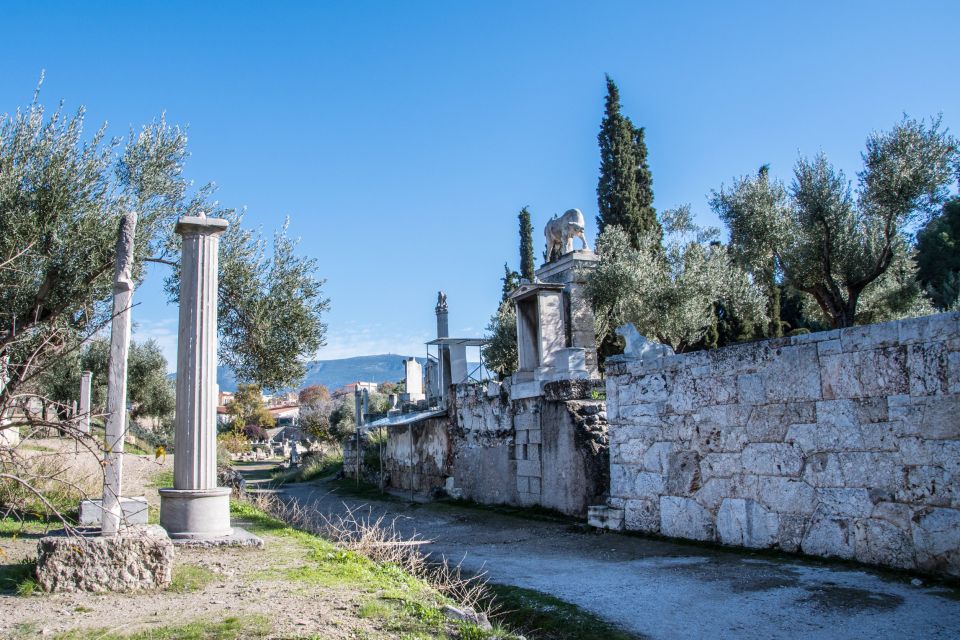
The admission ticket includes the museum, not only the outdoor archaeological site. That is important because artifacts and smaller finds can make the wider site easier to understand.
Your selected time slot applies to the museum entrance. You may visit the outdoor archaeological site at any time on the chosen date, but you should organize your schedule around the museum appointment. Arriving late or treating the museum time as optional could make the ticket less useful.
The museum provides a change of pace after walking among the open-air remains. Instead of studying large foundations and monuments, you can focus on objects and details presented indoors. The combination gives you both the setting and the material evidence connected with it.
I recommend allowing enough time for both parts. The advertised visit lasts one to two hours, but your exact pace will depend on how much you listen and how closely you examine the displays. If you only have a quick window in Athens, you can still make Kerameikos work, but do not book the museum at a time that leaves no room for the outdoor area.
How the phone audio tour really works
After booking, you receive an email with instructions and a link to download the app. You need an Android phone running version 5.0 or later, or a compatible iPhone. The tour is not compatible with Windows Phones, iPhone 5 or 5C and older models, certain older iPod Touch and iPad models, or the first iPad Mini.
You also need 100 to 150 MB of free storage. Download the content before you leave your accommodation, not at the entrance. This is the most practical way to avoid wasting sightseeing time on setup.
Bring:
- A fully charged smartphone
- Your own headphones
- Enough storage space for the app and tour
- The booking email and access instructions
You book per device, not per participant. Two people can potentially listen from one phone, but separate headphones and separate devices are more comfortable if you want to move at different speeds. The supplied information does not promise a separate device for each person.
The audio tour can be used offline. That is a real benefit in an archaeological site, since you do not need to depend on a strong mobile connection once the content is downloaded. It also lets you revisit the material before or after the visit.
The main weakness is technical rather than historical. One person was unable to use the audio because downloading it was too complicated. I would test the app, open the tour, and confirm that the recordings play before heading to Kerameikos.
Is $17.50 a fair price?
At $17.50 per person, the price is reasonable if you want both admission and interpretation. You are paying for entry to the archaeological site, access to the museum, and an audio tour in six languages.
The value is strongest for independent visitors. You do not need to arrange transportation, meet a guide, or join a group at a set outdoor starting time. You can fit the site into your Athens plans and spend more time at the stops that interest you.
The price is less attractive if you already have a strong guidebook and do not care about recorded commentary. It is also less useful if you cannot download the app or do not bring a compatible smartphone and headphones. The ticket does not include food, drinks, transportation, a live guide, or personal audio equipment.
Free and reduced admission tickets must be obtained at the site ticket booth and do not include skip-the-line privileges. If you qualify for one of those rates, compare the savings with the convenience of this advance booking before you buy.
Who will enjoy this format most?
I would recommend this experience to:
- Independent visitors who like to set their own pace
- First-time Athens visitors wanting context beyond the Acropolis
- History fans interested in burial customs and ancient beliefs
- Couples or friends comfortable sharing one device
- Visitors who prefer recorded narration to a group tour
- People with a compatible phone who can prepare the app in advance
It is less suitable if you want a live guide, spontaneous questions, or a fully handled experience with no phone setup. Families should also check how many devices they need, since the booking is based on the device used rather than the number of people entering.
The site is wheelchair accessible, which makes this option practical for visitors who need an accessible archaeological stop. Large bags and oversize luggage are not allowed, so travel light.
My practical plan for visiting Kerameikos
I would download the app and audio content the day before. Then I would check the museum time, arrive with a charged phone, and begin with the outdoor route so the major monuments have context before I enter the museum.
At the Sacred Gate and Pompeion, I would listen to the full explanations. At the Grave Stele of Dexileos, the Tomb of Lacedaemonians, the Tritopatreion, and the grave markers, I would pause often rather than treating the tour like a checklist.
I would allow at least an hour for a brisk visit and closer to two hours if I want to hear the recordings and spend time in the museum. Since there is no live guide or required outdoor meeting point, I would avoid rushing in from another timed activity.
Should you book this Kerameikos ticket?
Book it if you want a flexible visit with useful historical narration and you can handle the app setup before arriving. The ticket covers the outdoor ruins and museum, while the audio gives you a better way to understand the Sacred Gate, Pompeion, tombs, and Athenian beliefs.
Skip it if you want personal guidance, dislike phone-based tours, or cannot use a compatible Android or iOS device. At $17.50, the experience offers fair value, but only when you treat the technical preparation as part of the plan.
FAQ
How long does the Kerameikos experience take?
The stated duration is one to two hours. Your visit may be shorter or longer depending on how much of the audio tour you hear and how closely you study the archaeological site and museum.
Is the museum included in the ticket?
Yes. The entry ticket includes the Kerameikos archaeological site and the museum.
Do I need to visit the archaeological site at a fixed time?
No. You may enter the archaeological site anytime on the selected date. The binding time slot applies to entrance to the museum.
Is there a live guide?
No. This is a downloadable, self-guided audio tour for your smartphone. There is no live guide or required meeting point.
Which languages are available for the audio tour?
The audio guide is available in English, Greek, German, Italian, French, and Spanish.
What do I need to bring?
Bring a charged compatible smartphone and your own headphones. You also need enough storage space for approximately 100 to 150 MB of tour content.
Can I use a Windows phone for the audio tour?
No. The app is not compatible with Windows Phones. It also does not support several older Apple devices, including the iPhone 5 and 5C or older models, older iPod Touch models, certain older iPads, or the first iPad Mini.
Is Kerameikos wheelchair accessible?
Yes. The archaeological site is wheelchair accessible. Oversize luggage and large bags are not allowed.