REVIEW · ATHENS
Athens: Meteora Daytrip by train with optional lunch
Book on GetYourGuide →Operated by SIGHTS OF ATHENS-GRAY LINE · Bookable on GetYourGuide
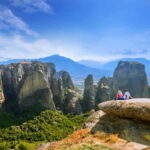
Meteora is one of Greece’s great sights: six Orthodox monasteries perched above towering stone pillars, reached on a long day from Athens. The scale is the main event, but the chance to enter two working monasteries gives the trip more meaning than a quick viewpoint stop.
I like the frequent photo stops and the efficient pickup from four central Athens locations. I also like the mix of transport, scenery, local guiding, and free time for lunch in Kalabaka. The catch is important: this is a very long day, and the advertised train may be replaced by a bus. Recent departures took roughly 15 hours, with about four hours each way by road.
In This Review
- Key points before you book
- Why Meteora is worth the long ride
- Starting in Athens at four central pickup points
- The journey north: train promise, bus reality
- Kalabaka at the foot of the rocks
- Seeing six monasteries, entering two
- Photo stops that make the trip worthwhile
- The guide and multilingual audio commentary
- What the full 14-hour day feels like
- Clothing, monastery visits, and small practical details
- Is $80 a fair price?
- Who should book this day trip?
- Should you book it?
- FAQ
- How long does the Meteora day trip last?
- Where can I be picked up in Athens?
- Is the journey to Meteora by train?
- How many monasteries will I visit?
- Are monastery entrance fees included?
- Is there a guided tour inside the monasteries?
- Is lunch included?
- What languages are available for the audio guide?
Key points before you book
- Meteora in one demanding day: You leave Athens around 7:00 am and may not return until about 11:30 pm.
- Transport can change: The trip is sold as train and bus travel, but rail service has been unavailable on some recent departures, with a bus used instead.
- Two monasteries inside: You see all six from the outside, but only two are entered, and entrance fees are extra.
- Excellent viewpoints: Several stops let you photograph the rock towers and monasteries from different angles.
- Lunch is optional: Choose the lunch package for a seasonal salad, one main course, and water, or eat independently in Kalabaka.
- Audio help in eight languages: Commentary is available in English, Chinese, Portuguese, German, French, Italian, Spanish, and Russian, while the live guide speaks English.
Why Meteora is worth the long ride
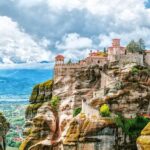
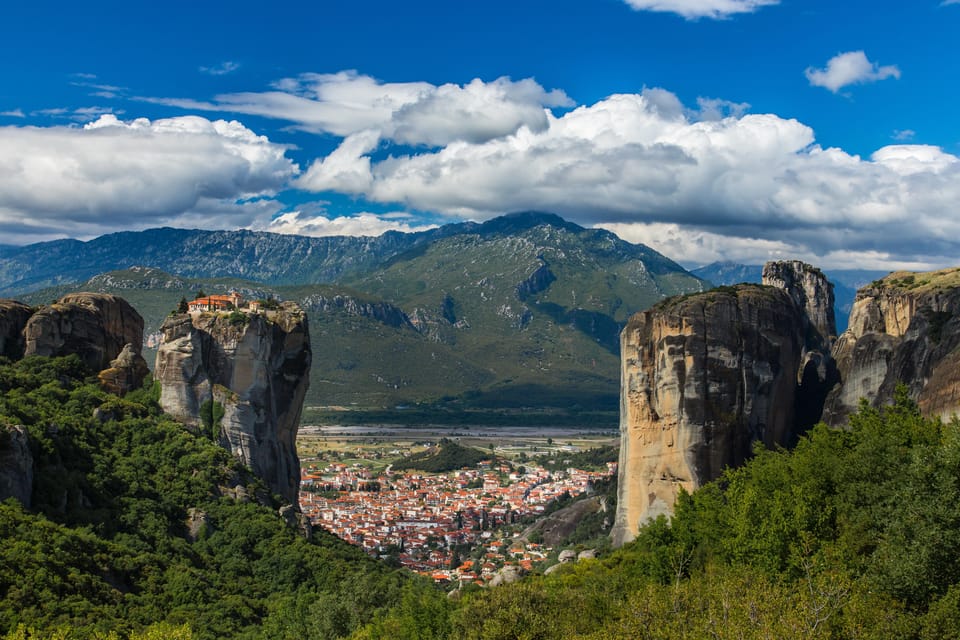
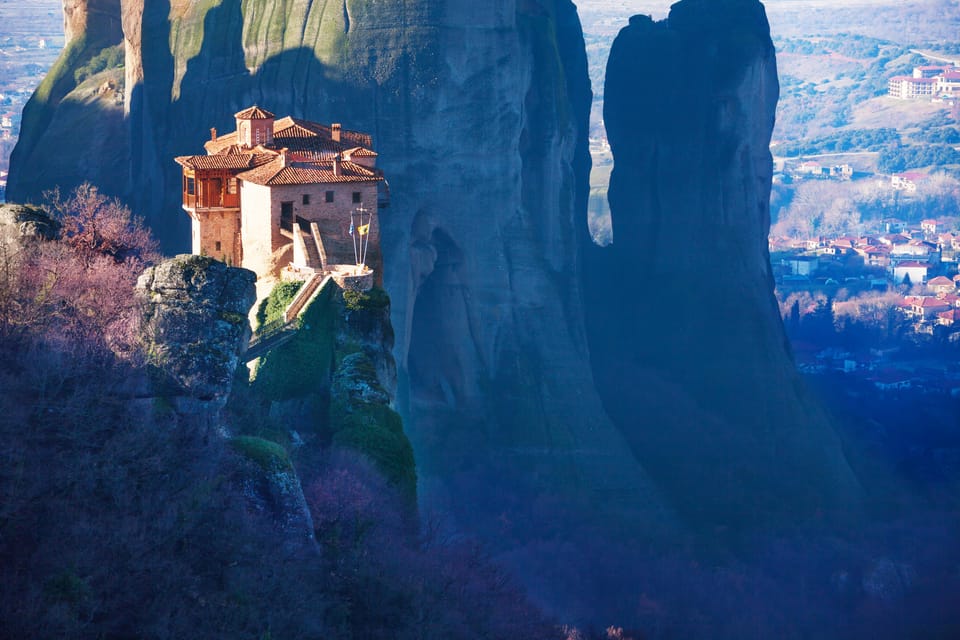
Meteora feels unlike almost anywhere else in Greece. Huge stone pillars rise from the plain near Kalabaka, with monasteries placed high on ledges and summits. From a distance, the buildings can look almost impossible to reach.
Monks began living among the rocks again in the ninth century. The first monasteries were built in the fourteenth century, when the high positions offered isolation and protection. Today, Meteora remains one of the most important groups of Eastern Orthodox monasteries and is listed as a UNESCO World Heritage Site.
I think the setting is the reason to accept the long travel time. This is not simply a religious museum or a collection of old buildings. The rocks, the roads, the cliffs, and the small monasteries work together as one remarkable sight. Even if you are not religious, the location makes the visit worthwhile.
The tour gives you a useful first look. You see all six monasteries during the drive and viewpoint stops, then enter two of the three that are open that day. Which two are available depends on the daily opening schedule, so you should not expect to choose every interior in advance.
A few more Athens tours and experiences worth a look
- All Day Cruise -3 Islands to Agistri,Moni, Aegina with lunch and drinks included
★ 5.0 · 4,958 reviews


Starting in Athens at four central pickup points
The morning begins at one of four central meeting places:
- Melina Mercouri Monument at 7:00 am
- Greek Parliament at 7:05 am
- Omonoia Square at 7:15 am
- Karaiskaki Square at 7:20 am
The pickup arrangement covers the Plaka area, Syntagma, Omonoia, and Karaiskaki Square. You need to wait by the sign for Sights of Athens, and arriving early is sensible because the departure times are close together.
A coach takes you to the train station, according to the planned arrangement. From there, the published experience describes a scenic train ride to Kalabaka. In practice, rail service has been affected by works, and recent departures used a bus for the journey instead. One recent account described about four hours by bus in each direction, while another reported leaving Athens at about 7:30 am and returning at 11:30 pm.
That difference matters. The advertised duration is 14 hours, but the day can run closer to 15 or 16 hours. If you have an evening reservation in Athens, do not place it too close to the expected return. I would keep the following morning light as well.
The journey north: train promise, bus reality
If the train is operating, the ride offers a calmer way to watch the Greek countryside pass by. You can sit back, take photographs, and save your energy for the Meteora visit.
If a bus replaces the train, the scenery is still part of the appeal, but the experience changes. A long road journey takes more patience, particularly on the return when you are already tired. The bus used on one recent departure was described as older, with torn seats, although the driver was praised for being pleasant.
The transport is not the strongest part of the experience. It is a practical way to reach a difficult day-trip destination, but you should think of the excursion as a major outing rather than a quick side trip from Athens. The distance is the price you pay for seeing Meteora without changing hotels.
The ride also explains the tour’s value. An $80 price can be reasonable for round-trip transport, a local guide, several viewpoint stops, and visits to two monasteries. It becomes less attractive if you dislike long transfers or want a slow, detailed visit inside every religious site.
Kalabaka at the foot of the rocks
You arrive in Kalabaka around midday. This traditional town sits at the foot of the Meteora formations and provides the break before the main visit.
With the lunch option, you receive a seasonal salad, one main course, and water. Vegetarian and vegan choices are available. This is a convenient choice after the morning journey, especially because it removes the need to search for food during a tightly timed stop.
I would choose lunch if you want a simple, organized day. If you prefer to eat early, snack lightly, or select your own Greek meal, the no-lunch option gives you time to explore the town and find food independently. The available information indicates that finding a Greek meal in Kalabaka is easy.
Do not expect a long town visit. Kalabaka is mainly a useful base for the Meteora excursion. Your best use of the break is to eat, rest, buy a snack, and prepare for the afternoon. The most memorable part of the day is above the town.
Seeing six monasteries, entering two
The Meteora circuit shows you all six monasteries from the road and viewing areas. You then go inside two monasteries that are open that day. This arrangement gives you both the wide view and a closer look at Orthodox monastic life.
The interiors are important because they turn the visit from a photo stop into a cultural experience. You can see how the monasteries function as historic Christian communities, not just buildings placed on dramatic rocks.
The entrance fees are not included. Carry money for the two monastery admissions, although the exact fee is not provided here. The tour also does not include a guided tour inside the monasteries. Your guide explains the wider story of Meteora, while you explore the monastery interiors on your own.
That distinction is worth understanding before booking. You receive guidance about the rocks, the history, and the area, but not a specialist-led explanation in every church or room. If you want detailed religious art commentary, a private tour or longer Meteora stay would suit you better.
Opening schedules also shape the day. Only two or three monasteries are open on a given day, so the exact pair you enter can vary. The tour promises two interiors, not two specific monasteries.


Photo stops that make the trip worthwhile
The best part of the afternoon is often outside the monasteries. The tour stops at viewpoints where you can see the pillars, cliffs, and buildings together.
These pauses are not filler. Meteora changes with every bend in the road, and a single viewpoint cannot show the full scale of the place. One stop may frame a monastery against a vertical rock face, while another gives you a wider view across the plain and the other peaks.
You will want your camera ready before getting off the minibus. The schedule allows several chances for photographs, but this is still a group excursion, so you should return promptly when asked.
The photo stops also help balance the monastery visits. If one interior feels brief, the outdoor views provide the sense of scale that makes Meteora special. I especially like this format for a first visit because it covers a lot without requiring you to plan the roads and viewpoints yourself.
The guide and multilingual audio commentary
The live tour guide speaks English. An audio guide is also available in eight languages: English, Chinese, Portuguese, German, French, Italian, Spanish, and Russian.
This is useful if you understand written information better than live commentary. It also gives you a way to follow the explanation during the drive and at the viewpoints. The Portuguese commentary is specifically included among the available options.
The information provided does not name the individual guides, so you should not expect to book a particular person. The guide joins the group in Kalabaka and leads the Meteora portion after the lunch or rest break.
One practical limitation is that the live guiding is not presented as a full multilingual service. If you do not speak English, rely on the audio commentary for the main explanation. The format works, but some visitors may feel less connected to the guide than English speakers.
What the full 14-hour day feels like
The schedule is tight but understandable. A typical day looks like this:
- Morning pickup in central Athens
- Transfer to the station or onward departure point
- Train or bus journey to Kalabaka
- Lunch or independent break in town
- Meteora drive with a local guide
- Viewpoints and photographs
- Visits inside two open monasteries
- Return journey to Athens
- Drop-off near your original central meeting area
The timing leaves enough room to see the main sights, but not enough for a relaxed visit. A recent departure spent about three hours around Meteora, from roughly 2:00 pm to 5:00 pm, after reaching the lunch stop at about 1:00 pm.
That is enough to visit two monasteries and stop for photographs. It is not enough to wander freely, study every chapel, or enjoy a quiet hour at one viewpoint. If you want time for hiking or a slower look at the churches, stay overnight in Kalabaka instead.
The return is the hardest stretch. After the afternoon visit, you board the bus or train for the long trip back to Athens. Comfort, patience, and realistic expectations matter more here than excitement.
Clothing, monastery visits, and small practical details
The provided information does not specify a dress code, but you are entering Orthodox monasteries, so modest clothing is the sensible choice. You should also be prepared for walking around historic sites and viewpoints, although the exact walking distance is not stated.
Wear comfortable shoes and bring water, even though the lunch option includes free water. A snack is useful if you select the no-lunch package or if you prefer to eat between stops.
Keep your phone or camera accessible. The viewpoints are one of the strongest features of the trip, and you will not want to waste time searching through your bag at each stop.
You should also bring some extra money for monastery entrance fees. The price of the excursion covers transport and the planned visits, but not admission inside the monasteries.
Is $80 a fair price?
At $80 per person, the tour offers a reasonably priced way to see Meteora from Athens without arranging transport yourself. Round-trip travel is the biggest value here, since reaching Kalabaka independently requires careful planning and a very early start.
The package also includes central pickup, an air-conditioned minibus, an English-speaking guide, multilingual audio commentary, photo stops, and entry to two monastery interiors, though the admission charges are extra. Lunch costs more only if you select that option.
The price is less compelling if the train is replaced by an older bus and the trip runs well beyond the stated 14 hours. You are paying for access and convenience, not for comfort comparable to a luxury coach or for a leisurely Meteora stay.
I see it as good value for a first visit when your Athens schedule does not allow an overnight trip. I would not choose it if you have several days available in northern Greece. In that case, staying near Meteora gives you more time and makes the long return journey unnecessary.
Who should book this day trip?
I would recommend it to you if you want to see Meteora from Athens, have only one free day, and prefer an organized route. It suits people who value broad coverage and easy transport more than a slow pace.
It also works well for photographers, since the itinerary includes repeated viewpoints and time to capture the formations from different angles. The optional lunch makes the day easier, while the no-lunch version gives you more control over what and when you eat.
I would hesitate if you dislike long bus journeys, need a guaranteed train, or want detailed guided commentary inside each monastery. Families and older visitors should consider the 14 to 16-hour schedule carefully, since the return to Athens can be tiring.
Free cancellation up to 24 hours before departure and reserve-now, pay-later booking make the commitment easier, but they do not change the demanding schedule. Check the current transport arrangement before you set off.
Should you book it?
Book this tour if Meteora is high on your list and you need to see it from Athens in one day. The rock formations, monastery interiors, and photo stops justify the effort, and $80 is a fair starting price for the transport and organized sightseeing.
Skip it if you want a relaxed cultural visit, guaranteed rail travel, or time to explore more than two monasteries. For the best experience, accept that the day may last 15 hours or more, bring comfortable clothes and snacks, and treat the journey as part of a big Greek outing rather than a quick excursion.
FAQ
How long does the Meteora day trip last?
The stated duration is 14 hours, but recent departures have taken about 15 hours or more. One reported schedule ran from around 7:30 am until 11:30 pm.
Where can I be picked up in Athens?
Pickup is available at the Melina Mercouri Monument, the Greek Parliament near Syntagma, Omonoia Square, and Karaiskaki Square. The listed departure times run from 7:00 am to 7:20 am.
Is the journey to Meteora by train?
The experience is advertised with train travel, but train service has been affected by works. Recent departures used a bus instead, with one account describing about four hours by bus in each direction.
How many monasteries will I visit?
You will see all six Meteora monasteries from the outside and enter two of the monasteries open that day. Only two or three monasteries are open on a given day.
Are monastery entrance fees included?
No. Entrance fees for the monasteries are not included in the tour price.
Is there a guided tour inside the monasteries?
No. A guide explains Meteora and leads the sightseeing portion, but guided tours inside the monasteries are not included.
Is lunch included?
Lunch is included only when you select the lunch option. It consists of a seasonal salad, one main course, and water, with vegan and vegetarian choices available.
What languages are available for the audio guide?
Audio commentary is available in English, Chinese, Portuguese, German, French, Italian, Spanish, and Russian. The live tour guide speaks English.
You Might Also Enjoy


More Lunch Experiences in Athens
- All Day Cruise -3 Islands to Agistri,Moni, Aegina with lunch and drinks included
★ 5.0 · 4,958 reviews