REVIEW · ATHENS
Cooking Class in Athens: Learn the Art of Phyllo with Christina
Book on Viator →Operated by Traveling Spoon · Bookable on Viator
Phyllo is the kind of skill that sticks. In Christina’s Athens kitchen, you’ll learn the craft behind Greek paper-thin dough, then make spanakopita step by step. It’s tied to the centuries-old Greek pie tradition that sits inside the UNESCO-recognized Mediterranean diet.
I especially like that this is private cooking instruction with a patient teacher who guides technique in real time. And I like that you don’t just cook then leave—you finish with a shared meal of the spanakopita you made plus other Greek favorites, along with Tsipouro, wine, and a sweet bergamot finish.
One thing to consider: if you add the optional market walk, Christina’s neighborhood is hilly, so you’ll want comfortable shoes and you should expect some uphill walking.
In This Review
- Key things that make this Athens class worth your time
- Christina’s Athens kitchen: what you’re really signing up for
- From Greek coffee to phyllo dough: the core technique
- Making spanakopita: filling, layering, and the flavor of local ingredients
- The Athens meal after class: what you’ll eat (and why it’s part of the deal)
- Optional 1-hour market tour: ingredient clues before you cook
- Price and value: is $185 fair for a 3.5-hour private class?
- Timing, meeting point, and practical details that matter
- Who should book this Athens phyllo class?
- Should you book Christina’s phyllo cooking class?
- FAQ
- What dish do I learn to make?
- How long does the experience take?
- Is this class private?
- What language is the class offered in?
- Can I choose lunch or dinner?
- Is there a vegetarian option?
- What is the cancellation policy for a full refund?
Key things that make this Athens class worth your time
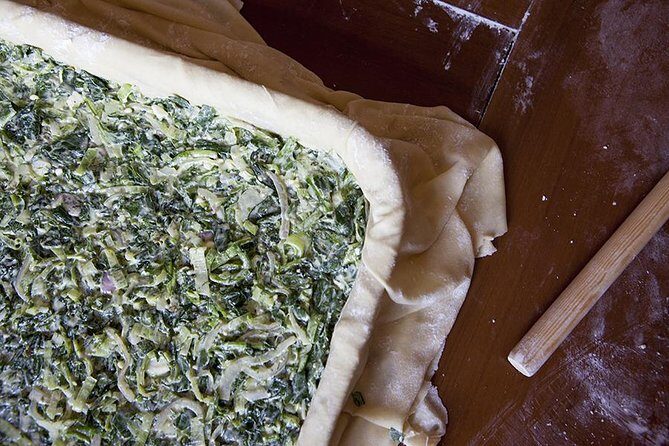
- Paper-thin phyllo, taught from flour and water so you understand the dough, not just the final pie.
- A private pace where you can ask questions and learn without feeling rushed.
- Christina’s kitchen-table method for rolling thin sheets and layering without tearing.
- Real Athens eating afterward: spanakopita plus an Athens spread and drinks like Tsipouro.
- A practical crust tip for moisture control so the phyllo bakes up lighter and crispier.
- Optional market shopping that helps you recognize key ingredients before you start cooking.
Christina’s Athens kitchen: what you’re really signing up for
This is not a quick demo where you watch and hope. You learn by doing, with Christina working you through the logic of phyllo—how the dough behaves, how thin it should be, and what to watch for as you layer it. If you’ve ever struggled with phyllo at home, this kind of start-to-finish guidance is exactly what you want.
You’ll also get that home-kitchen feel. The class begins in Christina’s welcoming apartment setting, not a big commercial studio. That matters because phyllo is delicate. When you’re learning hands-on, small corrections in your grip, your rolling thickness, and your layering technique make a big difference.
The experience starts with a traditional Greek coffee, then moves into cooking. That first coffee isn’t just a nice touch—it’s a reset. It sets the tone for the class as a shared, relaxed meal-making session rather than a rushed food show.
You can also read our reviews of more cooking classes in Athens

From Greek coffee to phyllo dough: the core technique
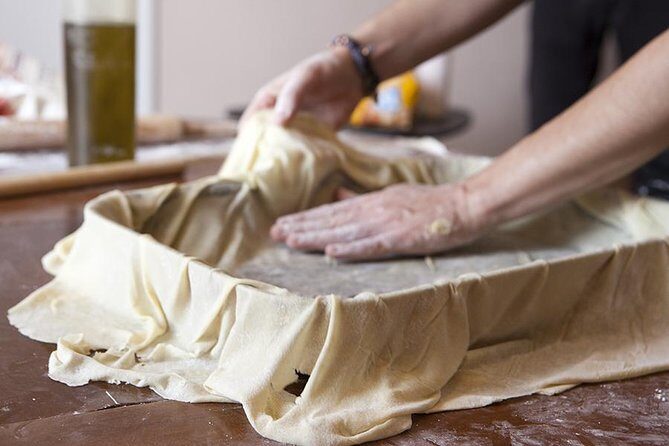
The star of the class is phyllo, the thin, paper-like dough at the center of Greek savory pies. Christina walks you through making the dough from scratch with basic ingredients like flour and water. That’s a big deal for value, because it’s the hardest part people skip when they buy pre-made dough.
Expect a true technique lesson:
- You’ll learn how to handle the dough so it can be rolled into thin sheets.
- You’ll practice how thin is thin enough, and how not to overwork it.
- You’ll build the pie by layering sheets and filling carefully.
Christina’s teaching style comes through in the details. She emphasizes the crust, not just the filling. One practical method you’ll hear during the process is a moisture-control approach: slicing the pie for moisture to escape, then adding a small water touch on top to help get the right baking result. It’s the kind of tip that makes your finished pie better, even when you’re not using the same pan or oven at home.
Making spanakopita: filling, layering, and the flavor of local ingredients
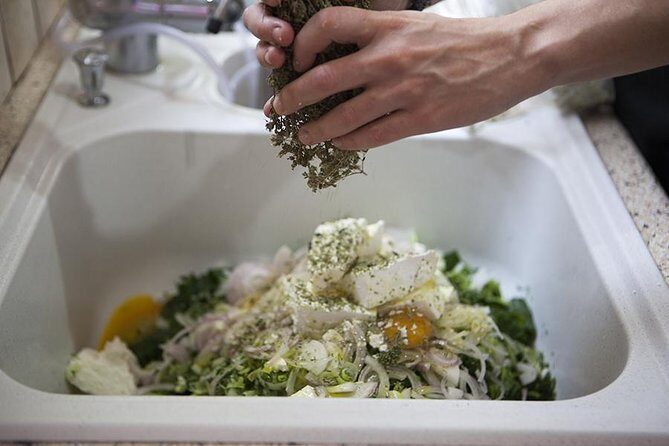
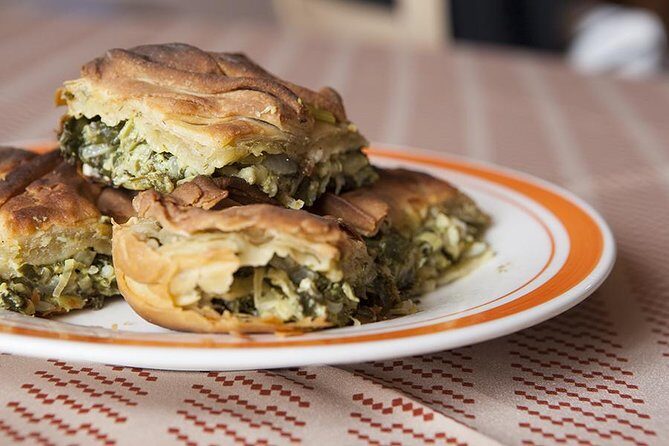
Spanakopita is the dish you make in class, and it’s a good one to learn because it forces you to master both dough and filling. You’ll work with seasonal greens and traditional Greek ingredients, including wild spinach, other local greens, and Greek cheeses.
Here’s what this teaches you, beyond the recipe:
- How to balance greens and cheese so the filling stays flavorful rather than watery.
- How to prep and distribute filling so every bite gets a good ratio.
- How layering affects texture, especially when sheets are paper-thin.
Christina also keeps the process grounded in what the ingredients actually are. Instead of treating greens as a generic category, she highlights their role in the pie—why seasonal wild spinach matters, and how local cheeses change the richness. That’s a useful mindset for cooking at home, because it helps you swap ingredients without losing the dish’s character.
The Athens meal after class: what you’ll eat (and why it’s part of the deal)
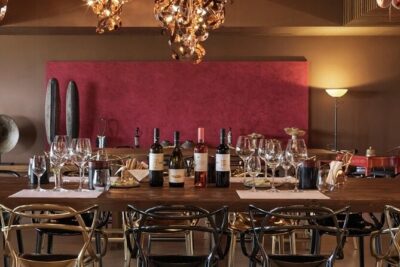
The cooking portion takes about two hours. After that, you sit down for a shared meal featuring the spanakopita you made, plus other seasonal dishes Christina prepares. This is one of those experiences where the food is not an afterthought—it’s the proof of the work.
The meal may include classics such as:
- Graviera with dried figs
- Bouyiourdi (baked feta with tomato and spicy peppers)
- Fakosalata (lentil salad with marinated anchovies, cherry tomatoes, and mint)
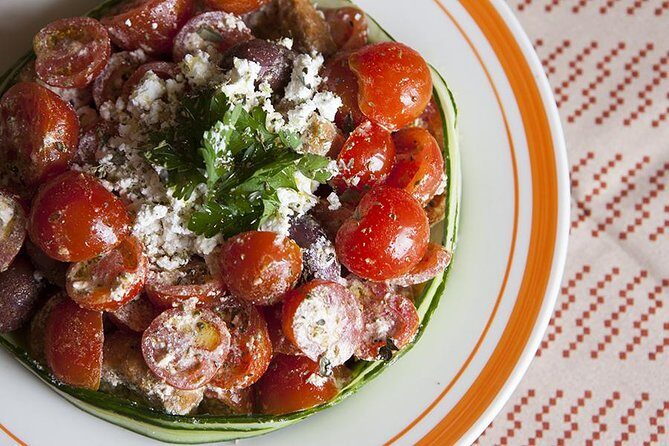
- Dakos (salad with rusks, tomatoes, olives, and katiki)
- Dolmades (stuffed vine leaves with rice and herbs)
- Youvetsi (orzo with sausage and veggies)
- Dessert: authentic Greek yogurt with homemade bergamot spoon sweet
Drinks are included with the meal: Tsipouro and wine, plus dessert. That matters for value. A cooking class that ends with a real table spread is giving you two experiences: the skills and the eating culture that goes with them.
Even if spanakopita is your main goal, I like that the menu widens your view of Greek flavors. You get a spread that covers cheese, herbs, tomatoes, legumes, vine leaves, and yogurt sweets. It makes it easier to plan your own Greek dinners later.
Optional 1-hour market tour: ingredient clues before you cook
If you choose the optional market time, Christina takes you on about a one-hour walking market tour to visit shops she favors—particularly a cheesemonger, deli, and bakery. The practical payoff is simple: you start the class with a better sense of what you’re buying and why it matters.
This also helps you cook smarter at home. After seeing typical Greek cheese and pantry ingredients, you’re less likely to substitute blindly. You’ll recognize the ingredients that shape the filling and the flavor profile of the dishes you eat during the class.
One more practical note: her neighborhood is hilly, so plan for walking. If you don’t want to deal with slopes, skip the market tour and focus on the kitchen portion only.
A few more Athens tours and experiences worth a look



Price and value: is $185 fair for a 3.5-hour private class?
At $185 per person, this isn’t the kind of cooking class you book as a casual impulse. But it can be fair value when you look at what’s included.
You’re paying for:
- A private class (only your group participates)
- Step-by-step phyllo instruction from scratch
- The time and ingredients needed to make spanakopita plus a full meal afterward
- Included drinks with the meal (Tsipouro and wine)
- Printed recipes so you can recreate the method later
- The option to add a market walk if you want ingredient context
Many cooking classes are either skill-light (watching more than doing) or food-light (no real meal afterward). This one aims to be both: you learn the hard technique, then you eat a proper Greek spread that uses that technique.
If you’re the type who likes learning methods you’ll repeat at home—especially pastry skills—this price makes more sense. If you just want to try spanakopita and move on, you might feel it’s pricier than a normal meal. The key question is whether you want technique, not just dinner.
Timing, meeting point, and practical details that matter
The total duration is about 3 hours 30 minutes. Cooking takes around two hours, with the rest of the time built around the meal and the class flow.
You’ll start at Vrioulon, Vironas 162 32, Greece, and the experience ends back at the meeting point. It’s near public transportation, which is helpful because Athens can be a lot to navigate if you’re relying only on taxis.
Christina’s class is offered in English, and you’ll receive a mobile ticket. Confirmation is typically provided within 48 hours of booking, subject to availability.
Also note a couple of comfort details:
- Vegetarian option is available if you advise dietary requirements at booking.
- Service animals are allowed.
Who should book this Athens phyllo class?
This fits best if you want more than a meal. Book it if you:
- Care about technique and want to learn phyllo from scratch
- Want a private, slower pace where questions are welcome
- Enjoy Greek food as a system—dough, filling, and the table afterward
- Like taking home recipes you can actually follow
It may not be ideal if:
- You don’t want to walk in a hilly area and you were hoping to add the market tour
- You’re short on time and only want quick food without sitting down to a full meal
If you’re planning a food-focused Athens trip, I’d put this class high on the list. It connects the flavor you eat with the method behind it, and that’s the part that keeps paying off long after you’re home.
Should you book Christina’s phyllo cooking class?
I think you should book it if you’re aiming for an Athens experience with real instruction, not just a dinner. The combination of private coaching, hands-on phyllo from flour and water, and a full shared meal with Tsipouro and dessert makes it feel like more than a standard activity.
I’d skip or simplify plans (like skipping the market walk) if hills and walking aren’t your thing. But if you’re okay with some slope and you want to leave able to make spanakopita again later, this is the kind of class that turns into a personal cooking reference point.
FAQ
What dish do I learn to make?
You’ll learn how to make phyllo dough and then prepare spanakopita using seasonal ingredients like wild spinach, local greens, and Greek cheeses.
How long does the experience take?
The overall experience is about 3 hours 30 minutes, and the cooking portion lasts about two hours.
Is this class private?
Yes. It’s a private cooking class, and only your group participates.
What language is the class offered in?
The cooking class is offered in English.
Can I choose lunch or dinner?
You can pick between lunch and dinner times to match your schedule.
Is there a vegetarian option?
Yes. A vegetarian option is available. You’ll need to advise any specific dietary requirements when booking.
What is the cancellation policy for a full refund?
You can cancel up to 24 hours in advance for a full refund. Cancellations made less than 24 hours before the experience start time are not refunded.