REVIEW · ATHENS
Ancient Corinth and canal Day trip from Athens: Private Tour
Book on Viator →Operated by Andrew's Unique Tours · Bookable on Viator
The most striking part of this private Corinth tour is its range. In about six hours, you move from a modern engineering marvel to a paved ancient boatway, Roman Corinth, the Temple of Apollo, and a fortress high above the plain. It gives you a useful break from Athens without requiring a full day on the road.
I like the flexible pacing, since you can spend more time at the stops that interest you. I also like the personal transport, with pickup in Athens or at the Piraeus cruise terminal and a choice of time slots. The main consideration is that entrance tickets and a licensed guide are extra, and the short 15-minute stop at Acrocorinth may feel rushed if you want to explore the fortress properly.
In This Review
- Key points to know before booking
- Why Corinth makes a smart half-day escape from Athens
- The Corinth Canal: a dramatic first stop
- Diolkos shows how ancient ships crossed land
- Ancient Corinth brings Greek and Roman worlds together
- Apollo’s Temple deserves a closer look
- The museum fills in what the ruins cannot show
- Acrocorinth offers the big view, but time is tight
- What the private vehicle adds
- Is $570.15 good value for three people?
- Who should book this Corinth outing?
- Final verdict: a flexible route for a small private group
- FAQ
- How long does the private Corinth tour last?
- How many people can join the private tour?
- Is pickup from Athens included?
- Are archaeological site tickets included?
- Is a licensed tour guide included?
- What happens if bad weather cancels the tour?
Key points to know before booking
- A private vehicle keeps the day flexible: Only your group of up to three people participates, and the driver can adjust time at the stops.
- The Corinth Canal is more than a photo stop: It cuts through the Isthmus of Corinth and links the Ionian and Aegean seas.
- Ancient Corinth combines Greek and Roman remains: You see Apollo’s Temple, the theater, Roman Odeon, Lechaion Street, museum, and the place associated with St. Paul’s preaching.
- Andrew is the named driver: Andrew’s Unique Tours provides professional drivers with historical knowledge, though they are not licensed to guide inside the archaeological sites.
- The cost works best for a small group: At $570.15 for up to three people, the per-person price is about $190 when three people share the vehicle.
- Plan for extra costs: Archaeological site admission, food, coffee, snacks, and airport pickup are not included.
Why Corinth makes a smart half-day escape from Athens
Corinth sits at a natural choke point between mainland Greece and the Peloponnese. That geography explains nearly everything you see here: the canal, the old overland boat route, the trading city, and the fortress above it.
The drive from Athens follows the coastal highway toward the Isthmus. You spend part of the six-hour outing in the car, but that is the tradeoff for reaching several sites that are awkward to combine by public transport in a short visit.
I find this tour especially useful if you have already seen Athens’ major ancient monuments and want a change of pace. It also suits cruise passengers at Piraeus who want a private outing with pickup and return to the port.
The private format matters. You are not tied to a large group, a fixed walking speed, or a guide’s preferred schedule. The published price covers the whole vehicle for up to three people, so the value improves greatly if you fill all three seats.
You can also read our reviews of more private tours in Athens



The Corinth Canal: a dramatic first stop
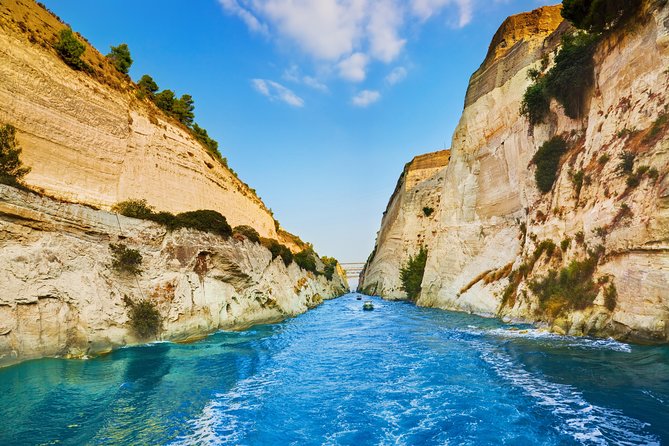
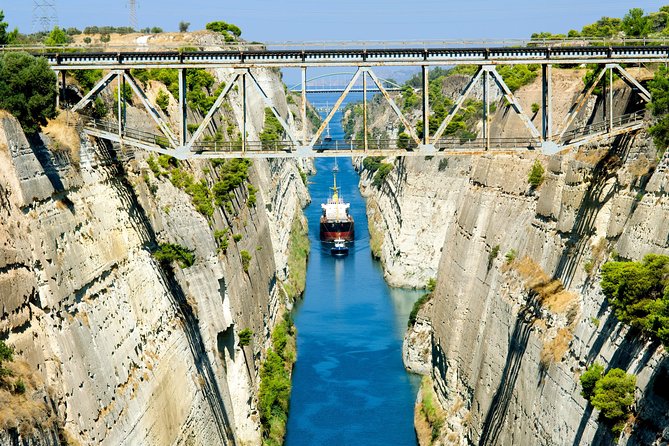
The Corinth Canal is the visual headline of the outing. It slices through the Isthmus, the narrow strip of land joining the Greek mainland and the Peloponnese, and connects the Ionian Sea with the Aegean Sea.
You have about 30 minutes here, with no admission ticket listed. That is enough for a look at the cut and photographs, though it is not a long canal cruise or a technical tour.
The canal’s importance comes from the distance it saves. Ships can avoid sailing around the Peloponnese, a longer and more difficult route. From the viewpoint, you can appreciate the steep sides and the narrow waterway below, even if you are not especially interested in engineering.
This stop also helps you understand the region before reaching Ancient Corinth. The isthmus was never just a line on a map. It controlled movement between two seas, and that made Corinth powerful for centuries.
Diolkos shows how ancient ships crossed land
The 15-minute stop at the Diolkos adds an unusual piece of ancient technology to the day. This was a paved trackway used to move boats overland across the Isthmus.
The idea sounds strange until you consider the alternative. Ancient vessels could avoid the dangerous trip around the Peloponnese by being hauled across the narrow land bridge. The Diolkos was an early answer to the same problem solved much later by the canal.
You should keep expectations modest here. The stop is short, and the information provided does not promise a large museum or a long walking route. Its value lies in connecting the ancient and modern stories of Corinth. First came the overland shortcut, then the canal.
For me, this is the kind of brief stop that makes a private tour worthwhile. A larger group might pass it without much thought, while your driver can explain why this otherwise quiet archaeological feature matters.
Ancient Corinth brings Greek and Roman worlds together
The main visit lasts about two hours, and Ancient Corinth deserves the time. This was not a single-period site. You encounter Greek remains, Roman urban features, public buildings, roads, religious monuments, and the setting tied to St. Paul’s time in Corinth.
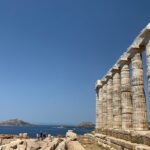
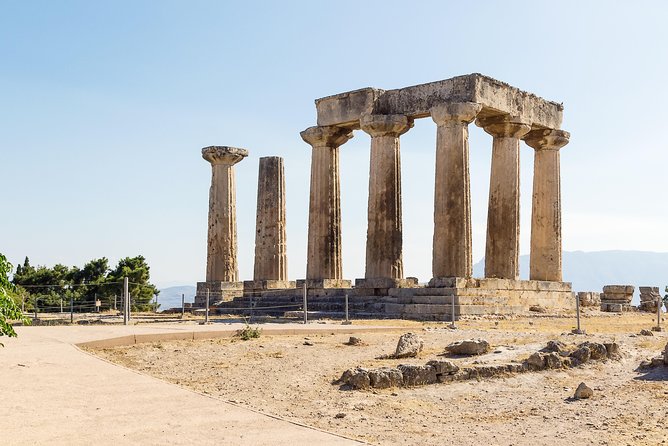
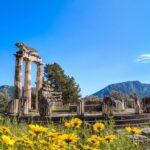
The Temple of Apollo is the most recognizable structure. Built around 560 B.C.E. from local oolitic limestone, it is among the earliest Doric temples in the Peloponnese and on the Greek mainland. Its surviving columns give you a clear sense of the temple’s scale, even though much of the original building is gone.
The ancient theater and Roman Odeon show how public life changed as Corinth moved through different eras. These spaces were built for performance and civic activity, not simply for worship. Lechaion Street gives the site an urban feel, helping you picture Corinth as a working city rather than a scattered group of ruins.
You will also see the Glauke Fountain and the Vima, the platform associated with St. Paul’s preaching to the Corinthians in 52 A.D. The Vima has particular interest for visitors who want to connect archaeological remains with early Christian history.
The site is broad enough that comfortable walking shoes make sense, though the provided information does not specify surfaces or accessibility details. You should also remember that your driver cannot serve as a licensed guide inside the site. The driver can provide historical background, but you may want to arrange a licensed guide separately if detailed interpretation is central to your visit.
Apollo’s Temple deserves a closer look
Apollo’s Temple appears in the visit to Ancient Corinth and is also listed as its own 10-minute stop. That gives the monument extra emphasis, but you should not assume the schedule means a separate excursion away from the main archaeological area.
The temple dates to roughly 560 B.C.E. and uses local oolitic limestone. Its early Doric design makes it important beyond Corinth itself. You can look at the surviving columns and imagine the strict, sturdy style that became one of the defining forms of Greek temple architecture.
Ten minutes is enough to pause, take photographs, and hear the basic story. It is not enough for a long architectural study. If you care about temples, tell the driver early that you would like to give this part proper attention. The private arrangement may allow some adjustment, although the total tour still needs to fit within about six hours.
A few more Athens tours and experiences worth a look




The museum fills in what the ruins cannot show
The Archaeological Museum of Ancient Corinth is located within the archaeological site. You have about 30 minutes there, and admission is not included.
A museum visit is useful because columns and foundations only tell part of a city’s story. Objects displayed indoors can add detail to daily life, religion, art, and public buildings. The museum was built in 1931 and 1932 to display finds from recent excavations, so it forms a natural companion to the open-air ruins.
Thirty minutes gives you a focused visit rather than a slow, room-by-room study. I would use the time to reinforce what you have just seen outside. If your main interest is photography or open-air ruins, you may prefer to spend longer in the archaeological site. If you want context, the museum is worth keeping in the plan.
Because entrance fees are not included, check current admission costs before departure. The supplied details do not give ticket prices, and they can change.
Acrocorinth offers the big view, but time is tight
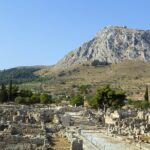
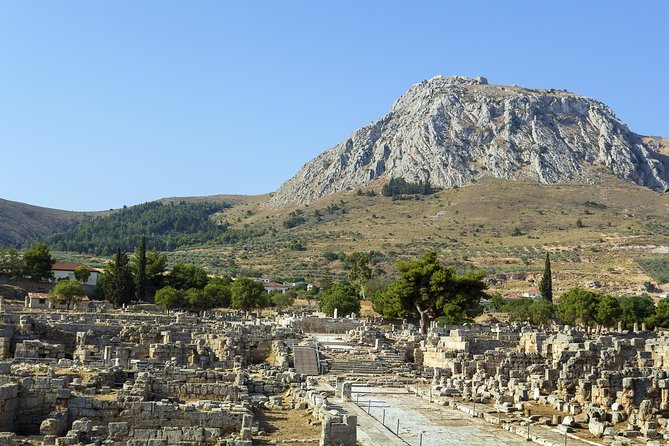
Acrocorinth, or Upper Corinth, is the ancient acropolis and fortress above Ancient Corinth. Its position gives you a wider view of the Isthmus and the surrounding Peloponnese, making it a strong final sight before returning to Athens.
The scheduled stop is 15 minutes. That is enough to reach a viewpoint and take in the setting if access is straightforward, but it is not enough for a serious exploration of the fortress. You should treat this as a scenic pause, not a full Acrocorinth hike.
This is the clearest point where the tour’s short duration shapes the experience. You see many important places, but you do not linger at all of them. If Acrocorinth is your top priority, ask Andrew’s Unique Tours whether the timing can be adjusted or consider a longer private outing.
Still, the stop gives the day a satisfying upward finish. From the canal below to the city ruins in the middle distance and the fortress above, Corinth’s strategic position becomes easy to understand.
What the private vehicle adds
Pickup and return are included from your accommodation in Athens and from the Piraeus cruise ship terminal. Airport pickup and drop-off are not included, so an airport arrival requires a separate transport plan.
The vehicle is listed as either a Skoda Kodiaq SUV or a Mercedes E Class taxicab. Both options point to a comfortable private ride rather than a shared coach. Bottled water and road tolls are included, which removes two small annoyances from the day.
The driver is described as professional and able to share historical information, but not licensed to accompany you inside archaeological sites. That distinction matters. You receive transport and informal background, not the same service as a certified guide leading you through each monument.
Andrew is the named guide associated with the company, and the available rating information identifies him as polite and friendly. The strongest practical detail is the ability to spend as much time as you want at each stop, within the tour’s overall limit. That flexibility can make a private six-hour trip feel less mechanical.
Is $570.15 good value for three people?
The price is $570.15 per group of up to three. If three people share it, the cost is about $190 per person. For two people, it is about $285 each, and for one person the full group price applies.
That is not a budget excursion. The value comes from private transport, pickup and return, tolls, bottled water, and the ability to set your own pace. You are paying for convenience and control as much as for the route itself.
You still need to budget for archaeological admission. Lunch, coffee, tea, and snacks are also excluded. Since the outing lasts about six hours, you may want to eat before departure or ask about a suitable break, but no meal is promised as part of the tour.
For three people who want a private vehicle, the price is easier to justify. For one person, a shared trip or public transport could cost less, but it would not offer the same direct pickup and personalized timing.
Who should book this Corinth outing?
I would recommend it to a small group that wants to leave Athens without spending a full day away. It works particularly well for three people, couples who value privacy, and cruise passengers who need a planned return to Piraeus.
It also suits visitors with a strong interest in ancient Greek and Roman sites, early Christianity, engineering, or military history. The route gives you a little of each without forcing you to choose just one theme.
You may want another option if you require a licensed guide at every monument, want a long visit at Acrocorinth, or prefer a slower archaeological day. The six-hour format covers a lot, but the time at individual sites is limited.
Pick a time slot that matches your energy and transport schedule. Since the tour requires good weather, poor conditions can lead to a different date or a full refund. Free cancellation is available if you cancel at least 24 hours before the start time. Changes or cancellations inside that window are not accepted for a refund.
Final verdict: a flexible route for a small private group
Book this tour if you want a practical half-day escape from Athens with your own vehicle, a clear route, and room to adjust the pace. The Corinth Canal, Diolkos, Ancient Corinth, Apollo’s Temple, museum, and Acrocorinth give you a strong sweep of the area.
I would book it for three people, since that is where the group price makes the most sense. I would also decide in advance whether you are happy with driver-led historical background or want to arrange a licensed guide separately. If you accept that limit and keep expectations realistic about the 15-minute Acrocorinth stop, this is an efficient and worthwhile way to see Corinth.
FAQ
How long does the private Corinth tour last?
The tour lasts approximately six hours, including travel between Athens and the Corinth area.
How many people can join the private tour?
The price covers a private group of up to three people. Only your group participates.
Is pickup from Athens included?
Yes. Pickup and drop-off from your accommodation in Athens are included. Pickup and drop-off at the Piraeus cruise ship terminal are also included, but Athens airport transfers are not.
Are archaeological site tickets included?
No. Tickets for the archaeological sites are not included in the price. Lunch, coffee, tea, and snacks are also excluded.
Is a licensed tour guide included?
No. The professional drivers have historical knowledge, but they are not licensed to accompany you inside the archaeological sites.
What happens if bad weather cancels the tour?
The experience requires good weather. If poor weather causes cancellation, you will be offered another date or a full refund. Free cancellation is also available when you cancel at least 24 hours before the start time.