REVIEW · ATHENS
Guided Walking Tour of the Acropolis in Athens in Spanish
Book on Viator →Operated by Secrets of Greece · Bookable on Viator
The best feature here is the southeast-side start, which helps you avoid the main entrance and get moving with less crowd pressure. You’ll cover the Acropolis’s major monuments in Spanish, then finish inside the archaeological site with broad views over Athens. I like the small maximum of 15 people, and I like the guide’s balance of history, legends, and time for photos.
The main catch is simple: the advertised price is only for the guided visit. You must also pay the €20 Acropolis admission fee, and the tour lasts about 90 minutes, so it gives you a focused introduction rather than a slow, museum-style examination of every stone.
In This Review
- Key points at a glance
- A smart way to approach the Acropolis
- What the €33.57 price really covers
- Beginning near Makrigianni and the Dionysus Theater
- The Odeon of Herodes Atticus and Athena Nike
- Walking through the Propylaea
- The Parthenon gets the longest look
- The Erechtheion and its famous Caryatids
- How the Spanish guide affects the experience
- Timing, comfort, and practical limits
- Who should book this Acropolis walk?
- Should you book this Spanish Acropolis tour?
- FAQ
- Where does the tour begin?
- Where does the tour end?
- How long does the guided tour last?
- Is the Acropolis entrance ticket included?
- What language is the tour conducted in?
- What monuments are included?
- How large is the group?
- Is hotel pickup included?
- What should I bring?
- Can I cancel for a full refund?
Key points at a glance
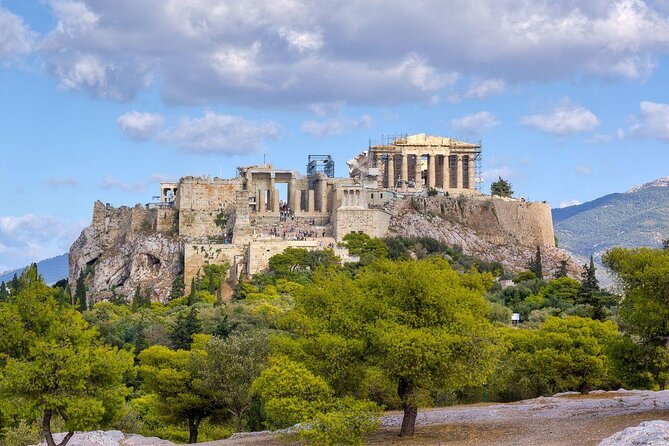
- Southeast-side meeting point: Start near Makrigianni instead of using the more crowded main entrance.
- Spanish-speaking official guide: Guide Juan is praised for clear explanations of ancient Greek art and history.
- Major monuments in one short visit: See the Parthenon, Erechtheion, Propylaea, Temple of Athena Nike, Dionysus Theater, and Herodes Atticus Odeon.
- Small group size: The tour accepts a maximum of 15 people, making questions and conversation more manageable.
- Photo-friendly pace: The guide allows free time for pictures instead of filling every minute with facts.
- Extra cost to plan for: The €33.57 tour price does not include the €20 Acropolis entrance ticket.
A smart way to approach the Acropolis
The Acropolis is not just one temple with a famous view. It is a hilltop archaeological site filled with monuments from different periods, each with its own purpose and story. Without some guidance, it is easy to spend your visit looking at marble columns without understanding why one building mattered more than another.
This tour gives you that basic framework in Spanish. You meet near Makrigianni, on the southeast side of the Acropolis, then walk into the site with an official Spanish-speaking guide. That starting point matters because the main entrance is often crowded. A less pressured beginning can help you focus on the guide rather than on finding your way through a mass of people.
The experience is listed at about 1 hour and 30 minutes. That is enough time to see the central monuments and hear the main legends, but you should not expect a long archaeological seminar. I would treat it as a well-organized introduction, especially useful if this is your first visit to Athens.
You can also read our reviews of more walking tours in Athens



What the €33.57 price really covers
The listed price is $33.57 per person, and the Acropolis entrance fee of €20 is separate. That puts the real cost higher than the headline price, so you should budget for both before booking.
What you are paying for is the Spanish-speaking official guide and the guided visit itself. The value depends heavily on how much you want help interpreting the site. If you already know the major buildings and prefer to walk at your own pace, buying entry alone may suit you better. If you want the monuments explained in Spanish and would rather not work out the site’s order yourself, the added fee can be worthwhile.
The group limit of 15 is another useful part of the value. It is not a private tour, but it is small enough that you should be able to hear the guide more easily than in a large coach group. You can also ask questions without shouting across a crowd.
A strong point is the way the time is handled. One guide is praised for keeping a perfect pace and level of dialogue, with the right amount of history and free time for photos. That balance matters on the Acropolis, where too much information can make the visit tiring and too little can leave the site feeling like a collection of ruins.
Beginning near Makrigianni and the Dionysus Theater
The meeting point is on Makrigianni, near the southeast side of the Acropolis. Your guide begins with the archaeological area and its setting, then takes you toward the monuments that shaped public and religious life in ancient Athens.
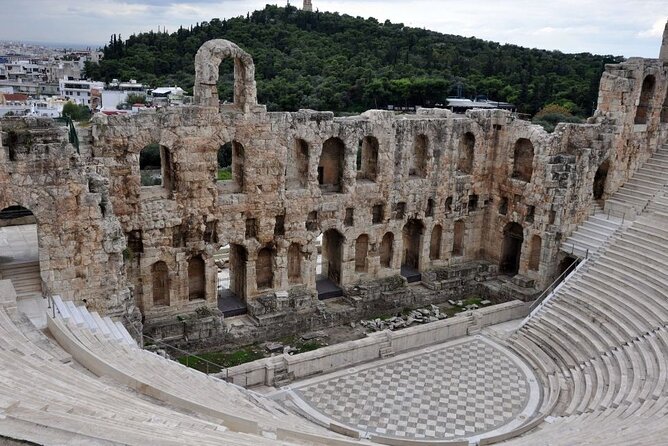
The Theater of Dionysus is one of the first major stops. It was the largest theater in ancient Greece, and it helps you picture the Acropolis as more than a religious center. This was also a place connected with performance, civic life, and the dramatic traditions that still influence theater today.
The stop is listed as about 10 minutes. That is enough for an explanation and a look around, but not enough for a detailed study of the theater’s construction or seating. I like this short approach for a first visit because it gives the theater its proper place without taking time away from the Parthenon and Erechtheion.
You then see the Temple of Asclepios, a sanctuary honoring Asclepius and Hygieia. These figures were linked with healing, so this stop adds another layer to the Acropolis complex. It shows that the sacred hill was connected with more than Athena and the city’s political identity.
The Odeon of Herodes Atticus and Athena Nike
The Herodes Atticus Odeon is described as the best-preserved monument in the Acropolis enclosure. Its curved structure and dramatic position make it one of the site’s most striking buildings, even though it is not as famous as the Parthenon.
The tour allows about 10 minutes here. That gives you time to understand the building’s role and take photographs. Since the stop is brief, you will get a clear explanation rather than an extended discussion of ancient performance spaces.
Next comes the Temple of Athena Nike, dedicated to the protective goddess of the city. Its name connects Athena with victory, and its position near the entrance makes it an important part of the approach to the summit.
This is where the southeast entry route proves useful. You are not simply rushing toward the Parthenon. You get to see how the entrance buildings and smaller temples prepared ancient worshippers for the sacred area above.
Walking through the Propylaea
The Propylaea form the main access point into the fortified Acropolis. Think of them as a grand gateway, not just an ordinary entrance. Their scale helps explain the importance of the hill and the effort devoted to controlling and presenting access to it.
The guide uses the gateway to connect the lower part of the site with the monuments on top. That kind of explanation is one of the main reasons to choose a guided visit. The stones are impressive on their own, but their meaning becomes clearer when you understand how the route was designed.
You should expect uneven ground, slopes, and plenty of walking. Comfortable shoes are specifically recommended, and you should bring water. The Acropolis is an exposed archaeological site, so a bottle of water is a practical item rather than a minor suggestion.
You can also read our reviews of more guided tours in Athens





The Parthenon gets the longest look
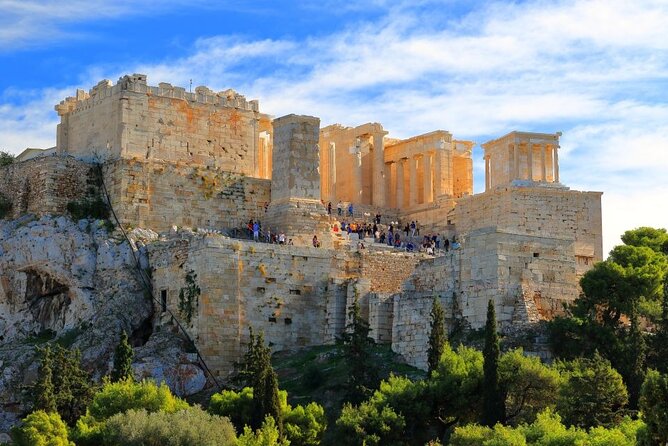
The Parthenon is the centerpiece of the visit and receives about 30 minutes in the stated plan. That is the right priority. This temple is the best-known symbol of Athens and the most recognizable monument on the sacred rock.
Your guide explains its connection with Athena, the city’s patron goddess, along with the building’s importance in Classical Greece. The tour description also promises legends connected with the archaeological site, so you can expect storytelling alongside architectural and historical context.
Thirty minutes is enough to take in the main views, hear the core explanation, and make time for photographs. It is not enough to inspect every sculptural detail or discuss every stage of the temple’s long history. I see that as a fair trade for a 90-minute tour that also includes the rest of the hilltop.
The guide’s pacing is especially important here. A nonstop lecture in front of the Parthenon would leave little room to enjoy the view. The reported balance between information and photo time suggests a more comfortable rhythm, with the guide explaining what you are seeing before giving you space to look.
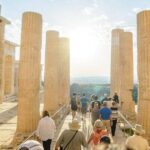
You will also get extraordinary views over Athens from the Acropolis. The city spreads out below the stone monuments, creating one of the visit’s clearest rewards. Bring your camera, but keep it secondary. The view is better when you take a moment to look beyond the screen.
The Erechtheion and its famous Caryatids
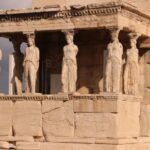
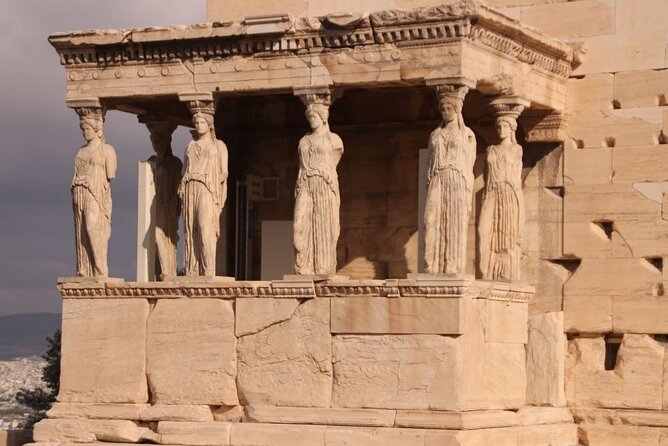
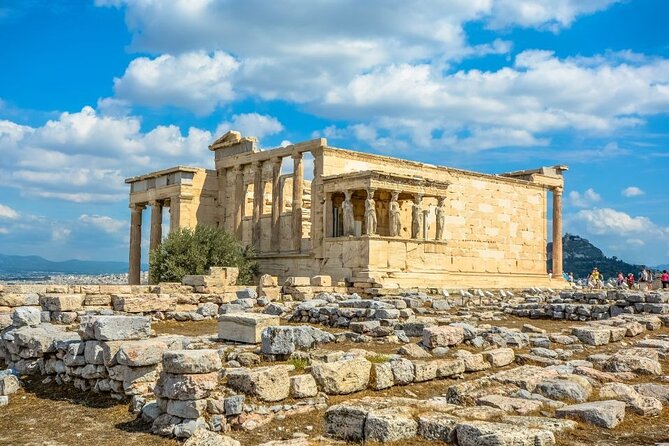
The Erechtheion is identified as the most sacred temple in the enclosure. It is famous for its Caryatids, the sculpted female figures used as architectural supports.
This stop brings a useful contrast to the Parthenon. The Parthenon feels broad, ordered, and immediately familiar. The Erechtheion is more complex in appearance and carries a different sacred role. A guide can help you understand why both buildings matter instead of treating the second temple as a smaller copy of the first.
The Caryatids are likely to draw most of your attention, but the guide also gives you a chance to see the temple as part of the wider religious center. The scheduled time is about 10 minutes, so this is another focused stop. You will get the key facts and photographs, but not a long technical session on every feature.
The tour ends at the Acropolis after the full visit. There is no hotel pickup or drop-off, so you must make your own way to Makrigianni and arrange your next stop from the Acropolis area.
How the Spanish guide affects the experience
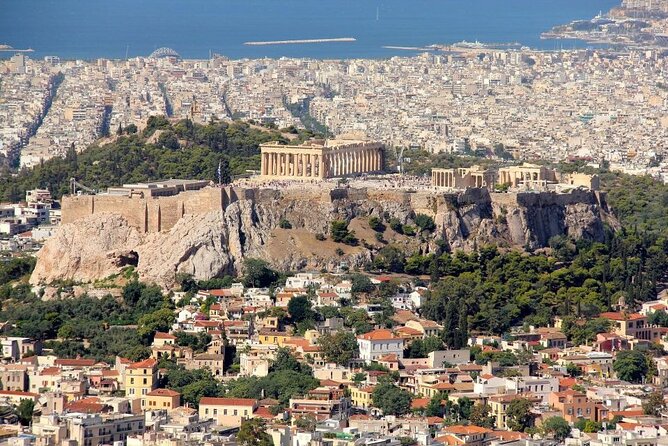
The strongest reason to book is the language. Ancient Greek sites come with unfamiliar names, complicated periods, and legends that can blur together when you are reading signs on your own. Hearing the explanation in Spanish lets you spend more time looking at the buildings and less time translating.
The guide named Juan receives particular praise for his command of ancient Greek history and art. He is described as making the experience exciting while explaining the different periods of Greece. Another guide is praised for keeping the pace comfortable and allowing photo time.
Those details point to the kind of guiding this tour aims to provide: clear information, stories, and a steady route through the site. Still, the guide assigned to your departure may not be Juan, so you should book for the Spanish-language format and tour structure rather than expecting a specific guide.
A small group also helps. With no more than 15 people, the group should be easier to keep together as you move between the theater, gateways, temples, and summit. The tour remains shared, so you will not have the flexibility of stopping for as long as you wish at one monument.
Timing, comfort, and practical limits
At 90 minutes, this is a compact tour. You will see the main monuments, but you should not plan to linger at every stop or return later to study individual details. The listed stop times add up to more than the stated tour length, so treat them as approximate points of interest rather than a strict minute-by-minute schedule.
Wear comfortable walking shoes. You will be on an archaeological site with slopes and uneven surfaces, and the activity is built around walking rather than vehicle transfers.
Bring water, and consider the weather when choosing your departure time. The provided details do not specify shade, departure options, or seasonal conditions, so you should check the local forecast and any current site restrictions before going.
The meeting point is near public transportation, which makes the start practical for people already staying in central Athens. Service animals are allowed, and most people can take part. Hotel pickup and drop-off are not included.
Confirmation is provided at booking, and free cancellation is available if you cancel at least 24 hours before the local start time. Changes or cancellations inside that window are not accepted for a refund.
Who should book this Acropolis walk?
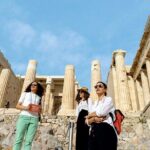
I would choose this tour if you want to see the essential Acropolis monuments in Spanish without committing to a half-day program. It suits first-time visitors, couples, families, and anyone who wants a guide to explain the myths and meaning behind the stones.
It is also a good fit if you value a small shared group and a guide who leaves room for pictures. The southeast start is useful if you want to avoid beginning at the busiest entrance.
I would look elsewhere if you want several hours for close architectural study, a private guide, hotel transfers, or entry included in the advertised price. You should also avoid booking it if you expect to wander freely, since the group follows a planned route and finishes at the Acropolis.
Should you book this Spanish Acropolis tour?
Book it if your priority is a focused Spanish-language introduction to Athens’ most important archaeological site. The southeast meeting point, 15-person limit, clear route, and photo-friendly pace make the format practical.
Just remember the €20 entrance fee, bring water, wear proper shoes, and allow only about 90 minutes for the guided portion. For the right reader, this is a sensible way to understand the Parthenon and its neighbors without spending a full day on the hill.
FAQ
Where does the tour begin?
The tour begins at Makrigianni, Athens 117 42, Greece, on the southeast side of the Acropolis.
Where does the tour end?
The tour ends at the Acropolis of Athens after the group visits the archaeological site.
How long does the guided tour last?
The tour lasts approximately 1 hour and 30 minutes.
Is the Acropolis entrance ticket included?
No. The Acropolis admission ticket costs €20 and must be paid separately.
What language is the tour conducted in?
The tour includes a Spanish-speaking official guide.
What monuments are included?
The route includes the Acropolis, Theater of Dionysus, Temple of Asclepios, Herodes Atticus Odeon, Temple of Athena Nike, Propylaea, Parthenon, and Erechtheion.
How large is the group?
The activity has a maximum of 15 participants.
Is hotel pickup included?
No. Hotel pickup and drop-off are not included.
What should I bring?
Bring a bottle of water and wear comfortable walking shoes.
Can I cancel for a full refund?
Yes. You can cancel at least 24 hours before the experience start time for a full refund. Cancellations or changes made less than 24 hours before the start are not accepted for a refund.