REVIEW · ATHENS
Learn To Make Pita And Gyros For Dinner In Athens
Book on Viator →Bookable on Viator
The best part of this Athens experience is that you do not simply sit down to eat gyros. You make the whole meal, including the pita bread, then eat it in Dionysia’s home with Greek beer or wine. You also learn her grandmother’s tzatziki recipe, along with family dishes such as zucchini pie and a traditional dessert.
I like the hands-on format and the warm, personal setting. You get practical recipes to take home, and the menu can be adapted for food concerns. The main drawback is the price, $178.16 per person, plus the need to travel out to the Glyfada area rather than stay in central Athens.
In This Review
- Key things to know before booking
- Making Greek dinner instead of just ordering it
- Meeting Dionysia in Glyfada
- Mixing the dough for homemade pita
- Building gyros and a family recipe for tzatziki
- Greek mezze, zucchini pie, and dessert
- Dinner with beer, wine, Dionysia, and Kostas
- Is $178.16 per person a fair price?
- Who will enjoy this Athens cooking class?
- Timing, food restrictions, and cancellation details
- Should you book it?
- FAQ
- How long does the cooking class last?
- What time does the class begin?
- Where does the cooking class take place?
- What food will I learn to prepare?
- Are drinks included?
- Can food allergies or dietary restrictions be accommodated?
- What is the cancellation policy?
Key things to know before booking

- You make the pita from scratch, not just assemble a finished gyro.
- Dionysia teaches in her home in Glyfada, with a relaxed dinner atmosphere.
- The menu includes gyros, tzatziki, mezze, and dessert, with patsavouropita or bougatsa listed as options.
- Beer and wine are included, which helps turn the lesson into a full evening meal.
- Chicken can replace pork, but you need to share allergies or dietary needs before the class.
- The class lasts about three hours, begins at 5:30 pm, and has a maximum of 20 people.
Making Greek dinner instead of just ordering it
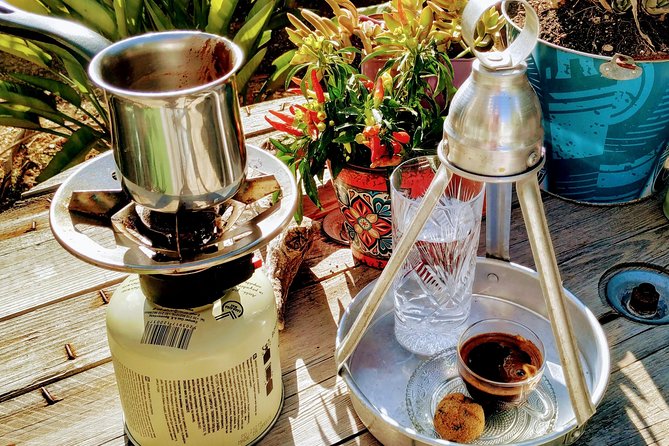
Athens offers no shortage of places to eat gyros. A few euros will get you a pita wrapped around meat, tomatoes, onions, and sauce. This class gives you something different: the ability to understand how the meal comes together and try making it again at home.
That matters because gyros are simple in appearance but depend on several small parts. The pita must be soft and flexible. The meat needs the right seasoning. Tzatziki must be cool, garlicky, and thick enough to stay inside the wrap. The toppings and sauces need to work together rather than compete.
Dionysia guides you through each part. The emphasis is on doing the work yourself, so you should expect to mix, shape, prepare, and assemble rather than watch a cooking demonstration from across the room. That makes this a good choice if you want more than a meal and enjoy learning through your hands.
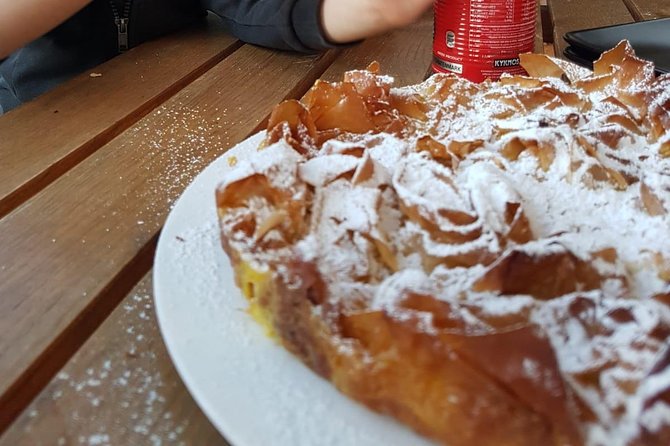
The class also reaches beyond gyros. You prepare Greek mezze, or small appetizers, and work with traditional dishes such as zucchini pie. Dessert may be patsavouropita or bougatsa, giving the meal a sweet finish and showing you another side of Greek home cooking.
A few more Athens tours and experiences worth a look


Meeting Dionysia in Glyfada
The experience begins at 5:30 pm and lasts roughly three hours. The published meeting point is on Panepistimiou in Athens, but that is not the complete address. Your confirmation voucher provides the full location and the instructions under the Before You Go section, so check it carefully before setting out.
The cooking takes place in Dionysia’s home in the Glyfada neighborhood. That setting is central to the appeal. You are not in a formal restaurant kitchen or a large tourist venue. You are welcomed into a private home, where the evening can feel more like being invited to dinner than joining a standard city tour.
That also means you should plan the logistics carefully. Glyfada is not the same part of Athens as the Acropolis and central historic districts. The activity information says the location is near public transportation, but it does not give a detailed route or travel time. Leave room in your schedule so you are not racing across the city for a 5:30 pm start.
The activity ends back at the meeting point. Since the full address is supplied only after booking, do not rely on the short address shown during initial planning. Use the confirmation details for the exact place.
Mixing the dough for homemade pita
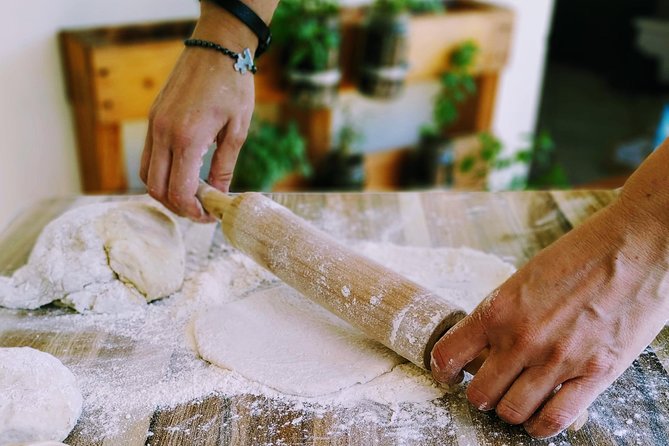
The pita lesson is the heart of the experience. You make the bread from scratch, which gives you a better sense of why a fresh gyro tastes different from a hurried takeaway version.
The useful part is not only the ingredient list. You also get to see how the dough behaves, how it is handled, and how the bread becomes soft enough to fold around the filling. These are the little kitchen decisions that are hard to learn from a recipe alone.
Dionysia’s teaching style is described as clear and detailed, with quick techniques and cooking options. That suggests a class aimed at ordinary home cooks rather than professional chefs. You do not need to arrive with advanced skills. The value is in learning a method you can repeat in your own kitchen.
The finished pita also gives the meal a satisfying rhythm. You prepare the components, cook them, and then use the bread immediately. Instead of learning a recipe in isolation, you see how the bread fits into a full Greek dinner.
If you are booking mainly for a sightseeing stop, this may feel slow. The class takes three hours, and cooking requires time for preparation and instruction. If you like food and want to understand the process, that slower pace is exactly the point.
Building gyros and a family recipe for tzatziki
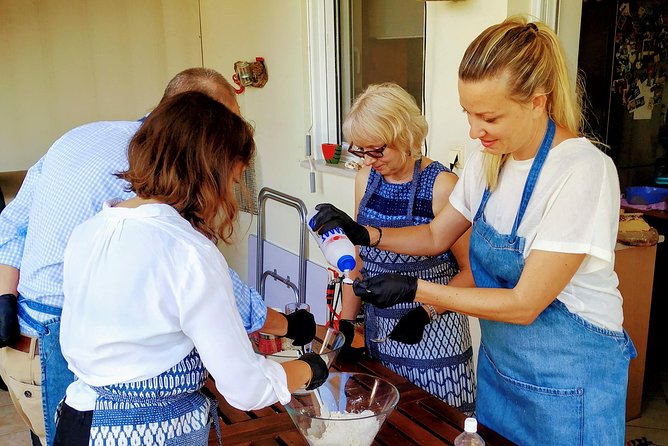
Once the pita is underway, you learn the main filling for pita-gyros. The class information does not specify every seasoning or cooking method, so you should not expect a fixed technical menu in advance. What is clear is that Dionysia teaches the full dish, including the bread, filling, sauce, and assembly.
Tzatziki gets special attention because Dionysia shares her grandmother’s recipe. Family recipes are often the most useful souvenirs from a cooking class. A famous restaurant dish can be difficult to recreate, but a sauce you can make at home may become part of your regular cooking.
The class can also accommodate some dietary needs. One person specifically avoided pork and was served plenty of chicken instead. That is a helpful sign if you do not eat pork, but it is not permission to arrive without warning. The instructions ask you to communicate allergies, special diets, and other food restrictions ahead of time.
You may also find the meal more flexible than a standard restaurant order. The focus is on learning options and techniques, so the kitchen conversation can help you understand how to adapt the food. Still, the host needs notice in advance to prepare properly.
Greek mezze, zucchini pie, and dessert
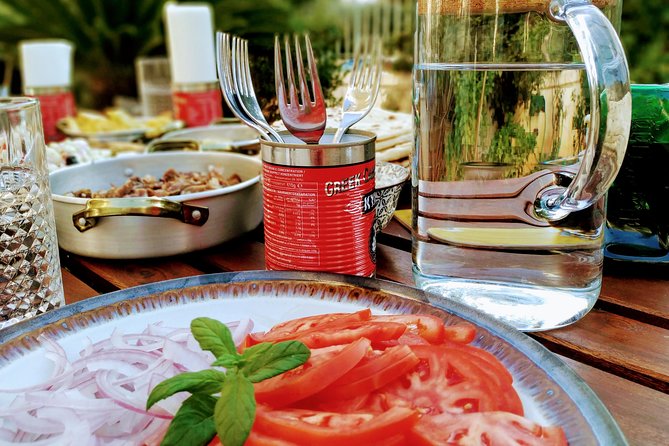
The evening is not limited to one famous dish. You also prepare mezze, the small Greek plates that make a meal feel social and unhurried.
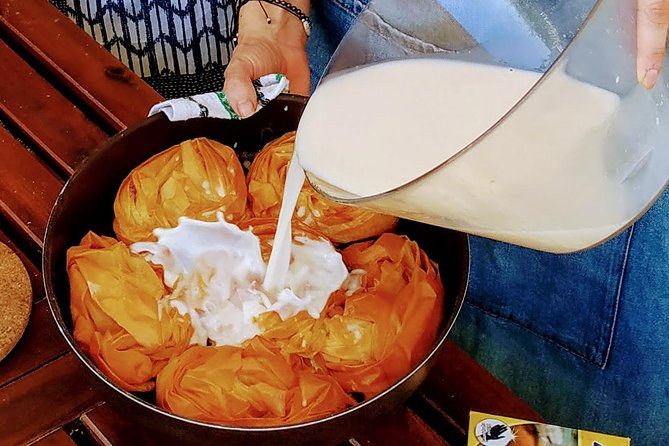
Zucchini pie is one of the traditional appetizers mentioned for the class. It adds a different texture and flavor to the table, and it shows how Greek home cooking uses vegetables in practical, filling ways. Mezze are also useful for a group because people can taste several dishes while talking and waiting for the main course.
For dessert, the options include patsavouropita or bougatsa. Both are traditional Greek pastries, but the information does not promise one specific dessert every time. If a particular sweet matters to you, ask about the menu before booking rather than assuming both will be served.
This range of dishes adds value to the class. You are not paying nearly $180 for a lesson on one sandwich. You are learning a small Greek meal, from appetizer through dessert, while making the components along the way.
A few more Athens tours and experiences worth a look



Dinner with beer, wine, Dionysia, and Kostas
Beer and wine are included in the price. That is a practical advantage because drinks can add noticeably to the cost of a private meal in Athens. More important, they help the evening feel like dinner with a host rather than a technical workshop.
Dionysia’s family is part of the experience, and Kostas is also mentioned as joining the cooking evening. The personal contact is a major reason to choose this over a restaurant meal. You get the chance to talk, laugh, and learn about food in a home setting.
One useful detail from the dining experience is that wine was kept flowing during the meal. That may appeal to adults looking for a relaxed evening, though you should still pace yourself. This is a cooking class first, not a drinking tour.
The setting also works for different groups. Couples can treat it as an evening activity. Families with older children and young teens can share the work. One family even brought a two-year-old, but the available information does not describe childcare arrangements or special facilities, so parents should decide based on their own needs.
Is $178.16 per person a fair price?
At $178.16 per person, this is an expensive meal and cooking lesson by Athens standards. You can eat gyros cheaply in the city. The price makes sense only if you value the private home setting, instruction, several dishes, drinks, and the chance to take recipes home.
The class is listed for up to 20 people, so do not assume the word private means only you and your companion. It means a private class format rather than a public city sightseeing tour, but the maximum group size is still substantial. Ask about the expected group size if a small, intimate lesson is important to you.
The price looks stronger for families or couples who would otherwise book a cooking class and a separate dinner. You receive the meal as part of the experience, along with beer and wine. The recipes may also have lasting value if you really plan to cook them at home.
It is less compelling if you want a quick introduction to Greek food or are watching every euro. For that kind of trip, eat at a local taverna and spend the difference elsewhere. This experience earns its price through personal contact and participation, not through the amount of food alone.
The class is often booked well ahead, with an average booking time of 54 days in advance. That does not guarantee it will sell out on your dates, but it is a good reason to reserve early if your Athens schedule is tight.
Who will enjoy this Athens cooking class?
I would recommend it to you if you enjoy learning a dish well enough to repeat it. The pita and tzatziki lessons are especially useful for home cooks who want a clear souvenir beyond photographs.
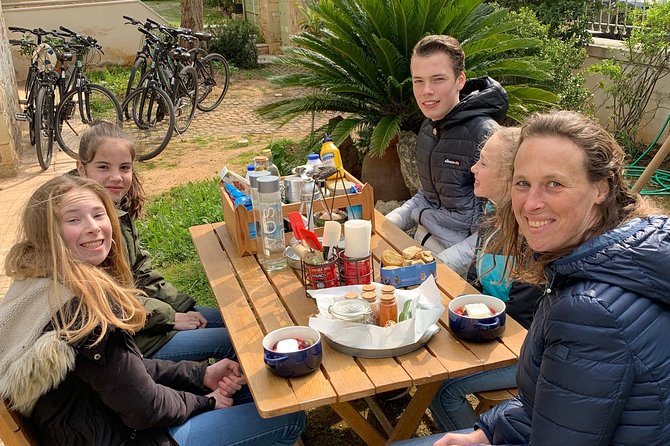
It also suits food-focused couples, families, and friends. The shared tasks give everyone something to do, and the meal creates plenty of time for conversation. Families with young teens should find the format appealing, provided the children are comfortable with a three-hour cooking session.
The experience is a good match for visitors who have already seen the major sights and want an evening with a local flavor. It gives you a reason to visit Glyfada and changes the pace from museums, ruins, and crowded central streets.
You may want to skip it if you dislike group cooking, have strict dietary requirements that were not discussed in advance, or want a highly polished restaurant meal. The class is personal and practical, not a formal culinary school course.
Timing, food restrictions, and cancellation details
You receive confirmation at booking, and the full address appears on the voucher under Before You Go. Check those details before leaving your hotel, since the short meeting point is not the complete address.
Tell the host about allergies, special diets, or food restrictions before the class. Pork-free diners can be accommodated with chicken, but advance communication is essential.
Free cancellation is available up to 24 hours before the local start time for a full refund. Changes or cancellations made less than 24 hours ahead are not accepted for a refund. The experience requires good weather, and if poor weather causes cancellation, you are offered another date or a full refund.
Should you book it?
Book this class if you want an active food experience, a home-cooked Greek meal, and recipes you can use after Athens. Dionysia’s pita lesson, grandmother’s tzatziki, mezze, dessert, and included drinks make the evening more substantial than a simple gyros stop.
Think twice if $178.16 feels high for dinner, or if you prefer a small class with a guaranteed handful of people. Also check the exact Glyfada address and plan your transport before committing.
For the right person, this is a memorable way to spend an Athens evening. You leave with a full meal, a better understanding of Greek cooking, and the practical challenge of trying to recreate the pita at home.
FAQ
How long does the cooking class last?
The experience lasts approximately three hours.
What time does the class begin?
The listed start time is 5:30 pm.
Where does the cooking class take place?
The cooking takes place in Dionysia’s home in the Glyfada neighborhood of Athens. The complete address is provided on your confirmation voucher under the Before You Go section.
What food will I learn to prepare?
You learn to make pita bread from scratch and prepare pita-gyros, tzatziki, Greek mezze, zucchini pie, and a dessert such as patsavouropita or bougatsa.
Are drinks included?
Yes. Beer and wine are included in the experience.
Can food allergies or dietary restrictions be accommodated?
You need to communicate allergies, special diets, and other food restrictions in advance. Chicken can be provided instead of pork for diners who do not eat pork.
What is the cancellation policy?
You can cancel up to 24 hours before the local start time for a full refund. Cancellations or changes made less than 24 hours before the experience are not accepted. If poor weather causes the activity to be canceled, you are offered another date or a full refund.