REVIEW · RETHYMNO
Rethymno: Traditional Arts & Workshops Tour.
Book on GetYourGuide →Operated by Filiko Tours · Bookable on GetYourGuide
Rethymno’s Old Town is more than pretty lanes and Venetian doorways. This tour takes you inside four working family workshops, where wood, leather, recycled paper, and the Cretan lyra are still made by hand. You get to meet the makers, ask questions, and try papier-mâché yourself.
I especially like the personal scale of the tour and the useful souvenirs. You receive a small wooden item and a personalized leather keepsake, then make your own papier-mâché piece. Guide Virginia also seems to give the walk a warm, human touch, sharing the Greek idea of meráki, putting heart and soul into your work.
The main thing to watch is the timing. The experience is described as lasting 1.5 hours in the booking details, while the fuller description calls it a 2-hour tour. It is also a walking visit to active workshops, not a formal museum tour, so expect conversation and demonstrations rather than a polished exhibition.
In This Review
- Key points to know before you book
- Why this tour gives Rethymno more character
- The wood workshop: simple tools, direct results
- The leather workshop: a third-generation craft
- Papier-mâché: the tour’s hands-on center
- The Cretan lyra workshop and the sound of Crete
- Rethymno’s Old Town between the workshops
- What the souvenirs are really worth
- Guide Virginia and the tone of the visit
- Who should book this Rethymno craft tour
- Booking advice and final verdict
- FAQ
- Where does the tour begin?
- Where does the tour finish?
- How long does the tour last?
- How many workshops do you visit?
- What language is the tour offered in?
- Is the tour suitable for children under five?
- Is the papier-mâché activity included?
- What souvenirs are included?
- Is food or drink included?
- Is hotel pickup included?
- What is the maximum group size?
- Can I cancel the booking?
Key points to know before you book
- Four family-run workshops: You visit wood, leather, papier-mâché, and Cretan lyra makers in Rethymno’s Old Town.
- Hands-on craft work: The papier-mâché stop lets you make a small piece to take home.
- Two handmade gifts included: You receive small souvenirs from the wood and leather workshops, including a personalized leather item.
- A small group of up to 12: This gives you a better chance to speak with the artisans and ask questions.
- Guide Virginia leads in English: Her friendly approach is part of the appeal, especially for visitors who enjoy personal stories.
- Budget about 1.5 to 2 hours: The supplied details use both time estimates, so leave a little breathing room in your day.
Why this tour gives Rethymno more character
Many Old Town walks point out buildings, fountains, and alleyways. This one points you toward the people who keep local making traditions alive. That difference matters. You are not just looking at an old quarter. You are seeing how certain skills still function inside it.
The tour visits four small workshops, each with a different material and purpose. You watch a craftsperson shape wood with simple tools, see traditional leatherwork carried on by a third-generation maker, turn recycled paper into art, and learn how a Cretan lyra is made.
I like this mix because it gives you variety without feeling like a shopping trip. The workshops are family-run, and the focus is on meeting the makers and understanding their work. You can still buy items if you wish, but the main value comes from seeing the process and talking with the people behind it.
The group is limited to 12 people. That is a useful number for this kind of visit. A large crowd would make a tiny workshop feel cramped and would limit your time with the artisans. Here, you should have room to watch, ask questions, and take part.
The route also gives you a reason to pay attention to Rethymno’s smaller streets. The listed stops include Mitropoleos Square, Guora Gate, and two unnamed workshop locations. The walk begins and ends near the former Customs House, with the meeting point described as in front of the information centre. Since both descriptions are used, check the exact map pin when booking.
A few more Rethymno tours and experiences worth a look


The wood workshop: simple tools, direct results
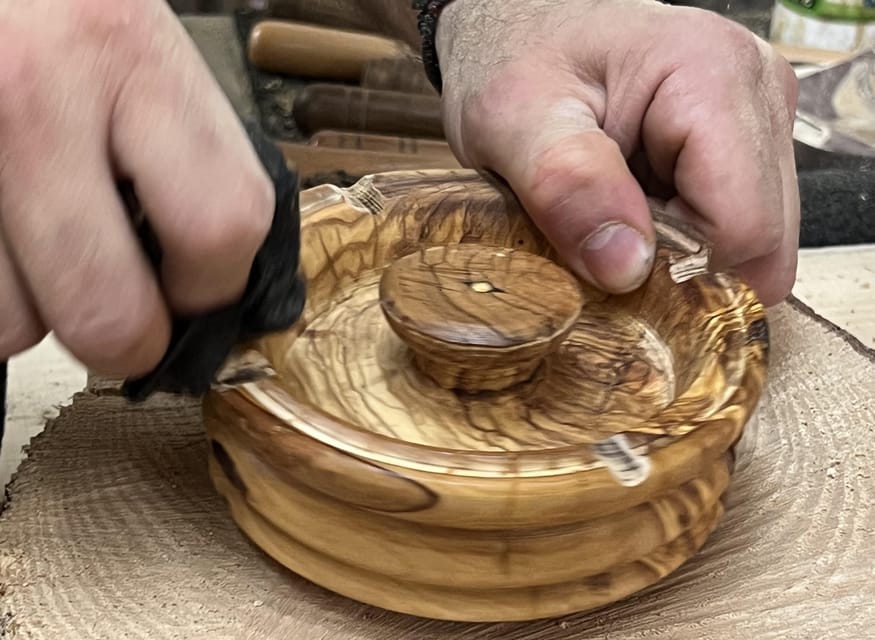
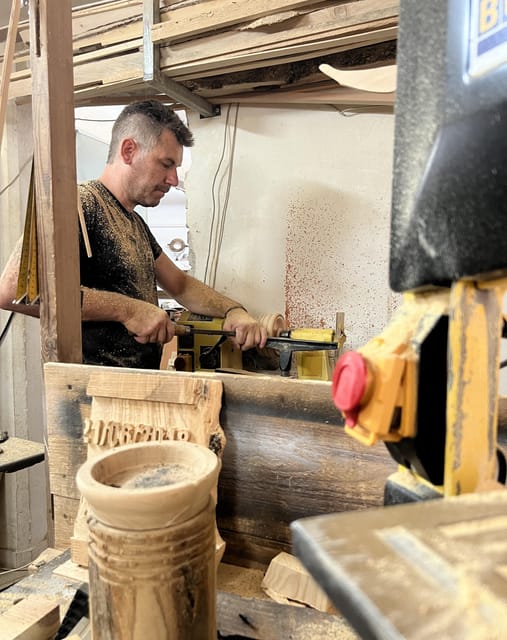
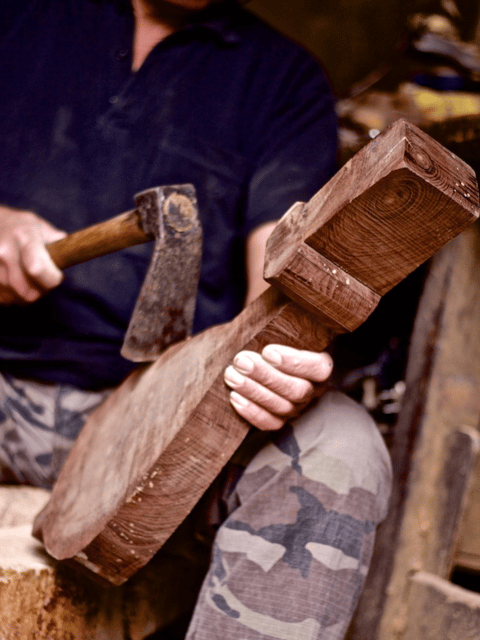
The first stop is a wood workshop. The artisan carves and shapes wood by hand, using basic tools rather than an industrial production line. This is a modest setting, but that is part of its appeal. You see the material change slowly under the maker’s hands.
I find demonstrations like this more useful than simply looking at finished objects in a shop. A finished wooden souvenir may be attractive, but watching it take shape helps you understand the time, control, and judgment behind it.
You receive a small handcrafted wooden souvenir from this stop. It is not presented as a major purchase or a large decorative object. Think of it as a compact reminder of the visit, with more meaning because you have seen the person and process behind it.
The stop should suit you if you like tools, materials, and practical craft. It may be less exciting if you want a long workshop where you make a full wooden object yourself. The information promises a demonstration and a souvenir, not an extended woodworking lesson.
The leather workshop: a third-generation craft
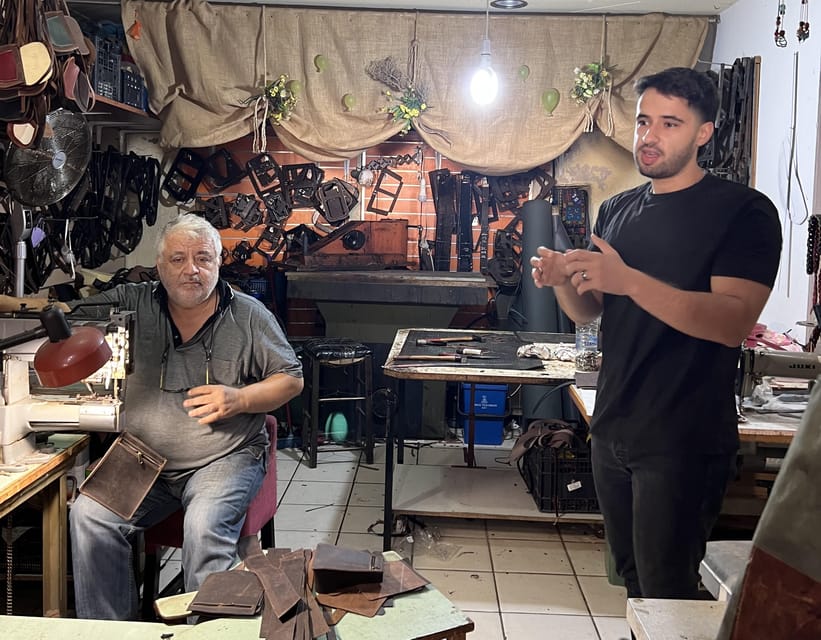
The leather stop is run by a third-generation craftsman. The skill has passed from grandfather to father to son, giving you a direct link between family tradition and present-day work.
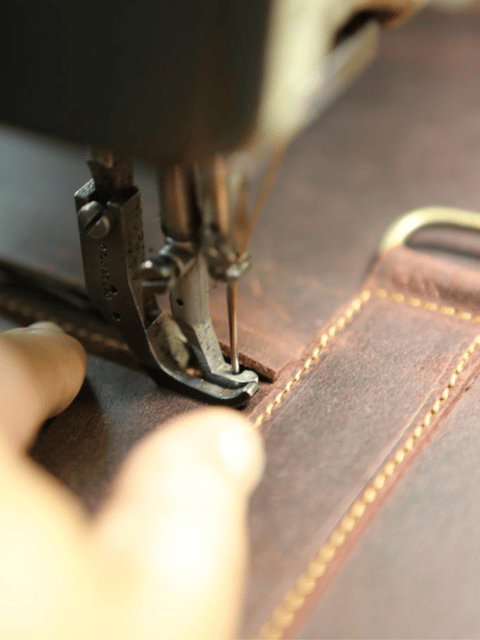
Leather is especially easy to understand when you see it being handled. You can appreciate the difference between a finished shop item and a handmade piece shaped, cut, or prepared by an individual maker. The tour is designed to show the old-fashioned method rather than mass production.
A personalized leather keepsake is included. This is one of the stronger practical benefits of the experience because the item is connected to you rather than being a generic souvenir from a rack.
The exact form of the personalization is not specified, so you should not book expecting a particular name, design, or size. What is clear is that you receive a handmade leather item as part of the tour.
This stop also adds a family story to the material. You are not only learning about leather goods. You are hearing how a trade can continue across several generations while still being shaped by one working family.
Papier-mâché: the tour’s hands-on center
The papier-mâché workshop is where you get involved directly. You use recycled paper and cardboard to create your own piece, then take it home.
That makes this stop different from the other three. At the wood, leather, and lyra workshops, the artisans are the main makers and you watch their skill. Here, you become part of the process. The result may not look perfect, and that is fine. Its value is that you made it during the walk.
Papier-mâché has a broader role than many people expect. It can be used for carnival floats, theatrical props, and decorative art. The material also connects traditional making with reuse, since paper and cardboard become something new instead of being discarded.
If you are visiting with children, this will likely be the easiest part for them to grasp. Still, the activity is not designed as a children-only craft session. It is offered to the group, and the booking information says children under five may join free but do not actively participate or receive souvenirs.
I would treat the papier-mâché piece as a personal memento rather than a polished work of art. You get the pleasure of trying the technique and taking home something that carries a story from Rethymno.
The Cretan lyra workshop and the sound of Crete
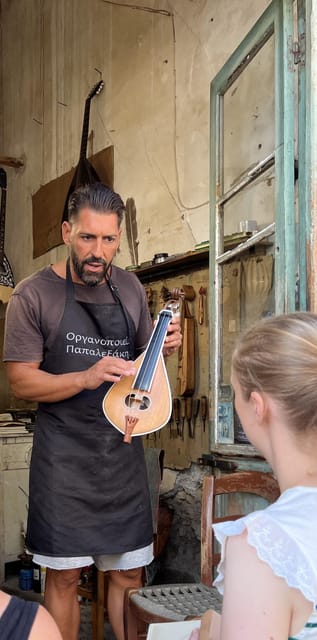
The final stop is devoted to the Cretan lyra, a traditional instrument closely tied to the island’s music. The workshop has received international documentary attention for its instruments, and you meet the master maker himself.
This is likely the most distinctive stop on the route. Wood and leather workshops can be found in many places, but the lyra gives the tour a direct connection to Cretan music and identity. You are learning about an instrument that is not simply decorative. It belongs to the island’s living musical tradition.
The personal details make the stop more memorable. During one visit, the lyra maker mentioned that his mother was born in Scotland, a small connection that created common ground with a visitor whose wife was also Scottish. That sort of exchange shows why a small-group setting works well. The conversation can move beyond a standard speech about tools and materials.
Do not expect a concert or a music lesson based on the supplied details. The emphasis is on the craft behind the instrument and the maker’s experience. If you are curious about how musical instruments are built, this should be a highlight. If you want to hear a full performance, you will need to find that elsewhere in Crete.






Rethymno’s Old Town between the workshops
The walking route links the workshops with several Old Town locations, including Mitropoleos Square and Guora Gate. These stops are not presented as long historical lectures. They give the walk a sense of place as you move between working studios.
This is a good way to spend time in Rethymno because you see the town at street level. The route begins near the former Customs House and returns there, making it easy to connect with other plans in the Old Town. The meeting instructions say to meet in front of the information centre, so check the exact starting point before setting out.
The itinerary lists four visits of about 20 minutes each. That accounts for much of the tour, with the remaining time used for walking, explanations, questions, and the hands-on activity. At that pace, the experience should feel focused rather than slow.
The route is not a broad survey of every Cretan craft. It gives you four carefully different examples. You will not see a long list of techniques, but you should come away with a better sense of how local skills survive through family work, personal pride, and direct contact with customers.
What the souvenirs are really worth
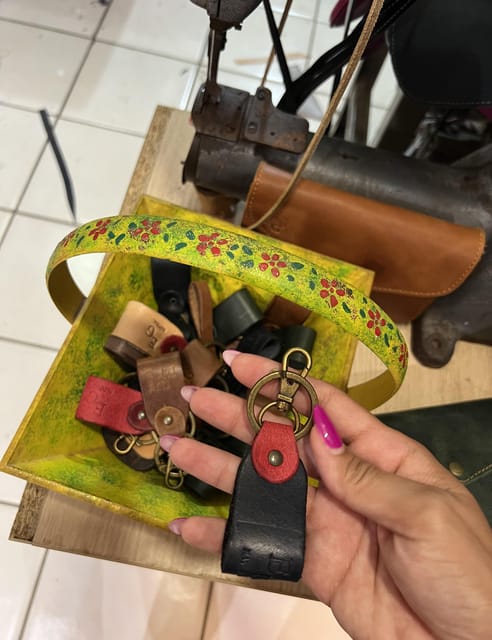
The $81 price per person needs to be judged against what is included. You receive a guided walk, four workshop visits, a hands-on activity, a personalized leather item, and a handcrafted wooden souvenir. Food, drinks, transport, and hotel pickup are not included.
If you only want a guided stroll through Rethymno, this is not the cheapest way to see the Old Town. Its value comes from access to active workshops and the included handmade items. Buying similar pieces separately could cost extra, but the more important benefit is that you learn how they are made.
I would not choose this tour because you expect expensive or large souvenirs. The gifts are small. Their appeal comes from the connection to the artisans, especially the leather item with personalization and the wooden piece made by hand.
The price is easier to justify if you enjoy craft, local culture, and conversations with makers. It is less convincing if you prefer major monuments, food tastings, or a broad historical tour. The activity is about making and people, not a checklist of Rethymno sights.
The small group helps the value. With a maximum of 12 people, you are not simply standing at the back of a crowd while an artisan works. You have a better chance to see the details and speak directly with the craftsmen.
Guide Virginia and the tone of the visit
Guide Virginia leads the tour in English. Her role is important because the workshops themselves are the heart of the experience, and a good guide helps the conversation move naturally between the craft, the Old Town, and Cretan culture.
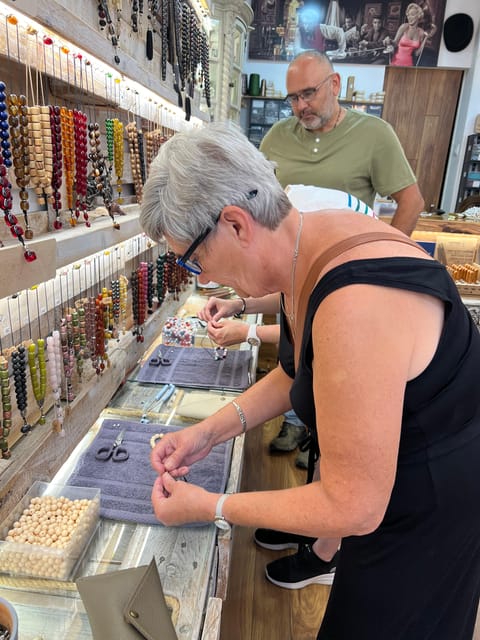
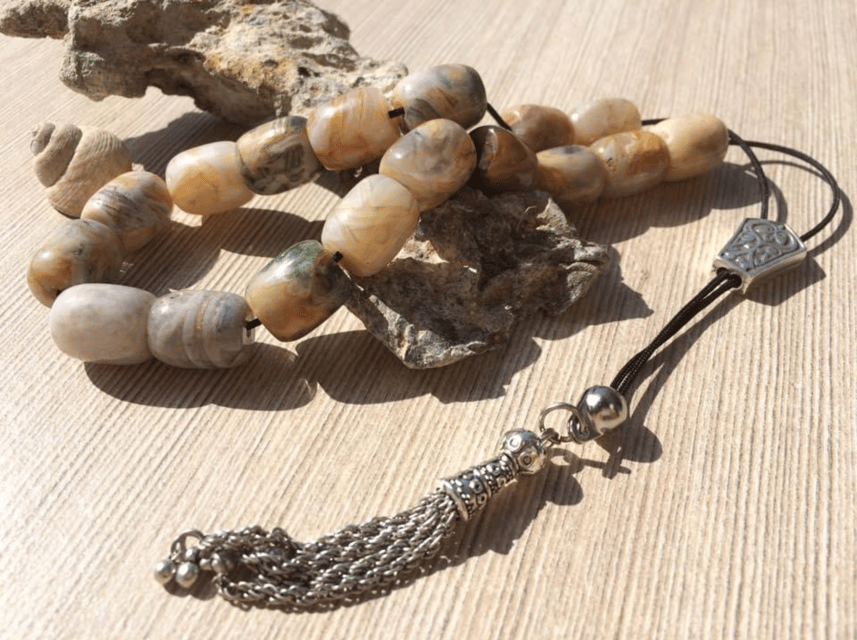
The available comments about the tour repeatedly single out Virginia’s friendly manner. One visitor noted that she had to step in and help finish the worry bead making when a participant with one hand found the task difficult. That detail suggests a guide who pays attention to the person in front of her rather than treating the activity as a fixed script.
The phrase meráki is another useful cultural detail. It means putting your heart, soul, and creativity into what you do. That idea gives the tour a clear theme. You are not merely looking at handmade objects. You are considering the care that makes them different from factory goods.
The guide’s personal style will matter more here than on a large sightseeing bus. If you like asking questions and chatting with local makers, you should feel at home. If you prefer to stay quiet and move quickly from sight to sight, the conversational approach may feel less efficient.
Who should book this Rethymno craft tour
I would recommend this experience to you if you enjoy:
- Meeting local makers in their own working spaces
- Small-group tours with time for questions
- Handmade objects with a story behind them
- Short creative activities you can share with family or friends
- Cultural experiences that go beyond monuments and photographs
- Traditional music and instruments, especially the Cretan lyra
It is also a good choice for a return visit to Rethymno. If you have already seen the main Old Town sights, the workshops give you a different reason to walk familiar streets.
Families can join, but keep the age rule in mind. Children under five may attend free, but they do not actively take part or receive the included souvenirs. Older children may find the papier-mâché activity the most engaging, while the lyra workshop may appeal to anyone interested in music.
You should think twice if you need hotel pickup, food, or transport included. None of those are part of the price. You should also allow flexibility because the duration is listed as both 1.5 and 2 hours.
Booking advice and final verdict
The booking terms are flexible: you can cancel up to 24 hours ahead for a full refund, and you can reserve now and pay later. Starting times vary, so check availability for your date. The tour is offered in English.
I would book this tour if you want a personal look at Rethymno’s living craft traditions and like the idea of going home with small handmade gifts. The strongest parts are the family-run workshops, the chance to make papier-mâché, and the Cretan lyra maker who connects the craft to the island’s music.
I would skip it if your main goal is a formal history tour, a full meal, or a long practical class in one craft. The schedule moves through four stops, so each visit is a short introduction.
For the right visitor, $81 buys more than a walk and a few souvenirs. It buys a conversation with makers, a creative attempt of your own, and a clearer sense of what made in Crete can mean.
FAQ
Where does the tour begin?
The meeting point is in front of the information centre, near the former Customs House. Check the exact location details when booking because both landmarks are used in the meeting information.
Where does the tour finish?
The route returns to the former Customs House area.
How long does the tour last?
The booking details list the duration as 1.5 hours, while the fuller tour description refers to 2 hours. Plan for roughly 1.5 to 2 hours.
How many workshops do you visit?
You visit four family-run workshops: wood, leather, papier-mâché, and Cretan lyra making.
What language is the tour offered in?
The live guided tour is offered in English.
Is the tour suitable for children under five?
Children under five can join for free, but they do not actively participate and do not receive the included souvenirs.
Is the papier-mâché activity included?
Yes. You create your own papier-mâché piece during the tour and take it home.
What souvenirs are included?
You receive a small handcrafted wooden souvenir and a personalized leather keepsake. You also take home the papier-mâché piece you make.
Is food or drink included?
No. Food and drinks are not included.
Is hotel pickup included?
No. Transportation and hotel pickup or drop-off are not included.
What is the maximum group size?
The group can include up to 12 people.
Can I cancel the booking?
You can cancel up to 24 hours in advance for a full refund. You can also reserve now and pay later.