REVIEW · ATHENS
Athens: Meteora Monasteries, Hermit Caves Tour with Pickup
Book on Viator →Operated by Keytours - Greece · Bookable on Viator
Meteora feels unreal for a reason. This day trip links the rock-top UNESCO monasteries with the Badovas hermit caves, plus scenic breaks and enough time on-site to actually look around, not just rush through.
Two things I really like: you get a human escort to help you time stairs and viewpoints, and the monasteries have a free audio guide to explain what you’re seeing. Guides like Maria and Kate (and others) are the kind who keep the day organized while still letting you pause for photos.
One consideration: it’s a long day with walking and stairs—though St. Stephen’s is the easiest stop and you can choose to wait at the parking area if needed.
In This Review
- Key highlights to know before you go
- Why Meteora makes sense as a day trip from Athens
- Pickup and the early-start reality (7:45-ish and a full day)
- Coach to Kalambaka: what the drive actually gives you
- Kalambaka to Meteora: the local transfer and your on-site flow
- Meteora monasteries: what you’ll see, and where stairs change everything
- Great Meteoron (Holy Monastery of Great Meteoron)
- Varlaam Monastery (often a main interior stop)
- Holy Monastery of Saint Stephen (the easiest access choice)
- Other monasteries you may see at a shorter stop level
- Stairs and pacing tip
- Badovas hermit caves: why this stop hits differently
- Food, breaks, and free time in Kalambaka (don’t skip the mental reset)
- Included lunch and optional meal stops
- Free time in Kalambaka
- Cost and value: what you’re really paying for
- Group size, guide quality, and the “communication” weak spots
- Who should book this Meteora monasteries pickup tour
- Should you book this Meteora Monasteries, Hermit Caves Tour with Pickup?
- FAQ
- How long is the Meteora tour from Athens?
- What time does the tour start and when do we return to Athens?
- Do I get hotel pickup in Athens?
- Where is the meeting point if I’m not using hotel pickup?
- Is an audio guide included inside the monasteries?
- Are monastery entrance fees included in the tour price?
- Is lunch included?
- What should I wear to enter the monasteries?
- What fitness level do I need, and is there an option if stairs are hard?
- What if the tour is canceled due to weather?
Key highlights to know before you go
- Pickup timing starts early from Athens, with hotel pickup options and an early bus to Kalambaka
- UNESCO Meteora in one day with time at major sites like Great Meteoron plus interior access to three monasteries
- Badovas hermit caves give you a quieter, more personal feeling than the main church spaces
- St. Stephen’s is the easy-access monastery with no stairs to reach the entrance
- Entrance fees are extra and cash-only at about €5 per monastery
- The day includes seaside food stops and free time in Kalambaka for your own meal
Why Meteora makes sense as a day trip from Athens
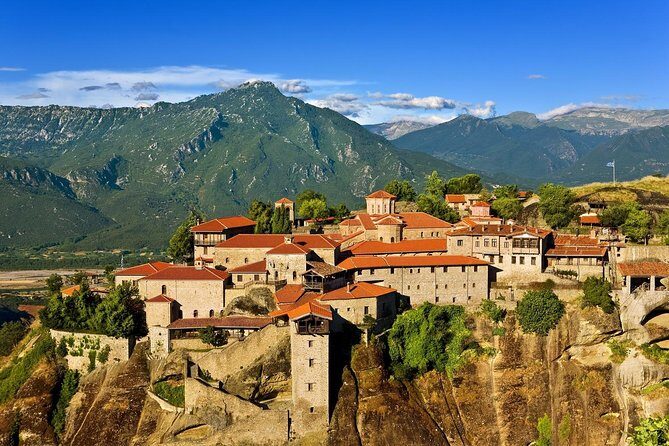
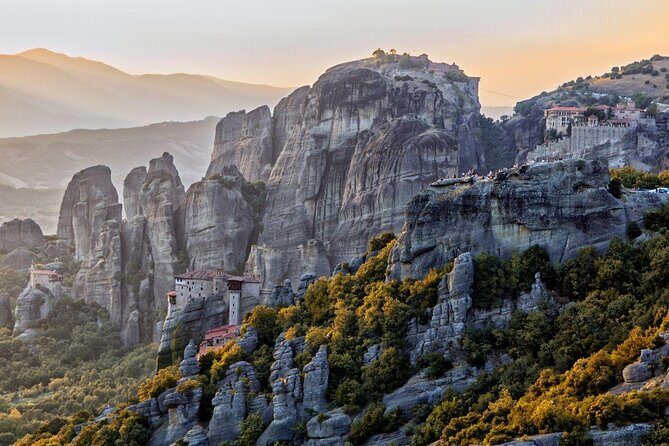
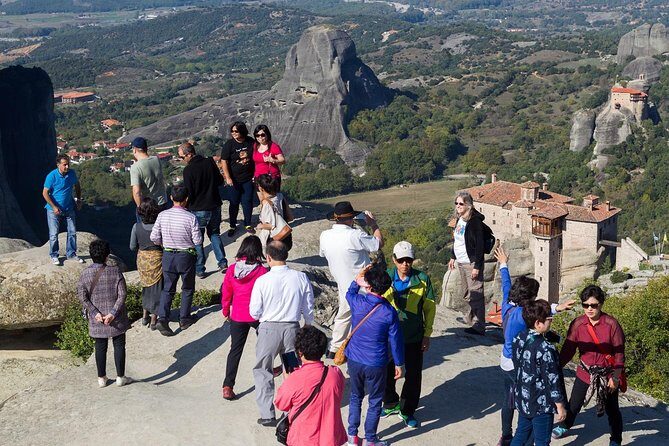
Meteora is one of those places where the setting does half the talking. The monasteries sit on towering rock pillars, built for safety and solitude, and the views make it obvious why monks chose this spot long ago.
What makes this tour practical is that you don’t have to piece together transport yourself. You get the drive managed, local transfers arranged, and on-site guidance so you can focus on the sights. It’s also built around time on Meteora itself—about five hours exploring—so you’re not stuck on a bus the whole day.
You can also read our reviews of more tours and experiences in Athens.
Pickup and the early-start reality (7:45-ish and a full day)

The day begins fast. The tour starts at 7:45am (with bus departure early in the morning), and hotel pickup (from selected central hotels) happens about one hour before departure. If you prefer the simple option, you’ll also find the main departure point at opposite Athens Railway Station.
This matters because Meteora runs on fixed timing. Stopping late means missing chapel time, photo windows, or the chance to browse without feeling rushed. On this tour, you’re also managing a group size capped at 45 travelers, so the schedule is designed to keep everyone moving.
One more practical note: the pickup area can feel busy, with multiple buses. If you want this part to be smooth, I’d recommend arriving early at your exact pickup point and having your map pin ready so you can spot the correct coach quickly.
Coach to Kalambaka: what the drive actually gives you
The Athens-to-Kalambaka portion takes you through the Greek countryside, and that five-hour travel stretch is part of the experience. It’s long, but it breaks up your day so you hit Meteora in the right daylight window rather than arriving late.
You’ll also get a couple of meal stops along the route, which helps on a day this long. The first is a coastal brunch stop near the sea in Kamena Vourla (about 30 minutes). Meals there are optional, and you can also pre-order via the onboard app, which is a nice way to avoid scrambling for food when you’re tired.
This is one of those tours where the road matters. If you’re expecting a quick sprint to the monasteries, you’ll be happier if you treat the bus ride as part of the pacing.
Kalambaka to Meteora: the local transfer and your on-site flow
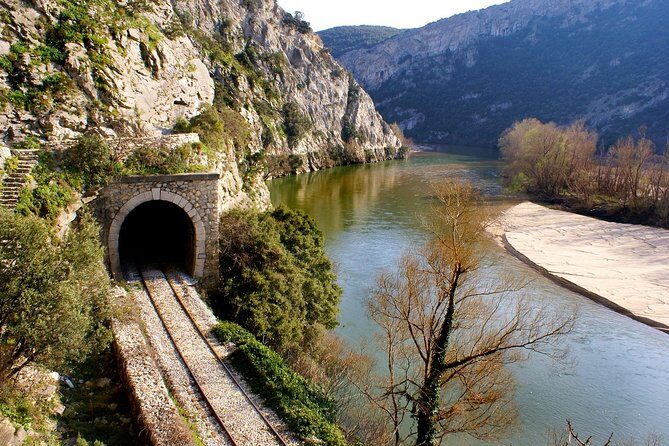
Once you reach Kalambaka (around 12:30pm), you switch from the big coach to the local part of the trip. You meet your English-speaking tour leader in the Meteora area and then move by local transfer to the monasteries.
The way it’s structured helps you avoid a common problem: getting stuck trying to “figure out” the best order once you arrive. Instead, the leader keeps the day moving and also gives you short photo stops along the way to major viewpoints.
You’ll also notice the tour doesn’t try to cram everything inside every single church. You get interior visits to three monasteries, plus time exploring key areas at your own pace with help on the ground.
Meteora monasteries: what you’ll see, and where stairs change everything
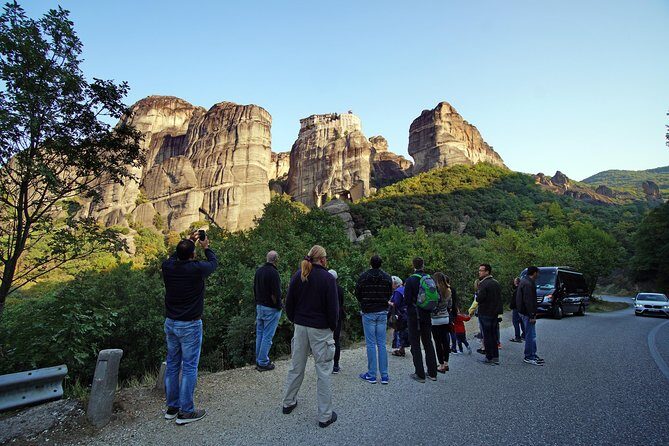
Meteora’s monasteries are not all the same level of effort. Some are reachable with relatively straightforward paths, and some require real climbs. The tour calls this out, and it’s something you’ll feel once you’re up close.
- All Day Cruise -3 Islands to Agistri,Moni, Aegina with lunch and drinks included
★ 5.0 · 4,958 reviews


Great Meteoron (Holy Monastery of Great Meteoron)
This is the big one: the largest and oldest of the Meteora monasteries, built atop a towering rock formation. The name “meteoro” is tied to the idea of being suspended in the air, which is exactly what the setting feels like.
You’ll spend time here getting your bearings and absorbing how the monastic community shaped Meteora. The spot is also ideal for understanding why these buildings were both spiritual centers and defensive shelters.
Varlaam Monastery (often a main interior stop)
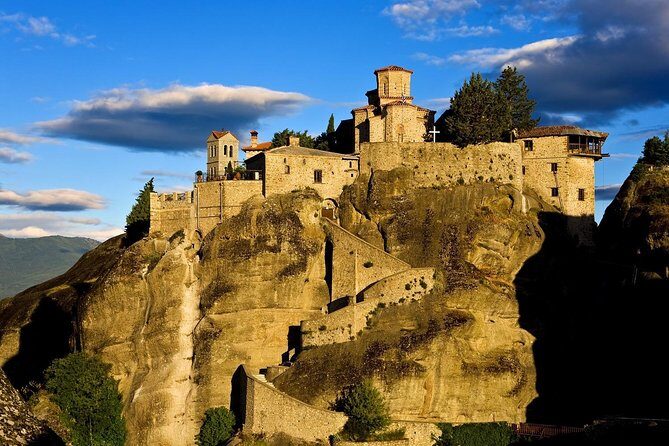
Varlaam is usually one of the featured monasteries you’ll visit. It’s described as the second largest, perched high on a rocky pinnacle, and the guide share context about its construction in the 16th century.
A detail worth paying attention to: the materials were hauled up by rope—so even if you’re not thinking about logistics while looking at frescoes, your brain will start noticing how everything had to be built from nothing in a hard place.
The chapel interior and the relics are where Varlaam can feel extra meaningful. This is the kind of stop where you’ll want to slow down and look at the art more than the view.
Holy Monastery of Saint Stephen (the easiest access choice)
If stairs are a concern, this is the monastery you’ll appreciate. St. Stephen’s is described as the most accessible because it requires no stairs to reach the entrance—just a short walk across a small bridge.
Your time here also helps you understand the timeline of Meteora’s monastic life. The tour notes early monastic activity reaching back to the 12th century, and it highlights Hosios Antonios and Hosios Philotheos, including that the church was rebuilt in 1545.
Inside, you’ll see two churches: a 16th-century chapel (damaged during WWII and the Greek Civil War) and a larger 18th-century cathedral dedicated to Saint Charalambos, which houses revered relics.
Other monasteries you may see at a shorter stop level
Depending on timing, you may also encounter brief viewpoints and short stops linked to places like:
- Agios Nikolaos Anapaphsas (founded end of the 14th century)
- Roussanou Monastery (often easier to reach since it’s on a lower rock)
- Holy Trinity Monastery (Agia Triada) (the tough one with about 140 steps and steep access)
Those extra stops matter because they help you understand that Meteora wasn’t one single monastery. It was a whole network of communities on different rock tops, with different levels of difficulty and visibility.
Stairs and pacing tip
The tour requires customers to climb stairs upon approach to many monasteries. If you find it challenging, there’s an option to wait at the parking area with benches. That’s a smart plan if you want to still be part of the day without being completely wiped out.
Badovas hermit caves: why this stop hits differently
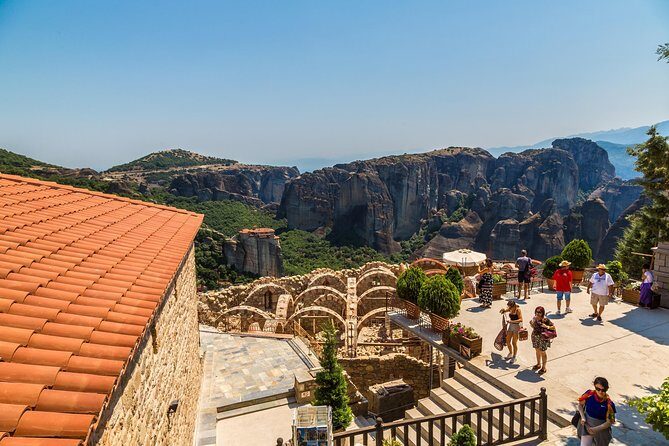
After the monastery interiors, the day shifts tone for Badovas hermit caves. These hermit caves are tied to Meteora’s earliest monks and their search for solitude. You’re exploring remote cliffside shelters with a sense of how small and austere life could be.
This stop is valuable because it changes the story from “church and art” to “how people lived here.” Even when you’re just looking at traces of simple dwellings, it feels more human and less ceremonial.
Time here is shorter (about 25 minutes listed for hermit caves), so I’d treat it as a “slow look” stop. If you rush, you miss the point.
Food, breaks, and free time in Kalambaka (don’t skip the mental reset)
Long tours live or die by pacing, and this one does a decent job keeping you from getting stuck on food decisions.
Included lunch and optional meal stops
There’s a Greek lunch with 10 dishes, including vegetarian options if you select that option. That’s genuinely helpful on a day like this because it reduces decision fatigue and keeps the schedule stable.
Outside of the included lunch, the route includes a coastal brunch stop in Kamena Vourla and an optional dinner stop by the sea on the way back. Both are meant as relax-and-reset moments rather than major sightseeing, so you can treat them as “fuel plus a view.”
Free time in Kalambaka
At the end, you get time to stroll in Kalambaka and have a bite to eat on your own before heading back to Athens. This is a good place to do something practical: grab water, use the restroom, and sit for a few minutes.
If you’ve got energy left, a short walk around town can make the whole day feel less like a sprint. And if you don’t, that quiet time is still worth it.
Cost and value: what you’re really paying for
The price is listed as $87.07 per person for a day trip that runs roughly 14 hours. At this price point, what you’re buying is convenience and guided logistics, not just a ticket to a single site.
Here’s what that value looks like in real-world terms:
- Roundtrip transport between Athens and Meteora (including the long road time managed for you)
- A local English-speaking tour leader to coordinate the stops
- Multilingual audio support inside monasteries
- Visits that include the hermit caves and interior access to monasteries
- A map and bottled water
What’s not included is the monastery entrance fee: about €5 per person per monastery, and you pay in cash on the spot. The tour data also says entrances are not required to be purchased ahead of time.
So I’d budget a little extra for entries and bring cash. One reason this matters: having cash ready keeps you from losing time while you hunt for an ATM.
Group size, guide quality, and the “communication” weak spots
This tour maxes out at 45 travelers, which is big enough to be efficient, but small enough that your leader can still manage the flow. That said, pickup logistics are where most frustrations can start, and the reviews reflect that.
The best way to avoid trouble is boring but effective: confirm your exact pickup point details by email, arrive early, and verify you’re at the right curb before the group starts loading.
For guide quality, the experience tends to hinge on the person driving the story. Names that came up strongly include Maria, Kate, Maira, and Jim, with drivers like Cristos/Christos also receiving compliments. When you get a guide who can connect the monastery setting to how people lived there, the whole day feels smarter.
Who should book this Meteora monasteries pickup tour
This is a strong match if you want:
- One-day access to Meteora without planning transport
- Time at multiple monasteries plus the Badovas caves
- A mix of guided context and on-your-own exploring
- A tour day that includes food breaks and a return trip to Athens
You might reconsider if:
- You’re very sensitive to long days and early mornings
- You have limited tolerance for steps, unless you’re comfortable focusing on the easier monastery stop like St. Stephen’s
Should you book this Meteora Monasteries, Hermit Caves Tour with Pickup?
I’d book it if you’re doing Athens as a base and want Meteora to be a “handled for you” day. The combination of guided escort, audio support, and time on-site is what makes it feel worth the long drive.
Skip it only if you know you won’t handle stairs or you prefer a more flexible, self-paced transport plan. If you can manage moderate walking and you pack your cash for the entrance fees, this tour is a solid value way to see why Meteora still feels like it belongs in another world.
FAQ
How long is the Meteora tour from Athens?
It runs about 14 hours.
What time does the tour start and when do we return to Athens?
The tour starts early in the morning (meeting around 7:45am), and it returns to Athens in the evening (arriving back about 9:58pm).
Do I get hotel pickup in Athens?
A complimentary pickup service is offered from selected centrally located hotels in Athens about one hour before departure. Pickup details are emailed to you before your tour date.
Where is the meeting point if I’m not using hotel pickup?
The listed start meeting point is St. Larissis, Athens 104 37, Greece, and the bus departure is described as opposite Athens Railway Station in the morning.
Is an audio guide included inside the monasteries?
Yes. A multilingual monasteries audio tour is included.
Are monastery entrance fees included in the tour price?
No. Entrance fees are not included. The Meteora Monasteries entrance fees are listed as about €5.00 per person per monastery, paid in cash on the spot.
Is lunch included?
Yes, a Greek lunch with 10 dishes (including vegetarian options if selected) is included.
What should I wear to enter the monasteries?
Women should not wear short skirts and should have long sleeves. Men are not allowed to wear shorts.
What fitness level do I need, and is there an option if stairs are hard?
The tour recommends travelers have a moderate physical fitness level. There are stairs involved, but it’s possible to wait at the parking area where some benches are available.
What if the tour is canceled due to weather?
The experience requires good weather. If it’s canceled due to poor weather, you’ll be offered a different date or a full refund.