REVIEW · SYROS
Authentic Greek Cooking & Foraging Experience in Syros with Maria
Book on Viator →Operated by Traveling Spoon · Bookable on Viator
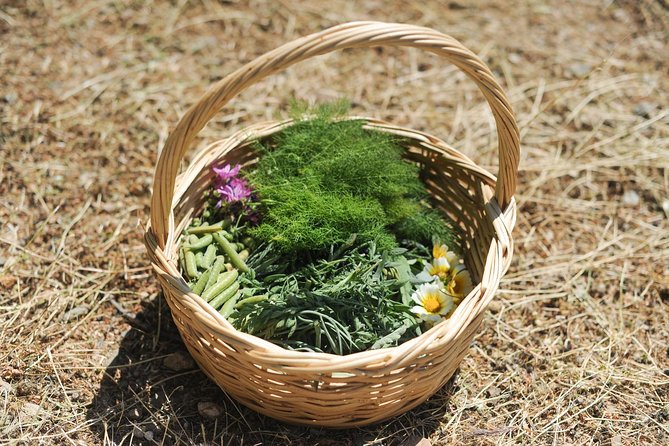
The most memorable part of this Syros food experience happens before the cooking starts. Depending on the season, Maria takes you near her home to gather wild herbs and greens, then explains how island families use them in food and herbal remedies. Back in her kitchen, you turn those plants into a meal that feels far removed from the usual tourist menu.
I like two things right away: the private setting means you spend the afternoon with Maria and your own group, and the menu reaches beyond standard Greek fare, with fava, wild greens, chickpeas, capers, grains, and seasonal vegetables. The main consideration is the price, $179 per person for about three hours. That is a serious spend, though the home visit, hands-on meal, and possible hotel transport make it more than a basic cooking lesson.
In This Review
- Key points to know before booking
- Why this Syros cooking class feels different
- The walk for wild herbs and greens
- Inside Maria’s garden and kitchen
- What you may eat: a menu with real island character
- A strong choice for vegetarians and curious meat eaters
- The private format and who benefits most
- Getting there from Megas Gialos
- Is $179 per person a good value?
- Things to keep in mind before you go
- Should you book Maria’s Syros cooking class?
- FAQ
- How long does the Syros cooking experience last?
- Where does the activity start?
- Where does the activity end?
- Is the cooking class private?
- Is the experience offered in English?
- Does the experience include foraging?
- What kind of food will I prepare?
- Is hotel transportation included?
- How much does the experience cost?
- Can I cancel for a full refund?
Key points to know before booking
- Foraging comes first: Seasonal conditions decide whether you walk with Maria to identify and gather wild herbs and greens.
- Maria hosts at home: The class takes place in her garden and kitchen in Megas Gialos, not in a formal cooking school.
- The food is vegetable-led: Expect legumes, grains, vegetables, local cheese, and only small amounts of meat if included.
- You cook, then eat: This is a hands-on lesson followed by a full meal, including dessert and Greek wine.
- Your group stays private: Only your party takes part, which suits families, couples, and small groups wanting personal attention.
- Transport is optional: You can upgrade for round-trip pickup from your local hotel.
Why this Syros cooking class feels different
Syros has plenty of reasons to visit, but food gives you a direct way into island life. This class does not simply place a plate of moussaka in front of you and call it local. Maria shows you how ordinary ingredients, wild plants, and old cooking habits fit together.
The meal is built around what grows and what has traditionally been available. That matters in the Cyclades, where island cooking developed with practical limits. Meat was used sparingly, while beans, peas, greens, potatoes, eggplant, tomatoes, grains, and herbs carried much of the meal.
You will also meet Maria in her own home. That changes the tone. You are not sitting in a large restaurant group with a fixed script. You are cooking in a personal setting, hearing Maria’s stories, and learning how she thinks about flavor, nutrition, and seasonal food.
The activity has a top rating from 17 reviews, with 100 percent recommending it. The praise centers on Maria herself: her warmth, her positive energy, her teaching, and her ability to make even a vegetarian lunch satisfying for people who normally prefer meat.
You can also read our reviews of more cooking classes in Syros
The walk for wild herbs and greens
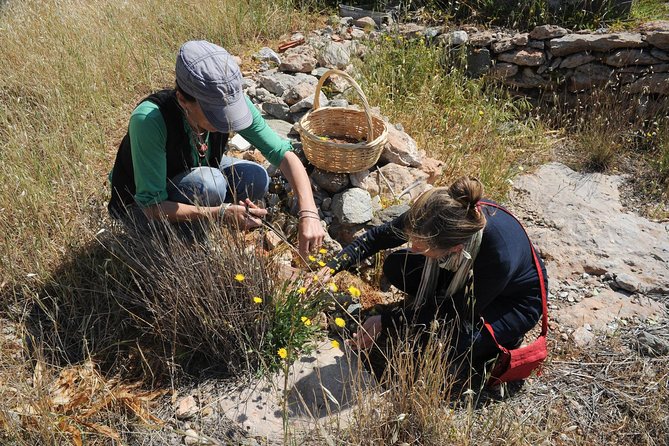
The opening walk depends on the season, so you should not book this expecting a guaranteed harvest of one particular plant. Instead, think of it as a guided introduction to the edible side of Syros.
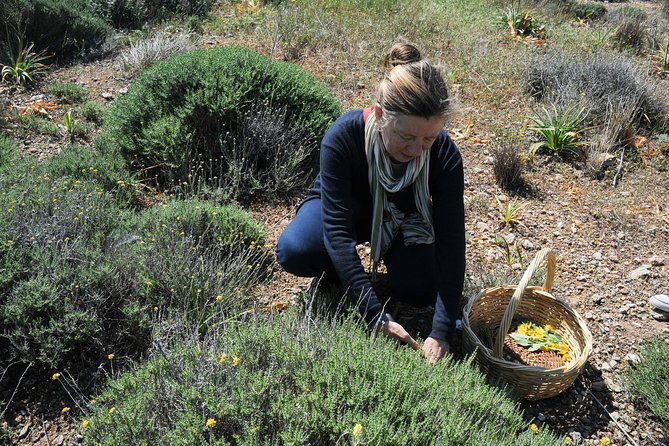
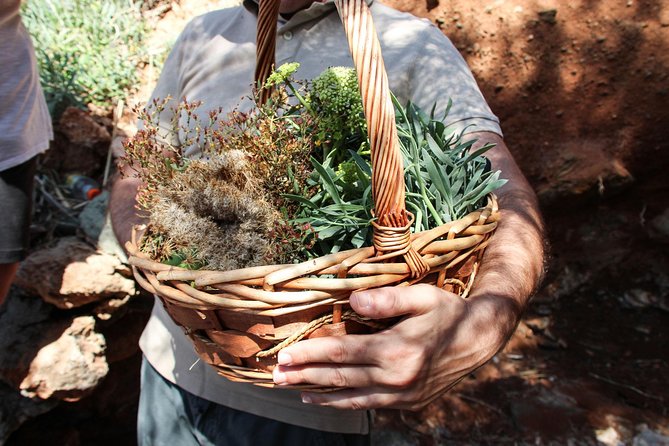
Maria teaches you how to identify local herbs and greens, then explains their uses in cooking and herbal medicine. Her approach includes both historical and scientific information, which gives the walk more substance than a simple name-and-point lesson.
This part is especially useful if you like knowing why an ingredient belongs in a dish. You might learn how a plant is gathered, how it has been used over time, and how its flavor works with vegetables, legumes, or a sauce. The plants then become part of your meal, so the walk has a clear purpose.
There is one practical limit. The details will change with the season and local conditions. If you want a specific foraging list, this is not the right promise to expect. The value lies in learning how Maria reads the local food supply and uses what is available.
Inside Maria’s garden and kitchen
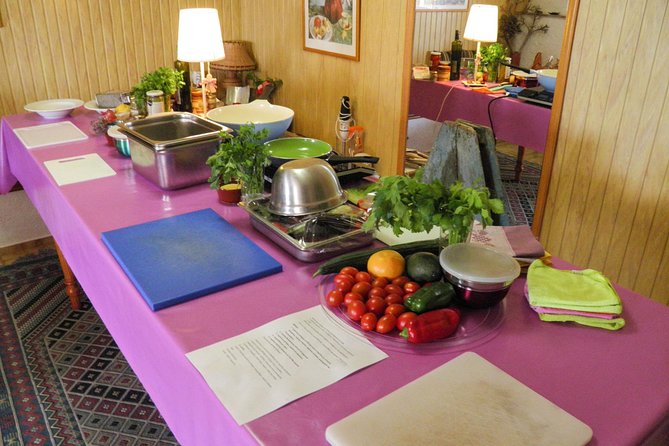
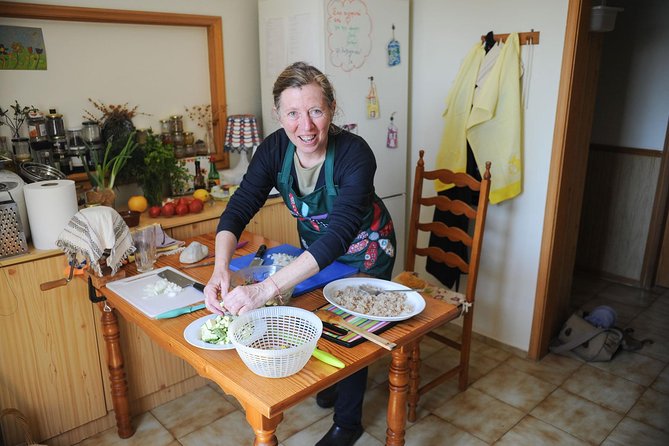
After the walk, you return to Maria’s home and begin preparing lunch. The class uses wild plants alongside organic vegetables and legumes, with Maria explaining techniques as you work.
This is not a demonstration where you watch from a chair while someone else does everything. You help prepare several dishes, handle ingredients, and follow the process from raw produce to finished food. Maria also shares nutritional advice and personal stories, so the cooking has a wider context.
The setting may include an outdoor meal on the patio when the weather allows. That detail matters because the experience is designed around conversation as much as food. One memorable touch mentioned by a past participant was a birthday dessert prepared as a surprise, so Maria clearly pays attention to personal occasions when she knows about them in advance.
I would tell you to arrive ready to participate rather than simply take photographs. The more questions you ask, the more useful the class becomes. You are not just collecting recipes. You are learning how a local cook combines humble ingredients into a complete meal.
What you may eat: a menu with real island character
The menu can vary, but the sample dishes show the kind of food to expect. Starters may include a seasonal peasant salad decorated with wild flowers, or a wild rock samphire salad with carrots, beets, and petimezi sauce.
Rock samphire brings a salty, coastal note, while petimezi, a grape syrup, adds sweetness and depth. This is a good example of why the class feels more distinctive than a standard Greek cooking lesson. You are working with ingredients that connect to the island and its older food traditions.
For the main courses, you might prepare fava padremeni, yellow split peas topped with onions, sun-dried capers, and tomatoes. You might instead make patates adinaktes, potatoes cooked in red wine with coriander.
Another possibility is tourlou, seasonal vegetables baked with chickpeas. The menu may also feature fresh black-eyed peas or melitzanes dellagratsiano, a local eggplant dish related to moussaka.
These are substantial dishes, not side salads dressed up as lunch. Legumes provide body, potatoes and grains add weight, and vegetables carry the main flavors. If you usually think of Greek food as grilled meat, feta, and familiar salad, this meal gives you a broader view.
Dessert may be semolina halva with saffron or another homemade sweet. Greek wine is included with dessert in the sample menu. The combination of cooking and eating means the class is likely to feel like a full afternoon meal, not a quick tasting.
A strong choice for vegetarians and curious meat eaters
The food is strongly vegetable-based, but you do not need to be vegetarian to enjoy it. The traditional logic is simple: meat appears in small amounts, while vegetables, legumes, grains, herbs, and cheese do most of the work.
That makes this class useful for anyone trying to understand Greek cooking beyond souvlaki. You will see how flavor comes from onions, tomatoes, wine, coriander, capers, saffron, wild greens, and slow cooking.
Past feedback also makes one point clear: people who normally eat meat still found the meal satisfying. I would treat that as a helpful sign, not a guarantee. Your enjoyment will depend on how much you like legumes and vegetable dishes, but the menu offers enough variety to avoid one-note cooking.
If you have strict dietary needs, you should confirm them before booking. The supplied details describe a vegetable-rich menu, but they do not provide a full allergy or substitution policy.
The private format and who benefits most
Only your group takes part. That is one of the strongest reasons to consider the $179 price. A private class lets Maria adjust the conversation to your interests, explain unfamiliar ingredients, and give you more direct help at the counter.
It also works well for a family or small group with different levels of cooking skill. One person can focus on herbs, another on chopping, and another on the history of a dish. You will not have to keep pace with a large class or compete for a place at the work surface.
Couples may like the personal setting, especially if they want a slower meal tied to local life. Food-focused visitors will get the most from the foraging and ingredient lessons. It also suits anyone who wants a quieter afternoon away from crowded sightseeing stops.
The three-hour duration is long enough for a walk, cooking, and a meal, but it is not an all-day farm visit. If you want a full-day food tour with several producers or market stops, this is more focused. Its strength is the close connection with one host and one home kitchen.
Getting there from Megas Gialos
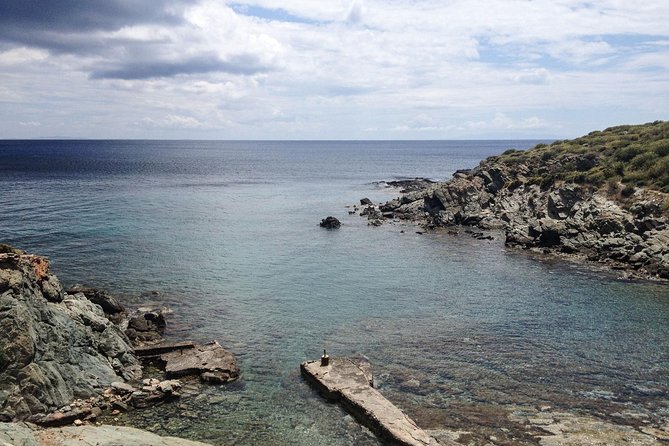
The meeting point is in Megas Gialos, Syros, at postal code 841 00. The activity ends back at the same meeting point.
You can upgrade for round-trip transport from your local hotel. That option may be worth the extra cost if you are unfamiliar with Syros, do not have a car, or want to avoid arranging your own route before an activity involving food and wine.
If you skip the transport upgrade, check your timing carefully. The provided details do not include a separate transfer schedule or a detailed pickup map, so you should make sure you know how to reach Megas Gialos before the start time.
The class is offered in English. Confirmation arrives within 48 hours of booking, subject to availability. It is also booked around 67 days ahead on average, which suggests you should not leave it until the last day of a short Syros stay.
Is $179 per person a good value?
At $179, this is not a cheap cooking class. You are paying for roughly three hours, food, instruction, a private group, access to Maria’s home and garden, and possibly a seasonal foraging walk. Round-trip hotel transport is an upgrade rather than a standard inclusion.
The value improves if you would otherwise pay for a special lunch and a separate guided activity. Here, the meal is the result of your own work, and the ingredients come with explanations about local customs, health, and seasonal use.
The price is harder to justify if you only want a quick recipe lesson or a standard Greek meal. You can find less expensive cooking classes, especially in larger group settings. Those may offer more dishes or a longer schedule, but they will not necessarily provide the same private home setting.
I would view this as a special-occasion activity rather than a routine meal stop. It fits a birthday, anniversary, honeymoon, or final afternoon after a longer Greek trip. One past participant used it as the closing food experience of a two-week Turkey and Greece journey, which makes sense: it gives you a personal meeting with a local cook instead of another restaurant table.
Things to keep in mind before you go
The weather can affect the outdoor part of the experience. The class may include a walk and an al fresco lunch, but the supplied details do not promise that every element will take place outdoors.
The foraging portion also changes with the season. You should expect Maria to work with what is available rather than present an identical menu all year.
This is a private activity, but the details do not state a maximum group size. If your party is larger than a couple or small family, confirm the group arrangements before paying.
Service animals are allowed. The class is offered in English, and free cancellation is available if you cancel at least 24 hours before the local start time. Cancellations or changes made inside that window are not refunded or accepted.
Should you book Maria’s Syros cooking class?
I would book this if you want food tied to place, people, and seasonal ingredients. The strongest reasons are the walk for wild herbs, the private visit to Maria’s home, and a menu that shows the vegetable and legume side of Greek cooking in full.
You should think twice if your budget is tight, you dislike vegetarian food, or you want a guaranteed menu and a formal cooking-school setting. For everyone else, especially couples, families, and food-minded visitors, this is one of the more personal ways to spend three hours on Syros.
Book early if the date matters to you. The average lead time is about 67 days, and confirmation depends on availability. Tell Maria about a birthday or special occasion when you book, since the experience has room for personal touches.
FAQ
How long does the Syros cooking experience last?
The activity lasts approximately three hours.
Where does the activity start?
It starts in Megas Gialos, Syros, at 841 00, Greece.
Where does the activity end?
It ends back at the meeting point in Megas Gialos.
Is the cooking class private?
Yes. Only your group participates in this private activity.
Is the experience offered in English?
Yes. The activity is offered in English.
Does the experience include foraging?
Depending on the season, Maria takes you on a walk near her home to identify and gather wild herbs and greens.
What kind of food will I prepare?
The menu focuses on traditional Greek dishes using seasonal vegetables, legumes, grains, local cheeses, and small amounts of meat. Possible dishes include fava, tourlou, eggplant, black-eyed peas, potatoes, salads, semolina halva, and homemade sweets.
Is hotel transportation included?
Round-trip transportation from your local hotel is available as an upgrade. The standard meeting point is in Megas Gialos.
How much does the experience cost?
The listed price is $179 per person.
Can I cancel for a full refund?
Yes, if you cancel at least 24 hours before the experience start time. Cancellations made less than 24 hours before the start time are not refunded.