Ermoupolis is not just a ferry stop with pretty blue water. It is a grand nineteenth-century town built around trade, politics, churches, and theater. This two-hour walk takes you from the broad civic heart of Miaouli Square to ornate Orthodox churches and the sea-facing streets of Vaporia, with an original El Greco icon as its quiet finale.
I like two things right away: the route packs in major sights without wasting time, and guides Dimitris and Tonia add local context that is hard to get from a quick solo stroll. The tour also suits a short port visit, since it begins at noon and ends near the central harbor.
The main drawback is the pace. Five stops are covered in roughly 24 minutes each, so you will see the highlights rather than explore every building at length. On a very hot day, you may prefer the shade or a beach, and the Apollo Theatre charges an extra €3 admission.
In This Review
- Key points before you book
- Why this two-hour walk works in Ermoupolis
- Miaouli Square and the Town Hall
- Apollo Theatre, Greece’s early cultural landmark
- Saint Nicholas Church and Orthodox design
- Vaporia, neoclassical streets beside the water
- The Dormition of the Virgin and an authentic El Greco
- What the guides add to the experience
- Timing, meeting point, and practical details
- Who will get the most from this walk
- Is the Ermoupolis Walking Tour worth $36.14?
- FAQ
- How long is the Ermoupolis Walking Tour?
- What time does the tour begin?
- Where does the tour meet?
- Where does the tour finish?
- Is the tour offered in English?
- Is Apollo Theatre admission included?
- Are the churches included in the tour?
- Is the El Greco painting included?
- What is the maximum group size?
- Can I cancel for a full refund?
Key points before you book
- See Ermoupolis Town Hall: Ernestos Ziller designed this imposing building, constructed from 1875 to 1891.
- Enter Apollo Theatre: Built between 1862 and 1864, it is described as the first theater in Greece. Admission costs €3 extra.
- View an original El Greco icon: The Church of the Dormition of the Virgin holds a 1562 image by Domenikos Theotokopoulos.
- Hear local stories: Dimitris is praised for answering questions and sharing personal insight into Syros. Tonia brings particular interest in the island’s industrial past.
- Keep the route compact: The walk lasts about two hours and accepts up to 20 people.
- Start in the town center: Meet at Plateia Miaoyli 1 at noon, then finish near the port at the Leivadaras sweet shop.
Why this two-hour walk works in Ermoupolis
Many Greek island towns reward wandering, but Ermoupolis can feel different from the start. Syros was built as an important urban center, and its capital has a formal scale that surprises people arriving by ferry. Broad streets, neoclassical facades, a large town hall, a theater, and grand churches all appear within a manageable area.
That makes a guided walk useful. You can find the buildings on your own, but it takes a local voice to explain why they matter and how they fit together. Dimitris has a strong connection to Syros and enjoys discussing its past and present. Tonia has also led the walk, including a tour where she focused on the island’s industrial development.
The format is simple. You meet at Plateia Miaoyli 1 at 12:00 pm, walk through the central parts of Ermoupolis, and finish near the port beside the Parisi travel agency, at the Leivadaras loukoumi shop on Akti Papagoi. That ending is practical if you have a ferry connection, though you should still allow your own buffer for schedules.
At $36.14 per person, the price is reasonable if you want interpretation rather than a self-guided checklist. You are paying for a local guide, a fixed route, and the chance to ask questions. The Apollo Theatre ticket is not included, so add €3 if you want to enter.
You can also read our reviews of more walking tours in Syros
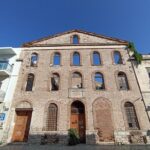
Miaouli Square and the Town Hall
The tour begins at Plateia Miaouli, the central square of Ermoupolis. This is the right place to start because it gives you an immediate sense of the city’s civic ambition. The square is not a small village plaza. It leads toward Ermou Street, a major shopping route, and anchors the town’s public life.
The main sight here is Ermoupolis Town Hall. Designed by Ernestos Ziller, the building was constructed between 1875 and 1891. Its long building period reflects the scale of the project and the importance of the young capital of Syros.
The tour description calls it the biggest town hall in Europe. Even without relying on that claim alone, the building makes a strong first impression. It is a place where architecture tells you that Ermoupolis was meant to be more than a seasonal resort.
You spend about 24 minutes at this stop, with admission included. That is enough time for your guide to point out the building’s role and explain the setting, though not enough for a slow architectural study. If you enjoy details such as stonework, proportions, and civic design, keep your eyes up as you cross the square.
Apollo Theatre, Greece’s early cultural landmark
From the town hall, the route continues to Apollo Theatre. Built between 1862 and 1864 according to plans by Italian architect Pietro Sambo, the theater reflects the European influence that shaped Ermoupolis.
It is described as the first theater in Greece and as a symbol of the town’s cultural growth. That makes it more than a quick photo stop. The building shows how much cultural life mattered in a nineteenth-century commercial city, where theater and public performance helped connect Syros with wider European currents.
The planned visit lasts about 24 minutes. Admission is not included and costs €3. That small extra charge is easy to overlook when comparing the tour price, so budget for it if entering the theater matters to you.
This is also one of the places where a guide adds real value. A building can look attractive from the outside, but its date, architect, and role in the city give it meaning. Dimitris is often praised for explaining these connections clearly and for taking questions. That open question-and-answer style is helpful here, since you may want to know how the theater fits into Ermoupolis life.
The limitation is time. If the theater is your main reason for booking, confirm how much of the interior visit is possible on your date. The listed schedule gives the stop 24 minutes, not an extended performance or behind-the-scenes visit.
Saint Nicholas Church and Orthodox design
The walk then reaches the Holy Church of Agios Nikolaos, or Saint Nicholas. It is the patron church of Ermoupolis and sits in the Vaporia district, close to Miaouli Square and Apollo Theatre.
The church is described as the third biggest church in Greece. Its size and decoration offer a sharp change from the civic buildings you have just seen. Here, the focus shifts from public government and theater to Orthodox worship, local identity, and religious art.
Admission is free. That matters because the tour gives you access to a major cultural sight without adding another fee. You should dress and behave with the same care expected at any active place of worship, even though no special clothing rules are provided in the tour details.
A guide can help you notice more than the surface decoration. Dimitris is praised for explaining cultural meaning as well as dates and names, and that is particularly useful in a church where visual details may otherwise blur together. You will have about 24 minutes, so this is a focused visit rather than a long period for quiet reflection.
The church also helps explain why a walking tour is better than a simple list of monuments. The stops are close together, but they represent different sides of Ermoupolis: government, performance, faith, and neighborhood life.
Vaporia, neoclassical streets beside the water
Vaporia is one of the most attractive parts of the route. The district is known for its neoclassical buildings and its position near the sea. This is where Ermoupolis becomes more intimate after the formal scale of the square and theater.
Your guide leads you through the area for about 24 minutes. Expect architecture, views, and stories about the buildings rather than a traditional beach outing. The tour names Vaporia Beach, but the point is walking through the famous district and seeing its neoclassical character.
This distinction matters in hot weather. One person who took the walk felt that time at Paralia Asteria might have been a better choice on a particularly scorching day. If your priority is swimming or sitting by the water, this tour will not replace a beach afternoon. If your priority is understanding why Ermoupolis looks the way it does, Vaporia earns its place.
The district is also a good part of the route for photographs, although you should not let your phone distract you from the guide. Dimitris is known for answering questions and adding personal recommendations, and the value of this section comes from connecting what you see with local life.
The Dormition of the Virgin and an authentic El Greco
The final major stop is the Church of the Dormition of the Virgin. The church itself is important, but the main reason to pay attention is the painting inside.
The church holds an authentic image of the Dormition of the Virgin dated to 1562, painted by Domenikos Theotokopoulos, better known as El Greco. That is an extraordinary sight to encounter in a relatively modest island church. It gives the tour a memorable ending because the painting is not presented as a distant museum object. It remains part of a functioning religious setting.
You receive about 24 minutes here, and admission is free. The guide’s explanation is especially useful because the painting’s importance could be easy to miss if you entered alone without context.
This stop was a highlight for many people who took the walk, and I can see why. The theater and town hall are impressive, but an original work by El Greco creates a more personal moment. It is the kind of detail that changes your view of Syros. The island is not only about beaches, ferry arrivals, and summer cafes. Its cultural treasures can appear in places you might otherwise pass without entering.
What the guides add to the experience
The tour is led by Dimitris, with Tonia also serving as a guide. The strongest praise centers on both guides’ enthusiasm, clear explanations, and willingness to answer questions.
Dimitris appears particularly suited to people who like conversation. You can ask about the buildings, local life, the island’s past, or personal recommendations for the rest of your stay. He also has an interesting personal background, which can make the walk feel less like a memorized script.
Tonia brings strong interest in Syros’s industrial past. She also used WhatsApp to remind one participant about the start time and later shared helpful information. That kind of communication is practical, especially if your arrival plans are tied to a ferry.
The maximum group size is 20, but the actual experience may be smaller. Some dates have had only two people, creating an almost private tour. You should not book on the assumption that you will receive a private walk, but a smaller group is possible and gives you more room for questions.
One critical rating described the route as basic and somewhat reduced. That is a fair way to frame the tour. It covers the main sights in two hours, but it is not designed to show every corner of Ermoupolis. If you want a broad introduction, the compact format works. If you want long interior visits or unplanned detours, you may find it limited.
Timing, meeting point, and practical details
The tour starts at noon, at Plateia Miaoyli 1 in Ermoupoli. The exact central-square meeting point matters, so arrive early enough to identify the location rather than searching at the last minute.
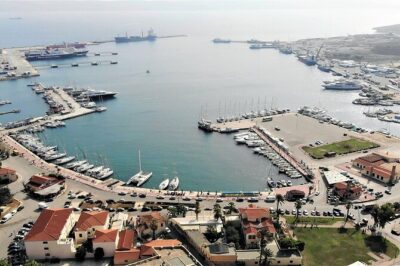
The ending point is at the central port, next to the Parisi travel agency, at the Leivadaras sweet shop on Akti Papagoi. The end location is useful for anyone continuing by ferry or wanting to explore the harbor afterward.
You receive a mobile ticket, and the experience is offered in English. It is near public transportation, and most people can take part. The tour is a walking activity, however, so you should be comfortable being on foot for about two hours.
Confirmation is provided at booking. Free cancellation is available up to 24 hours before the start time for a full refund. Changes or cancellations made inside that 24-hour window are not accepted for a refund. The experience also requires a minimum number of participants, so a cancellation by the provider may result in another date, another experience, or a full refund.
The timing deserves thought. Noon can be convenient if you arrive in the morning, but it may be hot. One guide provided large bottles of water on a very warm day, but that should not be treated as a guaranteed feature. Bring your own water and sun protection.
Who will get the most from this walk
I would choose this tour if you have only a short stay in Syros and want to understand Ermoupolis quickly. It gives you a strong first orientation and leaves you near the port when it ends.
It also suits anyone who enjoys architecture, Orthodox churches, local history, and cultural sites more than a day spent only on the beach. The combination of the town hall, theater, Vaporia, and El Greco painting gives the route a good range.
Families and mixed-age groups may appreciate the two-hour limit. The walk is long enough to feel worthwhile but short enough to fit around other plans. People who ask many questions should also enjoy the format, particularly if the group is small.
You may want to skip it if your only free afternoon is reserved for swimming, or if you dislike fixed routes and timed stops. You can visit many of these places independently, and the extra value comes from interpretation, local stories, and efficient routing rather than exclusive access.
Is the Ermoupolis Walking Tour worth $36.14?
For $36.14, this is a fair purchase if you want a guided introduction to Syros’s capital. The price covers about two hours with an English-speaking local guide, and the route includes several of the town’s most important buildings. The only listed admission cost, €3 for Apollo Theatre, is modest but separate.
I especially like that the walk does not stop at the obvious square. It moves from civic architecture to theater, Orthodox art, neoclassical streets, and an original El Greco. That range gives you a better understanding of Ermoupolis than a quick harbor stroll.
Book it if you want context, have limited time, and enjoy asking questions. Skip it if you would rather spend those two hours at the water or explore at your own pace. For most first-time visitors with a free morning or midday in town, it is a sensible way to get your bearings and discover why Syros deserves more than a quick ferry stop.
FAQ
How long is the Ermoupolis Walking Tour?
The tour lasts approximately two hours.
What time does the tour begin?
The tour starts at 12:00 pm.
Where does the tour meet?
The meeting point is Plateia Miaoyli 1, Ermoupoli 841 00, Greece.
Where does the tour finish?
It ends at the central port beside the Parisi travel agency, at the Leivadaras sweet shop on Akti Papagoi in Ermoupoli.
Is the tour offered in English?
Yes. The tour is offered in English.
Is Apollo Theatre admission included?
No. Admission to Apollo Theatre costs €3 and is paid separately.
Are the churches included in the tour?
Yes. The route includes Saint Nicholas Church and the Church of the Dormition of the Virgin.
Is the El Greco painting included?
Yes. The route visits the Church of the Dormition of the Virgin, where an authentic 1562 image of the Dormition of the Virgin by Domenikos Theotokopoulos, El Greco, is located.
What is the maximum group size?
The tour accepts a maximum of 20 people.
Can I cancel for a full refund?
Yes, if you cancel at least 24 hours before the experience start time. Cancellations made less than 24 hours in advance are not refunded.