REVIEW · CRETE
Crete: Cretan Culture Tour and Pottery Workshop
Book on GetYourGuide →Operated by Allcretetours · Bookable on GetYourGuide
Clay, cave, and monastery in one day.
This is the kind of Crete day that hits multiple interests at once: Monastery of Arkadi for major Cretan spiritual and military history, then a hands-on-style stop at the pottery workshop in Margarites (TSIKALARIO), plus an olive oil tasting and the dramatic Melidoni cave. I like how the day mixes big sights with small, human craft moments, so it does not feel like you are just riding around and taking photos.
One thing to keep in mind: the day’s descriptions promise you can create your own ceramic, but real departures can run as demonstrations depending on the group and flow, and the olive oil stop can feel more like explanation plus tasting than a fully “in-action” factory visit. Also, the main site entrances are not included, so plan for a few extra ticket costs on top of the $40.
In This Review
- Key points to know before you go
- A One-Day Loop from Rethymno (What the pacing feels like)
- Arkadi Monastery: Icons, relics, weapons, and an hour to breathe
- Eleftherna Museum: When Homer’s era meets a long timeline
- Margarites and TSIKALARIO pottery: craft tradition with an expectation check
- Margarites free time: lunch you control, pace you control
- Olive oil manufactory: from old methods to today’s tasting
- Melidoni Cave (Gerodospilios): stalactites, worship history, and the 220-meter setting
- Guide quality and day-tour comfort: what to expect in real life
- Price and value: is $40 really a good deal here?
- Should you book this one-day Cretan culture and pottery tour?
- FAQ
- Where does the tour pick you up?
- When will I receive the pickup time and pickup point?
- How long is the tour?
- Is the guide available in English?
- What is included in the price?
- Do I need to pay entrance fees for the sites?
- Will I be making pottery myself?
- What happens at the olive oil stop?
- Is free cancellation available?
Key points to know before you go
- Monastery of Arkadi first: museum rooms with icons, monastic relics, and weapons, plus time to wander
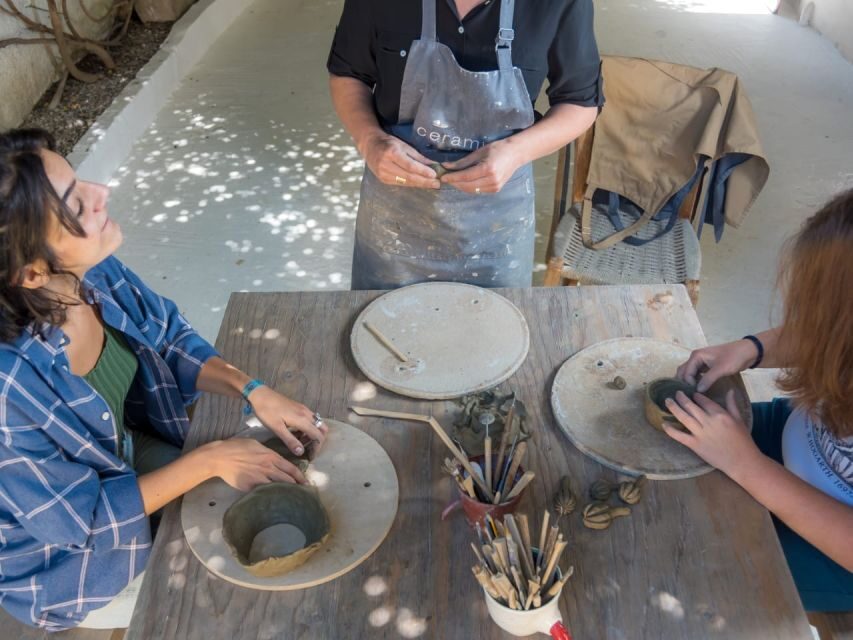
- Pottery in Margarites at TSIKALARIO: learn the tradition and (often) make something, though some groups get a demo
- Olive oil tasting included: learn the past-to-present story, then taste what you just learned
- Melidoni Cave (Gerodospilios): stalactites and stalagmites, tied to worship and religious ceremonies
- Built-in pauses: about one hour of free time at Arkadi, plus free time in Margarites for lunch or a walk
- English live guide + round-trip transport: picked up from your hotel area in Rethymno for a stress-free day
A One-Day Loop from Rethymno (What the pacing feels like)
The tour is built as a smooth one-day circuit, starting with pickup from your hotel or very close to it in Rethymno. You ride between stops with transportation included, which matters on Crete because distances can add up fast when you are doing it on your own.
The schedule is structured but not frantic. You get guided time for the “must-see” historical pieces, then you also get breathing space: roughly an hour of free time at the monastery, and then free time in Margarites for lunch or just strolling. It is a good match if you want variety without spending your whole day making decisions.
A few more Crete tours and experiences worth a look

Arkadi Monastery: Icons, relics, weapons, and an hour to breathe
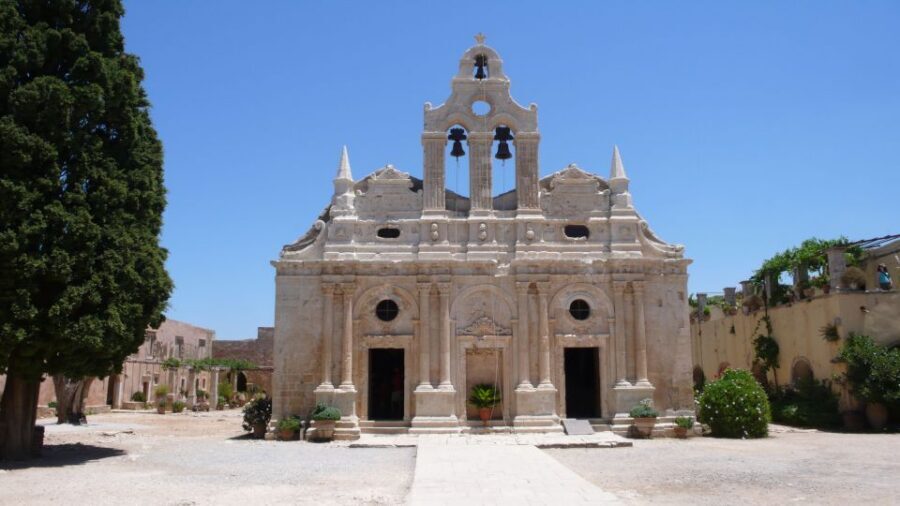
The day’s anchor is the Monastery of Arkadi, one of the most important stops in Crete. You start with the on-site museum portion, where you see icons, monastic relics, and weapons that explain why Arkadi matters beyond its walls. The museum setup makes the story easier to grasp, because you are not only seeing stones—you’re seeing what people kept, carried, and used.
After the guided portion, you get about one hour of free time. That is your chance to slow down, take in the view, and decide what you want to linger on. I like this kind of padding in a day tour, because it turns a guided history stop into something more personal.
One practical note: the Arkadi Monastery entrance fee is not included (3€ per person). If you want to avoid last-minute figuring, budget for it early in the day.
Eleftherna Museum: When Homer’s era meets a long timeline
Next comes the Museum of Ancient Eleftherna, tied to the archaeological site of Eleftherna. This museum holds findings that span an enormous time range: from 3000 B.C. to 1300 A.D. It is also described as the first archaeological site museum in Crete, which gives you a sense that the presentation is meant to help you follow the site’s evolution.
The museum includes material connected with Homer’s era, so it works well if you like history that connects to names you already recognize. The experience is mostly museum-based, so think of it as your cultural “reset” between outdoor stops—less walking, more reading and looking at artifacts.
Two things to consider: the entrance fee is not included (4€ per person), and some people find this museum smaller than expected for the price they paid. If you are the type who wants long, detailed museum time, you might feel you move through it quickly. If you’re okay with “key highlights,” it fits the one-day format well.
Margarites and TSIKALARIO pottery: craft tradition with an expectation check
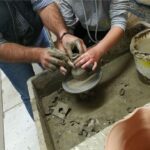
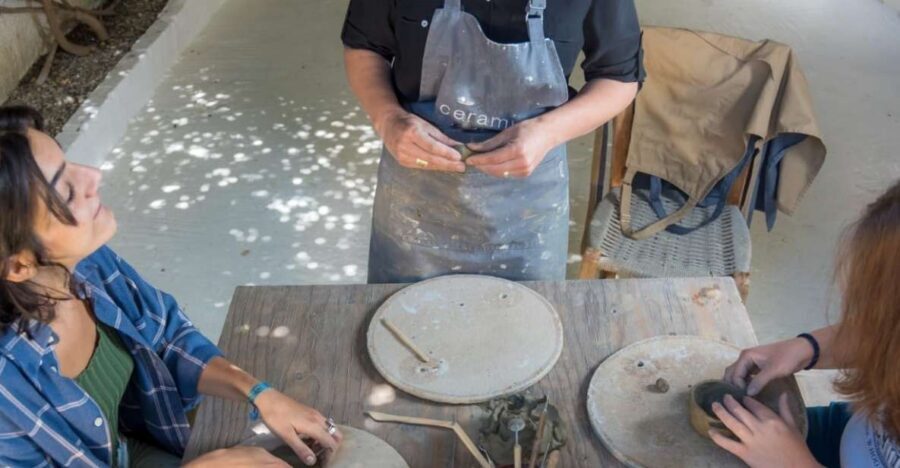
Margarites is where the tour shifts from stone and artifacts to hands and technique. You visit the pottery workshop TSIKALARIO, learn about the art, and get time to work on ceramics. The description is clear that the activity is designed to let you create your own ceramic, and the tradition here is described as going back many generations in the village.
Now, the important part: not every departure runs exactly like a full hands-on class. On some days, the pottery segment can be more of a demonstration than a true “you make your own piece” session. That does not make it pointless—it can still be fascinating to watch how it is done—but it can be disappointing if you booked specifically for doing every step yourself.
If you come with the right mindset, you’ll likely enjoy it more:
- Expect to learn how the process works, even if your hands don’t do every step.
- Bring patience. Workshops take time to set up, and clay work does not always fit perfectly into a group day.
Also, plan for the practical reality of pottery: even without heavy mess, clay and workshop surfaces can be less than tidy. Wear something you do not mind getting a little dusty.
Margarites free time: lunch you control, pace you control
After the workshop, you get free time in Margarites. This is your built-in chance to choose lunch on your own or just wander and see how the village feels when the tour group breaks up.
I like this stop because it lets you switch modes. One minute you are learning craft at a workshop; the next, you’re free to grab food at a local taverna or simply walk through the village streets at your own speed. If you want a souvenir for the home shelf—small pottery, olive oil products, local crafts—this is also often when that shopping is most relaxed.
No lunch is listed as included, so treat this as your “eat whenever works for you” window.

Olive oil manufactory: from old methods to today’s tasting
Then comes the olive oil manufactory stop. This part focuses on the evolution of how Cretans made olive oil in the past, compared with methods used today. The tour includes an olive oil tasting, which is the moment that turns information into something you can actually remember.
A key consideration: in some departures, the manufactory experience can feel more like observation and explanation than like watching everything actively running. Some days may also lean toward short tastings with simple pairings rather than a super-detailed walkthrough of every processing step.
Still, the tasting itself is included, and that alone makes this stop more than just a lecture. When you taste olive oil, you connect it to what you heard—fruitiness, bitterness, that peppery finish—so you leave knowing what the story should taste like.
Melidoni Cave (Gerodospilios): stalactites, worship history, and the 220-meter setting
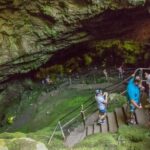
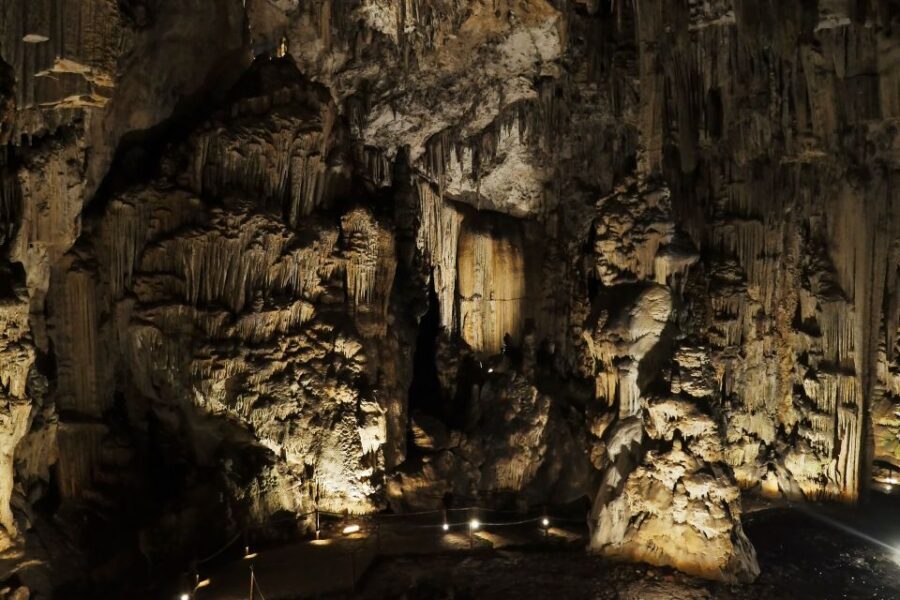
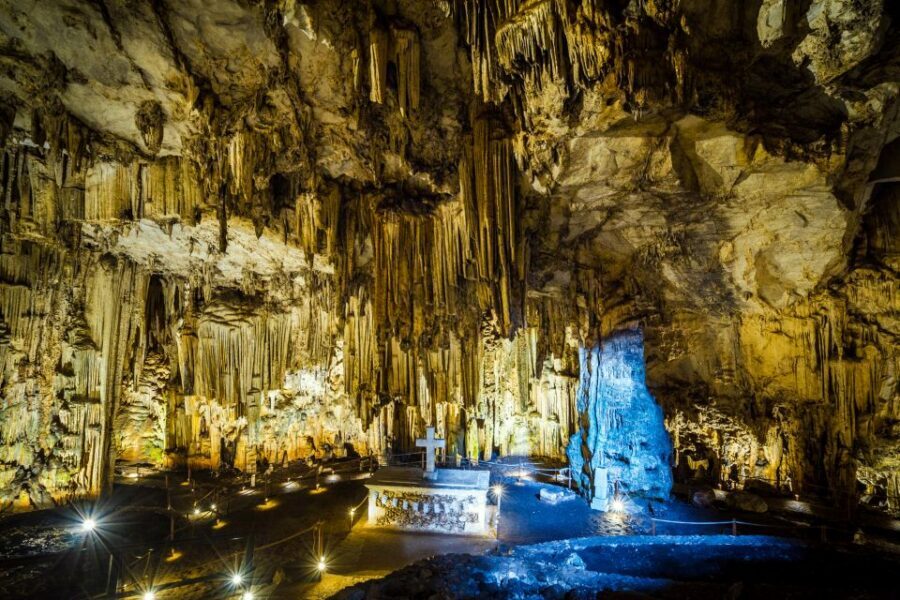
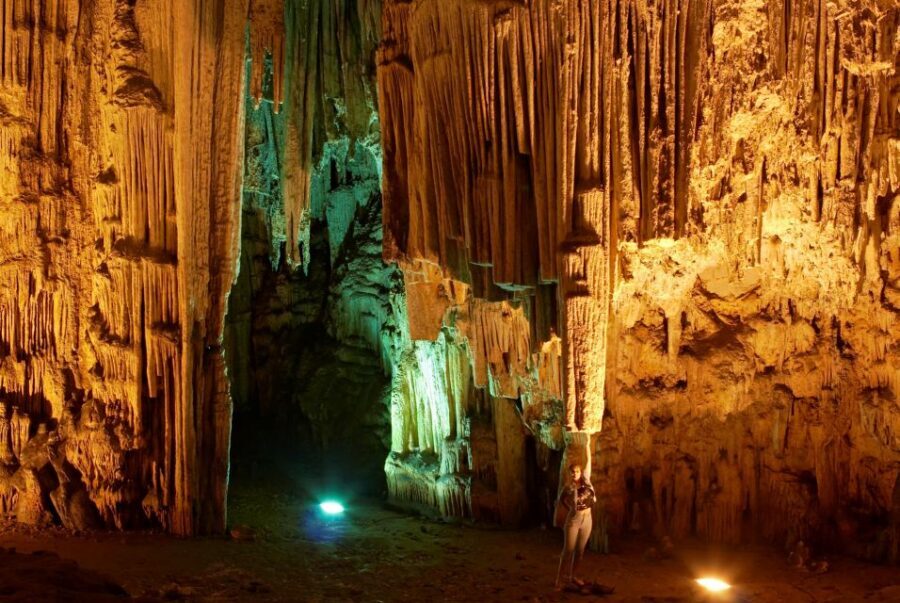
The final major sight is Melidoni Cave, also called Gerodospilios. You visit a cave described as 220-meter altitude, filled with stalactites and stalagmites, which gives you the classic cave visuals—nature built in slow motion.
What makes this cave feel more than scenic is the human history attached to it. The cave was used for religious ceremonies and as a place of worship. During your visit, you learn the cave’s archaeological and historical significance, so the tour does not treat it like just another underground stop.
As always with caves, wear footwear that feels secure for uneven ground. And if you get motion-sensitive, caves can feel a bit different in terms of lighting and sound—so pace yourself and keep your eyes on your step.
The cave entrance fee is also not included (3€ per person).
Guide quality and day-tour comfort: what to expect in real life
The guide is central to how well this day tour feels. Many people praise the guide’s competence and energy, and one guide name you may see associated with this route is Nicolas. Accounts also mention guides who can switch languages—one person noted relief when their guide provided French as needed.
That said, comfort issues can happen on any group day. There are hints that restroom access can be limited at certain points, and that vehicle comfort settings (like air conditioning) may not match everyone’s preference. Families can run into their own challenges too; one report mentioned that the guide seemed surprised by having two toddlers in the group, even though they had been documented in advance.
So if you’re traveling with children, it’s worth making your needs clear early. And if you have strong preferences about vehicle comfort or restrooms, go in knowing this is a guided day with limited control, not a private driver experience.
Price and value: is $40 really a good deal here?
At $40 per person, this tour is priced like a solid “starter sampler” of Cretan culture. What you get is not just sightseeing: guided tour, transportation, an opportunity connected to making ceramic, plus an olive oil tasting.
Then you have the add-ons. The main entrances are listed as not included:
- Arkadi Monastery: 3€
- Museum of Ancient Eleftherna: 4€
- Melidoni Cave: 3€
That is 10€ total in site tickets, before any meals. So your true cost is closer to “$40 plus a small stack of entry fees.” Still, the included transport and guide usually cover a big part of the hassle you’d otherwise handle yourself.
Is it best value? It tends to be, if you want:
- a one-day route from Rethymno
- history + craft + food tasting
- a schedule with built-in pauses
It may not be ideal if your top priority is guaranteed hands-on pottery every time. The day can shift toward demonstrations, so if you want to leave with a strong sense of making, ask questions when you confirm details.
Should you book this one-day Cretan culture and pottery tour?
Book it if you want a balanced Crete day that mixes a top monastery museum, a major archaeological museum, a craft stop in Margarites, olive oil tasting, and a cave with worship history. It’s a great fit for first-timers in Crete or anyone who wants structure without planning the route.
Skip it (or at least go in with eyes open) if you are specifically chasing guaranteed “you do the pottery step-by-step,” or if you prefer long, quiet museum time over short highlight visits. Also budget for the entrance fees, since they come out of your pocket during the day.
If you’re the type who likes a day tour that feels like you learned something and left with a few sensory memories (clay work and olive oil taste count here), this is an easy yes.
FAQ
Where does the tour pick you up?
Pickup is from your hotel or close to your hotel in Rethymno.
When will I receive the pickup time and pickup point?
You receive a voucher by email one day before the tour, with pick-up time and pick-up point. You can also view it on 123voucher.eu/voucher using your booking reference.
How long is the tour?
The tour runs for 1 day.
Is the guide available in English?
Yes, the live tour guide speaks English.
What is included in the price?
Included are the guided tour, transportation, an opportunity to create your own ceramic, and an olive oil tasting.
Do I need to pay entrance fees for the sites?
Yes. Arkadi Monastery is 3€ per person, the Eleftherna Museum is 4€ per person, and Melidoni Cave is 3€ per person.
Will I be making pottery myself?
The tour includes an opportunity to create your own ceramic. In some cases, the pottery segment may be run as a demonstration, so you should go in expecting you might not always do every step.
What happens at the olive oil stop?
You visit an olive oil manufactory, learn how olive oil was made in the past and how it evolved to today, and take part in an olive oil tasting.
Is free cancellation available?
Yes. You can cancel up to 24 hours in advance for a full refund.