REVIEW · CRETE
Cretan Cooking Class and Olive Oil Tasting
Book on Viator →Operated by Cretan Vibes · Bookable on Viator
Cooking in an olive grove changes everything. In this class, you work side-by-side with Marianna and her mom Stella to make classic Cretan dishes, right outdoors among the olive trees. Two things I especially love: the truly hands-on cooking pace and the fact that the night also includes a premium olive oil tasting with practical, use-it-the-next-day lessons.
The main consideration is logistics: there’s no private transportation, and the setup is outdoors, so you’ll want to plan your ride and hope for good weather.
In This Review
- Cretan Cooking with Marianna and Mama Stella: What Makes It Special
- Quick Hits Before You Go
- What You Cook: Cretan Dishes You’ll Actually Want to Recreate
- Starters That Set the Tone
- Mains With Real Cretan Character
- Dessert That Ends the Evening on a Sweet Note
- The Outdoor Kitchen: Comfortable, Scenic, and Built for Doing the Work
- The Olive Oil Tasting Lesson: How to Taste Like a Local
- Meal Time: Wine, Homemade Refreshments, and a Table You Can Enjoy
- Recipes and Photos: Your Take-Home Toolkit
- Price and Value: Why $114.93 Can Make Sense in Crete
- Who Should Book This Class (And Who Might Skip It)
- Before You Book: Practical Tips for Moirès and an Olive-Farm Evening
- Should You Book Cretan Vibes?
- FAQ
- What is the duration of the Cretan Cooking Class and Olive Oil Tasting?
- What’s included in the class?
- How many dishes will I cook?
- Where does the tour start and end?
- Do I need to arrange transportation?
- Is the class weather-dependent?
Cretan Cooking with Marianna and Mama Stella: What Makes It Special
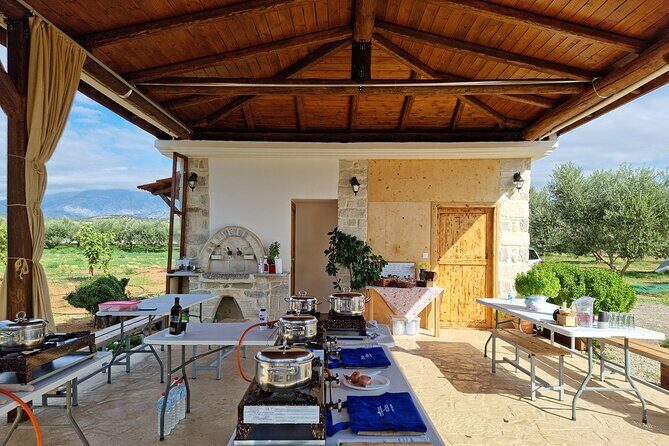
This is one of those experiences where you stop being a tourist and start being part of the process. You show up, get welcomed with homemade refreshments (think lemonade-style drinks and other farm-made tastes), then you cook with ingredients that are sourced fresh from their family operation. The experience runs about four hours, with an overall flow that stays relaxed but never feels slow.
The big hook for me is the combination: food you can cook at home, plus olive oil skills that help you shop smarter in Crete (and later, back home). It’s not just eating. It’s learning the logic behind Cretan flavors.
Quick Hits Before You Go
- Hands-on instruction from Marianna and Mama Stella, with a step-by-step approach that works even if you’re a non-cook.
- Outdoor cooking among olive trees, in a beautiful open-air space that still feels clean and modern.
- You’ll make five Cretan dishes, not just watch and snack.
- Extra-virgin olive oil tasting focused on aromas, flavors, bitterness, and spotting defects in lower-quality oils.
- Take-home rewards: leftovers packed for you, plus recipes and photos sent by email afterward.
You can also read our reviews of more food & drink experiences in Crete


What You Cook: Cretan Dishes You’ll Actually Want to Recreate
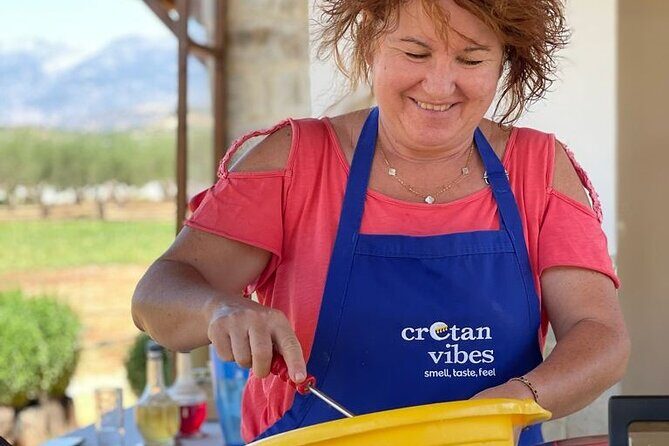
You build your meal from recognizable Cretan classics, but what matters is how you learn them: by doing the work with your own hands. The menu rotates through dishes that can include both vegetarian and meat options, depending on what’s prepared for your session.
Here’s the kind of food you’ll be making:
Starters That Set the Tone
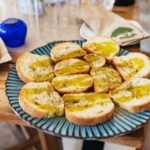
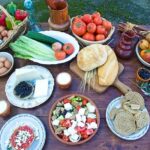
You may start with Cretan Dakos: rusk topped with fresh tomato sauce, mizithra cheese, organic oregano, and their extra virgin olive oil. It’s simple, but it teaches you something important about Crete—flavor comes from quality ingredients and timing, not complicated technique.
You’ll also likely handle dolmadakia, the stuffed grape leaves that Cretans treat like a must-have comfort food. Expect careful rolling and a focus on balance: herbs, filling, sauce, and texture.
Another starter that comes up is stuffed zucchini flowers. These are aromatic and very Cretan, and they reward patience more than speed.
Mains With Real Cretan Character
For the main course, you can end up with a few options, and the session is designed so you’re cooking the real deal. A vegetarian/vegan option is giaxni, which uses local green beans with potatoes, zucchini, fresh tomato sauce, and ksinoxondros (a Cretan ingredient made by the family). Even if you usually skip plant-based dishes, this one has the kind of savory depth that comes from how Cretans treat vegetables—as serious food, not side dishes.
If you’re going meat-forward, you might cook:
- Lamb with artichokes, potatoes, fennel, and fresh tomato sauce
- Augolemono, made with pork or chicken plus onions, potatoes, dill, eggs, and fresh lemon juice
- Cretan stifado, which you can cook with chicken, rabbit, or even snails depending on the menu you’re offered
- Lamb with stamnagathi, using fresh stamnagathi greens with the kind of tomato-based sauce work Cretans do so well
What you take home isn’t just recipes—it’s a feel for how these components fit together: lemon for brightness in egg-lemon sauces, tomato for body, and herbs for lift.
Dessert That Ends the Evening on a Sweet Note
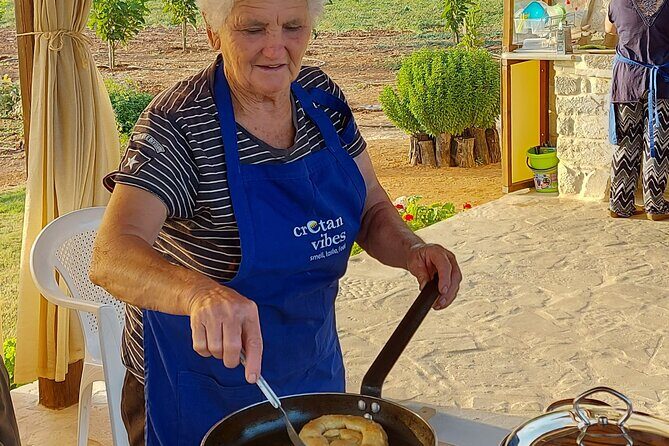
For dessert, you may make sarikopites or kalitsounia—small cheese-filled pastries. The key detail: the cheese comes from their family, and they fry it in their extra virgin olive oil. It’s the sort of dessert that tastes like it belongs in the Mediterranean version of a cozy kitchen memory.
You can also read our reviews of more cooking classes in Crete


The Outdoor Kitchen: Comfortable, Scenic, and Built for Doing the Work
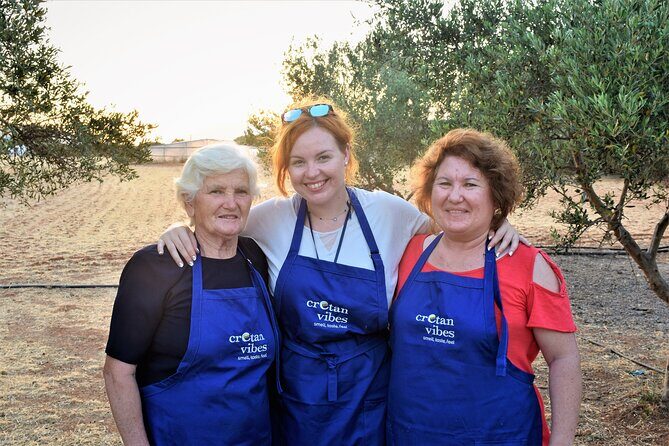
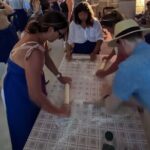
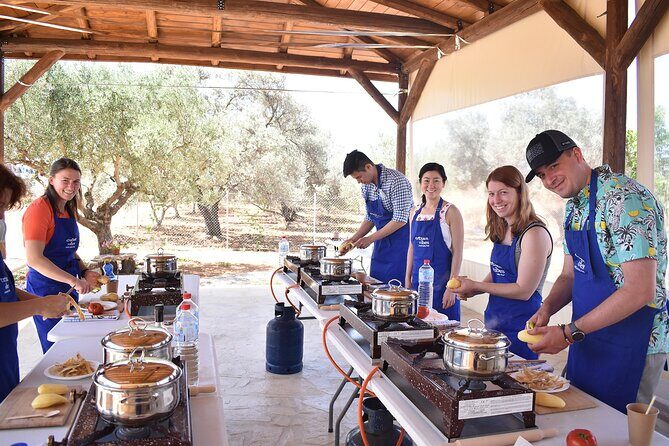
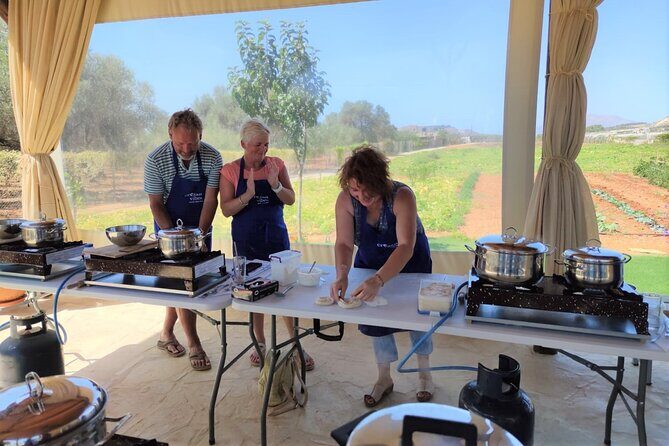
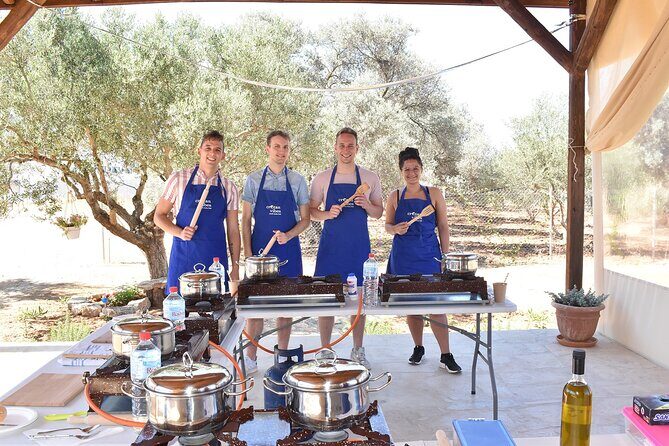
The setting is one of the most consistent highlights. You cook in an open-air area between olive trees and in the surrounding family garden spaces. It feels rural in the best way—away from the crowds, closer to the source.
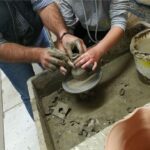
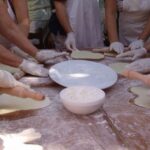
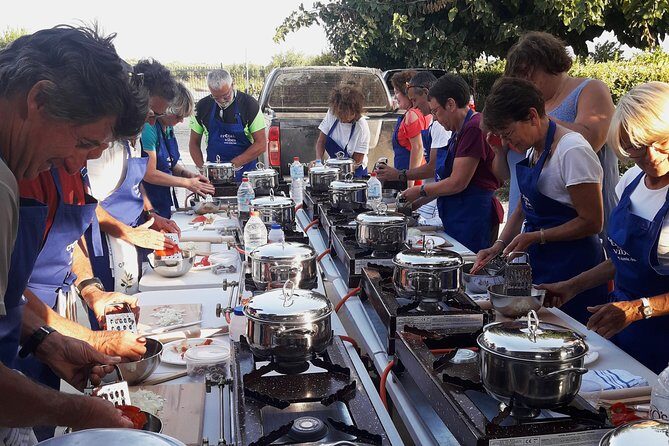
What’s also nice is how the space is designed for group instruction. You’re not squeezed into a tiny studio. You have room to work, and the setup supports the idea that everyone can participate.
The pace is another win. You’ll move through tasks without feeling rushed, with an organized flow that keeps you busy but not stressed. If you’ve ever taken a cooking class where you chop for 20 minutes and then get ignored, this won’t be that. The structure supports you staying active the whole time.
There’s also a softer side to the experience. People talk about sunsets and the farm atmosphere, and even small touches—like the family’s warmth and the comfortable flow—make the evening feel personal.
The Olive Oil Tasting Lesson: How to Taste Like a Local
After (or during) the cooking session, you get an educational olive oil tasting guided by an olive-growing family. This is the practical part you’ll remember once the food has been packed away.
Here’s what the tasting teaches you:
- How to recognize authentic extra virgin olive oil
- How to detect aromas and identify flavor profiles
- How to understand bitterness as a signal, not a flaw
- How to spot signs of defects in lower-quality oils
- Tips for choosing olive oil when you shop
In other words, you learn how to taste with intention. You’re not just sampling oil. You’re building a small set of sensory tools. That’s what makes it valuable: it connects to daily life, not just the dinner table.
You’ll also see a video of their olive harvest, which helps you connect what you’re tasting to how the product is grown and collected.
Meal Time: Wine, Homemade Refreshments, and a Table You Can Enjoy
Once you finish cooking, you get to eat your creations—this is not a class where you make a few bites and call it dinner. The tour includes a full meal after the class, with local wine to accompany your meal, plus coffee and/or tea and homemade refreshments.
Leftovers matter here. After dinner, your food is carefully packed so you can take it with you. That’s a big deal on a vacation day when you don’t want to waste time searching for your next meal.
This is also where the social side kicks in. The group size is capped at 12 travelers, and the class is designed for conversation and a relaxed rhythm. If your goal is meeting people, this structure helps. If your goal is learning quietly, you’ll still get the instruction without the chaos.
Recipes and Photos: Your Take-Home Toolkit
One of the easiest ways a cooking class can feel like a one-night event is when you leave with nothing solid to recreate it. Here, you get recipes sent by email afterward, plus photos of the experience.
That turns the class into something you can repeat. You can refresh your memory when you’re craving dakos, dolmadakia, or a cheese pastry weeks later, and you’ll have a reference for the techniques you practiced.
Price and Value: Why $114.93 Can Make Sense in Crete
Let’s talk money without hand-waving. At about $114.93 per person for roughly four hours, you’re paying for more than a cooking show.
You’re getting:
- A hands-on class (you cook, you don’t just watch)
- A full meal you then sit down to enjoy
- Local wine with your meal
- Premium olive oil tasting with educational guidance
- Coffee/tea and homemade refreshments
- Recipes and photos afterward
- Leftovers packed to take home
In value terms, it’s closer to a curated farm dinner experience plus a skill workshop than a simple activity. It’s also capped at 12 people, which helps keep the instruction personal and keeps the kitchen from turning into a conveyor belt.
The tradeoff is that you’ll want to plan how you’ll get there, since private transportation isn’t included. If you’re already renting a car, you’ll likely feel great about the value. If you’re relying only on public transport, you may want to make sure you can time your ride cleanly.
Who Should Book This Class (And Who Might Skip It)
This experience is a strong fit if you:
- Want authentic Cretan home-style cooking taught step-by-step
- Care about olive oil quality and want to learn how to taste and choose it
- Like the idea of a farm setting and a small group (max 12)
- Prefer experiences that leave you with food to take home and recipes to redo later
It’s also family-friendly in practice. One of the best signs: the format works across ages, and the kitchen flow supports participation.
You might skip it if you:
- Don’t want to cook at all (this is genuinely hands-on)
- Have trouble with outdoor settings, since it depends on good weather
Before You Book: Practical Tips for Moirès and an Olive-Farm Evening
A few things to keep your evening smooth:
- Start and end at the same place. The activity ends back at the meeting point.
- Plan for no private transport. You’ll want a taxi plan or rental car plan.
- The class is offered in English, so communication should be easy if that’s your language.
- Expect a small-group format. That’s part of why it feels personal and why instruction can stay focused.
- Bring yourself with an open mind. The class description emphasizes warmth and family-style hospitality, and the flow reflects that.
Also, if you care about olive oil, go in a little curious and a little ready to taste carefully. You’ll get more out of the tasting if you treat it like a mini sensory class.
Should You Book Cretan Vibes?
If you want one activity in Crete that blends hands-on cooking, olive oil education, and a real meal in a farm setting, I’d book it. The biggest strength is that you leave with both: food you made and skills you can use.
Book it especially if you like cooking, want an intimate group experience, and enjoy learning how real ingredients shape the flavor of a region. The value is strongest when you factor in the full meal, wine, olive oil tasting, recipes, and leftovers—not just the time in a kitchen.
Only hesitate if you’re not up for outdoor conditions or you don’t have an easy way to reach the meeting point. With those handled, this is exactly the kind of Crete night that makes the rest of your trip taste better.
FAQ
What is the duration of the Cretan Cooking Class and Olive Oil Tasting?
It runs for about 4 hours.
What’s included in the class?
You get a full meal after the class, a premium olive oil tasting, a video of the olive harvest, local wine with your meal, coffee and/or tea, homemade refreshments like lemonade, all cooking ingredients, recipes sent by email, and packed leftovers to take home.
How many dishes will I cook?
You’ll create multiple Cretan dishes during the hands-on session, with the experience highlighting five dishes.
Where does the tour start and end?
It starts at Cretan Vibes on Ethniki odos, Moirès 704 00, Greece, and ends back at the same meeting point.
Do I need to arrange transportation?
Private transportation is not included, so you’ll need to handle your own way to the meeting point.
Is the class weather-dependent?
Yes. The experience requires good weather, and if it’s canceled due to poor weather, you’ll be offered a different date or a full refund.