REVIEW · KRASI CRETE
Crete: Explore Lassithi Plateau, Myths & Cretan Cuisine
Book on GetYourGuide →Operated by Crete Safari Tours · Bookable on GetYourGuide
The most unusual stop here is Sfendili, a village partly swallowed by the Aposelemis Dam. From there, the route leaves the main roads for mountain tracks, old villages, and the high Lasithi Plateau. I like the mix of odd, modern history at the dam and ancient myth at Zeus’ Cave. I also like that lunch, wine, water, fruit, and raki are included.
The main consideration is the pace. This is an eight-hour day with road time, rough off-road sections, walking, and a cave visit lasting about 90 minutes. The cave entrance costs extra, and the outing is not suited to people with heart problems or recent surgery.
In This Review
- Key points to know before booking
- Why this Crete safari is different
- Sfendili and the Aposelemis Dam
- Embasa Gorge and Kardiotissa views
- Krasi’s ancient plane tree
- Through Avdou, Kastamonitsa, and the mountain villages
- Climbing to 1,100 meters
- The Lasithi Plateau and its old windmills
- Entering Diktaion Andron, Zeus’ Cave
- A family-run Cretan lunch
- What the $96 price really covers
- Pickup, timing, and practical comfort
- Who will enjoy this day most
- Should you book this Crete Jeep tour?
- FAQ
- How long does the Crete Jeep safari last?
- Where can I be picked up?
- Is hotel pickup and drop-off included?
- Is the Cave of Zeus entrance fee included?
- What food and drinks are included?
- Is the tour suitable for people with heart problems?
- Can the route change?
- Is a private group available?
Key points to know before booking
- Sfendili’s changing shoreline: The partially submerged village gives you one of Crete’s most striking photo stops.
- A true mountain route: The Jeep reaches about 1,100 meters and follows rough tracks near Embasa Gorge.
- Myth with a physical walk: Diktaion Andron, known as Zeus’ Cave, includes sightseeing and walking rather than a quick roadside stop.
- Food is part of the value: Your Cretan meal includes local wine and water, with seasonal fruit, traditional snacks, and raki along the way.
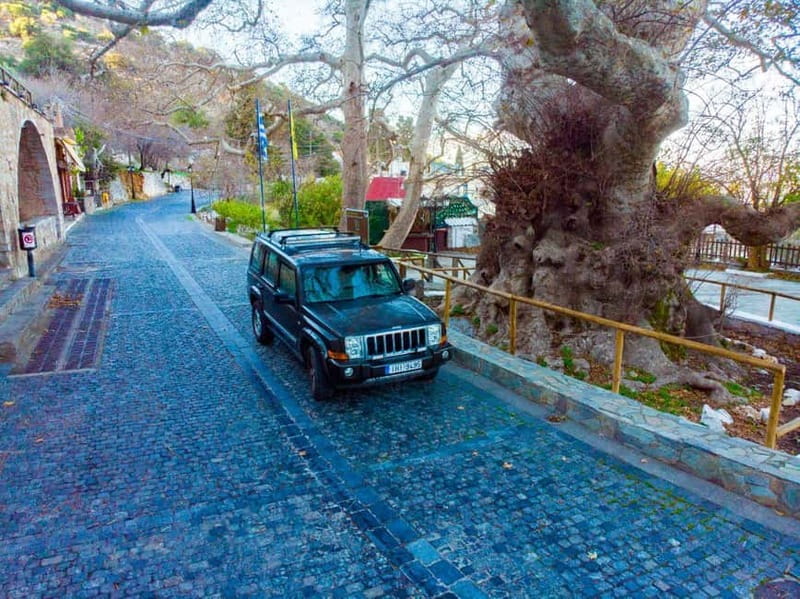
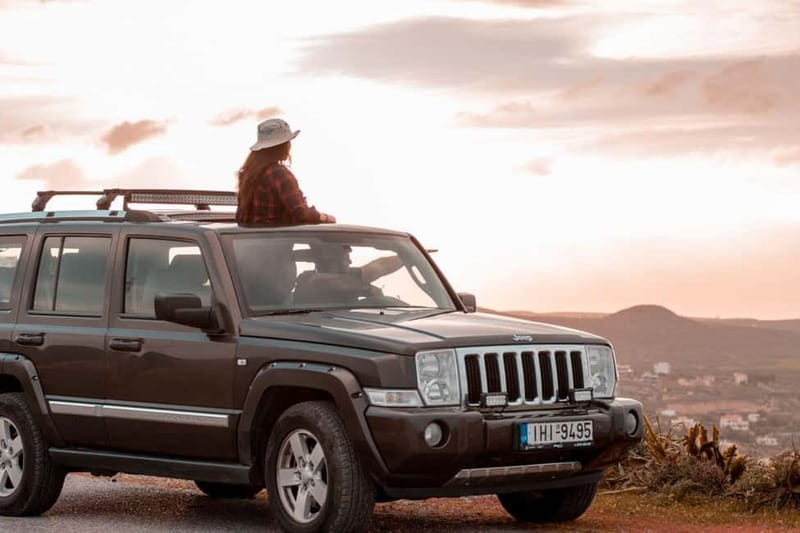
- Small-vehicle feel: The seven-seat Jeep Commander is more suited to narrow village roads and off-road travel than a large coach.
- Flexible booking: Hotel pickup and drop-off are included, and private groups are available.
Why this Crete safari is different
Many Crete day trips focus on one big sight. This one gives you a broad cross-section of the island’s interior: a dam, a gorge, stone villages, mountain wildlife, a legendary cave, windmills, and a long Cretan meal.
I like that the day is not built around a single postcard view. You get a sense of how the island changes as you leave the coast. The road passes through villages such as Gonies, Avdou, Kastamonitsa, Gonie, Aski, and Mochos, then climbs toward the Lasithi Plateau.
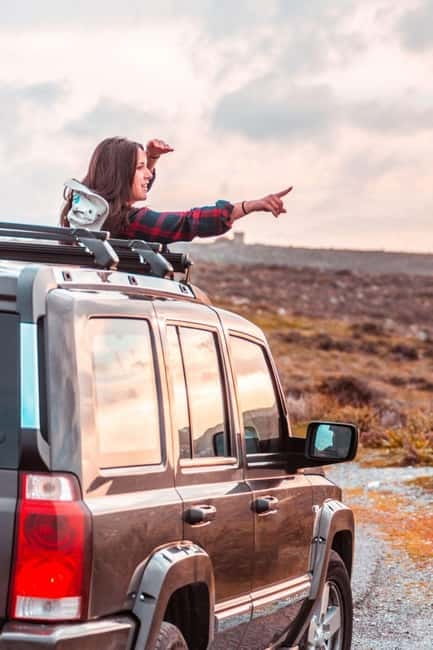
The seven-seat Jeep Commander matters here. It can use off-road tracks and smaller mountain roads that would not suit a large bus. That does not mean the ride will be gentle. Expect bumps, curves, and a full day in a vehicle. If you prefer smooth transport and long stops at one site, this is not your best match.
The driver speaks English and provides information about Crete as you go. A short review of the outing praised the amount of Greek information as well as the food, with especially strong approval for the meal. That combination tells you where much of the appeal lies: this is not just a vehicle ride with scenery. It connects places with local customs and stories.
You can also read our reviews of more tours and experiences in Krasi Crete.
Sfendili and the Aposelemis Dam
The first major stop is the Aposelemis Dam, where you can walk and take photographs for about 15 minutes. The village of Sfendili is partly submerged beneath the reservoir, creating an unusual sight that changes with the water level.
This is not a preserved archaeological site with a museum or a long guided visit. It is a quick, atmospheric stop. You will have time to look at the remains and take pictures, then continue. The appeal comes from the contrast between an old settlement and the modern reservoir that covered much of it.
Bring your camera, but do not expect a long exploration. The time here is brief by design. It works as a striking opening to the day, especially if you enjoy places that show how present-day projects reshape older communities.
Embasa Gorge and Kardiotissa views
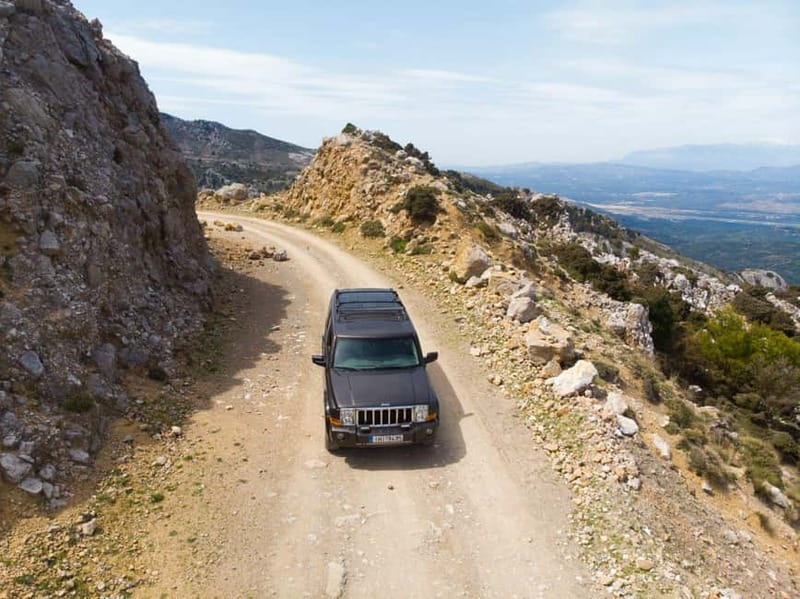
The Jeep then follows an off-road route alongside Embasa Gorge, also identified as the Gorge of the Virgin Mary. The stop lasts about 20 minutes and centers on rough-road travel and views rather than a long hike.
This is where the outing begins to feel like a safari instead of a standard sightseeing loop. You will see more rugged mountain scenery and travel away from the main tourist roads. The route also includes a photo stop near the historic Kardiotissa Monastery, set against the mountain surroundings.
The monastery is treated as a photo stop rather than a full interior visit. If you want extended time inside religious sites, check the schedule with the driver. The strength of this section is the setting and the route itself, not a detailed monastery tour.
Krasi’s ancient plane tree
Krasi is one of the most pleasant village stops. You get about 20 minutes to walk and take photographs around its traditional stone spring and famous plane tree.
The tree is described as roughly 2,000 to 2,400 years old, depending on the estimate used. Either way, it is an impressive reminder that Crete’s story is measured in centuries, not just decades. Standing beneath its broad branches gives you a quiet pause after the rougher gorge road.
The stop is short, so use your time well. Look for the spring, the stonework, and the village setting rather than expecting a long free period. Krasi is also a good place to appreciate the scale of the trip. You are not simply ticking off famous attractions. You are passing through working mountain settlements and seeing how water, trees, and village spaces shaped local life.
Through Avdou, Kastamonitsa, and the mountain villages
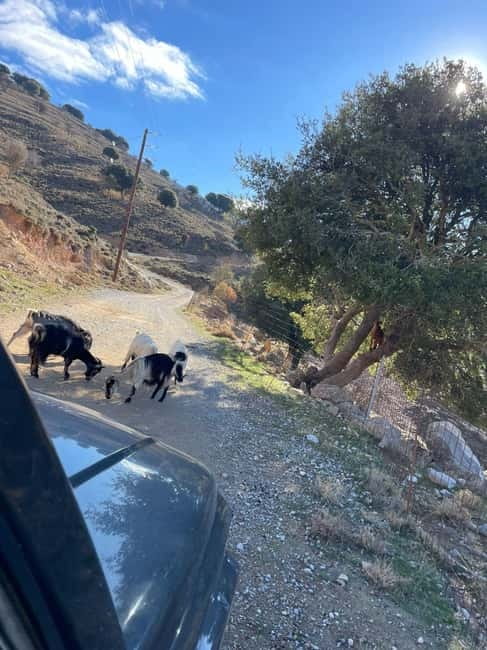
Several villages are passed without a planned stop, including Avdou and Kastamonitsa. The route also goes through Gonie and Aski before climbing higher.
At first, passing through a village may sound like a minor detail. It is not. These stretches help connect the major stops and show the change from coastal Crete to the island’s interior. You will see traditional settlements from the road, but you should not expect time to wander through each one.
That distinction is important when you plan your day. This is a moving tour, not a village-by-village walking program. The advantage is variety. The drawback is that some places may look interesting just as the Jeep continues onward.
Climbing to 1,100 meters
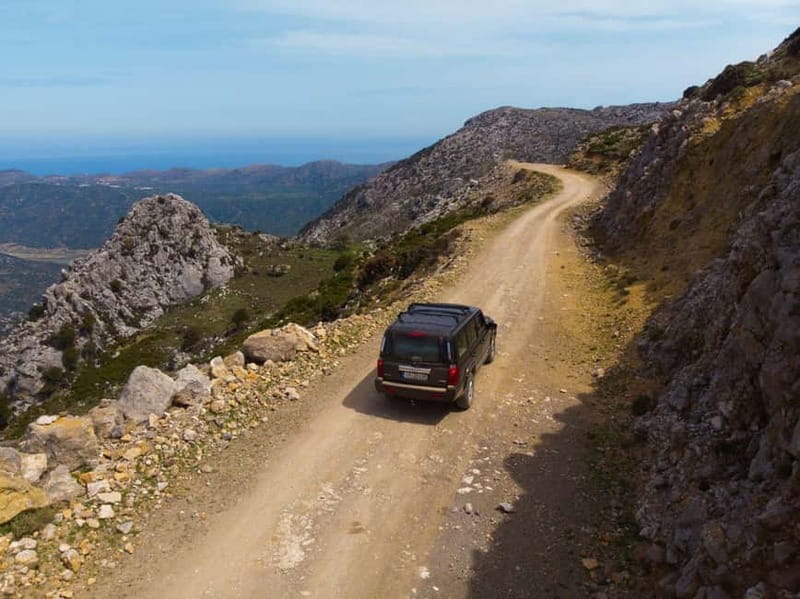
The off-road climb reaches about 1,100 meters. At this height, the views open across the mountains and the Lasithi area. The drive itself is one of the day’s main attractions, especially for anyone who likes seeing terrain change from a vehicle seat.
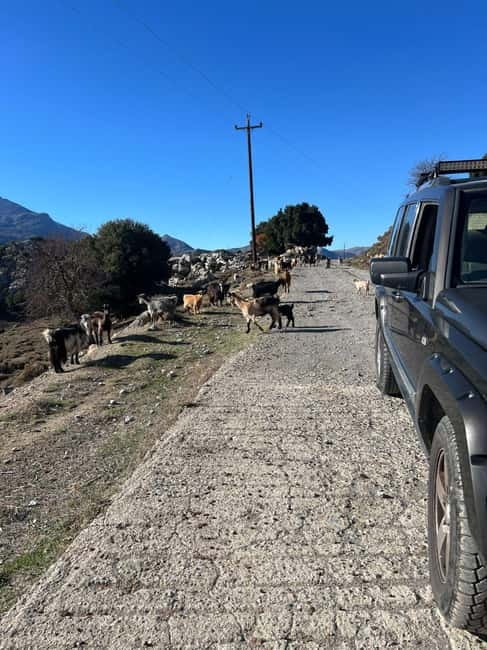
You may spot wild Cretan goats, vultures, and eagles. These are possible sightings, not guaranteed encounters, so bring binoculars only if you already have them and do not build the whole day around wildlife. The value is being in their mountain habitat, with a chance to see them moving above or across the slopes.
A mountain-top pause includes seasonal fruit or traditional snacks and unlimited raki, the local spirit. Raki is strong, so pace yourself, particularly before the remaining drive, the cave walk, and lunch. You can also expect local wine with the meal later in the day.
The Lasithi Plateau and its old windmills
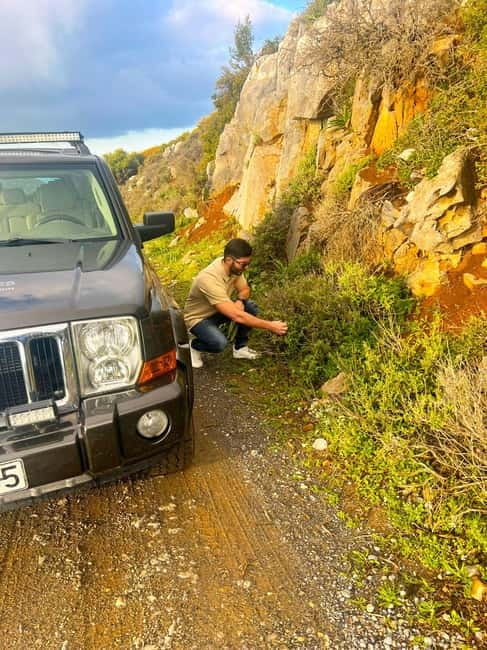
The route makes a scenic loop around the Lasithi Plateau, with several photo stops and about 40 minutes of off-road travel in one section. Later, you get another 30-minute scenic stop and a brief 15-minute visit near the Lasithi Plateau windmills and Psichro.
The plateau is tied to some of Crete’s best-known myths, but it is also a real agricultural area surrounded by mountains. The old windmills give the place a distinctive look and connect the scenery to older ways of working the land.
The schedule divides the plateau into several short visits rather than one long walk. I see that as a benefit if you want changing views without spending the whole day at one location. If you prefer a slow café stop or time to explore a village independently, the repeated short pauses may feel hurried.
Mochos appears near the end as a 15-minute photo stop before the return to your hotel. Again, this is a glimpse rather than a full village visit.
Entering Diktaion Andron, Zeus’ Cave
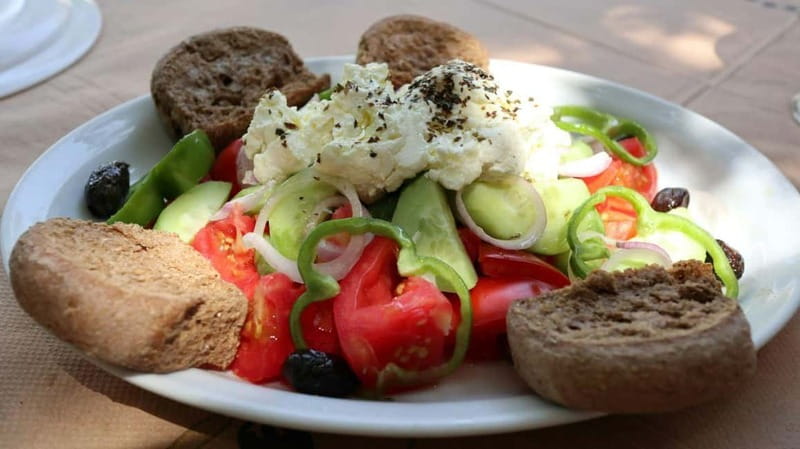
The main historical and mythological stop is Diktaion Andron, commonly called the Cave of Zeus. Ancient mythology identifies this cave as the birthplace of Zeus, king of the gods.
You have about 1.5 hours for the visit, sightseeing, and walking. That makes it one of the day’s most substantial stops. The cave gives the tour a stronger cultural focus than a simple viewpoint or photo stop. You are not only hearing a myth. You are visiting the place connected with one of the central figures of ancient Greek religion.
The entrance fee is not included. The stated price is 6 euros for general admission for EU and non-EU visitors. Students pay nothing if they are EU citizens and 3 euros if they are non-EU citizens. Visitors over 65 pay 3 euros. Site authorities control prices and opening schedules, so these details can change.
You should be ready for walking at this stop. The tour information specifically says it is not suitable for people with heart problems or recent surgery. Even if you are generally fit, wear practical footwear and remember that the cave visit comes within a long day of driving and mountain travel.
If the cave closes for maintenance or another reason, the driver may take you to alternative sites or nearby villages. The route can also change for safety or weather reasons. That flexibility is useful in the mountains, where conditions can affect roads and attractions.
A family-run Cretan lunch
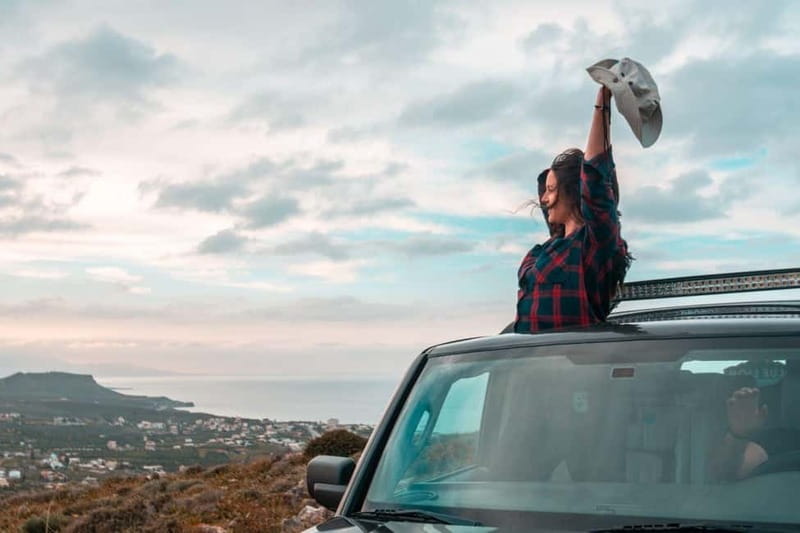
Lunch is served at a family-run mountain taverna and lasts about an hour. The meal includes traditional Cretan food, local wine, and water.
For me, this is one of the strongest parts of the value. A meal in a local taverna gives the day a human center after the vehicle rides and sightseeing. The food is not an optional add-on, and the meal received particularly warm praise for its quality. You are not paying separately for lunch or wine, which makes the $96 price easier to assess.
Do not expect the flexibility of choosing any restaurant you like. The group follows the planned meal stop, and one hour is enough for eating but not for a slow afternoon. Still, the combination of food, drink, scenery, and a family-run setting is more useful than a quick packaged lunch.
The included seasonal fruit or traditional snacks and raki add to the sense of a food-focused day. Drinks and food are not allowed inside the Jeep, so consume them during the designated breaks rather than trying to carry them into the vehicle.
What the $96 price really covers
At $96 per person, the price includes hotel pickup and drop-off, the seven-seat Jeep Commander, fuel and other running costs, an English-speaking driver, snacks or seasonal fruit, raki, and a traditional lunch with wine and water.
That is a fair package if you want several parts of Crete handled in one day. You would otherwise need to arrange transport to the plateau, manage mountain roads, pay for lunch and drinks, and plan a route linking the dam, gorge, villages, cave, and windmills.
The price is less attractive if you mainly want a long visit at Zeus’ Cave. The cave ticket is extra, and the site itself receives only one part of a much wider day. You are paying for the complete route and the convenience of transport, not just admission to one attraction.
A private group is available, which may improve the value for families or friends who want more control over the pace. The standard vehicle has seven seats, but the exact group arrangement should be confirmed when you book.
Pickup, timing, and practical comfort
Pickup and drop-off are offered in Heraklion, Malia, Analipsi, and Sisi. You receive the exact pickup time after booking. Be in your hotel lobby 15 minutes early because the driver waits no more than 10 minutes after the scheduled time.
If the Jeep cannot reach your accommodation because of a narrow or inaccessible street, a nearby meeting point will be arranged. This is worth checking if you are staying in an old village center or on a restricted road.
The tour lasts eight hours, but the day includes a lot of movement. You will have short photo stops, off-road sections, a cave walk, and a sit-down meal. Wear shoes suitable for walking, carry sun protection, and bring water for the road even though water is provided with lunch.
Smoking, drinks, and food are not allowed in the vehicle. The route may change because of weather or safety concerns. Those are normal limits for an off-road mountain trip, but they mean you should treat the schedule as a plan rather than a guarantee of every stop.
Who will enjoy this day most
I would choose this tour if you want to see inland Crete without renting a car. It suits you if you like rough-road travel, village scenery, local food, ancient myths, and a full schedule.
It is also a good fit for visitors staying in the listed pickup areas who want an organized day away from the coast. The English-speaking driver helps keep the route simple while adding information about Greek culture and the places along the way.
I would think twice if you dislike bumpy rides, have difficulty with extended walking, or want lots of free time in each village. The day is active, and some stops are brief. It is also not suitable for people with heart problems or recent surgery.
Should you book this Crete Jeep tour?
Book it if you want variety and value in one day: Sfendili’s half-submerged village, mountain roads, Zeus’ Cave, plateau windmills, and a proper Cretan lunch. The food and included drinks strengthen the package, while the Jeep route gets you into parts of Crete that are harder to reach on your own.
Skip it if your priority is a relaxed schedule, a long monastery visit, or a deep exploration of every village along the route. For most active visitors based in Heraklion, Malia, Analipsi, or Sisi, I would consider the $96 reasonable, especially since transport, lunch, wine, snacks, and the driver are included. Just budget another 6 euros for the cave and arrive ready for a long, bumpy day.
FAQ
How long does the Crete Jeep safari last?
The activity lasts eight hours, including hotel pickup, sightseeing, off-road travel, the cave visit, lunch, and return transportation.
Where can I be picked up?
Pickup is available from Heraklion, Malia, Analipsi, and Sisi. The exact time is provided after booking.
Is hotel pickup and drop-off included?
Yes. Pickup and return transportation to your hotel are included. If the vehicle cannot reach your street, a nearby meeting point will be arranged.
Is the Cave of Zeus entrance fee included?
No. The entrance fee is separate. The stated general admission is 6 euros, with reduced or free prices for certain EU and non-EU students and visitors over 65.
What food and drinks are included?
The tour includes seasonal fruit or traditional snacks, unlimited raki, and a traditional Cretan lunch with local wine and water.
Is the tour suitable for people with heart problems?
No. The activity is listed as unsuitable for people with heart problems or recent surgery.
Can the route change?
Yes. The provider may change the route or stops because of weather or safety conditions. If Zeus’ Cave is closed, alternative sites or nearby villages may be offered.
Is a private group available?
Yes. A private group option is available. The standard vehicle is a seven-seat Jeep Commander.