REVIEW · HERAKLION
Crete: Lasithi Plateau & Knossos Palace Tour
Book on GetYourGuide →Operated by ETHERION · Bookable on GetYourGuide
Knossos is the headline, but the most memorable part may be the climb into Crete’s Lasithi Plateau, where old windmills, mountain villages, and the story of Zeus’s birth give the day a strong sense of place. I like the useful mix of archaeology and local life, especially the stop at Kera Monastery and the handmade ceramics in Psychro. The catch is simple: you spend a lot of the 10-hour day on the bus, and cave access is not guaranteed.
I also like the easy resort pickup, air-conditioned coach, and guides who can explain the sites in English, French, or German. French-speaking guide Katie has been singled out for clear, warm explanations. A three-language tour can mean less detail in each language, though, so this suits you best if you want a broad overview rather than a slow, specialist tour.
In This Review
- Key points at a glance
- Why this Crete day trip works
- Kera Monastery and its old icons
- Crossing the Lasithi Plateau at 850 meters
- Psychro, Zeus, and the climb to the cave
- Tzermiado for lunch and mountain-town atmosphere
- The long ride back toward Knossos
- Knossos Palace and the Minoan world
- Guides, transport, and the group experience
- Who should book this tour?
- Useful details before you go
- Final verdict: a strong first look at inland Crete
- FAQ
- How long does the Crete Lasithi Plateau and Knossos tour last?
- What languages does the guide speak?
- Is pickup included?
- Are the entrance fees included?
- How much walking is required at Psychro Cave?
- Can the Dikteon Cave be closed?
- Can I cancel the tour or pay later?
Key points at a glance
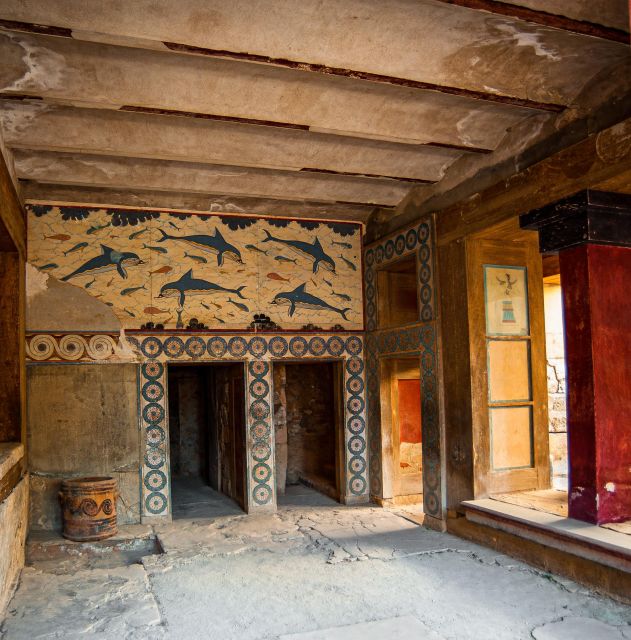
- Knossos gets 110 minutes: Enough time for a guided look at the palace, but not a leisurely archaeological study.
- The Lasithi Plateau reaches 850 meters: Expect mountain scenery, small towns, old windmills, and a change in climate from the coast.
- Psychro Cave requires a 300-meter uphill walk: The cave entrance costs €6, and access can be closed.
- Kera Monastery costs €2 to enter: Its icons and paintings from the 1400s add a strong cultural stop before the plateau.
- Tzermiado allows 70 minutes: This is your main chance for lunch, local snacks, and a short look at a Cretan mountain town.
- The $53 price excludes three entrance fees: Budget another €23 if you visit the cave, Knossos, and monastery.
Why this Crete day trip works
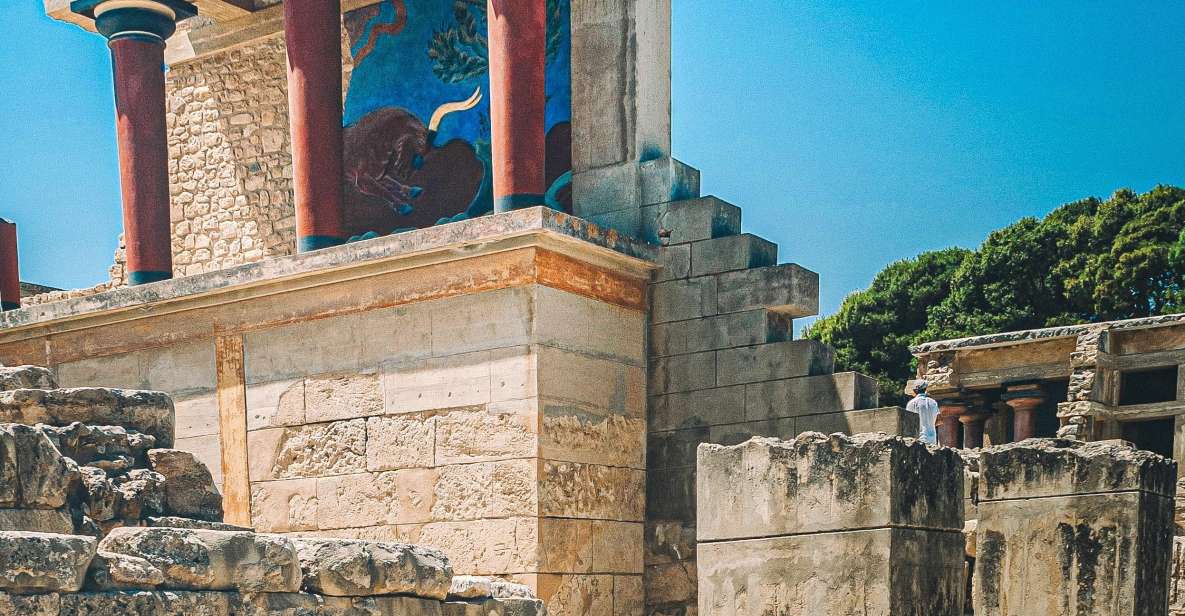
This is a big day with a clear story. You begin with a working religious site, move through the mountain villages and myths of Lasithi, then finish at Knossos, the island’s best-known archaeological site.
I like that the route does not treat Crete as only a beach destination. The plateau gives you a look at inland life, while the monastery and ceramic workshop add human details that a palace visit alone cannot provide. You see how many parts of Cretan culture sit side by side: Orthodox worship, village food, old farming systems, handmade crafts, and Bronze Age ruins.
The tour costs $53 per person, which is a reasonable base price for a 10-hour trip with transport, a professional driver, a multilingual guide, and pickup from a long list of resorts. The price looks less low once you add the €15 Knossos ticket, €6 for Psychro Cave, and €2 for Kera Monastery. If you do all three, the extra admission totals €23.
That still makes sense if you want someone else to handle the mountain roads and coordinate several far-flung stops. It is less attractive if you only want Knossos, since a dedicated palace visit would give you more time at the ruins and less time in transit.
You can also read our reviews of more tours and experiences in Heraklion.

Kera Monastery and its old icons
The first visit is Panagia Kera Kardiotissa, also called Kera Kardiotissa Monastery. It is a nunnery dedicated to the Virgin Mary, and the stop lasts about 30 minutes.
The main reason to go inside is the collection of icons and paintings, including works from the 1400s. You also see the famous image of the Virgin Mary, regarded as miraculous. The setting gives you a quick introduction to living Cretan religious culture before the day turns toward myths and ancient ruins.
The €2 entry fee is modest, but remember to bring cash. Thirty minutes is enough for a focused visit and photographs, not enough for a slow examination of every detail. Dress in comfortable, respectful clothing, and follow any instructions given at the convent.
This is one of the tour’s better choices because it breaks up the drive with something that feels rooted in the island, not simply built for sightseeing. You are not just looking at stones. You are entering a place still connected to worship.
Crossing the Lasithi Plateau at 850 meters
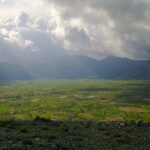
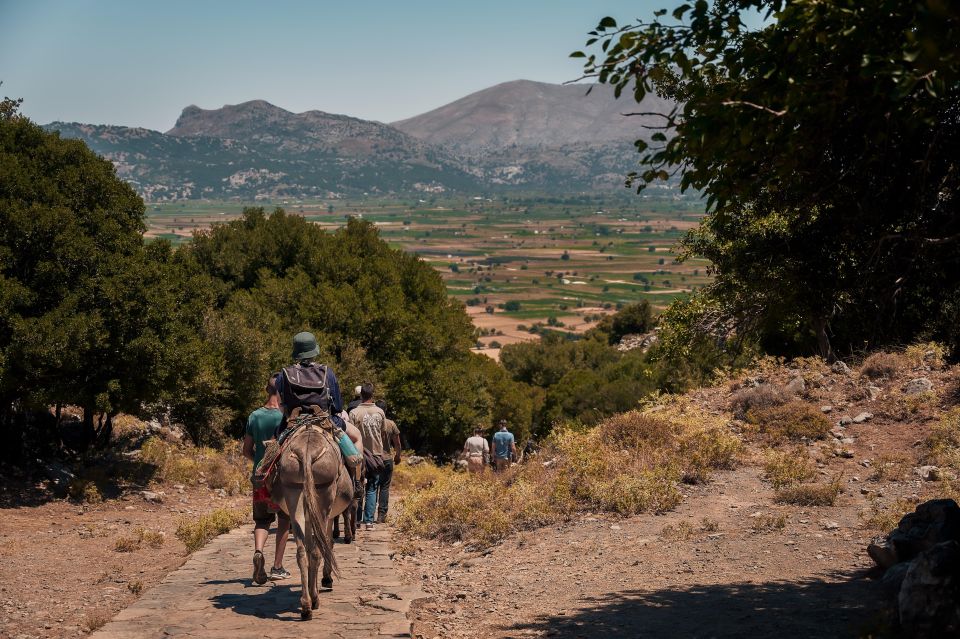
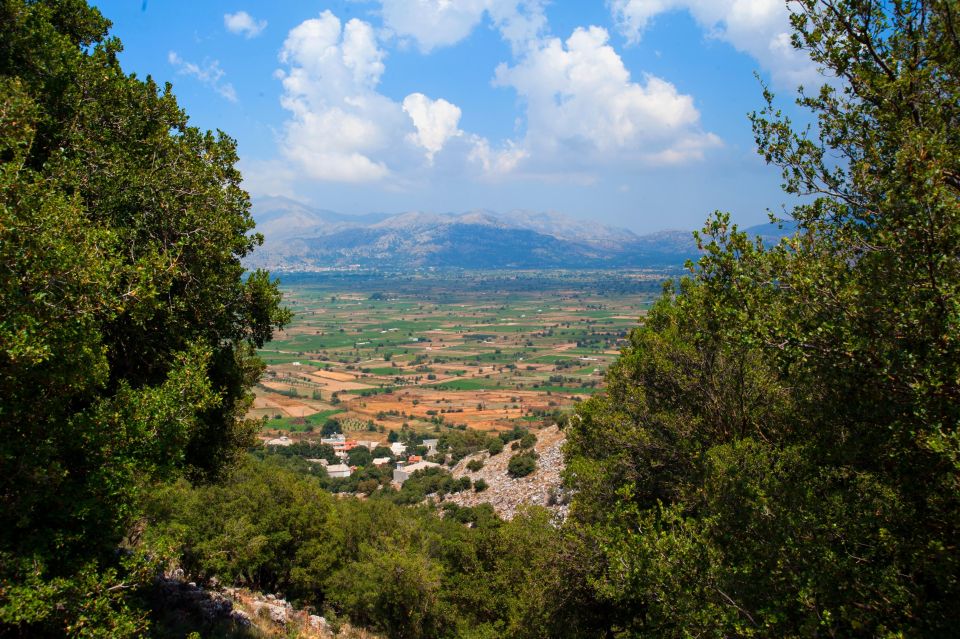
After the monastery, the coach takes about 20 minutes toward the plateau. Lasithi sits roughly 850 meters above sea level and is surrounded by the Dikti Mountains. The air and scenery change as you leave the coast behind.
The plateau is known for its 18 towns, traditional buildings, and the remains of a Venetian drainage system. Old windmills are another local marker, even though the system is no longer the main working feature it once was. From the coach, you get views of the broad highland plain framed by mountains, with villages scattered around it.
This section is important because it gives the day breathing room. Knossos can feel dense with names, dates, and myths. Lasithi offers a slower visual experience, with roads through open country and short stops in small towns.
Do not expect a long independent walk across the plateau. The schedule is built around several short visits, and much of the route is viewed from the coach. If you enjoy scenery and village atmosphere, this is a welcome change. If you want a hiking day, this is not the right tour.
Psychro, Zeus, and the climb to the cave
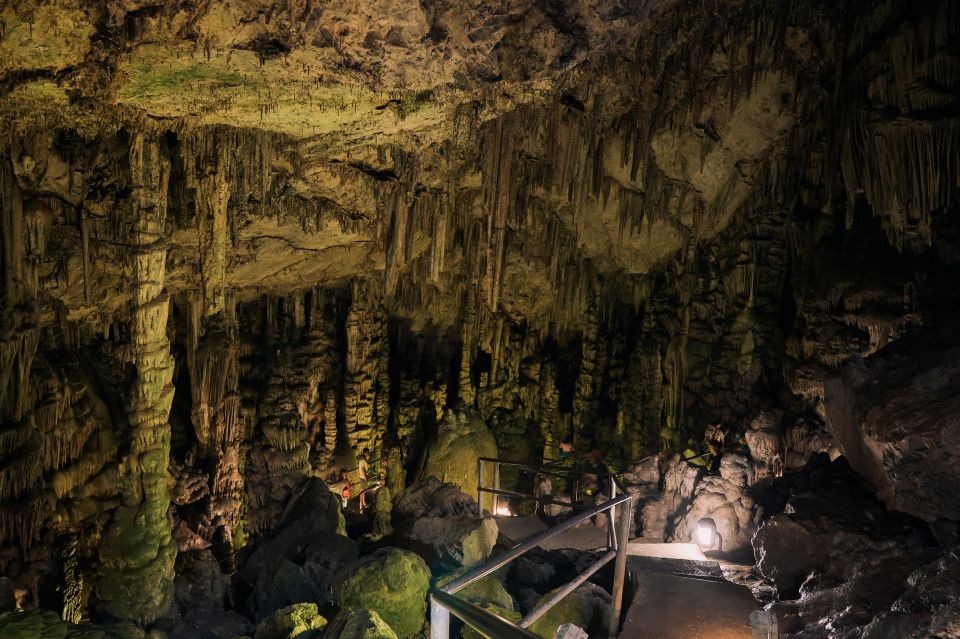
The next stop is Psychro, a picturesque village associated with the Dikteon Cave. Ancient tradition identifies the cave as the birthplace of Zeus, making it one of the day’s strongest links between Cretan geography and Greek mythology.
The practical detail matters: reaching the cave involves an uphill walk of about 300 meters. Wear proper walking shoes, carry water, and do not treat this as a flat coach stop. The cave entry fee is €6, paid separately.
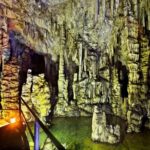
Inside, you might find stalactites and stalagmites, but access is not guaranteed. At least one September departure found the cave closed, making it impossible to go underground. Check the situation close to your travel date if the cave is a major reason for booking, and keep your expectations flexible.
The scheduled stop lasts about 30 minutes. That is tight if you want to make the uphill walk, enter the cave, look around, and return on time. One visitor specifically advised moving quickly because slower walkers may not have enough time. Follow the guide’s timing carefully. Missing the coach would be a far worse souvenir than missing a photograph.
Psychro also includes a handmade ceramic workshop. This adds a local craft element to the mythology, and you have time for shopping or simply watching the work. It is a useful stop if you want something tangible from the plateau beyond photographs.
Tzermiado for lunch and mountain-town atmosphere
From Psychro, the coach travels about 20 minutes to Tzermiado. You have roughly 70 minutes here, making it the longest stop before Knossos.
Tzermiado is the capital of the plateau’s hill towns and is presented as a place of old architecture, quiet streets, and mountain scenery. This is where you can sit for lunch at a local pub, browse for snacks, or take a short walk.
The lunch is not listed as included, so plan to pay for your own food. Bring cash, especially since several stops have separate costs and smaller local businesses may be more convenient for cash payments. You can also use this break to refill your water and rest your legs before the longer ride to Knossos.
I like the pacing here. After the brief monastery and cave stops, 70 minutes gives you enough time to eat without turning lunch into a rushed sandwich break. Still, it is a guided group stop, not an open-ended village visit. You will need to balance sitting down for a meal with seeing a little of Tzermiado.
The long ride back toward Knossos
The journey from Tzermiado to Knossos takes about 70 minutes. This is the longest continuous bus section of the day, and it is worth considering before you book.
The air-conditioned coach helps, particularly after the uphill cave walk and a full morning of sightseeing. Bring sunglasses, a sun hat, water, and comfortable clothes. The trip begins with pickup from coastal resorts and ends with drop-off across the same general area, so the total day can feel longer than the listed 10 hours depending on where you join the route.
The bus time is not wasted if you enjoy looking out at Crete and listening to the guide. Still, the tour is not ideal for anyone who dislikes road travel. One of the main tradeoffs is clear: you see several important places in one day, but each stop is limited by the need to keep moving.
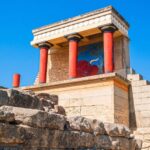
Knossos Palace and the Minoan world
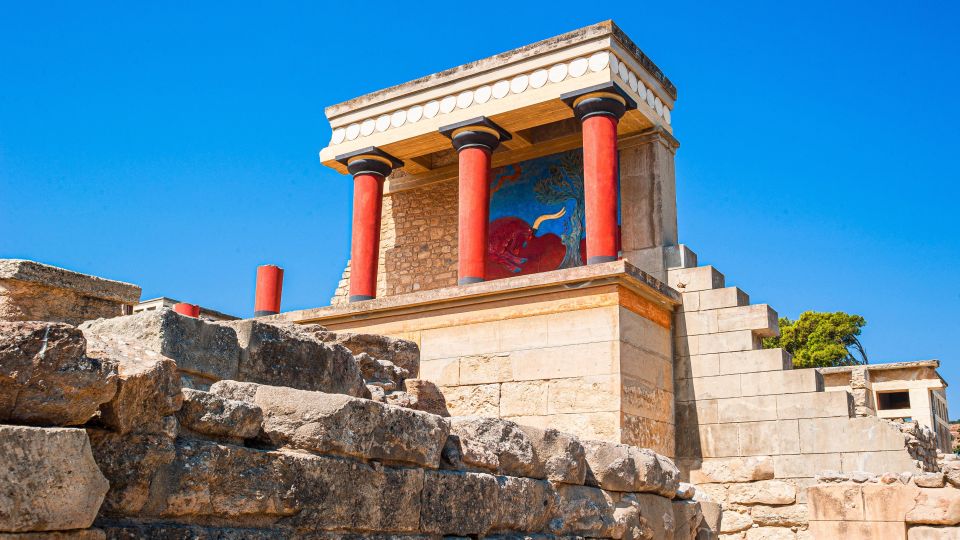
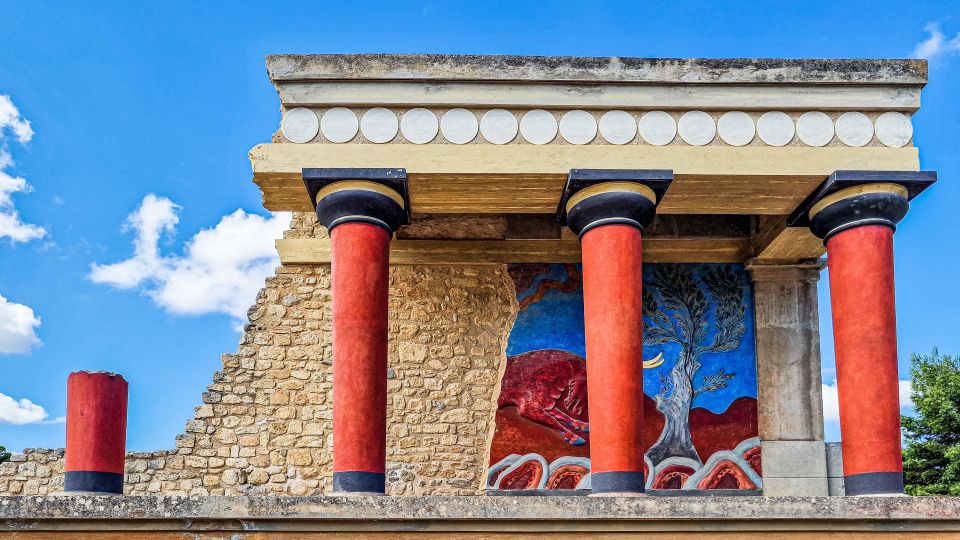
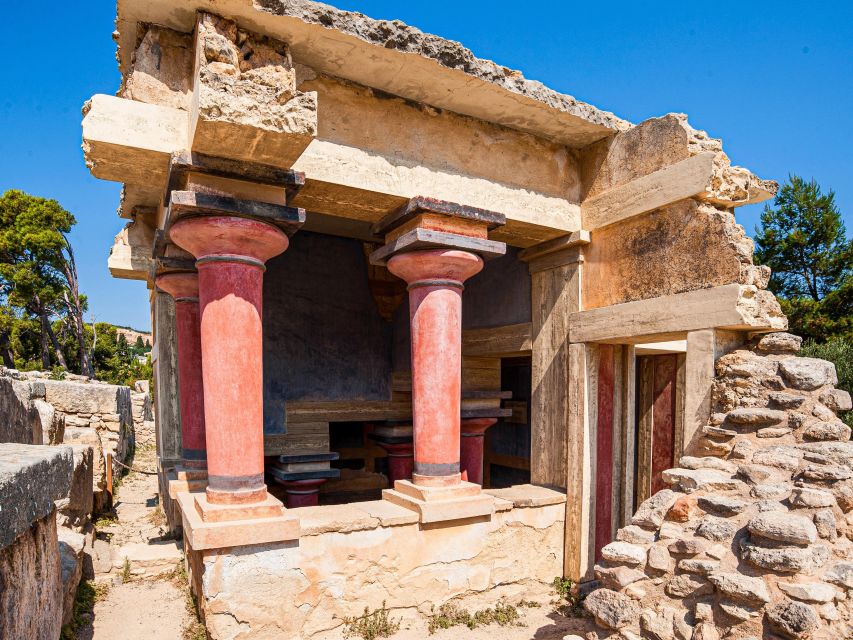
Knossos is the final major stop, with about 110 minutes for a guided walk, sightseeing, photographs, and some free time.
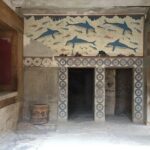
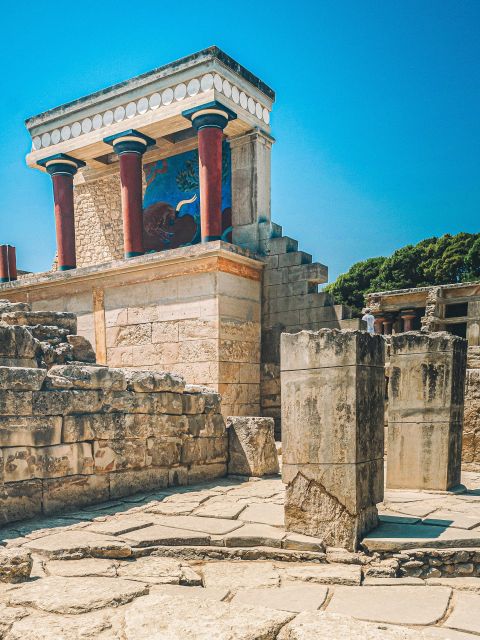
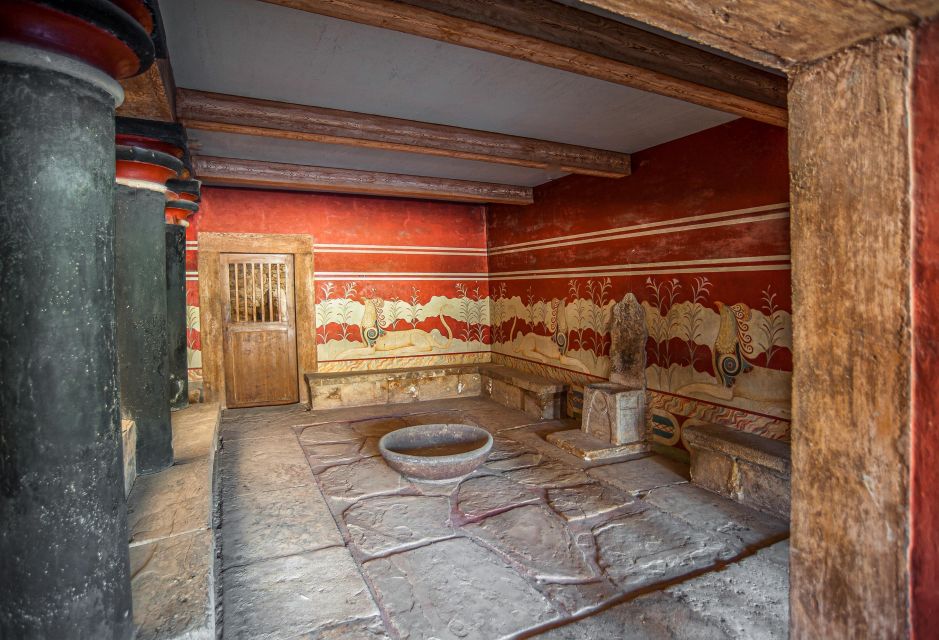
The palace was the capital of the Minoan state and is often described as Europe’s oldest civilization. Your guide connects the ruins to King Minos, the Minotaur, and the Labyrinth. Those stories make the site easier to understand, but the visit is also about the Minoan society that built and used the complex.
The €15 admission is separate, with reductions available. Bring cash so you are prepared for the extra fees throughout the day. The scheduled 110 minutes gives you a solid introduction, especially if this is your first visit to Knossos. It is not enough for every corner, every display, and a long independent study.
The guide matters most here. A good explanation turns scattered walls and reconstructed sections into a story about power, religion, daily life, and myth. The guides on this tour speak English, French, and German. If the coach carries all three language groups, each explanation must be repeated, which can limit the amount of detail. A German-language visitor found the three-language format less useful for detailed explanations, while French-speaking guide Katie received particular praise for being friendly and clear.
That gives you a useful booking question: do you want a simple, well-organized introduction, or do you want a specialist archaeological discussion? This tour is aimed at the first group.
Guides, transport, and the group experience
The tour includes a professional driver, an air-conditioned coach, liability insurance from Generali, and a live guide. Pickup is available from many points between Agia Pelagia and Malia, including Heraklion, Hersonissos, Stalida, Malia, Gouves, Kokkini Hani, Ammoudara, and nearby resort areas.
After booking, you receive the exact pickup point and departure time by email. That detail matters because the listed resort names cover a wide area. Do not assume the coach collects you directly outside every hotel. Wait for the specific instructions.
The strongest part of the guided format is organization. You do not need to arrange a rental car, find the monastery, navigate the plateau, locate Psychro, or work out how to connect all of these places with Knossos. The driver handles a route that would take more planning on your own.
The limitation is the same one found on many multilingual coach tours. Explanations may be delivered in three languages, so the commentary can be shorter than you expect. You gain language access and convenience, but you may give up depth and time.
Who should book this tour?
I would recommend it to you if you are staying near the northern coast and want one day covering myth, mountains, crafts, and archaeology. It is especially useful for first-time visitors who want to see Knossos but also want a glimpse of inland Crete.
It suits people who are comfortable with a full day, several coach rides, and short guided visits. Families and couples who prefer a planned route may appreciate the easy pickup and clear schedule. It also works for people who do not want to drive mountain roads.
I would think twice if you have limited mobility because of the uphill walk to the cave. The 300-meter climb may be manageable for some people, but the stop is short and the route is not presented as an easy stroll. The cave may also be closed.
You may prefer another option if Knossos is your sole priority. With only 110 minutes at the palace, you get the main story, not every archaeological detail. And if you dislike multilingual commentary, a tour in one language could offer a more focused experience.
For value, the tour is strongest when you want several attractions in one day. At $53, the transportation and guide make the base price fair. Add €23 for the three listed admissions, plus lunch, and budget for a full day rather than a bargain half-day outing.
Useful details before you go
Book with the 24-hour cancellation window in mind. You can cancel up to 24 hours before departure for a full refund, and the reserve-now, pay-later option keeps your plans open.
Wear comfortable shoes, not just sandals. The cave walk is uphill, and Knossos involves walking over uneven ground. Bring water, sunglasses, a sun hat, comfortable clothes, and cash for admission, lunch, snacks, and ceramics.
Alcohol and drugs are not allowed. The tour runs for 10 hours, and pickup times vary by location, so leave room in your day for the full schedule.
Final verdict: a strong first look at inland Crete
Book this tour if you want to combine Knossos with the Lasithi Plateau, Kera Monastery, Psychro, and Tzermiado without renting a car. The day gives you a useful range of Crete, from Orthodox icons and handmade pottery to mountain villages and Minoan myth.
Skip it if you want long, quiet visits or specialist archaeological detail. The coach rides are substantial, the cave can close, and three-language commentary may keep explanations brief.
For most first-time visitors based along the northern coast, I see this as a practical, good-value introduction to Crete beyond the beaches. Just budget for the entrance fees, wear shoes suitable for the cave climb, and treat Knossos as a well-guided overview rather than a complete study of the site.
FAQ
How long does the Crete Lasithi Plateau and Knossos tour last?
The tour lasts 10 hours, including resort pickup and drop-off, coach travel, guided visits, free time, and lunch time in Tzermiado.
What languages does the guide speak?
Live guides are available in English, French, and German. The tour may use a multilingual format, so commentary can be shorter in each language.
Is pickup included?
Yes. Free pickup and drop-off are available from many locations between Agia Pelagia and Malia, including Heraklion, Hersonissos, Malia, Stalida, Gouves, Kokkini Hani, Ammoudara, and nearby areas. The exact pickup point and time are sent by email after booking.
Are the entrance fees included?
No. The listed costs are €6 for Psychro Cave, €15 per person for Knossos with reductions available, and €2 for Kera Monastery.
How much walking is required at Psychro Cave?
The tour information specifies an uphill walk of about 300 meters to reach the cave. Comfortable shoes, water, and suitable clothing are recommended.
Can the Dikteon Cave be closed?
Yes. Cave access is not guaranteed, and it was closed during at least one September departure. Check close to your visit if entering the cave is especially important to you.
Can I cancel the tour or pay later?
You can cancel up to 24 hours in advance for a full refund. A reserve-now, pay-later option is also available.