REVIEW · HERAKLION
Lassithi, Zeus Cave, Olive Mill Farm & Knossos Combo Tour
Book on GetYourGuide →Operated by Cretan Odyssey · Bookable on GetYourGuide
A day trip that starts in myth and ends in ruins. This Lassithi Plateau route strings together Psychro Cave (Cave of Zeus), the quiet Vidiani Monastery, Krasi’s iconic plane tree, an olive mill farm visit, and then a guided walk through Knossos. Guides like Soula and Nektarios are mentioned often for making the ride feel like a moving history lesson, not just a bus timetable.
Two things I like a lot: you get big variety in one long day, and the stops are placed so you still see the core “myth + Minoans” story line. The other win is the guided component at Knossos, where restoration, frescoes, and layout make far more sense with a real person talking you through it.
One drawback to plan for: it’s a long day with real walking at Zeus Cave. If you’re not used to steps and uneven ground, you’ll want solid shoes and a game plan before you climb.
In This Review
- Key things to know before you go
- Lassithi Plateau + Knossos: a myth-to-Minoans day that actually fits
- Morning pickup and the route logic (why the day feels full)
- Vidiani Monastery: a calm start before the cave chaos
- Psychro Cave (Cave of Zeus): the steps, the cool air, and the legend
- Krasi village: the photo stop with the oldest plane tree payoff
- Olive Mill Farm (Lyrakis Family S.A.): rural Crete in production mode
- Knossos Palace: guided ruins you can actually read
- Price and logistics: where your $58 goes (and what still costs extra)
- Who should book this tour (and who should skip)
- Practical tips for a smoother day
- Should you book the Lassithi + Zeus Cave + Knossos combo?
- FAQ
- How long is the Lassithi, Zeus Cave, Olive Mill Farm & Knossos combo tour?
- What’s included in the price?
- Are Zeus Cave and Knossos entrance fees included?
- Is lunch included at the olive mill farm?
- What should I bring for the tour?
- What languages is the guide available in?
Key things to know before you go
- Lassithi Plateau hits the highlights: Vidiani Monastery, Krasi plane tree stop, Psychro Cave, olive mill farm, then Knossos
- Zeus Cave is the active part: steep approach and lots of steps, plus a rocky last stretch
- Knossos is guided for meaning, not just photos: you’ll get a structured tour through the palace areas
- Olive mill farm time can feel “extra”: you can enjoy it, but some people want more time elsewhere
- Entrance fees are separate: expect to pay for both Zeus Cave and Knossos on top of the tour price
Lassithi Plateau + Knossos: a myth-to-Minoans day that actually fits
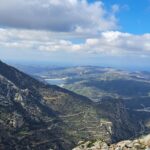
Crete has a lot of “one main site” tours. This one is different. You’re not just doing Knossos and calling it a day. You’re also climbing up into the Lassithi highlands, stepping into a cave tied to Greek legend, and then finishing with a guided walk through Europe’s earliest known urban culture.
The value angle is simple: for one set price (listed at $58), you’re buying transportation plus a guide and driver for a big chunk of the island’s north-central story. Then you add the two main site tickets separately: 15€ for Zeus Cave and 20€ for Knossos.
This is also a good “first Crete week” tour. If you want the famous stuff without doing all the driving, it gives you a concentrated hit of culture, religion, mythology, and everyday rural life.
A few more Heraklion tours and experiences worth a look
Morning pickup and the route logic (why the day feels full)
The day starts with morning pickup from a wide set of locations (including Heraklion, Malia, and the Sisi area). Depending on where you’re picked up, your bus time before the first stop can be longer—one review calls out over an hour just to collect multiple beach-area hotels.
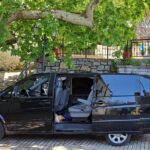
That matters because it shapes your energy. By the time you reach the first site, you’ll want to be hydrated and have your comfy shoes on. The good news: the bus is air-conditioned, and the pace between stops is designed around guided timing and breaks, so you don’t just sit in traffic the whole day.
A practical tip: pack water and keep it in your hand. The itinerary includes stops for walking and viewpoints, and the day can run long.
Vidiani Monastery: a calm start before the cave chaos
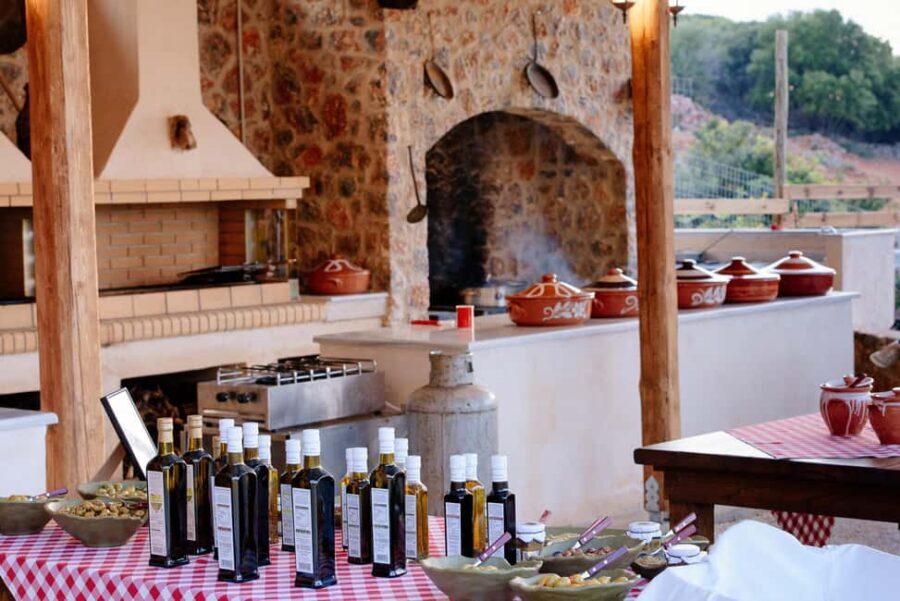
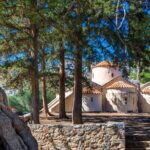
Your first major stop is the Monastery of the Mother Mary Vidiani, an Eastern Orthodox monastery at the base of Mount Louloudaki. Expect a peaceful courtyard, mountain views, and frescoes. It’s a gentle start that shifts the mood from bus mode to “slow down and look.”
This stop is short compared to the others (about 25 minutes). That’s good for time management, but you also need to be ready to take photos fast. The payoff is that you get a rare feel for Crete’s living religious landscape, not just archaeological stones.
I especially like that this monastery isn’t wedged in a theme park setting. You’re in a mountain area, and it feels like a place people still visit for quiet and reflection.
Psychro Cave (Cave of Zeus): the steps, the cool air, and the legend
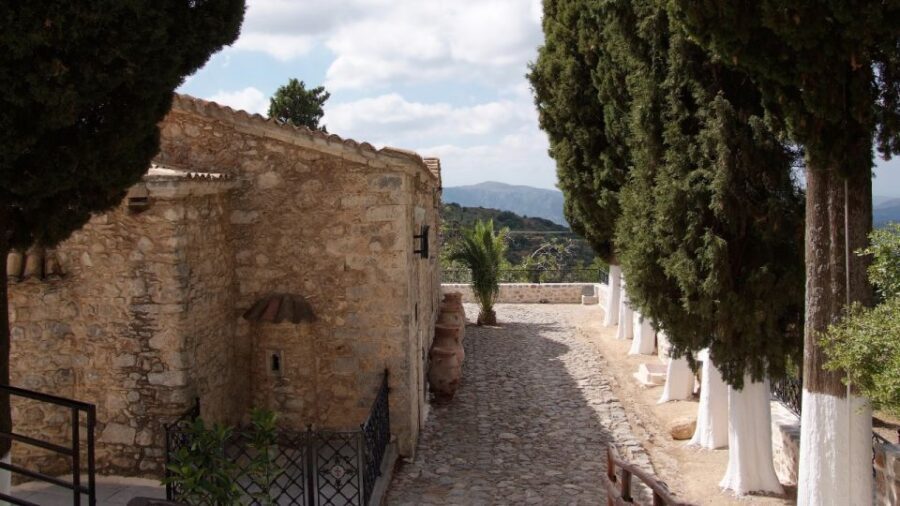
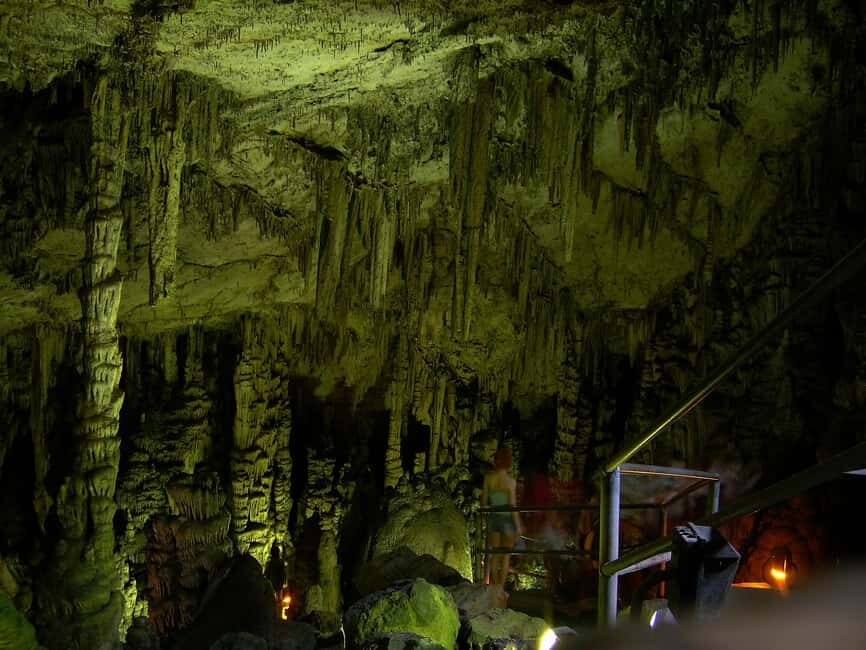
Then comes the showpiece: Psychro Cave, widely linked to the birthplace of Zeus. You descend into illuminated chambers with stalactites and stalagmites that form over thousands of years. Even if you’re not a mythology person, the cavern itself does the work.
Here’s the catch: the walk up is not a casual stroll. Multiple comments warn about a steep approach, a climb that can take around 25 minutes, and then plenty of steps and rocky sections near the cave entry. Wear shoes with grip.
Some tours mention donkey options for the uphill route. If you choose that, it can reduce strain. If you don’t want the donkey piece, you can still go on foot—but be honest with your fitness level first.
One more note that matters: there have been periods when Zeus Cave has been closed for restoration. So if you’re traveling during an announced closure window, you might need an alternative plan. Always check close to your dates.
Krasi village: the photo stop with the oldest plane tree payoff
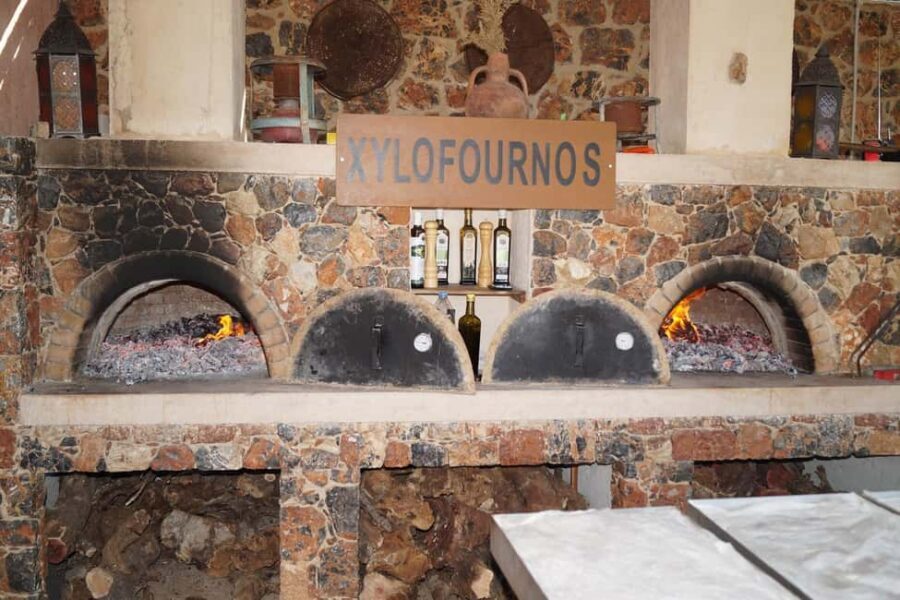
After the cave, the tour shifts to a traditional village break in Krasi. The headline is the oldest and largest plane tree in Crete, plus natural freshwater springs and a bit of greenery and village life.
This stop is about 20 minutes. That makes it ideal for:
- grabbing coffee or a quick drink,
- using the restroom if you need it,
- taking photos in the shade,
- and resetting your legs after the cave steps.
It’s the kind of stop that won’t change your life. But it breaks up the day so it doesn’t feel like you’re constantly going from one exhausting “hard stop” to another.

Olive Mill Farm (Lyrakis Family S.A.): rural Crete in production mode
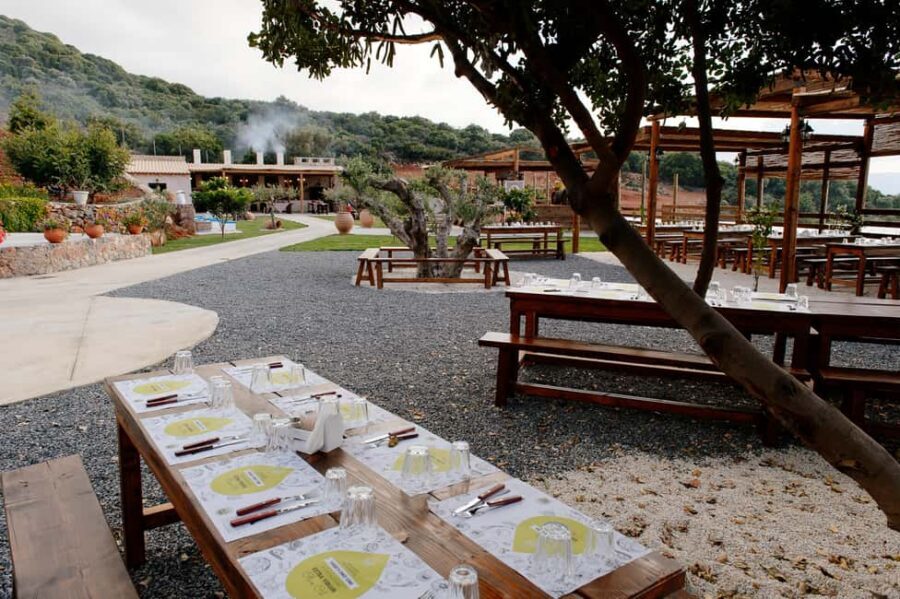
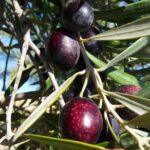
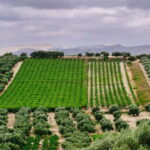
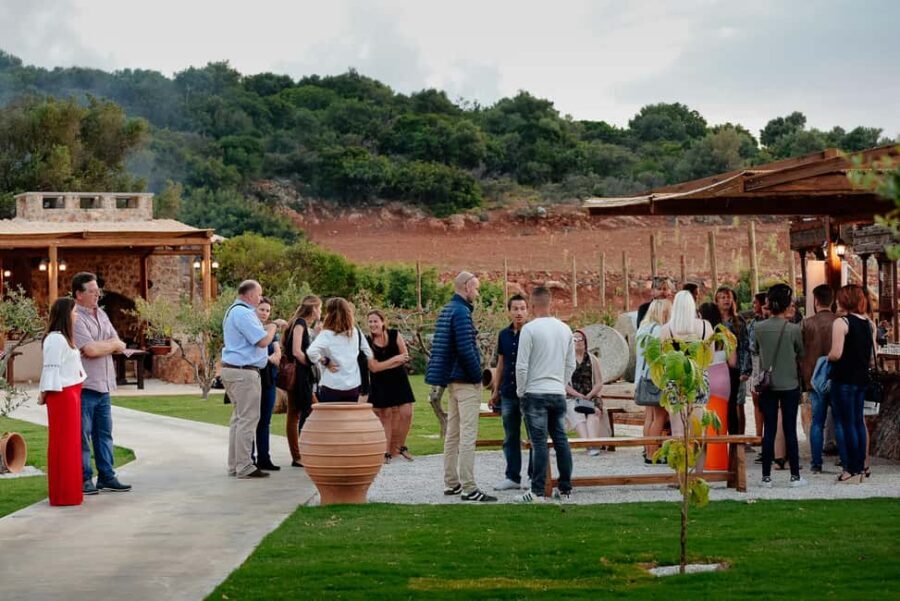
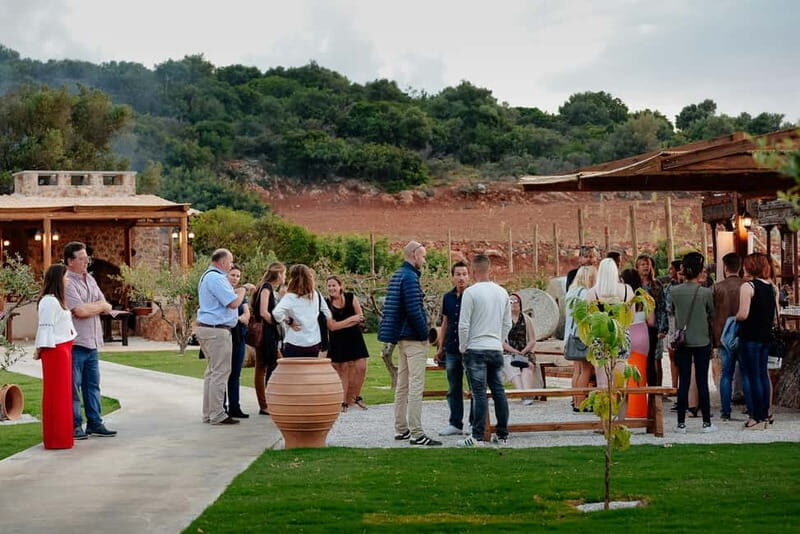
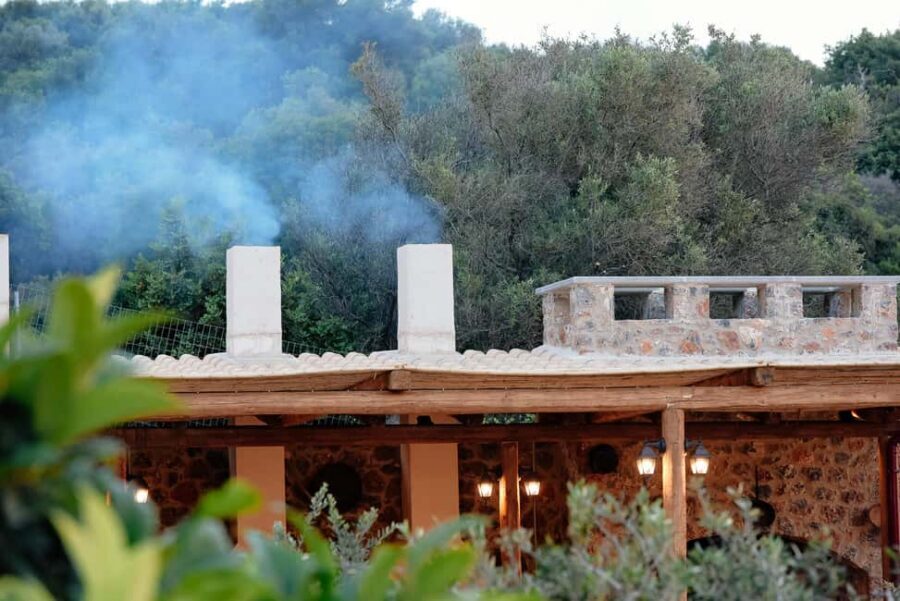
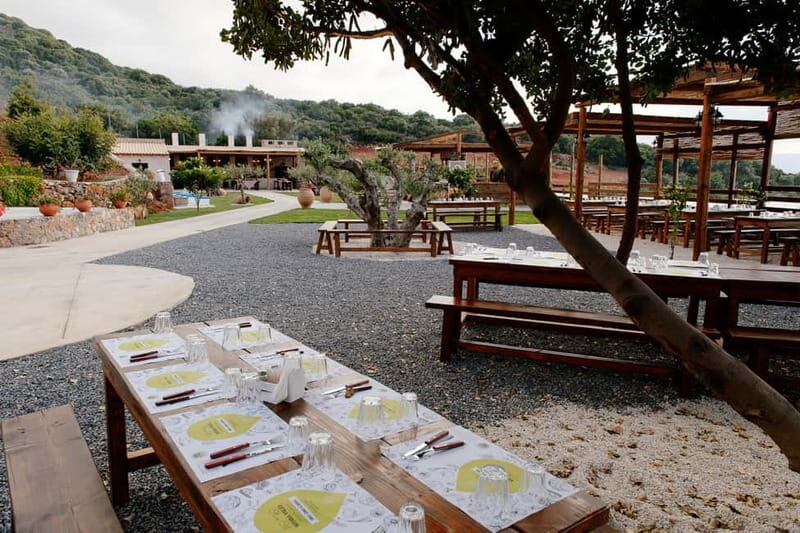
Next is the Olive Mill Farm (listed stop: Lyrakis Family S.A.), overlooking both the mountains and the Aegean Sea. Expect a guided walk through the production process for local olive oil and other products like honey and handmade olive-based goods.
This is where the tour can split opinions. Some people love it because it’s tangible—how a product becomes a product. Others find the time long, especially if you’re itching to spend more time at Knossos.
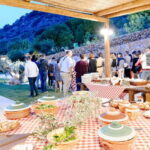
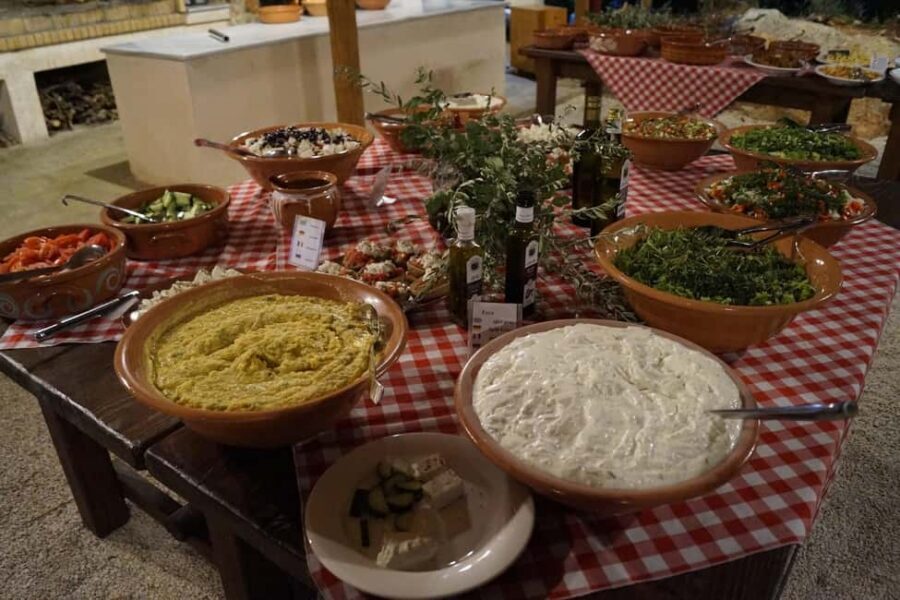
You also have the lunch option here. Lunch is at your own expense. One review mentions a buffet around 15€. The upside is that lunch is in a scenic setting tied to the place you just toured. The downside is timing: lunch can land later in the day, which may reduce independent exploration time at Knossos.
If you’re the type who wants maximum time wandering ruins at your own pace, keep your lunch expectations realistic. Eat, enjoy the farm, and then shift to Knossos mode when you get there.
Knossos Palace: guided ruins you can actually read
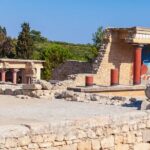
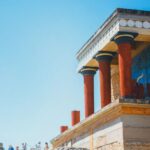
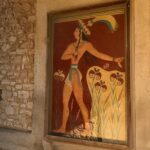
The day ends at the Palace of Knossos, the heart of the Minoan civilization. You’ll have a guided tour that focuses on restored chambers, frescoes, and the layout of an advanced Bronze Age society.
A common theme from reviews is that the guide makes Knossos click. Guides have pointed out details so you’re not just staring at walls and asking, What is this supposed to be? Some tours also mention a headset system for the Knossos portion, but not everyone finds it perfect—one person reports crackling audio. If that happens, you can still rely on the guide and your proximity.
Time at Knossos is about an hour. That’s not enough for a slow museum-style crawl, so treat it as a guided orientation. After the tour, if you have any extra time, take a second lap focusing on the areas your guide emphasized.
Also, keep an eye on group size. On some days, the bus can be quite full, and Knossos can feel crowded. If you’re easily irritated by crowds, plan your expectations: you’ll see a lot, but you won’t have quiet space to sprawl out.
Price and logistics: where your $58 goes (and what still costs extra)
The headline price is $58 per person, and it includes:
- hotel pickup and drop-off,
- air-conditioned bus transport,
- driver,
- a guide,
- and liability insurance coverage.
What’s not included are the two big tickets:
- Zeus Cave entrance fee: 15€
- Knossos entrance ticket: 20€
On top of that, lunch at the olive farm is optional.
When you total it up, this tour still tends to feel good value because the “hard parts” are covered: transportation across the island’s interior and guided interpretation at multiple key stops. You’re not piecing together tickets and bus transfers yourself.
But do the math honestly. If you’re budgeting down to the last euro, you’ll want to account for those entrance fees and any lunch you choose.
Who should book this tour (and who should skip)
This combo tour fits best if you:
- want a single-day overview of central Crete,
- like mythology plus Minoan archaeology in one plan,
- prefer guided explanations over reading plaques alone,
- don’t want to rent a car or manage connections.
Consider a different option if:
- you hate long bus days and tight stop windows,
- you have mobility limits with steps and uneven ground (especially the Zeus Cave approach),
- you want deep time at Knossos for independent exploring.
It’s also a solid choice for families, as some guides keep kids engaged with storytelling. The biggest stress point for families will be the cave walk.
Practical tips for a smoother day
Bring shoes you trust. Zeus Cave can mean steep sections, steps, and rocky ground. Trainers with grip are a common practical recommendation.
Bring water and sunglasses. Even though you’ll be in shaded stops sometimes, you’ll also be exposed during drives and viewpoints.
Plan your energy like it’s an all-day hike. It’s not just “a few sites.” The day runs roughly 10.5 to 11 hours door-to-door depending on pickup and drop-off traffic.
If Knossos timing matters to you, double-check ticket details. One comment describes confusion about time slots when tickets were bought beforehand. It’s not guaranteed to happen, but it’s a good reason to stay flexible or coordinate carefully.
Should you book the Lassithi + Zeus Cave + Knossos combo?
If you’re visiting Crete for a limited time, I’d book it. The route gives you a rare mix: a monastery stop, a nature-and-myth cave, a village break with an iconic plane tree, olive oil production on the hillside, and then a guided Knossos Palace visit.
I’d hesitate only if your priority is slow, uncrowded wandering at Knossos, or if the Zeus Cave walk sounds like it will be too much. For those cases, you might get more enjoyment from a smaller, more focused Knossos-only day.
Overall, this is the kind of day trip that makes Crete feel bigger than your hotel area—without requiring you to drive.
FAQ
How long is the Lassithi, Zeus Cave, Olive Mill Farm & Knossos combo tour?
The duration is listed at about 10.5 to 11 hours.
What’s included in the price?
The tour includes hotel pickup and drop-off, transportation by air-conditioned bus, a driver, and a live guide (plus liability insurance coverage by ALLIANZ).
Are Zeus Cave and Knossos entrance fees included?
No. Zeus Cave entrance fee (15€) and Knossos entrance ticket (20€) are not included.
Is lunch included at the olive mill farm?
Lunch is optional and costs extra.
What should I bring for the tour?
Bring comfortable shoes, sunglasses, water, and comfortable clothes.
What languages is the guide available in?
The live tour guide is available in German, English, and French.