REVIEW · HERAKLION
Knossos-Zeus Cave -Old Traditional Villages-Olive Oil Factory
Book on Viator →Operated by Explore Real Crete · Bookable on Viator
Crete feels different once you leave the coast roads. This day tour strings together olive oil making, old inland villages, and big mythology stops in a smooth, small-group format. I especially like that you get both modern and old-school olive processing, plus plenty of chances to walk narrow streets and take photos without racing. One thing to plan for: Dikteon Cave can be closed depending on the season, and major-site entrances like Knossos are not included.
Expect a practical, easy pace with pickup, air-conditioning, and onboard Wi-Fi—plus multiple short stops so the day doesn’t feel like one long bus ride. You might travel with a guide like Stavros, Ed, Mike, Spyros, or Demetrius, and the common thread is storytelling and local know-how. The main consideration is budget math: the itinerary is loaded with included drinks and tastings, but you may still pay separately for Knossos and potentially Zeus Cave (if it’s open).
In This Review
- Key highlights before you go
- A Small-Group Crete Day From Heraklion
- Omalia Olive Press: Old Presses, New Machines
- Mochos and the Narrow-Street Village Break
- Krasi and the Platanus Tree for Big Photos
- Lasithi Plateau Windmills: Why They Matter
- Optional Mountain Lunch and the Aposelemi Dam Overlook
- Dikteon Cave for Zeus: What to Expect If It’s Closed
- Knossos Archaeological Site: The Optional Decision That Makes the Day Work
- Price and Logistics: Is This Worth $136.65?
- Who This Tour Suits Best (and Who Might Want a Different Day)
- Should You Book This Tour?
- FAQ
- What’s the duration of the tour?
- Is pickup and drop-off included?
- What’s included in the price?
- Is lunch included?
- Are tickets for Dikteon Cave included?
- Is Knossos included?
- How many people are on the tour?
- Can I cancel for a full refund?
Key highlights before you go
- Old and new olive oil machinery: you’ll see how production works both now and the traditional way
- Mountain-and-village rhythm: short village walks, coffee breaks, and scenic overlooks instead of nonstop driving
- Lasithi windmills, explained: you get the real purpose behind the structures—water lifting and grain processing
- Family-run lunch option: you can choose a meal with a view, then keep moving without being locked in
- Zeus Cave timing check: the cave may be closed until late April, so confirm before your trip
- Knossos is optional: you can skip it and head back earlier if that helps you enjoy the rest of the day
A Small-Group Crete Day From Heraklion
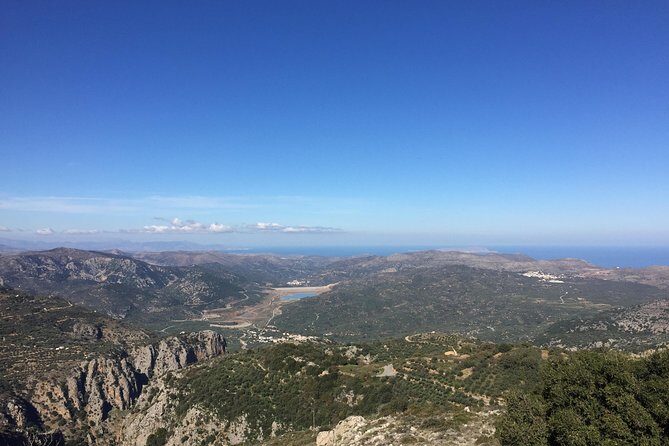
This tour runs with a maximum group size of 10, which matters more than you’d think. With a small group, your guide can actually manage timing: bathroom stops, coffee breaks, and a little extra time for photos in the places that call for it.
Pickup is built in. You can be collected from listed areas like Heraklion, Kartero, Gouves, Analipsi, Hersonissos, Anissaras, Stalida, Malia, and Sisi (and for private tours, even more towns farther out). If you’re arriving on a cruise, your guide meets you at the Heraklion port with a sign at the passenger station. Do note: pickup is not offered from Chania.
The comfort factor is solid. You’ll ride in an air-conditioned vehicle, you get free Wi-Fi onboard, and there are bottled waters plus coffees and teas included. That’s a genuine value point on a 7.5-hour day—especially if you’re traveling with kids or you just want your energy to stay steady.
If you’re the type who likes to ask questions, this tour supports that. Guides are local driver-guides, and the day tends to include lots of back-and-forth—stories, mythology context, and everyday life details.
You can also read our reviews of more tours and experiences in Heraklion.

Omalia Olive Press: Old Presses, New Machines
The olive press stop is one of the best anchors of the day. You’ll visit an olive oil facility and learn how olive oil is made using both modern machinery and the old traditional equipment. That contrast helps you understand why olive oil is such a big deal on Crete: it’s not just a flavor, it’s an entire skill set built over generations.
You’ll also get tastings: olive oil along with raki. The tasting isn’t presented like a lecture where you’re stuck standing still. It’s more like a guided sampling—what to expect, what to notice, and how the process connects to taste.
Practical tip: if you’re sensitive to strong flavors, start with smaller tastes of raki and olive oil, then adjust. Olive oil has a range, and the best way to appreciate it is to take notes in your head: peppery? smooth? grassy? The guide usually helps you put words to it.
This is the kind of stop that also works if you don’t want to be stuck inside museums all day. It’s hands-on and sensory, and it gives you something real to look for later in shops and restaurants.
Mochos and the Narrow-Street Village Break
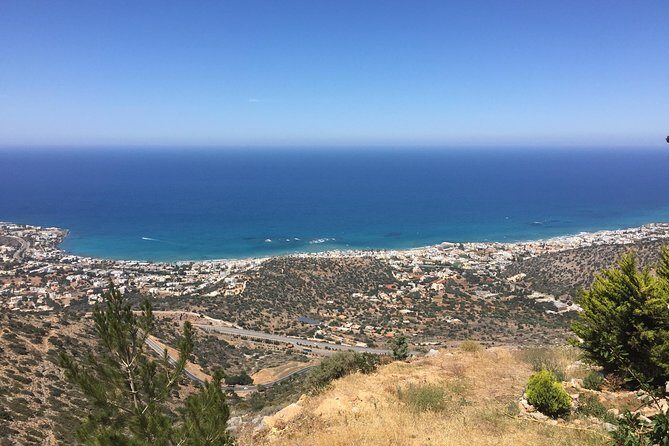
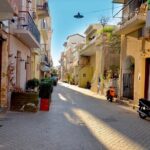
After the olive facility, the tour turns toward village life. In Mochos, you’ll walk through old, narrow streets and then have time in the main square for coffee or fresh juice.
This kind of pause is underrated. It’s not a rushed photo stop, and it’s not a long shopping detour either. You get enough time to reset—cool drink, people-watching, and a chance to feel the scale of Cretan villages without the noise you’d expect near major tourist lanes.
If you travel with family, this is also a good moment. Reviews often highlight how guides keep kids engaged with stories and fun explanations, and village breaks are where that energy lands best.
Also, keep your expectations realistic. A village stroll is not a full guided tour of every alley. It’s more like: you get oriented, you enjoy the vibe, you sip something cold, and you move on to the next viewpoint.
Krasi and the Platanus Tree for Big Photos
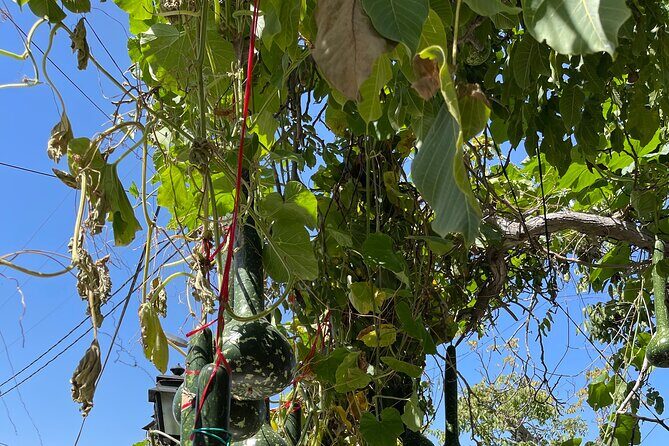
Next comes Krasi, with time to walk around stone narrow streets and older houses. One planned highlight is the village Platanus tree—described as the oldest and biggest in Crete—so you should expect an iconic stop for photos.
The point here isn’t the tree alone. It’s what the tree represents: a long-lived piece of the village landscape, literally shading the same kind of streets that locals still walk decades later. Even if you’re not chasing super-precise history facts, the atmosphere makes it memorable.
You’ll also have time to slow down, look up at the architecture, and take pictures without feeling like you’re late. This is the kind of stop that works well if you want the day to feel like travel, not a checklist.
Lasithi Plateau Windmills: Why They Matter
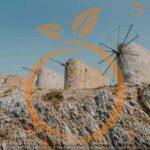
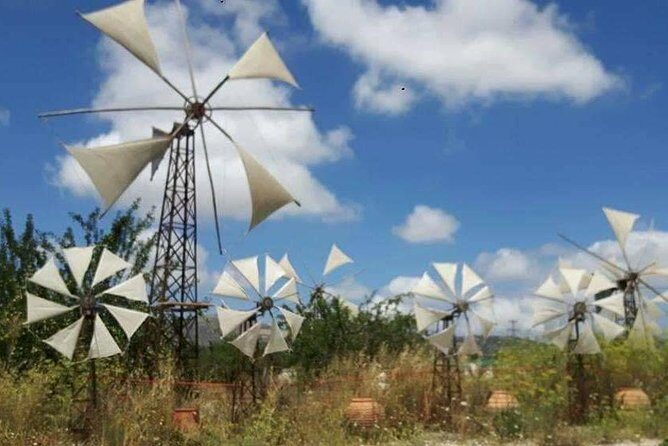
Now for a change of scenery—up on the Lasithi Plateau you’ll see the old windmills. The tour explains what they were used for: pumping water to help crops grow and using wind power to grind grain into flour.
That functional background turns what might look like scenery into something you can actually read. You’re not just seeing windmills; you’re seeing a system that once turned weather into food production.
You get a short stop (about 30 minutes), which is perfect for this type of visit. The goal isn’t a long hike. It’s a viewpoint and a photo moment with context, then back to the bus before the day gets too exhausting.
If you’re sensitive to sun, bring a hat and sunglasses. Windmill areas tend to be exposed, and you’re up high enough to feel the light strongly.



Optional Mountain Lunch and the Aposelemi Dam Overlook
Lunch is offered as an optional stop at a family restaurant up on the mountain. You’ll have about 45 minutes there. If you want the local meal and the mountain views, this is a great time to slow down and eat something that feels like it belongs on Crete.
If you prefer to skip it, you can—so you aren’t locked into a meal you don’t want. Either way, you keep the day moving, which matters when you’re balancing multiple stops.
After that, you’ll stop at Aposelemi canyon for views from above the aposelemi Dam. This is a quick photo-and-breathing moment (about 5 minutes), and it’s ideal for travelers who want scenery without a long walk.
Practical tip: if you’re prone to motion sickness, sit where you feel most stable on the vehicle. Mountain roads can be twisty, and a short burst of fresh air right after can help.
Dikteon Cave for Zeus: What to Expect If It’s Closed
The mythology payoff is Dikteon Cave, described as the cave where Zeus was born. The planned time on site is about 1 hour, and the entrance fee is not included.
Here’s the key reality check: the cave can be closed, and according to local authorities it may reopen at the end of April. That means you should plan for the possibility that your day ends up adjusting around it.
If it’s closed, don’t treat it as a failure of the tour. Think of it as a scheduling variable you can’t control. Your best move is to confirm the opening status close to departure, especially if your trip is right at the seasonal switch.
Also, remember entrance fees are separate for major sites. You’ll want some cash or a card ready for whatever is open.
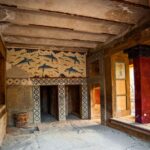
Knossos Archaeological Site: The Optional Decision That Makes the Day Work
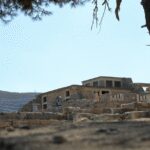
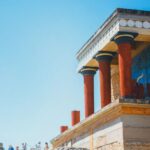
Knossos is the final stop and it’s marked as optional. The entrance fee is not included (20 euros per person, with half price for up to age 25). There’s also an option to arrange a private guide inside Knossos for an extra charge if you want deeper explanation.
The smarter part of this setup: you can tell the guide you’re not into Knossos and they can drive you back to your hotel earlier. That’s genuinely useful. Knossos can be fascinating, but it’s also a lot to process in one late-day window—especially if you’ve already walked several villages.
If you do go, plan to keep your pace slower than you think. The site covers a lot of ground, and your enjoyment depends on how much time you give yourself to look, not just walk.
If you don’t go, you still benefit from the rest of the day, which is built around Crete’s everyday rhythms—olive oil, villages, windmills, and mountain viewpoints.
Price and Logistics: Is This Worth $136.65?
At $136.65 per person, this isn’t the cheapest way to spend a day from Heraklion—but the inclusions explain where the value comes from.
Here’s what you get that you’d otherwise pay for separately:
- air-conditioned transport plus free Wi-Fi onboard
- pickup and drop-off from listed areas
- bottled water, coffees, and teas
- olive oil and raki tasting
The parts that may cost extra:
- lunch is optional (and not listed as included)
- Dikteon Cave entrance is not included
- Knossos entrance is not included (20 euros, with reduced pricing for younger visitors)
- private guiding inside Knossos is an optional add-on
So the value equation is: you’re paying for the driver-guide, the organized route across inland Crete, and the tastings/drinks that make the day feel like more than just “transport to sights.” If you love food culture and you’re happy paying for experiences while skipping museum-style ticketing add-ons, this tends to feel fair.
If you plan to skip Knossos and you also end up with Dikteon Cave closed, you’ll want to think of the trip as a village-and-food day with a mythology theme, not a full ancient-site itinerary.
Who This Tour Suits Best (and Who Might Want a Different Day)
This tour fits best if you want Crete that feels lived-in. You’ll spend time in inland villages like Mochos and Krasi, see windmills with practical historical context, and enjoy mountain viewpoints. It’s also a good pick if you travel with kids. Several guides are praised for keeping younger travelers engaged with stories and humor.
It’s also a strong option if you like food experiences. Olive oil tasting, raki, coffee or juice in a village square, and the optional family restaurant lunch make the day feel sensory rather than purely informational.
This may not be your best match if you only want major archaeological ruins and long museum visits. The time at big ticket sites like Knossos is limited, and both Zeus Cave and Knossos require separate entrances.
And if you’re someone who wants long stays in one place, you might feel the day is structured. This is a “move around, see a lot, but still stop to enjoy it” style.
Should You Book This Tour?
I’d book it if you’re craving a day that mixes olive culture, old villages, and myth in a small group. The olive press stop and the tastings are worth it even if you decide not to do Knossos. The windmills plus the mountain viewpoints also give you that inland Crete feel people often miss when they stay coastal.
I’d think twice if you’re traveling right around the seasonality window for Dikteon Cave, since it may be closed depending on authorities. And if you already know you want only archaeological sites with guided museum-style interpretation, look for a plan that spends more time inside the big ruins.
If you like your days active but not exhausting, and you want local food and culture without hunting for it yourself, this one is a very solid bet.
FAQ
What’s the duration of the tour?
The tour runs for about 7 hours 30 minutes.
Is pickup and drop-off included?
Yes. Pickup and drop-off are included from hotels (outside the reception area), the port, or the listed meeting points.
What’s included in the price?
Transport in an air-conditioned vehicle with free Wi-Fi, bottled water, coffees, teas, olive oil and raki tasting, and an English-speaking local guide/driver are included.
Is lunch included?
Lunch is optional. You stop at a family restaurant on the mountain, but lunch itself is not included.
Are tickets for Dikteon Cave included?
No. Dikteon Cave entrance is not included, and the cave can be closed depending on the time of year.
Is Knossos included?
Knossos is optional and the entrance ticket is not included. The listed price is 20 euros per person, with half price for up to 25 years old.
How many people are on the tour?
The tour has a maximum of 10 travelers.
Can I cancel for a full refund?
Yes. You can cancel up to 24 hours in advance for a full refund, and the experience may be rescheduled or refunded if canceled due to poor weather.