REVIEW · HERAKLION
Crete: Olive Oil Festival, Farm Dinner, Live Show & Pickup
Book on GetYourGuide →Operated by Cretan Odyssey · Bookable on GetYourGuide
Olive oil, dinner, and dancing in one 6-hour evening. I love how the day starts on a real farm in Sissi and then connects to a working olive oil mill where you learn production, taste, and can buy straight from producers. My other favorite is the live Cretan night—music and traditional dancing make it feel like a celebration, not a lecture. The main downside to plan for is logistics: the roundtrip bus can feel long because of multiple hotel pickups, and the schedule can run more “party fast” than “slow and detailed.”
You should go in knowing this is a social, hands-on day trip with workshops that can be brief, especially when groups are large. The experience is built for variety—honey, raki, soap, wine, dinner, show—so if you want deep, quiet, museum-style learning, you may find parts move quickly.
In This Review
- Key things to know before you go
- Setting the mood at the Sissi farm
- The 18th-century olive oil mill: where the story turns into flavor
- Honey, raki, and olive oil soap: hands-on culture (with varying depth)
- Wine tasting and a wood-fired dinner you can actually plan around
- Live Cretan music and traditional dancing in a real group setting
- Price and logistics: is $76 fair for this 6-hour package?
- Pickup areas, what to bring, and language reality checks
- Who should book this Cretan Olive Oil Festival night trip
- Should you book this Cretan Olive Oil Festival night trip?
- FAQ
- How long is the Cretan Olive Oil Festival day trip?
- What’s included in the price of $76?
- Is wine tasting included in the tour price?
- Where does pickup happen?
- Are there places where pickup is not available?
- What language is the live tour guide?
- What should I bring and what’s the cancellation policy?
Key things to know before you go
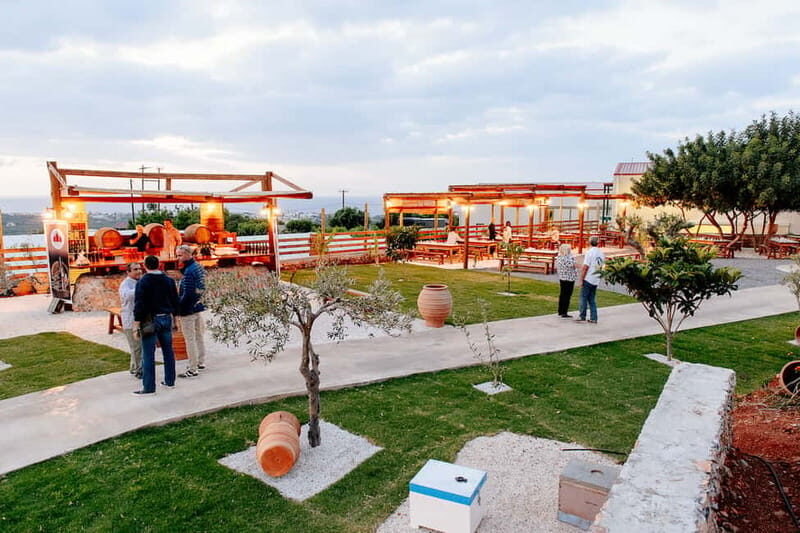
- Sissi farm start: you begin with a farm host and local rhythm before the tastings and demonstrations begin
- 18th-century olive oil mill: you’ll hear the family story and see how oil is made, not just read about it
- Cretan raki and honey workshops: you get the cultural angle plus practical “how it’s done” moments
- Soap lesson can be short: the olive oil soap demonstration may feel more like a quick overview than a long workshop
- Wood-fired dinner plus buffet: you’ll eat seasonal greens, fava, and salads with a spread of starters and sides
- Wine tasting is extra and adults only: budget the €2 per glass if you plan to drink
Setting the mood at the Sissi farm
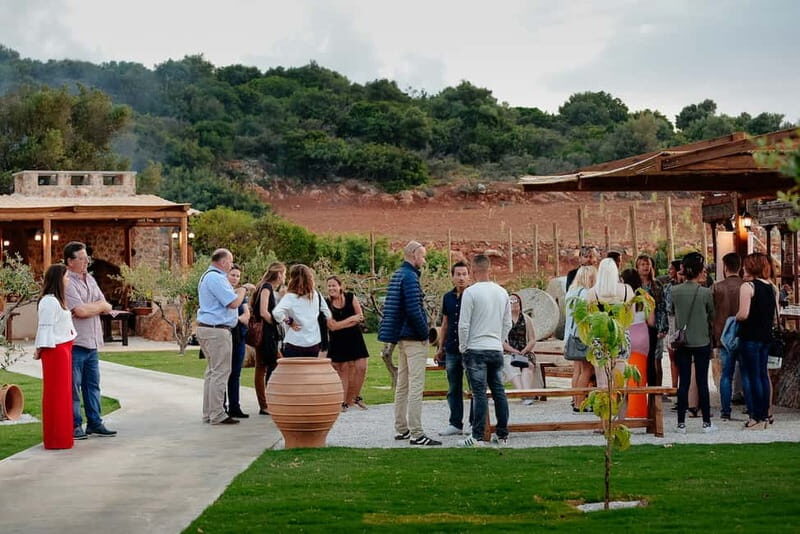
This trip is designed like a smooth evening arc: start with local life, then move toward food, drink, and entertainment. You begin in Sissi village at a farm, hosted by the people running day-to-day agricultural work. It’s a good way to get grounded fast—Cretan culture here isn’t just a performance; it’s the backdrop for what you’ll taste later.
The farm stop matters because it primes you for the theme. By the time you reach the olive oil mill and honey workshop, you’re already thinking about production, seasons, and why certain foods taste the way they do in Crete. If you’re the type who enjoys learning by doing, this first step sets up the whole evening.
Practical note: since the day can move quickly, show up at the pickup point with your jacket ready and your expectations set. You’ll be on a bus first, then on your feet and moving between stations.
A few more Heraklion tours and experiences worth a look



The 18th-century olive oil mill: where the story turns into flavor
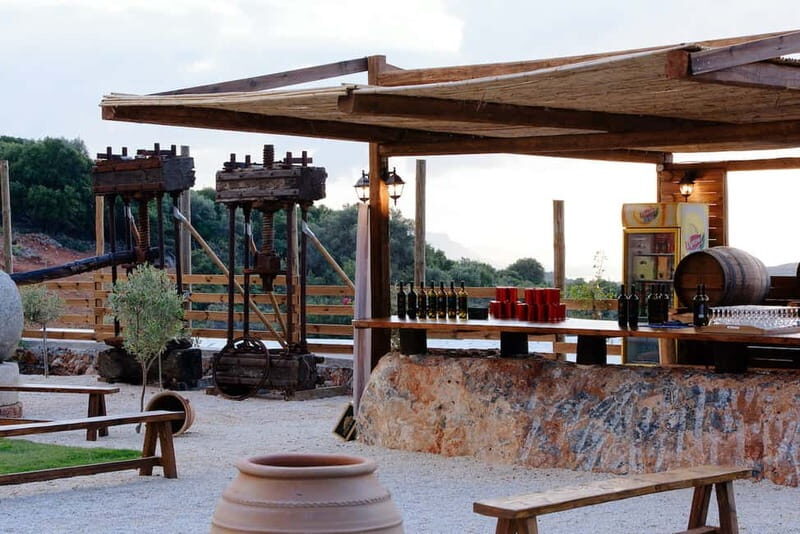
One of the best parts is the stop at an award-winning olive oil mill with roots back to the 18th century. Here, you’re not just offered a tasting plate—you’re guided through the production story and the family history behind the mill. That context helps the tasting make sense, especially if you’ve ever wondered why some olive oils taste more peppery or grassy than others.
Expect to learn how Cretan olive oil is produced and to hear the practical “what this means” side of the process. Once you taste, you also have a chance to buy products directly from the people who make them. That direct purchase angle is a real value here, because you’re often choosing from the same producers you learned from on-site.
The mill stop is also where the pace can feel more like a flow than a slow stroll. If your group is larger, you may have to listen in bursts as you move from one point to the next. Still, the payoff is that you come away with both flavor memory and a clearer idea of how the oil becomes oil.
Honey, raki, and olive oil soap: hands-on culture (with varying depth)
After olive oil, the trip keeps rolling through Cretan specialties. First up is a honey workshop, where you learn about honey production and the role bees play in the process. It’s usually presented in a way that connects biology and local practice—how bees work, what that means for honey, and why the result tastes distinct.
Next is raki, the famous Cretan spirit tied to local rituals. You’ll learn how it’s produced and how it fits into the culture. Even if you don’t become a raki expert by the end, the cultural explanation is what makes the tasting feel more meaningful than a quick shot.
Then comes the olive oil soap part. You’ll hear about the health benefits for skin and learn how soap is made. A heads-up for your expectations: the soap segment can be very short—think only a few minutes—so consider it a taste-and-overview moment rather than a full workshop with step-by-step milling.
This cluster of stops is the trip’s strength: it’s food culture across three angles—agriculture (honey), tradition (raki), and everyday product (soap). You get enough information to connect the dots without spending the whole night in a classroom.
Wine tasting and a wood-fired dinner you can actually plan around
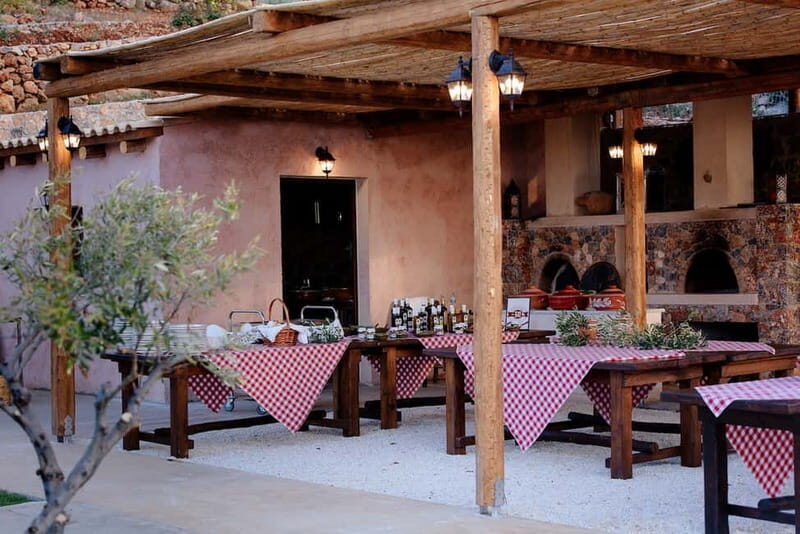
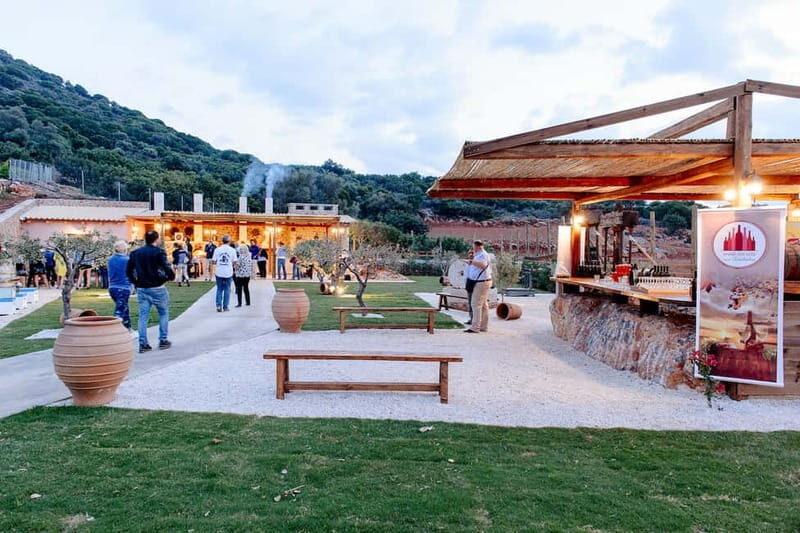
Wine tasting is included as an activity, but the cost is extra: it’s priced at €2 per glass, and it’s adults only. You’ll sample wines made from local Cretan grape varieties, with production explained in the context of how winemaking traditions stretch back to ancient Minoan civilization. Even if you only have one or two pours, it’s a solid way to connect Crete’s agriculture to its drinking culture.
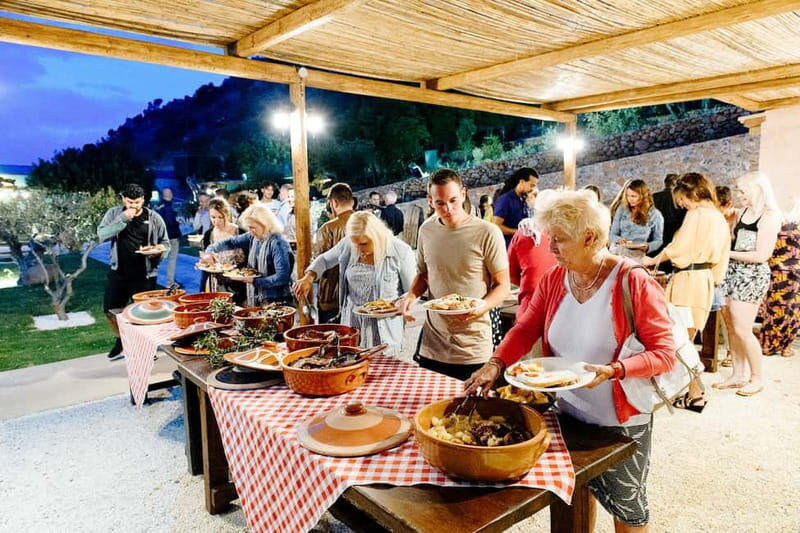
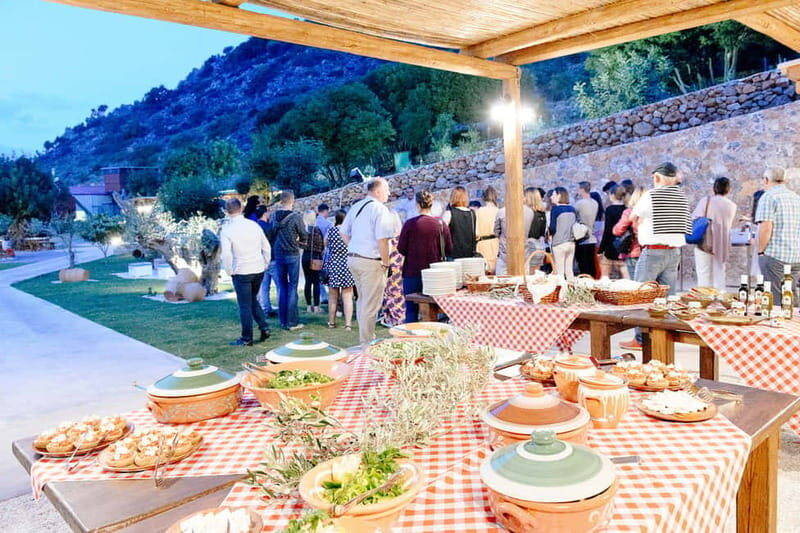
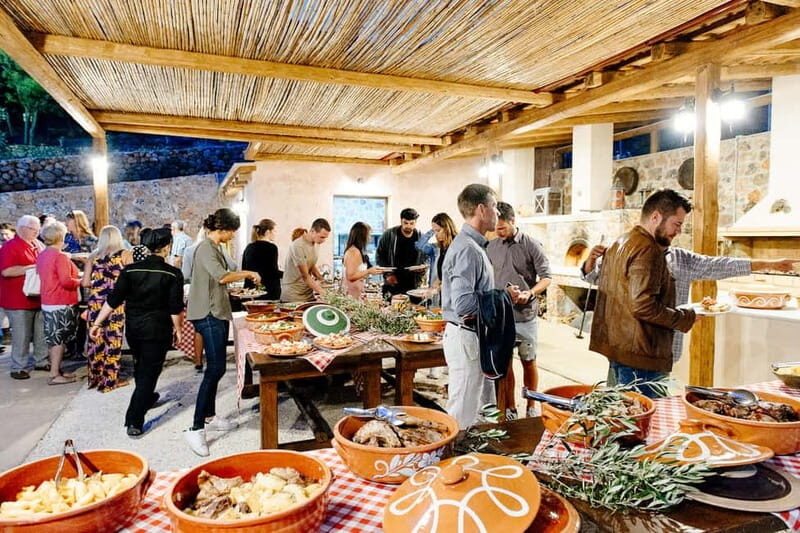
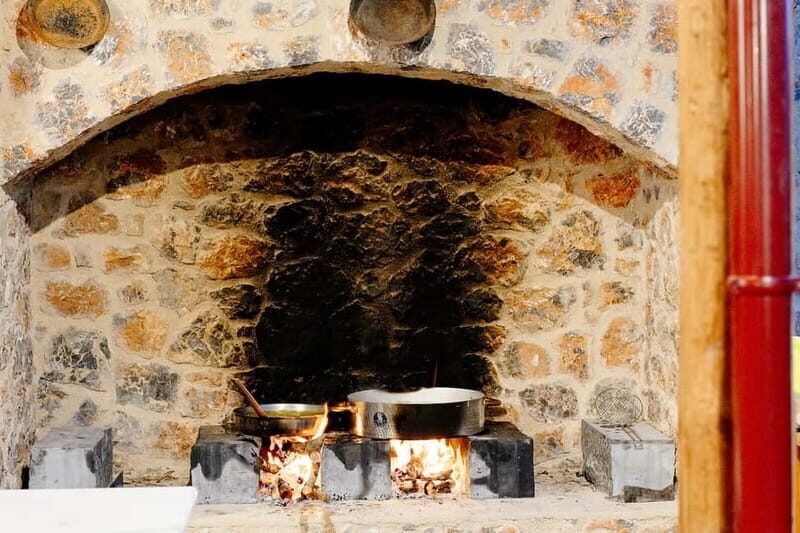
Then you get the main event: a homemade Cretan dinner cooked in a wood-fired oven. The meal is built around seasonal ingredients like greens and fava beans, plus salad from the owner’s garden. You’ll also find a broad buffet spread of appetizers and sides, and yes—French fries show up as part of the mix.
This is one of the best “value per hour” parts of the experience. You’re paying for a full evening package that includes dinner and entertainment, not just a handful of tastings. If you time your day well, you can treat this as your evening meal and not worry about finding food afterward.
Live Cretan music and traditional dancing in a real group setting
The evening ends with live entertainment and a night of dancing. You’ll hear an orchestra, get Greek rhythms, and watch traditional dancing. In a good setup, it feels like you’re not only watching culture—you’re being pulled into the energy that makes it work.
There’s also a farm-to-stage continuity in how the dancing fits in. After starting in Sissi with local hosting, you shift into a larger performance atmosphere that still focuses on traditional steps and music. It’s a nice arc: learn about food and drink, then close with the cultural expression of dance.
One practical consideration: the show portion can vary in how detailed it feels, and the overall event can lean more toward upbeat party energy than careful choreography breakdown. If your main goal is stagecraft and high production quality, you might find it average in places. If your goal is fun, food, and getting swept up in a group night, you’ll likely be happy with the experience.
A few more Heraklion tours and experiences worth a look



Price and logistics: is $76 fair for this 6-hour package?
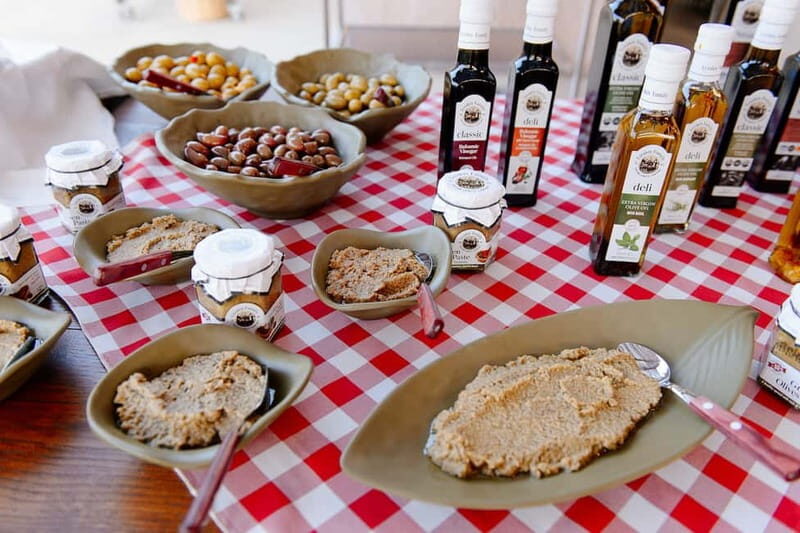
At $76 per person for a 6-hour trip, you’re buying a bundle: roundtrip bus, a professional driver, a farm host, a buffet dinner with local products, and a live dance show. On top of that, you get tastings and learning moments around olive oil, honey, raki, soap, and a wine tasting option.
So the value depends on what you care about most. If you want one organized evening that includes dinner plus cultural entertainment plus multiple tastings, it’s a fair deal. If you’re expecting a slow, deeply structured tour with tons of time at each station, the format can feel rushed, especially when groups are large.
Logistics are the big wildcard. Because pickups happen across multiple towns, your bus ride can stretch out. Some people get a long outbound and return simply because of the number of hotel stops and distance. If you’re staying in the farther edges of the pickup map, your “6 hours” may feel like it’s mostly time on the bus.
My practical advice: choose a pickup point as close to your accommodation as possible, confirm the exact pickup details by email, and plan a relaxed evening buffer afterward.
Pickup areas, what to bring, and language reality checks
Pickup is offered from specific points in and around Sisi, Malia, Stalis, Hersonissos, Anissaras, Agkisaras, Gouves, Gournes, Kokkini Hani, and Karteros. Pickup is not provided from the center of Heraklion, Ammoudara, or Agia Pelagia, and if your accommodation is outside accessible areas, extra charges may apply.
You’ll receive an email with your exact pickup time and location after booking. Make sure you check spam too, because the email is what determines your real-world timing.
What to bring: a jacket. Even if it’s warm during the day, evening outdoor time and bus air-conditioning can make the temperature drop feel bigger than you expect.
Language: the tour guide is listed as English, French, or German. Still, mixed-language groups can happen in real life. If you’re relying on a specific language for every explanation, you should know you might hear more English when groups blend.
Who should book this Cretan Olive Oil Festival night trip
This is a strong fit for:
- Food lovers who want olive oil, honey, raki, and dinner in one planned evening
- People who enjoy lively group experiences and live dancing
- Travelers who like practical shopping after tastings, especially when buying from producers
You might want to skip it (or think twice) if:
- You hate long hotel-to-hotel pickup routes
- You need consistent deep explanations in one language the entire time
- You’re looking for long, hands-on workshops rather than short demonstrations
Should you book this Cretan Olive Oil Festival night trip?
If your ideal Crete day is a mix of tastings, dinner, and music, this is an easy yes. The olive oil mill stop gives you the production story behind the flavors, the honey and raki moments add cultural meaning, and the wood-fired dinner plus live show make it feel like a complete evening.
Before you book, be honest about two things: the bus route can take time, and some workshops are quick. If you can accept a bit of pace and group energy, you’ll get a lot for your $76.
FAQ
How long is the Cretan Olive Oil Festival day trip?
The duration is 6 hours. Starting times can vary, so check availability for the specific session you choose.
What’s included in the price of $76?
It includes roundtrip bus transportation to the village (with a professional driver), a farm host, a buffet dinner with local products, and a live Cretan dance show.
Is wine tasting included in the tour price?
Wine tasting is not included. It costs €2 per glass, and it’s for adults only.
Where does pickup happen?
Pickup is offered from specific areas: Sisi, Malia, Stalis, Hersonissos, Anissaras, Agkisaras, Gouves, Gournes, Kokkini Hani, and Karteros.
Are there places where pickup is not available?
Yes. The tour does not provide pickup from the center of Heraklion, Ammoudara, or Agia Pelagia.
What language is the live tour guide?
The live tour guide is available in English, French, and German.
What should I bring and what’s the cancellation policy?
Bring a jacket. You can cancel up to 24 hours in advance for a full refund.