REVIEW · HERAKLION
Food Tour in Heraklion – Discover Cretan Flavors
Book on GetYourGuide →Operated by Porto Planet · Bookable on GetYourGuide
Heraklion’s best introduction may be edible: start with warm bougatsa and strong Greek coffee, then work through sweets, honey, savory meze, and raki as the city’s landmarks pass by. This four-hour food walk connects everyday Cretan tastes with churches, Venetian buildings, the harbor, and the central market.
I like the way the route mixes food with real city life rather than keeping you inside a string of restaurants. I also like the visit to a family-run stivania workshop, where you learn how traditional leather shepherds’ boots are made. The main drawback is pace: with many stops in four hours, you need comfortable shoes and must stay close to the guide. One guest also found it hard to hear without a microphone in noisy areas.
In This Review
- Key points at a glance
- Why this food walk works as a first look at Heraklion
- Bougatsa, coffee, honey, and the sweet side of Crete
- Plateia Eleftherias and Dedalou: getting into the city
- Agios Markos, the Lions Fountain, and Venetian Loggia
- Agios Titos and 25th Avgoustou
- Rocca a Mare Fortress and the old Venetian harbor
- Agios Minas Cathedral and the Central Market
- A traditional taverna and Cretan meze
- The stivania workshop and pastry museum finish
- What the four-hour pace feels like
- Who will get the most from this tour
- Booking value, timing, and small practical tips
- Should you book the Heraklion food tour?
- FAQ
- Where does the Food Tour in Heraklion start?
- Where does the tour finish?
- How long does the tour last?
- How much does the experience cost?
- What food and drinks are included?
- Is the tour conducted in English?
- What should I bring?
- Can I cancel the booking?
Key points at a glance
- Bougatsa and Greek coffee begin the day: Start with a classic Heraklion breakfast before moving on to sweets, honey, and other local tastes.
- The route covers major city sights: See the Lions Fountain, Venetian Loggia, Agios Titos Church, Rocca a Mare Fortress, Agios Minas Cathedral, and the central market.
- A stivania workshop adds local character: Learn about the handcraft behind the leather boots traditionally worn by Cretan shepherds.
- The final taverna meal is substantial: Finish with a selection of classic Cretan meze in a traditional setting.
- The group setting is personal: The tour is designed for small groups with an English-speaking local host.
- Sound can be an issue: Heraklion streets and market areas can be noisy, so stay near the guide and consider asking about headsets.
Why this food walk works as a first look at Heraklion
At $106 per person, this is not a cheap snack crawl. You are paying for four hours of guiding, several tastings, a walking tour of central Heraklion, visits to local food and craft spots, and a meal of Cretan meze. I see the price as reasonable if you want one organized experience that combines eating and sightseeing, but less appealing if your main goal is simply to sample inexpensive food.
The real value is the connection between the stops. You do not just taste honey and sweets in isolation. You hear about Cretan customs, walk through the market where local products are sold, and see how food fits into the city’s daily rhythm. That gives the meal more meaning than a restaurant reservation alone.
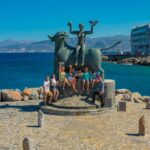
The tour begins outside the Heraklion Archaeological Museum, at the statue in the square. This is a useful central meeting point, but take care to confirm the exact statue and arrive early. The city has plenty of streets, squares, and landmarks close together, and a few extra minutes will help you begin without stress.
Your host speaks English, and Rallou is one guide named in the available feedback. The small-group format should make it easier to ask questions than on a large coach excursion. Still, one clear practical warning comes from the experience itself: background noise made it difficult for one participant to hear the guide. Stay close, especially in the market and on busy streets.
You can also read our reviews of more food & drink experiences in Heraklion

Bougatsa, coffee, honey, and the sweet side of Crete
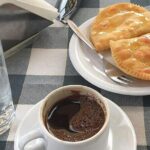
The food begins with bougatsa, a beloved pastry usually associated with a crisp exterior and creamy filling, served here with strong Greek coffee. It is a smart opening. You get a taste of a familiar Greek morning ritual before the tour turns toward broader Cretan food traditions.
You will also sample premium local honey and traditional Cretan sweets. These tastings are useful because they introduce ingredients and techniques that appear again in island cooking: local produce, simple combinations, and sweets linked to family kitchens and celebrations.
I would not expect every stop to be a full meal. The experience is built around a series of tastes, with a more generous spread later at the taverna. If you arrive hungry, that is sensible, but do not treat the first coffee and pastry stop as the main lunch.
The local café is also a natural pause in the walking route. You have time for coffee, dessert, photos, and conversation before continuing through the center. That break matters because the tour covers a lot of ground on foot.
Plateia Eleftherias and Dedalou: getting into the city
After meeting near the Archaeological Museum, the route moves through Plateia Eleftherias and along Dedalou. These opening streets help set the scene before the tour reaches the more recognizable monuments.
The guide leads the walk and points out details along the way. You can expect a mix of short talks, photo stops, and movement rather than long formal lectures. That format suits a food tour, since you stay engaged and keep making progress toward the next taste.
The walk also gives you a practical orientation to central Heraklion. You begin to see how the modern shopping streets, old religious buildings, Venetian architecture, and harbor roads fit together. If this is your first day in the city, pay attention to the route. It can help you find your way later without a map.
Agios Markos, the Lions Fountain, and Venetian Loggia
The Basilica of San Marco, known locally as Vasiliki Agiou Markou, is one of the early architectural stops. The tour includes a visit and guided explanation, giving you a look at the Venetian imprint on the city.
Next comes the Morosini Lions Fountain, one of Heraklion’s most recognizable meeting points. It is a good photo stop, but it is also a useful place to pause and notice the city’s layers. Cafés, shops, pedestrians, and historic stonework all meet around this compact landmark.
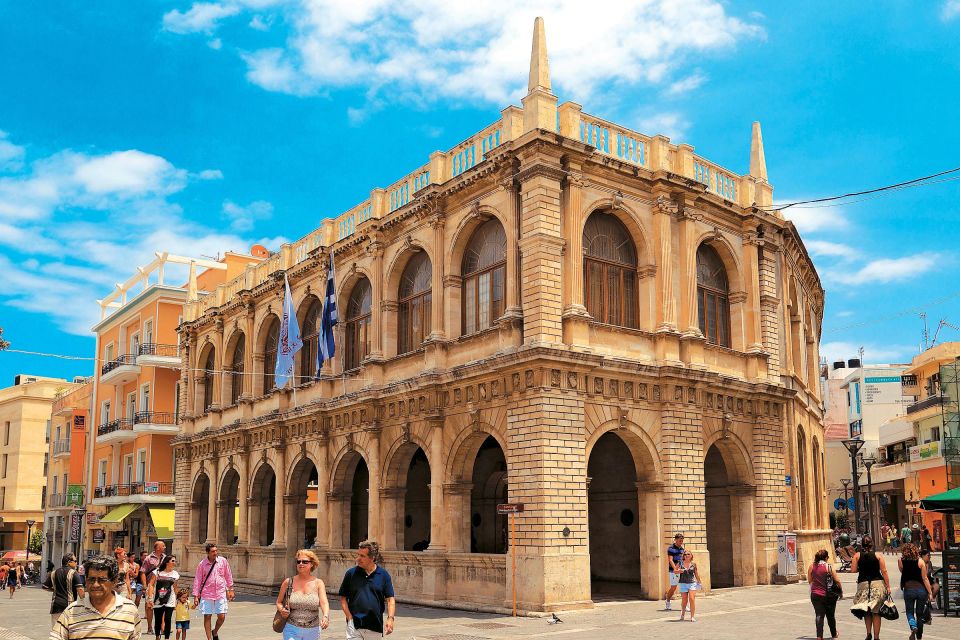
The Venetian Loggia follows. This elegant building reflects the period when Venetian rule shaped Heraklion’s civic life. You will not simply pass it on the way to lunch. The guide gives it a place in the story of the city, which makes the surrounding walk easier to understand.
These stops are brief, so I would not book this tour expecting full museum-style visits at each monument. The strength is the overall sequence: you see several important places while moving toward food, rather than spending the whole morning inside one site.
Agios Titos and 25th Avgoustou
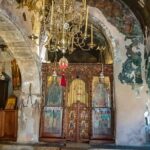
Agios Titos Church brings another layer of Heraklion’s religious and architectural story. The route includes a guided stop and time for photographs. As with the other landmarks, the visit is part of a larger walking conversation rather than an extended service or private tour.
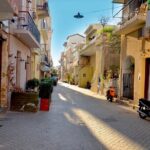
The section around 25th Avgoustou continues the historic center walk. This road leads toward the old harbor and brings you closer to the city’s seafaring past. You will want to keep your camera ready, but do not let photos make you lose contact with the guide. The route moves at a purposeful pace.
This mix of food and monuments is one of the tour’s strongest features. You can have a sweet taste at one stop, then hear about a church or Venetian building a few minutes later. That contrast keeps the four hours from feeling like either a standard sightseeing walk or a meal with a few facts added on.
A few more Heraklion tours and experiences worth a look
Rocca a Mare Fortress and the old Venetian harbor
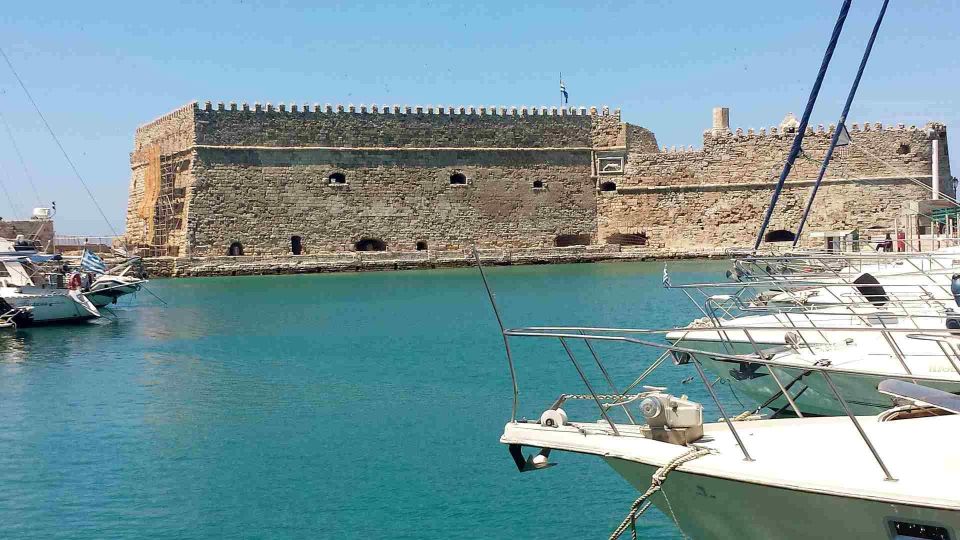
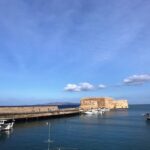
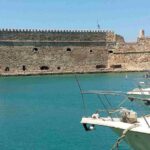
Rocca a Mare Fortress, also called Koules or Castello del Molo, sits by the old Venetian harbor. The tour includes a visit, sightseeing time, and a break. This is one of the clearest visual moments on the route, since the fortress gives you a direct connection to Heraklion’s position beside the sea.
The harbor walk is valuable even if you have already seen photographs of Koules. The setting links the fortress to the city’s waterfront and trade routes. You can take in the stone defenses, the harbor views, and the changing feel of the city from inland streets to the coast.
Do not expect the fortress stop to replace a dedicated historical visit. The experience has many goals, and food remains central. Instead, think of Koules as a well-placed sightseeing pause that adds scale and setting to the tour.
A short break here may be welcome. Four hours of walking, standing, listening, and eating can feel full, especially under the Cretan sun. Wear shoes with firm support, and bring whatever you normally need for a long city walk.
Agios Minas Cathedral and the Central Market
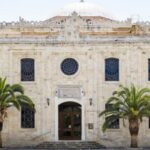
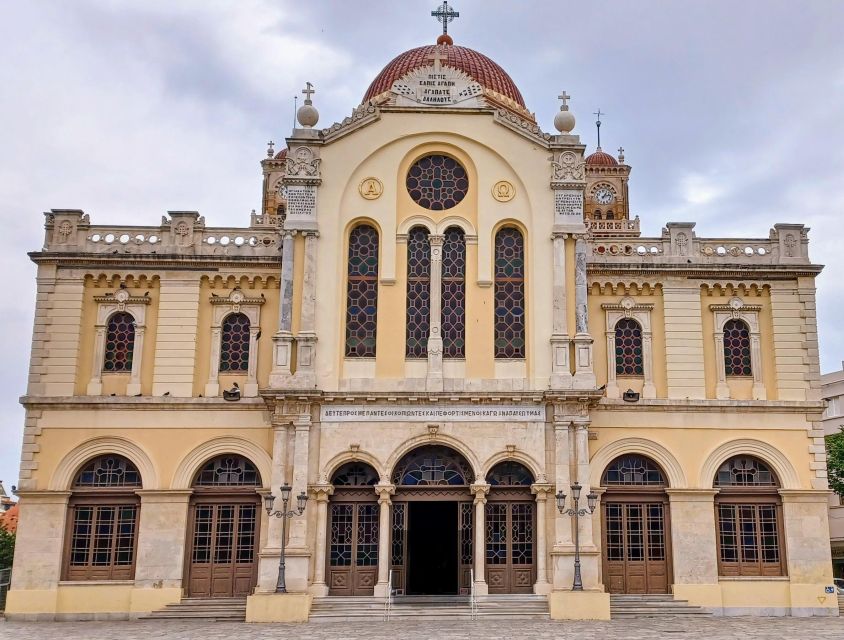
Agios Minas Cathedral is one of the most important religious landmarks on the route. The tour includes a guided stop and time for photographs. Its presence adds a strong contrast to the Venetian buildings and harbor fortress seen earlier.
After the cathedral, the route reaches the Central Market of Heraklion. This is where the food theme feels most closely tied to ordinary city life. You will see local products, hear the sounds of commerce, and encounter the smells and colors that make a market more than a quick photo stop.
The market is also where staying near the host matters most. Noise can make explanations difficult, and the route may move through tight or active spaces. If you cannot hear, say so at once rather than trying to catch up later. The guide’s stories are a key part of the experience, not an optional extra.
This stop may be especially useful if you want to shop for edible souvenirs. The tour includes local products and market exploration, but the supplied details do not promise a dedicated shopping period or specific items for purchase. Use the visit to notice what interests you, then ask the host what is practical to take home.
A traditional taverna and Cretan meze
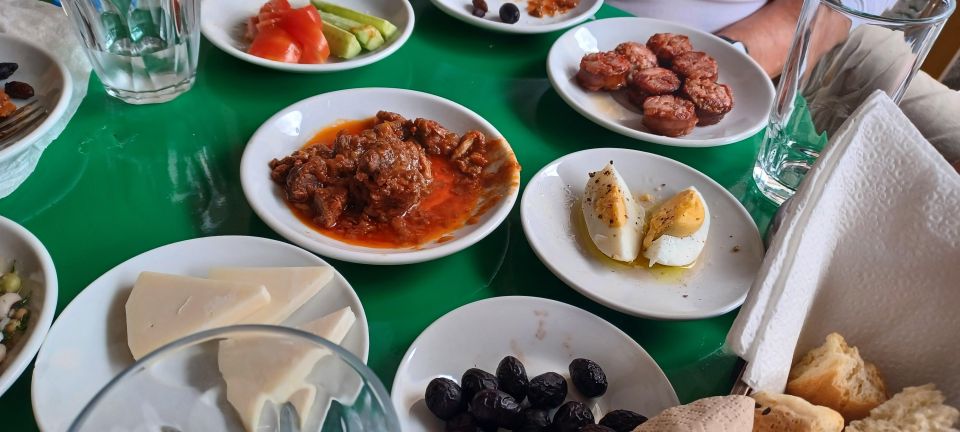
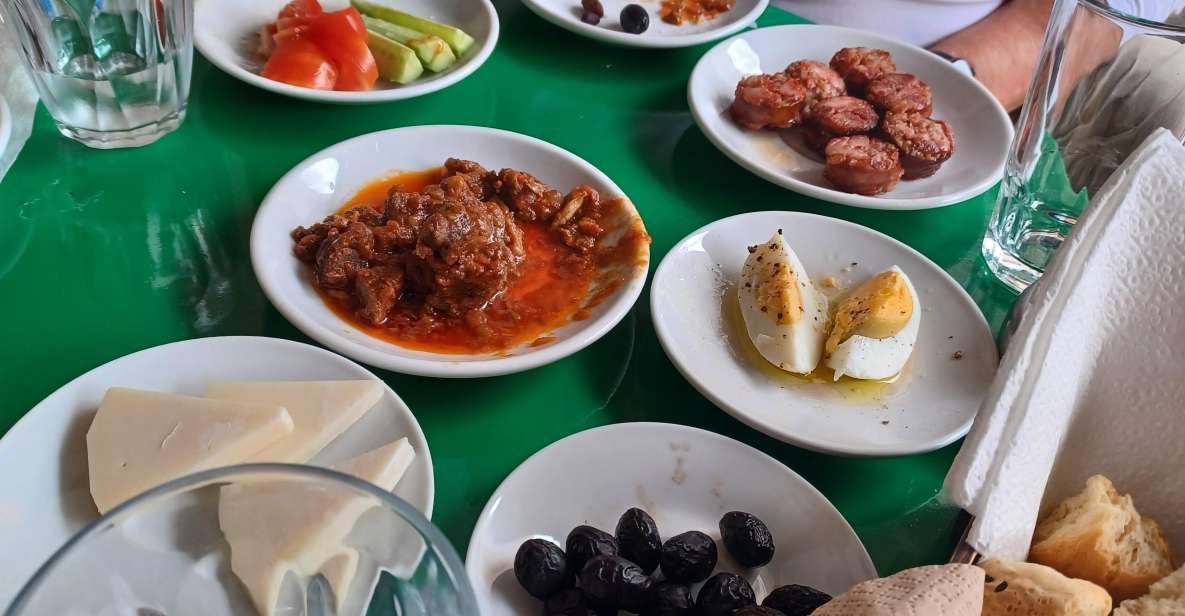
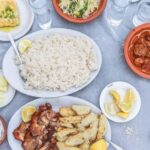
The main savory food stop takes place at a local restaurant or traditional taverna. A generous selection of classic Cretan meze is served, giving you the chance to try several small dishes rather than choosing only one main course.
That format suits a group. You get variety, and you can compare tastes across the table. It also reflects the social side of Cretan eating, where food is often shared and a meal develops through several small plates.
The taverna is where the tour’s earlier stops come together. You have seen market ingredients, heard about local customs, and walked through the city. Now you sit down to eat in a setting built around hospitality.
Raki is included among the traditional drinks and tastings. It is strong, so take a small sip and follow the host’s lead. The provided details mention food and drink tastings, but do not specify the number of dishes, exact menu, or amount of raki. If you have allergies or strict dietary needs, ask before booking because no special menu is promised.
The stivania workshop and pastry museum finish
One of the most distinctive elements is the family-run workshop devoted to stivania. These traditional leather boots are associated with Cretan shepherds, and the visit shows you the handcraft behind them.
I like this stop because it gives the tour something beyond eating. Food can tell you about a place, but so can the work people make and the objects they use. Seeing the boots as crafted items helps connect Cretan traditions with rural life and practical skill.
The tour finishes at the Pastry History Museum. The route includes a visit and guided explanation, so the ending keeps the food theme in view. It is a fitting final stop after bougatsa, sweets, honey, coffee, meze, and raki.
The finish is not at the starting point. Plan your afternoon from the Pastry History Museum rather than assuming you will return to the Archaeological Museum. This is a small detail, but it matters if you have a ferry, a timed visit, or another reservation afterward.
What the four-hour pace feels like
This is an active walking experience. The route includes Plateia Eleftherias, Dedalou, several churches, central streets, the harbor, Rocca a Mare Fortress, Agios Minas Cathedral, the market, a restaurant, a workshop, and a museum.
The stops break up the walk, but you should still arrive ready to spend much of four hours on your feet. Comfortable shoes are specifically recommended, and I would treat that advice as essential rather than polite wording.
The pace has received a positive practical assessment: it is fast enough to cover ground while still allowing a good balance between restaurants and antiquities. That balance is important. A slower route might offer longer talks but fewer sights and tastes. A faster route might feel rushed. This one aims for a middle path, though your experience will depend on group size, street noise, and how much time each stop requires.
You should also expect the route to be social. The small-group setup encourages conversation, but it means the guide must keep several people moving together. Stay attentive at crossings and crowded areas.
Who will get the most from this tour
I would recommend this experience to you if you want a broad first look at Heraklion and prefer to learn through food. It works particularly well for people who enjoy local markets, traditional cafés, churches, old harbor buildings, and shared meals in one half-day outing.
It is also a good choice if you are not sure where to eat. The host leads you to local food stops and explains what you are tasting, which removes some guesswork during a short stay.
You may want a different plan if you prefer a slow, restaurant-focused tasting with long meals. This route covers many sights, and the food comes in stages. It is also not ideal if you have difficulty walking for several hours or need guaranteed dietary accommodations, since those details are not provided.
The English-only format is clear and simple. If you need another language, this is not the right match based on the available information.
Booking value, timing, and small practical tips
At $106, the tour makes the most sense when you value the host and the city orientation as much as the food. You are not paying only for bougatsa, coffee, honey, sweets, meze, and raki. You are also paying for the route through Heraklion, local stories, market context, a traditional craft visit, and help choosing what to notice.
Cancellation is flexible up to 24 hours before the start for a full refund, and you can reserve now while paying later. Starting times depend on availability, so check the schedule before building the rest of your day.
Bring comfortable shoes and arrive at the statue in the square by the Archaeological Museum with enough time to identify the meeting point. Keep close to the English-speaking host, especially in the market and on busy streets. If hearing is important to you, ask whether a microphone or headsets are available, since one participant found background noise a real issue.
Should you book the Heraklion food tour?
Book it if you want your first taste of Heraklion to include both a meal and a sense of place. The strongest features are the mix of local fare and antiquities, the well-paced route, the family-run stivania workshop, and the final Cretan meze spread.
I would skip it if you want a quiet, leisurely lunch or a single-site history tour. For most food-minded visitors with four free hours, though, the combination offers solid value. You leave with a better feel for the city’s landmarks, market culture, craft traditions, and table customs, not just a full stomach.
FAQ
Where does the Food Tour in Heraklion start?
The tour starts outside the Heraklion Archaeological Museum, at the statue in the square.
Where does the tour finish?
The tour finishes at the Pastry History Museum, not at the starting point.
How long does the tour last?
The Food Tour in Heraklion lasts four hours.
How much does the experience cost?
The listed price is $106 per person.
What food and drinks are included?
Included tastings feature bougatsa, Greek coffee, local honey, traditional Cretan sweets, classic Cretan meze, and raki. The exact number of dishes is not specified.
Is the tour conducted in English?
Yes. The host or greeter and walking tour are in English.
What should I bring?
Bring comfortable shoes because the experience involves walking through central Heraklion for four hours.
Can I cancel the booking?
You can cancel up to 24 hours in advance for a full refund. You can also reserve now and pay later.