REVIEW · HERAKLION
Rethymno – Margarites – Argyroupoli Day Trip
Book on Viator →Operated by Cretan Holidays · Bookable on Viator
Western Crete packs a lot into this seven-hour outing: Margarites pottery, Rethymno’s Venetian Fortezza, Turkish minarets, and Argyroupoli’s shaded waterfalls and Roman remains. You move from a mountain village to a historic port town and then to a cool spring-fed stop, without arranging several separate trips.
I like the variety and the generous two-hour blocks at each stop. I also like the local flavor: pottery workshops, narrow village lanes, old portals, and a coffee break beneath plane trees. The main drawback is the pace. Six hours are divided among three places, and the remaining time goes to road travel, so you will see highlights rather than explore each town in depth.
In This Review
- Key points to know before you book
- Why this western Crete route works
- Margarites, where pottery gives the village its character
- Rethymno and the Fortezza above the harbor
- Argyroupoli’s waterfalls, plane trees, and ancient Lappa
- The guide and the value of a shared outing
- How to prepare for the seven-hour day
- Who should choose this tour
- Should you book the Margarites, Rethymno, and Argyroupoli day trip?
- FAQ
- Where does this day trip begin?
- Is hotel pickup included?
- How long does the experience last?
- Which places does the tour visit?
- How much time is scheduled at each stop?
- Is a guide included?
- Are food and drinks included in the price?
- Can children join the tour?
- What is the cancellation policy?
Key points to know before you book
- Margarites is the pottery stop: Expect narrow lanes, local ceramics, mountain views, and a pleasant look at old and new Crete living side by side.
- Rethymno brings the strongest historic sights: The Fortezza, harbor, Venetian buildings, and Turkish-period minarets give you the most substantial town visit.
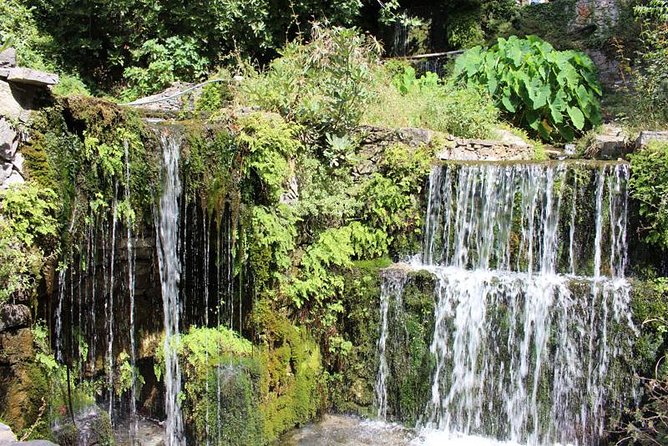
- Argyroupoli is a cool, shady finish: Waterfalls, plane trees, coffee tavernas, Roman mosaics, and a Venetian portal make this a slower final stop.
- You get two hours at every destination: That is enough for a focused visit, but not enough for every museum, shop, and side street.
- The tour costs $69.46 per person: Pickup, a professional guide, local taxes, and the three-stop route are included, while meals and drinks are extra.
- Pickup is limited to selected hotels: Confirm your pickup point and start time, listed as 9:30 am, before setting your plans.
Why this western Crete route works
This trip is built around contrast. You begin with a small mountain village known for pottery, continue to Rethymno, one of Crete’s most atmospheric historic towns, and finish at Argyroupoli, where water and shade soften the heat of the day.
That mix gives you more than a standard town tour. You see working craft traditions in Margarites, layers of Venetian and Turkish rule in Rethymno, and traces of Roman and older settlements at Argyroupoli. The route also gives you a look at western Crete beyond the main resort areas.
I would choose this outing if I wanted a broad introduction to the region in one day. It suits you especially well if you are staying in Heraklion and do not want to rent a car, plan rural roads, or work out how to connect three separate places by public transport.
The tradeoff is simple: convenience costs you some control. You follow the group schedule, and each stop has a fixed window. If your main goal is a long visit to Rethymno or a serious pottery shopping session, a private outing or an independent day would give you more freedom.
A few more Heraklion tours and experiences worth a look



Margarites, where pottery gives the village its character
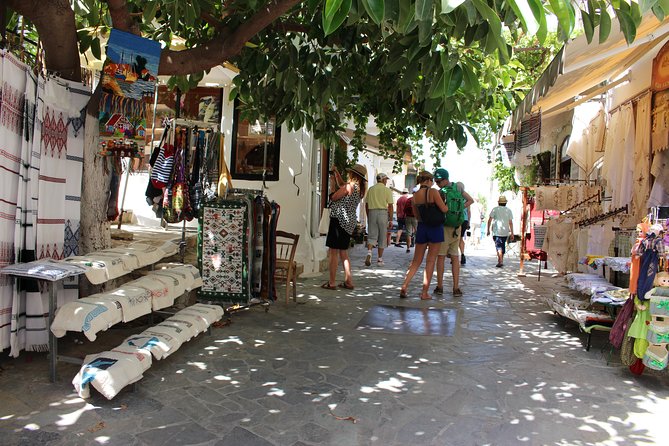
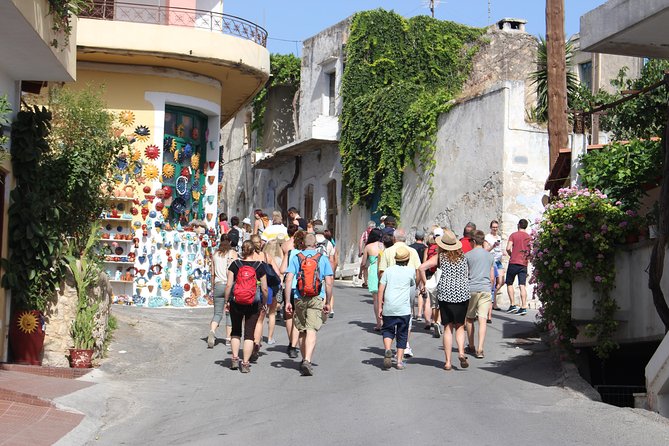
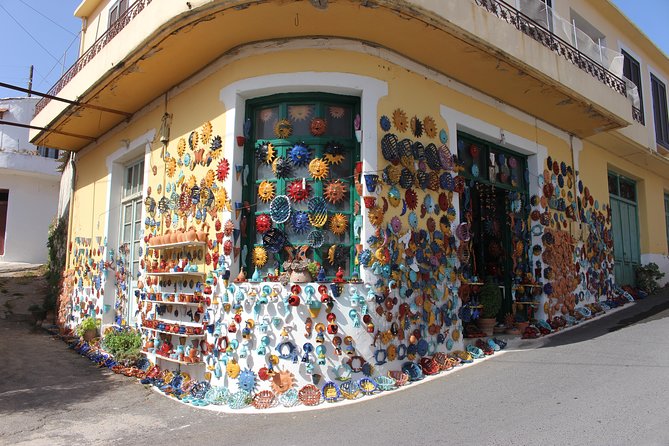
Margarites is the most distinctive first stop because its identity is tied to pottery. The village invites you to wander narrow streets, look at local ceramics, and take in views over the surrounding hills.
The appeal is not a single grand monument. It is the feel of a working village, where older stone buildings and newer life fit together without much fuss. I like this kind of stop because it gives you a sense of how local craft remains part of daily culture instead of appearing only in a museum display.
You have about two hours here. Use the first few minutes to get your bearings, then walk slowly through the lanes. If pottery catches your eye, allow time to browse rather than treating the village as a quick photo stop. The tour does not include purchases, so anything you buy is your responsibility.
The setting also makes Margarites a good place to notice the change from Heraklion’s urban and resort zones to the quieter interior. The roads are described as scenic, and the village views are part of the attraction.
There is one practical limitation. The details do not specify a pottery demonstration, a named workshop, or a hands-on class. You should expect a village visit with pottery shops and local character, not a guaranteed formal lesson. If making ceramics is your priority, ask what the day’s guide has arranged before booking.
Rethymno and the Fortezza above the harbor
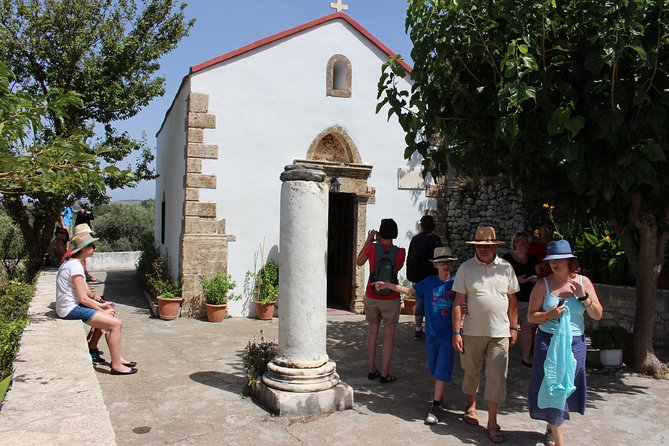
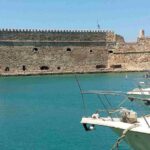
Rethymno gets another two hours, and this is the stop with the clearest concentration of major sights. The Venetian Fortezza rises near the city harbor, while Turkish-period minarets point to another chapter in the town’s past.
The town’s appeal comes from its layered character. Venetian rule shaped the fortress and parts of the old town, while later Ottoman influence added minarets and other features. You do not need to know every date to appreciate what is in front of you: stone fortifications, a historic harbor setting, and religious architecture from different periods sharing one compact town.
The Fortezza is the obvious anchor. Even from below, it gives the harbor area a strong sense of place. If your guide leads you toward the fortress, listen for context about its role and the city’s changing rulers. If the schedule leaves time for independent walking, use it to explore the surrounding streets and absorb Rethymno’s special atmosphere rather than rushing from one landmark to another.
Two hours is useful but tight. It should let you see the main historic area and enjoy a short walk, but it is not a full Rethymno visit. You may not have time for every lane, museum, church, shop, and café. Wear comfortable shoes, since old-town sightseeing usually means walking on uneven surfaces, though the tour information does not give a specific route or accessibility details.
Rethymno is also where the group format matters most. Thirty-five people is the maximum, which is not an enormous coach group but is large enough to affect how quickly you move through narrow streets. Stay close to the guide and note the meeting instructions before wandering off.
Argyroupoli’s waterfalls, plane trees, and ancient Lappa
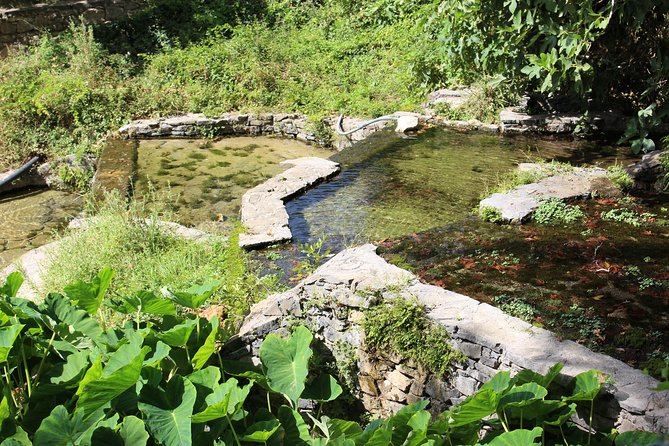
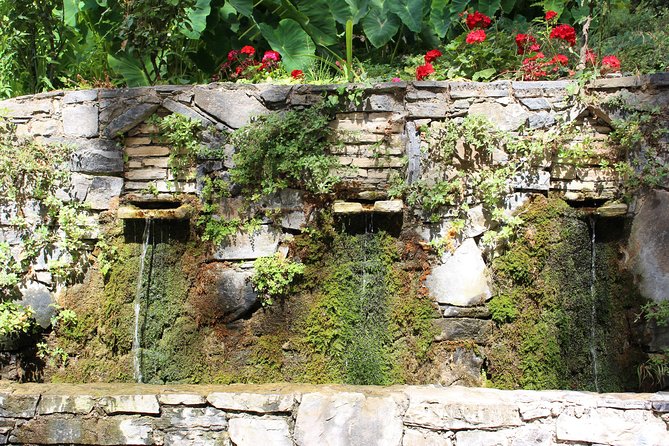
Argyroupoli provides a very different finish. Waterfalls run through the area, and imposing plane trees shade the tavernas. The combination makes this a natural place to pause with a coffee after the warmer, more exposed parts of the day.
The waterfalls are not presented as a remote wilderness trek. Think of a scenic water area connected with cafés and local stopping places. That distinction matters. If you imagine a huge cascade in an untouched gorge, the actual setting may feel modest. The water, shade, and atmosphere are the point, not a dramatic expedition.
You have two hours here, enough to see the falls, sit beneath the trees, and explore some of the old remains. A frappé in a taverna fits the setting, but food and drinks are not included in the $69.46 price. Carry some spending money if you want to make the most of the break.
Argyroupoli also carries the name of ancient Lappa. Local legend links the founding of Lappa with Agamemnon, though the tour presents this as legend rather than established fact. Your guide can help place the site in context, while you look for the surviving Roman mosaic and the Venetian portal bearing the inscription, All things of this world are smoke and shadows.
That portal is a small but memorable detail. It connects the ancient and Venetian layers of the village in a single object, while the mosaic gives you a direct glimpse of Roman-era decoration. These are not vast ruins spread across a large archaeological park, so keep your expectations measured. You are seeing selected remains within a living village setting.
The final stop works well because it slows the day. After the road journeys and town walking, the sound of water and shade beneath the plane trees create a natural pause. If you prefer active sightseeing from start to finish, two hours here may feel long. If you value a coffee and a change of pace, it may be your favorite part.
The guide and the value of a shared outing
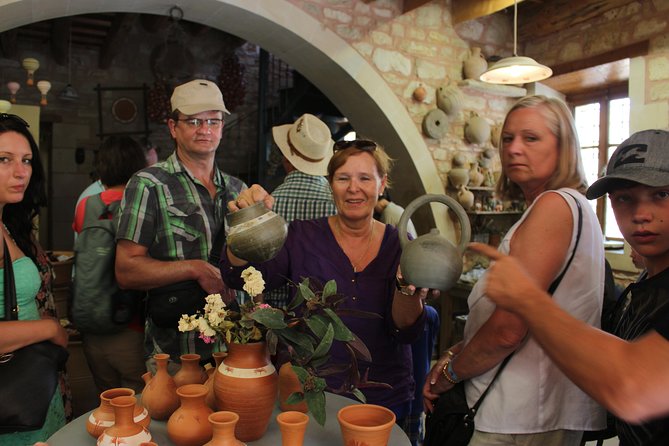
A professional guide is included, and the tour is designed around local explanation rather than simple transportation. That matters most at Rethymno and Argyroupoli, where the Venetian, Turkish, Roman, and legendary references can otherwise blur together.
One staff member connected with the tour, Markos, received specific praise for his service after recommending the outing at a seaside resort. The available details do not confirm that Markos leads every departure, so do not book on the assumption that he will be your guide. Still, his mention suggests that the local team includes people who actively help visitors choose suitable day trips.
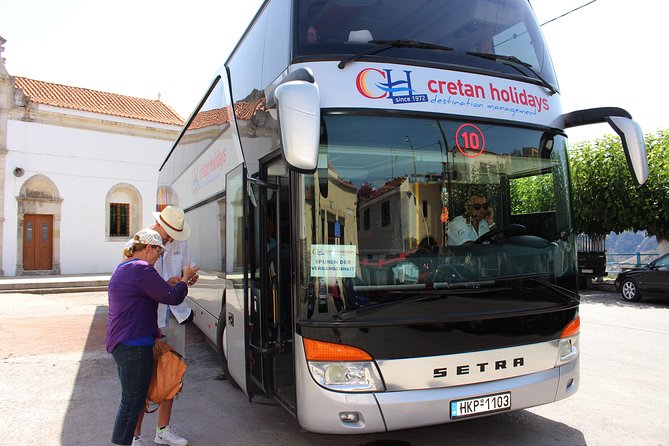
The group maximum is 35 people. That gives you the ease of a shared excursion while keeping the group smaller than some large coach operations, but the exact vehicle is not specified. You should expect a planned group schedule, guide-led sightseeing, and limited flexibility rather than a private car experience.
The listed start time is 9:30 am. Pickup and drop-off are offered at selected hotels, and local taxes are included. Check that your hotel qualifies before paying, since the phrase selected hotels only leaves room for exceptions.
At $69.46 per person, the value depends on what you would otherwise spend. The price covers three destinations, a professional guide, local taxes, and hotel transport when available. You still pay for lunch, coffee, snacks, and shopping, so the real day-out cost will be higher if you plan to eat at Argyroupoli or buy pottery in Margarites.
For a first look at western Crete, that is a reasonable package. Hiring a car might offer more independence, but it also puts the route planning and driving on you. This tour earns its price through convenience and range, not through long stays or included meals.






How to prepare for the seven-hour day
Keep your expectations focused. This is not a slow village holiday or a dedicated Rethymno history tour. It is a sampler that links three very different stops and gives each roughly two hours.
I would bring comfortable walking shoes, sun protection, water, and money for food and drinks. The supplied details do not specify meal arrangements, so assume you will need to purchase anything you want to eat or drink.
A mobile ticket makes check-in simpler, and confirmation is received at booking. Children must be accompanied by an adult, while most people can participate. No special physical requirements are stated, but you should be comfortable with ordinary sightseeing in village lanes and historic areas.
The free cancellation policy is useful if your plans may change. You can cancel for a full refund up to 24 hours before the start time. Cancellations or changes made less than 24 hours ahead are not accepted for a refund, and the cut-off follows local time.
Who should choose this tour
I would recommend it to you if you are based in Heraklion and want one organized day covering rural culture, historic architecture, and a natural water stop. It is also a good match if this is your first time in Crete and you want help understanding how the island’s different periods and regions fit together.
Families can consider it because children must simply be accompanied by an adult and most people can participate. The fixed schedule may be easier than planning three stops alone, though younger children may find the road time and historic walking less exciting.
Culture-minded visitors will get the most from Margarites and Rethymno. The pottery village offers local craft, while the Fortezza, minarets, and old-town setting provide more visible historical substance. People seeking a dramatic nature excursion should keep Argyroupoli in proportion. Its waterfalls are scenic and pleasant, but the stop also centers on cafés, shade, and small archaeological details.
You should skip it if you want a private schedule, extensive time in one place, or a full archaeological tour. You should also think twice if your idea of a waterfall is a large, wild cascade. Argyroupoli may be more atmospheric than spectacular.
Should you book the Margarites, Rethymno, and Argyroupoli day trip?
Book it if you value variety, guided context, and simple transport from a selected Heraklion hotel. The strongest parts are the unusual combination of destinations, the two-hour allocation at each stop, and the chance to move from pottery and village life to Venetian history and shaded waterfalls in one day.
Go in knowing what the price does and does not cover. The guide, local taxes, pickup where available, and route are included. Food, drinks, pottery, and any personal purchases are not.
My practical verdict: this is a good first western Crete sampler, especially for a seven-hour window. It is less suitable for a slow, detailed visit to Rethymno or a major waterfall adventure. If that balance matches your plans, $69.46 is a fair price for the convenience.
FAQ
Where does this day trip begin?
The tour begins from Heraklion, with a listed start time of 9:30 am.
Is hotel pickup included?
Hotel pickup and drop-off are included at selected hotels only. Confirm that your accommodation is covered before booking.
How long does the experience last?
The tour lasts approximately seven hours.
Which places does the tour visit?
The route includes Margarites, Rethymno, and Argyroupoli.
How much time is scheduled at each stop?
About two hours are scheduled at Margarites, two hours at Rethymno, and two hours at Argyroupoli.
Is a guide included?
Yes. A professional guide is included.
Are food and drinks included in the price?
No. Food and drinks are not included.
Can children join the tour?
Yes, but children must be accompanied by an adult.
What is the cancellation policy?
You can cancel up to 24 hours before the start time for a full refund. Cancellations or changes made less than 24 hours before the experience are not accepted for a refund.