REVIEW · ATHENS
Athens: The Acropolis and Acropolis Museum Tour in German
Book on GetYourGuide →Operated by LITTLE OWL TOURS · Bookable on GetYourGuide
Few places feel this myth-heavy. This German Acropolis tour turns the ruins into stories with a licensed guide, and you’ll get the payoff of seeing original sculptures at the museum (not just copies). The tradeoff is physical: it’s uphill, uneven, and there’s no elevator, so it’s not a good fit for limited mobility.
What makes it especially worth your time is the route: start at the Theatre of Dionysus, climb past major landmarks like the Propylaea, and then finish at the Acropolis Museum for the real Parthenon artwork. You also get a bit of breathing room with a photo stop on the hill, roughly 20 minutes.
In This Review
- Key highlights at a glance
- Touring the Acropolis with a German guide: how the myths fit the stones
- Price and logistics: is $152 worth it for a 3-hour tour?
- Where you start: Theatre of Dionysus first, not last
- Climbing the south slope: Propylaea and the approach to the temples
- Parthenon, Erechtheion, and Temple of Athena Nike: seeing what matters
- Theatre of Dionysus and Athens democracy in the same trip
- The photo stop: why that 20 minutes on the hill is planned
- Acropolis Museum: the payoff of seeing originals up close
- What pace and group size feel like in practice
- Comfort check: shoes, water, and who should skip this
- What’s included (and what you’ll need to plan yourself)
- Language: will German-only make you miss things?
- Should you book this Acropolis and Museum tour in German?
- FAQ
- How long is the Acropolis and Acropolis Museum tour?
- What’s included in the $152 per person price?
- Is there a ticket line to wait in?
- Where is the meeting point?
- What language is the tour guide speaking?
- Is the tour suitable for wheelchair users or limited mobility?
Key highlights at a glance
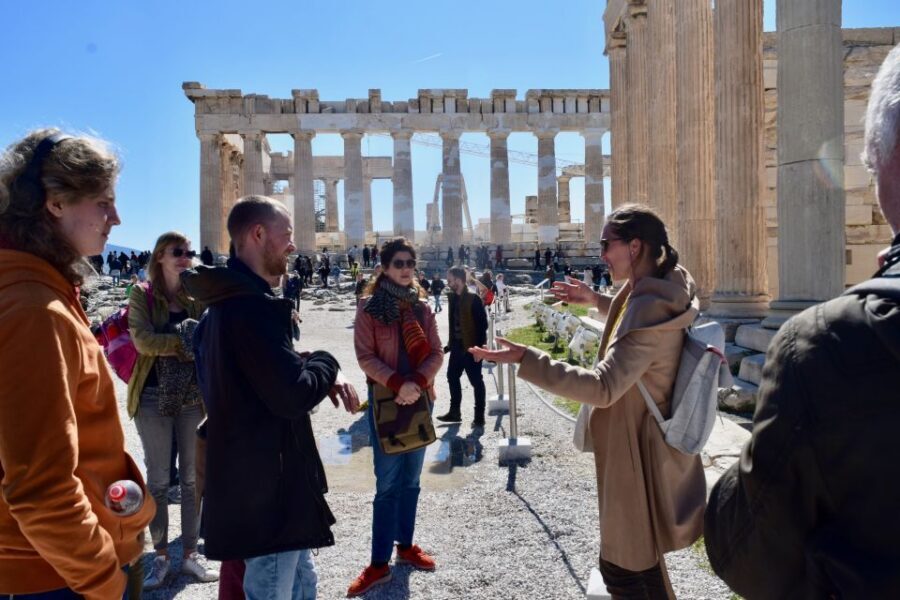
- German, licensed guide who explains with myths and historical tales (more story, less lecture)
- Theatre of Dionysus as your warm-up stop before you hit the sacred hill
- Classic Acropolis trio: Parthenon, Erechtheion, and Temple of Athena Nike viewpoints
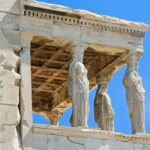
- Original sculpture displays at the Acropolis Museum, including Caryatids
- Practical timing: a compact 3-hour format that still covers both hilltop and museum
Touring the Acropolis with a German guide: how the myths fit the stones
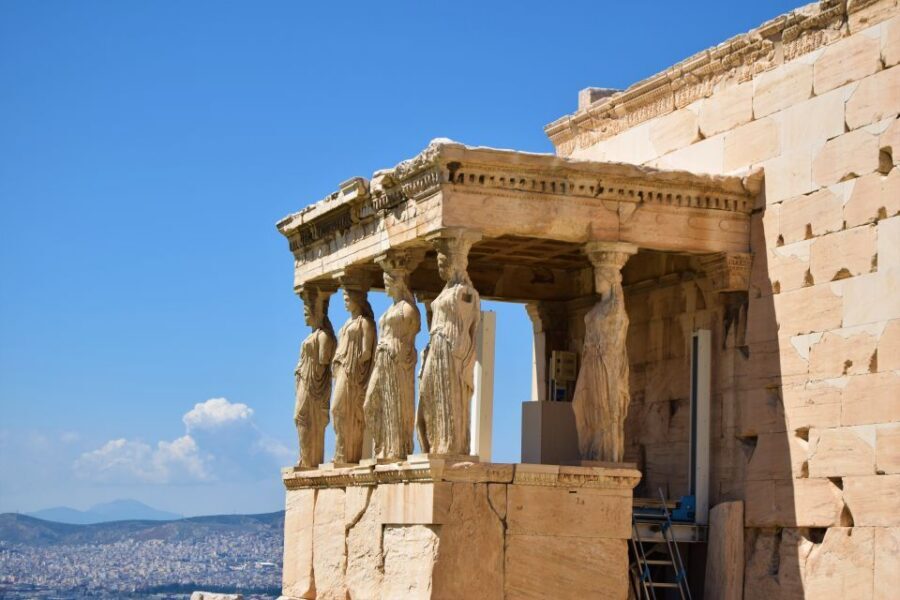
The Acropolis can feel like a photo safari if you go in cold. This tour helps you slow down just enough to notice why each building looks the way it does. A German guide gives you the big picture through stories and legends, not just facts on repeat.
I like this approach because myths actually work well at the Acropolis. When someone connects the monuments to the stories of Athens—its rulers, its rivalry, its early civic life—the stones stop being background scenery. You start seeing the site as something people once lived around, argued over, and performed in.
If you’re traveling with kids (or you’re the adult who still enjoys a good story), this format is easier to follow than a dry walkthrough. One guide named Jessica shows up in the feedback as especially engaging—competent, funny, and good at keeping attention moving.
You can also read our reviews of more museum experiences in Athens
Price and logistics: is $152 worth it for a 3-hour tour?
At $152 per person for 3 hours, this isn’t the cheapest way to see the Acropolis. But you are paying for a few things that add up fast: pre-booked entry, skip-the-ticket-line help, and a licensed guide speaking German who leads you through both the hill and the museum.
Think of it like this: if you try to DIY both locations in peak crowds, you’ll spend time queuing, re-orienting, and guessing what matters most. Here, the route is planned so you hit the major monuments in a logical order, then “cash in” at the museum where the originals are.
Also, the tour is walking-based. That can be a plus if you like moving and learning as you go. It can also be a dealbreaker if you don’t do well with hills and uneven stone.
Where you start: Theatre of Dionysus first, not last
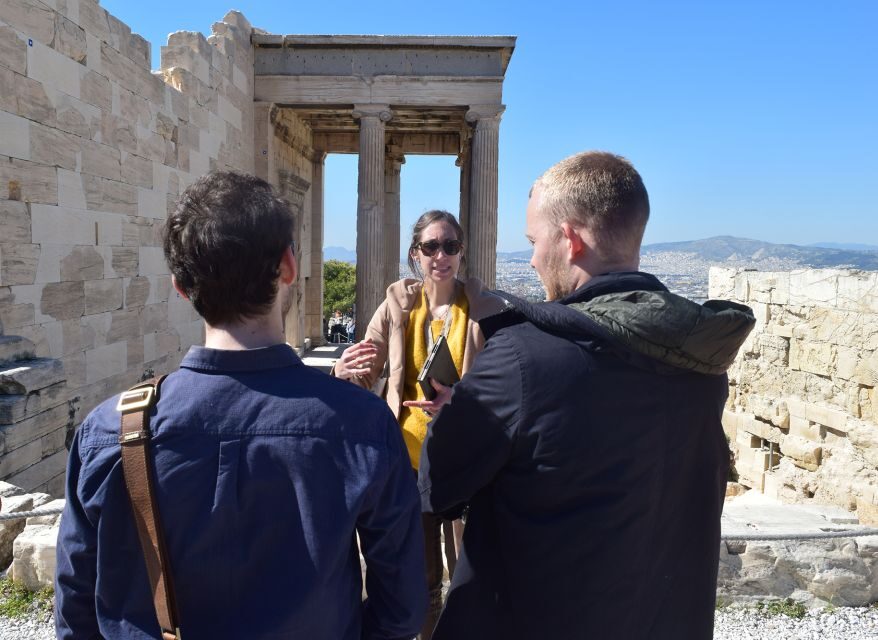
The tour begins at two possible central meeting options (the exact one varies by what you book). From there, you get a short walk to your first big stop: the Theatre of Dionysus.
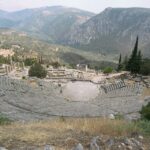
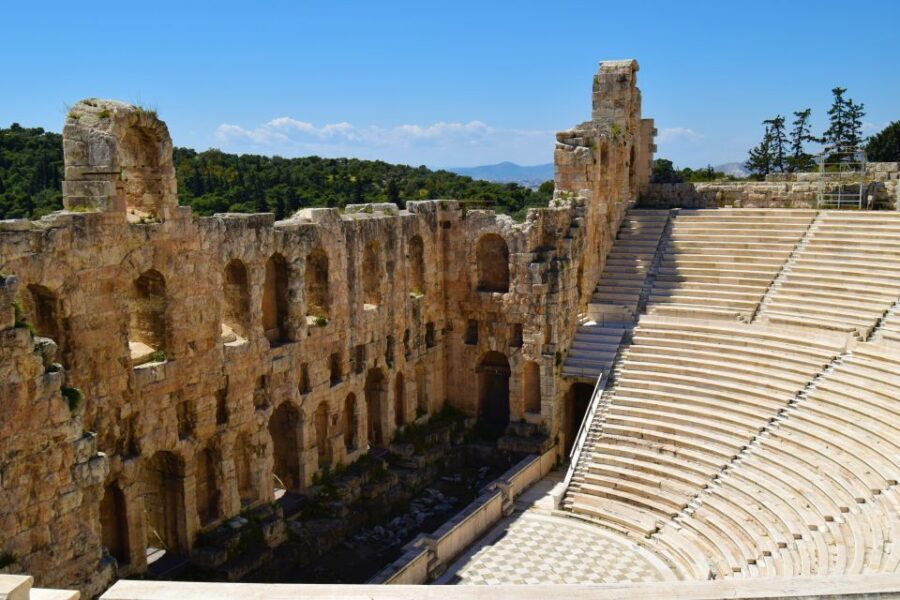
This is a smart opening. Before you climb into the heavy-hitter monuments, you see the setting where ancient Greek theater took shape. It helps you understand the Acropolis as a cultural stage, not just an architectural museum.
From the descriptions, the guide then continues past nearby historic layers—there’s mention of the Odeon of Herodes Atticus and the remains of Athens’ first pharmacy. Even if you only catch fragments, it gives the area context: Athens wasn’t built in one clean era. It was reused, rebuilt, and reinterpreted.
Climbing the south slope: Propylaea and the approach to the temples
After the theatre area, you ascend the hill on the sunlit south slope. You’ll pass landmarks along the way, including the Herodion and those vestiges of the first pharmacy. Expect uphill walking on uneven surfaces, and on occasion slippery ground.
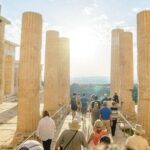
Then comes a key visual moment: the enormous entrance gate, the Propylaea. This isn’t just a doorway. It’s part of the ritual experience—approaching the sacred space with a sense that you’re entering something important.
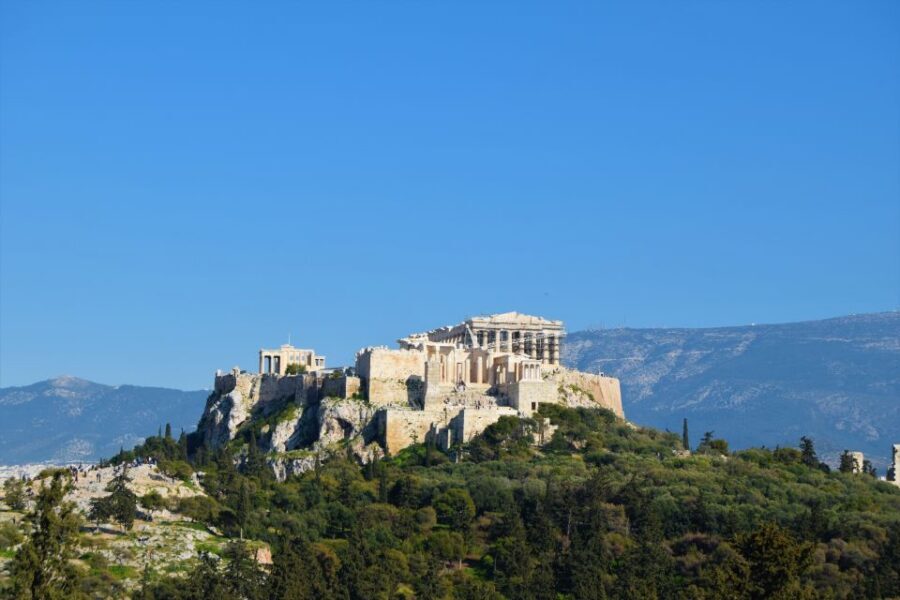
From the top, the guide points you toward major sights and explains why they were erected and the building techniques architects used. You’ll also enjoy views over the Nike Temple, the Erechtheion, and the Parthenon—so you’re not stuck facing one wall the entire time.
Parthenon, Erechtheion, and Temple of Athena Nike: seeing what matters
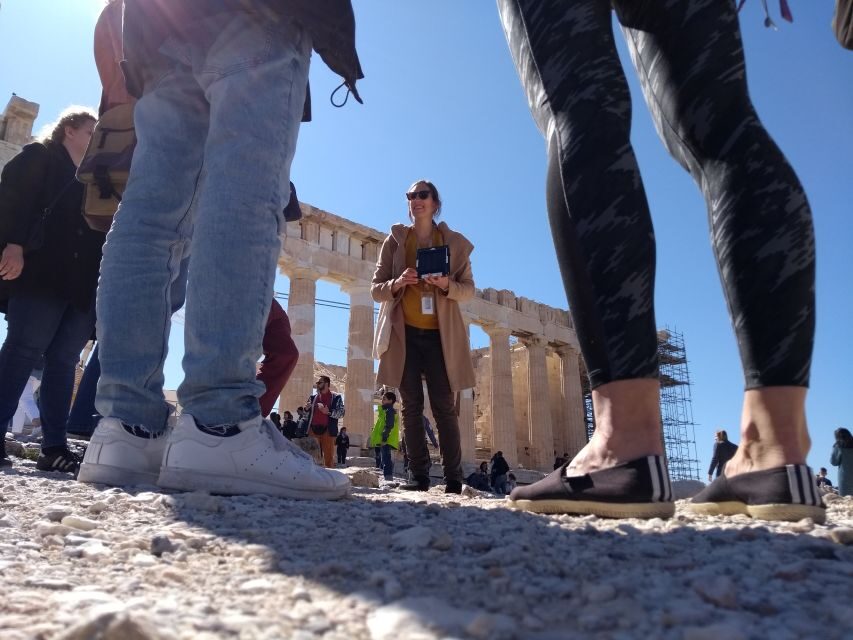
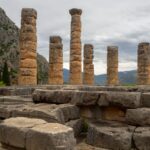
On the Acropolis hilltop, the classics are the point: the Parthenon, the Erechtheion, and the Temple of Athena Nike.
The Parthenon gets most of the attention for a reason, but this route also helps you notice the difference in forms and functions around it. The Erechtheion is a great contrast stop because it looks and feels different, with its famous figures and a more intricate personality than the main temple.
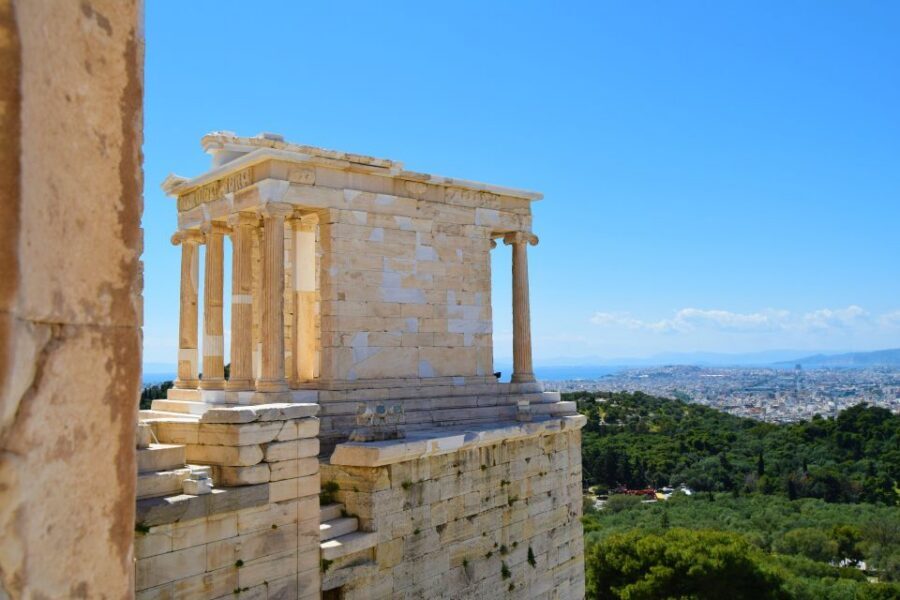
Temple of Athena Nike is another essential. From here, you get a strong sense of the temple’s role—designed to honor Athena in a way that was both symbolic and carefully crafted.
What I like about the tour style is that the guide doesn’t just point and say “this is old.” Instead, you hear myths and historical tales tied to what you’re seeing. That makes the structures feel connected rather than random.
- All Day Cruise -3 Islands to Agistri,Moni, Aegina with lunch and drinks included
★ 5.0 · 4,958 reviews




Theatre of Dionysus and Athens democracy in the same trip

The Acropolis isn’t only temples. It’s also the stage around which ideas and public life developed. The tour leans into that angle, so you’re not just walking through monuments—you’re building a mental map of Athens as a place that blended religion, performance, and politics.
That’s why starting at the theatre works. It signals that this site mattered for speeches, audiences, and civic identity—not just worship.
If you enjoy learning how ancient cities worked as systems, you’ll likely appreciate this emphasis. You get a tour that tries to connect the dots while you’re physically moving between them.
The photo stop: why that 20 minutes on the hill is planned
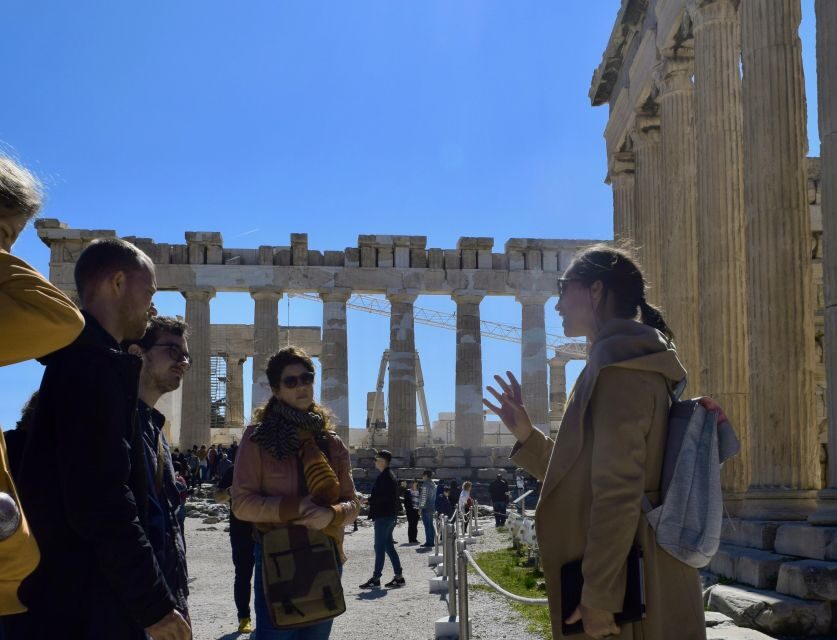
After the guided portions of the Acropolis, there’s time for pictures atop the hill. The free time is about 20 minutes.
I like that the photo window comes after you’ve already learned what to look for. It means your camera shots aren’t just random angles. You know what you want to capture—temple details, the view lines, and the overall composition of the hilltop complex.
It’s also practical. Waiting until the end avoids the “stop, pose, forget what you’re looking at” effect.
Acropolis Museum: the payoff of seeing originals up close
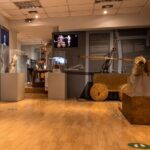
Here’s the big reason this tour feels worth doing: it doesn’t end when the view ends. You descend from the hill and move to the Acropolis Museum to see the real artifacts tied to what you just stood in front of.
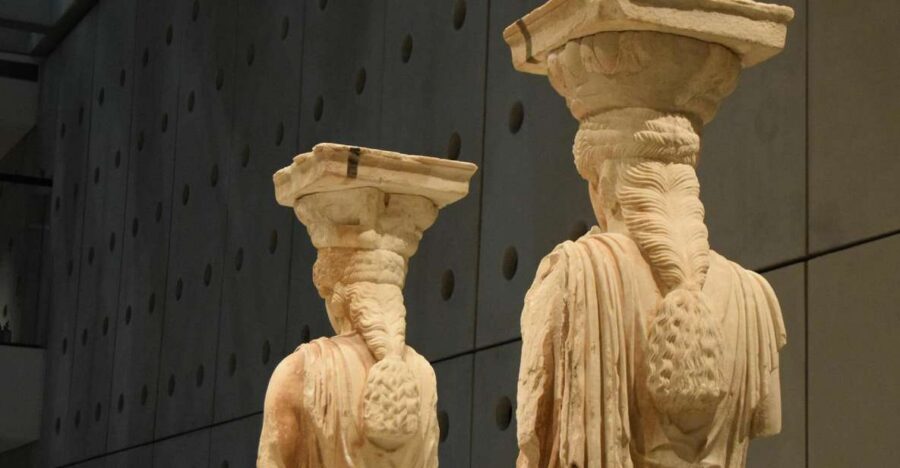
At the museum, you can focus on the pieces that make the Acropolis snap into place. The museum displays the actual Caryatids and Parthenon sculptures (plus authentic statues from the site). Seeing these in person changes your understanding fast—stone details that looked abstract on the hill suddenly make sense.
This is where the tour’s pacing pays off. You’ve just learned the monuments’ role and design, and now you’re given the closer look that explains them. If the hill is where you grasp the scale, the museum is where you grasp the craftsmanship.
Also, the museum experience often feels more comfortable because you’re indoors. You still walk, but it’s a different kind of tired.
What pace and group size feel like in practice
The tour is designed as a compact walking loop plus museum time, all within around 3 hours. That’s not a slow, sit-down sightseeing day, and it’s not a “take your time at every doorway” plan either.
From the info provided, the tour is a group walking tour with a licensed guide. When a group moves well, it can feel smooth. If your group is slower, the uphill parts can feel longer—so it helps to show up ready to walk.
One useful tip from the guide style described in the feedback: there’s an awareness that heat can affect the experience. There’s mention of pausing in shade during hotter periods and that very early mornings tend to be calmer.
If you’re heat-sensitive, planning your day around cooler hours can make the tour feel more comfortable and less stressful.
Comfort check: shoes, water, and who should skip this
You’ll want comfortable shoes because the terrain is uneven, and you might encounter slippery patches. Bring a sun hat and water—there’s no mention of food being provided, so plan to eat before or after your tour.
This tour is not recommended for people with limited mobility. There’s also no elevator, and it’s not suitable for wheelchair users. Pregnant women are also listed as not suitable.
The walking is the main issue. Even if you’re fit, you’re doing an uphill climb on ancient surfaces that weren’t made for modern sandals. If you know you struggle with hills or long uneven routes, choose a different format.
What’s included (and what you’ll need to plan yourself)
Included:
- Entry tickets to the Acropolis and the Acropolis Museum
- Guided walking group tour with a licensed guide (German)
- Administration fees for pre-booking
- Free time to take pictures
Not included:
- Food and drinks
- Hotel pickup and drop-off
So you should plan on eating separately. Also, since hotel pickup isn’t included, you’ll want to be ready to meet at the provided meeting point option.
For a smoother day, wear layers you can adjust for sun and shade. The hill area can get intense, and you’ll still be outside during the climb.
Language: will German-only make you miss things?
This tour is in German, with a live guide. The structure matters here: if you understand German well enough to follow stories, you’ll get a lot out of the explanations.
If your German is basic, you might still catch the major stop names and key points through visual cues, but you’ll lose some of the nuance. For many people, that nuance is exactly what makes this tour better than a self-guided circuit.
Should you book this Acropolis and Museum tour in German?
Book it if:
- You want a guided path that hits the major Acropolis monuments and the museum afterward
- You like learning through stories and myths, not just dates
- You value seeing originals, especially Caryatids and Parthenon sculptures
- You’re comfortable with uphill walking and uneven terrain
Consider skipping or switching tours if:
- You need an elevator or have mobility limitations (this route isn’t built for that)
- You’re sensitive to heat and don’t want a mostly outdoor climb
- You’d rather explore at your own pace without a set group timing
If your goal is to tick off the big sights and also understand what you’re looking at, this format has a solid logic: hilltop first, originals second. That’s how the Acropolis becomes more than a viewpoint.
FAQ
How long is the Acropolis and Acropolis Museum tour?
It runs for about 3 hours, with starting times depending on availability.
What’s included in the $152 per person price?
The price includes entry tickets for both the Acropolis and the Acropolis Museum, a licensed German-language guide, and administration fees for pre-booking. You also get free time for photos.
Is there a ticket line to wait in?
The tour includes help to skip the ticket line.
Where is the meeting point?
The meeting point can vary depending on the option you book.
What language is the tour guide speaking?
The tour guide is speaking German.
Is the tour suitable for wheelchair users or limited mobility?
No. It’s not recommended for people with limited mobility and there is no elevator. It’s also not suitable for wheelchair users.