REVIEW · ATHENS
Biblical Ancient Corinth Canal Epidaurus Nafplio Private Tour
Book on Viator →Operated by Yomadic.Tours & Transfers · Bookable on Viator
You can cover a lot without feeling herded. This private day tour strings together Corinth and Epidaurus with a proper Nafplio finale, all in one air-conditioned vehicle. I like that you get big “wow” stops plus pause time for photos, shade, and lunch, and you can ask your driver to tweak the order. One thing to plan for: several sights have entrance fees not included, and the day runs about 8.5 hours.
The best part is the pace and comfort. In past days, drivers like Giannis, Themos, and Chris have been praised for calm, careful driving and for not rushing people who want more time at a viewpoint or museum. If your group ranges from teens to older adults, this setup is often a good fit because you can split attention between history and the practical breaks.
A possible drawback is that this is not a site-guide service inside every archaeological area. You’ll have an expert English-speaking driver, but if you want extra depth while you’re walking among the stones, you should budget for hiring a licensed guide on-site or using an audio/printed guide.
In This Review
- Key points worth knowing before you go
- What a private Corinth to Epidaurus day really looks like
- Corinth Canal: the isthmus shortcut and a 2,000-year dream
- Ancient Corinth, the Paul connection, and walking among layers
- The Corinth Archaeological Museum: what you’ll actually see in 40 minutes
- Apollo, the acropolis rock, and the view from Akrokorinthos
- Epidaurus: amphitheatre acoustics and why the performances mattered
- The Sanctuary of Asklepios: ancient medicine as a full travel experience
- Nafplio: lunch, shopping time, and the Lion of the Bavarians
- Palamidi Castle: 999 steps, big views, and the sense of defense
- Akronauplia and Bourtzi: finishing with the harbor and the oldest walls
- Price and value: is $240.93 per person a good deal?
- Comfort, timing, and heat: how to make the day feel easy
- Who this tour fits best (and who might want another option)
- Should you book this private Corinth, Epidaurus, and Nafplio tour?
- FAQ
- How long is the tour?
- Is this tour private?
- What’s included in the price?
- Are entrance fees to archaeological sites included?
- Do we have a licensed guide at the archaeological sites?
- Is pickup available?
- What language is the tour conducted in?
- Can I cancel for free?
Key points worth knowing before you go
- Private door-to-door pickup from your Athens hotel, Airbnb, or the port
- Air-conditioned vehicle + WiFi + bottled water, helpful on a hot Peloponnese day
- Flexibility with timing so you can linger where your group cares most
- One-day “triple-hit”: Corinth, Epidaurus, then Nafplio’s forts and harbor
- Entrance fees add up: Ancient Corinth, Palamidi, and the Epidaurus archaeological site are extra
What a private Corinth to Epidaurus day really looks like
This is a long, satisfying day that starts with a dramatic engineering moment (the Corinth Canal), moves into two heavyweight ancient-world destinations (Corinth and Epidaurus), and ends with a coastal town that feels made for wandering (Nafplio).
Because it’s private, you’re not stuck with a fixed group rhythm. Your driver can usually adjust the flow based on heat, interest level, and how long you want at viewpoints. That matters, because these are not “drive-by” stops. Even when each location is timed tightly, you’ll still have chances to see key ruins and monuments up close.
You should also know what kind of guide you’re getting. The tour includes expert English-speaking drivers with extensive historical knowledge, but it does not include a licensed guide who accompanies you into every archaeological site. That setup keeps the schedule moving, but it can reduce the amount of in-depth commentary you hear while you’re inside each ticketed area.
You can also read our reviews of more private tours in Athens



Corinth Canal: the isthmus shortcut and a 2,000-year dream
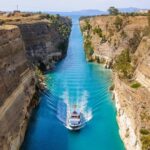
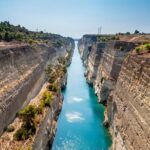
First stop is the Corinth Canal, a narrow waterway cut across the Isthmus of Corinth. It links the Gulf of Corinth to the Saronic Gulf, effectively separating the Greek mainland from the Peloponnese. In real life, you’ll understand this fast because you can see how the canal changes the geography of travel.
This canal is an 19th-century reality, but the idea goes way older. The information you’ll hear here is that shipping once had to sail around the Peloponnese, adding roughly 185 nautical miles to journeys toward the Adriatic. That’s a big deal when you imagine trade and war moving across the sea.
You’ll also hear about the clever workaround built by Periander, the tyrant of Corinth around 602 BC. Since the full canal was too difficult for the time, he developed the diolkos, a stone road where ships could be hauled over land on wheeled platforms. It’s a neat reminder that engineering is often a long chase.
Expect about 20 minutes here. It’s long enough for photos and to take in the big idea, but not so long that you feel bored waiting around.
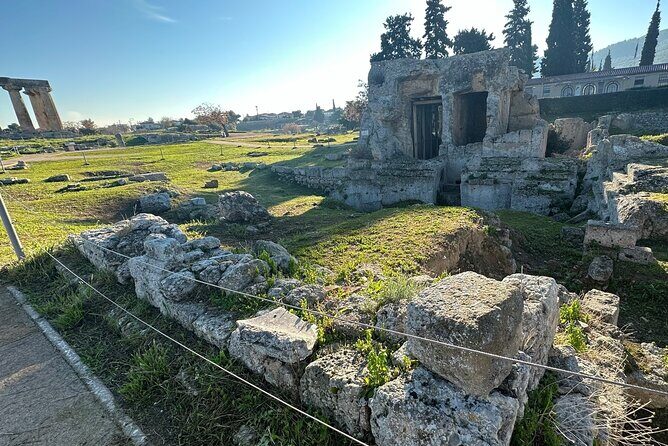
Ancient Corinth, the Paul connection, and walking among layers
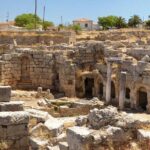
After the canal, you move to Ancient Corinth (Archaia Korinthos). Corinth was a major city-state on the Isthmus, the “bridge” between the mainland and the Peloponnese. It sits roughly halfway between Athens and Sparta, which explains why it mattered for trade, armies, and politics.
This stop is special for two reasons. First, it’s an ancient urban machine: Corinth was huge, with a population around 90,000 in the 4th century BC. Second, it’s deeply familiar from the Christian tradition. Corinth shows up in Saint Paul’s two letters (First and Second Corinthians) and is also part of the Acts of the Apostles during Paul’s travels.
The ruins also hold Roman-era change. The Romans destroyed Corinth in 146 BC, then built a new city in 44 BC, later making it the provincial capital of Greece. So as you look around, you’re not just seeing “one Corinth.” You’re seeing a place that got rebuilt after being erased.
Plan on about 1 hour 30 minutes in this area, and note the entrance fee is not included. If you want maximum context, this is exactly where a licensed site guide can pay off—especially if you like linking the biblical references to real stones and street layouts.
The Corinth Archaeological Museum: what you’ll actually see in 40 minutes

Next is the Archaeological Museum of Corinth, located within the ancient Corinth site. The museum was built 1931–1932 to show major excavations from the area.
You’re on the clock here, but the museum gives you a way to understand what the outdoor ruins are trying to say. The key parts of the broader site include places like Hadgimoustafa spring, the Lechaion Road, the Basilica, the Fountain of Peirene, the Agora, and the Theatre, among others. In the museum, you’ll get artifacts and reconstructions that help you connect names to forms.
Expect around 40 minutes for the museum stop. It’s a good length for most people. If you enjoy details and inscriptions, you may want extra time, but then you’ll need to adjust elsewhere since the full day is already packed.
The museum entrance is also not included in the tour price.
Apollo, the acropolis rock, and the view from Akrokorinthos
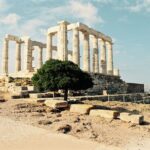
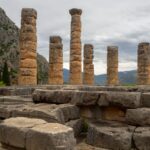
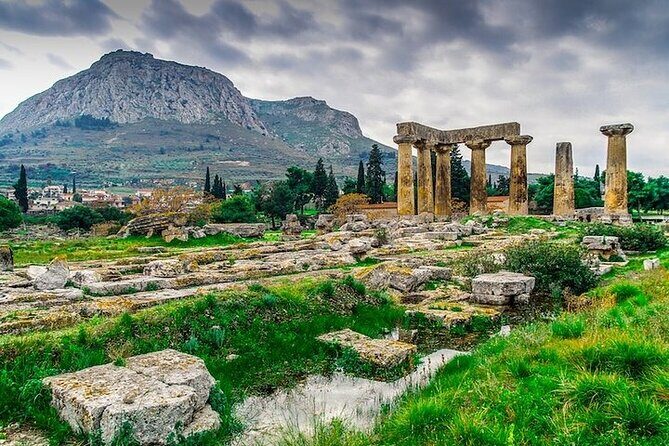
Back outside, you’ll visit the Temple of Apollo area. The Temple of Apollo at Corinth is dated to around 550 BC and is described as one of the earliest Doric temples in the Peloponnese and the Greek mainland, with rare monolithic columns for its time.
A key practical note: some of these stops are short on purpose. The tour gives you the big anchors—temple, fortress, sanctuary—so you don’t lose the day to travel time.
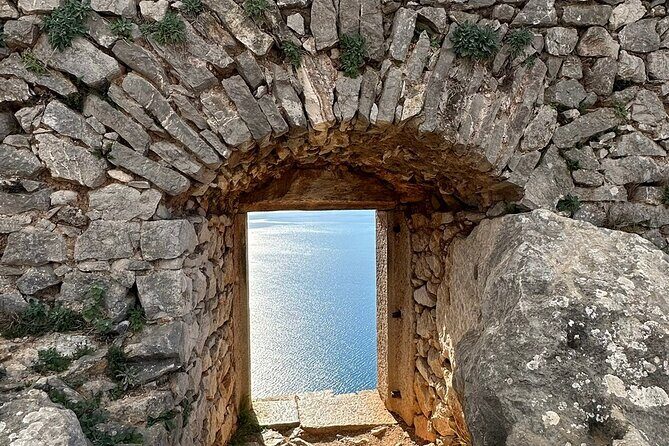
Then comes Akrokorinthos (Acrocorinth), the “Upper Corinth” acropolis: a monolithic rock fortress towering over the ancient city. This place mattered because it controlled movement. With a secure water supply, the fortress was repeatedly used as a last defense, repelling enemies and guarding the land approach to the Peloponnese peninsula.
In about 30 minutes, you should be able to:
- look out over the Isthmus and understand why it was strategic,
- get a feel for the scale of the ancient city below,
- and take photos without feeling like you need to climb all day.
Entrance fees here are listed as not included.
- All Day Cruise -3 Islands to Agistri,Moni, Aegina with lunch and drinks included
★ 5.0 · 4,958 reviews




Epidaurus: amphitheatre acoustics and why the performances mattered
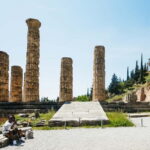
Now you switch from city power to healing-cult mystique. Epidaurus is best known for the ancient theatre and the sanctuary tied to Asclepius, the ancient Greek god of medicine.
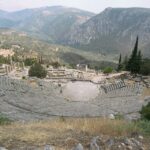
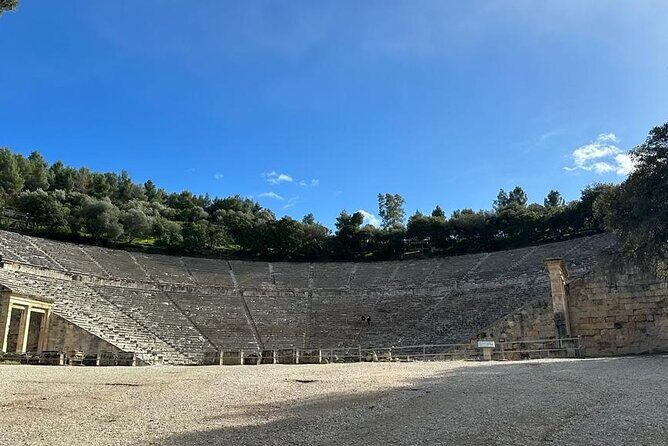
You’ll spend time at the Epidaurus amphitheatre, which is famous for its classic Greek construction and astonishing acoustics. There’s an old theater trick here: people drop a coin or let a sound from the stage carry, and you can hear it even from the last seats. You don’t need to test it with coins to enjoy the idea—you just need to stand in the right places and feel how the room behaves.
Along with architecture, there’s the arts layer. The theatre is associated with major Greek playwrights such as Euripides, Sophocles, Aristophanes, and Aeschylus. If your group is at all into drama, this stop hits both the nerd and the romantic side.
You’ll also have a chance at the Epidaurus Archaeological Museum, established 1902 and opened 1909, with reconstructions and columns with inscriptions. It’s built to help you interpret what you see at the sanctuary.
Plan roughly:
- about 1 hour for the Epidaurus highlights area (including the theatre and the museum time),
- then another 30 minutes at the Epidaurus museum stop in the itinerary flow you’ll follow.
Admissions are not included for these components.
The Sanctuary of Asklepios: ancient medicine as a full travel experience
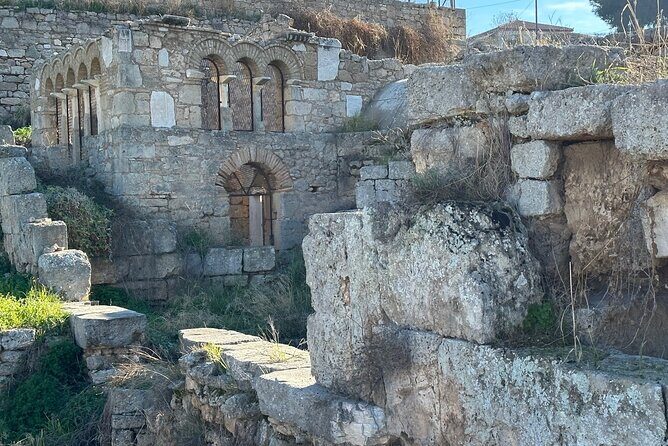
After the theatre, you’ll move into the Sanctuary of Asklepios, the main holy site for the cult of Asclepius. This wasn’t just a temple. It was a healing retreat—part religious center, part wellness destination by ancient standards.
The sanctuary is described as a rival to other major cult sites like the Sanctuary of Zeus at Olympia and Apollo at Delphi, which tells you it was a big deal on the map. The temple there dates to the early 4th century BC.
There’s also a story arc tied to later history. If the sanctuary was still active by the 4th century AD, it likely faced closure during the persecution of pagans in late Roman times, when Christian emperors issued edicts restricting non-Christian worship.
In practical terms, the stop lasts about 15 minutes at the sanctuary segment. That’s short, but it’s enough to get the feel of the sacred space and to understand the place’s purpose. If you want more detail, this is another good spot to use a site guide or read a bit before you go in.
The Ancient Theatre of Epidaurus is included as well (in a separate timed stop), with its tripartite structure: theatron, orchestra, and skene. It’s noted that Roman times didn’t harm this theatre as much as many other Greek theatres.
Nafplio: lunch, shopping time, and the Lion of the Bavarians
After all that ancient heaviness, Nafplio feels like a reward. You’ll have free time for lunch, coffee, and shopping, and that breathing room is a big part of why this tour works.
Nafplio is a seaport town in the Peloponnese, built up on hillsides near the Argolic Gulf. In the Middle Ages it was under royal houses connected to the lordship of Argos and Nauplia. It also became the capital of the First Hellenic Republic and the Kingdom of Greece at the start of the Greek Revolution.
When you’re ready to stretch your legs, you’ll see the famous Lion of the Bavarians. It’s carved into rock above Michael Iatrou Street, with a small park below. The lion commemorates Bavarian soldiers who died in Nafplio in 1833 of a typhoid epidemic. Locals also have an unofficial name tied to a different explanation involving bitter foods.
This is a free stop, and it’s quick—about 1 hour of the Nafplio segment is allocated to you for wandering and the lion stop within that time.
Palamidi Castle: 999 steps, big views, and the sense of defense
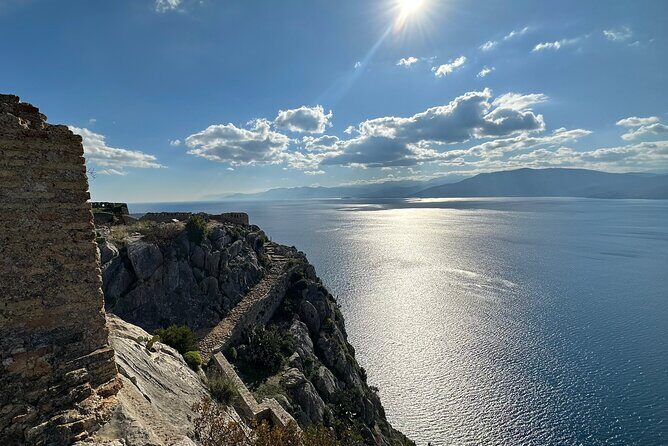
Next is Palamidi Castle, one of the best-preserved castles in Greece, and it comes with the kind of view that makes the climb worth it. The fortress sits on a 216-metre hill above Nafplio, built by the Venetians during their second occupation from 1686–1715.
The walking reality is famous here: there are 913 steps from town to the fortress, and locals often say there are 999 steps to the top. Either way, wear shoes with grip. You’ll be glad for that on steep stone.
Time here is about 30 minutes, and since the tour is already long, you should plan to move steadily, take the photos you care about, and then enjoy the view rather than trying to explore every nook.
Palamidi entrance is not included and is listed at €20 per person.
Akronauplia and Bourtzi: finishing with the harbor and the oldest walls
Your day wraps with more of Nafplio’s layers.
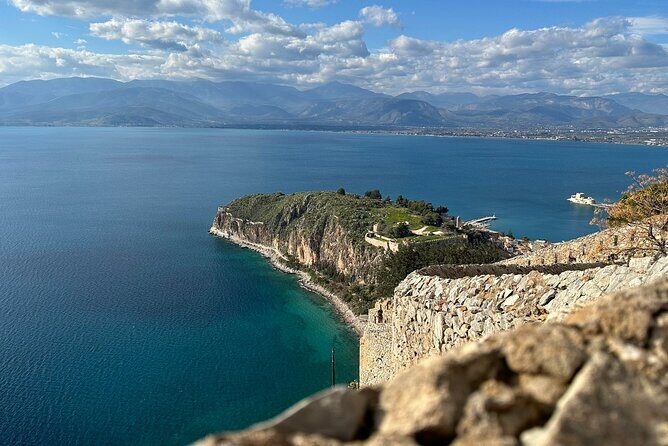
You’ll see Akronauplia, the oldest part of the city. Until the 13th century it was its own town, then the Venetians and Franks turned it into part of the city’s fortifications. Later it was used as a prison, and the Greek government decided the view from the location should support local tourism.
This segment is short—about brief time in the flow, but it gives you a good sense of why Nafplio was defensible.
Then you’ll head to Bourtzi, the waterfront “sea castle”—a Venetian castle in the middle of the harbor. You’ll get a chance to take photos from the harbor side, which is an easy way to end the day on something visual and calming.
Price and value: is $240.93 per person a good deal?
At $240.93 per person for about 8 hours 30 minutes, the value depends on what you compare it to.
Here’s the practical calculation:
- You’re paying for private transport with pickup and drop-off, plus fuel and tolls included.
- You get a modern, first-class vehicle with WiFi, A/C, and bottled water.
- You’re also paying for an expert English-speaking driver who can explain what you’re seeing and help shape pacing for your group.
What’s not included:
- archaeological site and museum entrance fees (some are known amounts, others are listed as not included),
- meals in Nafplio (you’ll have free time to handle lunch),
- and any optional extras like airport pickup.
If your group is small (1–3 people), the tour shifts you into a luxurious sedan. If you have a larger group within the limit (4–7 people), you’ll ride in a comfortable mini van. That private comfort alone can be worth it if you don’t want to spend the day juggling buses, taxis, and waiting times.
If you’re traveling with someone who needs frequent breaks, the included A/C plus water matters. If you love archaeology and want maximum storytelling inside each site, you may also want to budget a little extra for licensed guides at the most important stops.
Comfort, timing, and heat: how to make the day feel easy
This is a packed route, so your strategy should be simple: plan your priorities, then let the private pacing do the rest.
I’d do three things before you go:
- wear supportive shoes for uneven ground and stair climbs (Palamidi is the headline),
- bring sun protection and a hat since you’ll be outside for multiple segments,
- and decide in advance if you care more about ruins, museums, or views.
One more practical advantage: the tour can include time in shade and café stops, and people have specifically praised the day for having breaks that work even when it’s hot. The A/C van and bottled water are there for a reason. Use them.
Also, the best days here are the ones where you ask for small adjustments. In past experiences with drivers like Giannis, Themos, and Chris, the common theme is flexibility: changing the order slightly, stopping for extra interest, and not treating the clock like a boss.
Who this tour fits best (and who might want another option)
This one is ideal if you want to see a lot without doing logistics juggling. It’s also a good match for mixed-age groups—teens who like photos and views, plus adults who want the historical context and slower pacing.
It’s less ideal if your top priority is a fully guided archaeological experience inside every site with deep licensed commentary. Since the tour does not include a licensed guide to accompany you into archaeological areas, you’ll either need to use on-site guides selectively or accept shorter explanations.
It’s also not for you if you hate long days. This is a full day at roughly 8.5 hours, with multiple distinct locations and timed segments.
Should you book this private Corinth, Epidaurus, and Nafplio tour?
Book it if you want:
- one private driver day that links three major destinations,
- comfort (A/C, water) during travel between sites,
- and a schedule that can breathe when you want extra time at a viewpoint or in a museum.
Pass or look for a different format if:
- you need a licensed archaeologist guide inside every major site,
- you have limited stamina for hilltop walking and steps,
- or you’re on a strict budget for entrance fees.
If you do book, my advice is to bring your curiosity and your questions. This tour works best when you tell your driver what you want most—Corinth’s urban story, Epidaurus’s theatre and healing sanctuary, or Nafplio’s castle-and-harbor views. Flexibility is a core part of the value here.
FAQ
How long is the tour?
The tour runs about 8 hours 30 minutes.
Is this tour private?
Yes. It’s a fully private tour, meaning only your group participates.
What’s included in the price?
It includes pickup and drop-off (Athens hotel, Airbnb, or port), transportation in a modern vehicle with WiFi, A/C, and bottled water, fuel and tolls, and an expert English-speaking driver. Group size determines whether you’ll travel in a sedan (1–3) or a mini van (4–7).
Are entrance fees to archaeological sites included?
No. Entrance fees are not included. Ancient Corinth has an entry listed at €15 per person, Palamidi Castle is €20 per person, and the archaeological site of Epidaurus is €20 per person. Some other stops list admission as not included as well, so you should plan for extra costs.
Do we have a licensed guide at the archaeological sites?
No. A licensed guide to accompany you into archaeological sites is not included.
Is pickup available?
Yes. Pickup is offered from your Athens hotel or Airbnb residence, and also from the port or airport (airport pickup is optional at an additional cost).
What language is the tour conducted in?
The tour is offered in English.
Can I cancel for free?
Yes. You can cancel up to 24 hours in advance for a full refund. The experience requires good weather, and if poor weather causes cancellation, you’ll be offered another date or a full refund.