REVIEW · ATHENS
From Athens: 2 Days Meteora, Thermopylae & Delphi Tour
Book on GetYourGuide →Operated by Visit Meteora · Bookable on GetYourGuide
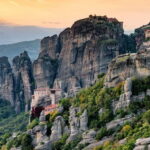
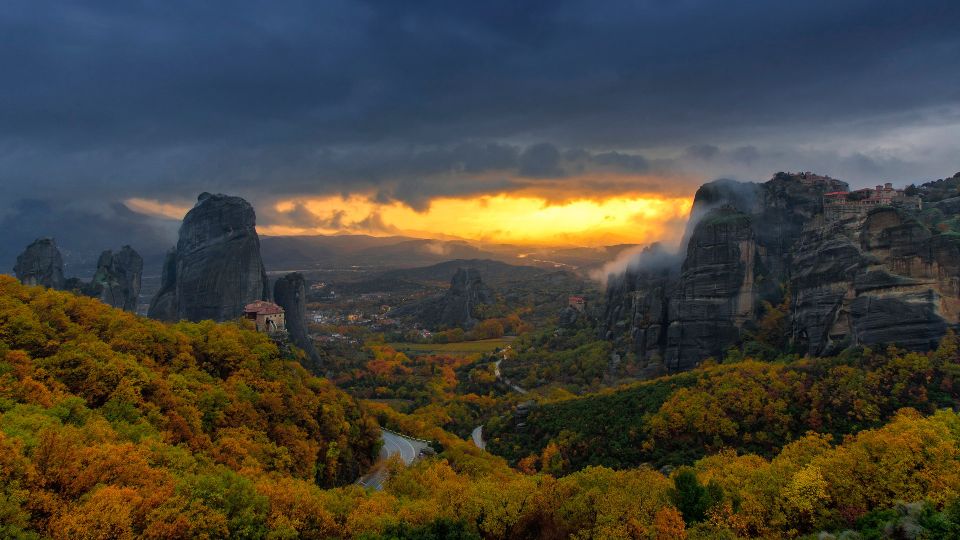
The best part of this trip is the Meteora sunset, when the great stone pillars and cliff-top monasteries take on warm evening light. You also get a useful link between three major Greek sights: Meteora, Thermopylae, and Delphi, without arranging several separate buses and hotels yourself.
I like the comfortable Athens transfer and the smooth handoffs, with drivers waiting at key points. I also like the efficient Meteora to Delphi connection, which saves a long return to Athens before heading north again. The catch is that Delphi is self-guided, and the final bus to Athens is ordinary public transport, not a private tour vehicle.
In This Review
- Key points to know before booking
- Why Meteora is the real centerpiece
- Getting from Athens to Kalambaka
- Choosing the sunset or midday Meteora option
- The overnight stay in Meteora
- Thermopylae, a brief stop with a big story
- Arriving in Delphi with luggage handled
- The 4:00 p.m. bus back to Athens
- What the 3.7 rating tells you
- Practical preparation for a smoother trip
- Should you book this Meteora and Delphi trip?
- FAQ
- Is the Athens to Meteora trip made by train?
- Is hotel accommodation included?
- Are Meteora monastery entrance fees included?
- Is a live guide included at Delphi?
- What happens at Thermopylae?
- What clothes and footwear should I bring?
Key points to know before booking
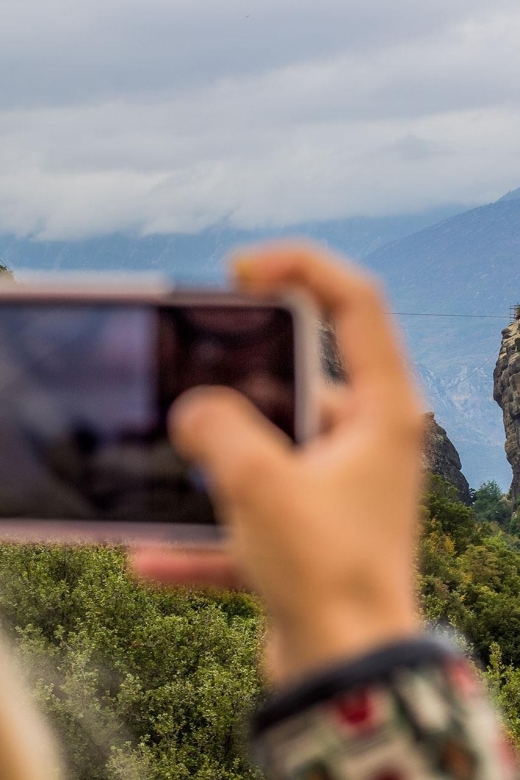
- Sunset at Meteora: Choose the sunset option for scenic viewpoints and monastery views in the softer evening light.
- Three major sights in two days: Meteora, Thermopylae, and Delphi make this a packed but rewarding route through Central Greece.
- One hotel night included: Accommodation, breakfast, station transfer, and a Meteora map are covered, though the hotel category depends on your selected option.
- Delphi is independent: You receive a self-guided mobile tour and audio guide, but no live Delphi guide.
- Transport is the main convenience: Direct service from Athens, an express shuttle to Delphi, and a public bus back to Athens keep the trip moving.
- Bring suitable clothes and shoes: Monastery visits require covered knees and shoulders, and reaching the monasteries means climbing steps.
Why Meteora is the real centerpiece
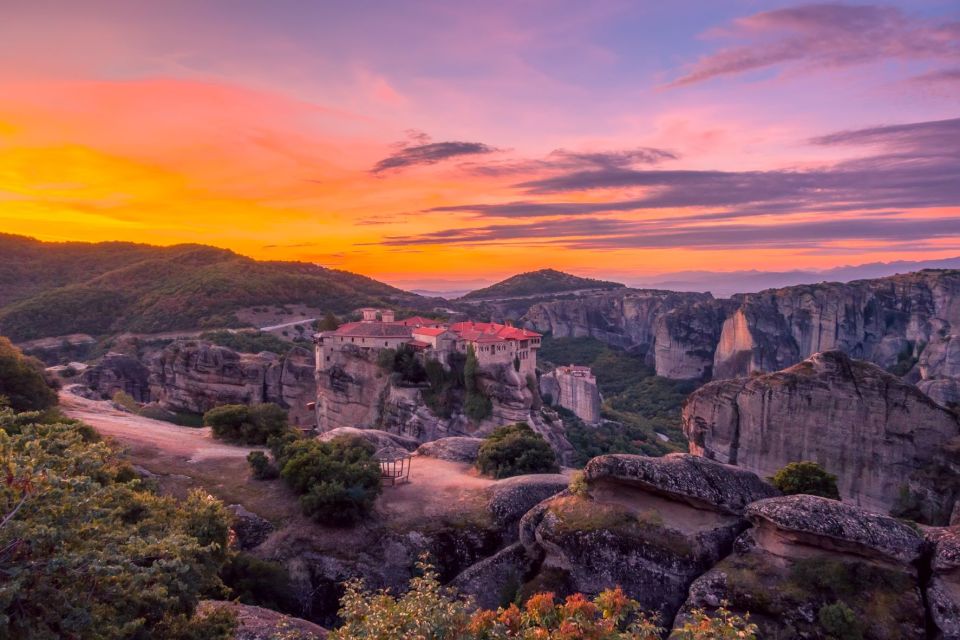
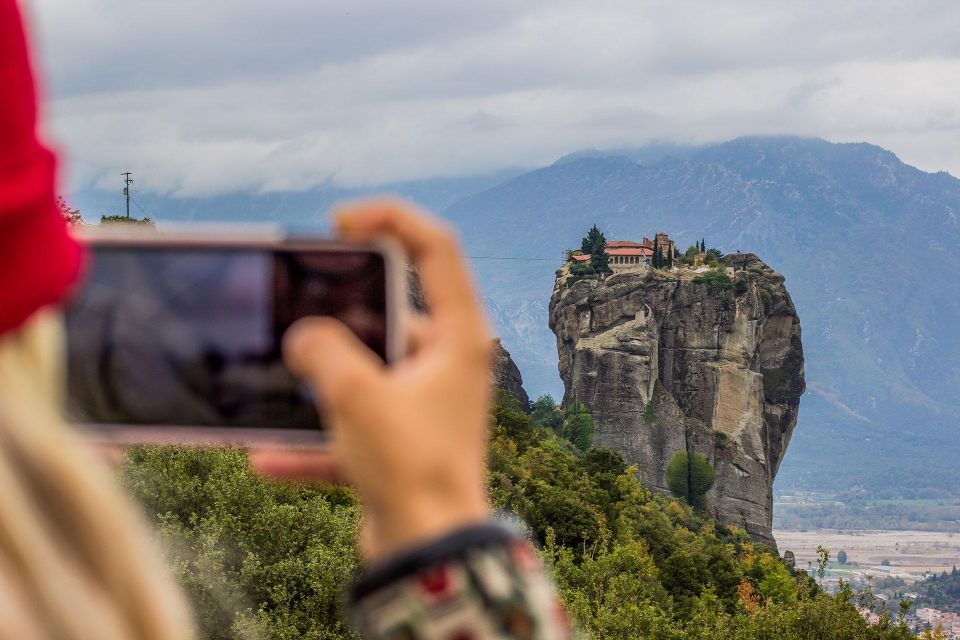
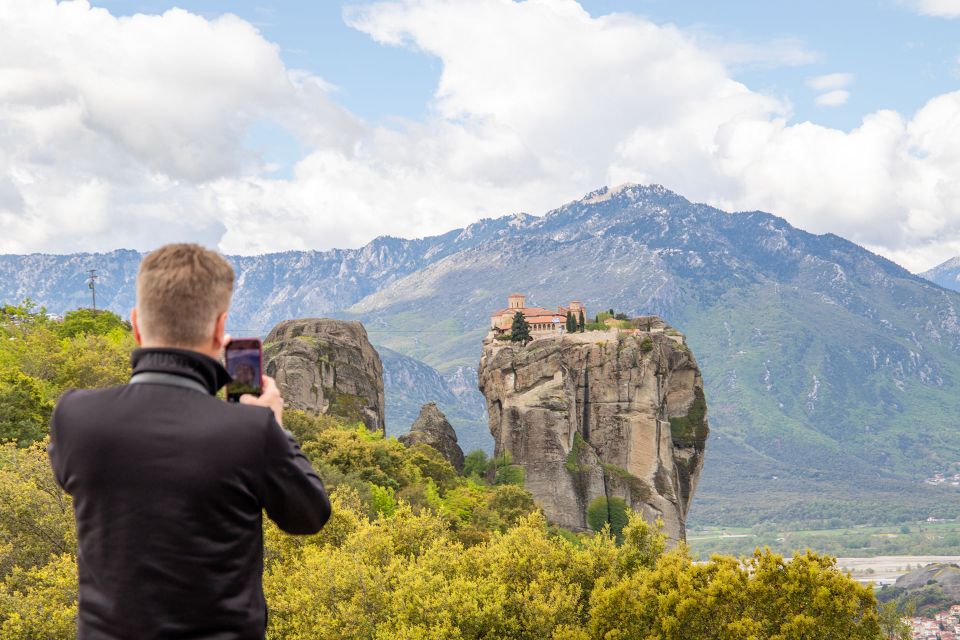
Meteora is one of Greece’s most striking sights. Tall rock pillars rise from the plain, topped by monasteries that seem to cling to the cliffs. The setting is unusual even by Greek standards, and the sunset tour gives you time to see it at its most photogenic.
The tour is designed for independent travelers who want the route organized but do not need a guide beside them every minute. On arrival in Kalambaka, an English-speaking driver meets you at the station with a sign bearing your name. Depending on your selected option, you are taken to the hotel or begin the midday Meteora tour.
The sunset choice is the stronger pick for most people. It lets you see the viewpoints as the light changes, and it focuses on photo stops around the monasteries rather than rushing you through a long daytime schedule. You should not expect a full monastery visit at every stop, though. The experience is built around views, access, and a tour of the area, while entrance fees are paid separately.
Some departures have been guided by Katarina, who earned especially strong praise for answering questions and explaining the area clearly. A good Meteora guide matters because the rock formations and monasteries are impressive at first glance, but the visit becomes more meaningful when you understand how isolated religious communities used these cliffs.
You get a Meteora map and a bottle of water, with Wi-Fi and USB chargers available on the tour bus. Those are modest extras, but they help on a short itinerary where you have little time to waste finding basic services.
A few more Athens tours and experiences worth a look

Getting from Athens to Kalambaka
Your first scheduled departure is at 8:00 a.m. from Athens Larissis Railway Station. The trip to Kalambaka is listed as a direct express service and arrives around 12:45 p.m., giving you part of the afternoon and evening in Meteora.
The transport situation needs a little attention. This route is usually made by train, but flooding has temporarily disrupted Greek rail service, with replacement buses operating until trains return. The published stops and timing are intended to remain the same, but check your final instructions close to departure so you know whether you are boarding a train or a replacement bus.
That distinction matters less for the sightseeing than for comfort and expectations. The Athens to Meteora ride has been described as comfortable, but a long road transfer is still a long road transfer. Bring water, keep a small bag with you, and do not put essentials in luggage that may be stored below a bus.
The Kalambaka station transfer is a useful touch. You do not need to work out a taxi immediately after arriving, and the driver takes you to the hotel or the afternoon tour. On a two-day trip, that saved time is worth real money and stress.
Choosing the sunset or midday Meteora option
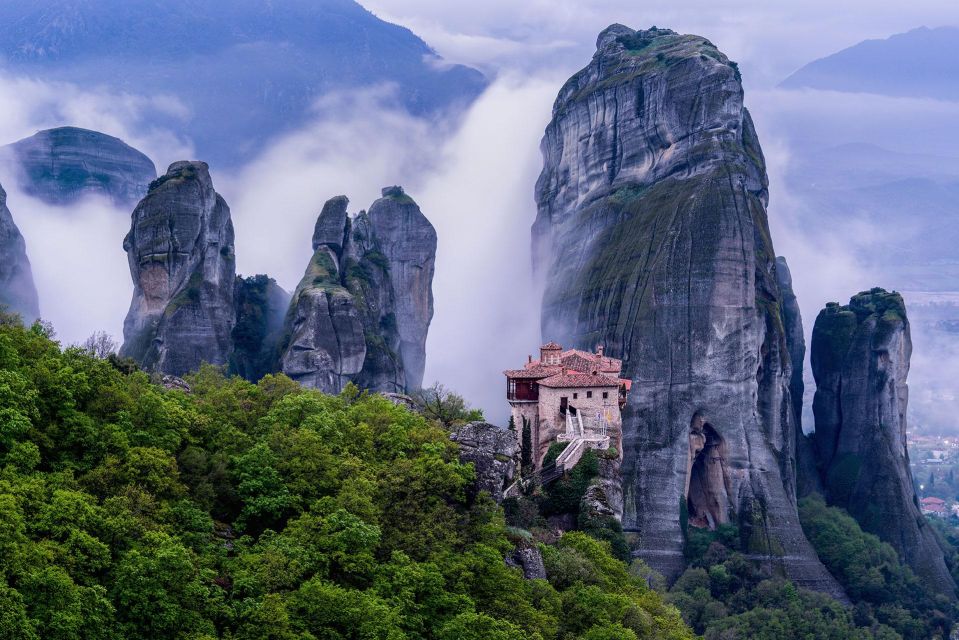
The two timing choices shape the whole first day. The midday option gives you an earlier look at the area and may leave more time afterward at the hotel or in Kalambaka. The sunset option is better if the main reason you are coming to Meteora is the scenery.
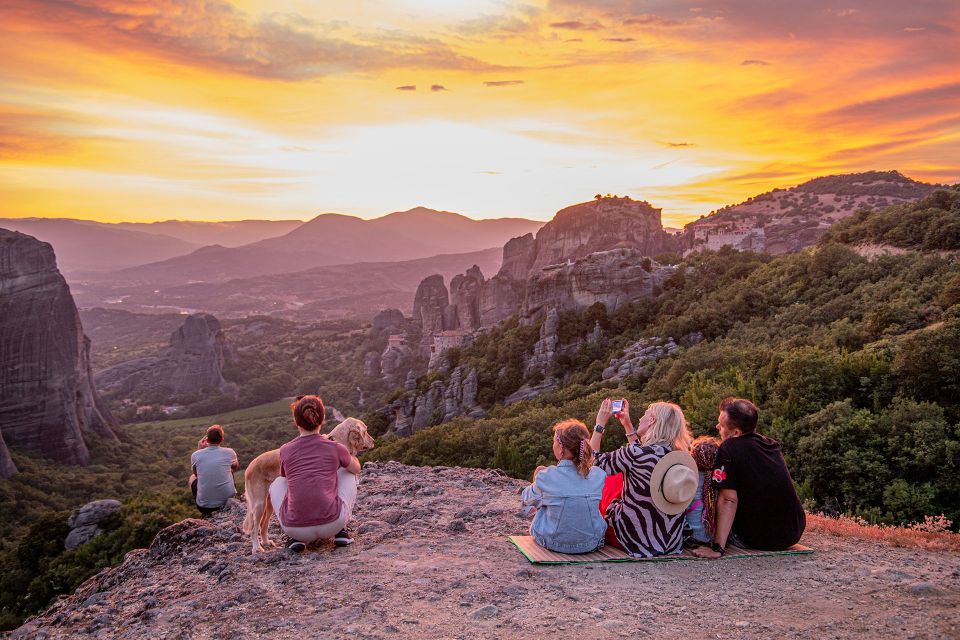
The sunset tour takes you to viewpoints and photo locations around the monasteries. You see the cliffs from changing angles, and the warm light can make the pale rock glow. This is not a quiet private outing, since Meteora is a major attraction, but the evening setting gives the experience a calmer feel than a rushed midday visit.
You should expect walking and steps. Reaching the monasteries requires climbing, and there are no elevators. Comfortable shoes are not just a standard packing suggestion here. They are important if you plan to enter the monasteries or spend time moving between viewpoints.
The dress rules are strict. Men and women need to cover their knees and shoulders at places of worship and selected museums. Shorts and sleeveless tops can lead to refused entry, so pack a light layer or wear longer clothing even if the weather is warm.
Monastery admission is not included. That makes the tour price look attractive at first, but you need to keep extra cash available for entrances, meals, and the accommodation tax. The exact number of monasteries you can enter depends on the route and timing, so do not assume every famous building is included in the base cost.
The overnight stay in Meteora
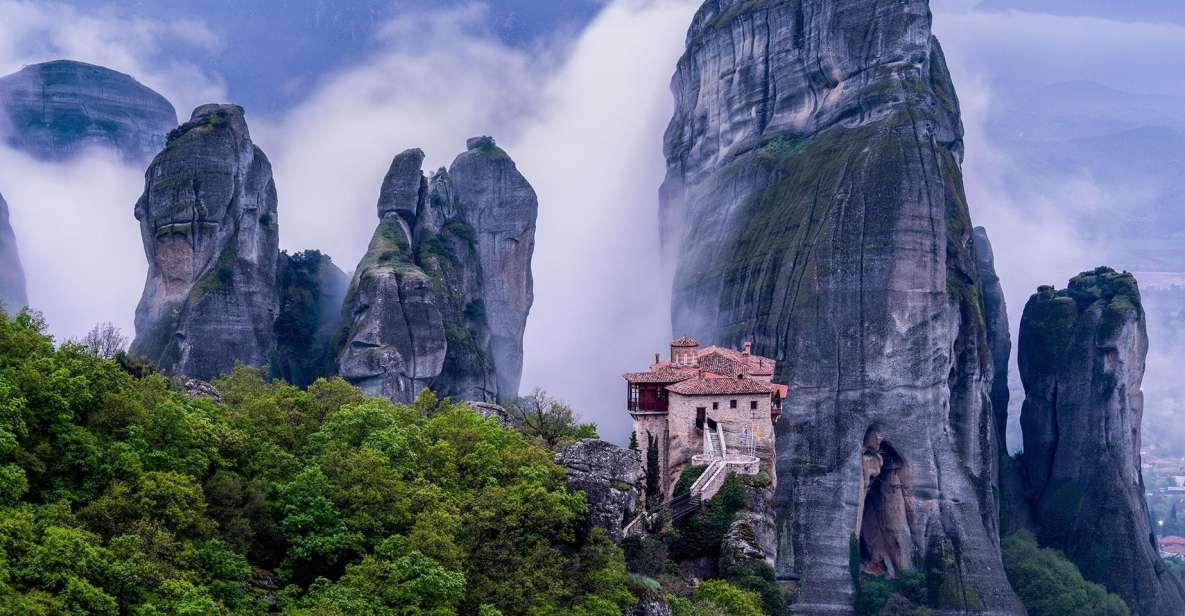
One night in Meteora is enough to break up the long journey from Athens, but it is not enough for a slow exploration of the region. The included hotel comes with breakfast, and the accommodation level depends on the package you choose.
The three-star option has worked well for some bookings, with helpful staff, a tasty breakfast, and restaurant advice for the evening. That kind of local help is valuable when you arrive after a day on the road and have limited time to make dinner plans.
Still, keep your expectations practical. This is a transportation-focused tour, not a luxury hotel escape. You are paying for a well-planned route, the overnight stop, and the connection onward to Delphi. If your top priority is a stylish room or several free hours in Kalambaka, you may prefer to book the hotel and transport separately.
Breakfast is included, but other food and drinks are not. The evening meal is your responsibility, and the schedule may not leave much time for a leisurely restaurant visit. Ask your hotel for a nearby recommendation, as the staff have helped with this before.
Thermopylae, a brief stop with a big story
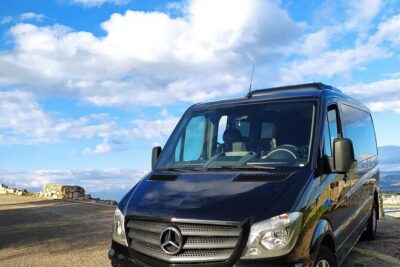
On the second morning, you meet your express shuttle driver at 9:00 a.m. at a designated location. The driver provides the exact meeting details, so read those instructions carefully rather than assuming you will depart from the hotel entrance.
The drive toward Delphi takes about three hours, with a stop at Thermopylae. This is the battlefield associated with King Leonidas and the 300 Spartans who resisted the Persian army. The site adds a strong historical contrast to Meteora: one tells of religious communities in the cliffs, the other of a military stand remembered for sacrifice and defiance.
Thermopylae is a stop, not a full guided day visit. You have the chance to see the historic area and learn about the battle, but the supplied details do not promise a set stop length or a live historian. Think of it as a useful pause on the road to Delphi rather than a separate, in-depth excursion.
That limitation is worth understanding before you book. If Thermopylae is your main goal, you may want a tour built around the battlefield. If you are already heading to Delphi, the stop adds meaning without requiring another day.


Arriving in Delphi with luggage handled
When you reach Delphi, the driver shows you the bus station, where you can leave your luggage safely. This is an important practical benefit. You can visit the museum and archaeological site without dragging a suitcase over the streets and ancient pathways.
The timing gives you a focused afternoon. You visit the Delphi Museum first, then walk a short distance to the archaeological site. The museum contains major ancient works, including the famous Charioteer of Delphi, and helps you understand the sculptures and objects before you see the ruins outside.
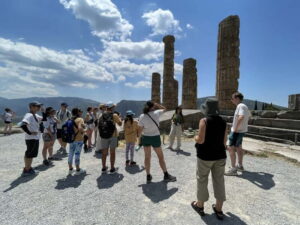
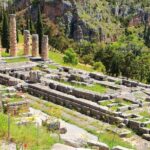
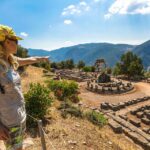
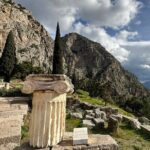
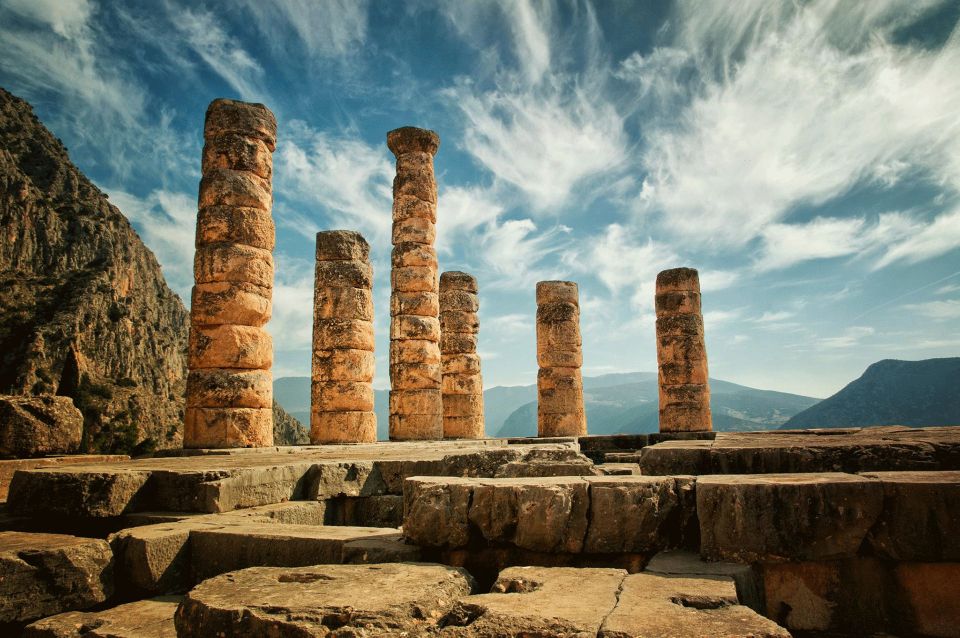
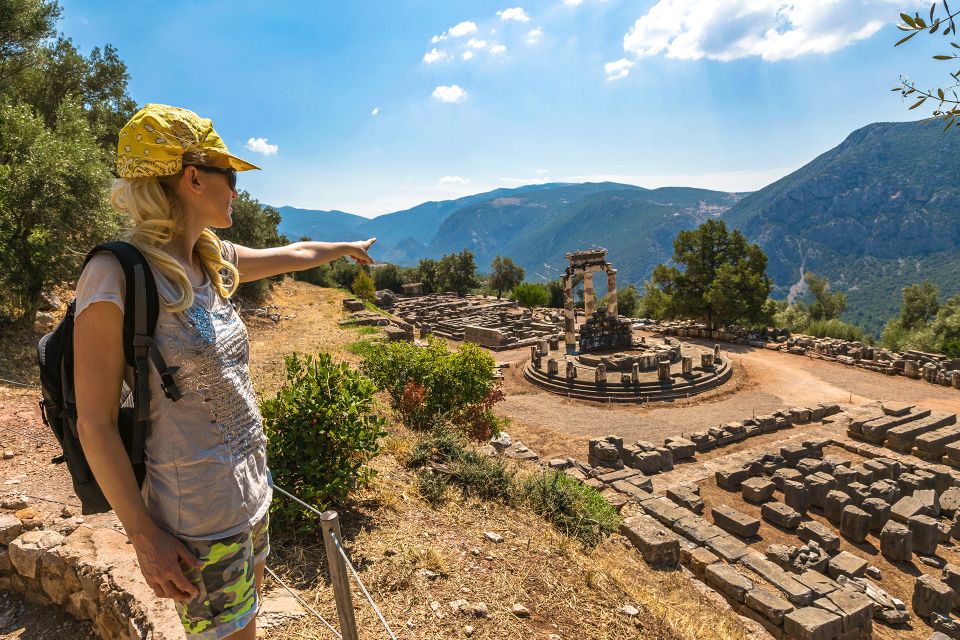
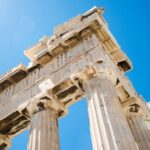
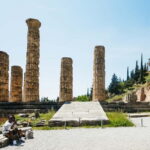
Delphi was the religious center of the ancient Greek world, where people consulted Apollo’s oracle. The site itself includes the Temple of Apollo, the Athenian Treasury, and the Theater of Delphi. The setting on the slopes above the valley gives the ruins a powerful sense of place, though the paths are uneven and you should keep those comfortable shoes on.
Your visit is self-guided. A mobile audio tour is included, with audio options listed in English, Korean, Spanish, French, German, Italian, Portuguese, Russian, Polish, Chinese, and Japanese. That is helpful if you prefer to move at your own pace, stop for photos, or skip sections that interest you less.
The tradeoff is that there is no live Delphi guide included. One driver has been described as friendly but not especially strong on the history of the site, so you should rely on the audio tour rather than expect the transfer driver to explain the ruins in detail. If you want lively discussion and immediate answers, book a separate guide or choose a fully guided Delphi visit.
Delphi admission is not included. Add the archaeological site and museum fees to your budget, and remember that the tour price also excludes food, drinks, and accommodation tax.
The 4:00 p.m. bus back to Athens
At 4:00 p.m., you take the public bus from Delphi to Athens, arriving around 7:00 p.m. This final leg is where the tour feels least polished. It is not a private transfer, and recent arrangements have caused confusion for at least one booking, particularly over the lack of a standard direct line service.
You should treat this as regular public transport, not the final part of a guided tour. The bus gets you back to Athens and keeps the package affordable, but you may have less personal assistance than during the Meteora and Delphi transfers.
That arrangement also explains why the total price is relatively reasonable at about $294 per person. The package includes several costly pieces: the Athens to Kalambaka connection, a hotel night with breakfast, station transfer, Meteora touring, the express Meteora to Delphi shuttle, and the Delphi to Athens bus. You are not paying for a private vehicle and guide from start to finish.
The value is strongest if you want to see Meteora and Delphi but do not want to arrange Greek intercity transport yourself. The value is weaker if you want door-to-door service, included entrance tickets, or a guide at every ancient site.
What the 3.7 rating tells you
The overall rating is 3.7 from nine ratings, which suggests a good but uneven experience rather than a flawless one. The most consistent praise centers on the Meteora guide, the sunset views, smooth connections, comfortable transport, and helpful hotel staff.
That pattern gives you a clear way to judge the tour. The sightseeing at Meteora is the safest reason to book. The sunset route has produced some of the strongest reactions, and guides such as Katarina have made the cliffs and monasteries easier to understand.
The weak point is the transport and guidance around Delphi. You get an audio tour, but not a live expert. The public bus back to Athens can also feel too basic for someone expecting a private return transfer.
Families can make good use of the itinerary because the major arrangements are handled and the route covers several famous sights in only two days. But the schedule is demanding. Parents should be ready for long transfers, steps at Meteora, and a concentrated Delphi visit.
This tour also suits independent adults who like structure but want freedom inside each sight. You can follow the audio tour at your own speed and use the included transportation without joining a large, tightly controlled coach excursion. It is less suitable for anyone with mobility limits because of the monastery steps and uneven archaeological paths.
Practical preparation for a smoother trip
Wear sturdy walking shoes and pack clothing that covers your shoulders and knees. A light layer is useful for monastery entry, even when the forecast is warm.
Keep your booking details and driver instructions easy to reach. Meeting points can change according to the option you select, and the second-day shuttle location is provided by the driver.
Bring a small overnight bag if possible. You will change transport several times, and carrying only what you need makes the station transfers and Delphi visit easier.
Budget separately for:
- Meteora monastery entrance fees
- Delphi museum and archaeological site entrance fees
- Accommodation tax
- Meals and drinks
The tour includes Wi-Fi and USB chargers on the tour bus, but do not rely on those as your only charging plan. A portable battery is still useful during a long day of road travel and sightseeing.
Cancellation is allowed up to 24 hours before departure for a full refund, and you can reserve now and pay later. Those terms help if Greek transport conditions change, but you should still check the current rail or replacement-bus arrangement before leaving Athens.
Should you book this Meteora and Delphi trip?
I would book this tour if you want Meteora’s sunset and Delphi in one compact trip, and you are comfortable with a mix of organized transfers and independent sightseeing. The route is efficient, the overnight stop makes the journey manageable, and the Meteora portion can be excellent, especially with a strong guide such as Katarina.
I would hesitate if you expect a fully guided historical tour. Delphi is largely up to you, the entrance fees are extra, and the last leg to Athens uses public transport. The tour is best understood as a smart transport and sightseeing package, not a private escorted journey.
For many people, the $294 price is fair because it removes the hardest planning work and links places that are awkward to combine independently. Choose the sunset option, wear proper clothes and shoes, allow for admission costs, and think of Thermopylae as a meaningful roadside stop rather than a full excursion. With those expectations, this is a practical way to see three important Central Greek sights in two busy days.
FAQ
Is the Athens to Meteora trip made by train?
The route is usually done by train, but flooding has temporarily disrupted rail service. Replacement buses are operating until train service is restored, while the planned itinerary and stops remain unaffected.
Is hotel accommodation included?
Yes. The tour includes one night in Meteora with breakfast. The accommodation category depends on the option you book, and an accommodation tax is not included.
Are Meteora monastery entrance fees included?
No. Entrance fees to the Meteora monasteries are paid separately.
Is a live guide included at Delphi?
No. Delphi is visited independently with a self-guided mobile audio tour. The listed audio languages include English, Korean, Spanish, French, German, Italian, Portuguese, Russian, Polish, Chinese, and Japanese.
What happens at Thermopylae?
The transfer from Meteora to Delphi includes a stop at the historic Thermopylae battlefield, associated with the 300 Spartans and their resistance against the Persian army.
What clothes and footwear should I bring?
Wear comfortable walking shoes. Entry to places of worship and selected museums requires knees and shoulders to be covered, and shorts or sleeveless tops may be refused.