REVIEW · ATHENS
Full Day Biblical Ancient Corinth Canal Mycenae Epidauvro Nafplio
Book on Viator →Operated by Yomadic.Tours & Transfers · Bookable on Viator
999 steps are only the start. This full-day private circuit strings together Corinth Canal (the isthmus shortcut idea that took centuries), biblical Kenchreai tied to Paul, Mycenae’s Bronze Age power, and then a slow wander through Nafplio’s old town. I especially like how the driving history keeps the sites meaningful, and how you get real time to take in views instead of just photo stops. One possible drawback: it is a long day with lots of walking and steep steps, so you will want comfy shoes.
You’ll ride in a modern private car with A/C, WiFi, and bottled water, with pickup and drop-off from your Athens hotel, Airbnb, or the port. It’s also flexible since it’s private, so you can often adjust the pace if your group wants more time somewhere.
Value-wise, the big win is the all-day logistics and expert English guidance from the driver, but plan your budget for archaeological entrance fees (most museums/sites are not included) and for your lunch cost in Nafplio. The itinerary is tight, so the sites you pick to linger over matter.
In This Review
- Key Highlights You’ll Actually Feel Today
- Price and Logistics for a 9–10 Hour Corinth–Mycenae–Nafplio Circuit
- Corinth Canal: The Isthmus Shortcut That Took Centuries
- Kenchreai and Acts 18: Paul’s Port Town With Real Place Names
- Ancient Corinth and Gallio’s Bema: When Roman Power Meets New Belief
- Corinth’s Museum, Temple of Apollo, and the Agora Stops That Add Meaning
- Acrocorinth: The Fortified Rock That Explains Who Controlled the Isthmus
- Mycenae: Lion Gate, Cyclopean Walls, and Agamemnon’s Battlefield-Grade Stone
- Lion Gate and the Treasury of Atreus: When Myth Meets Brutal Scale
- Nafplio and Palamidi: The 999 Steps With Fort Views Over the Argolic Gulf
- Nafplio Old Town, Bourtzi, and the Bavarian Lion: A Day’s Final Story Stops
- Who Should Book This Athens-to-the-Peloponnese Day Trip
- Should You Book This Tour?
- FAQ
- How long is this tour?
- What is the price per person?
- Is this a private tour?
- Will I be picked up from my Athens hotel or Airbnb?
- What vehicle will I ride in?
- What language is the tour in?
- Are entrance fees included?
- Is a licensed guide included for archaeological sites?
- Is lunch included in the price?
- What if the weather is bad?
- FAQ
- Can I cancel for a full refund?
- Do I need to bring tickets for the stops marked as not included?
Key Highlights You’ll Actually Feel Today
- Corinth Canal: a “2,000-year dream” that links the Gulf of Corinth to the Saronic Gulf and changes geography in one stroke of engineering.
- Kenchreai and Acts 18: Paul’s stop here connects the Bible to real place names like Kenchreai/Cenchreae and Phoebe.
- Mycenae’s power in plain sight: Cyclopean walls, the Lion Gate, and the Treasury of Atreus (Tomb of Agamemnon).
- Palamidi’s 999 steps: a fortress walk with huge Gulf views—worth it, even if your calves complain.
- Nafplio feels walkable: old town cobbles, Syntagma Square, the Bavarian Lion, and a sunset-worthy Bourtzi setting.
Price and Logistics for a 9–10 Hour Corinth–Mycenae–Nafplio Circuit
This day trip runs about 9 to 10 hours and costs $277.09 per person. That price can feel steep until you add up what you’re buying: a private driver, a comfortable car, and a route that strings together three major ancient regions without you coordinating buses, taxis, and timing.
You’ll be picked up at your place in Athens—hotel lobby, apartment entrance, or port gate—then dropped back at the same meeting point. If you’re in a group of 1 to 3, you ride in a sedan; for 4 to 7, it’s a mini van. Either way, the vehicle includes WiFi, A/C, and bottled water, which matters on a long day in the Peloponnese.
Two budget notes: entrances are generally not included, and lunch in Nafplio is scheduled but paid by you. Also, it’s popular territory. Even with a private route, you can still hit busy moments at major sites, so I recommend treating the day like a visit you plan for, not something you can rush.
A few more Athens tours and experiences worth a look
- All Day Cruise -3 Islands to Agistri,Moni, Aegina with lunch and drinks included
★ 5.0 · 4,958 reviews

Corinth Canal: The Isthmus Shortcut That Took Centuries
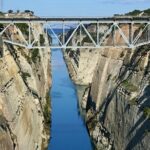
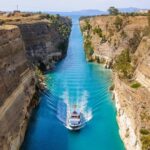
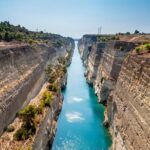
The day begins at the Corinth Canal, a waterway that cuts across the narrow isthmus to link the Gulf of Corinth with the Saronic Gulf. The key idea is simple: it separates the Greek mainland from the Peloponnese, so ships don’t need to sail the long way around.
What I like here is the context. This wasn’t a modern impulse; the canal was a 2,000-year dream. Before the late 19th-century project, ships wanting to reach routes toward the Adriatic or to anchor in Corinth faced an extra 185 nautical miles around the Peloponnese. You get a feeling for how “geography” becomes “economy,” and how empires and merchants think.
The tour also points to a Greek workaround from long ago: the tyrant Periander of Corinth (around 602 BC) imagined the concept early, and when digging was too hard for the time, he built the diolkos, a stone road where ships could be moved on wheeled platforms. It’s a nice warm-up for the rest of the day, because Mycenae and Corinth both revolve around infrastructure and control of movement.
Kenchreai and Acts 18: Paul’s Port Town With Real Place Names
Next comes the Corinthia region stop at Kechries, tied to the ancient port town Kenchreai/Cenchreae. This is the part of the day where you feel the Bible names in your guide’s mouth and then see them on the map.
The tour connects directly to Acts 18:18, where the Apostle Paul stops at Kenchreai during his second missionary journey. The detail I find most interesting is the hair-cut and vow angle: it mentions Paul shaving his head in Cenchrea and also references Phoebe in the local assembly in his letter to the Romans.
Even if you’re not a text-spotter, this stop is valuable because it’s not just “look at a ruin.” You’re watching a historic story get anchored to a specific location with a specific name tradition. It’s short, but it makes the next ancient-city stops feel more personal.
Ancient Corinth and Gallio’s Bema: When Roman Power Meets New Belief
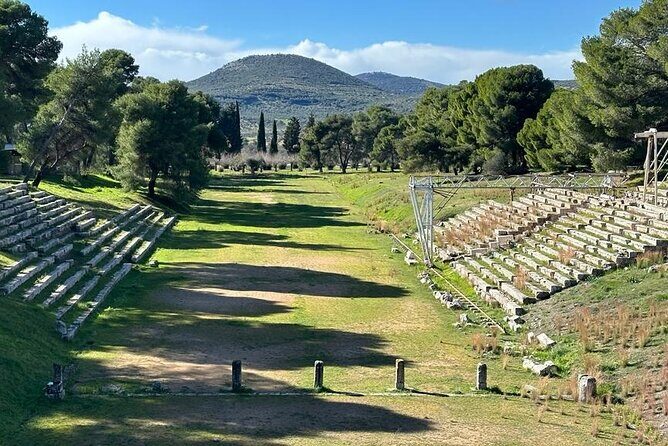
Ancient Corinth is where the day shifts from geography and ports into courtrooms, forums, and speeches. The big thread here is the famous clash described during Paul’s time in Corinth, when he was brought before the proconsul Lucius Junius Gallio Annaeanus—better known as Gallio.
Gallio is the twist. He refuses to judge what he considers a religious dispute among Jews. The tour ties this tradition to the Bema, an elevated rostrum in the center of the Roman Forum area where officials addressed the public. Then the story keeps going into later eras: the Bema was transformed into a Christian church during the Byzantine period.
I like how the itinerary doesn’t treat Paul as a floating character. It gives you a physical focal point to imagine a public scene. You’ll also have time around the Agora, including the central shops and small temples, and then see the broader Roman layout that made public life happen.
Timing tip: this is one of those areas where a quick glance from the wrong angle can feel flat. Slow down for a minute and orient yourself—forum spaces make more sense once you understand where crowds would have stood.
Corinth’s Museum, Temple of Apollo, and the Agora Stops That Add Meaning
After the forum focus, you’ll move through key “supporting actors” of ancient Corinth: a museum stop and some high-impact architectural remains.
At the Archaeological Museum of Corinth, the museum is described as built between 1931 and 1932 to display excavations from the Ancient Corinth site area. You’re in the museum briefly, so don’t expect a full-day museum experience. Instead, use it like a fast primer: look for items and displays that help you connect what you see outdoors with what those places meant.
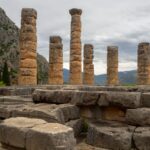
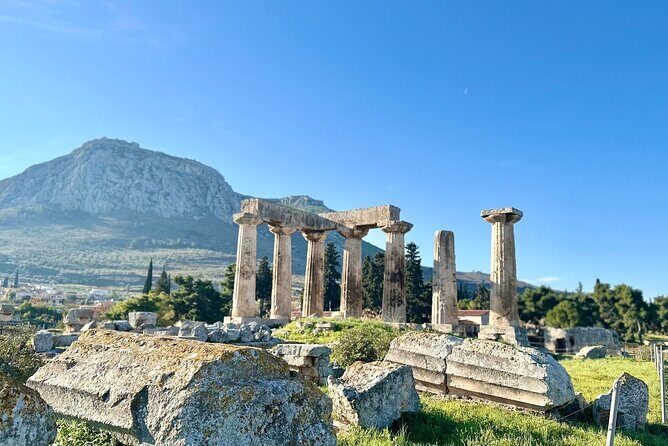
Then you hit the Temple of Apollo (constructed around 550 BC). This temple is noted as one of the earliest Doric temples in the Peloponnese and Greek mainland, and the tour emphasizes monolithic columns as something rare for the ancient world. Even if you’ve seen other Doric temples, Corinth’s scale and early date give it an extra “this is where it all starts” feel.
Finally, you return to the Agora area for the Bema connection and the practical layout of the city. It’s a lot for the brain in one morning, but it works if you treat each stop as one layer: power (Bema), religion (Apollo), and civic life (Agora).
- All Day Cruise -3 Islands to Agistri,Moni, Aegina with lunch and drinks included
★ 5.0 · 4,958 reviews


Acrocorinth: The Fortified Rock That Explains Who Controlled the Isthmus
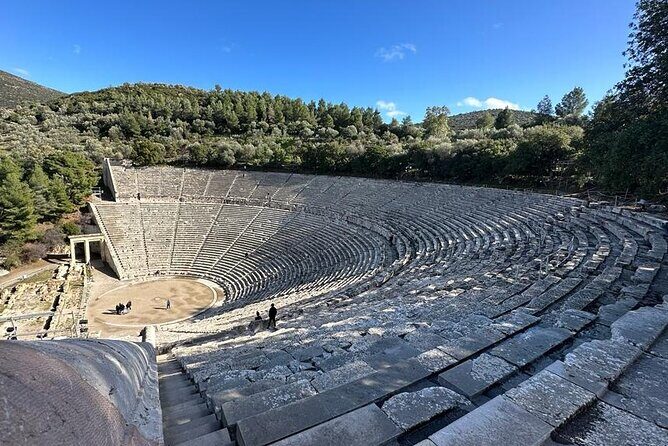
Acrocorinth is “Upper Corinth,” the acropolis dominating the city from a monolithic rock. If you’ve ever wondered why people built fortresses on huge rocks, Acrocorinth answers that in one look.
The site’s secure water supply and defensive position meant it was repeatedly used as a last line of defense in southern Greece. It also commanded the Isthmus of Corinth, so controlling Acrocorinth helped control entry into the Peloponnese peninsula.
Even with a short time window, Acrocorinth is about payoff: the views make the fortification logic obvious. The layout tells you who had leverage—land routes, watch points, and the ability to signal and defend.
This stop is also a gentle warning about the day ahead. If you start to feel tired here, you’ll want to pace carefully for Mycenae’s walking and then Palamidi later.
Mycenae: Lion Gate, Cyclopean Walls, and Agamemnon’s Battlefield-Grade Stone
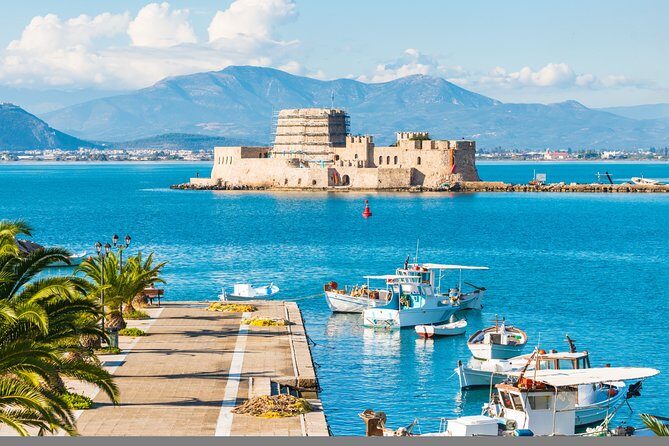
Mycenae is the point where many people stop thinking in “nice ruins” terms and start thinking “organized power.” The fortified citadel is presented as the seat of the mythical and mighty King Agamemnon, and the site gave its name to the Mycenaean civilization.
You’ll see a well-preserved complex and get introduced to major monuments: the Tomb of Clytemnestra, the Lion’s Gate, and Cyclopean walls—massive stone construction that feels built to outlast not just empires, but time itself.
The tour also gives you the civilizational context: in the second millennium BC, Mycenae was a major Greek center and a military stronghold that dominated southern Greece, Crete, the Cyclades, and parts of southwest Anatolia. At its peak around 1350 BC, the citadel and lower town supported around 30,000 people.
If you want one practical way to enjoy Mycenae more: before you move from stop to stop, look back at the entrance and imagine movement through the gate system. The Lion Gate isn’t just a cool carving; it’s a statement. The architecture is part of the message.
Lion Gate and the Treasury of Atreus: When Myth Meets Brutal Scale
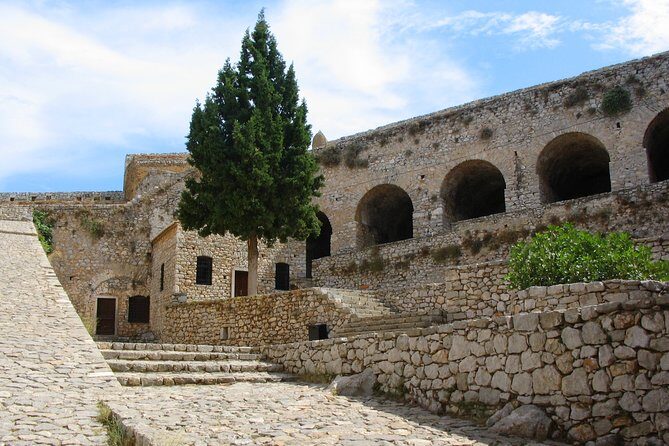
The Lion Gate is the main entrance to the Bronze Age citadel of Mycenae, erected around the 13th century BC (about 1250 BC). It’s named for the relief sculpture of opposing lionesses or lions in a heraldic pose above the entrance.
The tour points out something extra important for fans of iconography: it’s described as the sole surviving monumental piece of Mycenaean sculpture, and the largest sculpture in the prehistoric Aegean. It’s also the only relief image of Bronze Age Greece described in classical antiquity literature, meaning it was known before modern archaeology rediscovered it.
Then comes the Archaeological Museum of Ancient Mycenae briefly, followed by a star stop: the Citadel and Treasury of Atreus, also known as the Tomb of Agamemnon. This is a tholos or beehive tomb built around 1250 BC on Panagitsa Hill. The stone lintel over the doorway is noted as weighing around 120 tons, and the tour even gives approximate dimensions for the opening.
That 120-ton lintel detail does something to your imagination. It helps you feel the physical effort behind the myth. You’re not just seeing a “pretty tomb.” You’re seeing an ancient construction problem solved with brute force and deep planning.
Nafplio and Palamidi: The 999 Steps With Fort Views Over the Argolic Gulf
After Mycenae, you shift to Nafplio, and the vibe changes. Nafplio feels like a city built for strolling, with cobbled lanes and classic architecture layers.
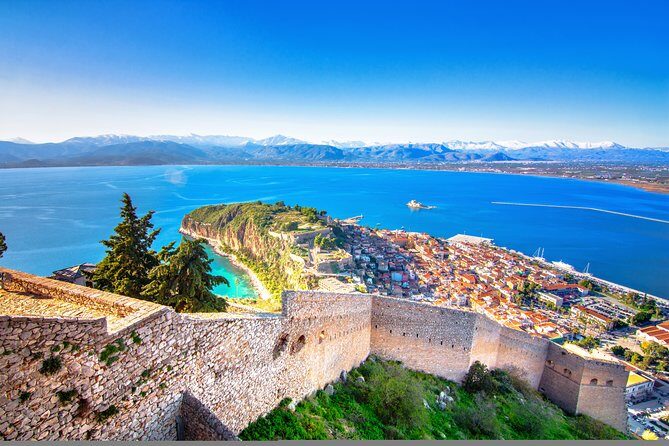
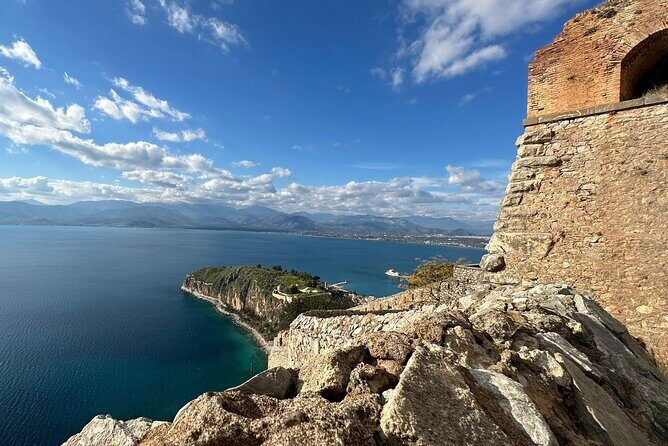
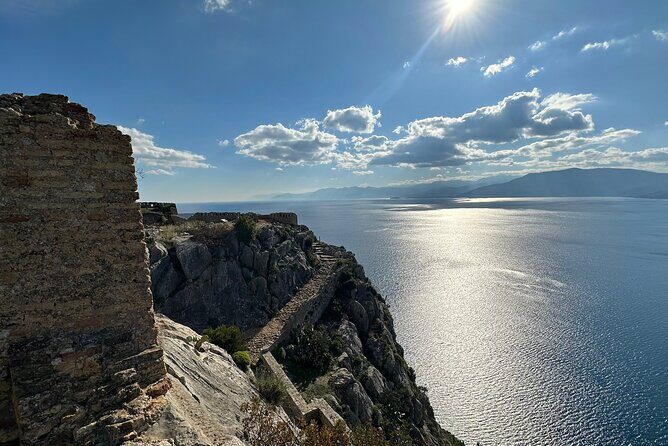
But first, there’s Palamidi Castle. This is one of the best payoffs in Greece if your legs are willing. Palamidi is described as one of the best-preserved castles in Greece, and it’s built on a 216-metre hill east of Acronauplia in Nafplio. The Venetians built it during their second occupation (1686–1715).
Here’s the step drama: there are 913 steps from town to fortress, while locals say there are 999 steps to the top. Either way, this is not a sit-and-watch stop. The route winds up the hillside and gives big views over the city, the Argolic Gulf, and the surrounding country.
The fort also connects to a darker note: the tour mentions the hole-prison of Kolokotronis. It’s that classic mix of beauty and control you get with fortresses.
My practical advice: if you want to enjoy Palamidi, go slow on the way up, stop for breath and photos, and save some energy for the walk back down.
Nafplio Old Town, Bourtzi, and the Bavarian Lion: A Day’s Final Story Stops
Once your legs stop negotiating with gravity, Nafplio opens up. You’ll get time in the Old Town for cobbled streets, flowered balconies, and a feel that’s both Venetian and later-period Greece. The tour frames Syntagma Square as the central point of the old town and sets up a story of how a newly formed Greek state’s Parliament was built during the reign of Kapodistrias.
This part of the day is also where the tour gives you your most human break: lunch is scheduled at a traditional tavern by the sea. Costs are not included, but having a meal planned (instead of you hunting for something last minute) is a real value on a long trip.
Next is Bourtzi, the small fortress on the islet of Agioi Theodoroi. The Venetians built it in 1473, and the tour notes it was called Castello dello Soglio. Bourtzi later served as a prison and even later a luxury hotel in the 1960s. Today it’s a postcard setting, and you reach it by boat in less than 10 minutes.
Finally, you’ll see Acronauplia Fortress (Akronafplia), the oldest part of Nafplio. Until the 13th century it was its own town. Venetians and Franks later folded it into the fortifications, and part of it was used as a prison before tourism-focused changes brought a hotel complex back into the picture.
And if you want a fun finale, the Lion of the Bavarians is right there above Michael Iatrou Street. The tour describes it as carved into the rock, commissioned by King Louis in memory of Bavarian soldiers who died in Nafplio in 1833 of a typhoid epidemic. Locals have an unofficial nickname tied to what they say killed the soldiers in spirit, not just in fact.
Who Should Book This Athens-to-the-Peloponnese Day Trip
This is a great fit if you:
- want one day to cover Corinth, Mycenae, and Nafplio without coordinating transportation
- enjoy seeing the Bible and myth connected to real locations, not just summarized in a book
- like the idea of an expert driver keeping the story threaded while you focus on walking and photos
You might want to choose something else if:
- you want a more leisurely pace with long museum time and fewer stops
- you hate steep terrain, because Palamidi’s steps plus site walking adds up fast
- you’re hoping for a licensed guide inside every archaeological site (the tour driver provides history, but a licensed site guide is not included)
Also, check your expectations about the word private. You are paying for a private vehicle and your own driver, so confirm in advance how the operator defines private in practice for your exact group size and time window.
Should You Book This Tour?
I think this is a strong booking if you want maximum “Greece hits” in one day: canal engineering, biblical place names, Bronze Age military power, then a bright and walkable finish in Nafplio with a fortress view. The private driver setup is where you get value, especially when someone like Chris, Gianny, Yiannes, Ioannis, Costas, Dimitrios, or Michael helps you understand what you’re looking at while you’re actually there.
If your priority is slow wandering and long inside-the-museum time, you may find the schedule feels full. If you can handle a packed day and you budget for entrance fees, this trip is a practical way to see a lot of the Peloponnese without turning your vacation into a logistics project.
FAQ
How long is this tour?
It runs about 9 to 10 hours.
What is the price per person?
The price is listed as $277.09 per person.
Is this a private tour?
Yes. It’s described as a private tour, meaning only your group participates.
Will I be picked up from my Athens hotel or Airbnb?
Yes. Pickup is offered from Athens Hotel, Airbnb residence, or the port, with a driver waiting in the lobby/entrance area.
What vehicle will I ride in?
For groups of 1–3 people, it’s a luxurious sedan. For groups of 4–7, it’s a comfortable mini van. Vehicles are described as Mercedes Taxi or Skoda luxury cars, and they have WiFi, A/C, and bottled water.
What language is the tour in?
The tour is offered in English.
Are entrance fees included?
No. Entrance fees for attractions are not included. Some stops are marked as admission ticket free, but most archaeological sites and museums are not included.
Is a licensed guide included for archaeological sites?
No. A licensed guide to accompany you into archaeological sites is not included.
Is lunch included in the price?
Lunch costs are not included. A lunch stop is scheduled in Nafplio at a traditional tavern by the sea.
What if the weather is bad?
The experience requires good weather. If it’s canceled due to poor weather, you’ll be offered a different date or a full refund.
FAQ
Can I cancel for a full refund?
Yes. Free cancellation is available up to 24 hours in advance of the experience start time.
Do I need to bring tickets for the stops marked as not included?
Yes. Entrance fees are not included, so you should be ready to pay on-site for the places where tickets are required.
You Might Also Enjoy


More Full-Day in Athens
- All Day Cruise -3 Islands to Agistri,Moni, Aegina with lunch and drinks included
★ 5.0 · 4,958 reviews